

Note: This article contains affiliate links. If you click on these links and make a purchase, I may earn a small commission at no extra cost to you. This helps support my research and content. Read my full affiliate disclosure here.
A dead battery can stop a project before it starts, especially when you are working in the driveway, diagnosing an older vehicle, or moving cars around the garage. A good jump starter gives DIY mechanics a fast way to get an engine turning without relying on another vehicle, long cables, or a nearby outlet.The right choice depends on more than raw power. Battery type, cable quality, clamp design, charging options, and safety protections all affect how useful the tool will be when you actually need it. The picks that follow cover a range of needs, and this guide will help you understand what matters before you choose.
Top Picks at a Glance
| Best Overall Jump Starter for DIY Mechanics Reliable all-around starter combining power, safety, portability, and value | NOCO Boost GB40 1000A Portable Lithium Jump Starter | 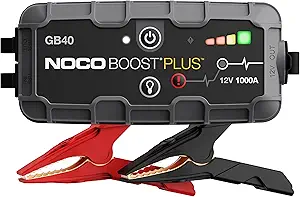 |
| Best Budget Jump Starter for DIY Mechanics Affordable starter offering basic safety, decent cranking power, dependable starts | Sharmeal GL985 5000A 12V Portable Car Jump Starter (8000mAh) |  |
| Best Compact Jump Starter Pocket-friendly unit prioritizing portability and storage without sacrificing power | NOCO Boost GB20 500A 12V Compact Lithium Jump Starter |  |
| Best High-Capacity Jump Starter Large-battery unit for multiple jumps and extended auxiliary power | NOCO Boost Max GB250 5250A 12V UltraSafe Lithium Jump Starter |  |
| Best Heavy-Duty Jump Starter Rugged, high-amp starter built for frequent use and tough conditions | Clore Automotive Jump-N-Carry JNC660 1700 Peak Amp 12V Jump Starter |  |
| Best Multi‑Function Jump Starter Starter with integrated accessories like air compressor, lights, and USB | Nicholaus QB08L 12V 8000mAh Portable Jump Starter with Air Compressor |  |
| Best Premium Jump Starter Top-tier starter with advanced electronics, durability, and convenience features | NOCO Boost X GBX155 4250A 12V UltraSafe Portable Jump Starter |  |
NOCO Boost GB40 1000A Portable Lithium Jump Starter
Best Overall Jump Starter for DIY Mechanics
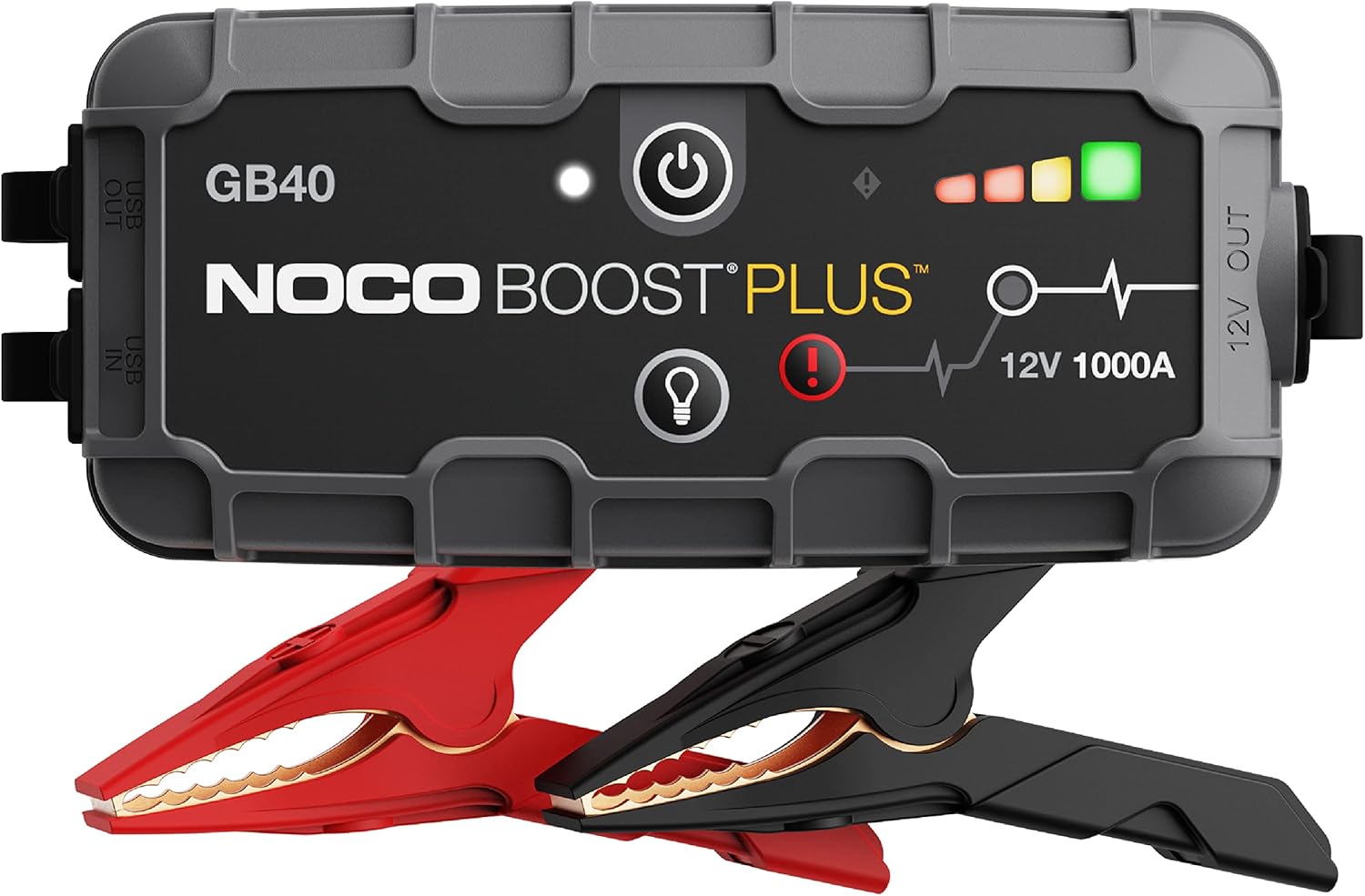
| Amperage | 1000 Amps |
|---|---|
| Engine rating | Up to 6.0L gas / 3.0L diesel |
| Flashlight output | 100 lumens |
| Ingress rating | IP65 |
| Recharge port | USB-C |
The NOCO Boost GB40 is a compact jump starter designed to revive a dead 12V battery quickly and safely. It delivers up to 1000 amps of peak current and is rated to start gasoline engines up to 6.0L and diesel engines up to 3.0L, making it suitable for typical car and light truck use. Built-in safety features like spark-proof connections and reverse-polarity protection reduce hookup mistakes, while heavy-duty clamps and a rugged IP65-rated case mean it tolerates roadside use. The unit doubles as a USB-C power bank and includes a 100-lumen LED flashlight with multiple modes for night-time emergencies or signaling. Practical benefits include up to roughly 20 starts per full charge and a compact form that fits in an emergency kit. Limitations are that runtime and number of starts depend on condition and temperature, it is not intended as a long-term battery maintainer, and higher-displacement or heavily discharged batteries may require a larger unit for consistent reliability.
Best for: DIY mechanics who want a compact, reliable jump starter that combines ample cranking power with built-in safety and extra USB charging for routine starts, roadside fixes, and light emergency use.
Less Ideal for: Users needing a permanent onboard maintainer, frequent commercial use, or guaranteed repeated starts for very large diesel engines should consider a higher-capacity or dedicated solution.
- 1000A peak output suited for most gasoline and light diesel engines
- Built-in safety with spark-proof and reverse-polarity protection for mistake-resistant hookup
- IP65-rated rugged housing and heavy-duty clamps for roadside durability
- Integrated USB-C power bank and 100-lumen flashlight add versatile emergency utility
- Not a substitute for a dedicated battery maintainer or charger
- Performance (starts per charge) can drop in cold conditions or with very weak batteries
Verdict: The all-around best jump starter for DIY mechanics that balances cranking power, battery capacity, safety features, portability, and value for routine vehicle starting and light emergency use.
Sharmeal GL985 5000A 12V Portable Car Jump Starter (8000mAh)
Best Budget Jump Starter for DIY Mechanics

| Battery Type | Lithium Ion |
|---|---|
| Voltage | 12 Volts |
| Battery Capacity | 8000 Milliamp Hours |
| Peak Output Current | 5000 Amps |
The Sharmeal GL985 is a lightweight portable jump starter meant to revive dead 12V vehicle batteries quickly. It pairs a 5000A peak output with an 8000mAh lithium cell and smart jumper clamps, so you can connect, verify polarity via the indicator lights, and crank a 10.0L gas or 9.0L diesel engine in seconds. The unit also doubles as a power bank with dual USB outputs for charging phones or small devices and includes an 800-lumen LED with steady, strobe, and SOS modes for roadside use. Built-in protections such as spark-proof and reverse-polarity prevention reduce the risk of user error. The compact size and included carrying case make it easy to store in a glove box or trunk for DIY weekend repairs and emergencies. Limitations are its modest battery capacity compared with larger, heavier units and the absence of advanced features like a digital battery readout or integrated air compressor, so repeated starts or very high-displacement engines may need a higher-capacity model.
Best for: DIY mechanics who want an affordable, compact jump starter that reliably revives stalled vehicles and doubles as a portable power bank for occasional roadside use, with basic safety protections to guard against sparks and reverse polarity.
Less Ideal for: Users who need a heavy-duty multi-start solution for frequent commercial use or who want integrated extras like an air compressor or advanced battery diagnostics should choose a more capable model.
- High peak output (5000A) capable of starting large gasoline and diesel engines quickly
- Smart clamps with indicator lights and multiple protections reduce risk of sparks and reverse connection
- Portable and lightweight design with a carrying case makes it easy to store and use on the go
- Dual USB outputs let the unit serve as a power bank and the 800-lumen LED provides useful roadside illumination
- 8000mAh capacity is limited for multiple consecutive jump attempts or heavy-duty use
- No large display or detailed state-of-charge indicator to show remaining battery level
Verdict: The best low-cost jump starter that provides reliable starting power and essential safety features for occasional roadside use without breaking the bank.
NOCO Boost GB20 500A 12V Compact Lithium Jump Starter
Best Compact Jump Starter

| Battery Type | Lithium |
|---|---|
| Voltage | 12 Volts |
| Amperage | 500 Amps |
| Battery Capacity | 2150 Milliamp Hours |
| Compatible with Vehicle Type | Passenger Car, Motorcycle, ATV, UTV, RV, Lawn Mower, Tractor, Van, Watercraft |
The NOCO Boost GB20 is a small, high-discharge lithium jump starter built to revive 12V batteries for gasoline engines up to 4.0 liters. You use it by attaching the needle-nosed booster clamps to the battery, powering the unit, and starting the vehicle; its UltraSafe circuitry provides spark-proof and reverse polarity protection to reduce setup mistakes. The GB20 doubles as a USB-C power bank to recharge phones and tablets and includes a 100-lumen LED with multiple modes for roadside visibility. It is rated for up to 20 jump starts per charge, has smart LEDs to indicate charge and status, and comes in an IP65-rated, rubberized case that tolerates dust, water spray, and drops. The main compromises are capacity and cable reach: the 500A peak and short clamp cable make it best for compact cars and tight storage rather than large trucks or deeply discharged batteries, and it lacks a dedicated 12V accessory port for heavier accessories. For DIY mechanics who value a reliable, portable starter for routine shop and roadside tasks, the GB20 is a durable, user-friendly option.
Best for: DIY mechanics who need a truly portable jump starter to keep in a glovebox or toolkit and value easy storage, quick single-vehicle recovery for routine dead batteries, and occasional device charging on the go.
Less Ideal for: Professional shops or owners who regularly service large trucks, diesel engines, or need high-capacity jump starts and extended cable reach should choose a more powerful unit with longer cables and higher output.
- 500-amp peak output suitable for gasoline engines up to 4.0L
- UltraSafe spark-proof and reverse polarity protection for safer connections
- Integrated USB-C power bank and 100-lumen multi-mode LED flashlight
- IP65-rated, rubberized housing built to resist dust, water spray, and impact
- Up to 20 jump starts per full charge and smart LED status indicators
- Cable length is short which can limit reach to some battery terminals
- 500A peak may be insufficient for larger engines or severely discharged batteries
- No dedicated 12V accessory port for powering higher-draw devices
Verdict: A small, lightweight jump starter that prioritizes portability and easy storage while still delivering enough peak amps for most everyday car batteries.
NOCO Boost Max GB250 5250A 12V UltraSafe Lithium Jump Starter
Best High-Capacity Jump Starter

| Battery Type | Lithium |
|---|---|
| Voltage | 12 Volts |
| Amperage | 5250 Amps |
| Compatible with Vehicle Type | Lawn Mower, Motorcycle, Passenger Car, RV, Tractor, Truck, UTV, Van, Watercraft |
The NOCO Boost Max GB250 is a heavy-duty 12V lithium jump starter built for commercial and demanding DIY use. It supplies a peak 5,250 amps to jump-start gasoline and diesel engines up to 16 liters, so it can handle large trucks, motorhomes, agricultural machines, and other high-displacement engines that smaller units cannot. In practice the GB250 is used like a traditional jump box but with UltraSafe protections that prevent sparks and reverse polarity mistakes, and it comes with heavy-duty booster clamps and an EVA case for transport. It also works as a portable power bank with USB output and includes a bright 600-lumen LED with multiple modes for roadside work. The unit recharges in about four hours with the included 56W adapter. The main compromises are size and cost: it is heavier and larger than compact consumer starters and is priced for professional buyers, so it is overkill for occasional small-car use. For DIY mechanics who regularly work on large engines or fleet vehicles, the GB250 brings reliable, safe starting power and useful on-site charging and lighting features.
Best for: DIY mechanics and small-fleet technicians who need a professional‑grade, high‑capacity jump starter capable of starting large gasoline and diesel engines repeatedly and supplying extended auxiliary power on job sites and roadside repairs.
Less Ideal for: Casual drivers or homeowners who only need occasional jump-starts for compact cars should consider smaller, more affordable consumer units instead.
- Very high peak output (5,250A) capable of starting engines up to 16L including diesel applications.
- Patented UltraSafe protection with spark-proof connections and reverse polarity prevention reduces user error risk.
- Integrated 600-lumen LED with multiple modes provides useful work and emergency lighting.
- Functions as a portable power bank with USB output and fast recharge via the included 56W adapter.
- Bulky and heavier than consumer-grade starters, making long-distance transport less convenient.
- Designed and priced for commercial or frequent heavy-duty use, so it is more than needed for occasional small-car emergencies.
Verdict: A jump starter with a large battery and high cold-cranking amps designed to start larger engines multiple times and provide extended auxiliary power.
Clore Automotive Jump-N-Carry JNC660 1700 Peak Amp 12V Jump Starter
Best Heavy-Duty Jump Starter
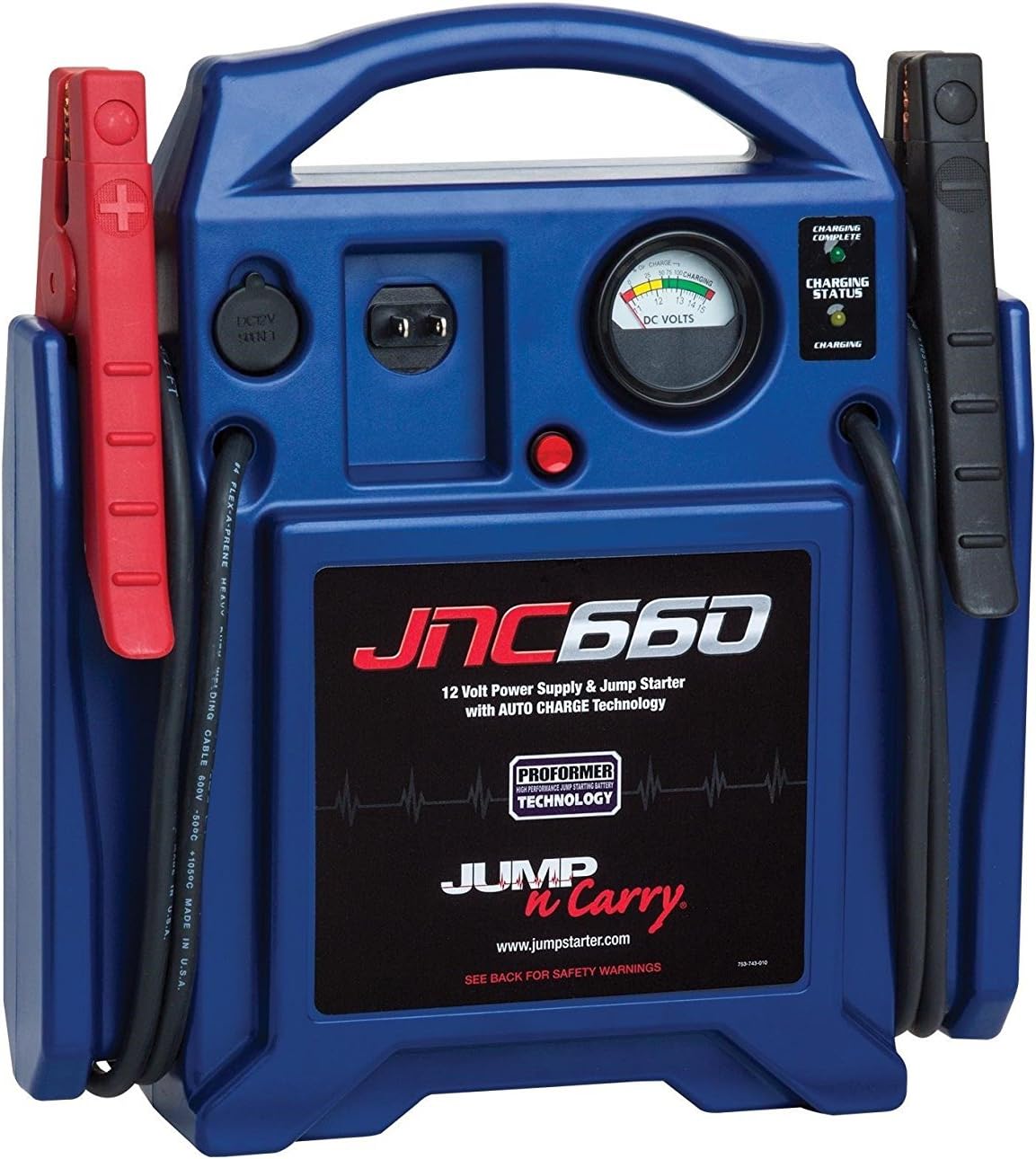
| Amperage | 1700 Amps |
|---|---|
| Peak Output Current | 1700 Amps |
| Batteries | 1 12V battery required (included) |
| Automotive Fit Type | Universal Fit |
The Clore Automotive Jump-N-Carry JNC660 is a rugged, professional-style 12V jump starter built to revive dead batteries and supply accessory power in a workshop or garage. It uses a 22Ah on-board battery and heavy 46-inch #2 AWG cables to deliver a 1700 peak amp surge for starting larger engines or multiple starts between charges. The built-in voltmeter gives a quick view of the unit charge state and the DC outlet lets you run 12V accessories without vehicle power. Typical use is jump-starting cars, trucks, and equipment during maintenance or emergency roadside service, and it is designed for repeat use during busy DIY sessions. The unit is large and relatively heavy compared with compact lithium boosters, so it lives best in a garage or truck rather than in a glovebox. Buyers should expect a traditional lead-acid form factor that requires occasional maintenance and takes longer to recharge than modern lithium alternatives, but it offers dependable high-cranking performance for heavier engines.
Best for: DIY mechanics and serious hobbyists who need a rugged, high-current jump starter for frequent use on larger or stubborn engines and want a durable, serviceable unit that doubles as a 12V power source for garage tasks.
Less Ideal for: Buyers who need a lightweight, pocketable emergency booster for occasional use or long off-grid trips should consider compact lithium alternatives instead.
- 1700 peak amps provides strong starting power for larger engines
- Heavy-duty 46-inch #2 AWG cables handle repeated high-current jumps
- On-board voltmeter lets you quickly check charge status
- DC outlet powers 12V accessories for workshop tasks
- Large and heavy compared with compact lithium jump starters
- Lead-acid style battery requires more time to recharge and periodic maintenance
Verdict: A robust, rugged jump starter built with higher peak current, durable housing, and reinforced clamps to handle frequent use and tougher starting conditions.
Nicholaus QB08L 12V 8000mAh Portable Jump Starter with Air Compressor
Best Multi‑Function Jump Starter
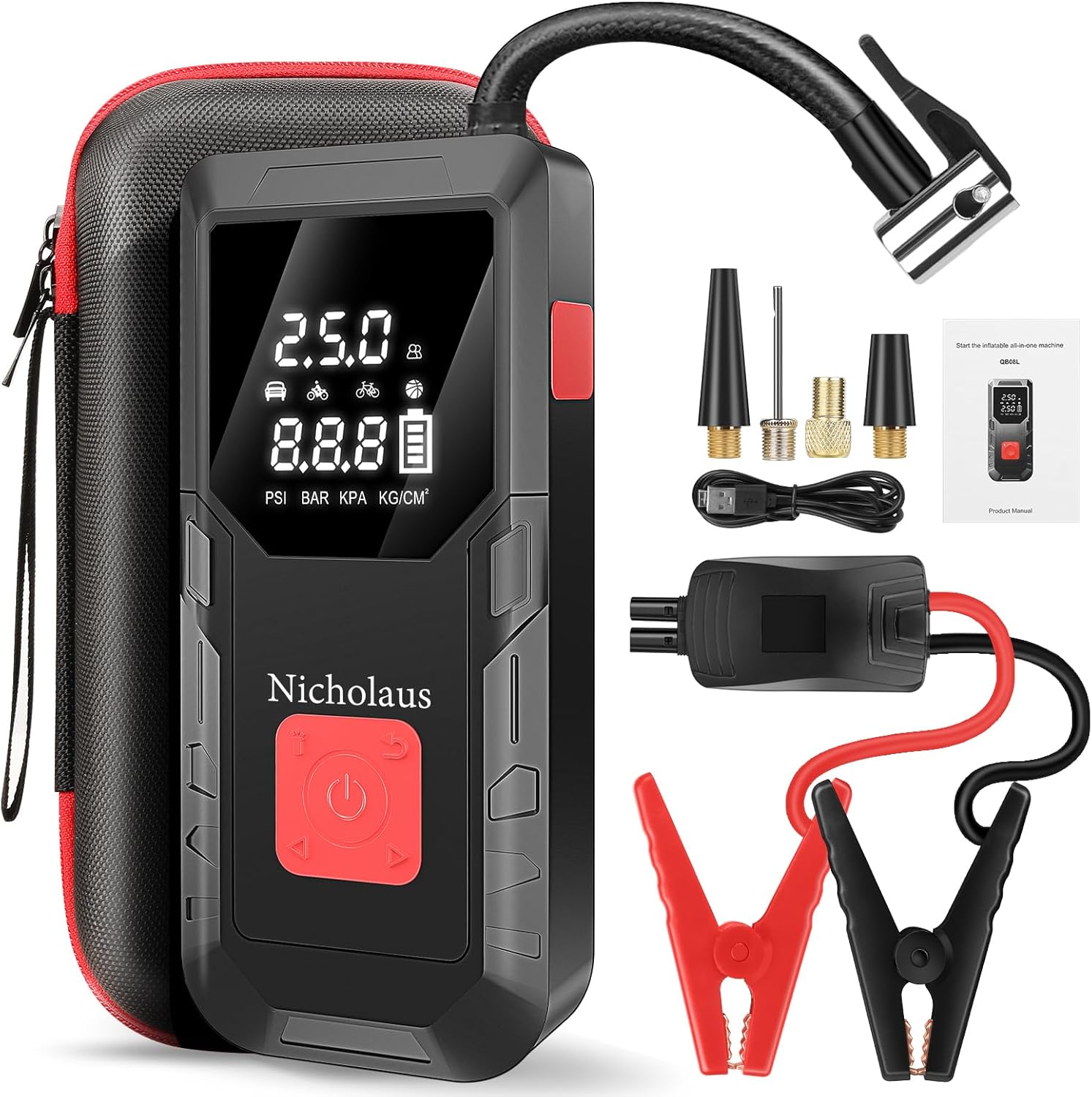
| Battery Type | Lithium Ion |
|---|---|
| Voltage | 12 Volts |
| Battery Capacity | 8000 Amp Hours |
| Peak Output Current | 2800 Amps |
| Peak Airflow / Pressure | 150 PSI |
The Nicholaus QB08L is a multi-function roadside tool aimed at getting stalled 12V vehicles running and topping up tires without separate equipment. In practice it serves as a portable jump starter, USB power bank, and small air compressor with an LED work light, pressure readout, and multiple inflation nozzles. The unit claims a 2800A peak output to start gasoline engines up to 6.0L and diesel up to 3.0L and can deliver about 25 starts per full charge under typical conditions. The built-in 150 PSI pump fills tires quickly and has automatic shutoff and pressure monitoring to avoid over-inflation. Safety features include spark-proof clamps and reverse-polarity protection, which reduce hookup risk for DIY mechanics working alone. Limitations are expected for continuous compressor duty where the pump must rest after several minutes and mobile charging is basic USB output rather than fast charging, so it should not be relied on as a primary power bank for frequent heavy use. The QB08L is best used as a compact emergency and workshop supplement rather than a daily primary compressor or charger.
Best for: DIY mechanics and active drivers who want a single portable unit that reliably starts 12V engines while also serving as an onboard air compressor, emergency light, and USB power bank for roadside repairs and maintenance.
Less Ideal for: Users who need a heavy-duty, continuous-use air compressor or a high-capacity fast-charging power bank should choose dedicated equipment instead.
- Combines jump starter, 150 PSI air compressor, USB power bank, and LED light in one compact unit.
- High peak current (2800A) and claimed starts per charge suitable for most gasoline and smaller diesel engines.
- Safety features include spark-proof clamps, reverse-polarity protection, and automatic compressor shutoff for ease of use.
- Includes multiple inflation nozzles and pressure readout for versatile tire inflation tasks.
- Compressor requires cooling pauses after continuous use and is not intended for long continuous duty.
- USB output is standard charging only and does not provide fast-charge speeds for modern devices.
- Some listed capacity and amperage values appear optimistic compared with typical real-world performance for repeated heavy use.
Verdict: A jump starter that combines reliable engine-starting capability with additional features like onboard air compressor, USB power output, and built-in lights for versatile garage and roadside use.
NOCO Boost X GBX155 4250A 12V UltraSafe Portable Jump Starter
Best Premium Jump Starter

| Battery Type | Lithium |
|---|---|
| Voltage | 12 Volts |
| Battery Capacity | 6750 Milliamp Hours |
| Amperage | 4250 Amps |
| Peak Output Current | 4250 Amps |
The NOCO Boost X GBX155 is a heavyweight portable jump starter designed for demanding starts and pro-level roadside use. It supplies a peak 4,250 amps and is rated to start gas engines up to 10.0L and diesel engines up to 8.0L, making it suitable for trucks and heavy equipment. Built-in UltraSafe 2.0 circuitry provides spark-proof connections, reverse-polarity protection, and thermal management so clamps can be attached quickly and with less risk. The unit supports rapid recovery too: it can provide a usable boost after five minutes of charging and fully charges via 60W USB-C Power Delivery in about 2.7 hours. Practical extras include heavy-duty jumper clamps, a 500-lumen multi-mode LED, and a microfiber storage bag. Expect up to roughly 18 full jump starts per charge under ideal conditions. Trade-offs are its bulk and weight compared with compact starters and the 1-year warranty that may be short for heavy commercial use. For DIY mechanics who work on large engines, it offers power, safety, and useful power-bank functionality in one rugged package.
Best for: DIY mechanics and professional hobbyists who prioritize a premium, high‑performance jump starter with advanced safety electronics, rapid USB‑C recharge and versatile power bank features for frequent heavy‑duty use and dependable roadside repairs.
Less Ideal for: Minimalist drivers who need a lightweight, pocketable booster or users who want a long manufacturer warranty and lower-cost basic models.
- Very high peak output (4,250A) for starting large gas and diesel engines
- UltraSafe 2.0 protections reduce risk of sparks and reverse polarity damage
- Fast recharge via 60W USB-C Power Delivery and quick 5-minute recovery for emergency use
- Integrated 500-lumen multi-mode LED adds useful lighting for roadside repairs
- Includes heavy-duty clamps and accessories so it is ready to use out of the box
- Relatively heavy and larger than compact jump starters which limits portability
- 1-year limited warranty may be short for heavy or commercial use
Verdict: A higher-end jump starter offering superior build quality, advanced safety and battery-management electronics, longer lifespan, and extra convenience features for mechanics who want top performance.
How We Chose the Best Jump Starter
We focused on the factors that matter most when a jump starter is used by DIY mechanics in real garage and driveway situations. First, we looked at starting capability, with attention to peak amp claims, realistic engine compatibility, and whether a unit is better suited to small gas engines, larger gas engines, or light diesel use. We also weighed battery chemistry, since lithium units offer better portability while lead-acid designs can still appeal for shop storage and occasional heavy-duty use.Next, we considered clamp quality, cable length, and overall ergonomics because awkward clamps and short leads can make a jump starter frustrating around crowded engine bays. Safety features were a major filter, including reverse polarity protection, spark resistance, overcharge protection, and clear status indicators. We also looked at recharge convenience, onboard battery status displays, durability, and useful extras such as work lights or charging ports.We excluded units with vague power claims, limited safety information, weak build quality, or designs that seemed better suited to casual emergency storage than repeated hands-on garage use.
Our full evaluation process is outlined in our review methodology.
How Much Power Do You Really Need
The biggest mistake many buyers make is assuming more peak amps always means a better jump starter. In practice, the right amount of power depends on engine size, battery condition, and temperature. A compact unit may be enough for smaller gas engines and routine emergency starts, while larger engines and neglected batteries usually benefit from a stronger reserve.
For DIY mechanics, it helps to think in terms of use case. If you mainly maintain compact cars and small crossovers, a smaller jump starter may be all you need. If you regularly work on trucks, older vehicles, or engines that sit for long periods, step up to a unit with more starting headroom and heavier cables.
- Small gas engines generally need less starting power
- Larger gas engines and high-compression engines benefit from higher output
- Cold weather and weak batteries increase the power required
- Extra reserve helps when diagnosing vehicles that have been sitting
Lithium Versus Lead-acid
Most modern portable jump starter options use lithium batteries, and for many garage users that is the most practical format. Lithium units are lighter, easier to store, and faster to grab when you need one. They also tend to include more modern electronics, status displays, and charging features.
Lead-acid jump starter designs are bulkier, but some users still like them for a dedicated shop tool that stays on a charger between uses. They can make sense if portability matters less than keeping a larger standby unit in the garage. The trade-off is extra weight, more storage space, and usually less convenience when moving around multiple vehicles.
- Choose lithium for portability and compact storage
- Choose lead-acid if you want a larger garage-based unit
- Check recharge intervals and storage recommendations for either type
Clamp and Cable Quality Matters More than Many Buyers Expect
A jump starter can have impressive output claims and still be frustrating if the clamps are flimsy or the cables are too short. DIY mechanics often work around battery covers, fuse boxes, and tight engine bays, so clamp opening width and grip strength matter. Good clamps should attach securely and inspire confidence instead of slipping off awkward terminals.
Cable length also affects real-world use. A compact design is nice, but not if it forces you into bad positioning every time you need to connect it. Better units balance portability with enough reach to work around front-end components, side-post layouts, and batteries mounted in less convenient spots.
- Look for clamps with strong spring tension and solid jaw contact
- Longer, more flexible cables are easier to position safely
- Compact size is useful, but not at the cost of awkward connections
Safety Features You Should Not Skip
A jump starter is handling high current, so built-in protections are not optional. Reverse polarity protection helps prevent mistakes when clamps are connected to the wrong terminals. Spark-resistant designs add another layer of safety, especially for less frequent users who want more reassurance during setup.
Good units also provide clear visual indicators that confirm correct connection before starting. Overcharge, short circuit, and temperature protection matter too, particularly if the jump starter may live in a hot garage or vehicle. For DIY mechanics who use tools repeatedly, these protections can reduce both risk and wear over time.
- Reverse polarity protection helps prevent wiring mistakes
- Spark resistance improves confidence during hookup
- Clear status lights simplify operation in poor lighting
- Temperature and short-circuit protection support long-term reliability
Useful Extra Features Versus Unnecessary Extras
Many jump starter models include USB charging ports, built-in flashlights, air compressor functions, or power bank capability. Some of these features are genuinely useful, especially if the unit doubles as a roadside emergency tool. A bright work light can help at night, and a battery status display makes routine maintenance easier.
Still, extras should never distract from the core job of starting a vehicle reliably. For a garage-focused buyer, dependable starting performance, clamp quality, and easy recharging matter more than a long list of bonus features. It is better to buy a jump starter that does the main job well than one packed with features but compromised in basic execution.
- Prioritize starting performance over novelty features
- A clear battery indicator is more useful than many gimmicks
- Built-in lights can help during night or winter use
- Charging ports are nice, but should be secondary
Storage, Charging, and Maintenance Tips
A jump starter is only helpful if it has a charge when you need it. That makes storage habits important. Lithium units usually prefer periodic top-offs rather than being left fully depleted, while larger garage units may need a regular charging routine to stay ready. Always follow the maker's guidance for storage temperature and recharge intervals.
For DIY mechanics, the easiest habit is to check battery level on a schedule, such as once a month or before a season change. Keep the clamps clean, store the unit where it will not be exposed to moisture, and avoid tossing it under heavy tools that can damage cables or housings. A little maintenance goes a long way toward making the jump starter dependable when a battery finally gives up.
- Check charge level regularly even if the unit has not been used
- Avoid extreme heat, freezing exposure, and damp storage
- Inspect clamps and cables for wear before relying on the unit
- Recharge promptly after use so the tool is ready again
FAQ
What size jump starter do DIY mechanics usually need?
That depends mainly on the vehicles you work on most often. For smaller gas engines, a compact unit may be enough, but trucks, larger engines, and vehicles with weak batteries usually benefit from more output reserve. If you handle a mix of vehicles, choosing a jump starter with some extra headroom is often the safer call.
Is a lithium jump starter better than a lead-acid model?
For most home garage users, lithium is the more convenient choice because it is smaller, lighter, and easier to store. Lead-acid can still work well as a dedicated shop unit, especially if portability is not important. The best option depends on whether you want easy carry and compact storage or a larger stationary backup tool.
Can a jump starter be used on a completely dead battery?
Sometimes, but results vary with the battery's condition and the vehicle. A deeply discharged battery may still accept enough support to crank, while a damaged or failed battery may not respond at all. In those cases, charging, battery replacement, or further diagnosis may be needed.
How often should I recharge a portable jump starter?
Follow the unit's storage guidance, but a monthly check is a smart baseline for most garage users. Recharge it after each use and do not let it sit empty for long periods. Regular checks are especially important before winter or before storing project vehicles.
Are built-in air compressors worth having in a jump starter?
They can be useful for emergency convenience, especially if you want one tool for battery and tire issues. Still, combination units involve trade-offs in size, weight, and sometimes ease of use. If your main goal is reliable engine starting, core jump starter performance should come first.
Can I keep a jump starter in my vehicle year-round?
You can, but temperature matters. Extreme heat and severe cold can affect battery performance and long-term health, especially with compact lithium units. If possible, store it in a more stable environment and check the charge level regularly.
Final Verdict
Choosing the right jump starter comes down to matching power, battery type, and usability to the vehicles you actually work on. DIY mechanics should focus first on reliable starting capability, safe operation, solid clamps, and a storage routine that keeps the unit ready instead of buried and forgotten.If you want the best overall value from this category, buy for your largest likely starting job rather than your easiest one, and do not compromise on safety features or cable quality. That approach will help you choose confidently and end up with a jump starter you will trust when the battery goes flat.
