

Note: This article contains affiliate links. If you click on these links and make a purchase, I may earn a small commission at no extra cost to you. This helps support my research and content. Read my full affiliate disclosure here.
A fuel pressure tester is one of the most useful diagnostic tools a DIY mechanic can keep in the garage. When an engine cranks too long, stumbles under load, idles rough, or refuses to start, checking fuel pressure can quickly narrow the problem to the pump, regulator, filter, injectors, or a leak in the system. Without a proper gauge and the right fittings, it is easy to guess wrong and replace parts that were never the issue.The best fuel pressure tester for your needs should match your vehicle types, pressure range, and connection style while staying easy to read and safe to use. The picks that follow focus on tools that help home mechanics troubleshoot efficiently and with less frustration.
Top Picks at a Glance
| Best Overall Fuel Pressure Tester for DIY Mechanics Reliable, easy-to-use tester with balanced accuracy, durability, and value | BETOOLL Fuel Injector and Pump Pressure Tester Kit (0-140 PSI) |  |
| Best Budget Fuel Pressure Tester for DIY Mechanics Affordable tester offering dependable readings and essential fittings | jiouxip Fuel Pressure Tester Kit with Multiple Adapters and 0–140 PSI Gauge | 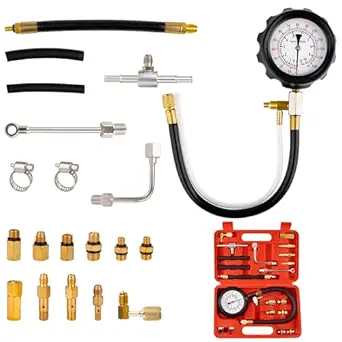 |
| Best Premium Fuel Pressure Tester Premium build with fine resolution and durable professional-grade components | Lisle Master Fuel Injection Test Kit |  |
| Best Complete Fuel Pressure Tester Kit Full kit with multiple adapters, hoses, and broad vehicle compatibility | OTC 6550PRO Professional Fuel Injection Master Fitting Kit |  |
| Best Compact Fuel Pressure Tester Pocketable, lightweight tester for quick checks and tight storage | AUTOWN Fuel Pressure Tester Kit 0-140 PSI with Adapter Set |  |
| Best Heavy-Duty Fuel Pressure Tester Rugged, service-grade tester with reinforced fittings for frequent use | VEVOR Diesel Fuel Injector Nozzle Tester with Dual-Scale Gauge |  |
| Best High-Precision Fuel Pressure Tester High-resolution gauge or digital readout for very accurate diagnostics | AUTOOL PT630 Digital Fuel Pressure Gauge Kit |  |
BETOOLL Fuel Injector and Pump Pressure Tester Kit (0-140 PSI)
Best Overall Fuel Pressure Tester for DIY Mechanics

| Measurement range | 0-140 PSI (0-10 bar) |
|---|---|
| Material type | Metal, Plastic |
| Thread style | NPT |
| Unit count | 1 Count |
This BETOOLL kit provides a practical way for DIY mechanics to check fuel injector and fuel pump pressure on gasoline engines. The kit includes a pressure gauge rated 0–140 PSI, a release valve for one-handed depressurizing, and a set of adapters and hoses intended to fit many fuel injection systems. In use you connect the hose to the fuel rail or test port, watch the analog gauge while cranking or running the engine, and relieve pressure quickly with the thumb-release valve. The metal and plastic construction feels serviceable for repeated garage use and the included fittings expand compatibility across cars, trucks, motorcycles, ATVs and similar gas engines. Limitations to note are the stated incompatibility with some Bosch systems, CIS Jetronic and certain vehicle-specific rails, so double-check fit before relying on it for exotic or older systems. The analog dial is easy to read but lacks digital logging or fractional precision, so it is best suited for troubleshooting and confirmation rather than detailed calibration work.
Best for: DIY mechanics who service and diagnose fuel-injected cars, trucks, motorcycles, and small engines and want a durable, easy-to-use pressure tester that balances accuracy, handy adapters, and single-handed operation for routine troubleshooting and repairs.
Less Ideal for: Technicians needing vehicle-specific calibration data, digital logging, or guaranteed fit for uncommon or legacy fuel systems should consider more specialized tools.
- Wide measurement range up to 0–140 PSI suitable for most gasoline fuel systems
- Quick-release valve for single-handed depressurizing and safer testing
- Includes multiple adapters and hoses to cover a broad range of fuel rails and test ports
- Durable metal and plastic components designed for repeated garage use
- Not compatible with certain Bosch, CIS Jetronic and some vehicle-specific fuel rails
- Analog gauge provides limited resolution compared with digital meters
Verdict: The all-around best fuel pressure tester that balances accuracy, durability, ease of use, and value for most DIY mechanics working on fuel systems.
jiouxip Fuel Pressure Tester Kit with Multiple Adapters and 0–140 PSI Gauge
Best Budget Fuel Pressure Tester for DIY Mechanics
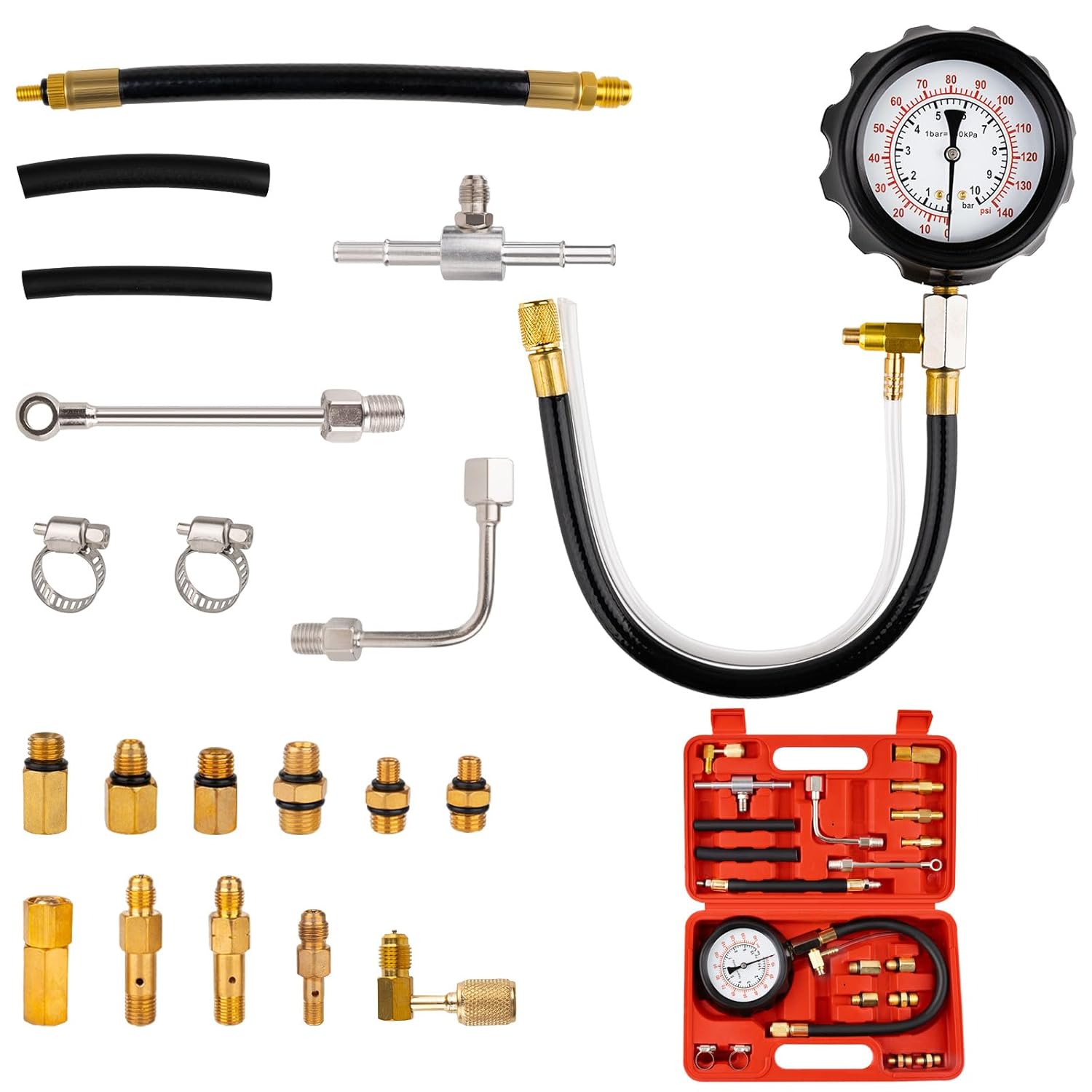
| Included Components | Fuel Injector Injection Pump Pressure Tester |
|---|---|
| Material Type | Aluminum, copper, and plastic |
| Thread Style | M6 |
| Pressure Range | 0-140 PSI / 0-10 bar |
This jiouxip fuel pressure tester kit is a hands-on diagnostic tool for checking fuel system pressure on gasoline engines. It installs in place of a fuel pressure sensor or connects to a Schrader valve using the included hoses and adapters, letting DIYers read system pressure on a dual-scale 0–140 PSI/0–10 bar gauge. The kit includes several thread adapters and a quick-release pressure valve for one-handed depressurizing, and its metal gauge and fittings resist corrosion for repeated garage use. It is useful for diagnosing weak pumps, clogged filters, or pressure regulator faults without needing a shop visit. Limitations are that it excludes many manufacturers and direct-injection or diesel high-pressure systems, and it does not include a Schrader valve adapter for non-standard valves, so you must verify valve type before use. For at-home mechanics who want a low-cost way to confirm fuel pressure and troubleshoot fuel delivery problems, this kit covers most common gasoline systems but is not suitable for high-pressure modern direct-injection setups.
Best for: DIY mechanics and home hobbyists who need an affordable, no-frills fuel pressure tester to diagnose gasoline fuel system issues on cars, trucks, motorcycles, or RVs and who value straightforward, reliable pressure readings and basic adapter coverage over advanced features.
Less Ideal for: Owners of modern vehicles with high-pressure direct-injection systems or diesel injection pumps should avoid this kit and choose a tester specifically designed for high-pressure systems.
- Dual color-coded 0–140 PSI and 0–10 bar gauge provides clear, readable pressure measurements
- Multiple thread adapters and hoses cover a wide range of common gasoline fuel systems
- Quick-release valve allows fast, single-handed pressure relief for safer use
- Metal fittings and corrosion-resistant construction improve durability for garage use
- Not compatible with many manufacturers and excludes direct-injection and diesel high-pressure systems
- No adapter for non-standard Schrader valves included, requiring verification or extra parts
Verdict: The best low-cost fuel pressure tester that delivers reliable readings and basic fittings without extra features for mechanics on a tight budget.
Lisle Master Fuel Injection Test Kit
Best Premium Fuel Pressure Tester

| Compatible systems | PFI and TBI fuel injection |
|---|---|
| Includes adapters for | GM, Ford, Chrysler, Honda/Acura, Toyota, Bosch CIS and L-Jetronic |
| Material | Acrylic, Metal, Plastic |
| Unit count | 1.0 Count |
The Lisle Master Fuel Injection Kit provides a full set of adapters, hoses, and gauges to check fuel pressure on most port fuel injection and throttle body injection systems. You use it by connecting the appropriate adapter to the vehicle test port, fuel hose end, or inline location, then reading pressure on the supplied gauge to verify pump and regulator operation. Notable features include a variety of vehicle-specific adapters that cover GM, Ford, Chrysler, Honda/Acura, Toyota, and legacy Bosch systems, plus clear instructions and a compact carrying layout. In practice the kit saves time for DIY mechanics by eliminating multiple trips to parts stores for fittings and letting you confirm pressure and leaks at the vehicle. The kit is lightweight and portable, but it does not include electronic diagnostics or vehicle-specific calibration data, so it is focused on mechanical pressure checks rather than advanced ECU-level troubleshooting. Expect accurate, hands-on pressure readings but plan to use other tools if you need flow testing or injector-level diagnostics.
Best for: DIY mechanics who want a higher-quality, long‑lasting fuel pressure tester with a comprehensive set of adapters and professional-grade versatility for diagnosing a wide range of fuel injection systems.
Less Ideal for: Technicians who need advanced electronic diagnostics, flow bench testing, or vehicle-specific calibration tools should choose more specialized equipment.
- Covers a wide range of PFI and TBI systems with multiple adapters for broad vehicle compatibility
- Includes gauge and hoses for direct, on-vehicle pressure readings without additional purchases
- Compact kit layout makes it easy to carry and store in a toolbox
- Clear instructions and included components simplify common fuel pressure checks
- Does not perform electronic or ECU-level diagnostics or flow measurements
- Not tailored to a single vehicle model so some adapters may be unnecessary for specific builds
Verdict: A higher-end fuel pressure tester with superior materials, finer gauge resolution, and robust accessories for users who want professional-level performance and longevity.
OTC 6550PRO Professional Fuel Injection Master Fitting Kit
Best Complete Fuel Pressure Tester Kit

| Included adapters | 47 adapters with Schrader quick-connects |
|---|---|
| Pressure range | 0–100 psi |
| Seal material | Viton |
| Application manual | Coverage for vehicles 1997–2008 |
The OTC 6550PRO is a professional-grade fuel injection master fitting kit built for diagnosing fuel pressure, weak pumps, restricted filters, flow and leak-down issues. Technicians and DIY mechanics use the included analog gauge and pressure manifold to attach to fuel rails or schrader fittings, observe pressure sweeps, and perform controlled bypass flow checks. The kit stands out for coverage: 47 adapters and a detailed 1997–2008 application manual simplify finding the correct connection for domestic, Asian, and European vehicles. Viton seals and O-rings resist gasoline, alcohol blends, and aggressive cleaning chemicals, reducing service failures from seal degradation. The analog gauge reads 0–100 psi, which is the right range for most gasoline systems and makes transient behavior easy to see. Trade-offs are that it is an analog kit without digital logging, and the manual fitment window stops at 2008 so very new vehicles may need different adapters or procedures. The kit is a solid, durable choice for anyone who wants wide coverage and professional-style pressure testing without specialty diagnostic electronics.
Best for: A DIY mechanic who wants a single, shop-ready fuel pressure tester that covers many vehicle makes and fuel-rail setups and prefers a durable, professional-grade kit with clear test procedures for troubleshooting pumps, filters, and injector issues.
Less Ideal for: Shop users who need integrated digital logging, Bluetooth connectivity, or explicit compatibility with vehicles made after 2008 should consider modern electronic testers or manufacturer-specific adapters.
- Extensive adapter set with 47 fittings for broad vehicle coverage within the stated application years
- Analog 0–100 psi gauge shows real-time pressure sweeps useful for diagnosing intermittent issues
- Viton seals and metal components resist fuel and cleaning chemicals for long-lasting service life
- Manual covers vehicles only through 2008 so adapters or procedures for newer cars may be missing
- No digital logging or electronic readout for data capture or trend analysis
Verdict: A comprehensive kit that includes multiple adapters, hoses, and fittings to test a wide range of vehicles and fuel-rail configurations right out of the case.
AUTOWN Fuel Pressure Tester Kit 0-140 PSI with Adapter Set
Best Compact Fuel Pressure Tester
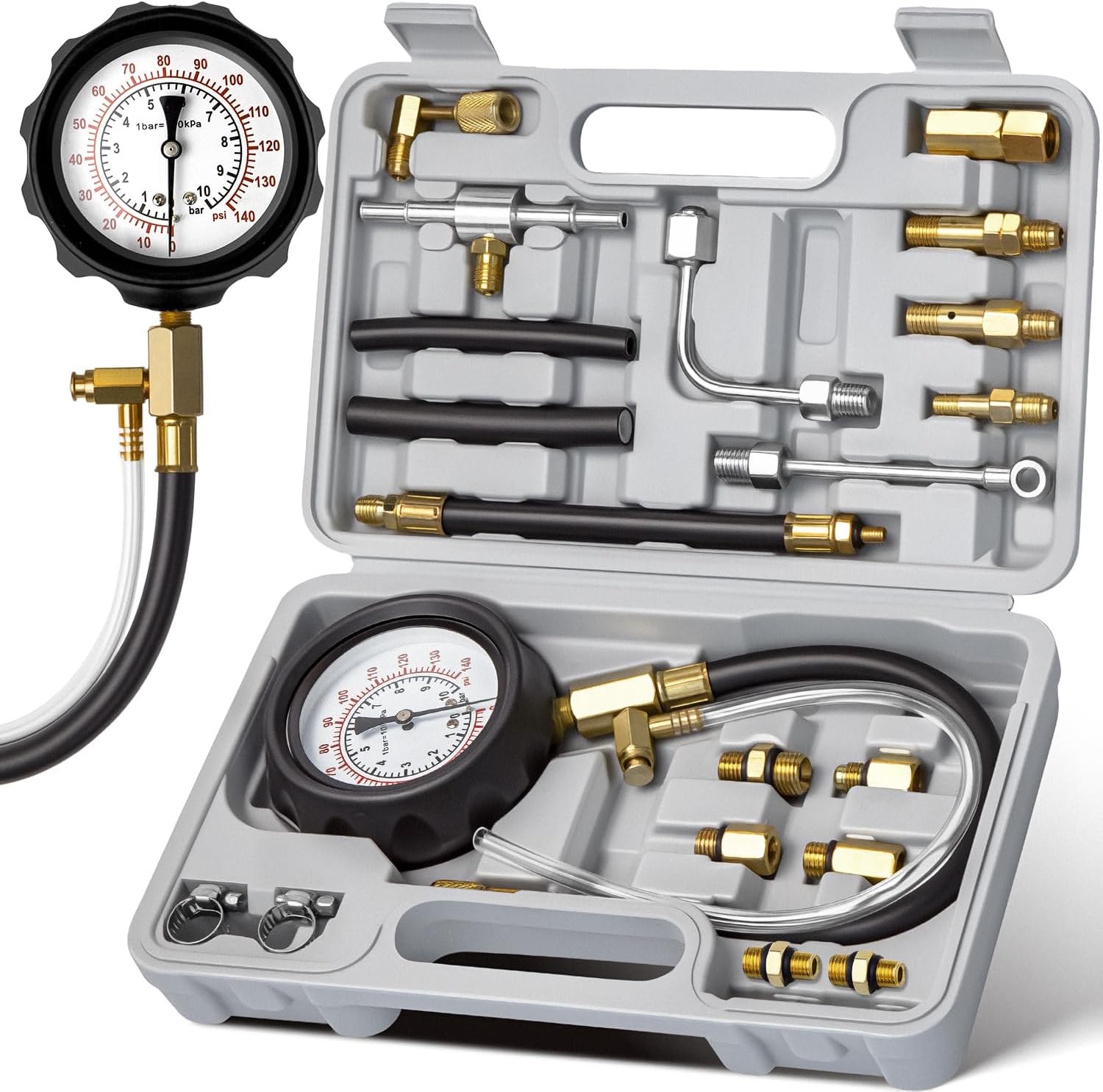
| Gauge range | 0-140 PSI, 0-10 BAR |
|---|---|
| Adapter count | 8 adapters (M6 to M14) |
| Includes | Two hoses with quick-release valve, relief valve, drain hose |
| Construction | Brass, aluminum, steel components |
This AUTOWN fuel pressure tester kit is a compact diagnostic tool for checking fuel system pressure on gasoline engines. It uses a liquid-filled, shock-resistant gauge with 0-140 PSI and 0-10 BAR scales so readings are easy to read under shop or roadside conditions. The kit includes eight adapters and two hoses with a quick-release valve plus a relief valve and drain hose for safer fuel recovery during testing. Construction uses brass, aluminum, and steel components intended to stand up to routine garage use. Typical use is connecting the appropriate adapter to the fuel rail or Schrader port, pressurizing the system and watching the gauge for steady or fluctuating pressure to pinpoint pump, regulator, or injector problems. Limitations are compatibility gaps: it does not fit vehicles with Bosch CIS Jetronic, GM TBI, or direct injection systems and may not work with some small or nonstandard Schrader valves, so verifying fitment is essential before relying on it for a specific vehicle. For DIY mechanics who need a durable, easy-to-read hand tester this kit covers most common gasoline engines.
Best for: DIY mechanics who need a compact, portable fuel pressure tester for quick diagnostic checks and easy storage in a small garage or toolbox, especially when convenience and straightforward gasoline-engine testing are the priority.
Less Ideal for: Professional shops or owners of vehicles with Bosch CIS, GM TBI, or direct injection systems should choose specialized testers designed for those systems.
- Liquid-filled dual-scale gauge (0-140 PSI and 0-10 BAR) for clear, stable readings
- Includes eight adapters and two hoses with quick-release valve to handle many fuel ports
- Durable metal construction with brass, aluminum, and steel components for workshop use
- Relief valve and drain hose improve safety and make fuel recovery easier during tests
- Does not fit Bosch CIS Jetronic, GM TBI, or direct injection systems and may miss nonstandard Schrader valves
Verdict: A small, lightweight tester designed for easy storage and quick checks when space and portability are priorities in a home garage.
VEVOR Diesel Fuel Injector Nozzle Tester with Dual-Scale Gauge
Best Heavy-Duty Fuel Pressure Tester

| Material Type | Cast Iron |
|---|---|
| Measuring ranges | 0 to 600 bar / 0 to 8000 PSI |
| Oil Cup | 0.8L |
| Thread Style | Npt |
This VEVOR diesel injector nozzle tester is a bench-style tool for checking opening pressure, leakage, spray pattern, chattering, and basic atomization of mechanical diesel injectors. It mounts on a stable base and uses a manual plunger to pressurize fuel into a transparent 0.8L cup so you can observe spray and measure flow while the heavy dual-scale gauge reads up to 600 bar. The cast-iron body and stainless gauge give it a rugged feel for repeated workshop use, and the kit includes the common high-pressure hoses, fittings and a 5-micron filter to help protect injectors during testing. It is straightforward to use for DIY mechanics who want to diagnose worn nozzles or verify injector calibration without specialized shop equipment. It will not test common-rail injectors, so it is limited to older mechanical injector types, and the manual operation means it is slower than automated bench testers and requires careful safety practices at high pressure.
Best for: Shops and experienced DIYers who need a heavy‑duty, service‑grade tester for frequent injector work and durable bench or field use, especially when testing a wide range of mechanical diesel injectors (non‑CRDI) under tougher conditions.
Less Ideal for: Technicians who need to test modern common-rail injectors or who prefer automated, electrically driven test benches for faster or high-volume diagnostics.
- Rugged cast-iron construction suited for workshop use
- Dual-scale gauge (0–600 bar / 0–8000 psi) provides wide measuring range for heavy-duty injectors
- Transparent 0.8L fuel cup and Bosch 5-micron filter let you observe spray and protect injectors
- Includes common hoses and fittings so it is ready for basic injector calibration out of the box
- Cannot test common-rail (CRDI) injectors
- Manual plunger operation is slower and more physically demanding than powered bench testers
Verdict: A rugged, service-grade tester built with reinforced hoses and metal components to withstand frequent shop use and harsher working conditions.
AUTOOL PT630 Digital Fuel Pressure Gauge Kit
Best High-Precision Fuel Pressure Tester

| Pressure range | 0-426.6 PSI / 0-29.4 BAR / 0-30 kg/cm² |
|---|---|
| Display | 2.8-inch backlit digital, 0.01 resolution |
| Hose length | 78.7 inches |
| Adapter count | Multiple riveted brass adapters |
The AUTOOL PT630 is a portable digital fuel pressure tester designed for DIY diagnostics on petrol engines. It connects to the fuel rail with the supplied adapters and displays real-time, maximum and minimum pressure and differential readings on a 2.8-inch backlit screen. The gauge supports PSI, bar and kg/cm² units, has a quick-release and zeroing function, and stores short-term data with a lock-screen hold for reading stable numbers while working. The kit includes a long reinforced rubber hose and a wide set of riveted brass adapters to reach most gasoline fittings without improvising. Practical benefits for home mechanics include the fine 0.01 display resolution for precise checks, clear visibility in low light, and a hose long enough to keep the tester at a safe distance from hot engine parts. Limitations are that it is focused on petrol engines only and requires the right adapter and basic knowledge to safely access the fuel system; the unit is a bench/hand tool rather than a permanently installed monitor. For DIYers who want accurate, immediate diagnostics, it simplifies isolating fuel pressure problems without specialized shop equipment.
Best for: DIY mechanics and advanced home tuners who need a high-resolution digital readout to diagnose and fine-tune fuel systems, prioritize precise measurements over basic convenience, and are comfortable using adapters and hoses to connect to a variety of gasoline engine fittings.
Less Ideal for: Users seeking a permanently installed monitor or those uncomfortable working on pressurized fuel systems should consider professional service or alternative monitoring solutions.
- High-resolution digital readout with 0.01 display steps for precise pressure checks.
- Backlit 2.8-inch screen and data hold make readings easy in tight or dim engine bays.
- Comprehensive adapter set with riveted brass fittings fits many gasoline fuel connections.
- Long reinforced rubber hose resists curling and holds up to engine-bay temperatures and pressure.
- Quick-release and zeroing functions speed testing and reduce setup time.
- Intended for gasoline engine fuel systems only and not for diesel or other fluids.
- Requires safe access to the fuel line and basic mechanical skill to use correctly.
Verdict: A tester featuring a high-resolution gauge or digital readout for DIY mechanics who need the most accurate pressure measurements for diagnostics and tuning.
How We Chose the Best Fuel Pressure Tester
We selected each fuel pressure tester by focusing on the factors that matter most in real garage diagnostics, not just what looks complete in the case. First, we looked at gauge range and readability, since a tester needs to cover common fuel injection pressures while remaining easy to read during cranking, idle, and load checks. We also prioritized adapter variety and thread compatibility because many DIY users work on more than one vehicle and need a kit that connects cleanly to common test ports and fuel rail fittings.Hose quality and sealing were another major filter. A fuel pressure tester should use durable hose material, secure crimping, and reliable seals that help prevent leaks during testing. We also considered bleed functionality, storage and organization, and overall ease of use, especially for one-person diagnostics in a home garage. Build consistency mattered too, including how well the fittings, valves, and gauge face hold up with repeated use.We excluded kits with vague fitment details, limited pressure coverage, flimsy connectors, or layouts that make safe testing harder than it needs to be.
Our full evaluation process is outlined in our review methodology.
What a Fuel Pressure Tester Helps You Diagnose
A fuel pressure tester gives you a direct way to verify whether the fuel system is delivering the pressure your engine needs. That matters because many drivability problems overlap with ignition, air, and sensor faults. A pressure reading helps you avoid blind part swapping and gives you a starting point for more focused troubleshooting.
In a DIY setting, this tool is especially helpful for no-start conditions, hard starts after sitting, hesitation under throttle, rough idle, low power, and suspected fuel pump weakness. It can also help confirm whether pressure bleeds off too quickly after shutdown, which may point to a leaking injector, a failing check valve, or a pressure regulator issue.
- Useful for cranking, idle, and key-on pressure checks
- Helps isolate pump, regulator, filter, and leak-related faults
- Can reveal pressure drop after shutdown
- Supports step-by-step troubleshooting instead of guessing
Gauge Range and Readability Matter More Than Most Buyers Expect
Not every fuel system operates at the same pressure, so the gauge needs a range that fits the vehicles you plan to test. For most modern fuel-injected applications, a mid-to-high pressure range is essential, but the gauge also needs enough resolution to show small changes clearly. A huge range with tiny markings can make normal diagnostic differences hard to see.
Readability affects real-world use more than buyers often realize. In a cramped engine bay, a clear dial face, logical scale layout, and steady needle are easier to trust than a gauge that forces you to squint or guess. If you plan to compare readings during startup, snap throttle, or leak-down testing, a readable gauge will save time and reduce mistakes.
- Choose a range that covers the systems you actually work on
- Look for clear markings that are easy to read quickly
- Prefer a gauge that shows small changes without excessive bounce
- Think about visibility in low light and tight engine bays
Adapter Coverage Is Often the Difference Between Useful and Frustrating
A fuel pressure tester is only as useful as its ability to connect properly to the vehicles in your garage. Many DIY mechanics discover too late that a kit includes plenty of pieces but not the right thread types or test-port fittings for their applications. A well-chosen kit should offer practical adapter coverage, not just a high part count.
If you work on a mix of domestic, Asian, or older vehicles, connection style matters just as much as pressure range. Some systems use a convenient service port, while others require inline connections or model-specific fittings. Better kits make it easier to move between vehicles without hunting for extra parts or improvising unsafe connections.
- Check for service-port and fuel-rail compatibility
- Do not judge a kit by piece count alone
- Organized labeling makes repeat use much easier
- A wider adapter set is helpful if you maintain multiple vehicle types
Hose Quality, Seals, and Safety Features Should Be Non-Negotiable
Fuel system testing involves flammable liquid under pressure, so build quality matters. A reliable fuel pressure tester should have hose material that resists kinking, cracking, and swelling over time. Secure crimps and snug-fitting connectors are equally important because even a small leak can create a mess and increase risk during testing.
A bleed valve or pressure relief feature can make the process cleaner and safer when disconnecting the tool after a test. It also helps when you need to repeat readings or store the kit without residual fuel trapped in the line. For DIY mechanics, safety and cleanliness are not bonus features. They are part of what makes a tester worth owning.
- Inspect hose thickness and flexibility
- Look for secure fitting engagement and dependable seals
- A bleed function helps with safer disconnects
- A sturdy storage case reduces lost adapters and contamination
How to Match a Tester to the Vehicles You Work On
The right fuel pressure tester depends on your typical jobs. If you mostly maintain one or two personal vehicles, you may not need a huge adapter assortment, but you do need correct fitment and an easy-to-read gauge. If you regularly help friends or work on several makes, broader compatibility becomes far more important.
Also think about how often you diagnose older return-style systems versus newer fuel injection setups. The more varied your garage work is, the more valuable a versatile kit becomes. Matching the tool to your real usage will usually deliver better results than buying the biggest case available.
- Single-vehicle owners can prioritize exact fit and simplicity
- Multi-vehicle garages benefit from broader adapter coverage
- Mixed older and newer vehicles may require more connection types
- Buy for your actual repair patterns, not occasional edge cases
Tips for Getting More Accurate Test Results at Home
Even a good fuel pressure tester can give misleading results if the test setup is rushed. Always confirm the correct connection point, relieve system pressure when required, and keep the hose routed away from hot or moving components. Make sure the fitting is fully seated before turning the key or cranking the engine.
It also helps to compare readings across several conditions instead of relying on one number. Check pressure with the key on, during cranking, at idle, and after shutdown if your service information calls for it. Watching how pressure rises, stabilizes, and bleeds off can tell you more than a single static reading.
- Verify connection style before attaching the kit
- Keep fuel away from exhaust heat and belts
- Compare readings across multiple operating conditions
- Use service information to interpret the numbers correctly
Common Buying Mistakes to Avoid
One common mistake is choosing a kit based only on low cost or the number of adapters in the box. A tester that leaks, reads poorly, or lacks the fitting you actually need is not a bargain. Another mistake is ignoring gauge resolution. If the markings are too coarse, subtle but important pressure problems can be harder to spot.
Buyers also overlook storage and organization. A scattered kit with unlabeled fittings can turn a simple diagnostic check into a frustrating search. Finally, some DIY mechanics assume any pressure tester fits any fuel system, which can lead to unsafe improvised connections and unreliable readings.
- Do not prioritize piece count over real compatibility
- Avoid vague fitment claims
- Choose readability and sealing over novelty features
- Skip kits that make safe connection uncertain
FAQ
What pressure range should a fuel pressure tester have for DIY use?
A useful range depends on the types of vehicles you work on, but it should comfortably cover common fuel injection pressures without sacrificing readability. A gauge that spans too wide a range can be harder to read precisely. The best choice is one that matches your vehicles while still showing small changes clearly.
Do I need a fuel pressure tester with lots of adapters?
Only if you work on multiple makes or different fuel system designs. For one or two vehicles, correct fitment matters more than a large piece count. For a mixed garage, broader adapter coverage can save time and reduce the chance that you will need extra fittings later.
Can a fuel pressure tester help diagnose a bad fuel pump?
Yes, it is one of the most direct ways to check whether the pump is supplying proper pressure. That said, a low or unstable reading does not always mean the pump alone is bad. Restrictions, regulator faults, leaks, and electrical supply issues can also affect the result.
Is a bleed valve important on a fuel pressure tester?
For many DIY users, yes. A bleed feature can make the tool safer and cleaner to disconnect by helping relieve trapped pressure after testing. It also makes repeat testing more convenient, especially when you are working alone in a home garage.
Can I use one fuel pressure tester on every vehicle?
Not always. Fuel systems use different port designs, thread types, and connection methods, so universal fit is limited. A kit can be versatile, but you should still verify compatibility with the vehicles you plan to diagnose.
What is the most common mistake when using a fuel pressure tester?
A very common mistake is relying on one quick reading without testing under the conditions that matter. Pressure during key-on, cranking, idle, and shutdown can tell different parts of the story. Another mistake is using the wrong fitting or failing to secure the connection fully before testing.
Final Verdict
Choosing the right fuel pressure tester comes down to a few practical trade-offs: correct fitment, clear gauge readings, dependable hose and seal quality, and enough adapter coverage for the vehicles you actually maintain. Bigger kits are not always better, and the cheapest option is rarely the most useful if it limits accuracy or safe setup.If you focus on compatibility, readability, and safe, repeatable testing, you will end up with a tool that pays for itself in better diagnostics and fewer wasted repairs. Pick the tester that fits your garage habits and the fuel systems you see most often, and you can troubleshoot with much more confidence.
