

Note: This article contains affiliate links. If you click on these links and make a purchase, I may earn a small commission at no extra cost to you. This helps support my research and content. Read my full affiliate disclosure here.
A manifold gauge set is one of the most important tools for diagnosing and servicing an automotive air conditioning system. For DIY mechanics, the right set can make it much easier to read system pressures, spot charging issues, check for restrictions, and work more confidently without guessing.Not every manifold gauge set is equally useful in a home garage. Hose durability, gauge readability, valve feel, fitting compatibility, and overall accuracy all affect how easy the tool is to use and how trustworthy the readings will be. The picks that follow are aimed at helping you find a manifold gauge set that fits your skill level, vehicle needs, and typical repair work.
Top Picks at a Glance
| Best Overall Manifold Gauge Set for DIY Mechanics Reliable, accurate set balancing durability, features, and ease of use | VIVOHOME VH322 4 CFM Vacuum Pump with R134a Manifold Gauge Kit |  |
| Best Budget Manifold Gauge Set for DIY Mechanics Affordable, functional gauges giving essential readings without premium frills | Orion Motor Tech 3-Way AC Manifold Gauge Set (R134a, R12, R22, R502) |  |
| Best Premium Manifold Gauge Set Professional-grade build and accuracy for long-term, heavy workshop use | Fieldpiece SM482V Wireless 4-Port Digital Refrigerant Manifold with Vacuum Gauge | 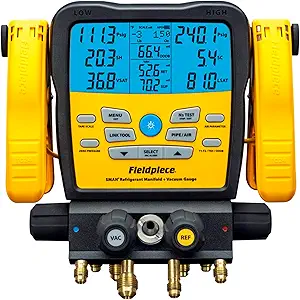 |
| Best Compact Manifold Gauge Set Pocket-friendly, lightweight design for easy storage and on-the-go checks | AURELIO TECH 3-Way AC Manifold Gauge Set with 5 ft Hoses and Adapters |  |
| Best Heavy-Duty Manifold Gauge Set Reinforced construction and durable hoses made for frequent shop abuse | Mastercool 59161 Two-Way Brass Manifold Gauge Set with 60" Hoses | 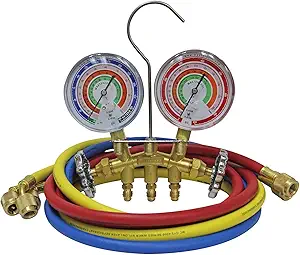 |
| Best R134a-Specific Manifold Gauge Set Calibrated pressure ranges and fittings tailored specifically for R134a systems | Mastercool 89661-PRO R134a 2-Way Aluminum Manifold Gauge Set with 3-in-1 Can Tap Valve |  |
| Best Complete Manifold Gauge Kit All-in-one kit with adapters, extra hoses, and wide service compatibility | VIVOHOME 1/3 HP 4.5 CFM Single-Stage Vacuum Pump with 3-Way AC Manifold Gauge Kit |  |
VIVOHOME VH322 4 CFM Vacuum Pump with R134a Manifold Gauge Kit
Best Overall Manifold Gauge Set for DIY Mechanics

| Motor rating | 1/3 HP |
|---|---|
| Pump flow | 4 CFM |
| Voltage | 110 Volts |
| Hose length | 5 ft |
This VIVOHOME VH322 kit combines a 4 CFM single-stage rotary vane vacuum pump with a four-way manifold gauge set and a full accessory pack to let DIYers evacuate, test, and recharge automotive and small HVAC systems. Typical use is removing moisture and air from an A/C line, checking system pressures with the color-coded gauges and hoses, and topping off refrigerant using the included hoses, can taps, and R410a adapters. Notable features include a built-in cooling fan and clear sight glass for easier oil checks, 5 ft reinforced hoses with color coding for straightforward hookups, and a battery-powered leak detector and carry bag for portability. In practice the pump’s 4 CFM flow makes evacuation reasonably quick on car and small home units, and the sight glass plus bottom drain port simplify oil maintenance. Limitations are that it is a single-stage pump so it will not reach the deepest vacuums of a two-stage unit and the kit’s gauges and fittings are aimed at common refrigerants so advanced commercial systems may need different tools. The kit is handy for hobbyists and home mechanics who want a compact all-in-one set for routine A/C service tasks.
Best for: DIY mechanics who want a reliable, all-in-one HVAC and automotive A/C manifold kit that balances accurate, easy-to-read gauges with durable hoses and useful adapters for routine diagnosis, evacuation, and charging tasks.
Less Ideal for: Technicians who routinely need very deep vacuums or service large commercial systems should choose a higher-capacity two-stage pump and professional-grade gauges instead.
- 4 CFM single-stage pump provides reasonably fast evacuation for car and small home A/C jobs
- Clear oil sight glass and bottom drain port make oil checks and changes straightforward
- Color-coded 5 ft reinforced hoses and four-way manifold simplify hookups and pressure reading
- Includes practical accessories: leak detector, R410a adapters, can taps, quick couplers and a carry bag for portability
- Single-stage design cannot achieve the deeper vacuum levels of two-stage pumps
- Kit targets common refrigerants and may not suit specialized commercial refrigerant work
Verdict: The all-around best manifold gauge set that balances accuracy, durable construction, clear gauges, and included hoses/adapters to serve most DIY mechanics for HVAC and automotive A/C diagnosis and charging.
Orion Motor Tech 3-Way AC Manifold Gauge Set (R134a, R12, R22, R502)
Best Budget Manifold Gauge Set for DIY Mechanics

| Compatible Refrigerants | R134a, R12, R22, R502 |
|---|---|
| Low Pressure Gauge Range | -15 to 350 psi |
| High Pressure Gauge Range | 0 to 500 psi |
| Number of Hoses | 3 |
| Hose Working Pressure | 600 psi |
This Orion Motor Tech 3-way manifold gauge set gives DIYers a straightforward tool for servicing automotive A/C systems that use R134a, R12, R22, or R502. The kit includes a three-way gauge assembly with separate low and high gauges, three 3-foot color-coded hoses, two quick couplers, a piercing can tap, and an adapter stored in a molded case for transport. In use it measures low- and high-side pressures for leak checks, vacuum/recharge operations, and basic diagnostics; the gauges are shock-protected and the rubber coating helps resist dings on the job. Hose working pressure and burst ratings are aimed at typical shop tasks and the included instructions help beginners follow basic procedures. Limitations are typical for a value kit: the gauges are mechanical so you do not get data logging or digital precision, and the piercing can tap is less convenient than self-sealing taps for repeated service. For a home mechanic who needs a durable, full kit for occasional charging and troubleshooting, this set covers the essentials without extra complexity.
Best for: A practical DIY mechanic who wants an affordable, no-frills A/C manifold set for routine diagnostics, charging, and basic repairs on common refrigerant systems and prefers dependable readings and service capability over professional-grade extras.
Less Ideal for: Professional shops or technicians who need digital accuracy, advanced features, or repeated service-friendly fittings should choose a more premium, professional-grade kit.
- Covers common automotive refrigerants (R134a, R12, R22, R502) for broad DIY use
- Includes three 3-foot color-coded hoses and quick couplers for easy hookups
- Rugged construction with rubber-coated, shock-resistant gauges and a molded case for portability
- Complete kit includes can tap and adapter so you can perform charging and basic diagnostics immediately
- Mechanical gauges lack digital readout and data logging for more precise or repeatable measurements
- Piercing can tap is convenient for one-off access but not ideal for frequent service
Verdict: An affordable manifold gauge set that provides reliable basic pressure readings and service capability for DIY mechanics who need functional A/C diagnostics and charging without premium features.
Fieldpiece SM482V Wireless 4-Port Digital Refrigerant Manifold with Vacuum Gauge
Best Premium Manifold Gauge Set

| Brand | Fieldpiece |
|---|---|
| Model | SM482V |
| Material Type | ABS Plastic |
| Thread Style | Npt |
The Fieldpiece SM482V is a high-end digital refrigerant manifold built for diagnostic and service work on HVAC and refrigeration systems. It measures low and high pressures, calculates superheat and subcooling, and accepts thermocouple probes for pipe and outdoor temperatures. The unit is wireless and supports data logging and a temperature-compensated system tightness test, which streamlines troubleshooting and documentation. A rugged overmolded ABS case, reinforced hook, and sealed sight glass make it durable on job sites while the four valves plus vacuum gauge let you handle evacuations, charging, and multi-port diagnostics without swapping tools. Integration with Fieldpiece Job Link accessories expands capability for psychrometers, clamps, and wireless scales. The main limitations are its professional price point and feature set that exceed what most occasional DIYers need, and the learning curve for using data-logging and app integration effectively. Battery life is strong for extended field use but advanced functions require familiarity to avoid misreading results.
Best for: DIY mechanics who want a professional-grade, long-term toolset focused on precise readings and robust construction, especially those who perform frequent refrigerant diagnostics and value wireless data logging and integration with other test gear.
Less Ideal for: People who only perform occasional simple AC top-offs or who want a basic, low-cost gauge set without advanced data or wireless features.
- Wireless connectivity and data logging for easy documentation and remote viewing
- Measures low/high pressure and computes superheat and subcooling for accurate diagnostics
- Integrated vacuum gauge and four valves let you evacuate, charge, and test without extra tools
- Rugged overmolded housing and sealed sight glass improve durability in field conditions
- High-cost premium tool that exceeds the needs of casual users
- Advanced features and app integration have a learning curve for first-time users
Verdict: A high-end manifold gauge set with superior gauge accuracy, machined brass manifold, durable valves, and professional-grade hoses for users who prioritize long-term precision and build quality.
AURELIO TECH 3-Way AC Manifold Gauge Set with 5 ft Hoses and Adapters
Best Compact Manifold Gauge Set

| Included Components | AC Manifold Gauge Set |
|---|---|
| Material Type | Aluminum, Brass, Plastic |
| Hose Length | 5FT Hose |
| Compatible Refrigerants | R134A, R12, R22, R502 |
This compact manifold gauge set gives DIY mechanics the basic tools to read and service automotive and HVAC refrigerant systems. It includes a three-valve aluminum manifold, color-coded gauges and three 5 foot hoses with quick couplers and ACME tank adapters so you can connect to common service ports and a refrigerant tank. The aluminum and brass construction keeps weight down while metal fittings and quick couplers make hookup straightforward on the typical car A/C. For home garages it is useful for pressure checks, evacuations and controlled charging with compatible refrigerants. Limitations are that the kit is a budget-oriented, general-purpose set rather than a precision lab instrument, so gauge calibration and long-term durability may lag premium professional tools. The 5 foot hoses are convenient for most cars but may be short for larger jobs and the set does not include a vacuum pump or scale, so plan to use it alongside other service equipment for complete A/C work.
Best for: DIYers and hobbyist mechanics who need a portable, easy-to-store A/C manifold set for occasional vehicle refrigerant checks and basic service tasks, prioritizing convenience and compactness over a full professional toolkit.
Less Ideal for: Professional technicians who need calibrated, heavy-duty shop tools or anyone who expects a complete service kit with vacuum pump and refrigerant scale included.
- Covers common refrigerants including R134a, R12, R22 and R502 for wide applicability
- Color-coded gauges and quick couplers simplify hookups and reduce cross-connection errors
- Aluminum and brass construction balances durability and light weight
- Includes ACME tank adapters so you can attach refrigerant cylinders without extra fittings
- Does not include a vacuum pump or charging scale, so additional equipment is required for full service
- Designed as a general-purpose consumer kit rather than a precision, shop-grade instrument
Verdict: A smaller, lightweight manifold gauge set that trades some accessory bulk for portability and easy storage while still offering the essential gauges and hoses needed for DIY A/C checks.
Mastercool 59161 Two-Way Brass Manifold Gauge Set with 60" Hoses
Best Heavy-Duty Manifold Gauge Set

| Compatible refrigerants | R410A, R22, R404A |
|---|---|
| Gauge size | 3-1/8 inch silicone-dampened gauges |
| Hose length | 60 inches (three hoses) |
| Thread style | SAE J514 |
The Mastercool 59161 is a heavy-duty two-way manifold gauge set built for HVAC and refrigeration service tasks. It provides two valves and large 3-1/8" silicone-dampened gauges with color-coded scales for R410A, R22, and R404A, making pressure reading and refrigerant identification straightforward. The forged brass body and free-floating piston valves aim to reduce internal wear and maintain smooth operation over repeated use. It ships with three 60" premium high-pressure hoses and 1/4" SAE fittings that resist kinks and let you reach service ports without frequent repositioning. Typical use cases include system evacuation, charging, and pressure checks during installations and routine maintenance. The all-metal angled handles and hose storage hook improve control and onsite organization. Expect a durable, professional feel and accurate, readable gauges, though the kit is a traditional analog setup so you will not get digital logging or automatic leak detection. For DIYers comfortable with manual gauges, it is a robust, service-ready tool; those wanting electronic data capture will need a separate meter.
Best for: DIY mechanics who need a rugged, service-grade manifold set for frequent garage use—those who prioritize durable brass construction, reinforced high-pressure hoses, and large silicone-dampened gauges for reliable, easy-to-read diagnostics during maintenance and repairs.
Less Ideal for: Users who require digital data logging, automated diagnostics, or simplified step-by-step guidance should consider electronic or smart gauge alternatives.
- Forged brass manifold and metal components for long-term durability
- Large 3-1/8" silicone-dampened gauges for easy, steady readings
- Includes three 60" kink-resistant hoses with standard 1/4" SAE fittings
- Free-floating piston valves and angled metal handles for smoother, controlled operation
- Built and assembled in the U.S. with professional-grade construction
- Analog gauges lack digital logging or data export features
- No built-in leak detection or electronic diagnostics
Verdict: A rugged manifold gauge set built with reinforced hoses, impact-resistant gauges, and robust fittings to withstand frequent garage use and harsher working conditions.
Mastercool 89661-PRO R134a 2-Way Aluminum Manifold Gauge Set with 3-in-1 Can Tap Valve
Best R134a-Specific Manifold Gauge Set

| Material Type | Aluminum |
|---|---|
| Included Components | manifold, hoses, couplers, cap tap valve, plastic case |
| Hoses | Three 60" nylon barrier R134a hoses |
| Gauges | 2.5" recalibratable silicone-dampened gauges |
This Mastercool 89661-PRO manifold set is built for routine R134a automotive A/C service and comes as a complete, job-ready kit. The extruded aluminum manifold houses two 2.5" silicone-dampened gauges that are designed to reduce needle flutter and can be recalibrated for accuracy. It includes three 60" nylon-barrier hoses with knurled brass nuts, factory-style manual R134a couplers that aim to minimize refrigerant loss, and a 3-in-1 side-mount can tap valve for charging from standard cans. Practical features for DIY mechanics include an extra access port for vacuum, a large sight glass to confirm refrigerant flow, and front-facing knobs for easier control while working. The set arrives in a blow-molded case for organized storage. Limitations are typical of manual R134a kits: it is intended only for R134a work so it will not cover R1234yf systems, and manual couplers require careful handling to avoid user error during hookup and charging.
Best for: Hands‑on DIY mechanics and home technicians who work on R134a automotive A/C systems and want a dedicated, professional‑grade manifold set that’s accurate, durable, and ready for frequent diagnostic and charging tasks.
Less Ideal for: Owners who need multi-refrigerant coverage or a fully automated charging solution should look at sets made for R1234yf or digital charging equipment instead.
- Complete R134a-focused kit with manifold, three 60" nylon barrier hoses, manual couplers, and a can tap valve.
- Aluminum extruded manifold with free-floating piston valves reduces o-ring wear for longer tool life.
- Silicone-dampened, recalibratable 2.5" gauges and anti-flutter design for steadier, more reliable readings.
- Large sight glass and extra vacuum access port speed diagnostics and vacuum procedures.
- Designed exclusively for R134a refrigerant so it does not support R1234yf systems.
- Manual couplers and can tap valve require careful technique to avoid leaks or contamination.
Verdict: A manifold gauge set specifically configured and calibrated for R134a refrigerant with the correct hose fittings and pressure ranges for accurate diagnostics and charging of common automotive systems.
VIVOHOME 1/3 HP 4.5 CFM Single-Stage Vacuum Pump with 3-Way AC Manifold Gauge Kit
Best Complete Manifold Gauge Kit

| Rated Power | 1/3 HP |
|---|---|
| Flow Rate | 4.5 CFM (128 L/min) |
| Compatible Refrigerants | R32, R1234yf, R454B, R134a, R410a |
| Air Inlet Ports | 1/4'' SAE & 1/2'' ACME |
| Ultimate Partial Vacuum | 2 Pa |
This VIVOHOME kit pairs a 1/3 HP single-stage vacuum pump with a three-way manifold gauge set and the hoses and adapters needed to service automotive A/C systems. In typical DIY use you hook the color-coded hoses to the vehicle service ports, evacuate the system to remove moisture and air, then use the manifold and adapters to charge or test pressures. Notable features include a 4.5 CFM flow rate for reasonably quick pull-downs, an oil sight window and drain for maintenance, self-sealing can taps and multiple adapters for R1234yf, R134a and other refrigerants, plus a carrying case to keep components organized. Practical benefits are speedier evacuation than small hobby pumps and an all-in-one accessory set that avoids sourcing adapters separately. Limitations are the single-stage design and recommended short duty cycle which make it less suitable for heavy commercial work or continuous use, and the kit does not include a refrigerant scale or electronic leak detector which pros might expect.
Best for: DIY mechanics who want a ready-to-use, all-in-one A/C service kit that includes manifold gauges, color-coded hoses, multiple adapters and quick couplers so they can evacuate, test, and recharge a wide range of automotive refrigerant systems without hunting for extra fittings.
Less Ideal for: Commercial shops or technicians who need continuous high-capacity performance and integrated professional diagnostics should choose higher-capacity dual-stage pumps and dedicated measurement tools.
- 4.5 CFM flow rate provides relatively fast vacuum pull-downs for DIY A/C jobs
- Includes manifold gauge, color-coded hoses, self-sealing can taps and multiple adapters for common refrigerants
- Oil sight window and quick drain make oil checks and maintenance straightforward
- Carrying case and organized accessories keep tools transportable and ready
- Single-stage pump with a short recommended duty cycle limits heavy or continuous professional use
- No refrigerant scale or electronic leak detector included, so additional tools may be required for complete service
Verdict: A comprehensive manifold gauge kit that includes multiple adapters, service port fittings, clamps, and a full complement of hoses to let DIY mechanics handle a wide range of A/C servicing tasks without extra purchases.
How We Chose the Best Manifold Gauge Set
We focused on manifold gauge sets that make sense for DIY automotive AC work rather than commercial shop use alone. The main filters were gauge readability, pressure range suitability for common vehicle refrigerant systems, hose construction, fitting quality, valve control, and overall ease of setup for occasional garage use. We also looked at whether the set offered clear low side and high side identification, manageable hose length, and hardware that feels durable enough for repeated connection cycles.For this category, details matter more than flashy extras. We prioritized sets with gauges that are easy to read in mixed lighting, hoses that resist kinking, and valves that allow controlled charging and evacuation steps without feeling loose or overly stiff. We also considered compatibility with common automotive service tasks and whether the included components support practical diagnostics rather than just basic pressure checks.We excluded kits that appeared poorly finished, confusing to read, overly fragile for home use, or built around incomplete accessory bundles that limit real-world usefulness. The goal was to highlight options that help DIY mechanics work safely, accurately, and with fewer setup frustrations.
Our full evaluation process is outlined in our review methodology.
What a Manifold Gauge Set Actually Helps You Do
A manifold gauge set is used to read low side and high side pressure so you can better understand what is happening inside an AC system. Those readings help with basic diagnosis, refrigerant charging procedures, and checking system behavior before and after repairs. For a DIY mechanic, the tool is valuable because it adds real information to the troubleshooting process instead of relying only on vent temperature or guesswork.
It is also important to understand what the tool does not do on its own. Pressure readings are only one part of AC diagnosis. A good manifold gauge set helps you collect useful data, but proper service still depends on following correct procedures, confirming refrigerant type, and using supporting tools when needed.
- Reads low side and high side system pressure
- Helps identify undercharge, overcharge, and some restriction symptoms
- Supports charging, evacuation, and general AC service work
- Works best when paired with safe procedures and accurate system information
Key Features That Matter Most for DIY Mechanics
For home garage use, the best manifold gauge set is usually the one that is clear, sturdy, and easy to control. Large gauge faces with readable markings reduce mistakes, especially if you only service AC systems occasionally. A solid manifold body and smooth valve operation also make a big difference because small connection and charging tasks are easier when the tool feels predictable in your hands.
Hose quality is another major factor. Cheap hoses can kink, seep, or become frustrating to route in a crowded engine bay. A better set will use flexible hoses with secure crimps and dependable fittings. If you plan to use the tool more than once or twice, those practical durability details matter more than extra adapters you may never need.
- Easy-to-read gauges with clear color coding
- Smooth valves for controlled service steps
- Flexible hoses with secure fittings and strain resistance
- Durable manifold body that holds up to repeated use
- Compatibility with the refrigerant and service ports you actually work with
Analog Versus Digital Gauge Sets
Most DIY mechanics still choose analog manifold gauges because they are straightforward, familiar, and usually easier to maintain. A well-made analog set gives quick visual pressure readings and works well for routine automotive AC tasks. For many garage users, that simplicity is a benefit, especially when learning the basics of system diagnosis and charging.
Digital options can offer added convenience, but they are not automatically better for every user. They may provide easier readouts and extra data functions, yet they also add complexity and can be less appealing if you prefer a basic tool that is always ready. If your main goal is occasional service on personal vehicles, a quality analog manifold gauge set is often the most practical place to start.
- Analog sets are simple, proven, and common for home use
- Digital sets can add convenience but also complexity
- Choose based on how often you service AC systems and how much data you need
Understanding Hose and Fitting Compatibility
Before choosing a manifold gauge set, make sure it matches the refrigerant system you intend to service. Automotive AC work can involve different refrigerant types and connection requirements, so compatibility should never be assumed. The right fittings help the tool connect cleanly and reduce the chance of leaks, cross-threading, or wasted time during setup.
It also helps to think about how you will actually use the set around a vehicle. Hose length that looks generous on paper may still feel short in a tight engine bay, while very long hoses can become awkward and cluttered. For most DIY users, the best setup is one that reaches comfortably, seals well, and stays easy to manage during the full service process.
- Confirm refrigerant compatibility before buying
- Check that service fittings match your intended vehicle applications
- Look for hose length that balances reach and control
- Better sealing fittings can reduce leaks and connection frustration
How Accuracy Affects AC Diagnosis
A manifold gauge set does not need laboratory precision for normal garage use, but it does need to be consistent and believable. If the gauges are hard to read or drift too much, it becomes harder to tell whether a system is undercharged, overcharged, or showing signs of another problem. Reliable readings support better decisions and help you avoid chasing the wrong issue.
Accuracy is especially important when you are comparing pressure changes during charging or when verifying system behavior after replacing parts. Even a beginner benefits from gauges that move smoothly and settle clearly. Readability and consistency often matter just as much as the raw numbers printed on the dial.
- Consistent readings are more useful than flashy specs
- Clear gauge markings help prevent interpretation mistakes
- Stable needles make it easier to track system changes
Safety and Usage Habits That Protect Your AC System
Using a manifold gauge set safely matters just as much as buying the right one. Always verify the refrigerant type, use the correct ports, and follow the service procedure for the vehicle you are working on. AC systems operate under pressure, and careless connections or incorrect charging methods can damage components or create safety risks.
Good habits also extend the life of the tool itself. Keep hoses capped when stored, avoid contaminating fittings, and inspect seals and hose ends before use. A manifold gauge set that is kept clean and handled carefully will be easier to trust the next time you need it.
- Verify refrigerant type and system specifications first
- Connect carefully and confirm proper port usage
- Inspect hoses, seals, and fittings before each job
- Store the set clean and protected from dirt and damage
Who Should Buy a Basic Set and Who Should Step Up
If you only service your own vehicles occasionally, a basic but well-made manifold gauge set is often enough. The priority should be easy reading, dependable hoses, and compatibility with your AC system rather than a long list of accessories. For light home use, a simpler set can be easier to learn and less frustrating to maintain.
If you work on several vehicles, perform deeper AC diagnostics, or want a tool that will handle more frequent use, stepping up in build quality makes sense. Better valves, stronger hoses, and more confidence in the readings can save time over the long run. The right choice depends less on being a beginner or advanced user and more on how often you expect to use the tool and how demanding your typical jobs are.
- Occasional home use favors simplicity and clarity
- Frequent AC work benefits from stronger construction
- Buy for your real usage pattern, not just the longest feature list
FAQ
Can a DIY mechanic use a manifold gauge set safely at home?
Yes, if you understand the basics of automotive AC service and follow correct procedures. The tool itself is not difficult to use, but AC systems are pressurized and mistakes can damage components or lead to poor system performance. Always confirm refrigerant type, use the proper service ports, and avoid guessing during charging.
Do I need a manifold gauge set just to recharge my car AC?
For a more informed and controlled job, yes. A manifold gauge set lets you see both low side and high side pressure, which provides much better diagnostic information than a simple single-hose charging approach. It is especially useful if you suspect the system has a fault beyond low refrigerant.
What is the most important feature in a manifold gauge set?
For most DIY users, readability and hose quality are the top priorities. If the gauges are easy to interpret and the hoses connect reliably, the entire service process becomes smoother and less error-prone. Smooth valve control and fitting compatibility are close behind.
Are analog manifold gauges good enough for automotive AC work?
Yes, a quality analog set is good enough for most home automotive AC service tasks. Analog gauges are widely used, easy to understand, and often more practical for occasional garage use. The key is choosing a set with clear markings and dependable construction.
How do I know if a manifold gauge set will fit my vehicle?
Start by checking the refrigerant type used by your vehicle and confirming that the set is designed for that application. Then verify that the included fittings and hose connections match the service ports and tasks you plan to perform. Compatibility should be confirmed before you buy, not after the tool arrives.
Can one manifold gauge set work on multiple vehicles?
Often yes, but only if the refrigerant and fitting requirements line up with the vehicles you service. Some sets are flexible enough for broader use, while others are better suited to a narrower range of applications. It is best to think about your whole vehicle mix before choosing one set.
Final Verdict
Choosing the right manifold gauge set comes down to a few practical trade-offs. DIY mechanics usually benefit most from a set that is easy to read, built with dependable hoses and fittings, and compatible with the refrigerant systems they actually service. Extra features can be helpful, but they should not come at the expense of clarity and control.If you focus on accuracy, durability, and real-world usability in the garage, you will be much more likely to end up with a tool you can trust. The best choice is the one that matches your skill level, your vehicle needs, and how often you plan to perform AC diagnosis or charging work.
