

Note: This article contains affiliate links. If you click on these links and make a purchase, I may earn a small commission at no extra cost to you. This helps support my research and content. Read my full affiliate disclosure here.
If you drive a Honda Civic EK, worn or damaged suspension arms will affect steering, alignment, and ride control more than most routine parts. Replacing a control arm is a practical repair that restores predictable handling and helps prevent premature tire wear. This guide covers six top control arm options matched specifically to the Civic EK chassis, shortlisted for correct fitment, durable bushings, and serviceability. We evaluate each choice by durability and installation practicality so you can pick the right option for your driving needs and maintenance plans. Read on for the key tradeoffs and what to expect when swapping a Civic EK control arm.
Looking for other parts? See all Honda Civic parts & accessories.
Top Picks at a Glance
| Best Overall The best all-around choice for most situations | PQY Rear Lower Control Arm and Subframe Brace for Honda Civic EK (1996–2000) |  |
| Best Quality Built to a higher standard if you want something more solid | Skunk2 Alpha Series Rear Lower Control Arm Set |  |
| Best Value The sweet spot between price and what you get | AJP Distributors Front Upper Adjustable Tubular Steel Control Arm Camber Kit |  |
| Best Budget The cheapest option that still gets the job done reliably | PTNHZ Rear Billet Aluminum Lower Control Arms (pair) for 1996–2000 Honda Civic |  |
| Highest Rated A top-rated pick with lots of positive feedback | Detroit Axle Pair Front Lower Control Arms for 1996–2000 Honda Civic / 1997–2000 Acura EL |  |
| Most Popular A crowd favorite that many people choose with confidence | POSENG Rear Lower Control Arm, Subframe Brace and Tie Bar Kit for Honda Civic EK (1996–2000) |  |
1. PQY Rear Lower Control Arm and Subframe Brace for Honda Civic EK (1996–2000)

| Fit Type | Vehicle Specific Fit |
|---|---|
| Auto Part Position | Lower |
| Auto Part Orientation | Rear |
| Material Type | Aluminum |
This PQY kit replaces the rear lower control arms and adds a subframe brace for Honda Civic EK models from 1996 to 2000. The arms are aluminum with modular, CNC bushing inserts that resist corrosion and allow the bushings to be rebuilt or replaced individually. The entrapment-style bushings do not need set screws, which simplifies installation and reduces stress points. In practice the kit is aimed at street-driven Civics where improved rear rigidity and longer-lasting bushings matter more than aggressive race durability. Fitment is vehicle-specific so installation is straightforward for mechanically capable owners, though the kit does not include detailed instructions and one reviewer reported a bolt failure during install, so inspect supplied hardware before starting. Finish and fit are reported as close to factory quality by multiple users, and the serialized tracking suggests consistent manufacturing. If you want a durable, serviceable rear arm package that improves rear stability and is easy to refresh over time, this kit delivers; those seeking a no-compromise motorsport solution may prefer heavier-duty alternatives.
Best for: Buyers who want a durable, serviceable rear suspension upgrade that improves rear stability and can be rebuilt over time for regular street and enthusiast use.
Less Ideal for: Drivers who need a competition-spec, track-focused control arm package or those unwilling to inspect or swap hardware during installation should consider stiffer, purpose-built options.
- Aluminum construction for corrosion resistance and lighter weight than steel
- Modular CNC bushing inserts allow individual component replacement and bushing rebuilds
- Entrapment-style bushings eliminate set screws and reduce stress concentration
- Vehicle-specific fitment for 1996–2000 Honda Civic EK simplifies installation and alignment
- Serialized production tracking indicates consistent quality control
- No detailed installation instructions included which may challenge less experienced installers
- Some users reported hardware issues during installation, so supplied fasteners may need inspection or replacement
Verdict: A durable, rebuildable rear lower control arm and subframe brace kit that improves rear stability for 1996–2000 Honda Civic EK owners looking for a balanced street-oriented upgrade.
2. Skunk2 Alpha Series Rear Lower Control Arm Set

| Fit Type | Vehicle Specific Fit |
|---|---|
| Auto Part Position | Lower |
| Auto Part Orientation | Front |
| Material Type | Aluminum,Polyurethane |
Skunk2s Alpha Series rear lower control arms are direct-replacement suspension arms engineered for street and track use on Honda Civic EK platforms. Forged from 2024 billet aluminum and CNC-machined, these arms are noticeably lighter than factory pieces and include adjustable anti-sway bar mounting holes so you can fine-tune roll stiffness and balance. Low-deflection polyurethane bushings are used in place of rubber to reduce compliance, which gives crisper steering response and a more connected feel through corners. Installation follows factory mounting points so fitment is straightforward for someone with basic mechanical skills, but final alignment and bushing break-in should be expected. The arms prioritize handling performance and responsiveness over ride isolation, so drivers who prefer a softer, more forgiving ride may find them firmer than stock. Built materials and adjustability make these a solid upgrade for enthusiasts chasing sharper handling and reduced unsprung weight on an EK Civic.
Best for: Drivers focused on sharper handling and precise suspension tuning for street or occasional track use who want a direct-replacement part that reduces unsprung weight and improves response.
Less Ideal for: Drivers seeking a plush, comfort-oriented ride or those unwilling to accept increased road noise and vibration should consider softer aftermarket options.
- Forged 2024 billet aluminum construction reduces weight compared with stock arms
- Adjustable anti-sway bar mounting holes enable fine-tuning of roll balance
- Polyurethane bushings lower deflection for quicker steering response
- Direct-replacement design maintains factory suspension geometry and simplifies installation
- Polyurethane bushings transmit more vibration and road harshness than rubber
Verdict: Choose these Skunk2 rear lower control arms if you want a lighter, adjustable, and more responsive replacement to sharpen handling on an EK Civic.
3. AJP Distributors Front Upper Adjustable Tubular Steel Control Arm Camber Kit
| Fit Type | Vehicle Specific Fit |
|---|---|
| Auto Part Position | Front Upper |
| Material Type | Polyurethane, Rubber, Steel |
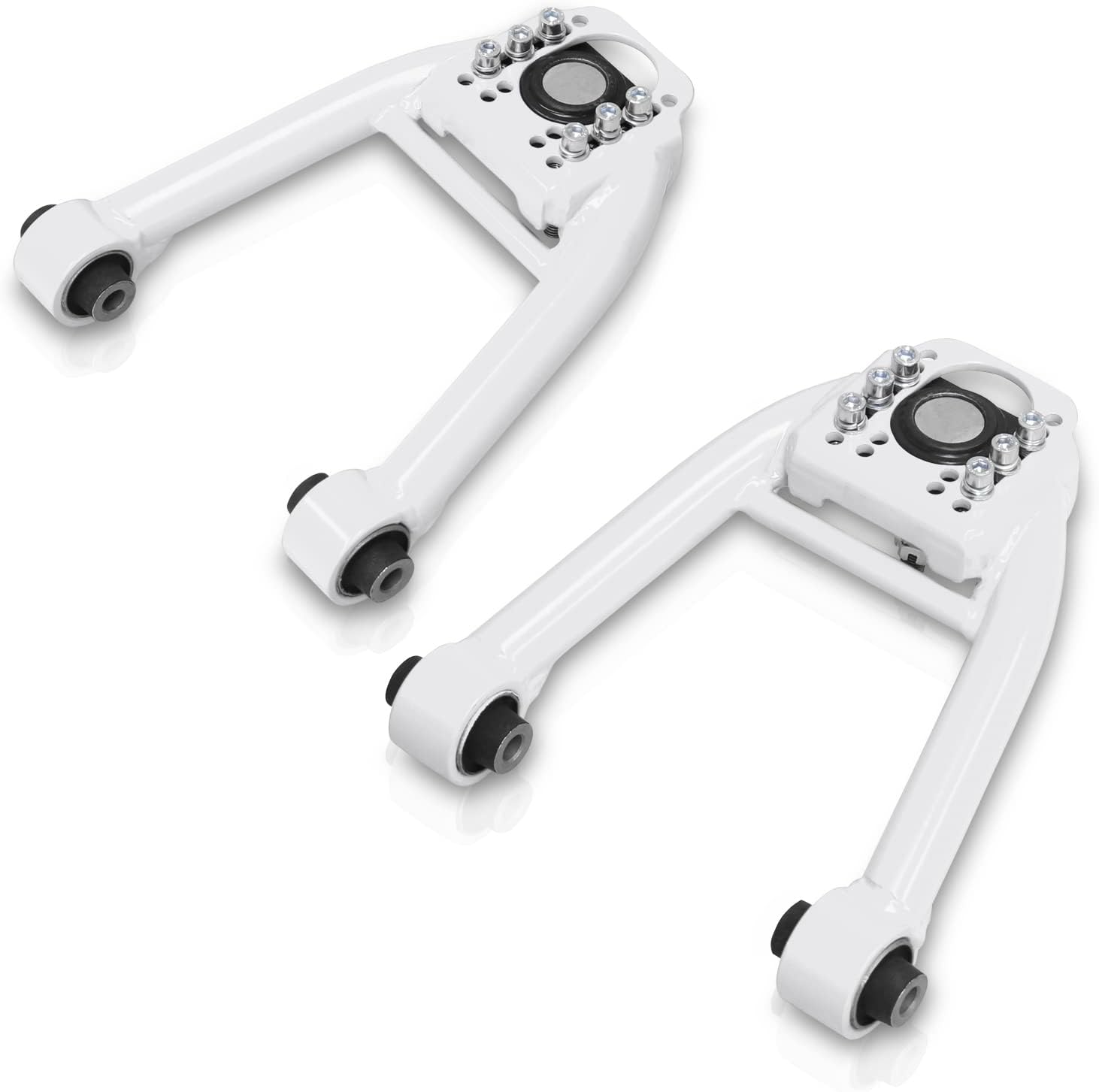
This camber kit replaces the front upper control arms on 1996–2000 Honda Civic EK models and provides adjustable alignment capability via tubular steel arms. Typically used when restoring steering geometry after lowered suspension or worn factory parts, the set combines steel construction with polyurethane and rubber components where bushings are required. The adjustable design lets you dial in camber for improved tire contact during spirited driving or to correct alignment after ride-height changes. Fitment is vehicle-specific which simplifies installation planning, but professional installation is recommended since no guide is included. The steel tubing and polyurethane parts lean toward durability and firmer response compared with stock rubber-only pieces, though that can transmit more road feedback. Color is white and the kit is sold as a front upper pair. If you need a straightforward, adjustable replacement to control camber on an EK Civic without upgrading other suspension geometry, this kit covers that role well.
Best for: Someone who needs a practical, adjustable front upper control arm to correct camber or maintain alignment after lowering an EK Civic and values durability over plush ride comfort.
Less Ideal for: Drivers who want a completely silent, factory-like ride or those unwilling to have suspension feel become firmer should consider softer replacement options.
- Vehicle-specific front upper replacement for 1996–2000 Honda Civic EK for direct-fit planning
- Adjustable tubular design allows camber tuning after lowering or alignment work
- Steel construction with polyurethane/rubber bushings offers stronger, longer-lasting components than stock rubber alone
- No installation guide included and professional installation is recommended
Verdict: AJP Distributors adjustable tubular front upper control arms give EK Civic owners a durable, vehicle-specific way to tune camber after lowering or replacing worn parts.
4. PTNHZ Rear Billet Aluminum Lower Control Arms (pair) for 1996–2000 Honda Civic

| Fit Type | Vehicle Specific Fit |
|---|---|
| Auto Part Position | Lower |
| Auto Part Orientation | Rear |
| Material Type | Aluminum,Polyurethane |
These PTNHZ rear lower control arms replace the stock rear lower links on 1996–2000 Honda Civic chassis and are aimed at drivers who want a durable, serviceable upgrade without high cost. They use billet aluminum construction with CNC bushing inserts to resist rust and polyurethane bushings for longer life and firmer control compared with rubber. The modular design lets you rebuild or replace individual bushings and hardware instead of swapping the whole arm, which helps keep maintenance costs down. In practice they bolt in like factory parts for the specified Civic models and provide a noticeably tighter rear feel that improves handling during spirited driving and daily cornering. Trade-offs are a firmer ride versus comfort and the finish is cast/polished aluminum that may show wear over time; the listing does not include installation instructions so some mechanical experience or a shop visit is recommended. Overall these arms are a practical, budget-friendly way to refresh rear suspension performance on EK Civics while keeping future rebuilds simple.
Best for: Buyers looking for an affordable, durable rear suspension upgrade that tightens handling and lowers long-term maintenance cost for a 1996–2000 Civic.
Less Ideal for: Drivers prioritizing the softest possible ride or those who want a direct comfort-focused replacement should consider alternatives with rubber bushings or OEM-spec parts.
- Vehicle-specific fit for 1996–2000 Honda Civic models ensures correct mounting points.
- Billet aluminum with CNC bushing inserts resists corrosion compared with steel replacements.
- Polyurethane bushings increase service life and deliver firmer, more precise rear suspension control.
- Modular design allows individual bushing or component replacement to reduce long-term maintenance cost.
- Firmer polyurethane bushings can transmit more road noise and reduce ride comfort compared with rubber bushings.
- No installation instructions included, which may complicate DIY fitting for inexperienced users.
Verdict: A cost-conscious, durable rear lower control arm upgrade that tightens handling and lets you rebuild bushings instead of replacing the whole unit.
5. Detroit Axle Pair Front Lower Control Arms for 1996–2000 Honda Civic / 1997–2000 Acura EL

| Fit Type | Vehicle Specific Fit |
|---|---|
| Auto Part Position | Front Lower |
| Material Type | Steel |
| Manufacturer Warranty Description | 10-Year |
These Detroit Axle front lower control arms replace the factory stamped-steel arms on EK-generation Civics and the Acura EL. Supplied as a left and right assembly, they are built from steel with a reinforced structure and corrosion-resistant coating to handle daily driving stresses. The parts are intended as direct-fit replacements so installation is straightforward for a home mechanic or independent shop using standard suspension tools. In use they restore correct lower arm geometry and steering feel after worn factory arms cause looseness or uneven tire wear. The steel construction and advertised high rigidity should hold up well under normal road impacts and extend service life compared with cheap cast alternatives. On the other hand these are stamped steel factory-style parts rather than an upgraded performance arm, so drivers seeking lighter-weight or track-tuned components should look elsewhere. Fitment is vehicle specific so confirm chassis year and trim before buying.
Best for: Buyers who prioritize dependable, factory-style replacements to restore original steering and suspension feel on EK-generation Civics and Acura ELs and want a straightforward installation.
Less Ideal for: Enthusiasts seeking lighter, performance-oriented control arms or custom suspension tuning should consider aftermarket performance options instead.
- Sold as a matched left and right pair for convenience during suspension service.
- Stamped steel construction with reinforced design offers durability for everyday driving.
- Direct-fit design simplifies installation and preserves factory suspension geometry.
- Corrosion-resistant finish and premium alloy claims improve longevity compared with lower-quality replacements.
- Not a performance or lightweight upgrade; designed to match factory specifications rather than improve handling.
Verdict: A durable, direct-fit stamped-steel pair that reliably restores factory steering and suspension behavior on EK Civic and Acura EL models.
6. POSENG Rear Lower Control Arm, Subframe Brace and Tie Bar Kit for Honda Civic EK (1996–2000)

| Compatible models | 1996–2000 Honda Civic EK |
|---|---|
| Material | T6061 Aluminum |
| Fit Type | Vehicle Specific Fit |
| Position | Rear Lower |
This POSENG kit bundles two rear lower control arms with a subframe brace and lower tie bar to stiffen the rear of an EK-series Civic. Intended as a direct replacement, the aluminum arms and anodized subframe bar are lightweight yet aimed at improving rear-end rigidity, helping steering stability and addressing camber play that develops on older Civics. Typical use is a weekend installation for someone replacing worn control arms or upgrading an aging rear subframe for better handling on street and occasional track use. Hardware is included but several buyers report mismatched threads or missing brackets, so plan to verify fasteners and possibly source replacement bolts or have a shop tap threads during installation. There are no printed instructions, so mechanical experience or references are needed. When the fitment and hardware line up the parts fit well and feel like a solid, budget-friendly upgrade for tightening rear suspension behavior, but expect to spend extra time confirming fastener compatibility and proper torque during install.
Best for: Drivers restoring or upgrading an EK Civic who prioritize improving rear suspension stiffness and handling while keeping costs low, and who are comfortable checking fitment and addressing hardware issues themselves or via a trusted shop.
Less Ideal for: People who want a fully bolt‑right, plug‑and‑play replacement with no extra work or those who cannot access a mechanic for thread repairs or hardware swaps.
- Complete kit includes both rear lower control arms plus a subframe brace and lower tie bar for a single install
- Constructed from T6061 aluminum and anodized tubing for corrosion resistance and reduced weight
- Designed as a vehicle-specific factory-replacement fit for 1996–2000 Honda Civic EK models
- Aimed at improving rear-end rigidity and steering stability, useful for worn suspension or light performance upgrades
- Some customers report incorrect or missing hardware and mismatched thread pitch requiring replacement bolts or rethreading
- No installation instructions included which raises difficulty for less experienced installers
Verdict: A budget-conscious way to stiffen the rear of a 1996–2000 Civic EK with factory-replacement style arms plus a subframe brace, best for buyers willing to verify or swap hardware during install.
Choosing the Right Honda Civic EK Control Arm: Key Factors to Consider
Fitment and Chassis Compatibility
Exact fitment to the Civic EK mounting points is mandatory because incorrect geometry changes alignment and handling. A control arm that matches the EK's bushing centers and ball joint offset preserves factory steering response and camber characteristics.
If a replacement requires adapter plates or modification, it can introduce alignment issues and uneven tire wear. Verify bolt patterns, bushing bore size, and ball joint taper match Civic EK specifications to avoid unexpected suspension geometry changes during installation.
Bushing Type and Durability
Bushing construction strongly influences ride quality and longevity. Fully rubber bushings absorb more vibration and restore a quieter, compliant ride typical of original Civic EK setups, while polyurethane or stiffer designs increase steering feedback at the cost of transmitting more NVH into the cabin.
Consider how you use the car: daily-driven Civics benefit from durable rubber or blended bushings that resist cracking from road salts, while a lightly modified street car may prefer firmer bushings for sharper response. Also evaluate how easily the bushings can be replaced independently of the arm for future maintenance.
Ball Joint Design and Serviceability
The ball joint is a primary wear item on front control arms. A sealed, serviceable ball joint or a design that allows easy press-fit replacement extends the overall life of the assembly. Loose or worn ball joints produce play that affects steering precision and can create clunks over bumps.
Check whether the arm uses a replaceable ball joint or an integrated press-fit unit. Replaceable joints are typically simpler to service in a home garage or independent shop; integrated joints may require a full-arm swap but can be cost-effective if the arm is inexpensive and robust.
Corrosion Protection and Material Quality
Control arms endure road salt, water, and debris. Corrosion-resistant finishes, quality welds, and durable steel or alloy construction reduce the risk of rust-through and structural degradation. Surface treatment such as e-coat or durable powder coating adds long-term protection.
Poor material quality or thin coatings lead to flaking and accelerated rust that compromises mounting points and can make future removal difficult. Prioritize arms with visible anti-corrosion measures and solid fabrication to minimize long-term shop time.
Installation Complexity and Hardware
Some arms are direct bolt-in replacements while others require transferring original hardware, bushings, or ball joints. Direct-fit options that include new bolts, nuts, and sleeves reduce installation time and minimize trips to the parts store.
Consider the tools and time required. If you plan a DIY swap, choose an arm that avoids cutting or pressing operations where possible. If alignment specs are tight after installation, ensure access to necessary alignment adjustments or budget for a post-install alignment visit.
Impact on Alignment and Tire Wear
Replacing a control arm can shift toe and camber values slightly depending on bushing preload and geometry. Arms that closely match OEM dimensions minimize the need for major alignment corrections, helping preserve even tire wear.
When selecting an arm, consider how much steering or suspension adjustment is available on the Civic EK. If the replacement alters static geometry, anticipate a professional alignment to correct toe and camber and avoid accelerated tire wear.
Common Signs That the Control Arm Needs Replacement
Recognizing failure early prevents collateral damage. Typical symptoms on a Civic EK include uneven tire wear, a persistent pulling sensation under braking, or knocking noises from the front suspension when going over bumps. Steering may feel loose or vague if bushings or the ball joint develop play.
Visual inspection often reveals cracked or separated bushings, rusty or deformed arm bodies, or grease leakage around the ball joint boot. If you notice any of these issues, prioritize a detailed inspection because continued driving can accelerate wear on tires and related suspension components.
- Clunking or popping noises over bumps
- Excessive play or looseness in steering
- Visible bushing cracks or separation
- Uneven inner shoulder tire wear
- Grease around the ball joint boot or torn boot
Preparing for a Control Arm Replacement
Preparation reduces time in the shop. Park on level ground, apply emergency brake, and have the correct jack points for the Civic EK. Gather necessary hand tools, torque wrench, and a ball joint press if you expect to separate a press-fit joint. A service manual or alignment specs are useful references.
Inspect related components such as tie rod ends, sway bar links, and hub bearings while the wheel is off. Replacing the control arm is an opportunity to address other front-end wear items that affect alignment and handling.
- Confirm correct replacement arm for Civic EK fitment
- Have replacement hardware and anti-seize or thread locker ready
- Acquire alignment values for post-install adjustments
Bushing Choices and Their Real-World Effects
Bushing selection affects daily driving more than many owners expect. Softer rubber bushings provide compliant ride comfort and isolate vibration, which is beneficial for everyday commuting. Firmer bushings increase steering feel and responsiveness but can introduce noise and harshness over rough pavement.
If you anticipate replacing bushings later, check whether the arm's bushing can be serviced separately. Some aftermarket arms come with replaceable sleeves or readily available bushing kits, which reduces long-term ownership cost.
- Rubber: quieter, more compliant
- Polyurethane: firmer, more feedback, more NVH
- Replaceable-bushing arms reduce future labor
Alignment After Replacement
A control arm swap typically requires a front-end alignment to correct toe and camber within Civic EK specifications. Even slight differences in bushing preload or ball joint seating can move alignment enough to cause tire feathering or pulling at speed. Schedule an alignment after installing new arms.
If you lack access to an alignment shop immediately, avoid aggressive driving and check tire wear over the first few hundred miles. Some alignment fixes are minor and adjustable at home, but accurate toe settings often require proper alignment equipment.
- Get toe set precisely to factory spec
- Check camber and caster where adjustable
- Reinspect fastener torque after initial road miles
When to Choose Replaceable Versus Full-Arm Replacement
Decide based on condition and available tools. If the ball joint alone is worn and the arm body and bushings are in good shape, a replaceable joint saves cost and waste. Conversely, if the arm shows rust, bent metal, or multiple failing components, a full-arm replacement is more time efficient.
Consider labor and parts availability: press-fit joints require a press or a specialist shop, while full-arm replacements are often quicker to swap and come preassembled with new hardware and bushings in many cases.
- Replaceable joint: less waste, lower parts cost if arm otherwise sound
- Full-arm swap: faster, avoids press operations, ideal for corroded arms
Still looking for the perfect fit?
Select your Honda Civic configuration to see the most relevant Control Arms recommendations
How We Chose the Best Honda Civic EK Control Arm
We focused editorial selection on components engineered for the Civic EK chassis and evaluated candidates against criteria that matter to owners and mechanics. Primary filters included correct OEM-equivalent fitment to the EK mounting points and geometry, and quality of the control arm bushings and ball joint interface because those determine handling and noise. We assessed construction and materials for corrosion resistance and structural durability, including welded vs stamped designs and paint or coating systems. Ease of installation and serviceability were weighed by looking at attachment hardware accessibility, whether a reusable ball joint or press-fit is used, and how often common shop tools suffice. Ride and handling characteristics were judged indirectly from bushing design and joint stiffness rather than subjective driving tests. Warranty or support options and the availability of replacement bushings or joints were included as practical ownership considerations. Exclusions: we excluded parts that require extensive chassis modification, do not match Civic EK geometry, or lack basic corrosion protection. The result is a focused list of reliably fitting control arms that balance longevity, maintainability, and road manners for the Civic EK.
Our full evaluation process is outlined in our review methodology.
FAQ
How do I tell if my Civic EK control arm is bad?
You will often notice clunking noises over bumps, uneven tire wear, or excessive steering play. A visual check may reveal cracked bushings, torn ball joint boots, or rusted mounting points. If these signs appear, have the arm inspected and measured against wear tolerances.
Can I replace a control arm myself on a Civic EK?
Many owners with moderate mechanical skill can perform a full-arm swap using common tools, but pressing a ball joint requires special tools or a shop. Ensure you have torque specs, proper jacking points, and plan for a post-installation alignment.
Will replacing the control arm fix alignment issues?
Replacing a worn arm removes play that contributes to alignment drift, but a new arm alone may not restore factory alignment without an adjustment. Expect to get a professional alignment after replacing arms to correct toe and camber precisely.
How long do control arm bushings typically last on a Civic EK?
Bushing life varies widely based on driving conditions and material. Rubber bushings commonly last many years under normal driving, while harsher climates and aggressive driving shorten life. Inspect bushings during routine maintenance and when you notice handling changes.
Are replaceable ball joints worth it for the Civic EK?
Replaceable ball joints can be practical if the arm body and bushings remain in good condition because they reduce waste and repair cost. If the arm shows corrosion or deformation, a complete arm replacement is usually more reliable.
Will I need new hardware when replacing the control arm?
It depends on the replacement part. Some arms include new bolts and sleeves, while others expect you to reuse original hardware. Replacing worn fasteners and using proper torque is important for safety and to prevent future loosening.
Final Verdict
When replacing control arms on a Honda Civic EK, prioritize correct fitment, bushing quality, and the ball joint design that best suits your use. For daily-driven vehicles, an arm with resilient rubber bushings and corrosion protection restores quiet, predictable handling. If you want sharper feedback, choose firmer bushings while understanding the tradeoff with noise and ride harshness. Always factor in installation complexity and plan for a post-replacement alignment. With those priorities in mind, you can select an option that balances longevity, driving feel, and maintenance effort for the Civic EK.
Explore More:
- Check out all Honda Civic parts & accessories
- Explore Control Arms Maintenance & Repair Guides
- Explore Suspension & Steering
- Browse all Auto Parts
