

Note: This article contains affiliate links. If you click on these links and make a purchase, I may earn a small commission at no extra cost to you. This helps support my research and content. Read my full affiliate disclosure here.
If your 1996-2000 Honda Civic is showing loose steering, uneven tire wear, or play at the front wheels, replacing worn tie rod ends can make a dramatic difference. For owners of EJ, EK, and EM chassis Civics, the right tie rod ends restore steering precision, reduce noise and vibration, and help maintain correct wheel alignment under daily driving conditions.This guide covers the top shortlisted tie rod ends that fit the 1996-2000 Honda Civic and explains the evaluation criteria we used, including durability, fitment accuracy, and ease of installation. Read on to find options suited to routine maintenance, higher-mileage cars, or a restored steering feel, and then use the Factors to Consider to match a part to your driving priorities.
Looking for other parts? See all Honda Civic parts & accessories.
Top Picks at a Glance
| Best Overall The best all-around choice for most situations | Detroit Axle Front Tie Rods Kit (6-piece) for 1996–2000 Honda Civic / 1997–2000 Acura EL |  |
| Best Quality Built to a higher standard if you want something more solid | MOOG ES3332R Outer Steering Tie Rod End |  |
| Best Value The sweet spot between price and what you get | TRQ Front Inner and Outer Tie Rod Set, 4-Piece |  |
| Best Budget The cheapest option that still gets the job done reliably | PartsW Front Outer Tie Rod End Kit (driver + passenger) |  |
| Highest Rated A top-rated pick with lots of positive feedback | Metrix Premium Chassis Parts Front Outer Tie Rod End Kit (pair) |  |
| Most Popular A crowd favorite that many people choose with confidence | Detroit Axle 2pc Front Outer Tie Rod Ends Replacement |  |
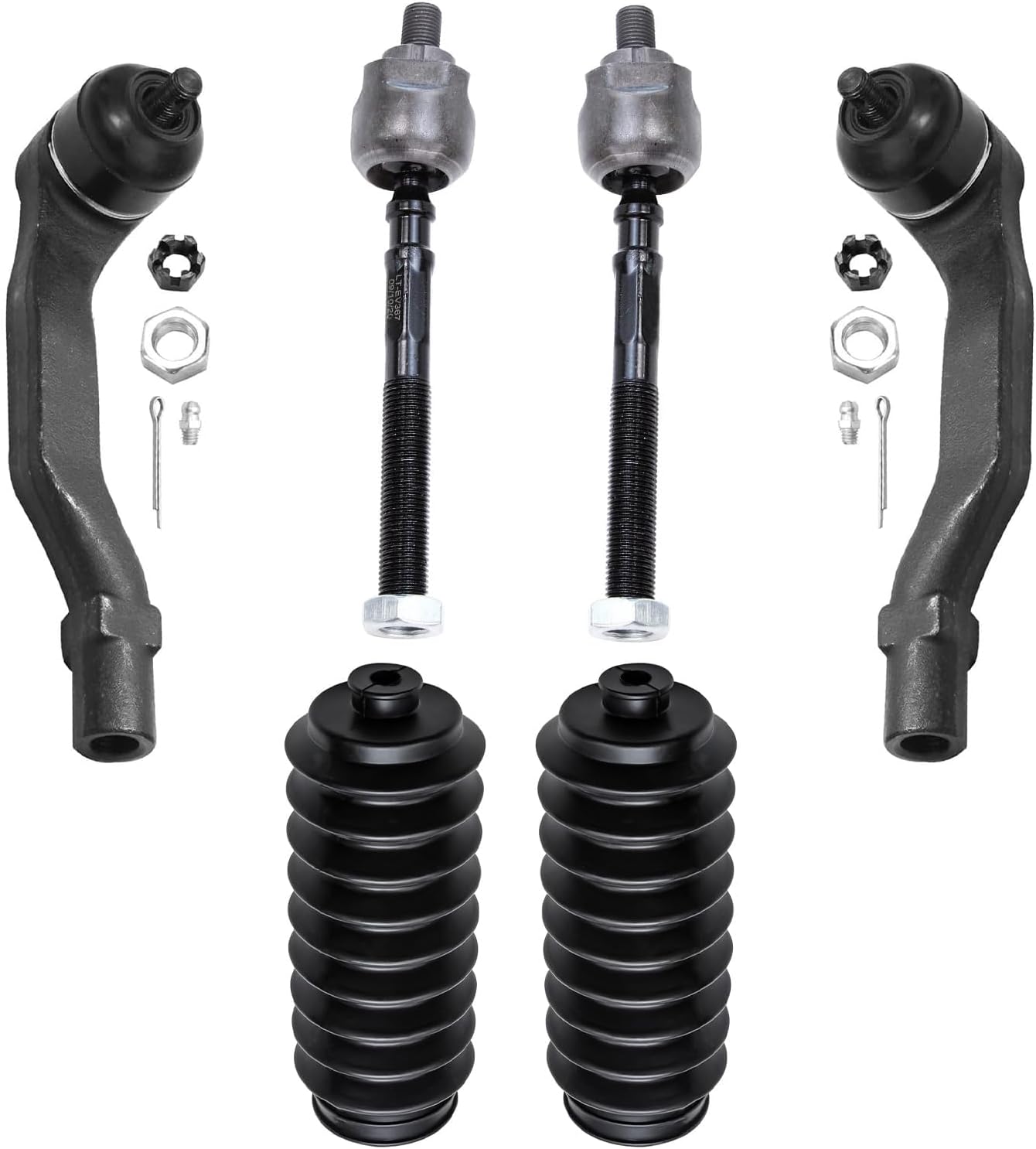
1. Detroit Axle Front Tie Rods Kit (6-piece) for 1996–2000 Honda Civic / 1997–2000 Acura EL
| Fitment | 1996–2000 Honda Civic (power steering), 1997–2000 Acura EL |
|---|---|
| Kit contents | 2 inner tie rods, 2 outer tie rods, 2 rack & pinion boots |
| Material Type | Metal |
| Automotive Fit Type | Vehicle Specific Fit |
This Detroit Axle kit supplies the front steering tie rods needed to refresh the entire connection between the rack and the wheel on compatible 1996–2000 Honda Civic and 1997–2000 Acura EL power steering models. The kit includes two inner tie rod ends, two outer tie rod ends and two rack-and-pinion boots so you can replace worn joints and cracked boots in one job. Parts are described as premium alloy with grease fittings on treated joints for longer service life, and the pieces are built as direct-fit replacements intended for straightforward installation followed by a wheel alignment. In practice the rods restore steering feel and reduce play when installed correctly, and the included boots protect the rack end from dirt. Watch for occasional fitment variability reported by some buyers and note the boots may be smaller than factory units on certain cars. Expect to plan for an alignment after installation and to check boot fit before final assembly if you want a clean, trouble-free swap.
Best for: Drivers who want a balanced, all-in-one steering repair for specified 1996–2000 Civic or 1997–2000 EL models and prefer buying a complete kit to replace worn inner and outer tie rods and boots in a single job.
Less Ideal for: If you only need a single outer or inner rod and want OEM-branded components, this full kit may be more than necessary; also avoid if you cannot access alignment service after installation.
- Complete 6-piece kit replaces both inner and outer tie rods plus rack boots for a full front-end refresh.
- Direct-fit design simplifies installation compared with sourcing individual parts.
- Greaseable joints increase serviceability and potential longevity compared with sealed-only units.
- Some buyers report fitment or size differences versus original parts, so verify fit before final assembly.
Verdict: A practical, complete front tie rod kit that lets Civic and EL owners replace all steering tie rod components at once to restore steering feel and serviceability.
2. MOOG ES3332R Outer Steering Tie Rod End

| Bearing Type | Ball Bearing |
|---|---|
| Compatible Lubricant | Grease |
| Manufacturer | MOOG Chassis Products |
| Manufacturer Part Number | ES3332R |
The MOOG ES3332R is an outer tie rod end intended to restore steering precision and front-end alignment on compatible 1996–2000 Honda Civics and similar models. It connects the steering knuckle to the steering gear and is used when worn joints cause uneven tire wear, looseness in the wheel, or alignment issues. MOOG highlights a heat-treated ball stud for improved strength, a pressed-in cover plate to keep out debris, and a greasable socket and gusher bearing that let grease flow through the bearing surface for lower friction and longer life. In practical terms that means easier installation to factory tolerances, the ability to service the joint with fresh grease, and a robust joint that resists premature fatigue from potholes and rough roads. Limitations are that the rubber boot fit can be tight on some vehicles and the zerk fitting may need installation if not preinstalled, so minor prep or servicing could be required during installation. After replacement a professional alignment is recommended to ensure proper steering geometry.
Best for: Buyers who want a durable, serviceable steering joint that restores tight steering feel and resists premature failure, prioritizing long-term performance and the option to lubricate the joint over time.
Less Ideal for: If you need a fully preassembled, maintenance-free tie rod end with no additional fittings to install or adjust, consider alternatives designed without service fittings or with a different boot design.
- Direct-fit design for covered Honda and Acura models with factory-style metric hardware for straightforward installation
- Heat-treated ball stud and reinforced bearing design for improved strength and fatigue resistance
- Greasable socket and gusher bearing allow periodic lubrication to extend service life
- Pressed-in cover plate helps seal out debris and reduces bearing wear
- Rubber protective boot may not seat perfectly on every vehicle and can require adjustment during install
Verdict: A strong, greasable replacement tie rod end that restores steering precision and lets you service the joint for longer real-world life.
3. TRQ Front Inner and Outer Tie Rod Set, 4-Piece

| Position | Front Inner, Front Outer |
|---|---|
| Model | TRQ PSA55063 4 Piece Tie Rod Set |
| Manufacturer | TRQ |
| OEM Part Number | 53540S04003, 53540S04013, 53560S04013 |
This TRQ four-piece tie rod set replaces the front inner and outer tie rods on 1996–2000 Honda Civics and is aimed at DIY repairs where direct fit and ease of installation matter. The kit ships with two inner and two outer rods pre-assembled to match factory fitment so you can swap both sides without fabrication. Installers will appreciate the machined finish, included lubrication for the inner joint, and the company support resources such as installation videos. In practical use the parts thread on smoothly, torque down securely, and get the steering back to factory geometry when followed by an alignment. Limitations to note are the lack of grease fittings on some units and occasional quality variation reported by buyers, so double-check parts on arrival before installation. For routine street use and scheduled front-end refreshes this kit offers a straightforward, cost-effective way to replace worn tie rods, though you should plan an alignment after installation and consider upgraded components if you need heavy-duty offroad durability.
Best for: Buyers who want a practical, factory-style replacement to refresh steering on a 1996–2000 Civic and prefer parts that are easy to install themselves with clear video guidance.
Less Ideal for: Drivers who use their Civic for aggressive offroad or heavy-duty applications and need reinforced or greasable heavy-duty steering components should consider specialty upgrades instead.
- Direct-fit design for 1996–2000 Honda Civic front inner and outer tie rods
- Pre-assembled components simplify installation and reduce shop time
- Machined finish and included lubricant improve initial movement and protection
- Large catalog of installation videos and DIY resources to guide fitting
- Some units lack grease (zerk) fittings so long-term serviceability is limited
- Occasional quality variation and minor shipping damage reported by users
Verdict: A practical, direct-fit four-piece tie rod kit that makes replacing the front steering tie rods on a 1996–2000 Honda Civic straightforward for DIYers seeking reliable factory-style replacements.
4. PartsW Front Outer Tie Rod End Kit (driver + passenger)

| Position | Front |
|---|---|
| Fits | Honda Civic 1992–2000, CR-V 1997–2001, Acura Integra 1994–2001, Civic del Sol 1993–1997, Acura EL 1997–2000 |
| Manufacturer | PartsW |
| Special Features | Precision-machined; performance-tested; built to meet factory-quality standards |
This PartsW kit includes both left and right front outer tie rod ends so you can replace worn components that cause loose steering, vibration, or uneven tire wear. It is a bolt-on direct-fit design intended for Honda Civic (including del Sol) and compatible Acura models from the 1990s, so installation is straightforward and requires no modification when the fitment matches. The parts are forged from hardened steel with a corrosion-resistant coating and are described as precision-machined and performance-tested to meet factory-quality standards, which should deliver reliable everyday driving performance and long service life. For a budget-focused buyer this kit offers the practical benefit of replacing both outer ends at once, restoring alignment stability without the cost of OEM parts. Note that alignment after installation is required and buyers should verify exact year/configuration fit before purchase; professional installation is recommended for consistent results.
Best for: Buyers looking to fix loose steering or front-end play on a tight budget who want a complete, direct-fit replacement kit that restores alignment stability without paying OEM prices.
Less Ideal for: Anyone who prefers dealer-sourced factory parts or needs upgraded performance steering components beyond a standard replacement should look elsewhere.
- Includes both driver and passenger front outer tie rod ends for a complete front-end repair
- Direct-fit bolt-on design simplifies installation when matched to the correct year and model
- Forged steel construction with corrosion-resistant coating for durability in daily driving
- Precision-machined, performance-tested parts intended to meet factory-quality standards
- Fitment is limited to specific Honda and Acura years so confirmation is required before ordering
Verdict: A cost-conscious, complete front outer tie rod end kit that restores steering precision and alignment stability for compatible late 1990s Honda Civics.
5. Metrix Premium Chassis Parts Front Outer Tie Rod End Kit (pair)

| Model | 99996MT |
|---|---|
| Position | Front Outer |
| Made in | Europe |
| Manufacturer | METRIX PREMIUM CHASSIS PARTS |
This Metrix Premium kit includes the left and right front outer tie rod ends designed for 1996–2000 Honda Civic applications and aims to restore steering precision and stability. The parts are made from high-grade steel with precision ball studs and are offered pre-greased or greaseable to reduce wear. Installation is straightforward for a mechanic or experienced DIYer and the kit includes cotter pins to complete a proper safety installation. Certification to IATF 16949 and ISO 9001 indicates consistent manufacturing and quality control, which supports long-term reliability on daily-driven Civics. Practical benefits are responsive steering feel after replacement and reduced play compared with worn components. Note that this listing is for outer tie rod ends only, so inner tie rods or alignment services may be needed after installation to fully restore front-end geometry. Also the 3-year/36,000-mile limited warranty is tied to proper installation and use.
Best for: Drivers of mid-1990s Honda Civics who prioritize dependable, factory-quality steering replacements and want parts built to consistent manufacturing standards.
Less Ideal for: Someone looking for a complete steering overhaul package that includes inner tie rods or an alignment service; budget buyers wanting the cheapest option may prefer basic economy parts.
- Made from high-grade steel for strength and longevity
- Precision-engineered ball studs for improved steering response
- Pre-greased or greaseable option reduces maintenance wear
- Includes cotter pins for correct safety installation
- Manufactured to IATF 16949 and ISO 9001 quality standards
- Only front outer tie rod ends included so additional steering components or alignment may be required
Verdict: Choose this kit if you want factory-quality front outer tie rod ends built and certified for reliable, long-lasting steering performance on a 1996–2000 Honda Civic.
6. Detroit Axle 2pc Front Outer Tie Rod Ends Replacement

| Kit includes | 2x Front Outer Tie Rod Ends |
|---|---|
| Manufacturer | Detroit Axle |
| Manufacturer Part Number | ES3331_ES3332 |
| ASIN | B01ENXW6TC |
| Date First Available | April 22, 2016 |
These Detroit Axle outer tie rod ends replace the front outer tie rods on many late 1990s Honda Civics and related models. The kit includes two outer tie rod ends built for suspension and steering link replacement and is intended for DIY or shop installation when steering play, uneven tire wear, or alignment issues appear. Detroit Axle states the parts undergo impact, wear, and fatigue testing and the listing notes a long warranty backing. In practice these parts offer factory-replacement form and function with a straightforward threaded stud and ball joint design that accepts standard castle nuts and cotter pins for secure installation. Expect restored steering feel and reduced play after installation, though professional alignment is required afterward. These are basic steering components with no extra corrosion coatings or performance upgrades, so longevity depends on installation quality and local driving conditions. Fitment is vehicle-specific so confirm the exact model and year fit before buying.
Best for: Buyers who prioritize proven fitment and reassurance from other owners and want a straightforward, warranty-backed replacement to restore steering feel on late 1990s Honda Civics.
Less Ideal for: If you want performance steering upgrades, enhanced corrosion protection, or OEM-level materials specified by the manufacturer, consider higher-end or upgraded options instead.
- Matches factory replacement form and mounting style for the specified Honda applications
- Supplied as a two-piece kit to replace both front outer tie rod ends at once
- Parts claimed to undergo impact, wear, and fatigue testing for durability
- Backed by a long warranty from the brand
- Straightforward threaded design works with standard fasteners for easy installation by a competent DIYer or mechanic
- No special corrosion-resistant finish or premium materials called out beyond standard aftermarket construction
Verdict: A practical, warranty-backed two-piece outer tie rod end kit that restores steering feel for 1996–2000 Honda Civic owners seeking reliable, proven replacements.
Choosing the Right 1996-2000 Honda Civic Tie Rod End: Key Factors to Consider
Fitment and Thread Compatibility
Correct fitment is the single most important factor because tie rod ends connect the steering rack to the wheel hub and must match the Civic's taper, stud size, and thread pitch exactly. Mismatched tapers or thread sizes can prevent safe installation or require re-tapping, which increases cost and risk. Confirming the part matches the 1996-2000 Civic's steering knuckle taper and outer tie rod thread prevents improper seating and uneven load transfer.
Thread compatibility affects how the inner and outer tie rod assemble and whether you can preserve factory toe settings when replacing parts. A replacement that duplicates the original thread pitch and length reduces the need for extra alignment work after installation and makes the swap quicker for DIYers and technicians alike.
Ball Joint Design and Seal Quality
The joint inside a tie rod end must allow smooth steering input while resisting contaminants. A high-quality ball joint has tight tolerances and a robust seal that keeps grease in and dirt and water out. Poor seals lead to accelerated wear, increased play, and eventual failure; for Civics that see winter roads or salted streets, corrosion resistance in the joint becomes essential.
Inspect whether a part is greaseable or sealed. Greaseable joints allow maintenance that can extend service life if you or your shop will periodically re-lubricate the joint. Sealed joints can be fine if they use durable materials and high-quality seals, but once worn they are not serviceable and must be replaced.
Durability and Corrosion Protection
Tie rod ends take direct road shock and are exposed to moisture, salt, and grime. Materials and protective finishes determine how long a part lasts before showing play or structural issues. Look for corrosion-resistant coatings, proper steel grades for the stud and sleeve, and reinforced boots to resist cracking over time.
Durable construction not only extends the interval between replacements but also keeps steering feel consistent. For higher-mileage Civics, prioritize parts with better corrosion protection and thicker boots to help avoid premature failures and the need for repeat repairs.
Preservation of Alignment and Serviceability
A practical replacement should let you preserve or restore proper toe settings with minimal adjustment. Parts that copy OEM dimensions closely make it easier to maintain alignment and reduce time in the alignment rack after installation. If you prefer DIY installation, choose parts that allow reusing inner tie rods or that are adjustable in a familiar way so you can set toe roughly before a professional alignment.
Serviceability ties into whether a joint is greaseable and how accessible the grease fitting is. Greaseable joints increase the potential service life but require periodic maintenance. Consider the overall lifecycle cost of the replacement versus sealed units that need full replacement once worn.
Installation Complexity and Required Tools
Some tie rod end replacements are straightforward, while others require specialty tools like a pitman arm or ball joint separator, torque wrenches, or press tools. Knowing the likely tools and level of labor helps decide between a DIY job and professional installation. For the 1996-2000 Civic, removing the outer tie rod typically involves separating the taper at the steering knuckle and adjusting the inner tie rod to maintain toe; familiarity with the process reduces errors.
Also consider whether the replacement includes necessary hardware, such as new nuts, cotter pins, or grease fittings. Parts packaged with all required fasteners reduce the chance of installation delays and ensure safe reassembly.
Steering Feel and Intended Use
Different tie rod ends can slightly change steering feedback through variations in joint stiffness and tolerances. For a daily-driven Civic that prioritizes comfort and predictable handling, choose parts that mimic OEM compliance and minimize added stiffness. For a car used in spirited driving or with upgraded suspension, a tighter-tolerance joint can provide crisper steering response.
Balance your desire for precise steering with acceptable NVH, especially on older Civics where added joint stiffness can transmit more road noise into the cabin. Select the type that matches how you use the car to avoid surprises after installation.
Common Symptoms That Point to Worn Tie Rod Ends
Recognizing early symptoms helps prevent unsafe steering conditions. Typical signals include uneven tire wear concentrated on the inner or outer edges, a loose or vague steering wheel, and clunking noises when turning or going over bumps. These are practical indicators that the ball joint inside the tie rod end has developed excessive play or that the boot has failed and allowed contamination.
Other signs include a vehicle that wanders or requires frequent steering corrections, and visible grease leakage or torn boots at the tie rod end. Addressing worn tie rod ends promptly reduces the risk of sudden failure and helps maintain predictable handling.
- Steering wheel play or looseness
- Clunking or knocking noises on turns
- Uneven tire wear at the front tires
- Vehicle pulling or wandering down the road
- Visible torn boot or grease leakage
When to Replace: Mileage and Inspection Intervals
There is no single mileage threshold that dictates replacement because driving conditions, environment, and prior maintenance vary. Inspect tie rod ends visually at regular service intervals and whenever you notice steering changes. For higher-mileage Civic examples, plan targeted inspections after 50,000 miles and more frequent checks on cars driven in corrosive or rough-road environments.
Pay attention during pre-trip or seasonal inspections. If the boot shows cracking, the stud has surface corrosion, or the joint moves noticeably under pry-bar pressure, replacement is prudent rather than waiting for complete failure.
- Inspect visually every oil change or at least twice a year
- Check after exposure to heavy road salt or off-road use
- Replace when any play is detected during a hands-on inspection
Alignment Considerations After Replacement
Tie rod end replacement alters toe settings and can affect steering geometry. Because the outer tie rod location directly sets toe, any change requires a professional alignment to factory specifications. On the 1996-2000 Civic, small differences in length or taper seating may cause noticeable toe change, so plan for a front-end alignment after installing new components.
If you are performing a DIY swap, mark the original position of adjustable tie rods before removal to approximate the previous toe. Even with careful marking, a final alignment check and adjustment is recommended to ensure even tire wear and correct handling.
- New tie rod ends usually necessitate a toe alignment
- Mark components before removal to save alignment time
- Professional alignment ensures correct steering and tire life
DIY Replacement: What to Expect
Replacing an outer tie rod end on the 1996-2000 Civic is a common DIY job for owners with basic mechanical skills and a modest toolset. Typical steps include lifting the vehicle, removing the front wheel, separating the tie rod stud from the steering knuckle taper, and unscrewing the outer tie rod from the inner tie rod. In many cases you can preserve approximate toe settings by matching the number of turns or measuring the exposed thread length.
Common pitfalls include rounded threads from improper tools, difficulty separating a corroded taper, and forgetting to torque the nut to the proper specification. Use a proper ball joint separator or an appropriate puller, and always inspect cotter pins or self-locking hardware for re-use guidelines.
- Basic tools: jack and stands, wrenches, ball joint separator, torque wrench
- Plan for a professional alignment after installation
- Expect rusted fasteners on older cars; penetrating oil may help
Choosing Between Greaseable and Sealed Joints
Greaseable tie rod ends include a zerk fitting that allows periodic lubrication. If you or your service provider will perform routine undercar maintenance, greaseable joints can extend service life and delay replacement. For Civics driven in dry climates with low corrosion risk, sealed units are often adequate and require no maintenance.
Sealed joints are simpler for owners who want a replacement-and-forget solution, but they will eventually wear out and need full replacement. If you expect heavy road salt exposure, greaseable joints combined with regular lubrication often provide better longevity than sealed units that cannot be re-lubricated.
- Greaseable: longer potential service life with maintenance
- Sealed: lower maintenance but requires full replacement when worn
- Consider climate and maintenance habits when choosing
How Tie Rod Ends Affect Front-End Components
Tie rod ends are one part of the steering and front suspension system. Worn tie rod ends can accelerate front tire wear, increase load on wheel bearings, and cause uneven stress on the steering rack. Replacing worn tie rod ends as part of a broader front-end inspection helps prevent cascading wear to adjacent components.
When replacing tie rod ends, inspect adjacent parts such as ball joints, control arm bushings, and wheel bearings. Correcting only the tie rod ends without addressing other worn components may not fully restore steering feel or alignment stability.
- Worn tie rod ends can speed front tire wear
- Check ball joints and control arm bushings during replacement
- A holistic front-end inspection improves long-term results
Still looking for the perfect fit?
Select your Honda Civic configuration to see the most relevant Tie Rod Ends recommendations
How We Chose the Best 1996-2000 Honda Civic Tie Rod End
We prioritized components that deliver safe, repeatable steering behavior on 1996-2000 Honda Civic chassis codes EJ, EK, and EM. Key evaluation criteria included fitment accuracy to stock steering knuckles and tie rod taper dimensions, material and corrosion protection for long service life, ball-joint stiffness and seal design to resist water and road debris, and mechanical compatibility with factory tie rod threads to avoid re-threading or additional adapters.We also considered installation practicality, such as whether the replacement requires special tools or complex disassembly, and whether the part preserves factory alignment settings well enough to minimize toe changes at installation. Durability indicators included greaseable vs sealed joints, boot quality, and hardware included for installation. Ride and steering feedback were judged in terms of expected stiffness and play under normal driving loads rather than subjective performance claims.Excluded from the shortlist were parts that had unclear fitment data for EJ, EK, and EM Civics, components with obvious manufacturing finish defects, and any options that required steering system modifications. The resulting set emphasizes reliable replacements that balance long life, correct geometry, and straightforward installation for Civic owners.
Our full evaluation process is outlined in our review methodology.
FAQ
How long do tie rod ends typically last on a 1996-2000 Civic?
Life expectancy varies widely with driving conditions and maintenance. Often they last many tens of thousands of miles, but exposure to salt, moisture, or rough roads can shorten service life. Regular inspections will reveal wear signs long before catastrophic failure.
Can I drive safely with a slightly worn tie rod end?
A little play can degrade steering precision but may not be immediately dangerous. However, any detectable looseness or clunking should be addressed quickly because continued driving increases the chance of sudden failure and uneven tire wear.
Will replacing tie rod ends fix steering pull or only alignment can?
Replacing worn tie rod ends can correct play that contributes to pulling, but toe misalignment itself also needs to be measured and corrected. After replacement, a proper alignment is usually required to eliminate pull caused by incorrect toe.
Are greaseable tie rod ends worth it for a Civic in a northern climate?
Yes, greaseable joints can be beneficial if you plan to perform periodic undercar lubrication. They allow fresh grease to flush contaminants and can extend life in salted or wet environments compared with sealed versions.
How can I check a tie rod end for play at home?
With the front wheels off the ground and the car safely supported, grasp the tire at the 3 and 9 o'clock positions and rock it side to side while watching the tie rod end for movement. Any visible play at the joint or looseness at the stud indicates wear and the need for replacement.
Does replacing outer tie rod ends require replacing inner tie rods too?
Not always. If the inner tie rods are in good condition and have no play, you can often replace only the outer tie rod ends. Inspect the inner tie rods for play and boot condition during the job and replace them if they show wear.
Final Verdict
When maintaining a 1996-2000 Honda Civic, prioritize tie rod ends that match OEM fitment, offer durable joint protection, and preserve alignment geometry. Balance the choice between sealed and greaseable joints based on climate and maintenance habits, and plan for an alignment after replacement to restore correct toe settings.Choose a replacement that minimizes installation complexity while delivering reliable steering feel. By focusing on fitment, seal quality, and durability, you can restore safe, predictable handling and extend the life of related front-end components.
Explore More:
- Check out all Honda Civic parts & accessories
- Explore Tie Rod Ends Maintenance & Repair Guides
- Explore Suspension & Steering
- Browse all Auto Parts
