

Note: This article contains affiliate links. If you click on these links and make a purchase, I may earn a small commission at no extra cost to you. This helps support my research and content. Read my full affiliate disclosure here.
If you drive a 2001-2005 Honda Civic, worn control arms can cause poor handling, uneven tire wear, and unpredictable steering feel. For Civic owners of the 2001-2005 (ES, EM, and EP) chassis, choosing control arms that match factory geometry and use durable bushings is essential to restore safe, predictable ride quality. This guide shortlists seven top control arms selected for direct-fit compatibility, bushing longevity, and ball-joint reliability so you can get back to confident driving.Below we summarize the real-world reasons each option made the list and the evaluation criteria used, then walk through the factors that should guide your decision before installation.
Looking for other parts? See all Honda Civic parts & accessories.
Top Picks at a Glance


1. Detroit Axle Front Lower Control Arms Pair for 2001–2005 Honda Civic / Acura EL

| Fit Type | Vehicle Specific Fit |
|---|---|
| Auto Part Position | Front |
| Material Type | Alloy Steel, Aluminum, Cast Iron |
These Detroit Axle lower control arms replace the factory front lower arms on 2001–2005 Honda Civic and Acura EL. Sold as a driver and passenger side pair, they arrive as complete assemblies with ball joints already pressed in so installation is a straightforward bolt‑in job for a competent DIYer or tech. The arms use a mix of alloy steel, aluminum, and cast iron and are advertised as high‑rigidity, corrosion‑resistant pieces intended to restore steering stability and reduce noise from worn suspension components. In use they typically tighten up sloppy front-end feel and eliminate clunks over bumps. Reviewers report good fitment with minimal alignment issues when installed correctly. Limitations to note are that grease fittings are not serviceable on the sealed ball joints and mounting hardware may not be included in every order, so you should confirm fastener availability before starting work. For a balanced replacement that aims to match factory fit and function at a value price, these arms are a practical option for Civic/EL front suspension repairs.
Best for: Buyers looking for a reliable, factory-style replacement that restores steering feel and removes suspension play on 2001–2005 Honda Civic and Acura EL models, prioritizing straightforward fit and value over aftermarket performance upgrades.
Less Ideal for: Drivers seeking performance-tuned suspension parts or serviceable greasable joints should consider specialty or rebuildable control arms instead.
- Direct-fit pair for 2001–2005 Honda Civic and Acura EL, simplifying installation
- Complete assemblies with pressed-in ball joints for faster replacement
- Construction uses alloy steel/aluminum/cast iron for strength and corrosion resistance
- Designed to restore steering stability and reduce front-end noise
- Sealed ball joints are not serviceable or greasable
- Some orders may not include new mounting bolts or hardware
Verdict: A cost-effective, direct-fit pair that restores factory steering stability on 2001–2005 Honda Civic and Acura EL models.
2. TRQ Front Lower Control Arm and Ball Joint 4‑Piece Set for 2001–2005 Honda Civic
| Fit Type | Vehicle Specific Fit |
|---|---|
| Auto Part Position | Front Lower |
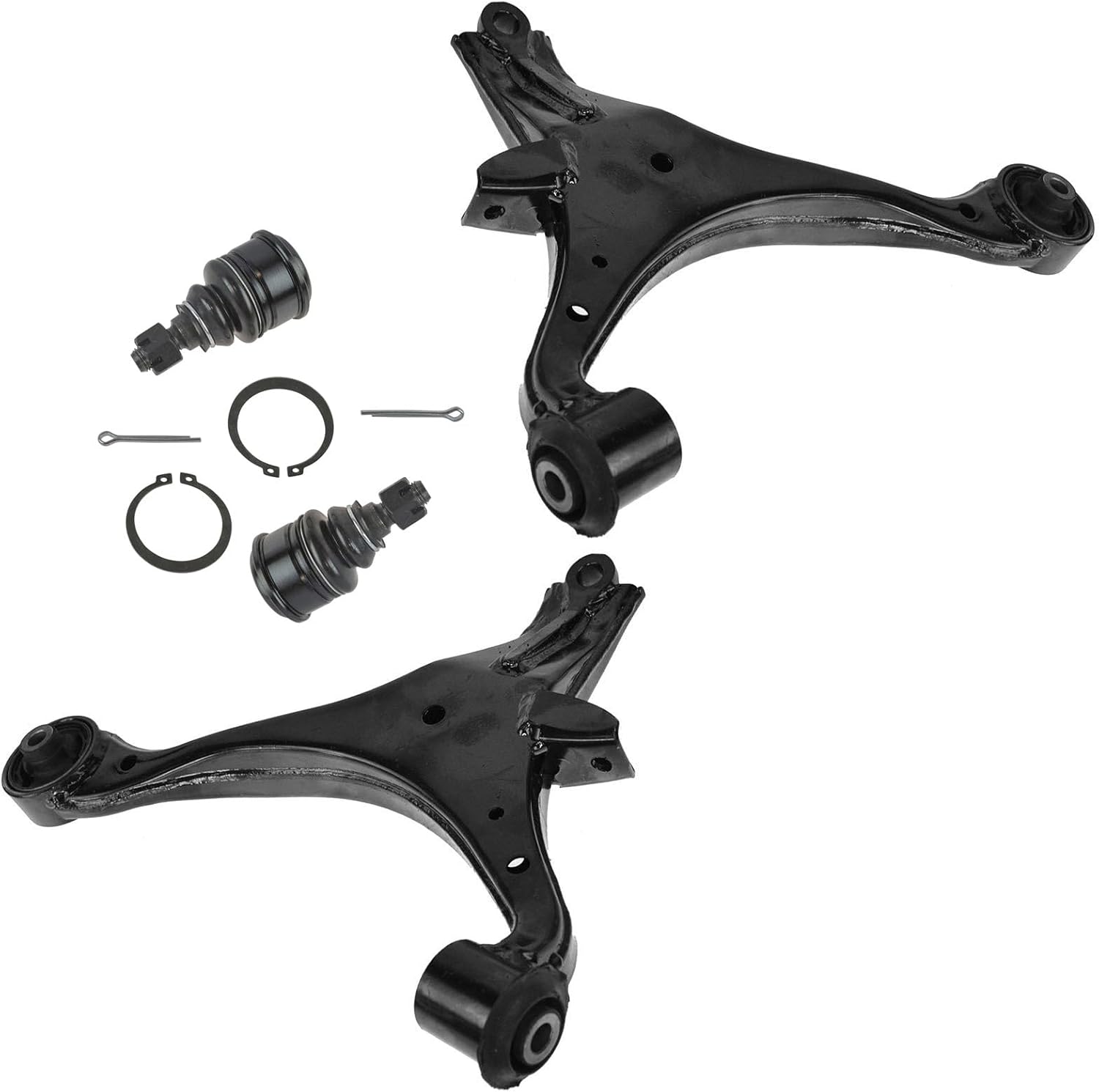
| Included Components | 2 Front Lower Ball Joints, 2 Front Lower Control Arms |
| Material Type | Alloy Steel |
This TRQ four-piece kit replaces both front lower control arms and their ball joints in 2001–2005 Honda Civic variants and is intended as a direct-fit replacement. It arrives with the ball joints already pressed into the control arms, which simplifies installation for a DIYer or a shop and reduces time under the car. The parts are cast from alloy steel for structural strength and the kit covers common Civic trims including DX, EX, HX, LX and hybrid variants listed for those years. In real-world use the parts restore steering precision and eliminate bushing noise when worn originals cause clunks or wandering. Buyers should expect a moderately involved install that can require subframe or bolt removal and basic shop tools; several reviewers recommend replacing suspension fasteners and having a professional alignment after installation. Some customers have reported occasional fitment or premature ball-joint life issues, so confirm vehicle fitment carefully before you buy and plan for the possibility of swapping hardware.
Best for: A buyer focused on restoring or improving front-end response and steering feel on a 2001–2005 Honda Civic who wants a direct-fit, mostly preassembled replacement that reduces shop labor time.
Less Ideal for: People seeking upgraded performance suspension components or heavy-duty motorsport arms should look at aftermarket performance control arms with reinforced geometry rather than a factory-style replacement kit.
- Complete kit includes two front lower control arms and two preinstalled ball joints for a single purchase and install session
- Alloy steel construction intended to match the strength of factory components
- Ball joints pre-assembled to save installation time and reduce need for press tools
- Vehicle-specific fit listing for 2001–2005 Honda Civic trims simplifies part selection
- Does not include replacement mounting bolts or nuts which are often recommended to replace during suspension work
- Some users report occasional fitment mismatches or shorter ball-joint life on high-mileage vehicles
Verdict: Buy this kit if you want a ready-to-install, factory‑style front lower control arm and ball-joint replacement that restores steering feel on 2001–2005 Honda Civics.
3. Detroit Axle Front Lower Control Arms Kit with Lower Ball Joints for 2001–2005 Honda Civic / Acura EL

| Fit Type | Vehicle Specific Fit |
|---|---|
| Auto Part Position | Front Lower |
| Material Type | Alloy Steel, Stainless Steel |
This Detroit Axle kit replaces both front lower control arms and the two lower ball joints on 2001–2005 Honda Civic and Acura EL sedans and coupes. It is designed as a direct-fit, vehicle-specific replacement so typical use is a like-for-like repair when worn bushings or ball joints cause play, uneven tire wear, or a vague steering feel. Notable features include stamped alloy steel construction with corrosion-resistant treatment and preassembled lower ball joints for easier installation. In practice the parts restore factory alignment points and steering stability without the need for heavy modification, and the kit is useful for a DIY job or a professional quick swap. Limitations are that additional alignment and any hardware that is corroded or damaged will need to be addressed separately, and buyers should verify the exact submodel fit before ordering. The kit emphasizes value and serviceability rather than performance upgrades, making it a sensible maintenance choice for older Civics.
Best for: Buyers who want a practical, value-focused repair that restores factory steering feel on a 2001–2005 Civic or Acura EL and prefer a direct-fit kit suited for DIY or routine shop replacement.
Less Ideal for: Drivers seeking performance suspension upgrades or heavier-duty aftermarket arms for track use should consider performance-oriented alternatives.
- Vehicle-specific direct-fit design simplifies installation and preserves factory geometry
- Includes both lower control arms and lower ball joints so front-end wear items are replaced together
- Stamped alloy steel construction with corrosion-resistant finish for longer service life
- Preassembled components reduce labor time compared with sourcing parts separately
- Does not include alignment, fasteners, or other hardware that may be needed during installation
Verdict: A straightforward, vehicle-specific replacement kit that restores front steering stability and serviceability for 2001–2005 Honda Civic and Acura EL owners who prioritize practicality and value.
4. MOOG RK640287 Front Right Lower Control Arm

| Fit Type | Vehicle Specific Fit |
|---|---|
| Auto Part Position | Front Right Lower |
| Material Type | Alloy Steel |
The MOOG RK640287 is a front right lower control arm intended as a direct-fit replacement to restore steering stability and suspension geometry on compatible Civics and RSXs. It installs like a factory-style arm and is typically used when worn bushings or bent components cause steering play, uneven tire wear, or clunking over bumps. Constructed from alloy steel with corrosion-resistant coatings, the arm is built for everyday driving and engineered to match factory fitment so installation is straightforward for DIY mechanics or technicians. Practical benefits include improved steering response and predictable handling after swapping a bad arm, plus compatibility with the listed model years. Limitations to consider are that this RK line is a budget-focused offering within MOOG’s range, so some owners report shorter bushing life under heavy use or modified suspensions. If you want the highest-end MOOG "Problem Solver" level, this is not that premium line, but it does provide an affordable, factory-fit repair for stock-driven cars.
Best for: Drivers looking for an affordable, straightforward replacement to restore handling on a 2001–2005 Honda Civic or 2002–2004 Acura RSX who prefer a product that bolts in and gets the car back to factory-like behavior.
Less Ideal for: Enthusiasts running lowered, heavily modified, or high-mileage vehicles who need heavy-duty or premium suspension components should consider higher-grade aftermarket options.
- Vehicle-specific direct-fit design simplifies installation and preserves factory suspension geometry
- Alloy steel construction with corrosion-resistant coating for everyday durability
- Restores steering response and reduces steering play and uneven tire wear when replacing worn arms
- RK line is positioned as a budget option and may have shorter bushing longevity under heavy or modified use
Verdict: A budget-friendly, direct-fit front lower control arm that restores factory-like steering and handling on compatible Civics and RSXs.
5. GYMMEDS Front Lower Suspension Kit for Honda Civic/Acura EL (2001–2005) — 10‑Piece

| Fit Type | Vehicle Specific Fit |
|---|---|
| Auto Part Position | Front Lower |
| Material Type | Alloy Steel |
| Unit Count | 1.0 Count |
This GYMMEDS front lower suspension kit supplies the common wear parts needed to rebuild the front lower suspension on 2001–2005 Honda Civic and Acura EL (non‑Si). The kit includes both left and right lower control arms, two ball joints, inner and outer tie rod ends, and sway bar end links so you can refresh the entire front lower assembly in one job. In use it restores firmer steering feedback, reduces play and uneven tire wear, and returns the car to a more stable, factory-like feel. Parts are alloy steel with a powder coat and the replaceable ball joints and tie rod ends come serviceable grease fittings for periodic maintenance. Expect a repair that is garage‑doable for a mechanically comfortable DIYer, though an alignment after installation is necessary. The kit uses rubber bushings rather than polyurethane, which favors a quieter ride and predictable compliance but may not offer the longest possible lifespan under very heavy use. Overall this is a practical, cost-conscious solution to eliminate loose front-end symptoms and bring back reliable handling on these older Civics and ELs.
Best for: Buyers who prioritize restoring dependable, factory-like steering and handling on a 2001–2005 Civic or Acura EL and prefer a single kit that replaces all front lower wear items.
Less Ideal for: Owners seeking maximum performance or track-focused durability who want stiffer polyurethane bushings should consider performance-oriented components instead.
- Complete 10-piece kit replaces control arms, ball joints, tie rod ends, and end links in one purchase
- Alloy steel construction with powder coat finish resists corrosion
- Ball joints and tie rod ends are serviceable with zerk grease fittings for extended service life
- Vehicle-specific fit for 2001–2005 Honda Civic and Acura EL ensures correct fitment
- Bushing material is rubber rather than polyurethane, so it may wear sooner under aggressive driving
Verdict: A full, serviceable front lower suspension kit that reliably restores factory-style steering and control on 2001–2005 Honda Civic and Acura EL models.
6. Detroit Axle Front Suspension 14-piece Kit for 2001–2005 Honda Civic (Non-Si)
| Fit Type | Vehicle Specific Fit |
|---|---|
| Auto Part Position | Front Lower |
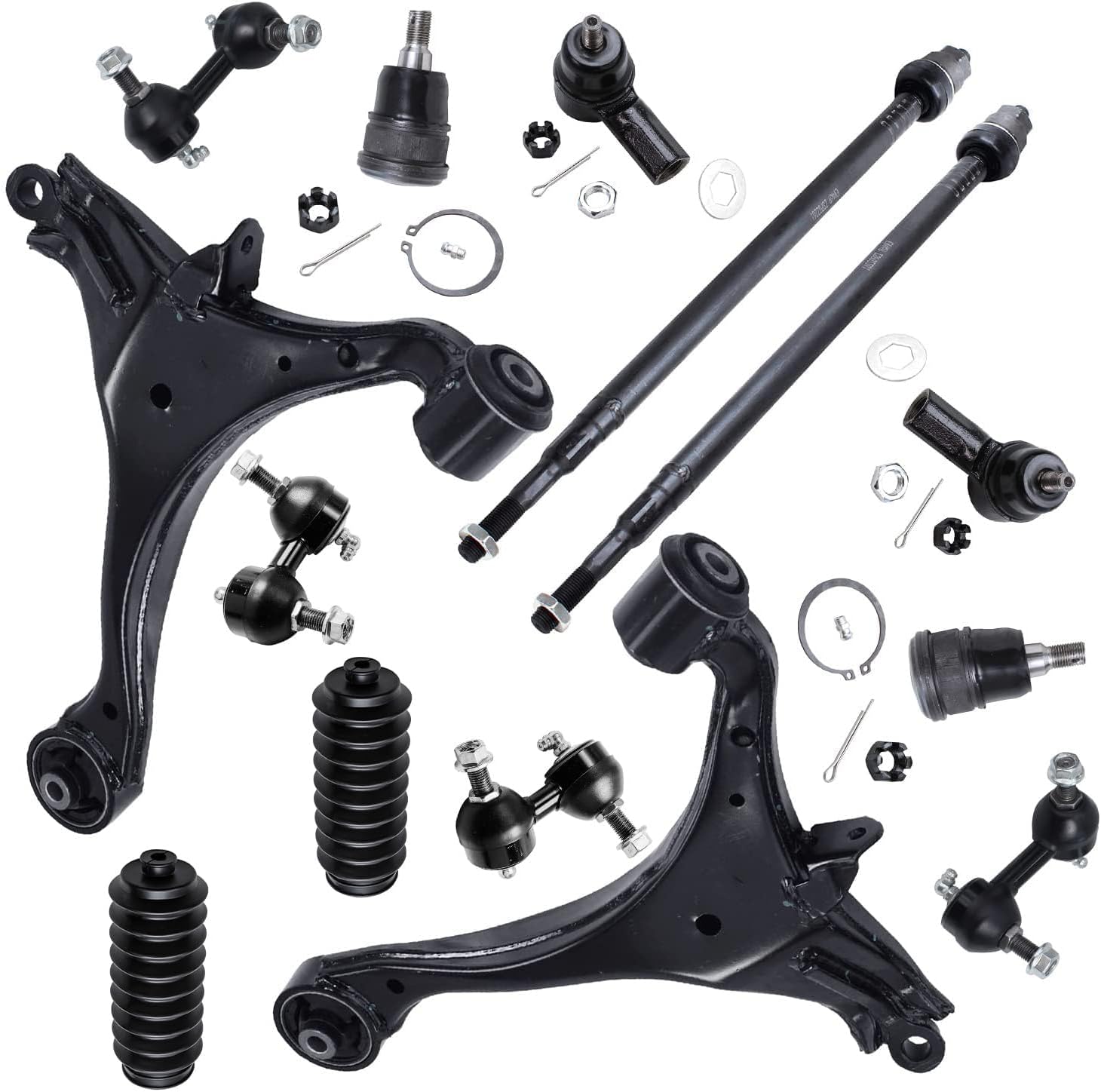
| Included Components | Lower Control Arms, Sway Bars, Tie Rods, Ball Joints |
| Manufacturer Warranty Description | 10-Year Warranty |
This Detroit Axle 14-piece front suspension kit supplies the common wear components needed when overhauling the front end of a 2001–2005 Honda Civic (all non-Si coupe and sedan models). It includes two lower control arms, two lower ball joints, front outer and inner tie rods, front and rear sway bar links, and rack-and-pinion boots so you can address steering play, clunks, and uneven tire wear in one purchase. Parts are sold as vehicle-specific replacements and are manufactured to aftermarket quality standards with testing for impact and fatigue. For a DIYer or independent shop this kit saves time sourcing individual parts and helps ensure the major front-end items are replaced together for consistent handling. Expect to still need alignment after installation and to reuse any hardware only if it passes inspection. The kit is a vehicle-specific fit rather than a performance upgrade, so drivers seeking stiffer handling or long-travel suspension should look elsewhere. The included 10-year warranty and broad positive review count offer added confidence for buyers focused on reliability and social proof.
Best for: Buyers who want a single, proven kit to refresh the entire front lower suspension and steering of a 2001–2005 Civic with minimal parts hunting, prioritizing convenience and documented reliability.
Less Ideal for: Drivers wanting performance suspension upgrades, race-oriented parts, or altered ride height should choose specialized components instead.
- Complete front-end set replaces multiple wear items in one kit so installations are faster and consistent
- Vehicle-specific fit for 2001–2005 non-Si Civic models reduces fitment guesswork
- Includes both inner and outer tie rods and rack boots to address steering play end-to-end
- Parts undergo impact, wear, and fatigue testing per brand claims and come with a long warranty
- Components are aftermarket replacements designed for correct fit and function but are not aimed at performance improvement
Verdict: A convenient, well-reviewed all-in-one front suspension kit that replaces the common wear items on 2001–2005 Honda Civic non-Si models to restore steering feel and handling consistency.
7. Youxmoto Front Lower Control Arms Suspension Kit with Ball Joints and Tie Rods for Honda Civic 2001–2005
| Fit Type | Vehicle Specific Fit |
|---|---|
| Auto Part Position | Front |
| Material Type | Alloy Steel |
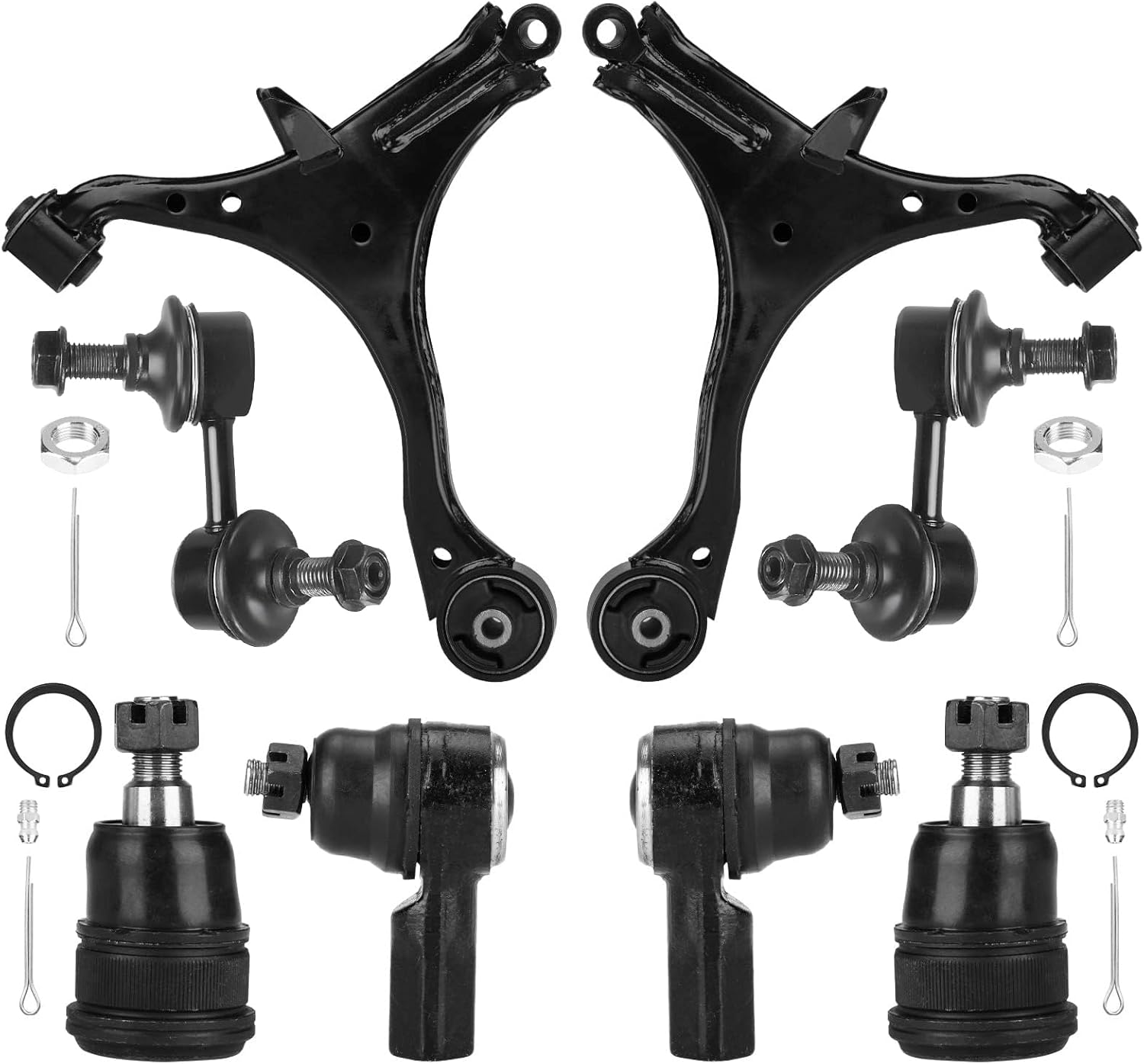
This Youxmoto suspension kit replaces the front lower control arms and several related steering components to restore proper wheel location and steering feel on 2001–2005 Honda Civics (coupe and sedan). It ships as a small kit: left and right lower control arms, two lower ball joints, two stabilizer bar end links, and two outer tie rod ends, so you can address multiple worn front-end parts in one job. The arms are described as high-strength alloy steel with rubber bushings to reduce vibration, and the supplied ball joints are positioned as premium units intended to smooth articulation and reduce noise. In practice the kit is most useful for owners who want a direct replacement to regain factory-like tracking and reduce clunking or uneven tire wear without sourcing parts separately. Expect a straightforward bolt-in swap for a technician or experienced DIYer, though alignment after installation is required. This is a focused front-end repair solution rather than a performance upgrade, and fitment is limited to the stated Civic years and body types only.
Best for: Buyers seeking a low-risk, consolidated front-end replacement that restores factory steering geometry and quiets clunks on 2001–2005 Civic coupe or sedan models, preferring one kit to replace several worn parts at once.
Less Ideal for: Shoppers looking for performance suspension upgrades, complete front suspension overhauls, or parts for Si models should look elsewhere.
- Complete small kit covers both lower control arms plus ball joints, stabilizer links, and both outer tie rod ends so multiple worn parts are replaced at once.
- Vehicle-specific fit for 2001–2005 Honda Civic coupe and sedan reduces fitment guesswork.
- High-strength alloy steel construction and reinforced bushings aim to restore steering stability and reduce vibration.
- Includes premounted ball joints which simplifies installation compared with sourcing joints separately.
- Not compatible with Si model Civics and limited to coupe and sedan body styles.
- Does not include upper suspension components or inner tie rods so additional wear elsewhere may still require parts.
- Manufacturer and long-term durability beyond initial use are less documented compared with major OEM suppliers.
Verdict: Choose this kit if you want a single, vehicle-specific package to replace worn front lower control arms and related steering pieces on a 2001–2005 Honda Civic coupe or sedan and restore factory-style ride and handling.
Choosing the Right 2001-2005 Honda Civic Control Arm: Key Factors to Consider
Fitment and Chassis Compatibility
Correct fitment to the 2001-2005 (ES, EM, and EP) chassis is the primary concern. Even small differences in mounting hole location or arm length can alter suspension geometry and make alignment difficult. Confirm that the part is designed for your Civic's model years and mounting configuration before assuming compatibility.
Fitment matters because an incorrect arm can change toe or camber behavior under load, leading to uneven tire wear and reduced handling precision. For owners who value a quick, bolt-in repair, prioritize arms that explicitly list 2001-2005 Civic ES, EM, and EP fitment and include the correct mounting hardware if the factory pieces are not reusable.
Bushing Material and Durability
Bushing construction controls NVH, compliance, and durability. Rubber bushings isolate noise and vibration but can wear faster in harsh climates. Polyurethane bushings last longer and hold alignment well but may transmit more road noise and require lubrication.
Consider your driving conditions and tolerance for increased noise when choosing bushing material. Also look at bushing design—bonded versus pressed-in—and whether the bushings are replaceable. High-quality bushings reduce the frequency of control arm replacement and keep steering feel consistent as the suspension ages.
Ball Joint Quality and Serviceability
Many front control arms incorporate a ball joint. Ball-joint durability affects steering precision and safety. Look for arms with sealed, high-quality ball joints that resist contamination and wear. In some designs the ball joint is replaceable, allowing lower lifecycle cost by servicing the joint rather than replacing the entire arm.
A worn ball joint produces looseness in the steering and can accelerate tire wear. Prioritizing replaceable or heavy-duty ball joints helps keep long-term maintenance costs lower and preserves steering geometry between service intervals.
Impact on Alignment and Handling
Control arms directly determine suspension geometry and therefore alignment behavior. Choosing an arm that maintains factory geometry limits the need for corrective modifications and keeps handling predictable. Some aftermarket arms alter caster or camber characteristics; while that can be desirable for specific setups, it complicates alignment and may require additional adjustments.
If you want to retain stock handling, select arms specified as direct-fit with factory geometry. For modified vehicles, ensure any changes are intentional and coordinate with your alignment technician to achieve the desired handling outcome.
Materials, Corrosion Protection, and Build Quality
The base metal, weld quality, and corrosion protection determine how long an arm will function without failure. Arms made from thicker stamped steel or robust castings resist bending and fatigue. Coatings such as powder coat or e-coat help prevent rust in wet climates and on salted roads.
Evaluate seam and weld quality where visible and confirm the manufacturer specifies rust-resistant finishes. Better-built arms can withstand potholes and seasonal exposure with less chance of cracking or premature fatigue.
Ease of Installation and Included Hardware
Ease of installation affects labor time and total repair cost. Some arms are sold with new bolts, nuts, or bushings included, while others assume reuse of factory fasteners. Parts that match factory torque specifications and include replacement hardware reduce installation time and the risk of incorrect reassembly.
Also consider whether the arm requires special tools or press-fit operations. For owners planning home installation, choosing a control arm that minimizes pressed-in operations and comes with clear instructions will make the job more straightforward and safer.
Common Symptoms of Worn Control Arms
Worn control arms produce recognizable symptoms that help diagnose when a replacement is needed. Typical signs include clunking or knocking noises over bumps, steering wander, excessive vibration through the steering wheel, and uneven tire wear along the inner or outer edges.
A failing control arm can also show visual signs such as cracked or separated bushings and excessive play at the ball joint. Identifying symptoms early prevents secondary damage to tires and alignment systems.
- Clunking from the front suspension during acceleration or braking
- Pulling or wandering at highway speeds
- Vibration transmitted to the steering wheel
- Inner or outer edge tire wear not explained by alignment
Upper Versus Lower Control Arms on the Civic
On the 2001-2005 Civic, the front suspension layout uses control arms that serve specific roles. Lower arms commonly carry the ball joint and take greater vertical loads, while upper links, where present, control camber and locate the knuckle.
Understanding which arm is failing is important because repair complexity and parts cost vary between upper and lower arms. If both arms show wear, replacing matching components ensures consistent geometry and wear patterns.
- Lower arms: primary load-bearing component and common source of ball-joint wear
- Upper links: often smaller, control camber and reduce lateral play
Inspection Checklist Before Replacement
Before ordering parts, perform a visual and physical inspection. With the vehicle safely lifted, check bushings for cracking, split rubber, or movement at the mount. Grab the wheel at 12 and 6 o'clock and rock to detect play in the ball joint or arm bushings.
Also check for corrosion at mounting points and inspect fasteners for rounding or damage. Document any suspension modifications that could affect fitment or alignment so that the replacement arm matches the installed setup.
- Look for torn or separated bushings and grease leakage near joints
- Check for play by rocking the wheel and observing movement at the arm
- Note any bent or distorted arms or mounts that indicate prior impact damage
Installation Tips and Alignment Considerations
Install replacement arms with new hardware when recommended and torque fasteners to factory specifications. If bushings are pre-mounted, set the arm in its resting position before final torquing to avoid preloading bushings incorrectly. For pressed-in ball joints or bushings, use proper presses and guides to avoid damaging components.
After installation, always perform a four-wheel alignment. Replacement arms can shift toe and camber slightly. If an alignment shows excessive toe or camber deviation, check for crushed or misaligned mounting points before final adjustments.
- Hand-start bolts to ensure proper thread engagement before torquing
- Torque to factory specs and recheck after a short break-in drive
- Always complete a professional alignment after replacement
When to Replace Bushings Versus the Entire Arm
Deciding whether to replace only bushings or the whole arm depends on the arm's condition. If the metal structure is straight and the ball joint is serviceable, replacing worn bushings can be cost-effective. However, if there is corrosion, cracking, or ball-joint wear, a full arm replacement often provides better long-term value.
Consider accessibility and tool availability. Pressing bushings in and out requires specialized tools and skill. For many DIYers and independent shops, a complete arm swap reduces labor time and eliminates the risk of improper bushing installation.
- Replace bushings alone when the arm is structurally sound and ball joint is good
- Replace the entire arm when the ball joint shows play or the arm is corroded
Part Numbers, Documentation, and Matching Components
When ordering parts, confirm the control arm part number matches your 2001-2005 Civic ES, EM, and EP chassis and any sub-variants such as coupe or sedan where applicable. Documentation that lists exact mounting locations, bolt sizes, and torque specs reduces the chance of returns or incorrect parts.
Also verify whether the arm requires separate components like sway bar end links or alignment shims. Getting all required pieces together before starting the job saves time and prevents mid-repair delays.
- Cross-check part numbers against factory reference or repair manuals
- Confirm included hardware and note any additional parts required for installation
Still looking for the perfect fit?
Select your Honda Civic configuration to see the most relevant Control Arms recommendations
How We Chose the Best 2001-2005 Honda Civic Control Arm
We prioritized parts that deliver correct fitment, durable wear components, and serviceability for the 2001-2005 Honda Civic (ES, EM, and EP). Our selection filters focused on four to six measurable attributes: verified fitment to the 2001-2005 chassis and suspension mounting points; bushing material and construction that resist premature degradation; ball-joint quality and replacementability where applicable; overall materials and corrosion protection for longevity; and adherence to factory steering and suspension geometry to avoid alignment drift.We also checked claims about supplemental hardware and whether the part required additional components for installation. Exclusions included parts that lacked clear fitment data for the 2001-2005 ES, EM, and EP chassis, aftermarket items with unclear bushing specification, and components that force significant suspension geometry changes. The final list balances durability, alignment stability, and ease of installation for typical Civic owners and independent shops.
Our full evaluation process is outlined in our review methodology.
FAQ
What are the most common control arm symptoms on a 2001-2005 Civic?
Common symptoms include clunking noises over bumps, steering wander, vibrations through the steering wheel, and uneven tire wear. Visual signs like cracked bushings or play at the ball joint also indicate failure.
Can I replace just the bushings instead of the whole control arm?
Often you can if the arm is straight and the ball joint is in good condition. However, pressing bushings requires special tools and time. If the arm shows corrosion or ball-joint wear, a full arm replacement is usually more reliable.
How soon should I get an alignment after replacing control arms?
You should perform a four-wheel alignment immediately after replacement. New arms can change toe and camber slightly, so alignment ensures proper tire wear and handling performance.
Are polyurethane bushings a good choice for daily-driven Civics?
Polyurethane bushings last longer and maintain alignment better than rubber but may increase road noise and require periodic lubrication. For daily-driven 2001-2005 Civics, consider your tolerance for additional NVH when choosing bushing material.
How can I tell if the ball joint on the control arm is bad?
Look for looseness by rocking the wheel and watching for vertical or lateral play at the joint. A worn ball joint often produces clunking sounds and uneven tire wear. Visual grease leakage or a torn boot also suggests impending failure.
Will replacing control arms fix my alignment issues?
Replacing worn arms can resolve alignment drift caused by loose bushings or ball joints, but it will not correct bent mounting points or incorrect geometry from prior impacts. Always inspect mounts and then perform a professional alignment after replacement.
Final Verdict
For 2001-2005 Honda Civic owners, prioritize control arms that match the ES, EM, and EP chassis mounting points, use durable bushings, and feature serviceable ball joints when possible. Balance the tradeoff between rubber for quiet ride and polyurethane for longevity according to your driving style and tolerance for noise. Finally, plan for a professional alignment after installation to ensure handling and tire life are restored. Choosing parts with clear fitment documentation and solid corrosion protection gives the best long-term value and peace of mind.
Explore More:
- Check out all Honda Civic parts & accessories
- Explore Control Arms Maintenance & Repair Guides
- Explore Suspension & Steering
- Browse all Auto Parts
