

Note: This article contains affiliate links. If you click on these links and make a purchase, I may earn a small commission at no extra cost to you. This helps support my research and content. Read my full affiliate disclosure here.
If your 2010-2014 Subaru Outback feels loose on the road, is pulling during braking, or has uneven tire wear, worn control arms are a common cause. Replacing the control arms can restore steering precision, correct alignment drift, and reduce vibration for everyday driving and light towing. This guide gathers seven top control arms suitable for the 2010-2014 Outback and explains the decision factors that matter for fitment, durability, and ride quality.Below you will find the shortlisted control arms and the criteria used to evaluate them, including bushing type, ball joint quality, and installation considerations. Use this overview to match the right option to how you drive and maintain your Outback.
Looking for other parts? See all Subaru Outback parts & accessories.
Top Picks at a Glance


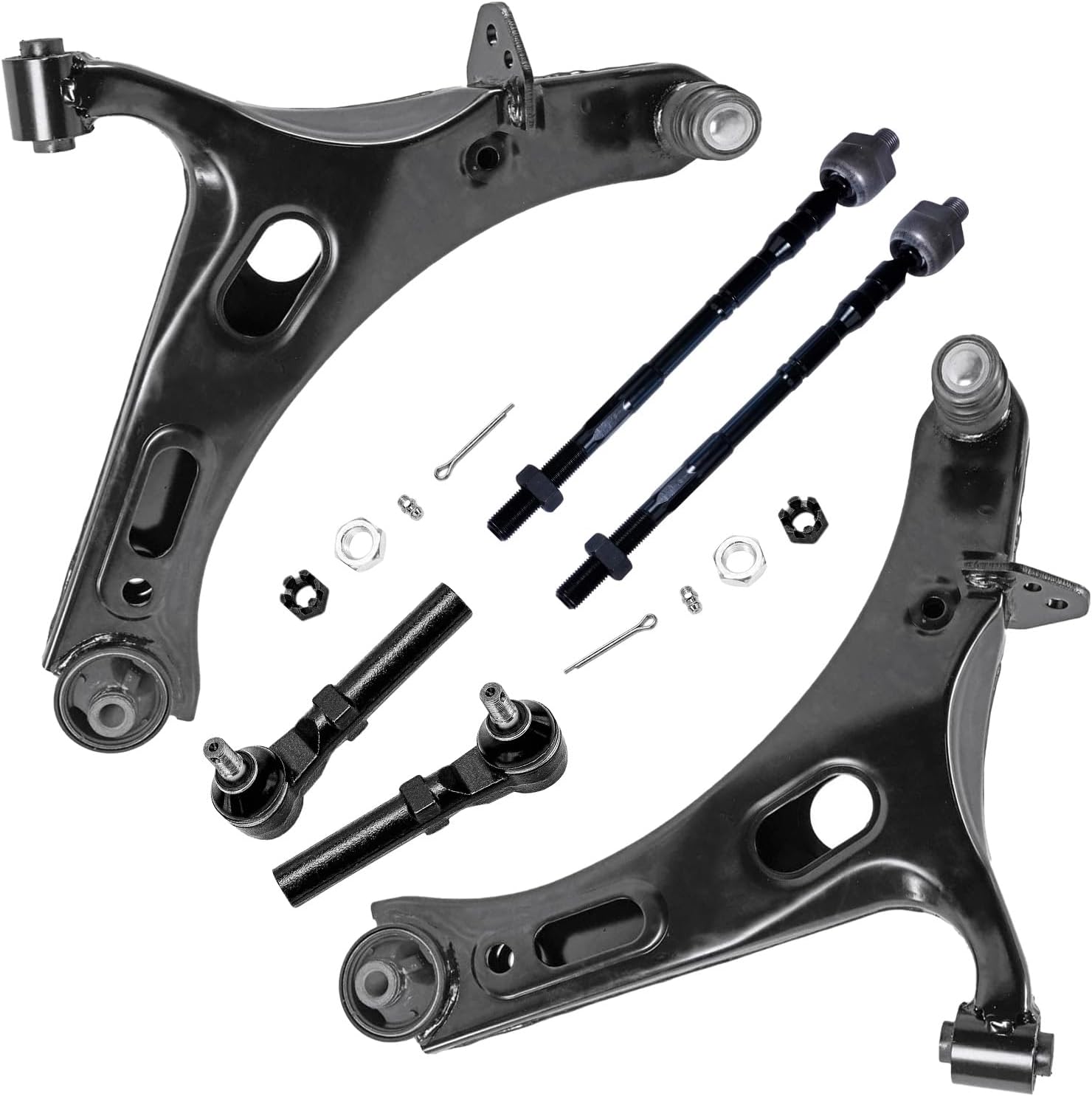
1. Detroit Axle Front 6‑Piece Control Arms Kit for 2010–2014 Subaru Outback
| Fit Type | Vehicle Specific Fit |
|---|---|
| Auto Part Position | Front Lower |
| Material Type | Alloy Steel |
| Manufacturer Warranty Description | 10-Year |
This Detroit Axle kit replaces the two front lower control arms (with integrated ball joints) and four inner and outer tie rod ends to restore steering precision and front-end stability on 2010–2014 Subaru Outback vehicles. The parts are vehicle-specific fit components made from alloy steel and arrive ready to install as a complete front-end kit, which simplifies a coordinated repair and reduces alignment guesswork. In use the new control arms and tie rod ends should tighten up steering feel and reduce play that causes wandering or uneven tire wear. The kit is designed to meet typical aftermarket durability expectations and Detroit Axle backs it with a long warranty. Expect installation to require standard suspension tools and an alignment after fitting; this is not a performance upgrade, so drivers seeking stiffer handling or adjustable geometry should look elsewhere. Fitment is limited to the listed model years and the kit includes factory-style replacement components rather than upgraded racing hardware.
Best for: Buyers who want a straightforward, factory-style front suspension replacement that fixes steering play and tire wear on a 2010–2014 Outback without custom modifications.
Less Ideal for: Do not choose this if you want performance-tuned, adjustable, or heavy-duty off-road suspension upgrades; also avoid if you prefer individual-part purchases rather than a full kit.
- Complete kit replaces both lower control arms with ball joints plus inner and outer tie rod ends for a coordinated front-end refresh
- Vehicle-specific fit reduces fitment guesswork and speeds installation
- Alloy steel construction aimed at durability under normal driving conditions
- Arrives as a full set so you can replace worn components at once and restore steering geometry
- Not a performance or adjustable component set; it restores factory-style behavior rather than improving handling
- Installation requires suspension tools and a professional alignment to ensure correct steering geometry
Verdict: If you need a single, vehicle-matched kit to restore front steering feel and replace worn lower control arms and tie rods on a 2010–2014 Subaru Outback, this Detroit Axle set is a practical factory-style solution.
2. TRQ Front Steering & Suspension 6-Piece Control Arm Kit with Ball Joints and Tie Rods

| Fit Type | Vehicle Specific Fit |
|---|---|
| Auto Part Position | Front |
| Unit Count | 1.0 Count |
| Exterior | Machined |
This TRQ kit bundles the front lower control arms with pre-installed ball joints, outer tie rods, and sway bar links to restore the front suspension and steering on 2010–2014 Subaru Outback models. It is designed as a vehicle-specific direct-fit kit so installation requires minimal modification, and the pre-greased ball joints and anti-corrosion coating reduce initial maintenance and help durability. The included components improve road feel and handling compared with worn factory parts and let you replace multiple wear items in one job, saving time and alignment headaches. Practical benefits include fewer parts to source and TRQ's DIY video support for step-by-step installation. Limitations are that this is a direct-replacement steering and suspension kit rather than a performance upgrade tuned for lowered or track-focused setups, and professional alignment is still required after installation to ensure correct steering geometry.
Best for: A DIYer or enthusiast who wants to restore tight, predictable steering and handling on a 2010–2014 Subaru Outback by replacing multiple front-end wear items in one installation.
Less Ideal for: Drivers seeking adjustable, performance-tuned suspension components for lowered ride height or motorsport use should consider aftermarket performance parts instead.
- Complete six-piece kit covers lower control arms, ball joints, outer tie rods, and sway bar links for a single front-end refresh
- Pre-greased ball joints and anti-corrosion coating reduce initial maintenance and improve longevity
- Vehicle-specific direct-fit design minimizes the need for modifications and simplifies installation
- Factory-style components restore factory steering feel and handling without requiring additional parts sourcing
- Not engineered as a performance or adjustable suspension upgrade for lowered or track applications
Verdict: Buy this TRQ six-piece front kit to quickly and confidently restore factory steering feel and handling on a 2010–2014 Subaru Outback with a single direct-fit replacement.
3. PHILTOP Front Lower Control Arm with Ball Joint for Subaru Outback/Legacy 2010-2014

| Fit Type | Vehicle Specific Fit |
|---|---|
| Auto Part Position | Front Lower |
| Material Type | Alloy Steel |
| Unit Count | 2 Count |
These PHILTOP front lower control arms replace the factory front lower assemblies for 2010–2014 Subaru Outback and Legacy models and come as a two-piece set with preinstalled ball joints. Built from forged alloy steel and featuring hardened ball pins, the arms are designed to be stronger than the original and resist wear from rough roads or larger tires. Installation is straightforward because the parts are made to vehicle-specific dimensions and fit without modification. For day-to-day drivers this yields restored steering geometry and stable handling after worn arms are removed, while the heavy-duty ball joints should extend service life under tougher conditions. The kit does not include bushings or extra hardware beyond the arms themselves, so expect to reuse factory fasteners or source replacements if rusted. Also, while the construction aims for higher strength, aftermarket fit can vary, so verify the confirmed fit for your VIN before buying. Overall it is a practical, beefed-up factory replacement for restoring front suspension performance on applicable Subarus.
Best for: Buyers who want a durable, direct-replacement front lower control arm to restore handling and extend suspension life on a 2010–2014 Outback or Legacy while prioritizing practicality over costly performance upgrades.
Less Ideal for: Drivers seeking a performance-tuned suspension component with adjustable geometry or those who need a complete hardware/bushing refresh in the same purchase.
- Forged alloy steel construction offers higher strength than many stock arms
- Integrated hardened ball joints for improved wear resistance
- Sold as a two-count set so both sides can be replaced at once
- Vehicle-specific fit simplifies installation with no modifications expected
- Does not list included mounting hardware or replacement bushings
- Fitment can vary by VIN so purchaser should confirm compatibility before installation
Verdict: A robust, vehicle-specific replacement set that strengthens the front lower suspension and simplifies a practical repair for 2010–2014 Subaru Outback and Legacy owners.
4. Detroit Axle Front Left Lower Control Arm with Ball Joint for 2010–2014 Subaru Outback

| Fitment | 2010-2014 Subaru Outback |
|---|---|
| Position | Front Left Lower |
| Includes | Control arm with ball joint |
| Manufacturer | Detroit Axle |
This Detroit Axle control arm replaces the front left lower arm and comes with an integrated ball joint for the 2010–2014 Subaru Outback. It is intended as a vehicle-specific, direct-fit replacement so installation is straightforward for a DIYer or a mechanic replacing a worn or damaged arm. The arm is made from a premium alloy with an emphasis on structural strength and corrosion resistance, which should help with durability under normal driving and occasional rough roads. Because the ball joint is included, you avoid sourcing a separate component and get immediate suspension geometry restoration. The part carries a long stated warranty and is advertised to meet factory-quality fit, form, and function. Expect solid value compared with dealer parts, though professional alignment after installation is still required and heavier-duty performance upgrades are not the focus of this OE-style replacement.
Best for: Buyers who need an affordable, ready-to-install replacement to restore proper suspension function on a 2010–2014 Subaru Outback and prefer a direct-fit part that includes the ball joint.
Less Ideal for: Drivers seeking uprated suspension components for heavy off-road duty or performance handling should consider aftermarket performance arms instead.
- Direct-fit, vehicle-specific design simplifies installation and reduces fitment guesses
- Includes integrated ball joint so you do not need a separate part
- Constructed from a premium alloy for improved wear resistance and corrosion protection
- Designed to match factory-style fit and function for straightforward replacement
- Not designed as a heavy-duty or performance upgrade for aggressive off-road use
Verdict: A cost-conscious, direct-fit replacement that includes the ball joint and restores factory-style suspension function on 2010–2014 Subaru Outback models.
5. Metrix Premium Chassis Parts Front Right Lower Control Arm with Ball Joint

| Fit Type | Vehicle Specific Fit |
|---|---|
| Auto Part Position | Front Right Lower |
| Item Type Name | Control Arm and Ball Joint Assembly |
| Manufacturer Warranty Description | 3 Year / 36,000 miles Limited Warranty |
| Material Type | Sheet Metal |
This Metrix Premium front right lower control arm replaces the factory unit and includes an integrated, pre-greased ball joint for smoother operation straight out of the box. It is designed as a vehicle-specific fit for 2010–2014 Subaru Legacy and Outback front suspension, so installation is straightforward for a DIYer or a professional mechanic. Notable features include a greasable design for periodic maintenance, sheet-metal construction with corrosion-resistant coating, and factory-style geometry that helps restore steering stability and reduce uneven tire wear. The unit arrives ready to install with the housing included and an accessory cotter pin. Limitations are that it is a single-side assembly sold as one piece and alignment is required after fitting; if both sides or additional front suspension parts are worn you may prefer a full kit instead. Backed by a 3 year/36,000-mile limited warranty, this control arm is aimed at drivers who prioritize a dependable, replacement-quality suspension part that closely matches factory performance.
Best for: Buyers who want a reliable, factory-style replacement to restore steering stability and extend service life on a 2010–2014 Subaru Outback without upgrading other suspension components.
Less Ideal for: Those planning a full front suspension overhaul or owners who want matched left-and-right replacements and all associated wear items in one purchase.
- Vehicle-specific front right lower fit for 2010–2014 Subaru Legacy and Outback, simplifying installation.
- Pre-greased ball joint and greasable design for easier maintenance and longer service life.
- Corrosion-resistant coating and sheet-metal construction intended to match factory performance.
- Includes housing and basic installation accessory (cotter pin) and comes with a limited warranty.
- Sold as a single control arm assembly rather than a paired kit which may require purchasing additional parts for a full repair.
Verdict: A dependable, factory-quality front right lower control arm that restores steering stability on 2010–2014 Subaru Outback models with minimal fuss.
6. Detroit Axle Front Lower Control Arms with Ball Joints (pair) for 2010–2014 Outback/Legacy

| Fit Type | Vehicle Specific Fit |
|---|---|
| Auto Part Position | Front Lower |
| Material Type | Alloy Steel |
| Manufacturer Warranty Description | 10-Year |
These Detroit Axle front lower control arms come as a matched pair with preinstalled ball joints to replace worn or damaged factory front lower arms on 2010–2014 Subaru Outback and Legacy vehicles. Designed as direct-fit, vehicle-specific replacements, they install like factory parts and restore steering geometry and suspension stability without requiring modification. The arms are stamped from premium alloy steel with a rust-resistant finish and claim enhanced structural strength to resist repeated impact loads, which helps maintain alignment and handling over time. Because the ball joints are already pressed into the assemblies, installation is faster and avoids the extra labor of swapping cores. The kit carries a long 10-year warranty, reflecting confidence in durability. Keep in mind these are aftermarket replacement parts rather than performance upgrades, so drivers seeking upgraded ride height, sport handling, or heavy-duty off-road strength should look elsewhere; this kit is intended to match factory fit and feel. Expect improved steering response and reduced play compared with worn originals when these are installed by a competent mechanic.
Best for: Buyers who want a reliable, factory-style replacement that restores steering feel and alignment with minimal hassle and documented longevity concerns addressed by a long warranty.
Less Ideal for: Not the right choice for drivers seeking performance-tuned control arms, lift kits, or heavy-duty off-road strengthening where reinforced or adjustable aftermarket arms are required.
- Vehicle-specific direct-fit design for 2010–2014 Outback and Legacy simplifies installation
- Preinstalled ball joints reduce labor and ensure correct assembly
- Premium alloy steel construction with rust-resistant finish for long-term durability
- Matched pair kit restores steering geometry and reduces play compared to worn arms
- Aftermarket replacement aimed at factory-equivalent performance rather than upgraded strength for heavy off-road use
Verdict: If you need a dependable, direct-fit replacement pair to restore factory steering and suspension performance on a 2010–2014 Outback or Legacy, this Detroit Axle kit is a practical, low-risk choice.
7. Detroit Axle 4pc Front Suspension Kit with Lower Control Arms, Ball Joints and Outer Tie Rod Ends

| Fitment | 2010–2014 Subaru Outback and Legacy (front lower) |
|---|---|
| Kit contents | 2 front lower control arms w/ ball joints + 2 outer tie rod ends |
| Manufacturer | Detroit Axle |
| Manufacturer Part Number | 4CS50733 |
This Detroit Axle kit supplies two front lower control arms with integrated ball joints plus two outer tie rod ends to restore worn front suspension on 2010–2014 Subaru Outback and Legacy vehicles. It is intended as a direct replacement for factory lower control arms and tie rod ends, so typical use is swapping the worn front lower assemblies and steering ends to eliminate play, uneven tire wear, or alignment drift. The components are tested for impact and fatigue and come from a brand that emphasizes factory-quality fit and a 10-year warranty. Practical benefits include restoring steering precision and suspension geometry in one purchase and avoiding the need to source individual parts. Expect standard aftermarket hardware and installation similar to other control-arm replacements; alignment after installation is required. The kit covers only the front lower assemblies and outer tie rods, so more comprehensive front-end overhauls will need additional parts, and professional installation may be advisable for those without suspension experience.
Best for: Buyers who want a straightforward, factory-quality replacement to eliminate front-end play and restore steering feel on a 2010–2014 Subaru Outback or Legacy without sourcing multiple parts separately.
Less Ideal for: People doing a full front suspension rebuild that includes upper arms, struts, or wheel bearings or DIYers who prefer buying single-item components for phased repairs.
- Includes both lower control arms with ball joints and outer tie rod ends to address multiple front-end failures at once
- Sold as a matched kit which simplifies parts compatibility for the 2010–2014 Outback/Legacy front end
- Parts undergo impact, wear, and fatigue testing and are marketed to factory-quality standards
- 10-year warranty adds long-term reassurance for cautious buyers
- Kit only replaces front lower control arms and outer tie rod ends so other worn front components are not covered
Verdict: A matched four-piece front lower control-arm and tie-rod kit that restores steering precision on 2010–2014 Subaru Outback and Legacy models with factory-quality fit and a long warranty.
Choosing the Right 2010-2014 Subaru Outback Control Arm: Key Factors to Consider
Fitment and Mounting Points
Correct fitment is the baseline requirement for any control arm on a 2010-2014 Subaru Outback. Arms must match factory mounting hole placement, bolt diameters, and orientation to avoid stress on adjacent suspension components and to ensure predictable steering response.
Mismatched or generic arms can introduce alignment issues and accelerate wear on ball joints or bushings. When shopping, verify that the part is specified for your Outback years and model configuration. Proper fitment reduces installation time and the likelihood of additional repairs after the replacement.
Bushing Type and Durability
Bushings isolate vibration and allow controlled movement of the suspension; their composition strongly influences ride quality and noise. Rubber bushings provide a compliant ride and help absorb road shock, while polyurethane or hardened bushings offer firmer handling and longer life but may transmit more noise and vibration into the cabin.
For the 2010-2014 Outback, consider the local climate and driving style. If you drive on rough roads or in salted winters, choose bushings with proven resistance to oil, road contaminants, and ozone. Inspect bushing sealing and how the bushing is bonded to the arm, since poor bonding or thin walls are common failure points.
Ball Joint Quality and Serviceability
Many control arms integrate the ball joint that connects the arm to the steering knuckle. The ball joint's design, materials, and sealing determine steering precision and safety. Look for ball joints with dust boots, adequate lubrication, and replaceable or serviceable designs if long-term maintenance is a priority.
Inferior ball joints can lead to play at the knuckle, uneven tire wear, and handling unpredictability. For the Outback, a robust ball joint reduces the frequency of alignment corrections and contributes to stable braking and cornering behavior.
Material, Construction, and Corrosion Resistance
Control arms endure road debris and moisture, so material choice affects both strength and longevity. Stamped steel arms are common and can provide a good strength-to-cost ratio, while cast or forged pieces may offer higher load capacity. Surface treatments and coatings combat rust, which is particularly important in regions that use road salt.
Weld quality, gusseting, and reinforcement at load-bearing points should be considered. Corrosion that progresses past protective coatings can compromise mounting holes and ball joint seats, increasing the risk of failure and expensive follow-up repairs.
Impact on Alignment and Tire Wear
A replacement control arm should preserve or allow proper adjustment of the vehicle's factory alignment specifications. Incorrect geometry or excessive wear in bushings and ball joints can change camber, caster, or toe, leading to rapid, uneven tire wear and handling problems.
When replacing arms on a 2010-2014 Outback, plan for a post-installation alignment. Choosing arms designed to maintain factory geometry reduces the chance of repeated alignments and helps extend tire life.
Installation Complexity and Hardware
Some control arms are direct bolt-on replacements while others require additional hardware, press-in bushings, or ball joint servicing tools. Consider whether you will have access to a press, torque tools, and a lift, or whether you prefer a unit that arrives with pressed-in bushings and a preinstalled ball joint.
Availability of replacement hardware, instructions, and the need for special tools affects total labor time and cost. Selecting an arm that includes serviceable components or clear installation guidance can simplify DIY replacement or reduce shop labor.
When To Replace Control Arms On Your Outback
Control arms are subject to gradual wear that can manifest as loose steering, clunking over bumps, or visible bushing degradation. On a 2010-2014 Subaru Outback, age, mileage, and exposure to harsh conditions accelerate those symptoms.
If you notice persistent pull to one side, steering wander, or uneven inner tire wear, the control arms and their bushings or ball joints are among the first suspension components to inspect. Regular visual inspections can reveal cracked bushings, torn dust boots, or excessive rust that justify replacement before more costly damage occurs.
- Clunking noises when going over bumps
- Steering pull or wandering
- Uneven tire wear on inner or outer edges
- Visible bushing cracks or separated rubber
- Excessive play in the wheel when lifted and rocked
DIY Vs Professional Installation
Replacing control arms on the 2010-2014 Outback can be a DIY project for someone with moderate mechanical skills, the right tools, and a safe workspace. Tasks include safely lifting the vehicle, supporting the suspension, removing bolts at the subframe and knuckle, and torquing fasteners to spec.
If the replacement requires pressing out bushings or replacing a non-serviceable ball joint, having a hydraulic press, ball joint tool, or a shop with those capabilities is important. A professional installation is recommended if you cannot access proper alignment equipment after installation or lack torque and safety tools.
- DIY may save labor but plan for an alignment afterward
- Shop installation ensures correct torque and alignment
- Press-in bushings or integrated ball joints increase complexity
How Replacement Control Arms Affect Ride And Handling
Swapping worn control arms for new units restores the connection between the chassis and the wheels, reducing play and improving steering feel. The bushing material chosen influences how much road feedback is transmitted to the cabin and how crisp cornering feels.
Stiffer bushings and high-quality ball joints typically sharpen handling at the expense of slightly firmer ride comfort. For drivers who prioritize a smooth ride for daily commuting, rubber or dual-rate bushings balance isolation with durability. Those seeking more responsive handling may choose firmer bushing options while understanding the tradeoff in NVH.
- New bushings reduce vibration and noise
- Tight ball joints improve steering precision
- Choice of bushing affects ride comfort vs responsiveness
Maintenance Tips To Extend Control Arm Life
Regular inspections and keeping components free of debris can prolong control arm life on a 2010-2014 Outback. After driving in salty conditions, rinsing the undercarriage helps reduce corrosion risk at mounting points and fasteners.
Address minor bushing cracks or torn dust boots early to prevent accelerated wear of ball joints and adjacent parts. If your replacement arm has a serviceable ball joint or grease fitting, periodic lubrication can extend service intervals and preserve smooth movement.
- Rinse underbody after winter or off-road use
- Inspect dust boots and bushings during oil changes
- Re-torque suspension fasteners after initial break-in mileage
Alignment Considerations After Replacement
Any control arm replacement on the Outback should be followed by a wheel alignment. Installing new arms, even OEM-style units, can alter toe and camber enough to affect handling and tire wear if not corrected.
Tell your alignment technician which components were replaced so they can verify that the geometry falls within Subaru specifications. If aftermarket arms have slightly different bushing compliance, the technician can adjust toe or caster to compensate and achieve optimal tire contact.
- Plan for an alignment immediately after installation
- Document replaced components for the alignment shop
- Expect minor adjustments to toe and camber settings
Still looking for the perfect fit?
Select your Subaru Outback configuration to see the most relevant Control Arms recommendations
How We Chose the Best 2010-2014 Subaru Outback Control Arm
We prioritized components and suppliers that meet the specific fitment requirements for the 2010-2014 Subaru Outback and focused on attributes that affect safety, handling, and long-term value. Primary evaluation criteria included fitment accuracy to factory mounting points, bushing composition and expected lifespan, and the quality and serviceability of integrated ball joints. We also assessed materials and finish for corrosion resistance in climates where road salt is common, plus whether the parts preserved factory alignment geometry. Installation practicality was a factor, emphasizing bolt-on designs and availability of serviceable hardware.Excluded items included universal or non-vehicle-specific arms, components that required chassis modification, and parts lacking clear fitment data for the 2010-2014 Outback. We favored options with clear specifications for bushings and ball joints, documented mounting dimensions, and indications of reinforced or stamped steel construction over vague claims. Where applicable, we focused on parts that reduce future alignment corrections by matching factory suspension geometry.
Our full evaluation process is outlined in our review methodology.
FAQ
How can I tell if a control arm is bad on my 2010-2014 Outback?
Common indicators include clunking noises over bumps, steering that drifts or pulls, and uneven tire wear. A visual inspection may show torn bushings, separated rubber, or a damaged ball joint dust boot. Lifting the wheel and checking for play by rocking it can also reveal excessive movement at the control arm joints.
Are control arm bushings different from ball joint problems?
They are related but distinct. Worn bushings allow unwanted movement between the arm and chassis, producing vibration and misalignment. Ball joint wear creates play where the arm connects to the knuckle, often felt as looseness or clunking at the wheel. Both can produce similar handling symptoms and should be inspected together.
Will replacing control arms fix alignment issues on the Outback?
Replacing worn control arms addresses a common cause of alignment drift, but a proper wheel alignment is still necessary after installation. New arms that match factory geometry reduce the rate of future drift, but adjustments to toe, camber, or caster may be required to restore correct settings.
Can I replace only the bushings instead of the whole control arm?
In some cases bushings can be pressed out and replaced, but this requires the right tools and sometimes specialized presses. Some aftermarket arms come with preinstalled bushings or serviceable ball joints, which can simplify installation. Consider overall arm condition, corrosion, and labor cost when deciding whether to rebuild or replace.
How long do control arm bushings typically last on a 2010-2014 Outback?
Lifespan depends on driving conditions and material. In moderate climates and normal driving, rubber bushings may last many years, while harsher conditions, heavy loads, or exposure to salt shorten life. Polyurethane or upgraded bushings generally last longer but may transfer more noise and vibration.
Does a control arm replacement change front-end noise or vibration?
Yes. Replacing degraded bushings or ball joints typically reduces clunks and eliminates some vibration. The exact change depends on the bushing material chosen: firmer bushings can reduce play but may increase transmitted road noise compared with softer rubber.
Final Verdict
When choosing control arms for a 2010-2014 Subaru Outback, prioritize correct fitment, bushing durability, and ball joint quality to restore handling and minimize repeat repairs. Balance the tradeoff between a compliant ride and firmer handling by selecting the bushing type that matches your typical driving conditions and climate. Finally, plan for a professional wheel alignment after installation so suspension geometry is restored and tire wear is controlled.
Explore More:
- Check out all Subaru Outback parts & accessories
- Explore Control Arms Maintenance & Repair Guides
- Explore Suspension & Steering
- Browse all Auto Parts
