

Note: This article contains affiliate links. If you click on these links and make a purchase, I may earn a small commission at no extra cost to you. This helps support my research and content. Read my full affiliate disclosure here.
If you drive a 2000-2004 Subaru Outback, worn or damaged control arms can noticeably alter handling, ride comfort, and tire wear. Choosing the right control arm replacement matters because the front suspension geometry and bushing condition directly affect steering feel and alignment stability. This guide outlines the top shortlisted control arms for the 2000-2004 Outback and explains the practical tradeoffs you should expect when replacing worn components. We focus on fitment, bushing and ball-joint durability, and installation considerations so you can make a confident choice for regular driving or higher-mileage vehicles.Below you will find our top picks followed by the decision factors we used to evaluate them and practical guidance for installation and maintenance.
Looking for other parts? See all Subaru Outback parts & accessories.
Top Picks at a Glance
| Best Overall The best all-around choice for most situations | TRQ Front Lower Control Arm and Ball Joint 4-Piece Set |  |
| Best Quality Built to a higher standard if you want something more solid | MOOG RK640740 Front Right Lower Suspension Control Arm |  |
| Best Value The sweet spot between price and what you get | YIYIBYUS Front Lower Control Arm with Ball Joint Kit (Left & Right) |  |
| Best Budget The cheapest option that still gets the job done reliably | WHODNUS Front Lower Control Arm with Ball Joint Set (pair) |  |
| Highest Rated A top-rated pick with lots of positive feedback | TRQ Front 10-Piece Steering & Suspension Kit (vehicle-specific fit) |  |
| Most Popular A crowd favorite that many people choose with confidence | Dorman Front Passenger-Side Lower Suspension Control Arm (520-478) |  |
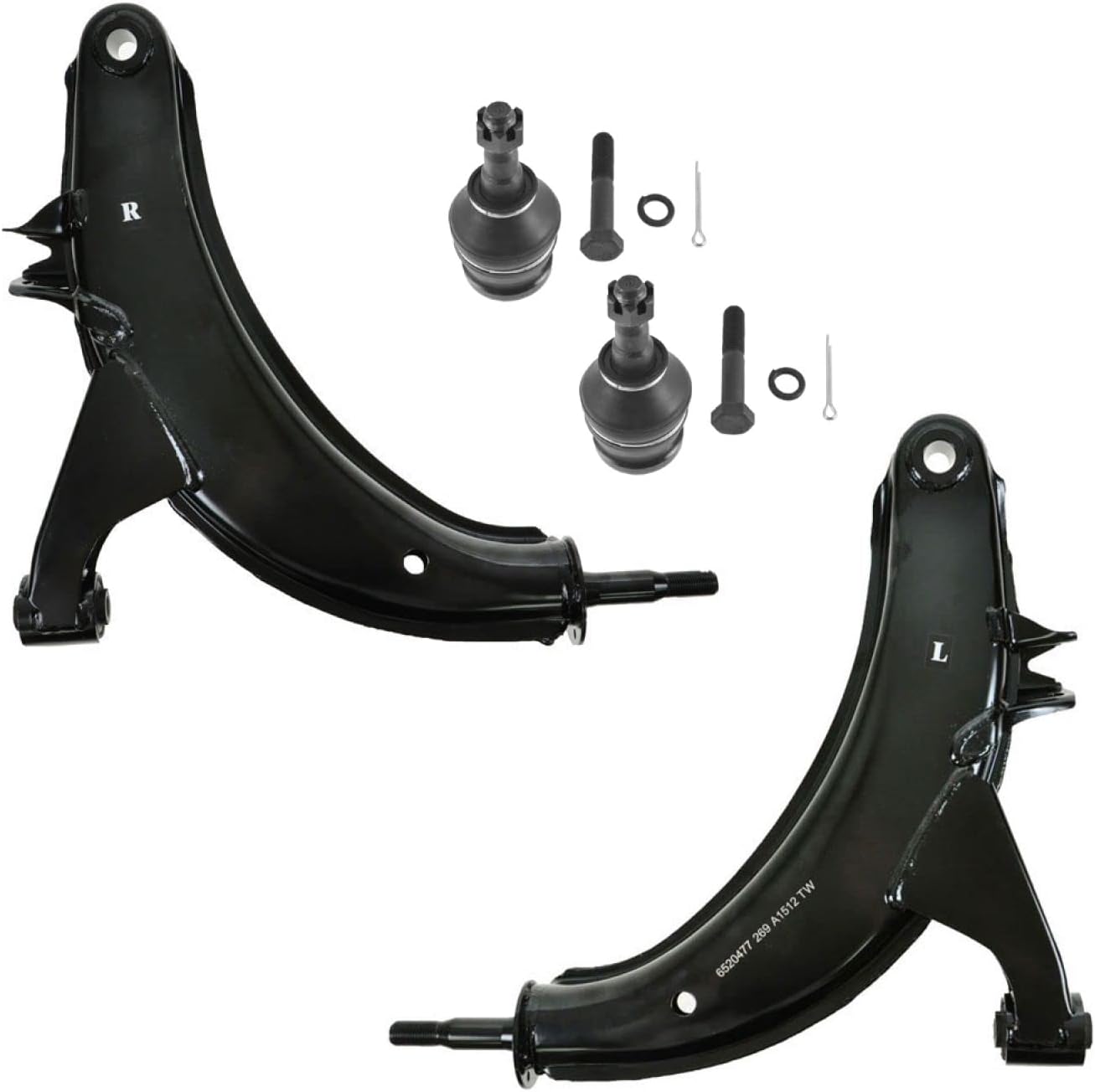
1. TRQ Front Lower Control Arm and Ball Joint 4-Piece Set
| Fit Type | Vehicle Specific Fit |
|---|---|
| Auto Part Position | Front Lower |
| Unit Count | 1.0 Count |
| Exterior | Machined |
This TRQ kit supplies two front lower control arms and two matched ball joints intended as direct-fit replacements for compatible Subaru models, including the 2000–2004 Outback. The parts arrive pre-assembled and machined, which speeds installation for a DIY mechanic or a shop doing a paired-arm replacement. TRQ emphasizes fitment and provides a large library of installation videos to guide removal and reassembly, and the kit lists many cross-reference part numbers for verification. In practical use the set restores steering geometry and front suspension stability after worn arms or failing ball joints, reducing play and tire wear. The main limitations are that this is a vehicle-specific replacement set so you must confirm fitment for your exact year and submodel, and the parts are replacement-grade rather than performance-upgrade components for aggressive driving or lifted suspensions.
Best for: Buyers looking for a reliable, direct-fit replacement to restore front suspension geometry and steering feel on a 2000–2004 Outback who prefer an easier, mostly DIY-friendly installation.
Less Ideal for: Drivers seeking heavy-duty or performance suspension upgrades, or those who need parts for vehicles outside the specified Outback model years and configurations.
- Complete four-piece kit includes both lower control arms and matched ball joints for one axle
- Pre-assembled, machined components speed installation and reduce prep work
- Designed as vehicle-specific direct-fit replacements for factory-style alignment and function
- Extensive DIY video resources to help with step-by-step installation
- Intended as factory-style replacements and not tuned for high-performance or lifted applications
Verdict: If you need a straightforward, factory-style replacement to restore front suspension and steering on a 2000–2004 Outback, this pre-assembled four-piece TRQ kit is a practical choice.
2. MOOG RK640740 Front Right Lower Suspension Control Arm

| Fit Type | Vehicle Specific Fit |
|---|---|
| Auto Part Position | Front Right Lower |
| Material Type | Alloy Steel |
| Manufacturer Part Number | RK640740 |
The MOOG RK640740 is a front right lower control arm designed as a direct-fit replacement for compatible Subaru vehicles from the 2000–2004 Outback family. It replaces a worn or damaged control arm to restore proper suspension geometry, steering response, and tire wear patterns. Built from heat-treated alloy steel with corrosion-resistant coatings, MOOG emphasizes structural strength to handle road impacts and repetitive loads. Installation is typical of direct-fit control arms and should fit factory mounting points without modification, making it suitable for a DIY mechanic with basic suspension tools or a shop install. The part focuses on durability and serviceability rather than lightening or performance tuning, so drivers seeking stiffer geometry or adjustable alignment features will need aftermarket performance arms. For everyday and spirited street driving the MOOG unit provides a solid balance of longevity and predictable handling, helping the Outback feel tighter and tracking truer after replacing worn components.
Best for: Someone restoring handling and ride quality on a 2000–2004 Subaru Outback who prioritizes a durable, factory-compatible replacement part over competition-focused features.
Less Ideal for: Drivers seeking track-focused or adjustable control arms for performance alignment and cornering fine-tuning should consider aftermarket, adjustable options instead.
- Direct-fit design for straightforward replacement of the front right lower arm
- Heat-treated alloy steel construction for added structural strength
- Corrosion-resistant coatings on studs to extend service life
- Restores suspension geometry and improves steering response when replacing worn parts
- Non-adjustable design so alignment tweaks require separate adjustable components or alignment shop
Verdict: Choose the MOOG RK640740 when you want a durable, direct-fit front right lower arm to reliably restore handling on a 2000–2004 Subaru Outback.
3. YIYIBYUS Front Lower Control Arm with Ball Joint Kit (Left & Right)

| Fit Type | Vehicle Specific Fit |
|---|---|
| Auto Part Position | Front Left Lower |
| Material Type | Alloy Steel |
| Included Components | 2* Control Arms |
This YIYIBYUS kit replaces both front lower control arms and includes ball joints for a direct-replacement installation on compatible Subaru models. Made from SPHC alloy steel and finished in black, the arms are designed to restore steering geometry and wheel tracking after worn or damaged originals. In use the parts perform the basic job of transmitting suspension loads to the body and maintaining wheel trajectory; the included ball joints simplify swapping the assemblies compared with sourcing joints separately. The vehicle-specific fit and listed interchange numbers make it straightforward to confirm compatibility for 2000 to 2004 Subaru Outback applications. Expect a straightforward part-for-part replacement when installed by a competent technician, but note this is an aftermarket offering so finish, hole alignment, and fitment tolerances can vary from factory-quality parts. The seller recommends professional installation, and the kit comes as two control arms so additional hardware or alignment is likely needed after installation.
Best for: Buyers who want a cost-effective, ready-to-install replacement to return a 2000–2004 Outback's front suspension to proper geometry and are focused on practical, straightforward repairs rather than brand-name parts.
Less Ideal for: Those seeking factory-brand components or precision OEM match for high-performance or concours restorations should consider factory-quality replacements instead.
- Sold as a pair with integrated ball joints for faster replacement
- Vehicle-specific fit and multiple interchange part numbers for easier verification
- Constructed from SPHC alloy steel for corrosion and wear resistance
- Direct-replacement design intended to restore steering geometry
- Aftermarket fit and finish may not match factory parts exactly
Verdict: A practical, two-arm replacement kit with ball joints that gets a 2000–2004 Outback's front suspension back to serviceable condition without unnecessary complexity.
4. WHODNUS Front Lower Control Arm with Ball Joint Set (pair)

| Fit Type | Vehicle Specific Fit |
|---|---|
| Auto Part Position | Front Lower |
| Material Type | SPHC |
| Included Components | 2* Control Arms |
These WHODNUS front lower control arms replace the factory front lower arms and include ball joints for a one-step swap on compatible Subaru models. Made from SPHC steel and finished in black, the set is intended as a direct replacement to restore wheel trajectory and front-end stability after worn or damaged arms. Typical use is as a budget-friendly repair or refresh during suspension work; the included ball joints simplify reassembly compared with installing separate joints. Benefits you can expect are solid-feeling steering feedback and a restoration of factory-like wheel control when paired with proper alignment. The parts are marketed as vehicle-specific fit and list interchange numbers for easy cross-checking, but professional installation is recommended. Limitations are that the listing does not include measured tolerances, bushings details, or long-term corrosion testing data, so longevity may vary with climate and driving style compared with higher-end aftermarket or premium remanufactured arms.
Best for: Buyers looking for an affordable, vehicle-specific replacement to restore front-end geometry and handling on older Subaru Outbacks while prioritizing lower repair cost and straightforward installation.
Less Ideal for: Drivers seeking premium, lifetime-rated suspension upgrades or those who want detailed material specs and lab-tested corrosion guarantees should consider higher-end options.
- Includes both control arms with integrated ball joints for a straightforward direct replacement
- Constructed from SPHC steel for strength and resistance to everyday road conditions
- Lists OEM interchange numbers to help verify fitment for specified Subaru models
- Does not specify bushing materials or detailed durability testing for long-term corrosion resistance
Verdict: A cost-conscious two-arm replacement with integrated ball joints that restores front wheel control for eligible early-2000s Subaru Outbacks.
5. TRQ Front 10-Piece Steering & Suspension Kit (vehicle-specific fit)

| Fit Type | Vehicle Specific Fit |
|---|---|
| Auto Part Position | Front Lower |
| Unit Count | 1.0 Count |
| Model | TRQ PSA59068 10 Piece Steering & Suspension Kit |
This TRQ 10-piece front steering and suspension kit bundles control arms, inner and outer tie rods, lower ball joints, and sway bar links into a single vehicle-specific replacement set for 2000–2004 Subaru Outback and similar models. Designed as direct-fit parts, the components come pre-greased and coated against corrosion to simplify installation and reduce initial maintenance. For DIYers the kit is practical: it replaces the common wear items that cause loose steering, uneven tire wear, and poor road feel, and TRQ provides installation videos to guide the process. The machined finish and pre-assembled pieces speed up installation compared with sourcing parts separately, and the anti-corrosion coating helps longevity in wet or salty climates. This kit covers only the front lower steering and suspension items, so additional related parts like struts, bushings, or wheel bearings are not included; buyers expecting a full suspension overhaul will need to purchase those separately. Fitment should be confirmed for your exact model year and trim before purchase.
Best for: Buyers who prioritize restoring reliable, factory-quality steering and handling with a single, direct-fit kit and prefer doing the work themselves with clear installation guidance.
Less Ideal for: Shoppers seeking a complete suspension rebuild including struts, upper mounts, or wheel bearings should look for a more comprehensive package or buy additional parts separately.
- Comprehensive kit replaces multiple front steering and suspension wear parts at once
- Pre-greased components reduce initial maintenance and simplify installation
- Anti-corrosion coating improves durability in harsh conditions
- Vehicle-specific design meant to fit without modifications
- Manufacturer provides installation videos to support DIY installation
- Kit covers only front lower steering and suspension parts, not a complete suspension overhaul
Verdict: Choose this TRQ front steering and suspension kit to quickly restore reliable, factory-quality steering and handling on your 2000–2004 Subaru Outback with parts designed for direct fit and easy DIY installation.
6. Dorman Front Passenger-Side Lower Suspension Control Arm (520-478)

| Fit Type | Vehicle Specific Fit |
|---|---|
| Auto Part Position | Front |
| Material | Alloy Steel |
| Orientation | Passengers Side |
This Dorman lower front control arm is built as a direct replacement for the passenger side on many older Subaru models, including 2000-2004 Outback applications listed for fitment. It is made from alloy steel with a machined exterior and is designed to match the original geometry so it installs in the factory location and restores proper suspension alignment. Typical use is as a repair or maintenance part when the OEM arm shows wear, ball-joint play, or corrosion; installers will appreciate the vehicle-specific fit and familiar mounting points. The unit is manufactured to aftermarket quality standards and undergoes testing to verify durability. Expect straightforward bolt-on replacement with no modifications when the part is confirmed for your trim. Limitations include that this is a single arm sold for the passenger side only and fit must be verified for your exact year and trim before ordering, and it does not include ancillary hardware or a replacement ball joint apart from what the listing specifies.
Best for: Buyers who want a reliable, vehicle-specific replacement to restore proper suspension function on older Subaru Outback models and value parts with documented testing and fitment.
Less Ideal for: People seeking a complete suspension overhaul kit or who need both sides included in one purchase should consider alternatives that bundle matching components and hardware.
- Vehicle-specific fit designed to match factory mounting points and geometry
- Alloy steel construction for strength and corrosion resistance
- Machined exterior and factory-style design for straightforward bolt-on installation
- Rigorously tested by the manufacturer to meet aftermarket durability standards
- Sold as a single passenger-side arm so matching driver-side replacement requires a separate purchase
- May not include additional hardware or a preinstalled ball joint depending on the listing
Verdict: A sturdy, vehicle-specific passenger-side lower control arm that restores factory alignment and durability for 2000–2004 Subaru Outback owners who need a dependable replacement.
Choosing the Right 2000-2004 Subaru Outback Control Arm: Key Factors to Consider
Fitment and Mounting Accuracy
Correct fitment is essential because control arms locate the wheel hub relative to the chassis. A control arm that does not match factory mounting points or hole spacing can cause poor toe and camber, leading to accelerated tire wear and unstable steering. When shopping for a replacement, verify that the arm is specified for the 2000-2004 Subaru Outback and that mounting bushings and bolt hole dimensions match the original.
Even small differences in bracket geometry or bushing offset change suspension geometry. If a replacement uses different mounting hardware or requires adapters, expect extra labor and potential alignment correction. For most owners, a direct-fit part that replicates factory dimensions reduces installation time and the risk of unintended handling changes.
Bushing Material And Durability
Bushings isolate vibration and define compliance in the suspension. Rubber bushings provide a quieter ride but tend to deteriorate faster, especially in regions with road salt or high mileage. Polyurethane bushings increase durability and reduce deflection, which improves steering precision, but they transfer more noise and harshness into the cabin.
Assess the expected driving conditions for your Outback when choosing bushing material. For daily-driven, high-mileage cars in wet climates, corrosion-resistant designs and heavier-duty bushings extend service intervals. Also consider whether the control arm allows for serviceable bushing replacement or requires swapping the entire arm when bushings fail.
Ball Joint Quality And Serviceability
Many front control arms include an integrated ball joint that connects to the steering knuckle. Ball joint wear leads to play in the steering and uneven tire wear, and a failed ball joint can be a safety hazard. Look for control arms with robust ball-joint housing, proper lubrication provisions, and tight tolerances to minimize early play.
Serviceable ball joints, or designs that allow separate ball-joint replacement, can lower long-term maintenance costs. If the ball joint is sealed and non-serviceable, expect to replace the entire arm when the joint fails. Consider the tradeoff between the convenience of an integrated assembly and the cost of future replacements.
Corrosion Resistance and Coatings
Subaru Outbacks often see harsh conditions that accelerate corrosion, such as wet climates and road salt. Control arms with proper coatings, e-coat priming, or powder-coat finishes resist rust and maintain structural integrity longer. Corrosion can seize mounting bolts and weaken the arm over time, complicating future repairs and making removal difficult.
Choose parts with clear corrosion protection, especially if you plan to keep the vehicle long term or operate in corrosive environments. Also inspect seam welds and fastener interfaces for added protection measures to prevent premature deterioration.
Installation Complexity And Required Tools
Installation complexity affects whether you can do the job at home or need professional help. Some control arms are direct bolt-on replacements with standard hardware; others may require ball-joint presses, alignment shims, or special torque procedures. Consider your access to tools like a hydraulic press or ball joint removal tools and whether you are comfortable pressing out old bushings.
Remember that replacing control arms often changes wheel alignment. Plan for an alignment after installation and account for potential additional parts such as new mounting bolts, cotter pins, or alignment shims. If you prefer minimal hassle, choose assemblies designed for straightforward swap-in with common hand tools.
Impact On Alignment And Handling
A replacement control arm should restore or maintain correct suspension geometry. Differences in arm length, bushing compliance, or mounting offset can alter camber and toe, which affects steering response and tire life. Some aftermarket options intentionally stiffen the front end to improve handling, but that can increase noise and transmit more road feel into the cabin.
If preserving factory ride characteristics is important, prioritize arms that match OEM dimensions and bushing compliance. For drivers focused on firmer handling, look for arms with reduced deflection and tighter ball-joint fitment, but be prepared to accept tradeoffs in ride comfort.
Common Control Arm Symptoms And What They Mean
Understanding symptoms helps diagnose whether the control arm or related components are at fault. Typical signs include clunking noises over bumps, wandering steering, uneven tire wear across the shoulder, and vibration at speed. These symptoms often indicate worn bushings or ball joints that allow excess movement.
Pay attention to how the symptoms change with load and steering input. If a noise is present only when turning or when the suspension compresses, the ball joint is more likely the cause. If the noise occurs during straight-line ride over bumps, the bushings may be deteriorated. Accurate diagnosis reduces unnecessary part replacements.
- Clunking over bumps: possible worn bushing or loose mounting hardware
- Steering wander: often due to bushing compliance or ball-joint play
- Uneven tire wear: alignment drift caused by component deflection
- Vibration at speed: can be caused by excessive play or imbalanced suspension response
Routine Inspection And Maintenance Tips
Regular visual and tactile inspections can catch wear before it becomes a major issue. Look for cracked or missing bushing material, excessive movement at the ball joint when prying with a pry bar, and rust around mounting points. Addressing minor issues early can prevent further suspension damage.
Lubrication is limited on sealed assemblies, but inspect grease fittings if present and follow recommended intervals. When replacing control arms, note the condition of associated hardware such as bolts and sway-bar links and replace corroded or stretched fasteners to ensure a secure installation.
- Inspect bushings for cracking and separation
- Check ball-joint play with a pry bar or lift-and-wiggle test
- Look for corrosion around mount points and pivot areas
- Replace mounting bolts and nuts if threads are corroded or stretched
Installation Considerations For DIYers
Many control arm swaps for the 2000-2004 Outback are within reach of mechanically inclined owners, but be realistic about required tools. Common steps include lifting the vehicle safely, supporting the knuckle, removing fasteners, and separating the ball joint. Some owners prefer to support the control arm to maintain rearward preload on bushings during reassembly to simplify alignment.
Plan for a post-installation wheel alignment. Reusing original alignment settings is possible if the replacement matches OEM geometry, but final toe and camber should be verified at a shop. If you encounter seized hardware or rust, factor in extra time and possibly penetrating oil or bolt-extraction tools.
- Always use jack stands and wheel chocks when working under the vehicle
- Support the knuckle to avoid stressing brake lines or CV joints
- Mark original bolt positions if attempting to replicate factory alignment
- Schedule a professional alignment after installation
When To Replace Bushings Versus The Entire Arm
Deciding between bushing replacement and full-arm replacement depends on the arm's condition and part availability. If the metal arm is straight and corrosion-free, replacing bushings can be cost-effective, but it requires a press or an experienced shop. If the ball joint is worn or the arm shows rust or damage, replacing the entire assembly is usually the better option.
Some aftermarket arms come with serviceable bushings or replaceable ball joints, offering a middle ground. Evaluate the long-term cost and labor: replacing bushings at home may save money initially but could be more labor-intensive than swapping a complete assembly.
- Bushing-only: good if arm is structurally sound and bushings are the only issue
- Full-arm replacement: advisable when ball joint or metal integrity is compromised
- Serviceable designs: offer future flexibility and potentially lower lifecycle cost
Alignment After Replacement: What To Expect
After replacing a control arm, expect some alignment movement. The amount depends on whether the new part matches factory geometry and how the bushings settle. Most replacements require at least a toe adjustment, and some may need camber corrections if mounting offsets differ.
Communicate to your alignment shop that new control arms were installed and ask them to check all front suspension settings. If you used polyurethane or stiffer bushings, the alignment may shift as those components seat in, so a follow-up check after a short break-in period can be beneficial.
- Plan for at least a basic toe alignment after installation
- Camber may need adjustment if geometry differs slightly
- Request a post-break-in recheck if non-rubber bushings are used
Still looking for the perfect fit?
Select your Subaru Outback configuration to see the most relevant Control Arms recommendations
How We Chose the Best 2000-2004 Subaru Outback Control Arm
We prioritized parts that deliver correct fitment for the 2000-2004 Subaru Outback and that address common failure modes for this generation. Key evaluation criteria included: fit and mounting accuracy to factory points; bushing material and expected service life under salt and road-grit exposure; ball-joint design and serviceability for steering safety; overall construction and corrosion protection for longevity; and ease of installation for owners or independent shops. We also assessed how each option preserves suspension geometry to minimize alignment correction after replacement.We excluded components that required extensive vehicle modification or altered intended suspension geometry. Lower-quality or ambiguous-fit listings were not considered. The shortlist leans toward parts that balance durability and straightforward installation, while also accounting for replacement scenarios where bushings, ball joints, or the entire control arm assembly may be changed. Finally, we considered how parts affect alignment outcomes and whether additional hardware or special tools are typically required.
Our full evaluation process is outlined in our review methodology.
FAQ
What are the common symptoms of a failing control arm on a 2000-2004 Outback?
Common symptoms include clunking noises over bumps, steering wander, uneven tire wear, and vibration. These signs often point to worn bushings or ball joints that allow excess movement in the front suspension.
Can I replace just the bushings instead of the whole control arm?
Often you can, provided the metal arm is straight and not corroded. Bushing replacement requires a press or shop equipment and can be cost-effective, but if the ball joint or arm itself is compromised, a full-arm replacement is usually better.
Will replacing control arms affect my wheel alignment?
Yes. Replacing control arms typically alters suspension geometry enough to require at minimum a toe adjustment. If the replacement has different offsets or bushings, camber or caster may also need correction.
How do I tell if the ball joint in the control arm is worn?
You can check for ball-joint play by lifting the wheel and using a pry bar to feel for movement at the joint, or by noticing looseness in steering and uneven tire wear. Excessive play or visible boot damage usually indicates replacement is needed.
Are polyurethane bushings a good upgrade for the Outback?
Polyurethane bushings last longer and reduce deflection, improving steering precision. However, they can increase road noise and harshness. The right choice depends on whether you prioritize ride comfort or firmer handling.
How difficult is control arm installation for a DIYer?
Difficulty varies. Many owners with basic tools can swap direct-fit arms, but tasks like pressing bushings or separating seized ball joints may require special tools or a shop. Always plan for an alignment afterward.
Final Verdict
When replacing control arms on a 2000-2004 Subaru Outback, prioritize correct fitment and durable bushings to restore steering precision and reduce tire wear. Decide between bushing replacement and full arm swap based on the arm's structural condition and ball-joint health. Consider corrosion protection and whether a serviceable ball joint will lower long-term maintenance costs.Balance ride comfort against handling needs: rubber bushings retain a softer ride, while stiffer options improve steering response but may increase noise. After installation, plan for a professional alignment and a short break-in recheck if using non-rubber bushings to ensure the suspension performs as intended.
Explore More:
- Check out all Subaru Outback parts & accessories
- Explore Control Arms Maintenance & Repair Guides
- Explore Suspension & Steering
- Browse all Auto Parts
