

Note: This article contains affiliate links. If you click on these links and make a purchase, I may earn a small commission at no extra cost to you. This helps support my research and content. Read my full affiliate disclosure here.
If you drive a 1997-2006 Jeep Wrangler you know how much suspension parts matter for steering, off-road durability, and everyday comfort. Replacing worn control arms is one of the most effective ways to fix wandering steering, uneven tire wear, and noisy suspension comebacks. This guide focuses on the common TJ, LJ, and TJU era Wrangler platform and the control arm options that suit its geometry and typical use cases. Below are the top shortlisted control arms for this Wrangler generation, chosen to address fitment, bushing life, and alignment stability. We walk through the evaluation criteria so you can pick the right option based on how you use the vehicle, whether for street driving, trail duty, or lifted suspension setups.
Looking for other parts? See all Jeep Wrangler parts & accessories.
Top Picks at a Glance
| Best Overall The best all-around choice for most situations | Detroit Axle 13‑Piece Front End Control Arm Kit for 1997–2006 Jeep TJ Wrangler |  |
| Best Quality Built to a higher standard if you want something more solid | Rough Country X-Flex Control Arm Set (1997–2006 Jeep Wrangler TJ) |  |
| Best Value The sweet spot between price and what you get | Aeagle 4-piece Front Upper and Lower Control Arm Kit for 1997–2006 Jeep Wrangler TJ |  |
| Best Budget The cheapest option that still gets the job done reliably | Detroit Axle Front Lower Control Arm Assembly for 1997–2006 Jeep Wrangler TJ |  |
| Highest Rated A top-rated pick with lots of positive feedback | TRQ 4-Piece Front Upper and Lower Control Arm Set for 1997–2006 Jeep Wrangler |  |
| Most Popular A crowd favorite that many people choose with confidence | Detroit Axle Front Upper Control Arms, Front Pair |  |
| Best Seller A high-volume bestseller chosen again and again | Detroit Axle Front End 17‑Piece Suspension Kit for 1997–2006 Jeep Wrangler |  |
1. Detroit Axle 13‑Piece Front End Control Arm Kit for 1997–2006 Jeep TJ Wrangler

| Fit Type | Vehicle Specific |
|---|---|
| Auto Part Position | Front |
| Material Type | Alloy Steel |
| Manufacturer Part Number | 13CS50103 |
| Warranty | 10-Year |
This Detroit Axle 13-piece front-end kit supplies the main wear items needed when rebuilding the front suspension on a 1997–2006 Jeep TJ Wrangler. The kit includes upper and lower control arms with matching ball joints, sway bar links, and inner and outer tie rod pieces so you can refresh the whole front end in one job. Parts are stamped alloy steel with a claimed high-strength structure and are sold as vehicle-specific direct-fit replacements to simplify installation. For DIYers and shops the biggest practical benefit is completeness: having matched components on hand reduces repeat tear-downs and makes post-install alignment straightforward. Some buyers report differences in greaseable vs non-greaseable joints and a few quality-control issues like loose boots, so inspect boots and clamps before installation and be prepared to add retaining clamps or grease where needed. Overall it is a cost-effective way to rebuild the TJ front suspension, but careful pre-install checks and basic tools are recommended.
Best for: Buyers who want a balanced, cost-conscious solution to fully rebuild the TJ Wrangler front suspension themselves or hand to a local shop, prioritizing matched components and ease of installation.
Less Ideal for: If you need factory-lifetime durability without any pre-inspection or you prefer premium OEM-branded components, this aftermarket kit may not meet those expectations.
- Complete kit replaces control arms, ball joints, tie rod inner and outer, and sway bar links for a full front-end refresh
- Vehicle-specific direct-fit design simplifies installation and reduces fitment guessing
- Stamped alloy steel construction advertised for strength and corrosion resistance
- Includes most items needed for a single job so you avoid multiple orders and extra downtime
- Some reported quality-control issues such as non-greaseable joints or loose grease boots requiring added clamps or lubricant
- A minority of customers reported missing or lower-quality components that required buying small hardware or replacements
Verdict: A cost-effective, all-in-one front suspension kit that makes a complete 1997–2006 Jeep TJ Wrangler front-end rebuild straightforward for balanced, value-focused buyers.
2. Rough Country X-Flex Control Arm Set (1997–2006 Jeep Wrangler TJ)

| Fit Type | Vehicle Specific Fit |
|---|---|
| Material Type | Steel |
| Included Components | Front and rear upper and lower adjustable control arms, flex joints, hardware |
The Rough Country X-Flex control arm set replaces all four upper and lower arms with heavy-duty, adjustable steel units built for off-road articulation. Each arm uses large ball-in joints with grease fittings and oversized threads that let the upper joints pivot up to 20 degrees and lowers up to 35 degrees, which helps maintain alignment and driveline angles on large lifts and rough trails. Installation is typically done with the vehicle on a lift and requires alignment afterward; Rough Country recommends professional installation and continual post-install inspections. Practical benefits include strong construction, adjustable length for setting pinion and caster, and serviceable joints for periodic maintenance. Downsides are mixed long-term durability reports from some users and the need to monitor fasteners and joint wear as part of routine maintenance. These arms are best when you prioritize improved articulation and adjustability for serious off-road use but accept that heavy trail use will require inspection and occasional joint service.
Best for: Buyers building a lifted Wrangler TJ who prioritize maximum suspension articulation and adjustable control arms for aggressive off-road driving and night-trail or rock-crawling performance.
Less Ideal for: Casual drivers who keep their Jeep primarily on pavement or who want a maintenance-free, lifetime-wear solution should consider less aggressive, lower-maintenance control arm options.
- Large ball-in joints and oversized 1.25" threads provide extended articulation and robustness for lifted rigs
- Fully greaseable joints allow regular servicing to extend life and maintain smooth operation
- Adjustable arms let you correct caster and pinion angles after lifts
- Includes complete front and rear upper and lower arms plus flex joints and hardware for a full suspension refresh
- Some users report premature flex joint wear under heavy use, requiring more frequent replacement
- Installation and periodic checks require mechanical knowledge or professional service
Verdict: Choose these X-Flex arms if you need heavy-duty, adjustable control arms that increase articulation and let you dial in alignment for lifted 1997–2006 Wrangler TJs.
3. Aeagle 4-piece Front Upper and Lower Control Arm Kit for 1997–2006 Jeep Wrangler TJ

| Fit Type | Vehicle Specific Fit |
|---|---|
| Auto Part Position | Front |
| Material | Alloy Steel, Iron |
| Special Features | Pre-greased |
| Exterior | Electrophoretic Coating |
This Aeagle kit supplies two front upper and two front lower control arms intended as a direct, vehicle-specific replacement for 1997–2006 Jeep Wrangler TJ models with coil spring suspension. The arms are made from alloy steel and iron, come pre-greased, and have an electrophoretic coating to resist corrosion. Installation is straightforward for a competent DIYer because required hardware is included, and the kit restores front suspension geometry and steering control after worn or damaged arms are removed. Practical benefits include factory-style fitment, corrosion protection, and lower upfront cost compared with heavy-duty aftermarket arms. Important limitations: reviewers report mixed durability under serious off-road use, with a few upper arms failing when subjected to hard off-road loads, so these are best for street driving, light trail use, or owners focused on budget repairs rather than heavy rock crawling. The kit carries a 12-month warranty and is sold as a matched set to simplify replacement of all four front arms at once.
Best for: Buyers who prioritize a practical, budget-conscious replacement that restores steering and suspension geometry for daily driving and occasional mild off-road use.
Less Ideal for: Enthusiasts who do frequent heavy off-roading, rock crawling, or who need premium heavy-duty performance components should choose reinforced aftermarket arms instead.
- Vehicle-specific fit for 1997–2006 Jeep Wrangler TJ that simplifies installation
- Pre-greased joints and included hardware speed up assembly
- Electrophoretic coating improves corrosion resistance for longer service life
- Alloy steel and iron construction offers decent baseline strength for street use
- Not engineered for heavy off-road or extreme load conditions based on user reports of failures
Verdict: A cost-effective, vehicle-specific front control arm kit that restores proper suspension function for street-driven 1997–2006 Jeep Wrangler TJs.
4. Detroit Axle Front Lower Control Arm Assembly for 1997–2006 Jeep Wrangler TJ
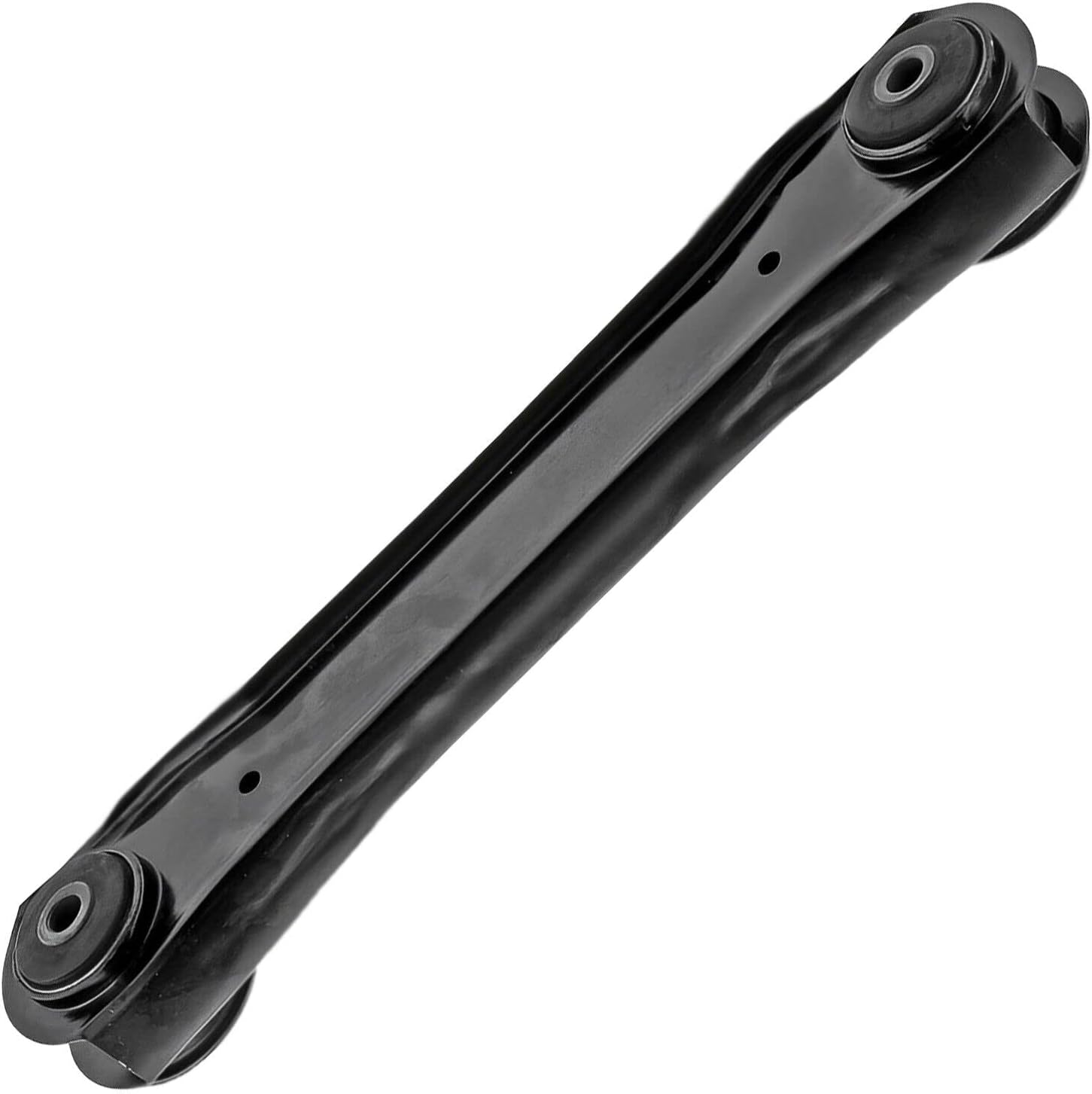
| Fit Type | Vehicle Specific Fit |
|---|---|
| Auto Part Position | Front Lower |
| Material Type | Alloy Steel, Cast Iron |
| Unit Count | 1.0 Count |
| Manufacturer Warranty Description | 10-Year |
This Detroit Axle front lower control arm assembly is a direct-fit replacement intended to restore front suspension geometry on 1997–2006 Jeep Wrangler TJ models with coil springs. It arrives as a single complete arm (driver or passenger side) built from alloy steel and cast iron with a black corrosion-resistant coating. Installation is straightforward for a competent DIYer or a shop because it is designed to match factory mounting points and includes the ball joint area preassembled. In use it provides a beefy, high-strength structure aimed at resisting impact and wear, which helps return steering feel and alignment stability after a worn arm is removed. The unit carries a long warranty and benefits from materials that resist rust, but it is a basic replacement rather than a performance upgrade — expect factory-like ride characteristics rather than improved articulation or lightweight design. Buyers should also confirm they are ordering the correct side since the listing is sold as a single arm.
Best for: Jeep owners looking for a reliable, affordable OE-quality replacement to restore front-end stability and steering feel on a budget-oriented repair project.
Less Ideal for: Not the best choice for off-road enthusiasts seeking upgraded articulation or lighter aftermarket performance parts; those buyers should consider purpose-built performance control arms.
- Vehicle-specific direct-fit design simplifies installation and alignment
- Constructed from alloy steel and cast iron for durability and impact resistance
- Preassembled ball joint area reduces installation steps
- Rust-resistant coating extends service life in wet or salty conditions
- Backed by a long manufacturer warranty
- Sold as a single arm so you must buy the opposite side separately for pair replacement
Verdict: A sturdy, factory-style front lower control arm that gives budget-minded Jeep owners a direct-fit, durable way to restore front suspension and alignment.
5. TRQ 4-Piece Front Upper and Lower Control Arm Set for 1997–2006 Jeep Wrangler

| Fit Type | Vehicle Specific Fit |
|---|---|
| Quantity | 4 Piece |
| Manufacturer | TRQ |
| Model | PSA62820 4 Piece Control Arm Set |
This TRQ four-piece control arm set replaces the front upper and lower control arms on 1997–2006 Jeep Wranglers and is intended as a direct-fit factory-quality replacement. The kit arrives with the two upper and two lower arms preassembled to speed installation and reduce shop time, and TRQ provides step-by-step DIY videos to guide the process. In use the parts restore steering feel and front-end stability, helping eliminate looseness, uneven tire wear, and vibration from worn arms. Construction is machined metal with factory-style bushings and preinstalled ball joints on many fits, which shortens labor compared with replacing individual components. Some reviewers note occasional early failures on isolated units, so long-term durability may vary; inspect bushings and ball joints after break-in and torque hardware to spec. This set is a practical option if you want a near–factory fit and easier installation without buying individual components or aftermarket performance arms.
Best for: Buyers who prioritize dependable, factory-style replacements and want a complete front-arm kit that simplifies repair and restores steering stability on older Wranglers.
Less Ideal for: Drivers seeking heavy-duty off-road performance upgrades or extended-lifespan race-spec components should consider purpose-built aftermarket arms instead.
- Vehicle-specific direct-fit kit for 1997–2006 Jeep Wrangler that replaces both upper and lower front arms
- Preassembled components and preinstalled ball joints reduce installation time
- Machined metal construction with factory-style bushings for restored steering and stability
- Vendor provides DIY installation videos to support home mechanics
- Some customers report premature wear or ball-joint issues on a small number of units
Verdict: A convenient, vehicle-specific replacement kit that restores front-end stability and simplifies installation for 1997–2006 Jeep Wrangler owners focused on reliable, factory-style repairs.
6. Detroit Axle Front Upper Control Arms, Front Pair

| Fit Type | Vehicle Specific Fit |
|---|---|
| Auto Part Position | Front Left Upper, Front Right Upper |
| Material Type | Alloy Steel, Aluminum |
| Included | 2x Front Upper Control Arms Assembly |
| Warranty | 10-Year Warranty |
These Detroit Axle front upper control arms come as a matched pair intended to replace worn factory units on 1997–2006 Jeep Wranglers and similar Jeep platforms. They arrive as complete assemblies with ball joints and bushings already installed so installation is usually a straightforward bolt-in job for a competent DIYer or a shop. The forged alloy steel and aluminum construction with a protective coating aims to resist corrosion and restore steering precision and suspension geometry. Buyers report consistent fitment and improved steering feel after installation, and the parts undergo impact and fatigue testing per the brand. Limitations: some customers note inconsistent accessory hardware packing, so you may need to reuse original bolts or source new fasteners; a few reports discuss greasability and warranty responsiveness. Expect to follow with a professional alignment after installation to ensure proper handling and tire wear.
Best for: Buyers who want a ready-made, direct-replacement pair to restore steering stability and ride control on a 1997–2006 Wrangler and prefer parts with broad real-world approval.
Less Ideal for: Drivers who need fully serviceable, greasable ball joints or who prefer OE dealer parts and full dealership warranty handling should consider alternatives.
- Vehicle-specific matched pair for direct replacement on listed Jeep models
- Comes as complete assemblies with ball joints and bushings preinstalled for faster install
- Alloy steel and aluminum construction with protective coating to resist rust
- Designed and tested for impact, wear, and fatigue to meet factory-quality performance
- Some orders may not include all mounting bolts or grease fittings, requiring reuse or replacement of hardware
- A few users report sealed ball joints that are not serviceable, limiting long-term maintenance options
Verdict: If you want a bolt-in pair that restores steering feel and is widely confirmed to fit 1997–2006 Jeep Wranglers, this Detroit Axle set is a practical, tested replacement.
7. Detroit Axle Front End 17‑Piece Suspension Kit for 1997–2006 Jeep Wrangler

| Fit Type | Vehicle Specific Fit |
|---|---|
| Auto Part Position | Front |
| Manufacturer | Detroit Axle |
| Manufacturer Part Number | 80517-17A |
| Warranty | 10-Year Warranty |
This Detroit Axle kit bundles the key front suspension and steering parts you need to rebuild a 1997–2006 Jeep Wrangler front end. It includes upper and lower control arms with ball joints, outer and inner tie rod ends, adjusting sleeves, sway bar links, a track bar and a drag link so you can replace worn components in one job instead of sourcing parts separately. For routine street use the components restore steering feel, remove clunks and make alignment straightforward after installation. The kit is described as vehicle-specific fit and many owners report straightforward bolt‑in installation and easy greasing of fittings. Quality reports vary: several users praise fit and durability for daily driving, while some note occasional missing or lower‑tolerance hardware that may require inspection or replacement during install. This kit is best when installed by someone comfortable checking torque, cotter pin alignment and swapping suspect bolts rather than relying on every fastener as delivered.
Best for: Buyers who want a one-package front suspension refresh for a 1997–2006 Wrangler and who prefer replacing multiple worn components at once while being careful to inspect hardware during installation.
Less Ideal for: Shoppers who expect factory-level premium tolerances without post‑purchase inspection or those planning heavy-duty off-road use without upgrading to heavy‑duty components.
- Complete kit replaces most front steering and suspension parts in one purchase, simplifying repairs
- Vehicle-specific fitment for 1997–2006 Jeep Wrangler reduces fitment guesswork
- Includes serviceable ball joints and grease fittings for maintenance
- Many buyers report good fit and restored steering feel after installation
- Some customers report inconsistent hardware quality and occasional missing or brittle fasteners that require inspection or replacement
- A few reviews cite premature wear on specific control arms under heavy use
Verdict: A convenient, vehicle-specific front suspension kit that gets a 1997–2006 Wrangler back to quiet, drivable steering when you inspect and secure hardware during installation.
Choosing the Right 1997-2006 Jeep Wrangler Control Arm: Key Factors to Consider
Fitment and Chassis Compatibility
Correct fitment is the single most important factor because the 1997-2006 Wrangler (TJ, LJ, and TJU) uses specific mounting points and suspension geometry. A properly fitting control arm aligns with frame brackets, ball joint taper sizes, and bushing bores so you avoid modification, grinding, or additional adapters. When shopping, verify hole spacing, orientation, and whether the arm is made for stock ride height or lifted setups. Mismatched arms can change suspension geometry, create binding, or create clearance issues with tires and steering components. Fitment also affects alignment outcomes; arms engineered for the TJ, LJ, and TJU geometry make it easier to get the vehicle back to proper toe and camber specs after installation.
Bushing Type and Durability
Bushing material directly influences ride comfort, noise, and service life. Rubber bushings absorb vibration and usually offer a quieter ride but wear faster under heavy off-road use. Polyurethane bushings last longer and resist deformation when exposed to torque, but they may transmit more noise and harshness into the cabin. Consider how you use the Wrangler. If you do frequent trail driving or rock crawling, look for heavier-duty bushings with metal sleeves and good sealing against dirt. For primarily street-driven Wranglers, a softer bushing may preserve ride comfort while still restoring alignment and control. Also check whether bushings are replaceable or bonded into the arm, since replaceable designs allow future refresh without swapping the entire arm.
Ball Joint Quality and Serviceability
Many front control arms integrate ball joints that link to the steering knuckle. The ball joint affects steering precision, wear patterns, and safety. High-quality ball joints use sealed bearings, robust housings, and grease fittings or lifetime seals depending on design. A worn ball joint produces play, which leads to loose steering and uneven tire wear. For owners who want easier maintenance, consider arms with serviceable ball joints or replaceable ball joint cartridges. For heavy off-road use, look for ball joints rated for increased articulation and impact resistance to avoid premature failure during trail impacts.
Construction Material and Corrosion Resistance
Control arms must withstand repeated loads and exposure to road salt, mud, and water. Arms made from heavy-gauge steel, boxed sections, or forged components provide superior strength compared with thin stamped designs. Quality heat treatment and weld practices reduce the risk of fatigue failure under torsional stress. A durable coating or finish such as powder coat or plated corrosion protection extends service life, especially in climates with road salt. If you plan to use the Wrangler off-road, prioritize construction that resists dents and bending, and check weld seams for consistent workmanship to avoid stress concentrators that can cause cracks over time.
Compatibility With Lifted or Stock Suspensions
The Wrangler TJ, LJ, and TJU is frequently modified with lift kits, and control arms must match the chosen ride height and suspension geometry. Stock-length arms maintain original caster and control arm angles, while extended or adjustable arms help correct geometry after a lift to reduce bump steer and maintain tire clearance. If you have a modest lift, adjustable arms offer the flexibility to dial in alignment and caster. For heavy lifts, look for arms specifically designed for altered ride height that also account for driveshaft and steering constraints. Using nonadjustable, stock-length arms on a lifted Wrangler can cause increased wear and poor handling, so confirm the arm's intended application before buying.
Alignment and Steering Behavior
Control arms influence how easily the vehicle returns to proper alignment and how the steering feels during cornering and straight-line driving. Arms that maintain factory geometry simplify shop alignment and reduce time and cost after installation. Adjustable arms let you fine-tune caster and toe when other suspension components are changed. Poorly designed arms can introduce bump steer, change scrub radius, or alter roll center behavior. Evaluate whether the arm allows for factory alignment ranges and whether additional alignment adjustments will be necessary. For drivers who prioritize predictable steering on- and off-road, stability-targeted arm designs are preferable to purely strength-focused parts that ignore alignment outcomes.
Common Control Arm Symptoms and Diagnosis
Understanding symptoms helps you decide whether a control arm replacement is necessary. Typical signs include clunking or knocking noises over bumps, uneven tire wear concentrated on one edge, steering that wanders or requires constant corrections, and visible play at suspension pivot points.
A simple diagnosis routine starts with a visual inspection for torn bushings, rusted or cracked arms, and loose ball joints. With the vehicle lifted, grab the wheel and try to move the wheel hub by hand to feel for play at the ball joint or inner bushing. Many owners also notice vibration under braking when a control arm bushing has deteriorated and allows unwanted movement.
- Clunking on acceleration or braking often points to worn bushings or loose ball joints.
- Pull test of the wheel hub can reveal vertical or lateral play from the control arm joint.
- Look for uneven tire wear across the tread as a sign of alignment drift caused by loose pivots.
- Visual inspection for cracked rubber, metal fatigue, or collapsed bushings gives early warning.
When To Replace Versus Rebuild
Deciding between replacing the entire arm or rebuilding components comes down to condition and long-term goals. If the arm itself is bent, heavily corroded, or has failed welds, replacement is the safest option. If the arm body is sound but bushings or the ball joint are worn, rebuild kits or serviceable cartridges can be more economical and preserve factory geometry.
Consider future maintenance needs. Rebuildable arms with replaceable bushings and ball joints simplify later servicing and can be ideal for owners who plan to keep the Wrangler long term. Conversely, one-piece arms with bonded bushings often provide better initial stiffness and may be preferable for heavy-duty applications where total arm strength is the priority.
- Replace if the arm shows structural damage or permanent deformation.
- Rebuild if bushings or joints are the only worn items and the arm structure is intact.
- Choose rebuildable designs if you expect repeated maintenance or want lower long-term ownership cost.
Installation Considerations for the TJ, LJ, and TJU Wrangler
Control arm installation on a 1997-2006 Wrangler follows a straightforward process but has specific torque specs and alignment consequences. Before removing old arms, mark the current alignment settings if possible and measure ride height. Loosen suspension fasteners with the vehicle at full weight to avoid preloading bushings during reassembly.
New arms often require a post-installation alignment to correct toe and caster. Some designs include grease fittings and require periodic lubrication. If your replacement arms have adjustable features, set them close to factory geometry before lowering the vehicle, then finalize alignment at a shop or with proper tools.
- Install with the vehicle at full weight when tightening bolts where applicable to avoid bushing bind.
- Always check torque values for control arm bolts and ball joint fasteners.
- Plan for a wheel alignment after installation, especially if adjustable arms are used.
Maintenance Tips to Extend Control Arm Life
Routine inspection and basic maintenance will extend the life of control arms. Periodically check bushings for cracks or displacement, inspect welds for hairline cracks, and monitor ball joint boots for tears that allow dirt and moisture in. Grease fittings should be serviced according to the component specification if present.
Address alignment issues promptly. Excessive toe or camber deviations accelerate bushing wear and can lead to premature failure. For trail-driven Wranglers, rinse mud and salt out of suspension cavities after off-road outings to slow corrosion and remove abrasive particles that accelerate bushing deterioration.
- Inspect suspension visually every oil change interval or after heavy off-road use.
- Grease serviceable joints on schedule to prevent premature wear.
- Rinse off corrosive materials and inspect boots and seals for damage after trail runs.
Compatibility With Steering and Brake Components
Control arms interact with steering knuckles, tie rods, and brake assemblies, so ensure the chosen arm does not introduce interference with existing steering or brake upgrades. Arms that reposition pivot points can alter steering geometry and may require additional modifications to maintain proper clearances.
If you have upgraded to larger wheels or tires, verify that the arm's outer clearance is sufficient and that ball joint angles will not impose binding during full lock turns. When in doubt, check manufacturer specifications for spindle taper sizes and knuckle interfaces to confirm compatibility with your existing steering components.
- Confirm ball joint taper sizes match the knuckle to avoid fitment problems.
- Check for adequate clearance with oversized tires and aftermarket brake hardware.
- Consider potential impacts on steering angles when changing arm length or geometry.
Still looking for the perfect fit?
Select your Jeep Wrangler configuration to see the most relevant Control Arms recommendations
How We Chose the Best 1997-2006 Jeep Wrangler Control Arm
We selected control arms for the 1997-2006 Jeep Wrangler using a focused set of technical and practical filters tailored to this vehicle generation. First, fitment accuracy and correct mounting points were mandatory; any arm that did not match the Wrangler TJ, LJ, and TJU suspension geometry was excluded. Second, we prioritized material and manufacturing quality, looking for robust steel or forged components, consistent welds, and corrosion-resistant finishes that withstand off-road exposure. Third, bushing type and expected service life were key criteria. We evaluated rubber, polyurethane, and bonded designs according to likely longevity and NVH tradeoffs for typical Wrangler use. Fourth, ball joint durability and serviceability were considered because they directly affect steering feel and replacement frequency. Fifth, compatibility with common alignment specs and ease of achieving proper toe and camber were included to reduce shop time after installation. We excluded control arms intended only for other Jeep generations, one-off experimental designs, and units lacking clear specification data. The final list balances longevity, serviceability, and real-world fitment for owners who want a reliable steering and suspension baseline.
Our full evaluation process is outlined in our review methodology.
FAQ
How do I tell if a Wrangler control arm is bad?
Common indicators include clunking noises over bumps, visible torn bushings, excessive play at the ball joint, and uneven tire wear. A hands-on check with the hub lifted will reveal lateral or vertical play that suggests a failing arm or joint.
Can I replace just the bushings instead of the whole control arm?
Often you can if the arm body is undamaged and the bushings are replaceable. Some arms have bonded bushings that require full-arm replacement, while rebuildable arms let you swap bushings and extend service life.
Will new control arms fix an alignment issue?
Replacing worn arms can restore alignment stability, but new parts often require a professional alignment afterward. Adjustable arms make correcting caster and toe easier, but alignment checks remain necessary to ensure proper tire wear and steering behavior.
How long do control arm bushings typically last on a Wrangler?
Bushing life depends on material and usage. Rubber bushings under normal street use may last several years, while aggressive off-road use shortens life significantly. Polyurethane and heavy-duty bushings generally last longer but can change ride quality.
Is control arm installation difficult on a TJ, LJ, and TJU Wrangler?
Installation is straightforward for a mechanically inclined owner with basic tools, but some fasteners can be seized from corrosion. Tightening certain bolts at the vehicle's normal ride height and following torque specs helps prevent bushing preload issues. Plan for an alignment after installation.
Do control arms include ball joints or are they separate?
It varies. Some control arms come with integrated, sealed ball joints while others use replaceable ball joint cartridges. Choose based on whether you prefer replaceable serviceability or an integrated sealed assembly.
Final Verdict
When selecting control arms for a 1997-2006 Jeep Wrangler focus on correct TJ, LJ, and TJU fitment, bushing type, and ball joint durability to restore reliable steering and suspension performance. Balance the need for strength and corrosion resistance with alignment-friendly geometry, especially if the vehicle is lifted or runs larger tires. Prioritize parts that match your intended use case: durable, serviceable arms for frequent off-road use, or quieter bushing options for primarily street-driven Wranglers. After installation, plan for a professional alignment and routine inspections to protect your investment and maintain predictable handling.
Explore More:
- Check out all Jeep Wrangler parts & accessories
- Explore Control Arms Maintenance & Repair Guides
- Explore Suspension & Steering
- Browse all Auto Parts
