

Note: This article contains affiliate links. If you click on these links and make a purchase, I may earn a small commission at no extra cost to you. This helps support my research and content. Read my full affiliate disclosure here.
Upgrading to adjustable control arms can be one of the most impactful changes you make to a Jeep Wrangler suspension. Whether you are correcting lift-induced geometry, chasing better tire wear, or eliminating alignment issues, properly selected adjustable control arms restore correct suspension angles and improve handling. This guide collects the top adjustable control arms for the Jeep Wrangler, shortlisted for fit, durability, and ease of installation. We evaluate each option on build quality, adjustability range, and how well it holds alignment under real-world conditions. Read on to see which features matter for your Wrangler and which control arms made the list.
Looking for other parts? See all Jeep Wrangler parts & accessories.
Top Picks at a Glance
| Best Overall The best all-around choice for most situations | TOPTHANE Adjustable Front Upper & Lower Control Arms for 2007–2018 Jeep Wrangler JK |  |
| Best Quality Built to a higher standard if you want something more solid | TeraFlex Alpine Front Lower Flexarm Kit (1415500) |  |
| Best Value The sweet spot between price and what you get | Autoptzxd Front Lower Adjustable Control Arms for 2007–2018 Jeep Wrangler JK/JKU (0–6" Lift) — Pair |  |
| Highest Rated A top-rated pick with lots of positive feedback | maXpeedingrods Adjustable Rear Control Arms for Jeep Wrangler TJ (1997–2006) |  |
| Most Popular A crowd favorite that many people choose with confidence | maXpeedingrods Adjustable Front Upper Control Arms for Jeep Wrangler TJ and Cherokee XJ |  |
1. TOPTHANE Adjustable Front Upper & Lower Control Arms for 2007–2018 Jeep Wrangler JK
| Fit Type | Vehicle Specific Fit |
|---|---|
| Auto Part Position | Front Lower, Front Upper |
| Material Type | Alloy Steel |
| Included Components | Upper & Lower Control Arms |
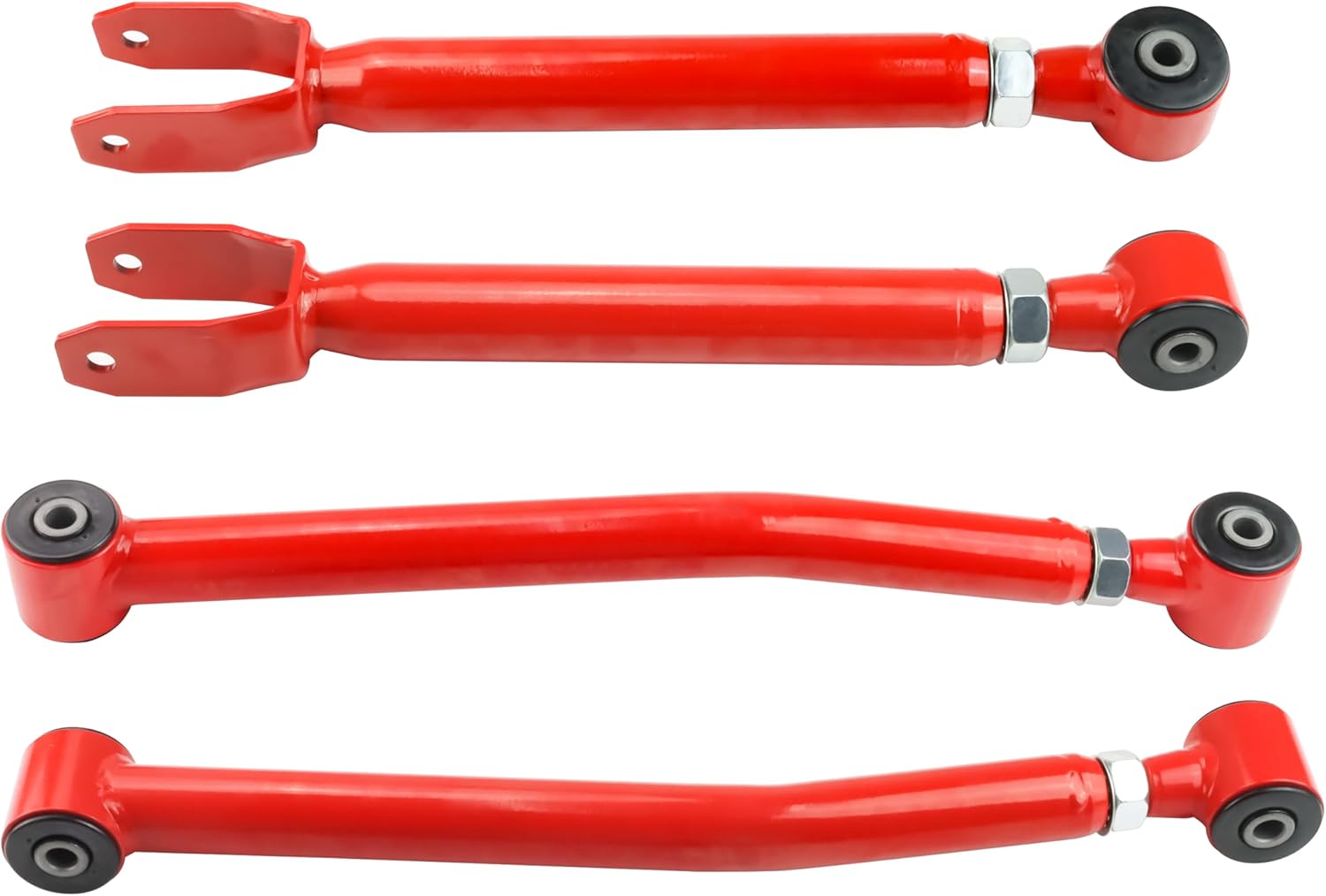
These TOPTHANE control arms replace the front upper and lower factory pieces with adjustable-length units so you can correct caster, camber, and pinion angles after installing a 0–4.5 inch lift on a 2007–2018 Jeep Wrangler JK. Constructed from alloy steel with threaded adjusters and forged ends, the arms are built for heavier duty use on trails while still being used for everyday driving. The adjustable design makes dialing in alignment easier and helps improve on-road stability and steering return after a lift. Molded or engineered bushings reduce noise and harshness while allowing articulation on rough terrain. Installation uses factory mounting points for a bolt-on swap, though a professional alignment is recommended afterward. These are a focused suspension upgrade for lifted JK Wranglers; buyers should know the kit aims at geometry correction and durability rather than a lightweight or show-piece finish, and final alignment and periodic checks of adjusters are necessary to maintain settings under heavy off-road use.
Best for: Buyers who want a practical, durable suspension fix to restore proper geometry after lifting a JK Wrangler and prioritize on- and off-road stability over appearance.
Less Ideal for: If you want a cosmetic, lightweight, or track-focused control arm set, or you plan to keep the factory ride height, this heavy-duty adjustable kit is not the best match.
- Adjustable lengths let you correct caster and camber after lifting for better handling.
- Alloy steel construction with forged ends provides strength for off-road and daily driving use.
- Engineered bushings reduce noise and vibration while allowing articulation over rough terrain.
- Direct bolt-on design uses factory mounting points for straightforward installation.
- Not a lightweight or show-finish component; focus is on strength rather than cosmetic appearance.
- Requires professional alignment after install and periodic checks of adjuster settings.
Verdict: A rugged, adjustable front control arm kit that restores suspension geometry for lifted 2007–2018 Jeep Wrangler JKs and improves on- and off-road stability.
2. TeraFlex Alpine Front Lower Flexarm Kit (1415500)

| Fit | JK Wrangler (2-door) and JK Wrangler Unlimited (4-door) |
|---|---|
| Lift requirement | 2-4" lift required |
| Position | Front lower control arms |
| Included components | Instructions, stickers, 2 flexarms |
TeraFlex Alpine front lower flexarms are adjustable control arms for JK Wrangler and Wrangler Unlimited that let you correct caster and improve axle articulation after lifting the rig 2 to 4 inches. They use forged threaded adjusters with maintenance-free joints and factory-style bonded rubber bushings, which damp vibration for quieter daily driving compared with polyurethane. Installation is a straightforward bolt-on job with no welding; adjustments require removing a bolt to index the threaded stud so changes are made in full-turn increments. In use these arms stiffen the front end, help eliminate death wobble when combined with correct front-end components, and provide more predictable steering under load while allowing good off-road flex. Important limits: adjustment is coarse by design and you cannot turn the adjuster in-place, and full suspension alignment after install is still required. The arms are vehicle-specific and intended for lifted JKs rather than universal fit applications.
Best for: Buyers who prioritize steering control and suspension tuning on a lifted JK and want a durable, factory-style adjustable lower arm that improves caster and reduces wobble while retaining everyday ride comfort.
Less Ideal for: Drivers who need micro-adjustability, on-vehicle adjustment, or a universal arm for multiple vehicle platforms should consider alternative designs or adjustable arms with heim joints.
- Designed specifically for JK Wrangler front application for correct fit and geometry
- Forged threaded adjusters provide durable, smooth adjustment and strong construction
- Bonded rubber bushings reduce vibration for a quieter, more comfortable daily ride
- Bolt-on installation with no welding required
- Adjuster must be removed and repositioned to change length so you cannot fine-tune alignment from under the vehicle
Verdict: For lifted JK owners seeking a durable, factory-style adjustable lower arm to dial in caster and cure death wobble while keeping a comfortable daily ride, these Alpine flexarms are a top practical choice.
3. Autoptzxd Front Lower Adjustable Control Arms for 2007–2018 Jeep Wrangler JK/JKU (0–6" Lift) — Pair

| Fitment | 2007-2018 Jeep Wrangler JK/JKU |
|---|---|
| Lift height | 0-6" |
| Position | Front Lower |
| Material | Alloy Steel |
These adjustable front lower control arms are built for lifted Jeep Wrangler JK/JKU rigs and serve as a direct replacement for factory arms when running 0–6 inches of lift. Made from heavy duty steel tubing with a black powder coat, the arms use a forged ball-and-socket joint with rubber isolators for increased articulation and reduced noise. On-vehicle adjustability and jam nuts let you set pinion angle and axle position without removing the assembly, and the Zerk fittings make them greasable and serviceable over time. Practical benefits include stronger, more stable front-end geometry on trails and improved handling at highway speeds once lengths are dialed in. The arms are not a complete suspension kit so you still need correct lift components and a post-install alignment to get best results, and installation requires some measuring and tightening to lock settings. For a budget-conscious build these strike a solid balance between durability and adjustability.
Best for: Buyers who want a practical, cost-effective way to correct front geometry and improve articulation on a lifted Jeep JK/JKU while keeping serviceability and durability in mind.
Less Ideal for: Drivers seeking a complete suspension overhaul or a no-adjustment, drop-in upgrade should consider a full suspension kit or different control arms with preset geometry.
- Adjustable design allows on-vehicle length changes to set pinion angle and axle position
- Forged ball-and-socket joints with rubber isolators increase articulation while reducing noise
- Greaseable with Zerk fittings for long-term serviceability
- Heavy-duty steel construction with powder coat resists bending and corrosion
- Requires alignment and careful measurement after installation to avoid driveline vibration
Verdict: A durable, adjustable front lower arm pair that gives budget-focused Jeep builders reliable pinion-angle control and improved articulation for 0–6 inch lifts.
4. maXpeedingrods Adjustable Rear Control Arms for Jeep Wrangler TJ (1997–2006)

| Fitment | Jeep Wrangler TJ 1997-2006 |
|---|---|
| Included components | 2 rear upper arms (320-420 mm), 2 rear lower arms (385-470 mm) |
| Material Type | Alloy Steel |
| Unit Count | 4.0 Count |
These maXpeedingrods adjustable rear control arms are a complete four-piece kit for Jeep Wrangler TJ (1997–2006) owners running stock or lifted suspensions up to 4 inches. The set includes two upper and two lower rear arms with threaded adjusters so you can lengthen or shorten each arm to square up the rear axle after a lift. In practice they restore proper wheel alignment, reduce bump steer, and help prevent uneven tire wear compared with fixed-length arms. Built from alloy steel with a powder-coated finish, they are intended for off-road use where strength and corrosion resistance matter. Installation requires basic suspension tools and alignment after adjustment, and users should expect to recheck settings after an initial break-in period; the kit does not include bushings or alignment hardware beyond the arms themselves. These arms are a practical upgrade when you want reliable, adjustable geometry for a lifted TJ without moving to heavy-duty custom arms, but professional alignment is recommended for best results.
Best for: Someone who prioritizes restoring trustworthy suspension geometry after lifting a TJ and wants a durable, adjustable rear arm kit to reduce bump steer and uneven tire wear.
Less Ideal for: Drivers looking for a bolt‑in, maintenance‑free solution with included bushings or those who prefer a heavy‑duty competition suspension setup should consider other options.
- Adjustable length for both upper and lower rear arms to correct axle geometry after a lift
- Complete four-piece kit covers both left and right rear, simplifying installation
- Alloy steel construction with powder coat for strength and corrosion resistance
- Does not include replacement bushings or additional alignment hardware which may be needed during installation
Verdict: Choose this kit if you need a durable, adjustable rear control arm set to reliably correct suspension geometry on a lifted Jeep Wrangler TJ.
5. maXpeedingrods Adjustable Front Upper Control Arms for Jeep Wrangler TJ and Cherokee XJ

| Fitment | Jeep Wrangler TJ 1997-2006, Cherokee XJ 1984-2001, Grand Cherokee ZJ/WJ 1993-2004 |
|---|---|
| Lift compatibility | 0-8" lift |
| Position | Front upper |
| Material Type | Alloy Steel |
These adjustable front upper control arms let you fine tune suspension geometry after lifting a Jeep Wrangler TJ or Cherokee XJ, reducing bump steer and helping prevent uneven tire wear. They install in the front and adjust across a range to suit stock height up to heavy lifts, so they are typically used when fitting larger tires or correcting alignment after a lift. Construction uses alloy steel with powder coating for corrosion resistance and polyurethane bushings in place of rubber for more responsive handling and longer wear. The kit is greaseable and comes with sleeves for different bolt diameters, but it does not include mounting bolts so you will need to source high-strength hardware and follow correct bushing greasing procedures. Fitment reports are generally positive for TJ and XJ but some buyers needed minor modifications or different hardware on certain Grand Cherokee WJ models, so expect to check fit carefully for non-TJ/XJ installs. For the price this offers a robust, adjustable solution for lifted Jeeps if you are comfortable handling final hardware and fitment checks.
Best for: Buyers who want a cost-effective way to restore steering geometry and handling after installing a lift on a Wrangler TJ or Cherokee XJ and who prioritize visible user feedback and proven results when choosing parts.
Less Ideal for: People who expect a perfect direct-fit replacement for every Jeep model without changing hardware or making minor adjustments should consider a vehicle-specific OEM-style arm or a higher-end tuned option.
- Adjustable length to correct geometry for stock height up to heavy lifts
- Alloy steel construction with powder coating resists rust in off-road conditions
- Polyurethane bushings offer more responsive handling and greater wear resistance than rubber
- Greaseable design with sleeves for different bolt diameters simplifies maintenance
- Does not include mounting bolts so additional hardware purchase is required
- Some users report fitment issues on certain Grand Cherokee WJ years that require minor modification
Verdict: A budget-friendly, adjustable front upper arm that reliably restores steering geometry for lifted Wrangler TJ and Cherokee XJ builds when you are prepared to supply correct hardware and check fitment.
Choosing the Right Jeep Wrangler Adjustable Control Arm: Key Factors to Consider
Adjustment Range And Precision
The adjustability range determines how much caster and pinion angle correction you can achieve after lifting the Wrangler. A wider and more precise range lets you fine-tune alignment without forcing other suspension changes. Precision matters because small alignment differences can cause uneven tire wear, alignment issues, and poor steering returnability.
Look for arms with fine-thread adjustment or indexed settings so adjustments are repeatable. If you plan to change ride height or wheel/tire size frequently, choose arms that maintain settings and resist turning under vibration. Consider whether the design allows full travel without binding at full droop or compression.
Material Quality And Corrosion Resistance
Control arms are exposed to road salt, mud, and rock contact, so material and finish affect longevity. Heavy-gauge steel or forged components provide strength needed for off-road use, while quality coatings prevent premature rust that can seize adjusters and hardware.
Weld quality and heat treatment influence fatigue resistance. For long-term service, look for arms with corrosion-resistant finishes and replaceable wear parts rather than one-piece pressed arms that may require full replacement when a bushing or joint fails.
Bushing And Joint Design
The type of bushing or joint impacts ride quality and steering feedback. Polyurethane bushings offer firmer steering and longer life than rubber but can increase noise and vibration. Spherical bearings and heim joints give precise alignment and articulation but may transfer more noise and require maintenance.
Choose a design that suits how you use your Wrangler. For daily-driven Wranglers, resilient bushings that isolate road noise are often preferred. For serious off-road articulation and precise alignment, stronger joints may be worth the tradeoff.
Compatibility And Mounting Fitment
Correct fitment is essential to avoid modification. Control arms should match the Wrangler chassis and factory mounting points so installation is straightforward and does not introduce alignment issues. Confirm bolt orientation, bracket spacing, and control arm length range are compatible with your Wrangler's configuration and lift height.
Also consider whether the arms interfere with other components such as brake lines, sway bar links, or ABS sensors. Clear documentation and hardware kits simplify installation and reduce surprises during a suspension upgrade.
Alignment Stability And Maintenance
An adjustable control arm must hold its settings through typical driving loads. Locking mechanisms, jam nuts, and corrosion-resistant threads help prevent unwanted movement that causes alignment drift and tire wear. Maintenance access is important; being able to check and re-lock settings without removing the arm saves time.
Consider the availability of replacement bushings, joints, and hardware. Products designed for field service let you refresh wear items rather than replacing the whole arm, improving long-term value.
Ease Of Installation
Ease of installation affects cost and downtime. Control arms that fit in place with factory hardware or a minimal hardware kit reduce installation time. Designs that allow alignment without complete disassembly or that offer adjustment with the vehicle on the ground help reduce alignment labor.
Check if special tools or press work are required for bushing installation. If you plan to install at home, prioritize arms with straightforward instructions, clear torque specs, and accessible adjustment points.
When Adjustable Control Arms Make The Biggest Difference
Adjustable control arms are most beneficial after a suspension lift or when persistent alignment issues occur. Lifting a Jeep Wrangler alters caster, camber, and track width geometry; adjustable arms let you correct caster and pinion angle without moving other suspension components.
Owners who experience uneven tire wear, steering pull, or poor steering returnability after a lift will see the quickest gains from proper adjustable arms. They also help maintain driveline angles and reduce stress on CV or U-joints by allowing fine correction.
- Corrects caster and pinion angle after lifting
- Reduces uneven tire wear and steering pull
- Improves handling and steering feedback
Understanding Common Control Arm Symptoms
Symptoms that point to worn or misadjusted control arms include clunking over bumps, wandering steering, vibration at speed, and accelerated tire wear. Distinguishing between a worn bushing and improper alignment is important because the remedies differ.
If your Wrangler has visible bushing movement, grease leakage from joints, or noticeable play at suspension pivots, those often indicate component wear. Alternatively, if symptoms started after a lift or wheel change, geometry correction with adjustable arms may be the cure rather than part replacement alone.
- Clunking or knocking on compression or rebound
- Steering pull or poor straight-line tracking
- Rapid or uneven tire wear patterns
Basic Installation Considerations For Home Mechanics
Many adjustable control arms are designed for bolt-on installation using common hand tools and a torque wrench. Typical steps involve supporting the axle, removing the factory arm, transferring or installing new hardware, and setting a baseline adjustment before lowering the vehicle for alignment.
Some designs allow final adjustment with the vehicle on the ground, which helps achieve accurate caster and toe without repeated jacking. If bushings or pressed joints are involved, you may need a press or specialty tools. Expect to recheck and torque fasteners after initial driving.
- Support vehicle safely and use correct torque specs
- Set a conservative baseline length before lowering for alignment
- Recheck fasteners and adjustments after the first few hundred miles
Maintenance And Long-Term Care
Regular inspection prolongs control arm life. Look for corrosion on adjuster threads, play in joints, and bushing deterioration. Periodic greasing of fittings, if present, and cleaning of threads helps prevent seizure and preserves adjustment accuracy.
Plan to replace wear items before failure; replace bushings or joints when you detect excessive play. Keeping replacement parts on hand or choosing arms with readily available service components reduces downtime when issues arise.
- Inspect for play and corrosion every 6 months or after heavy off-road use
- Grease zerk fittings when applicable and clean adjuster threads
- Replace worn bushings or joints promptly to avoid secondary damage
How Adjustable Arms Affect Alignment And Tire Wear
Adjustable control arms allow you to dial in caster, which directly influences steering returnability and cornering stability. Correct caster settings reduce steering effort and improve straight-line tracking, which lowers the risk of alignment issues developing over time.
Properly set arms also help maintain consistent toe settings, limiting feathering and uneven tire wear. After installation, a professional alignment is recommended to confirm caster, camber, and toe are within specifications for the Wrangler configuration.
- Caster tuning enhances steering feel and returnability
- Maintains proper toe to reduce uneven tire wear
- Helps preserve driveline geometry to prevent vibration
Still looking for the perfect fit?
Select your Jeep Wrangler configuration to see the most relevant Control Arms recommendations
How We Chose the Best Jeep Wrangler Adjustable Control Arm
Our selection process focused on the practical needs of Jeep Wrangler owners who are installing adjustable control arms to correct suspension geometry or accommodate lift kits. We prioritized components that provide reliable adjustment range, robust construction, and consistent alignment retention under load. Key evaluation criteria included adjustability precision and range so you can correct caster and toe after lifting; material and finish for corrosion resistance on trail and road; bushing and joint design to balance compliance and stability; mounting points and hardware compatibility for factory mounts; and ease of installation, including whether the arms allow alignment without removing the assembly. We also considered serviceability, such as replaceable bushings or joints, and measured tolerance to maintain settings over time.We excluded products that require extensive fabrication, non-welded construction, or unproven proprietary fittings that limit standard alignment procedures. We did not factor brand popularity alone; instead we focused on measurable fitment, manufacturing quality, and documented performance characteristics that matter for Jeep Wrangler owners. The resulting picks reflect those filters and are intended to suit common lift heights and street-to-light-trail use cases.
Our full evaluation process is outlined in our review methodology.
FAQ
How do I tell if an adjustable control arm is the right fix for my steering pull?
It often depends on the root cause. If the steering pull began after a lift or wheel/tire change, geometry is a likely culprit and adjustable arms can correct it. If pull is accompanied by clunks or visible bushing movement, worn components may need replacement first.
Can I install adjustable control arms at home without special tools?
Many Wrangler-compatible adjustable arms are bolt-on and installable with standard tools and a torque wrench. However, some bushings or pressed joints may require a press or specialty tools. Choose a design matched to your tool access if installing at home.
Will adjustable arms solve all control arm symptoms like clunking?
Not always. Clunking often indicates worn bushings or joints rather than just alignment problems. Adjustable arms can correct geometry but if components have play they should be replaced or serviced to eliminate noise and restore proper function.
How often should I check the adjustment and hardware on adjustable control arms?
Check fastener torque and adjustment settings after the first 100 to 200 miles, then during routine inspections every 6 months or after heavy off-road use. Corrosion and vibration can loosen hardware over time, so periodic checks preserve alignment.
Do adjustable control arms affect the front alignment cost or frequency?
They can reduce the need for frequent corrective work by enabling correct initial geometry, which helps prevent alignment issues that lead to extra shop visits. However, any suspension change or component wear will still require periodic alignments to maintain optimal tire wear.
Final Verdict
For Jeep Wrangler owners, adjustable control arms are a practical way to restore proper suspension geometry after lifts and to address alignment-related handling problems. Prioritize arms that offer the right adjustability range for your lift, durable materials and finishes for off-road exposure, and a bushing or joint style that matches your balance of comfort and precision. Remember that correct installation and follow-up alignment are essential to secure the benefits. Choose an option that fits your intended use, and expect to maintain adjustment points and wear items over time to keep your Wrangler tracking true.
Explore More:
- Check out all Jeep Wrangler parts & accessories
- Explore Control Arms Maintenance & Repair Guides
- Explore Suspension & Steering
- Browse all Auto Parts
