

Note: This article contains affiliate links. If you click on these links and make a purchase, I may earn a small commission at no extra cost to you. This helps support my research and content. Read my full affiliate disclosure here.
If you drive a 1996-2000 Honda Civic, choosing the right clutch kit matters for shift quality, longevity, and everyday drivability. Whether your Civic is an EJ, EK, and EM, or EM chassis, a properly matched kit restores engagement, reduces noise, and prevents premature wear to the transmission. This guide focuses on clutch kits suitable for manual-transmission Civics from that model span and highlights shortlisted options that meet real-world needs.We evaluated kits with attention to friction material, pressure plate design, and included hardware so you can pick a solution that matches your driving style and service plans. Read on to compare the top picks and learn what to prioritize when replacing the clutch on your Civic.
Looking for other parts? See all Honda Civic parts & accessories.
Top Picks at a Glance
| Best Overall The best all-around choice for most situations | EFORTISSIMO Racing Stage 2 Clutch Kit with Heavy-Duty Flywheel for 1992–2005 Honda Civic/Del Sol |  |
| Best Quality Built to a higher standard if you want something more solid | EFORTISSIMO Racing Stage 1 Clutch Kit (210 mm, 20-Spline) |  |
| Best Value The sweet spot between price and what you get | ClutchMaxPRO Stage 3 Performance Clutch Kit for Honda Civic / Del Sol (D15/D16/D17) |  |
| Best Budget The cheapest option that still gets the job done reliably | MITSUKO Stage 1 Complete Clutch Kit (08-026RV) |  |
| Highest Rated A top-rated pick with lots of positive feedback | Exedy Clutch Kit (08022) |  |
| Most Popular A crowd favorite that many people choose with confidence | ClutchMaxPRO Stage 2 Performance Clutch Kit (Fits 1992–2005 Civic D15/D16/D17) |  |
1. EFORTISSIMO Racing Stage 2 Clutch Kit with Heavy-Duty Flywheel for 1992–2005 Honda Civic/Del Sol

| Horsepower rating | 235 HP |
|---|---|
| Torque capacity | 215 ft/lbs |
| Disc size and spline | 212mm, 20 spline |
| Includes | Flywheel, pressure plate, disc, release & pilot bearings, alignment tool |
This EFT/EFORTISSIMO Stage 2 clutch kit bundles a heavier 18 lb flywheel with a Stage 2 sprung pressure plate and a carbonized friction disc to give a noticeable step up from factory clutch performance. It is intended as a one-step street or occasional track upgrade that holds roughly 50% more power than stock and is rated around 235 HP and 215 ft-lbs torque capacity. The kit includes everything needed for installation: disc, pressure plate, heavy-duty flywheel, release and pilot bearings, alignment tool and instructions. In use the carbonized disc and hardened diaphragm deliver firmer clamp and improved heat tolerance for spirited driving, while the sprung center helps smooth engagement compared with aggressive race discs. Practical downsides reported by some users include noisy or lower-quality bearings in the kit and occasional engagement or slipping issues if not properly broken in or if used heavily on track. For a balanced buyer wanting more durability and stronger holding capacity without a full race setup, this kit provides a clear performance and drivability upgrade with a mostly straightforward install.
Best for: Buyers who want a reliable, street-focused performance upgrade that improves holding capacity and drivability over stock without moving to a full race clutch.
Less Ideal for: Drivers seeking a dedicated competition or drag-racing clutch with aggressive engagement and maximum heat tolerance should look to more track-focused packages.
- Complete package includes disc, pressure plate, heavy-duty flywheel, release and pilot bearings, alignment tool and guide
- Carbonized friction material and induction-hardened diaphragm increase heat resistance and burst strength
- Designed as a direct factory-replacement for easy fitment with no modifications
- Higher clamp and sprung center help deliver smoother engagement than a pure race puck-style disc
- Some customers report noisy or lower-quality bearings included in the kit
- A few users experienced slipping or engagement problems if not properly broken in or under heavy heat
Verdict: A practical Stage 2 upgrade that gives Civic/Del Sol owners stronger, smoother clutch performance and a factory-style fit without a full race compromise.
2. EFORTISSIMO Racing Stage 1 Clutch Kit (210 mm, 20-Spline)

| Vehicle fitment | Honda Civic 1992-2000 / Del Sol 1993-1995 and listed 2001-2005 D17 |
|---|---|
| Clutch disc | 210 mm, 20 spline |
| Horsepower rating | 195 HP |
| Torque capacity | 181 ft/lbs |
This EFT (EFORTISSIMO) Stage 1 clutch kit is a full replacement package built for 1992–2000 Civic and 1993–1995 Del Sol SOHC applications and the 2001–2005 D17 Civic noted by the listing. It includes a heavy-duty pressure plate, a 210 mm 20-spline organic clutch disc, release and pilot bearings, an alignment tool, and an installation guide. The pressure plate uses an induction-hardened single diaphragm and reinforced drive straps aimed at higher clamp load and consistent engagement. The organic disc is formulated for good heat tolerance and quick recovery so it stays streetable during spirited driving while improving power transfer up to the listed 195 HP rating. Buyers can expect firmer engagement and better clutch feel versus a worn factory unit, with components sized for direct fitment and easy installation. Limitations are that the kit is rated for moderate performance gains only and is not intended for heavily modified high-boost builds or extreme track use where multi-puck or cerametallic setups are preferable.
Best for: Drivers who want a straightforward, performance-minded replacement that increases clamp and engagement for spirited street driving and light track use while keeping installation simple.
Less Ideal for: Racers or builders running high-boost or heavily modified engines who need higher torque capacity or aggressive, non-organic clutch materials should look at stronger competition-oriented kits.
- Complete kit includes pressure plate, clutch disc, release and pilot bearings, and alignment tool for one-stop installation
- Pressure plate with induction-hardened diaphragm and reinforced straps increases clamp load and durability
- Organic friction disc offers good heat tolerance and quick recovery for street and occasional track use
- Rated for 195 HP and 181 ft·lb so it may not handle heavily modified, high-boost engines
Verdict: A ready-to-install, street-focused Stage 1 kit that noticeably tightens clutch feel and power transfer for moderately tuned SOHC Civics.
3. ClutchMaxPRO Stage 3 Performance Clutch Kit for Honda Civic / Del Sol (D15/D16/D17)

| Vehicle application | 1992–2005 Civic (D15, D16, D17); 1993–1995 Civic Del Sol (D15, D16) |
|---|---|
| Torque capacity | 275 lb-ft |
| Horsepower rating | 314 HP |
| Disc type | Stage 3 ceramic 6-puck sprung |
This ClutchMaxPRO Stage 3 kit replaces the factory clutch with a high-capacity performance setup intended for stronger acceleration and track-minded driving. It includes a heavy-duty pressure plate, a ceramic 6-puck sprung disc, release bearing, pilot bushing, alignment tool, and installation guide so a competent DIYer or a shop can complete a clutch job without sourcing extra parts. The kit is rated to roughly 314 hp and 275 lb-ft torque, so it will tolerate upgraded engines, mild forced induction, or more aggressive driving compared with a stock unit. The 6-puck ceramic disc gives sharper clutch engagement and better heat resistance but can feel choppier at low speeds and may increase driveline noise compared with an organic disc. Because the package targets performance, drivability in stop-and-go traffic will be firmer and may require a short break-in and precise pedal modulation. Fitment covers 1992–2005 Civics and early Del Sols with D15/D16/D17 SOHC motors, but buyers should confirm spline and transmission match before ordering.
Best for: Drivers who want a durable, higher-capacity clutch for spirited street driving or occasional track use and who prioritize stronger engagement over plush daily comfort.
Less Ideal for: Drivers who primarily commute in heavy city traffic or who prefer smooth, OEM-like engagement should consider a milder organic or Stage 1 replacement instead.
- High torque and horsepower capacity (rated ~314 HP / 275 lb-ft) for upgraded or aggressive engines
- Complete kit includes pressure plate, 6-puck ceramic disc, release bearing, pilot bushing, and alignment tool
- Ceramic puck design increases heat resistance and clutch bite for track and spirited driving
- Designed and assembled in the U.S. with brand support and a limited manufacturer warranty
- 6-puck ceramic disc produces firmer, less smooth engagement at low speeds compared with organic discs
- Intended for performance use so it may be less comfortable for frequent stop-and-go city driving
Verdict: Buy this kit if you need a stronger, track-capable clutch for a D15/D16/D17 Honda engine and accept firmer engagement for improved performance.
4. MITSUKO Stage 1 Complete Clutch Kit (08-026RV)
| Brand | MITSUKO |
|---|---|
| Model | Clutch Clutch Kit |
| Item model number | 08-026RV |
| Position | Front |
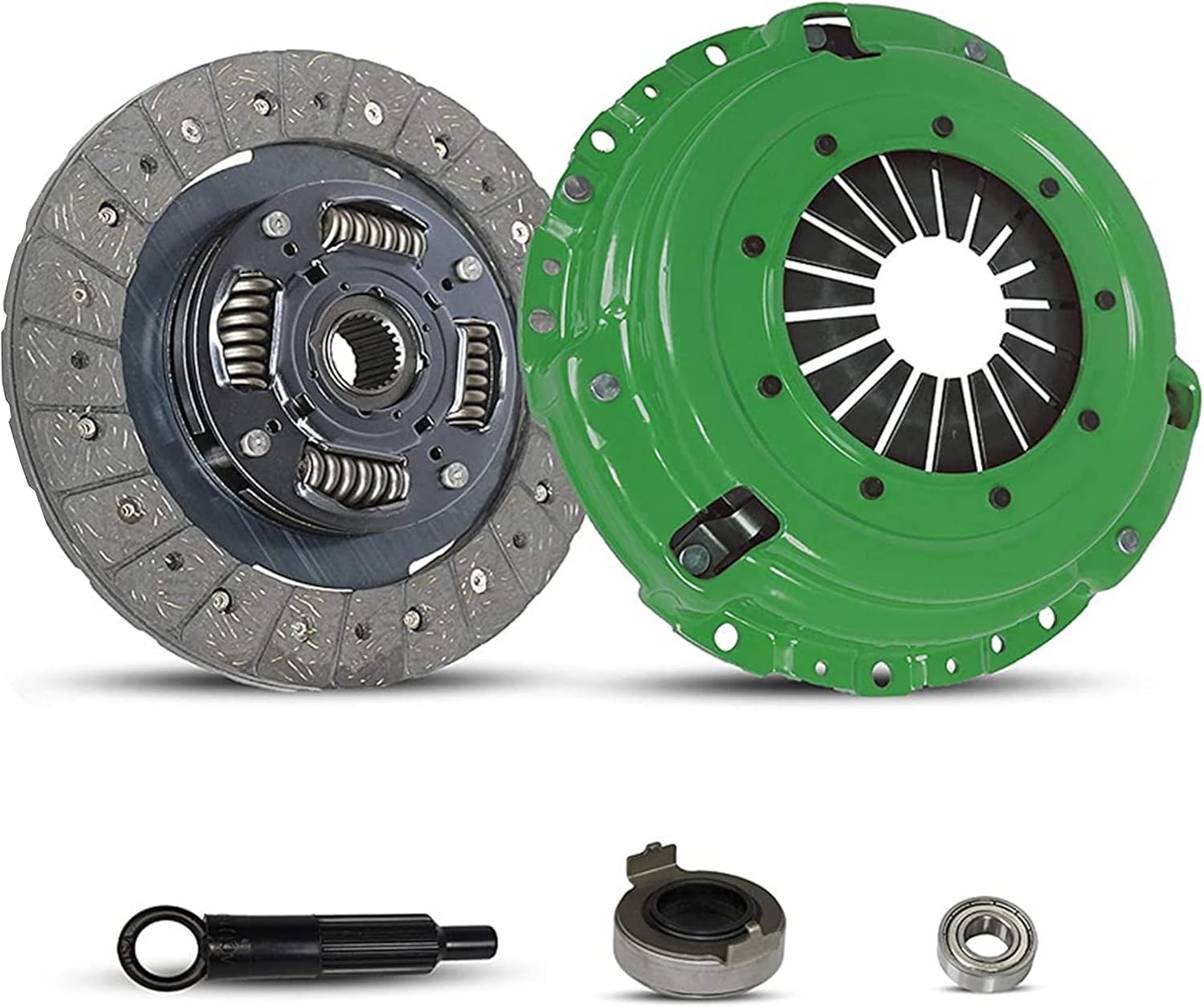
This MITSUKO Stage 1 clutch kit supplies everything needed for a full clutch replacement: a heavy duty pressure plate, a woven organic sprung disc, release bearing, pilot bushing and alignment tool. It is intended for street and mild performance use and is built to provide a firmer, more positive engagement than a stock unit while keeping drivability reasonable. The woven organic disc and sprung center reduce shock to the drivetrain, which helps longevity and smoother takeup compared with untamed racing discs. The kit is assembled in the U.S. and includes a grease packet and break-in guidance, so a professional installer can fit it and have the vehicle back on the road quickly. Buyers should expect a stiffer pedal and a required 500 mile break-in; this is not a high-friction race puck, so it will not support major power upgrades without slipping. For someone replacing a worn clutch or upgrading slightly for spirited street driving, it offers a complete, affordable package.
Best for: Buyers looking for an affordable, complete replacement clutch that improves engagement and durability for daily-driven 1996–2000 Civic use without major performance modifications.
Less Ideal for: Drivers building high-horsepower or track-focused cars who need a heavy duty racing clutch or multi-plate setup should look for specialized performance units instead.
- Complete kit includes pressure plate, clutch disc, release bearing, pilot bushing and alignment tool for one-stop replacement.
- Woven organic sprung disc provides smoother engagement and reduced drivetrain shock compared with unruly performance discs.
- Assembled in the U.S. with a grease packet and break-in guidance to simplify installation and initial service.
- Designed for Stage 1 and mild performance; not suitable for extensively modified engines that produce significantly more torque.
- Pedal feel is firmer than stock and requires a 500 mile break-in period before normal operation.
Verdict: A budget-friendly, all-in-one Stage 1 clutch kit that upgrades engagement and lets you replace the entire clutch assembly without sourcing extra parts.
5. Exedy Clutch Kit (08022)

| Brand | Exedy |
|---|---|
| Model | Clutch Kit |
| Manufacturer | Exedy Globalparts Corporation |
| Exterior | Machined |
This Exedy clutch kit supplies the friction disc, pressure plate, and associated wear components for a straightforward clutch replacement. It is built to factory-quality specifications and is used when replacing a worn or slipping clutch during a transmission removal or engine-out clutch service. Installers report a light pedal and smooth engagement similar to factory units, and the machined pressure plate and included pilot bearing/throwout hardware make it a one-stop kit for most D-series Hondas. The practical benefit is a near-OEM feel and longevity at a lower cost than dealer parts, which makes it attractive for daily-driven Civics. Fitment reports are mostly positive but there are occasional fit issues on some year/model combinations, so verify part number and vehicle compatibility before buying. This kit is not a performance clutch, so drivers wanting stiffer engagement or higher torque capacity will need an aftermarket performance unit.
Best for: A buyer looking to restore reliable, factory-like clutch operation on an older Honda Civic and prioritizing longevity and predictable pedal feel over performance upgrades.
Less Ideal for: Enthusiasts who want a performance-oriented clutch with firmer engagement or higher torque capacity should choose a dedicated performance kit instead.
- Factory-quality design that matches OEM specifications for a stock driving feel
- Includes the main wear parts so a full clutch job does not require extra components
- Light pedal and smooth engagement reported by multiple installers
- Durable machined pressure plate and factory-style construction
- Not intended for high-performance or increased torque applications
- Some buyers reported fitment problems on specific model years, so compatibility must be confirmed
Verdict: Choose this Exedy kit if you want a dependable, factory-spec replacement clutch for a D-series Honda that restores stock feel and durability.
6. ClutchMaxPRO Stage 2 Performance Clutch Kit (Fits 1992–2005 Civic D15/D16/D17)

| Vehicle fit | 1992–2005 Civic (1.5L, 1.6L, 1.7L SOHC) and 1993–1995 Civic Del Sol |
|---|---|
| Torque capacity | 243 HP / 215 lb-ft |
| Disc type | Stage 2 carbon-kevlar infused disc |
| Kit contents | Pressure plate, disc, release bearing, pilot bearing, alignment tool |
This ClutchMaxPRO Stage 2 kit replaces the factory clutch with a heavier-duty pressure plate and a carbon-kevlar infused stage 2 disc to raise torque capacity to 243 hp and 215 lb-ft. It is used as a direct replacement when the transmission is out and suits daily-driven cars that see occasional spirited driving or moderate track sessions. The kit includes the pressure plate, stage 2 friction disc, release bearing, pilot bearing, alignment tool, and a basic installation guide, which covers the parts needed for a full clutch job. In practice the clutch bites harder than stock and holds significantly more power, so drivers report improved launch and reduced slip—some owners with boosted engines note good durability. Expect a firmer pedal and a sharper engagement point compared with stock, and a small number of users have reported fitment or engagement issues that required troubleshooting. This is a practical, budget-friendly performance upgrade for Civic owners wanting more holding capacity without moving to an aggressive race setup.
Best for: Buyers who value community-verified performance upgrades and want a budget-friendly clutch that reliably increases holding capacity for spirited street driving and occasional track use.
Less Ideal for: Drivers who prioritize ultra-smooth, stock-like pedal feel or who need an aggressive race-only clutch for high-horsepower competition.
- Higher torque rating (243 hp / 215 lb-ft) for better holding capacity than stock
- Includes full hardware needed for installation including release and pilot bearings and alignment tool
- Carbon-kevlar infused friction disc offers a balance of grip and durability for street and light track use
- Well suited to boosted or modified lightweight engines according to multiple user reports
- Engagement is firmer and less smooth than stock which may require a break-in period and driving adjustment
- A minority of buyers reported installation or engagement problems that required removing the transmission to correct
Verdict: A budget-conscious Stage 2 kit that real-world Civic owners trust to add reliable holding power for spirited street and light track use.
Choosing the Right 1996-2000 Honda Civic Clutch Kit: Key Factors to Consider
Friction Material and Compound
The friction material determines engagement characteristics, wear rate, and heat tolerance. Organic compounds offer smooth engagement and are forgiving for daily driving, while ceramic or sintered materials handle higher heat and torque but can be harsher at the pedal. For a 1996-2000 Civic used on the street, choose a compound that balances smooth take-up with reasonable life.
Consider how driving style affects wear. Aggressive launches, frequent stop-and-go traffic, or towing will accelerate wear and favor tougher compounds. Also think about bedding-in procedures: some friction materials require a controlled break-in to achieve consistent contact and longevity. Selecting the right compound helps avoid chatter, slipping, or rapid deterioration.
Pressure Plate Design and Clamp Load
The pressure plate controls clamping force and determines pedal effort and holding capacity. A higher clamp load resists slippage under load but increases pedal stiffness, which can affect daily drivability. For stock or mildly modified Civic engines, a balanced pressure plate provides secure engagement without fatiguing the driver.
Different pressure plate designs, such as diaphragm versus coil-spring, behave differently as they wear. Diaphragm plates tend to have more consistent pedal feel and simpler adjustment needs. When selecting a kit, consider how the pressure plate will pair with your driving habits and whether you prioritize lighter pedal travel or stronger holding capacity.
Included Components and Hardware
A complete kit should include the clutch disc, pressure plate, release bearing, pilot bushing or bearing, and alignment tool. Missing hardware leads to extra parts orders and can extend downtime. The release bearing quality affects how smoothly the clutch disengages and directly influences noise and wear on the input shaft.
Also check whether the kit provides new mounting bolts or whether the existing bolts are reusable. Alignment tools included with the kit make installation straightforward and reduce the chance of cross-threading or misalignment. For many DIY owners of 1996-2000 Civics, getting a full component set saves a service visit and avoids later issues from overlooked parts.
Compatibility With Flywheel Condition
Clutch performance depends on the mating surface of the flywheel. A resurfaced or new flywheel ensures proper contact with the friction material. Some kits are optimized for use with a resurfaced stock flywheel while others assume replacement with a new unit. Inspecting the flywheel for heat spots, warping, or scoring is an essential preparatory step.
Decide whether you plan to resurface the existing flywheel or replace it. Resurfacing can be cost-effective if the flywheel is within spec, but significant damage requires replacement. Compatibility notes in kit documentation clarify whether included components work best with a resurfaced or new flywheel.
Clutch Disc Type and Spline Fitment
Disc design, including spline count and hub damping, affects drivetrain NVH and engagement smoothness. The correct spline fitment for the Civic's input shaft is critical; an incorrect spline count or hub type will not install or will cause premature wear. Cushioning or torsional damping in the disc reduces driveline harshness and helps smooth shifts.
Review technical specs to confirm spline compatibility with EJ, EK, and EM, or EM input shafts. Consider whether a sprung hub is preferable for street use to absorb shock loads, especially if the car sees uneven gears or occasional spirited driving.
Serviceability and Installation Complexity
Installing a clutch kit involves transmission removal and can be labor-intensive. Some kits are designed for straightforward bolt-on replacement while others require extra machining or specialized tools. For owners planning DIY installation, prioritize kits that include an alignment tool and components that match stock tolerances.
Also factor in clutch kit installation labor cost if you plan professional installation. The kit choice can affect labor time; for example, replacing a flywheel or dealing with seized bolts adds hours. Choosing a kit that fits cleanly with the Civic's bellhousing and input-shaft geometry reduces the chance of extra labor.
How To Diagnose Clutch Issues on a 1996-2000 Civic (EJ, EK, and EM)
Start with common symptoms: slipping under load, a soft or spongy pedal, difficulty engaging gears, or grinding noises when shifting. Pay attention to whether issues change as the engine warms up or under certain RPM ranges. These observations narrow down whether the clutch disc, pressure plate, or release bearing is at fault.
Perform a simple on-car test: with the engine running and the parking brake engaged, try to hold the car in gear with the clutch partially depressed. Slipping under this test indicates wear. Also check for fluid leaks at the slave cylinder or master cylinder that may affect pedal feel.
- Listen for squeal or rumble when the clutch is engaged or disengaged
- Check for excessive free play at the pedal or abnormal pedal travel
- Inspect transmission input shaft and pilot bearing access for signs of wear
Preparing Your Civic for a Clutch Replacement
Before removing the transmission, document the starter position, linkage routing, and any wiring or lines that must be disconnected. Labeling components and taking photos helps during reassembly. Have jack stands and a transmission jack ready to support the gearbox safely.
Gather required replacement items beyond the clutch kit itself, such as new transmission mount hardware or axle bolts if they show corrosion. Verify torque specs and have a service manual or reliable technical reference for the EJ, EK, and EM, or EM chassis on hand.
- Inspect the flywheel for heat spots or warpage and decide on resurfacing
- Plan for replacing the release bearing and pilot bearing when accessible
- Ensure all necessary hand tools and an alignment tool are available
DIY Installation Tips for Manual Transmission Owners
If you are tackling a clutch job yourself, take your time during disassembly to avoid stripped threads or damaged sensors. Use a transmission jack to lower the gearbox evenly and support the engine if motor mounts are removed. Clean mating surfaces thoroughly before installing the new kit.
When installing the new disc and pressure plate, use the alignment tool and tighten bolts in a star pattern to the specified torque. Double-check clutch-release geometry and pedal free play before reconnecting the linkage. After installation, perform a gradual bedding-in routine to allow the friction material to mate properly with the flywheel.
- Replace hardware bolts if they show stretching or corrosion
- Torque pressure plate bolts incrementally and in sequence
- Bleed the hydraulic system thoroughly to restore pedal firmness
Matching Clutch Characteristics to Driving Style
Consider how you use the Civic. Commuters benefit from kits that prioritize smooth, light pedals and low noise. Drivers who occasionally push the car should look for a slightly firmer setup with higher clamp capacity. Track or competition use requires purpose-built components, which are outside the scope of this street-focused guide.
Think about tradeoffs. A kit that reduces slipping under sudden loads may increase pedal effort and daily fatigue. For 1996-2000 Civic owners, a middle-ground kit often provides the best blend of comfort and capability.
- Street-oriented kits: softer engagement, longer life
- Performance-oriented kits: firmer engagement, higher heat tolerance
- Heavy-duty kits: intended for high-load applications and modified engines
Common Installation Pitfalls and How to Avoid Them
One frequent issue is improper alignment of the clutch disc which can lead to difficulty installing the transmission or cause vibration. Always use the supplied alignment tool and verify the disc is centered before torquing the pressure plate. Cross-threaded bolts on the bellhousing or pressure plate are another avoidable problem; start threads by hand.
Failing to inspect the flywheel or replace the pilot bearing can result in premature failure. Ensure all components are clean and free from oil or grease contamination which would compromise friction surfaces.
- Hand-start fasteners to prevent cross-threading
- Confirm clutch disc orientation and spline engagement
- Keep friction surfaces free of oil and grease during assembly
When To Replace the Flywheel
Replace or resurface the flywheel if you find heat spots, deep scoring, or signs of warpage. A damaged flywheel prevents full contact with the clutch disc and can cause chatter or uneven wear. Measure runout and friction-surface thickness against service limits before deciding.
If the flywheel is within spec and only minor resurfacing is needed, that approach can be cost-effective and preserve balance. Severe damage or prior machining beyond service limits warrants a replacement unit to ensure reliable long-term performance.
- Check for blueing or heat discoloration as signs of overheating
- Measure surface runout to detect warpage
- Replace if resurfacing would reduce thickness below specification
Still looking for the perfect fit?
Select your Honda Civic configuration to see the most relevant Clutch Kits recommendations
How We Chose the Best 1996-2000 Honda Civic Clutch Kit
We selected clutch kits using criteria that matter specifically for 1996-2000 Honda Civic owners. Primary evaluation points included friction material and torque capacity to ensure smooth engagement and longevity under stock and slightly modified power levels. We also considered pressure plate design and clamp load since these directly affect pedal effort and how consistently the clutch bites during shifts. Included components were important; kits that include a release bearing, alignment tool, and pilot bearing reduce installation time and the risk of missing small but critical parts. Fitment accuracy for EJ, EK, and EM chassis configurations was verified in spec sheets and technical references so the selected kits match bellhousing and input-shaft dimensions.Durability testing history and known service life under street use informed our durability ranking, favoring kits with proven friction compounds. Ease of installation and compatibility with common DIY tools influenced selections for owners doing their own clutch work. We excluded kits intended only for racing or high-horsepower builds that require flywheel resurfacing or custom modifications, and we did not consider single-component sales such as standalone pressure plates or flywheels. In short, our filters prioritized correct fit, complete component sets, predictable engagement, and durability for street-driven 1996-2000 Honda Civics.
Our full evaluation process is outlined in our review methodology.
FAQ
How can I tell if my Civic's clutch kit needs replacement?
Common signs include slipping under load, difficulty shifting, a soft or inconsistent pedal, or noise when engaging or disengaging. These symptoms often show gradually, so document changes in pedal feel and behavior during different driving conditions.
Can I replace the clutch kit myself on a 1996-2000 Civic?
Yes, many mechanically inclined owners perform clutch replacement, but it requires removing the transmission, handling heavy components, and following torque specs carefully. If you lack a transmission jack or experience, professional installation is safer.
Do I need to resurface the flywheel when installing a new clutch kit?
Resurface the flywheel if it shows heat spots, scoring, or warpage. Minor surface imperfections can often be corrected by resurfacing, but severe damage or loss of thickness requires replacement.
What is included in a typical Civic clutch kit?
A complete kit usually contains the clutch disc, pressure plate, release bearing, pilot bearing or bushing, and an alignment tool. Confirm the kit includes all necessary hardware to avoid additional parts orders during installation.
How long does a clutch kit last on a 1996-2000 Civic?
Lifespan depends on driving style, conditions, and compound choice. Under normal street use, a well-installed kit can last many tens of thousands of miles, while aggressive driving or heavy loads will shorten service life.
Will upgrading the clutch affect pedal feel or transmission wear?
Yes, different friction materials and pressure plate designs change pedal effort and engagement characteristics. A properly matched kit should not increase transmission wear, but aggressive setups can increase shock loads that affect related drivetrain components.
Final Verdict
When replacing the clutch on a 1996-2000 Honda Civic, prioritize correct fitment for the EJ, EK, and EM, or EM chassis, the friction material, and whether the kit includes all required components. Balance clamp load and pedal effort against your daily driving needs so you do not sacrifice comfort for unnecessary capacity. Address flywheel condition during the service to avoid repeat work.Focus on a kit that delivers predictable engagement, proper spline fitment, and durable materials for street use. With those priorities in mind, you can choose confidently and restore reliable shifting to your Civic.
Explore More:
- Check out all Honda Civic parts & accessories
- Explore Clutch Kits Maintenance & Repair Guides
- Explore Transmission & Drivetrain
- Browse all Auto Parts
