

Note: This article contains affiliate links. If you click on these links and make a purchase, I may earn a small commission at no extra cost to you. This helps support my research and content. Read my full affiliate disclosure here.
If your Civic is showing signs of driveline shudder, rattling at idle, or rough shifts, the dual-mass flywheel can be a critical component to inspect. Choosing the right dual-mass flywheel helps tame engine vibration, protect the transmission, and restore smooth clutch engagement on Hondas that use this design. This guide covers the top shortlisted dual-mass flywheels chosen specifically for the Honda Civic, and explains the practical factors that matter when replacing this part.Below we summarize the top options and then walk through the selection criteria so you can match a flywheel to your Civic's usage and service goals.
Looking for other parts? See all Honda Civic parts & accessories.
Top Picks at a Glance
| Best Overall The best all-around choice for most situations | LuK DMF099 Dual Mass Flywheel |  |
| Best Quality Built to a higher standard if you want something more solid | LuK DMF123 Dual Mass Flywheel |  |
| Best Value The sweet spot between price and what you get | LuK DMF105 Dual Mass Flywheel (replacement) |  |
| Best Budget The cheapest option that still gets the job done reliably | LuK DMF193 Dual Mass Flywheel |  |
| Highest Rated A top-rated pick with lots of positive feedback | LuK DMF133 Dual Mass Flywheel | |
| Most Popular A crowd favorite that many people choose with confidence | LuK DMF062 Dual Mass Flywheel |  |
1. LuK DMF099 Dual Mass Flywheel

| Brand | LUK |
|---|---|
| Model | DMF099 |
| Exterior | Machined |
| Manufacturer | LuK |
The LuK DMF099 dual-mass flywheel replaces the factory flywheel during a clutch job and is engineered to meet OEM performance specifications. It uses a two-piece design with a primary section bolted to the crankshaft and a secondary section that the clutch bolts to, which helps isolate engine vibration and reduce shock to the transmission. This product is typically installed alongside a RepSet clutch kit as part of a full clutch replacement to ensure correct clearances and long service life. Notable features include precision balancing, machined friction surfaces, and materials chosen for heat absorption to reduce wear on the clutch. Because dual-mass flywheels cannot be resurfaced safely, installing a new LuK DMF avoids the risks of over-machining and potential clutch slippage. The trade-off is that a DMF is heavier and more complex than a single-mass option and requires correct fitment to your specific Civic build, but for a balanced buyer wanting quiet operation and smoother driveline behavior the DMF delivers factory-like damping and durability.
Best for: Buyers who want a factory-quality replacement that restores quiet, smooth operation after a clutch replacement and prefer a balanced choice between longevity and NVH control.
Less Ideal for: Drivers seeking the lightest, simplest or race-oriented setup should consider single-mass or performance-specific flywheels instead.
- Built to OEM performance specifications and functionally tested
- Dual-mass design effectively reduces engine vibration transmitted to the driveline
- Precision-balanced and machined friction surfaces for smoother clutch engagement
- Cannot be resurfaced so replacement is required during clutch service
Verdict: Choose the LuK DMF099 when you want a factory-grade dual-mass replacement that restores smooth, quiet driveline behavior during a clutch replacement on your Civic.
2. LuK DMF123 Dual Mass Flywheel
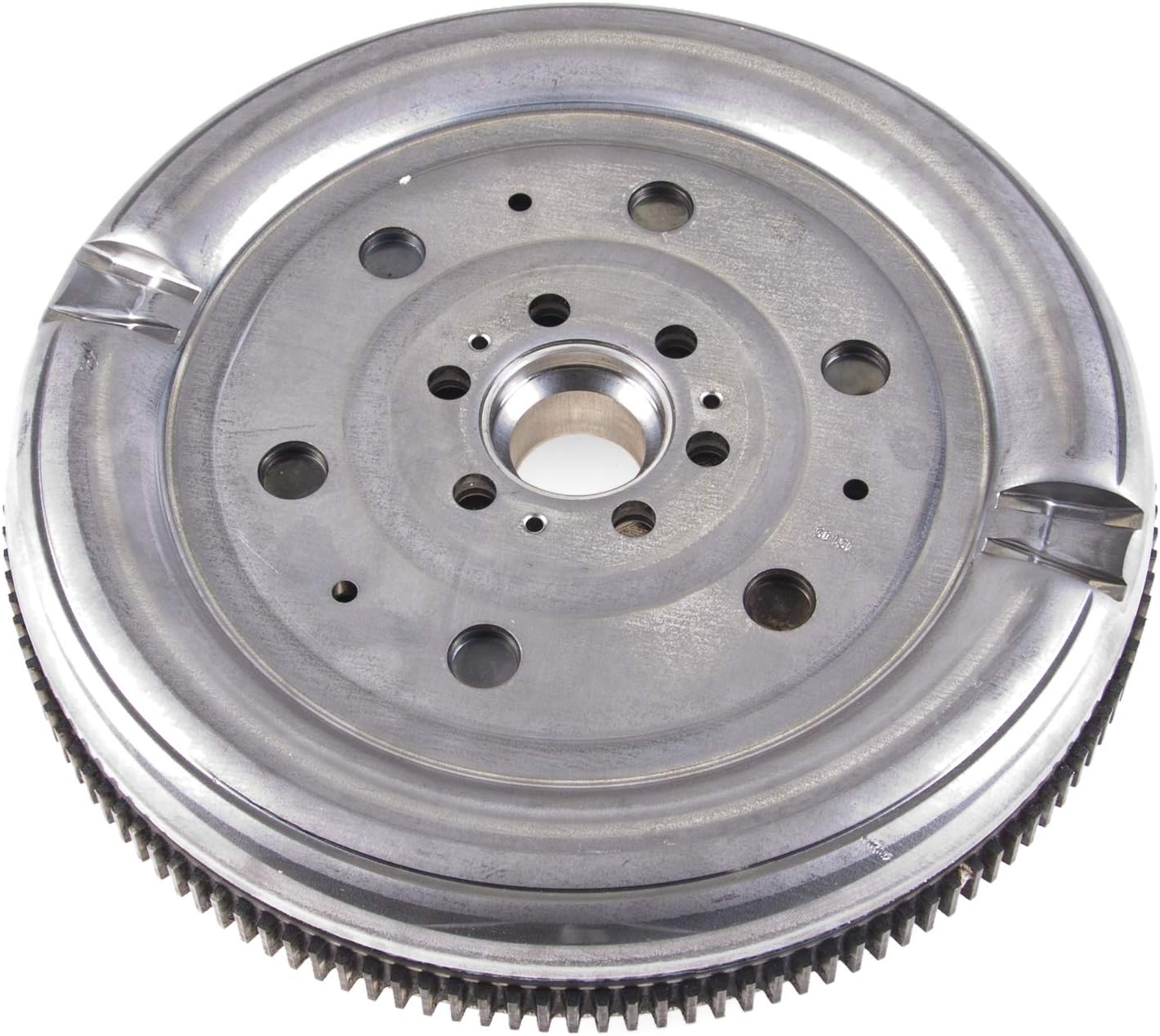
| Brand | LuK |
|---|---|
| Model | DMF123 |
| Exterior | Painted |
The LuK DMF123 is a replacement dual-mass flywheel engineered to dampen engine vibrations before they reach the driveline and transmission. It is used when replacing a clutch assembly and is intended to be installed in applications that require a dual-mass design. LuK ships the unit fully balanced and functionally tested to match factory performance, and the product description emphasizes premium friction surfaces and strong heat-absorption to help clutch life under driving loads. Because dual-mass designs cannot be resurfaced, this is sold as a direct replacement to avoid the risks of over-machining. For a performance-minded Civic application this flywheel will reduce driveline rattle and smooth torque spikes, making shifts feel less abrupt with a stock or mildly modified engine. The main compromise is weight and inertia characteristics inherent to dual-mass parts, which prioritize NVH reduction over the immediate throttle response and quicker revving that a lightweight single-mass unit offers. Installation requires the correct build and clutch pairing and is best done with proper alignment tools.
Best for: A Honda Civic owner prioritizing a smooth, factory-like driving feel and reduced drivetrain vibration after a clutch service, especially with a stock or mildly tuned engine.
Less Ideal for: Drivers focused on aggressive performance, fast engine response, or track use where a lightweight single-mass flywheel and quicker revs are preferred.
- Functionally tested to meet OEM performance specifications for vibration damping
- Balanced at the factory to minimize driveline vibration and reduce gear rattle
- Premium friction surfaces and designed for good heat absorption to protect clutch life
- Sold as a complete replacement eliminating risks associated with resurfacing
- Dual-mass construction keeps more rotating mass, which can blunt throttle response compared with lightweight single-mass alternatives
Verdict: Choose the LuK DMF123 when you want a factory-quality dual-mass replacement that restores smooth, quiet drivability for a Civic with a focus on NVH reduction.
3. LuK DMF105 Dual Mass Flywheel (replacement)

| Manufacturer | LuK |
|---|---|
| Model | DMF105 |
| Exterior | Machined |
| Item Weight | 8 pounds |
The LuK DMF105 is a replacement dual mass flywheel built to the manufacturer’s OEM performance specs for use during clutch jobs. It separates into a primary section that bolts to the crank and a secondary section that accepts the clutch, with internal damping that reduces engine vibration and prevents torque spikes from reaching the transmission. Buyers typically install this when replacing a worn clutch or when a resurfaced flywheel is not an option, since dual mass designs cannot be machined safely. Notable features include factory-grade friction surfaces, balanced construction, and 100% functional testing to meet vehicle-specific tolerances. In real-world use this translates to quieter driveline operation, reduced gear rattle, and improved longevity for the new clutch. Limitations are inherent to the part type: it is a vehicle-specific component so fitment must be checked, and dual mass flywheels add complexity compared with single-mass replacements and are not serviceable by resurfacing. Pairing it with a matched clutch kit provides the most reliable result.
Best for: Buyers who want a reliable, factory-quality replacement when doing a clutch job and who prioritize reducing driveline vibration and maximizing clutch service life.
Less Ideal for: People looking for a low-cost, generic single-mass replacement or those who need a resurfacing-capable flywheel should consider other options.
- Built to OEM performance specifications and 100% functionally tested
- Factory-balanced construction reduces driveline vibration and gear rattle
- Premium-grade friction surfaces with good heat absorption for clutch longevity
- Vehicle-specific fitment required and cannot be resurfaced if worn
Verdict: Choose the LuK DMF105 when you need a direct-fit, factory-quality dual mass flywheel to reduce vibration and protect the transmission during a clutch replacement.
4. LuK DMF193 Dual Mass Flywheel

| Manufacturer | LuK |
|---|---|
| Model | DMF193 |
| Exterior | Machined |
| Item model number | DMF193 |
The LuK DMF193 is a ready-to-install dual-mass flywheel built to the same performance targets used by many manufacturers. It replaces a worn DMF to restore vibration damping and protect the transmission from torque spikes; installation is typically done alongside a clutch job. LuK says the unit is fully tested, uses premium friction surfaces and is balanced to factory standards so it should run quietly and prolong clutch life versus a worn or resurfaced flywheel. Because dual-mass designs cannot be resurfaced, the DMF193 offers a straightforward swap instead of risky machining. Practical benefits include reduced driveline noise, smoother takeoff and lower risk of transmission damage. Limitations to note are fitment sensitivity across engine generations and clutch assemblies — the wrong generation can cause misalignment with the pressure plate — so confirm exact vehicle and engine fitment before buying. This part is aimed at replacing a failed or degraded DMF rather than upgrading performance or changing driving characteristics.
Best for: A buyer replacing a failed or worn dual-mass flywheel who wants a factory-quality direct replacement to restore smoothness and protect the transmission while keeping costs reasonable.
Less Ideal for: Not a good choice for someone seeking performance upgrades or a custom solution; also avoid if you cannot confirm the exact generation fit for your engine and clutch assembly.
- Built and tested to factory-quality performance specifications for dependable vibration damping
- Premium friction surfaces and full balancing to reduce clutch wear and driveline noise
- Specifically sold as a direct replacement to avoid risks associated with resurfacing dual-mass flywheels
- Fitment can vary between engine generations and may not align with some pressure plates or clutch kits
Verdict: Choose the LuK DMF193 when you need a factory-quality dual-mass replacement to restore vibration control and clutch service life on a compatible vehicle.
5. LuK DMF133 Dual Mass Flywheel
| Manufacturer | LuK |
|---|---|
| Model | DMF133 |
| Exterior | Machined |
The LuK DMF133 is a dual-mass flywheel built to the same functional specifications used by vehicle manufacturers and intended as a direct replacement in compatible clutch systems. It dampens engine vibrations before they reach the driveline by using a primary section that bolts to the crank and a secondary section that the clutch mounts to, which reduces gear rattle and isolates torque spikes. The unit arrives machined and balanced for straightforward installation during a clutch job and is specifically not designed to be resurfaced, so replacement is the recommended procedure when doing a clutch assembly. Practical benefits include factory-quality friction surfaces and better heat absorption compared with resurfaced parts, which can extend clutch life when paired with a matching clutch kit. Important limitations are strict fitment requirements — multiple sizes exist for similar vehicles — so confirming build, year, and exact model is essential to avoid ordering the wrong diameter. Expect a reliable, OEM-grade replacement when the part number matches the vehicle application.
Best for: Buyers who prioritize a reliable, factory-quality replacement when doing a clutch job and want a flywheel that restores vibration damping and driveline protection.
Less Ideal for: Shoppers who need a universal or resurfaceable flywheel solution or who cannot verify exact build and fitment for their vehicle should consider other options.
- Manufactured to meet OEM functional specifications for consistent fit and performance
- Dual-mass design isolates engine vibrations and reduces driveline noise and gear rattle
- Machined and balanced from premium materials for good heat-absorption and friction surface quality
- Recommended pairing with a matched clutch kit simplifies installation and helps maximize clutch life
- Cannot be resurfaced, so replacement is required during clutch service
- Multiple diameter options exist and wrong size shipping has been reported, so fitment must be verified carefully
Verdict: Choose the LuK DMF133 when you want a factory-quality dual-mass flywheel that restores OEM vibration damping and long-term clutch durability.
6. LuK DMF062 Dual Mass Flywheel

| Manufacturer | LuK |
|---|---|
| Model | DMF062 |
| Exterior | Machined |
The LuK DMF062 is a direct-fit dual mass flywheel intended as a factory-quality replacement for applications that originally used a DMF. It installs where the original flywheel mounted to the crank and the clutch bolts to the secondary section, and its purpose is to absorb engine vibration and protect the transmission from torque spikes. Typical use is during a clutch job or when a worn DMF causes rattles, harsh engagement, or driveline vibration. LuK emphasizes not resurfacing DMFs and supplies a balanced, preassembled unit with machined friction surfaces and built-in damping. In practice this means a like-for-like feel close to factory behavior, easier installation compared with improvised resurfacing, and better long-term clutch life when paired with a matching clutch kit. The product is engineered to OEM performance specifications, but as a vehicle-specific component buyers must confirm correct build and fitment before ordering. Some installers replace the supplied pilot/bearing with a known-quality OEM unit as a precaution.
Best for: Buyers who want a risk-averse, factory-quality replacement DMF that restores original vibration damping and pairs with a full clutch replacement.
Less Ideal for: Drivers seeking a performance-oriented or lightweight single-mass flywheel for racing or significant power upgrades should consider performance-specific alternatives.
- Built to meet OEM performance specifications for factory-like damping
- Prebalanced, machined friction surfaces that improve clutch longevity
- Designed as a direct replacement to avoid risks of over-machining during resurfacing
- Backed by LuK brand reputation and installer recommendations
- Vehicle-specific fitment required so you must verify correct build and year before buying
- Some users recommend replacing the supplied pilot bearing with a different brand
Verdict: Choose the LuK DMF062 when you want a reliable, factory-spec dual mass flywheel replacement that restores smooth drivetrain operation with minimal risk.
Choosing the Right Honda Civic Dual-mass Flywheel: Key Factors to Consider
Compatibility And Fitment
Correct fitment is essential because the flywheel must match the Civic's crank bolt pattern, starter engagement surface, and clutch spline alignment. Using a unit that deviates from OEM mounting or thickness can change clutch bite point, clutch disc preload, and release travel, which leads to premature wear or difficulty adjusting the clutch.
Check the flywheel's specified crank flange diameter, pilot bore size, and bolt torque specs. If a replacement differs in ring gear design or overall diameter, starter engagement and gear alignment may be affected. For many Civic models, direct-fit dual-mass units are engineered to match OEM geometry, reducing the risk of installation errors and subsequent drivability issues.
NVH Dampening Performance
The primary reason to use a dual-mass flywheel is to reduce noise, vibration, and harshness. Evaluate how the unit controls torsional vibration through spring rates, friction interfaces, and internal damping chambers. A flywheel with well-tuned damping will smooth low-speed rattle, reduce driveline clunks during acceleration or deceleration, and make shifts feel less abrupt.
Consider your driving conditions: daily commuting benefits most from units tuned for comfort, while performance-oriented Civics may need different damping characteristics. Look for datasheets or technical notes that describe natural frequency targets or damping stages, since these indicate deliberate engineering against typical Honda engine vibration modes.
Durability And Materials
Durability matters because replacing a flywheel is labor-intensive. Key material considerations include the quality of friction surfaces, heat-treatment of mating faces, and corrosion-resistant coatings. Robust internal components such as high-grade springs, fatigue-resistant rivets, and precision bearings extend service life and maintain damping performance over time.
Also assess how the unit handles heat from repeated clutch slip during heavy city traffic or spirited driving. Units using higher-grade steels and engineered friction facings resist glazing and warping, reducing the chance of future resurfacing or replacement.
Balance And Runout Control
Imbalance and excessive runout cause vibration that defeats the purpose of a dual-mass design. Proper dynamic balancing during manufacturing and tight runout tolerances keep rotational forces even at all RPMs. When a replacement flywheel is within strict runout spec, clutch wear is more uniform and transmission input shaft bearings experience less stress.
Ask about the manufacturing tolerance band and whether the flywheel is delivered as a matched assembly with the clutch disc. Some suppliers perform matched balancing to minimize vibration after installation, which can be particularly important on naturally aspirated or high-revving Civic engines.
Serviceability And Installation Features
Serviceability affects repair time and long-term maintenance. Features such as pre-drilled dowel holes, clear indexing marks, and a finish that accepts clutch grease and sealants simplify installation. Units that preserve OEM pilot bore dimensions avoid the need for intrusive machining or custom adapters.
Consider whether the replacement requires clutch flywheel resurfacing of the mating surface, or whether it is supplied ready-to-install. Installation-friendly design reduces shop hours and the risk of alignment-related problems that can manifest as shifting difficulties or chatter.
Warranty And Support
A solid warranty provides protection for a part that is expensive to replace. Look for clear warranty terms that cover defects in materials and workmanship for a reasonable period. Warranty service that includes technical support can help shops troubleshoot fitment or NVH issues after installation.
Also consider the manufacturer's quality control processes and whether replacement cores or exchanges are required. A comprehensive warranty and accessible technical documentation improve confidence in the purchase and reduce long-term ownership risk.
Common Symptoms That Point To The Flywheel
Several drivability symptoms often indicate flywheel problems rather than clutch or transmission faults. Owners commonly report a rattling or knocking noise at idle that diminishes as engine speed rises, increased vibration through the clutch pedal, and judder during slow-speed engagement. These signs can be especially noticeable after long periods of coast or during cold starts.
It is important to isolate the noise and vibration source. Some symptoms overlap with worn clutch discs or release bearings, so a methodical diagnosis that inspects the flywheel surface, measures runout, and checks for freeplay in the dual-mass assembly will clarify whether the flywheel is the root cause.
- Rattle at idle that changes with engine RPM
- Chatter or judder during takeoff or low-speed crawling
- Increased vibration felt in the pedal or floorboard
When To Replace Versus Resurface
Clutch flywheel resurfacing can restore a smooth engagement when the friction surface is only slightly scored or glazed. However, dual-mass designs contain internal damping elements that cannot be refreshed by resurfacing alone. If the flywheel exhibits internal looseness, excessive end play, or degraded damping, replacement is the proper course.
Inspect for heat cracks, deep scoring, or burrs on the starter gear teeth. If runout measurements exceed service limits or the assembly shows internal wear, replacement avoids repeat labor and potential damage to new clutch components.
- Resurface minor surface wear; replace if internal damping is compromised
- Measure runout and end play before deciding
- Replace when heat damage or cracking is present
Installation Tips For A Smooth Service
Proper installation ensures the new dual-mass flywheel performs as intended. Use OEM torque sequences and torque values for crank bolts and starter fasteners. Clean mating surfaces thoroughly and verify pilot bearing condition. If the replacement is not pre-balanced to the clutch, consider matched balancing to minimize post-install vibration.
Also replace related wear items like the pilot bearing, release bearing, and clutch disc if they show wear. Verify clutch pedal freeplay and adjust according to Honda specifications after installation. Test drive gently to bed the new unit and monitor for unusual noises or vibration.
- Follow OEM torque specs and bolt patterns
- Inspect and replace associated bearings and seals
- Consider matched balancing if not supplied as a set
How Driving Style Affects Flywheel Choice
Your daily driving habits should guide the selection. Commuters who spend a lot of time in traffic benefit most from units tuned for NVH reduction and heat resistance under repeated slipping. Conversely, owners who do spirited driving or track occasionally may prefer a flywheel with higher fatigue strength and different damping characteristics to cope with abrupt torque changes.
If your Civic has modest power upgrades, choose a unit rated to handle slightly higher torque loads. Overbuilding unnecessarily can change feel and increase inertia, while under-specifying risks premature failure.
- City driving favors comfort-oriented damping
- Spirited use requires stronger internal components
- Match torque capacity to engine output and modifications
Common Diagnostic Checks Before Purchase
Perform a few simple checks before ordering a replacement. Measure flywheel runout with a dial indicator and compare to the service limit. Check for axial end play in the dual-mass assembly and listen for internal looseness by applying light torque while the unit is rotated by hand. Inspect the friction surface for heat discoloration, cracks, or glazing.
Document these findings and share them with the installer or parts supplier so you get a unit that addresses the observed failure mode. Clear diagnostic data prevents unnecessary replacement and ensures the selected flywheel solves the actual problem.
- Measure runout and end play
- Look for heat spots and surface cracking
- Note all symptoms and share with your installer
Still looking for the perfect fit?
Select your Honda Civic configuration to see the most relevant Flywheels recommendations
How We Chose the Best Honda Civic Dual-mass Flywheel
We shortlisted dual-mass flywheels based on criteria that reflect real-world needs for Honda Civic owners. Primary evaluation factors included build quality and materials to ensure long-term durability under Civic torque characteristics; vibration isolation performance measured by NVH design features such as damping springs and inertia tuning; balance and fit accuracy to minimize runout and ensure smooth engagement with the Civic clutch and transmission; compatibility with OEM clutch components and common resurfacing tolerances to avoid installation headaches; and serviceability considerations including clutch alignment features and whether the unit is intended as a direct-fit replacement or requires additional adjustments.We also considered warranty coverage and manufacturer quality control as proxies for reliability. Exclusions: we excluded flywheels intended solely for racing or heavy-modified engines, units incompatible with typical Civic clutch assemblies, and reconditioned cores that did not meet modern balancing standards. The goal was to favor direct-fit, road-oriented dual-mass flywheels that deliver predictable NVH improvements and long service life on the Honda Civic.
Our full evaluation process is outlined in our review methodology.
FAQ
What are the most common flywheel symptoms on a Civic?
Common signs include rattling at idle, judder or shudder during engagement, and increased vibration through the pedal or floor. Symptoms often become more noticeable when the engine is cold or after long idling periods.
Can a dual-mass flywheel be resurfaced instead of replaced?
Minor surface scoring or glazing can sometimes be corrected by resurfacing, but internal damping elements cannot be restored. If there is internal looseness, excessive end play, or degraded damping, replacement is typically required.
How do I check flywheel runout on my Civic?
Mount a dial indicator against the friction surface and rotate the crank slowly while observing variation. Compare the measured runout to Honda service limits. Excessive variation indicates the need for replacement rather than resurfacing.
Will replacing the flywheel fix clutch noise and vibration?
Replacing a worn or damaged flywheel often reduces clutch-related noise and vibration, but other components like the clutch disc, pilot bearing, or release bearing can also cause similar symptoms. A full inspection ensures the root cause is addressed.
Should I replace related components when installing a new flywheel?
Yes. It is advisable to inspect and often replace the pilot bearing, release bearing, and clutch disc if worn. Fresh related components help ensure proper engagement and prevent premature failure of the new flywheel.
How long should a dual-mass flywheel last in a Civic?
Service life depends on driving conditions and load. Under normal commuting conditions, they often last many tens of thousands of miles, but repeated clutch slipping, heavy towing, or aggressive driving can shorten life.
Final Verdict
Prioritize fitment, NVH performance, and durability when choosing a dual-mass flywheel for your Civic. Accurate fit and tight runout tolerances reduce the risk of post-installation vibration, while well-engineered damping improves shift feel and reduces noise. Balance your driving needs against durability tradeoffs: comfort-oriented units favor daily driving, while stronger assemblies suit more demanding use.Ultimately, select a direct-fit dual-mass flywheel that matches your Civic's geometry and torque demands, and pair it with refreshed associated components during installation. That approach minimizes repeat labor and helps restore smooth, quiet operation with confidence.
Explore More:
- Check out all Honda Civic parts & accessories
- Explore Flywheels Maintenance & Repair Guides
- Explore Transmission & Drivetrain
- Browse all Auto Parts
