

Note: This article contains affiliate links. If you click on these links and make a purchase, I may earn a small commission at no extra cost to you. This helps support my research and content. Read my full affiliate disclosure here.
If you need a replacement catalytic converter for a Toyota Tacoma 4.0L, choosing the right unit matters for emissions compliance, engine performance, and long-term reliability. The wrong fit or a low-quality substrate can trigger a check engine light, worsen fuel economy, or fail emissions testing. This guide focuses solely on compatible catalytic converters for the Toyota Tacoma 4.0L and highlights shortlisted options that meet fitment and durability expectations.We evaluated candidates for emissions effectiveness and vehicle-specific fitment, while also considering build quality and ease of installation. Below are the top picks for owners who want dependable emissions control and straightforward installation. Read on to see the main considerations and practical advice for replacing the catalytic converter on your Tacoma 4.0L.
Looking for other parts? See all Toyota Tacoma parts & accessories.
Top Picks at a Glance
| Best Overall The best all-around choice for most situations | PHILTOP Catalytic Converter Kit for Toyota Tacoma 4.0L (2005–2008) |  |
| Best Quality Built to a higher standard if you want something more solid | JT Exhaust Catalytic Converter for 4.0L Toyota 4Runner / Tacoma / FJ Cruiser (Catalyst+ Grade) |  |
| Best Value The sweet spot between price and what you get | NutsCata Direct-Fit Catalytic Converter for Toyota Tacoma (2005–2016) |  |
| Best Budget The cheapest option that still gets the job done reliably | ACZCR Catalytic Converter 4-Pack for Toyota Tacoma 4.0L (2005–2015) |  |
| Highest Rated A top-rated pick with lots of positive feedback | SPEEDFusion 4.0L V6 Direct-Fit Catalytic Converter (Left and Right) |  |
| Most Popular A crowd favorite that many people choose with confidence | PHILTOP Catalytic Converter Kit for Toyota Tacoma 4.0L (2005–2015) |  |
PHILTOP Catalytic Converter Kit for Toyota Tacoma 4.0L (2005–2008)
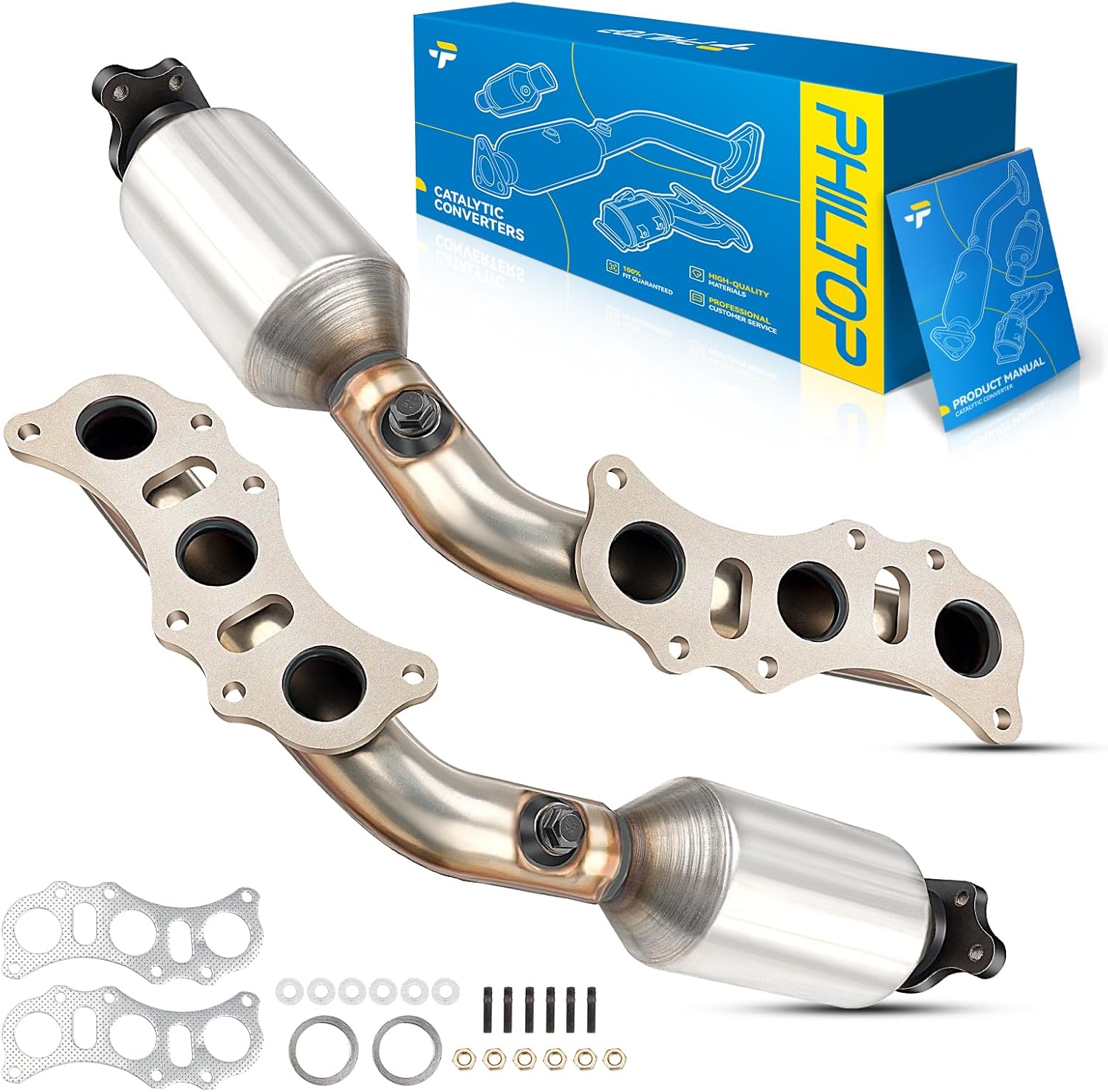
| Fitment | Toyota Tacoma 2005-2008 4.0L |
|---|---|
| Certification | EPA compliant |
| Manufacturer | PHILTOP |
| Included | Gaskets and mounting hardware |
This PHILTOP kit replaces the factory catalytic converter on Toyota Tacoma 4.0L models and is supplied as a two-piece assembly with gaskets and hardware for installation. It uses a stainless/aluminized shell and a double-layer high-temperature ceramic carrier to restore oxygen storage and catalytic surface area, which can clear engine codes and reduce exhaust noise. The kit is typically used as a repair part during emissions-related failures or when the original unit is damaged. Practical benefits include included mounting hardware and an emphasis on corrosion resistance for longer service life. Real-world buyers report successful fixes and improved fuel economy after replacement, but fitment can be uneven on some vehicles: flange bends and heat-shield mounts may not line up perfectly and the two-piece design can complicate a DIY install. The product is EPA compliant and therefore intended for use outside states with stricter aftermarket rules. Expect to use a shop or an experienced home mechanic unless you have solid exhaust fabrication skills.
Best for: Buyers who want a practical, factory-replacement style catalytic converter to repair emissions faults on a mid-2000s Tacoma and who prioritize durability and included hardware over a guaranteed perfect bolt-on fit.
Less Ideal for: Drivers expecting a flawless, lift-free DIY swap or those in states that prohibit EPA aftermarket converters should look for dealer or state-approved alternatives or professional installation.
- Designed to match factory fit for Tacoma 4.0L mid-2000s models
- Stainless/aluminized body and high-temperature ceramic carrier for corrosion resistance and durability
- Comes with gaskets and mounting hardware to simplify replacement
- EPA compliant for use in most states outside stricter-emission jurisdictions
- Two-piece assembly may require welding or adjustment and can be confusing for average DIYers
- Some users report flange bends and heat-shield mount points that do not align perfectly on every vehicle
Verdict: A budget-friendly, factory-style catalytic converter kit that restores emissions function on 2005–2008 Tacoma 4.0L trucks when installed by a competent mechanic.
JT Exhaust Catalytic Converter for 4.0L Toyota 4Runner / Tacoma / FJ Cruiser (Catalyst+ Grade)

| Compatible engines | 4.0L V6 |
|---|---|
| OEM part numbers | 17150-0P100, 17150-31250 |
| Shell material | Stainless Steel 409 |
| Emission standard | EPA OBDII compliant |
| Grade | Catalyst+ (higher precious metal) |
This JT Exhaust catalytic converter is a direct-fit replacement engineered for Toyota 4.0L V6 trucks and SUVs. It installs in place of the factory unit and is intended to restore catalytic conversion performance, clear P0420-style codes, and reduce tailpipe emissions to meet EPA OBDII requirements. The product uses a stainless steel 409 shell and an OEM-grade honeycomb ceramic substrate with a higher dose of precious metal coating compared with standard EPA-grade cores, which should improve conversion efficiency and service life. Fitment is handled via 3D scanning for bolt-on compatibility and the unit ships with gaskets needed for installation. Real-world benefits include easier installation for experienced DIYers or mechanics, improved chance of passing emission checks in many states, and quieter, leak-free operation versus damaged converters. Reported limitations include mixed long-term reliability in some customer reports and potential issues with California smog compliance despite EPA claims, so confirm local requirements before purchasing.
Best for: Buyers who prioritize restoring or improving catalytic performance on a 4.0L Toyota and want a higher-precious-metal direct-fit replacement that is suitable for professional installers or confident DIYers.
Less Ideal for: Drivers who must guarantee California smog station approval without verification or those seeking an exact factory-certified OEM part backed by strong documented support.
- Direct-fit design using 3D scan data for straightforward bolt-on installation
- Catalyst+ grade core with higher precious metal loading for stronger conversion performance
- Stainless steel 409 shell and OEM-grade ceramic substrate for improved durability
- Designed to address P0420 codes and meet EPA OBDII emission requirements
- Some user reports of early failure or clogging suggest variable long-term durability
- Manufacturer customer service and warranty support appear inconsistent in customer feedback
Verdict: If you want a direct-fit, higher-precious-metal replacement to restore catalytic efficiency on a Toyota 4.0L, this JT Catalyst+ unit is a strong performance-minded upgrade.
NutsCata Direct-Fit Catalytic Converter for Toyota Tacoma (2005–2016)

| Vehicle fitment | Toyota Tacoma 2005-2016 2.7L/3.5L/4.0L |
|---|---|
| Material | 409L stainless steel |
| Emissions | EPA-compliant (federal) |
| Manufacturer | NutsCata |
| Manufacturer part number | Nuts-ToTac-05-15-2.7L-L4-NC |
This NutsCata catalytic converter is a direct bolt-on replacement designed for Toyota Tacoma models from 2005 through 2016 covering 2.7L I4 and 3.5L/4.0L V6 configurations. It uses a honeycomb ceramic substrate loaded with platinum, rhodium, and palladium to restore catalytic efficiency and help clear emission-related check-engine codes. The unit is made from 409L stainless steel for corrosion and heat resistance and ships complete for a no-weld installation. In practice it is meant for routine replacement after failure or to return a vehicle to federal emissions compliance; several buyers report easy fitment and passing emissions tests after installation. Limitations to note are regulatory: this kit is not for sale or use in certain states with stricter requirements, and some customers said hardware or heat-shield fitment can vary by production batch so minor adjustments may be needed during install. If you want a factory-style replacement that focuses on emissions performance and longevity, this is a practical choice for Tacoma owners working to optimize reliability and compliance.
Best for: Buyers who prioritize restoring emissions performance and a reliable factory-style replacement for routine maintenance or to resolve a check-engine code will appreciate this part.
Less Ideal for: Do not choose this if you need a California-compliant or state-specific emissions part or if you require exact one-to-one fitment for nonstandard or heavily modified exhaust systems.
- Direct bolt-on design for installation without welding or machining
- Catalytic substrate loaded with high-concentration precious metals for better conversion efficiency
- 409L stainless steel construction resists heat and corrosion
- Built to meet federal EPA emissions standards and suitable for emissions testing in compliant states
- Not legal for sale or use in certain states with stricter emissions rules
- Fitment can vary slightly by unit requiring minor adjustments to heat shields or hardware
Verdict: A practical, factory-style direct-fit converter that restores emissions performance and durability for Tacoma owners seeking a straightforward replacement.
ACZCR Catalytic Converter 4-Pack for Toyota Tacoma 4.0L (2005–2015)

| Fitment | Toyota Tacoma 4.0L 2005–2015 |
|---|---|
| OEM Part Numbers | 52451, 50352 |
| Material | Stainless steel housing |
| Compliance | EPA compliant (not CARB) |
This ACZCR four-piece catalytic converter kit is a direct-fit replacement for the Toyota Tacoma 4.0L (2005–2015) that aims to restore emissions performance and clear engine fault codes. It installs in place of OEM units and is typically used when a failed converter causes reduced power, higher fuel consumption, or a check engine light. The housings are stainless steel and the internal carrier uses a honeycomb ceramic core with precious metal coating to maintain catalytic activity. Because it is EPA compliant, it is suitable for mainstream replacement outside CARB-restricted states. In practical use the kit should return emissions conversion close to factory levels and stop related drivability symptoms, though professional installation is recommended to ensure proper fit and sensor alignment. Limitations include lack of CARB compliance and apparent restriction from sale to certain states, so buyers in those regions must source a compliant unit. The product is best when you need an affordable, full-set factory-style replacement to get a Tacoma back on the road and passing emissions checks where allowed.
Best for: Buyers looking for a cost-conscious, factory-style replacement to restore emissions performance and clear diagnostics on a Toyota Tacoma 4.0L from 2005–2015. Ideal for owners prioritizing affordability and a straightforward direct-fit swap over seeking CARB-certified options.
Less Ideal for: Drivers who live in CARB-regulated states that require certified parts or those who need a universal or performance-oriented aftermarket converter.
- Direct-fit design that replaces OEM part numbers 52451 and 50352 for straightforward installation
- Stainless steel construction for corrosion resistance under normal driving conditions
- Honeycomb ceramic carrier with precious metal coating to restore catalytic conversion efficiency
- EPA compliant for legal use outside states that require CARB-certified parts
- Not CARB compliant and cannot be sold or shipped to certain states
- Sold as a set intended for specific Tacoma 4.0L fitment so it is not a universal solution
Verdict: If you need an affordable, direct-fit replacement to restore emissions function on a Tacoma 4.0L outside CARB states, this four-piece ACZCR kit is a practical choice.
SPEEDFusion 4.0L V6 Direct-Fit Catalytic Converter (Left and Right)

| Brand | SPEEDFusion |
|---|---|
| Manufacturer Part Number | YL09682G |
| Vehicle fitment | 2003–2009 4Runner, 2005–2011 Tacoma, 2007–2009 FJ Cruiser 4.0L V6 |
| Material | 409L stainless steel |
| EPA compliance | Federal emission standards only |
This SPEEDFusion catalytic converter is a direct-fit replacement for 4.0L V6 Toyota applications and is built with 409L stainless steel and a 400-hole ceramic substrate coated with platinum, rhodium and palladium to support emissions control. It is typically used to replace a failed factory converter to restore proper catalytic function, stop a check-engine light tied to emissions codes, and keep a vehicle within federal EPA limits. Notable features include EPA certification for federal vehicles, a polished stainless shell for corrosion resistance and an anti-core-detachment welding process aimed at durability. Installation is straightforward for a professional shop because it is marketed as a direct fit for the specified model years, though some customers note sensor boss orientation and heat shield fitment can require minor adjustments. There are documented cases of long-term reliability as well as isolated early failures, so professional installation and correct part selection are important for predictable service life.
Best for: Buyers who prioritize restoring reliable emissions control on a 4.0L V6 Toyota and want a direct-fit, EPA-compliant replacement installed by a professional technician.
Less Ideal for: Drivers in states with stricter local emissions rules who need a state-approved converter or DIY installers unwilling to make minor fitment adjustments.
- Direct-fit design for 4.0L V6 Toyota fitments simplifies installation when matched correctly
- Constructed from 409L stainless steel and anti-detachment welding for improved corrosion resistance
- OEM-grade 400-hole ceramic substrate with precious metal coating to support effective catalytic conversion
- EPA compliant for vehicles that meet federal emission standards
- Not legal for sale or use in certain states with their own rules such as California
- Some units have reported fitment quirks like sensor boss orientation or heat shield mismatch that may need minor modification
Verdict: If you need a reliable, direct-fit EPA-compliant catalytic converter to restore emissions function on a Toyota 4.0L V6, this SPEEDFusion unit is a practical professional-grade replacement.
PHILTOP Catalytic Converter Kit for Toyota Tacoma 4.0L (2005–2015)

| Fitment | Toyota Tacoma 4.0L 2005-2015 |
|---|---|
| Material | Stainless steel |
| Included | Gaskets and installation hardware |
| Emissions | EPA compliant (federal) |
This PHILTOP catalytic converter kit is a direct-replacement style unit built from stainless steel with a high-flow ceramic honeycomb substrate and OE-style gaskets and hardware. It installs using the factory mounting points and is intended to restore emissions performance, quiet rattles from a failing converter, and reduce backpressure to help the engine breathe. The kit is EPA-compliant for federal emissions states and includes welded seams and heat-resistant construction for corrosion resistance. Practical benefits include included gaskets and bolts so most installs can be completed in a few hours without cutting or welding, plus higher flow that can help drivability if the original converter was clogged. Limitations to note are mixed user reports about fitment precision and occasional odd noises at higher RPMs, so careful verification of the fit and inspection after installation are recommended for peace of mind. This is a sensible lower-cost replacement for drivers who need to clear cat-related codes or pass inspections outside states that restrict aftermarket EPA converters.
Best for: Buyers who prioritize documented customer experience and want an affordable, ready-to-install replacement to clear cat codes or restore emissions performance on a Tacoma 4.0L while avoiding dealer parts.
Less Ideal for: Drivers in states that require California-specific converters or owners who need a lifetime-proven OEM-level part for long-term durability without testing aftermarket options.
- Stainless steel construction and welded seams resist heat, rust, and corrosion
- High-flow ceramic honeycomb substrate designed to reduce backpressure and improve exhaust flow
- Ships with OE-style gaskets and hardware to simplify installation without cutting or welding
- EPA-compliant for federal emissions standards where applicable
- Some buyers report fitment issues or incorrect hardware for specific installs
- A few users noted unusual noises at higher RPM after installation
Verdict: A cost-conscious, ready-to-install federal-emissions replacement that restores catalytic function and includes hardware for a straightforward Tacoma 4.0L swap.
Choosing the Right Toyota Tacoma 4.0L Catalytic Converter: Key Factors to Consider
Fitment and Flange Compatibility
Correct physical fit is the foundation of a successful catalytic converter replacement for the Toyota Tacoma 4.0L. The converter must match the vehicle's exhaust routing, pipe diameters, and flange patterns so it seals properly and does not introduce leaks.
Improper fitment can cause exhaust leaks, rattling, or stress on adjacent exhaust components. It also makes installation harder and may require extra adapters or cutting and welding. Verify the converter's flange type, inlet and outlet diameters, and overall length against the Tacoma 4.0L layout. If the unit uses oxygen sensor ports, confirm their placement matches the factory locations to avoid sensor extension issues.
Emissions Efficiency and Substrate Quality
The core function of a catalytic converter is to convert harmful gases into less harmful ones. Substrate type, cell density, and the washcoat loading determine how effectively the unit reduces hydrocarbons, carbon monoxide, and nitrogen oxides. Higher-quality substrates typically offer better conversion rates and longer service life.
For a Tacoma 4.0L, choose a converter whose construction supports the engine's exhaust flow and operating temperatures. Poorly made substrates can clog or break down, causing performance drops and failure to meet emissions checks. Look for technical specs that describe cell density and the presence of a durable washcoat to ensure real emissions benefits.
Durability and Corrosion Resistance
Under-vehicle components face moisture, road salt, and debris, so corrosion-resistant materials and protective coatings matter for longevity. Shell material, weld quality, and protective finishes all influence how long the unit will last on a Tacoma used in variable climates or off-road conditions.
Units with poor welding or thin shells are more likely to develop cracks or rust-through, which leads to leaks and early replacement. Consider converters with robust housings and proven coatings that resist corrosion. A durable unit reduces the frequency of replacements and helps maintain consistent emissions performance over time.
Backpressure and Engine Performance
Catalytic converters introduce flow restriction, and excessive backpressure can harm throttle response, torque, and fuel economy. The ideal converter balances conversion efficiency with minimal impact on exhaust flow for the Tacoma 4.0L's engine characteristics.
When selecting a unit, check design features that reduce flow restriction, such as optimized cell structures or larger internal passages where appropriate. Avoid converters designed for much smaller engines that could restrict flow. Properly sized converters help preserve drivability while still achieving emissions goals.
Oxygen Sensor Integration and Diagnostics
Most modern Tacomas rely on upstream and downstream oxygen sensor readings to monitor catalyst performance and control air-fuel ratio. The converter should accommodate sensor ports in the correct locations and maintain the appropriate distance between sensors to avoid false diagnostics.
Incorrect sensor placement or missing ports can trigger a check engine light catalytic converter-related fault, even if the catalyst itself is functioning. Ensure the replacement unit either includes the necessary sensor fittings or matches the factory sensor layout so your ECU receives accurate readings for emissions control and diagnostics.
Installation Complexity and Serviceability
Installation difficulty affects labor cost and the time the vehicle is out of service. A direct-fit converter with matching flanges and bolt patterns reduces labor and the need for specialized tools, while universal or universal-adapted units often require cutting, welding, or custom hangers.
Consider how accessible the factory unit is on your Tacoma 4.0L and whether you have the tools or a technician experienced with exhaust work. Units that allow reuse of factory gaskets and hardware, or that include clear installation instructions and necessary mounting hardware, make replacement quicker and reduce the risk of installation errors.
Common Catalytic Converter Symptoms and Diagnostics
Recognizing catalytic converter symptoms early helps you avoid larger problems. Common signs include a persistent check engine light catalytic converter code, reduced acceleration, unusual exhaust odor, or increased fuel consumption. Some symptoms overlap with other exhaust or engine faults, so proper diagnosis is essential.
Start diagnostics by scanning for trouble codes and comparing live oxygen sensor data against expected ranges. A clogged converter often causes a noticeable drop in exhaust flow and may result in higher than normal backpressure readings. Visual inspection for physical damage, rattling sounds from a loose substrate, and inspection of sensor wiring are also useful steps.
- Check engine light catalytic converter codes are a common first indicator.
- Rattling under acceleration can indicate a failing internal substrate.
- A rotten egg or sulfur smell may point to conversion problems.
- Perform sensor and backpressure checks before replacing the converter.
Ensuring Proper CAT Converter Fitment on the Tacoma
Fitment starts by confirming the exact Tacoma 4.0L exhaust layout and the converter's connection points. Measure flange types, bolt patterns, and pipe diameters, and compare them to the replacement part. Many direct-fit options are designed to match factory mounting points and sensor locations, which simplifies installation.
If you encounter a universal-style unit, plan for potential modifications and verify whether the unit includes appropriate hangers and gaskets. Remember that minor dimension mismatches can cause exhaust leaks or stress on hangers and joints, so prioritize a converter built to match the Toyota Tacoma 4.0L specifications.
- Measure inlet/outlet diameters and flange bolt patterns before ordering.
- Confirm oxygen sensor port locations to avoid wiring extensions.
- Prefer direct-fit designs to minimize fabrication needs.
Maintenance Tips to Extend Converter Life
Good engine maintenance reduces the likelihood of premature catalytic converter failure signs. Address misfires, worn spark plugs, and fuel system faults promptly, since unburned fuel entering the converter can overheat and damage the substrate. Regular inspections of the exhaust system for rust or loose hangers also help prevent stress on the converter.
Use high-quality engine oil and correct fuel octane to maintain efficient combustion. If you frequently drive in dusty, salty, or off-road conditions, inspect the converter shell and mounting hardware more often to catch corrosion early. These preventive practices preserve emissions performance and reduce the chance of unexpected replacements.
- Repair misfires and fuel-system problems immediately to avoid catalyst damage.
- Inspect mounting hardware and flanges periodically for rust or looseness.
- Address exhaust leaks promptly to protect converter efficiency.
What to Expect During a Replacement
A typical replacement varies with accessibility and whether the unit is a direct-fit. Expect removal of mounting bolts or cutting of the old pipe if rusted. Direct-fit units usually align with factory brackets and sensor ports, making the swap straightforward, while universal units may require welding or clamps.
Plan for a diagnostic check after installation to clear any existing check engine light catalytic converter codes and confirm the vehicle's oxygen sensors read within expected ranges. Proper torque of flange bolts and the use of fresh gaskets or high-temperature sealants ensure a long-lasting, leak-free repair.
- Have basic exhaust tools and penetrating oil available for seized bolts.
- Replace gaskets and hardware to ensure a reliable seal.
- Recheck diagnostic codes and sensor data after installation.
Legal and Emissions Considerations
Emissions regulations vary by jurisdiction and may require that replacement catalytic converters meet specific standards. For the Toyota Tacoma 4.0L, select a unit that aligns with local emissions requirements and provides adequate conversion efficiency. Using a converter that does not meet local standards can result in failed inspections.
Keep documentation showing the converter's specifications and any compliance statements you receive. If you are unsure which standard applies in your area, consult local regulations or an emissions specialist to ensure the replacement remains compliant.
- Confirm local emissions requirements before purchasing a replacement.
- Retain documentation that demonstrates emissions performance specifications.
Still looking for the perfect fit?
Select your Toyota Tacoma configuration to see the most relevant Catalytic Converters recommendations
How We Chose the Best Toyota Tacoma 4.0L Catalytic Converter
We prioritized selection criteria that reflect the specific needs of Toyota Tacoma 4.0L owners. Primary filters included precise fitment to the Tacoma 4.0L exhaust routing and flange configuration, verified substrate and washcoat construction for effective emissions conversion, and robust corrosion resistance for long-term durability in mixed driving conditions. We also evaluated backpressure characteristics to avoid negatively affecting engine performance and assessed thermal management features that reduce the risk of premature catalyst degradation.Additional factors in our editorial process were installation practicality, including whether the unit supports direct-bolt replacement or requires simple, commonly available hardware, and compliance with emissions performance standards relevant to on-road use. Units lacking clear fitment information, those with nonstandard flanges, or those with insufficient corrosion protection were excluded. We did not consider units that require extensive manifold modification or custom fabrication. The resulting shortlist emphasizes reliable emissions control, accurate fitment, and straightforward installation for the Toyota Tacoma 4.0L.
Our full evaluation process is outlined in our review methodology.
FAQ
How do I know if my Toyota Tacoma 4.0L catalytic converter is failing?
Signs often include a persistent check engine light catalytic converter code, reduced acceleration, a rattling noise under acceleration, or unusual exhaust odors. Diagnosis typically involves scanning for trouble codes and inspecting oxygen sensor data and backpressure to confirm converter problems.
Can I install a catalytic converter replacement myself on the Tacoma 4.0L?
It depends on your mechanical skills and the unit type. Direct-fit converters usually allow DIY installation with common tools, while universal units may require cutting, welding, or special hangers. If bolt threads are seized or routing is tight, professional help is often advisable.
Will a clogged converter cause poor fuel economy on my Tacoma 4.0L?
Yes, a clogged converter can increase backpressure and reduce engine efficiency, which may lower fuel economy. However, similar symptoms can come from other issues, so confirm with diagnostics before replacing the converter.
Do oxygen sensor codes always mean the catalytic converter is bad?
Not always. Oxygen sensor codes can result from sensor failure, wiring issues, or upstream engine problems. Sensor readings and live data should be evaluated to determine whether the converter itself is the root cause.
How often should I inspect the catalytic converter on the Tacoma 4.0L?
Inspect the converter during routine service intervals or if you notice symptoms like unusual noises, smells, or a check engine light. Tacomas used in harsh climates or off-road may benefit from more frequent visual checks for corrosion and damage.
Will replacing the catalytic converter clear a check engine light immediately?
Replacing the converter may not clear the light instantly. You should clear stored diagnostic codes and confirm that oxygen sensor readings return to normal ranges. If other related faults remain, the light could persist until those are resolved.
Are there maintenance steps to prevent catalytic converter failure signs?
Yes. Maintain proper engine tune, fix misfires promptly, use the correct fuel and oil, and inspect the exhaust system regularly. Controlling oil and coolant leaks that enter the exhaust stream also helps prevent premature catalyst damage.
Final Verdict
When choosing a catalytic converter for a Toyota Tacoma 4.0L, prioritize accurate fitment, proven emissions conversion, and durable construction. Balance conversion efficiency with low backpressure to preserve engine performance. Consider oxygen sensor placement and installation complexity to avoid diagnostic issues and extra labor.Weigh the tradeoffs between ease of installation and long-term durability, and choose a unit that matches the Tacoma 4.0L exhaust layout and emissions expectations. That approach will deliver reliable emissions control and minimize rework or early replacement.
Explore More:
- Check out all Toyota Tacoma parts & accessories
- Explore Catalytic Converters Maintenance & Repair Guides
- Explore Exhaust & Emissions
- Browse all Auto Parts
