
Note: This article contains affiliate links. If you click on these links and make a purchase, I may earn a small commission at no extra cost to you. This helps support my research and content. Read my full affiliate disclosure here.
If your Tacoma V6 is showing emission problems or running rough, choosing the right catalytic converter matters for drivability and legal compliance. A properly fitted catalytic converter restores exhaust flow, reduces harmful emissions, and helps resolve persistent check-engine codes related to the emissions system.This guide covers six shortlisted catalytic converters suitable for the Toyota Tacoma V6. We focus on options that prioritize correct fitment, emissions performance, and durability so you can pick a solution that addresses symptoms like reduced power, poor fuel economy, or an illuminated check-engine light. Read on for the evaluation criteria and what to consider before you replace the unit.
Looking for other parts? See all Toyota Tacoma parts & accessories.
Top Picks at a Glance
| Best Overall The best all-around choice for most situations | Walker CalCat 81798 Direct-Fit Catalytic Converter for Toyota Tacoma |  |
| Best Quality Built to a higher standard if you want something more solid | JT Exhaust Catalytic Converter for 4.0L Toyota V6 (Direct-Fit, Catalyst+ Grade) |  |
| Best Value The sweet spot between price and what you get | NutsCata Direct-Fit Catalytic Converter Compatible with Toyota Tacoma (2005–2016) |  |
| Best Budget The cheapest option that still gets the job done reliably | pulcherflow Front Catalytic Converter for 2000–2004 Toyota Tacoma/Tundra 3.4L V6 |  |
| Highest Rated A top-rated pick with lots of positive feedback | CIRconvert Front Right Catalytic Converter for Toyota Tacoma 3.5L V6 (2016–2020) |  |
| Most Popular A crowd favorite that many people choose with confidence | SAROTIN Catalytic Converter Compatible with Toyota Tacoma 2005–2011 (Front Inner, 4.0L) |  |
Walker CalCat 81798 Direct-Fit Catalytic Converter for Toyota Tacoma

| Manufacturer | Walker Exhaust |
|---|---|
| Brand | Walker |
| Item model number | 81798 |
| CARB EO | D-182-52 |
The Walker CalCat 81798 is a direct-fit catalytic converter designed specifically for Toyota Tacoma V6 applications and built to meet California Air Resources Board requirements. It replaces the factory unit with OE-style hangers, flanges, brackets and heat shields so installation is a straightforward bolt-on job without welding or fabrication. Constructed with a stainless-steel body, aluminized pipe and a precision-coated internal substrate, the unit aims to provide consistent emissions control and reliable long-term durability. Technicians will appreciate the CARB EO certification for smog-regulated states and the converter's focus on maintaining proper downstream oxygen sensor readings and monitors. Expect a practical solution for repairing failed cats or clearing efficiency codes, though you may need to reuse or replace a hanger or fasteners in some installs. For drivers outside CARB states the premium certification may be more than required, but for Tacoma V6 owners who need a compliant, near-factory replacement this is a sensible choice.
Best for: Buyers who want a reliable, near-factory replacement that will pass smog checks and minimize installation work on a Tacoma V6, prioritizing emissions compliance and durability.
Less Ideal for: Drivers looking for a budget universal or performance-oriented converter who do not need CARB certification or factory-style replacement hardware.
- CARB EO certified for emissions compliance in states with strict regulations
- Direct-fit design with factory-style hangers and flanges for bolt-on installation
- Stainless-steel body and aluminized pipe improve durability against corrosion
- Precision-coated substrate to stabilize downstream O2 sensor readings and emissions performance
- Hanger fasteners may differ from the original and sometimes require new bolts or reuse of OE hanger
- Higher specification for CARB compliance may be unnecessary for drivers in non-regulated areas
Verdict: Choose this Walker CalCat if you need a CARB-certified, direct-fit catalytic converter that restores Tacoma V6 emissions compliance with minimal installation hassle.
JT Exhaust Catalytic Converter for 4.0L Toyota V6 (Direct-Fit, Catalyst+ Grade)

| Compatible engines | 4.0L Toyota V6 |
|---|---|
| Fitment years | 2003-2009 4Runner, 2005-2011 Tacoma, 2007-2009 FJ Cruiser |
| Shell material | Stainless steel 409 |
| Substrate | OEM-grade honeycomb ceramic |
This JT Exhaust catalytic converter is a direct-fit replacement for 4.0L Toyota V6 models and is intended to restore emission control and turn off P0420-style check engine codes. It uses a stainless 409 shell and an OEM-grade honeycomb ceramic substrate coated with an increased loading of precious metals, which JT calls Catalyst+ grade. In practice that means higher precious-metal content than basic EPA-grade aftermarket cats, which can improve conversion efficiency and service life. The unit is designed for straightforward installation using 3D-scanned fitment and arrives with the common interchange part numbers for Toyota 4Runner, Tacoma, and FJ Cruiser V6 applications. Buyers should expect a factory-style fit and compatibility with OBDII systems, but some buyers report early failures so long-term durability may vary. This is best used as a budget-conscious alternative to factory replacement when you need to correct emissions faults or replace a clogged converter, provided you follow proper installation and state smog rules.
Best for: Buyers who need a direct-fit, performance-minded replacement to restore emissions function and reduce backpressure on 4.0L Toyota V6 trucks and SUVs while prioritizing higher precious-metal content over the cheapest aftermarket options.
Less Ideal for: If you require a guaranteed long-term, smog-certified part for strict state inspections or want an OEM-backed warranty experience, consider dealer or certified emissions parts instead.
- Direct-fit design using 3D scanning for installation suitability with 4.0L Toyota V6 applications
- Catalyst+ grade core with higher precious-metal loading than standard EPA-grade aftermarket converters
- Stainless steel 409 outer shell and OEM-grade honeycomb ceramic substrate for factory-style construction
- Marketed to meet EPA OBDII emission requirements to address check engine codes like P0420
- Some customer reports of premature failure or clogging indicate inconsistent long-term reliability
- May not pass strict state smog testing in all jurisdictions despite EPA-focused marketing
Verdict: A direct-fit, higher-precious-metal aftermarket converter that aims to give Toyota V6 owners a factory-style replacement with improved conversion capacity at a lower cost than dealer parts.
NutsCata Direct-Fit Catalytic Converter Compatible with Toyota Tacoma (2005–2016)

| Manufacturer | NutsCata |
|---|---|
| Compatible vehicles | Toyota Tacoma 2005–2016 (2.7L L4, 3.5L/4.0L V6 as listed) |
| Material | 409L stainless steel |
| EPA status | EPA-compliant (federal) |
This NutsCata catalytic converter is a direct bolt-on replacement for Toyota Tacoma 2005–2016 engines that simplifies installation and restores emissions performance to federal standards. It uses a honeycomb ceramic substrate loaded with high-concentration precious metals to improve catalytic efficiency, and the inlet/outlet and flange layout are shaped for a bolt-on fit so no welding or machining should be required for a correct match. The assembly is built from 409L stainless steel for better high-temperature and corrosion resistance compared with untreated steel, and the listing notes EPA compliance for federal states. In practice this unit is intended for owners who want a straightforward repair that clears emissions faults and gets a vehicle back to reliable operation; several buyers report easy fitment and resolution of check-engine lights. Limitations include the product being prohibited for sale in states with different emissions rules and potential fit differences depending on factory heat shields or bracket variations, so confirm vehicle-specific mounting details before purchase.
Best for: Buyers seeking a practical, factory-replacement style catalytic converter to restore emissions function and clear check-engine alerts on a Tacoma while minimizing installation complexity.
Less Ideal for: People who need a California or other state-compliant converter or who require a custom or performance-tuned exhaust solution should look elsewhere.
- Direct bolt-on design intended to fit Toyota Tacoma 2005–2016 without welding or machining
- Honeycomb ceramic substrate with high-concentration precious metals for improved catalytic efficiency
- 409L stainless steel construction for high-temperature and wear resistance
- EPA-compliant for federal emissions standards
- Not legal for sale or use in some states with separate emissions rules
- Fit can vary with vehicle-specific heat shields or mounting brackets requiring verification
Verdict: A practical direct-fit replacement that restores emissions performance on Toyota Tacoma models while keeping installation simple.
pulcherflow Front Catalytic Converter for 2000–2004 Toyota Tacoma/Tundra 3.4L V6

| Vehicle fitment | 2000–2004 Toyota Tacoma/Tundra 3.4L V6 |
|---|---|
| Position | Front |
| Compliance | EPA compliant (46-state) |
| Shell material | Stainless steel |
This pulcherflow front catalytic converter is a direct-fit replacement for 2000–2004 Toyota Tacoma and Tundra 3.4L V6 trucks intended as a budget-friendly alternative to factory units. It installs using the OE-style flange holes and included gaskets and hardware so most DIYers or independent shops can swap it in without major modification. The converter uses an enlarged honeycomb ceramic substrate and increased precious metal loading to improve conversion efficiency, while the stainless steel shell resists corrosion and high heat for long-term durability. It is intended for federal emissions models and carries EPA compliance but is not legal for sale or use in several states with strict emissions rules. Fitment reports are generally positive though some buyers needed to reuse original fasteners or make small adjustments to eliminate exhaust leaks. For owners prioritizing value and a working emissions component over an OEM part, this offers strong performance at a lower cost, but check state compliance and O2 sensor requirements before buying.
Best for: Buyers who need a functioning, affordable replacement catalytic converter to get a 2000–2004 Tacoma or Tundra V6 back on the road without paying OEM prices and who are comfortable handling a basic install or having a local shop fit it.
Less Ideal for: Drivers in states with strict emissions rules or those who require a guaranteed CARB-compliant OEM-level part should look for certified alternatives.
- Direct-fit design with OE-style flange holes and included gaskets for straightforward installation
- Enlarged honeycomb substrate and higher precious metal loading for improved emissions conversion
- Stainless steel shell resists rust and high temperatures for durable service life
- EPA compliant for federal emissions models, providing a legal replacement in most states
- Not legal for use or sale in California, New York, and Maine or for CARB-controlled vehicles
- Some purchasers reported minor fitment or hardware mismatches requiring reuse of original bolts or sealant
Verdict: A cost-conscious, direct-fit EPA-compliant front catalytic converter that delivers solid emissions performance and durability for 2000–2004 Tacoma and Tundra V6 trucks.
CIRconvert Front Right Catalytic Converter for Toyota Tacoma 3.5L V6 (2016–2020)
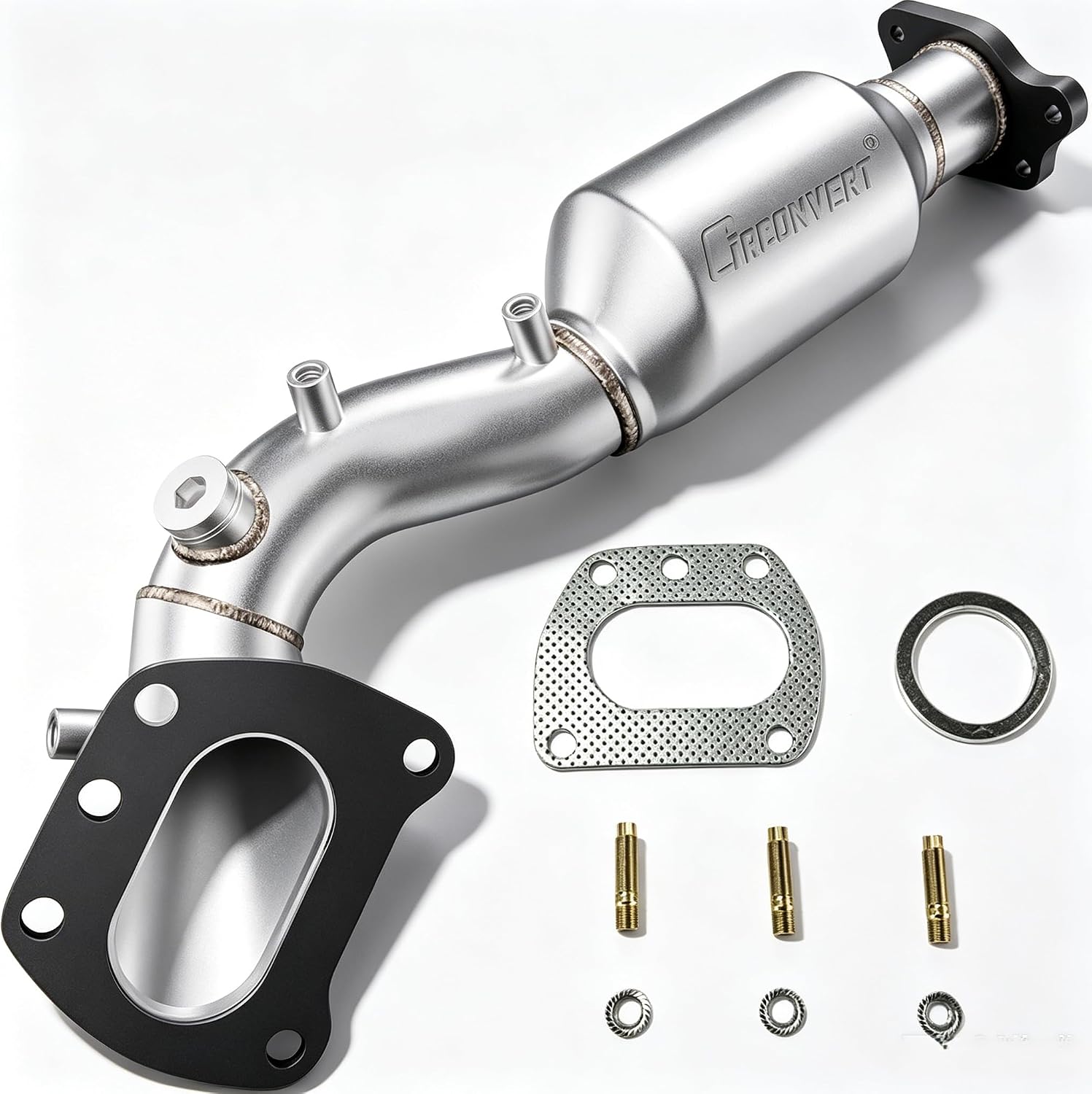
| Fitment | 2016–2020 Toyota Tacoma 3.5L V6 front right passenger side |
|---|---|
| Position | Front Right |
| Material | Stainless steel shell |
| Compliance | EPA compliant |
| Manufacturer | CIRconvert |
This CIRconvert front-right catalytic converter replaces the passenger-side unit on 2016–2020 Toyota Tacoma 3.5L V6 trucks and is built as a factory-style replacement for emissions control. It is constructed with a stainless steel shell, laser-cut and welded seams, and a honeycomb substrate loaded with palladium, platinum, and rhodium to reduce CO, HC, and NOx. Typical use is a bolt-on replacement for a failed, stolen, or out-of-spec converter to clear P0420/P0430 codes and restore emissions performance. Notable features include EPA compliance for federal markets, increased precious-metal loading for conversion efficiency, and claimed high-temperature durability. In practice buyers report generally straightforward installation and resolved check-engine lights, though a minority saw flange or fitment issues that may require minor adjustment or professional attention. The unit cannot be sold in certain states with stricter rules. If you prioritize a reliable, OEM-style emissions repair and follow correct installation steps and gaskets, this converter performs as intended; those expecting performance gains beyond emissions compliance should not expect power improvements.
Best for: Buyers who need a dependable, factory-style replacement to restore emissions compliance and turn off catalytic-converter-related engine codes on a 2016–2020 Tacoma V6, and who value durability over performance modifications.
Less Ideal for: Drivers seeking upgraded performance or racers who need high-flow, non-EPA components or solutions certified for states with stricter local regulations should look elsewhere.
- Made from high-strength stainless steel shell for corrosion and heat resistance
- EPA-compliant unit aimed at restoring emissions control and clearing related trouble codes
- Laser cutting and welding on seams for tighter joints and longer service life
- Higher precious-metal loading on the substrate to improve conversion efficiency
- Direct-fit design for the 2016–2020 Tacoma 3.5L V6 passenger-side location
- Not available for sale in several states with stricter emissions rules
- Some users reported flange alignment or welding issues that required shop intervention
Verdict: A durable, EPA-compliant direct-fit replacement that restores emissions function and reliability for 2016–2020 Tacoma 3.5L V6 passenger-side applications.
SAROTIN Catalytic Converter Compatible with Toyota Tacoma 2005–2011 (Front Inner, 4.0L)

| Compatible vehicles | Toyota Tacoma 2005-2011; 4Runner 2003-2009; FJ Cruiser 2007-2009 4.0L |
|---|---|
| Body material | 409 stainless steel |
| Substrate material | Cordierite ceramic carrier |
| Fitment type | Direct Replacement |
| O2 sensor ports | 1 upstream and 1 downstream |
This SAROTIN catalytic converter is a direct-replacement front inner unit designed for Toyota Tacoma 2005–2011, Toyota 4Runner 2003–2009, and FJ Cruiser 2007–2009 with the 4.0L engine. It uses a cordierite ceramic substrate and a stainless steel 409 shell with a precious-metal coated catalyst intended to improve conversion of harmful gases and clear an illuminated check-engine P0420 code. Fitment is engineered for a bolt-on installation with matching 6-bolt inlet and 3-bolt outlet flanges so no cutting or welding should be necessary on properly compatible vehicles. Buyers report it reduces exhaust noise and restores factory-like function in many cases, and the EPA-compliant design makes it legal in most states outside CARB jurisdictions. Expect practical benefits like easier DIY replacement and restored emissions performance, while noting this is not CARB-compliant so it cannot be used in California or Colorado and may require confirming sensor port locations and exact flange patterns before purchase to avoid fitment mismatches.
Best for: Buyers who prioritize proven real-world results and want a bolt-on, EPA-compliant replacement that restores emissions function and clears P0420 codes with minimal shop time.
Less Ideal for: Drivers who need a California-legal CARB-approved converter or those unwilling to verify exact flange and sensor compatibility before installation.
- Direct-fit design for bolt-on installation with matching inlet and outlet flanges
- Constructed from 409 stainless steel with a cordierite ceramic substrate and precious-metal coated catalyst for emission conversion
- EPA compliant for federal use to address P0420 and reduce emissions
- Includes provision for O2 sensor ports matching upstream and downstream monitoring
- Not CARB compliant and therefore not legal for use in California or Colorado
- Fitment depends on exact flange and sensor locations so may not match every vehicle without verification
Verdict: A practical EPA-compliant, bolt-on replacement that restores emissions control and fixes P0420 on compatible 4.0L Toyota Tacomas without welding.
Choosing the Right Toyota Tacoma V6 Catalytic Converter: Key Factors to Consider
Fitment and Compatibility
Correct fitment ensures the catalytic converter mates cleanly with the Tacoma V6 exhaust flanges and sensor ports. A unit that matches the factory flange pattern and includes the proper upstream and downstream oxygen sensor ports reduces installation time and avoids cutting or welding. Mismatched fit often leads to exhaust leaks, poor sensor readings, and repeated trips to the shop.
Compatibility also covers the converter's orientation and physical clearance under the truck. Tacoma V6 owners should check hanger locations and heat shields to confirm there is no interference with the frame, suspension components, or fuel lines. Choosing a converter specified for the V6 configuration minimizes the risk of fitment surprises and additional fabrication costs.
Emissions Performance and Certification
Emissions effectiveness is the primary function of a catalytic converter, so look for documentation on conversion efficiency or compliance with local emissions standards. A converter with clear claims about its ability to reduce hydrocarbons, carbon monoxide, and NOx will better address failed emissions tests and related check-engine codes.
Where applicable, ensure the unit meets state or regional requirements for on-road vehicles. Even when full certification is not available, technical details about catalyst substrate type and washcoat can indicate expected performance. Prioritizing converters engineered for emissions control helps avoid repeat failures and resolves symptoms tied to poor catalytic activity.
Durability and Construction
Construction materials influence how long a catalytic converter lasts under road salt, high heat, and vibration. Stainless steel housings and quality flanges resist corrosion and cracking better than lower-grade metals. Internal substrate choice and the strength of the mounting points determine how well the unit survives impacts and thermal cycling.
Consider the quality of welds, presence of heat shielding, and the robustness of sensor bosses. A durable converter reduces the chance of exhaust leaks, rattles from broken substrates, and premature replacement. For Tacoma V6 owners driving in harsh conditions, prioritizing durability can mean fewer service visits and more reliable emissions control.
Backpressure and Exhaust Flow
Catalytic converters introduce some restriction to exhaust flow; the balance between conversion efficiency and backpressure affects engine performance. A unit designed with optimized substrate cell density can achieve required emissions conversion while minimizing excess backpressure that reduces power or fuel economy.
When selecting a converter for the Tacoma V6, consider how the unit's flow characteristics match your engine and any aftermarket modifications. For mostly stock vehicles, choose a converter that offers OEM-caliber flow. If you have upgraded other exhaust components, ensure the converter selection complements those changes to avoid creating a bottleneck.
Oxygen Sensor Integration
Modern vehicles rely on oxygen sensors placed before and after the catalytic converter to monitor conversion efficiency. A replacement converter must provide correct locations and threads for the upstream and downstream sensors used on the Tacoma V6. Incorrect sensor placement or incompatible threads can trigger check-engine codes and obscure the real cause of emissions issues.
Also assess whether sensor bungs require additional hardware or adapters. Proper sensor integration keeps the engine management system calibrated and prevents misleading diagnostic trouble codes. This is particularly important when addressing symptoms related to the check-engine light or fluctuating fuel trims.
Installation and Hardware
Ease of installation affects total repair time and cost. Units that include factory-style flanges, gaskets, and mounting hardware reduce the need for aftermarket parts or welding. Clear instructions and included bolts or clamps make fitting straightforward for a professional or a competent DIYer.
Consider whether the converter requires cutting the old pipe, welding, or can be bolted in place. For owners planning a DIY replacement, pick a converter that matches the Tacoma V6 emission system design and comes with the necessary hardware. That reduces risk of leaks, ensures correct torque on flanges, and shortens downtime.
Common Catalytic Converter Symptoms on the Tacoma V6
Understanding symptom patterns helps diagnose whether the catalytic converter is the likely cause. Common signs include a persistent check-engine light with emissions-related codes, noticeable loss of engine power, reduced fuel economy, and unusual sulfur or rotten-egg exhaust odors. These symptoms are not definitive on their own, but they often point to diminished catalytic activity or a clogged substrate.
Owners may also hear rattling from beneath the truck if the internal substrate is damaged. Symptoms often develop gradually, so comparing performance and fuel use before and after symptom onset can help determine whether the converter is the problem rather than unrelated engine or fuel system issues.
- Persistent check-engine light with oxygen sensor or catalyst efficiency codes
- Drop in acceleration or throttle response under load
- Decreased fuel economy over time
- Sulfur-like exhaust smell or black smoke in severe cases
- Rattling noises from a broken internal substrate
Diagnosing the Issue Before Replacement
A careful diagnosis prevents unnecessary replacement. Start by scanning the vehicle for codes to see if they reference oxygen sensors or catalyst efficiency. A live data look at upstream and downstream oxygen sensor readings can reveal whether the converter is actively reducing emissions or if sensors are simply malfunctioning.
A backpressure test or temperature comparison between the converter inlet and outlet can indicate blockages. Visual inspection for physical damage, leaks at flanges, and condition of sensor bungs also helps. Addressing upstream issues like misfires, rich running, or oil consumption first can prevent repeat converter failures.
- Scan for specific emissions-related trouble codes
- Compare upstream and downstream oxygen sensor readings
- Use temperature differential testing to detect blockages
- Inspect flanges, hangers, and sensor bungs for leaks or damage
Installation Tips for Tacoma V6 Owners
Preparing the vehicle and workspace makes installation smoother. Lift the truck securely and allow the exhaust to cool completely before starting work. Penetrating lubricant on old bolts, and in some cases cutting slotted bolts, will ease removal of the old converter. Keep the replacement gaskets and hardware ready and confirm the sensor threads match the replacement unit.
When installing, ensure all mating surfaces are clean and flat, torque flange bolts to specification, and use new gaskets to prevent leaks. If welding is required, have a qualified technician perform the work to ensure proper alignment and avoid warping. After installation, clear codes and perform a short drive cycle to allow the engine control module to relearn sensor parameters.
- Confirm sensor thread size and location before removing old unit
- Use new gaskets and properly torque flange bolts
- Replace rusted hangers or hardware to prevent stress on the new converter
- Perform a system scan after installation and drive to complete relearn
When to Repair Upstream Problems First
The catalytic converter often fails secondary to upstream engine issues. If the engine is misfiring, burning oil, or running rich, those conditions can contaminate or overheat the catalyst. Fixing ignition, fuel, or vacuum problems before replacing the converter can stop recurring failures and protect the new unit.
Addressing oxygen sensor faults, fuel trim anomalies, and regular maintenance items such as spark plugs and air filters ensures the replacement converter operates under optimal conditions. Replacing the converter without correcting the root cause risks repeating the same failure and wasting time and resources.
- Resolve misfires and rich-running conditions prior to converter replacement
- Replace or test oxygen sensors that show out-of-range readings
- Perform routine engine maintenance to prevent catalyst contamination
Emissions Testing and Legal Considerations
Depending on your region, emissions testing requirements may dictate what type of catalytic converter is acceptable. Use converters with documented compliance for regulated areas and keep installation records in case of inspection. Selecting a unit that meets local certification standards avoids unexpected test failures and compliance issues.
Even where formal certification is not mandatory, choosing a unit engineered for effective emissions reduction helps maintain the truck's environmental performance and avoids problems that could lead to failed inspections or penalties.
- Verify local emissions rules before choosing a replacement
- Retain documentation of the converter and installation for inspections
- Prefer units with clear technical data supporting emissions performance
Still looking for the perfect fit?
Select your Toyota Tacoma configuration to see the most relevant Catalytic Converters recommendations
How We Chose the Best Toyota Tacoma V6 Catalytic Converter
We applied a series of practical filters to narrow dozens of available units down to six options appropriate for the Toyota Tacoma V6. Primary evaluation criteria included mechanical fitment to the Tacomaspecific V6 exhaust layout, verified emissions performance or oxygen sensor compatibility, and construction materials that affect longevity under typical driving and climate conditions. We also considered backpressure and flow characteristics that influence drivability, plus heat shielding and flange quality for reliable installation.Additional selection factors were compliance with emissions testing where applicable and supplier documentation for vehicle-specific fit. Units lacking clear fitment information, missing sensor ports needed for the V6 exhaust, or with uncertain materials were excluded. We prioritized items that balance emission control effectiveness with straightforward installation and robust hardware, excluding universal-only pieces that require extensive modification. The result is a curated set of options that match the Toyota Tacoma V6 exhaust geometry and the real-world needs of owners.
Our full evaluation process is outlined in our review methodology.
FAQ
What codes indicate a failing catalytic converter on a Tacoma V6?
On the Tacoma V6, emissions-related trouble codes referencing catalyst efficiency, bank sensor comparisons, or O2 sensor performance often point to catalytic converter problems. Codes that show downstream sensor readings mirroring upstream sensors or persistent catalyst efficiency faults are common indicators.
Can a catalytic converter cause the check-engine light to stay on?
Yes. A degraded or clogged catalytic converter can trigger the check-engine light through emissions efficiency codes or abnormal oxygen sensor readings. However, similar codes can be caused by failing sensors or upstream engine issues, so diagnostic scanning is important before replacement.
Is it necessary to replace oxygen sensors when changing the catalytic converter?
Not always. If the sensors test within specification and their threads match the new unit, they can often be reused. But if sensors are old, showing poor response times, or damaged, replacing them during the converter service helps ensure accurate emissions monitoring.
How long should a properly installed catalytic converter last on a Tacoma V6?
A well-made, correctly installed converter can last many years under normal driving conditions. Lifespan depends on driving habits, exposure to road salt, and whether upstream engine problems have been present. Regular maintenance and addressing engine issues promptly will extend service life.
Will replacing the catalytic converter improve fuel economy?
If a failing converter was creating excessive backpressure or causing the engine to run poorly, replacement can restore lost efficiency and improve fuel economy. If the converter is not the source of the problem, fuel economy may not change significantly.
Can I install a replacement catalytic converter myself on the Tacoma V6?
A competent DIYer with proper safety equipment and tools can install many converters that bolt into place. Some units require cutting or welding, which is best left to a professional. Ensure you have the correct gaskets, hardware, and sensor compatibility before attempting the job.
Final Verdict
Prioritize fitment, emissions performance, and sensor integration when selecting a catalytic converter for the Toyota Tacoma V6. Confirm that the unit matches the V6 exhaust geometry, provides the correct oxygen sensor locations, and is constructed to withstand road conditions you typically encounter. Address any upstream engine issues first to protect the new converter and reduce the chance of repeat failures.Balancing durability and proper flow characteristics will give the best long-term outcome. With careful diagnosis and attention to the factors outlined above, you can choose a converter that restores emissions control, resolves related symptoms, and maintains reliable operation for miles to come.
Explore More:
- Check out all Toyota Tacoma parts & accessories
- Explore Catalytic Converters Maintenance & Repair Guides
- Explore Exhaust & Emissions
- Browse all Auto Parts
