

Note: This article contains affiliate links. If you click on these links and make a purchase, I may earn a small commission at no extra cost to you. This helps support my research and content. Read my full affiliate disclosure here.
If you own a Toyota Tacoma with the 2.7L engine, a properly functioning catalytic converter is essential for legal emissions, smooth engine operation, and keeping the check engine light from recurring. This guide covers the top choices for Tacoma 2.7L catalytic converters, narrowed to seven shortlisted options that prioritize correct fitment, emission control, and durable construction.You will find practical evaluation criteria used to vet each choice, including fitment accuracy, substrate quality, and ease of installation. Read on to understand which converter characteristics matter most for the Tacoma 2.7L and how they affect real-world driving and emissions testing.
Looking for other parts? See all Toyota Tacoma parts & accessories.
Top Picks at a Glance
| Best Overall The best all-around choice for most situations | PHILTOP High Flow Catalytic Converter Kit for Toyota Tacoma 2.7L (Rear) EPA Compliant |  |
| Best Quality Built to a higher standard if you want something more solid | MagnaFlow HM Grade Direct-Fit Catalytic Converter 24487 |  |
| Best Value The sweet spot between price and what you get | CatFlowFixer Catalytic Converter for 2005–2015 Toyota Tacoma 2.7L |  |
| Best Budget The cheapest option that still gets the job done reliably | ZonCar Catalytic Converter for Toyota Tacoma 2.7L (Rear) |  |
| Highest Rated A top-rated pick with lots of positive feedback | SIZZER Catalytic Converter Replacement for Toyota Tacoma 2.7L (2005–2015) |  |
| Most Popular A crowd favorite that many people choose with confidence | SPEEDFusion Catalytic Converter for Toyota Tacoma 2005–2015 2.7L |  |
| Best Seller A high-volume bestseller chosen again and again | PREMIER MILES Catalytic Converter for Toyota Tacoma 2.7L (2005–2015) — EPA Compliant |  |
PHILTOP High Flow Catalytic Converter Kit for Toyota Tacoma 2.7L (Rear) EPA Compliant

| Position | Rear |
|---|---|
| Vehicle fitment | Toyota Tacoma 2.7L (2005-2023) |
| Material | 409L stainless steel |
| O2 port | Included |
| EPA status | EPA-compliant (not for certain states) |
This PHILTOP catalytic converter kit is a direct-fit rear replacement intended for Toyota Tacoma 2.7L models and aims to restore emissions function while reducing backpressure. It features a high-flow ceramic honeycomb substrate and 409L stainless steel construction that the maker says improves catalytic efficiency and longevity. The kit ships with OE-style gaskets and hardware and includes an O2 sensor port, so installation typically follows factory mounting points and can be completed in a few hours by a home mechanic or shop. In practice buyers report good fits and resolved check-engine light codes when the unit matches their vehicle, and the high-flow design can slightly improve engine breathing versus a clogged unit. However, results vary: some users have reported durability problems with internal substrate failure and occasional fitment or hardware mismatches requiring reuse of original bolts. Also this EPA-approved unit cannot be used in states with stricter emissions rules. For a balanced buyer this is a cost-conscious replacement that can get a Tacoma passing emissions if the correct fitment is verified, but be mindful of mixed long-term reliability reports.
Best for: Buyers looking for a budget-conscious, factory-style replacement to restore emissions performance on a Tacoma 2.7L and who prioritize straightforward installation and short-term emissions compliance.
Less Ideal for: Drivers who need a conversion legal in California-style states or who want a long-term heavy-duty performance unit with proven track record for extended high-mileage use.
- Direct-fit design with OE-style gaskets and hardware for straightforward installation
- High-flow honeycomb substrate aimed at reducing backpressure and improving catalytic efficiency
- Made from 409L stainless steel for corrosion resistance and longer service life
- Includes an O2 sensor port so factory sensors can be reused without modification
- Mixed reports of internal substrate failure and ceramic breakage on some units
- Not legal for sale or installation in states with stricter emissions rules (for example California, New York, Colorado, Maine)
Verdict: A cost-effective, direct-fit rear catalytic converter for Tacoma 2.7L owners who want a factory-style replacement to clear emissions codes and restore exhaust flow.
MagnaFlow HM Grade Direct-Fit Catalytic Converter 24487

| Series | HM Grade |
|---|---|
| Type | Direct-Fit Federal/EPA Compliant |
| Body Material | Stainless Steel |
| Substrate Material | Ceramic |
| Inlet Attachment | Bolt-On |
The MagnaFlow 24487 HM Grade is a direct-fit catalytic converter made for the 2005–2015 Toyota Tacoma 2.7L that aims to restore emissions performance while using a high-flow, durable design. It installs using the vehicle's factory attachment points and includes gaskets and hardware to reduce leaks and avoid reusing corroded parts. The spun stainless-steel body, mandrel-bent tubing, and OEM-like O2 sensor locations mean it fits tightly and resists corrosion better than stamped-sheet alternatives. Because it is HM Grade and federal/EPA compliant it contains additional catalyst material to improve conversion efficiency and keep the check-engine light off on properly functioning systems. Real-world use requires basic exhaust tools and replacement of heavily rusted manifold bolts in many Tacomas, and some buyers reported issues with fitment or returns, so confirm vehicle match before installation. This unit is not legal for sale or use in certain states with stricter emissions rules.
Best for: Buyers who prioritize restoring emissions performance and a durable, factory-style replacement on a Toyota Tacoma 2.7L while keeping engine warning lights off.
Less Ideal for: Drivers in states with stricter emissions regulations or those seeking a California-legal converter should choose a certified alternative specific to their state.
- Direct-fit design with OEM-like O2 port locations for straightforward installation
- Stainless-steel spun body and mandrel-bent tubing for improved corrosion resistance
- HM Grade substrate with extra catalyst material to help correct emissions issues
- Includes gaskets and mounting hardware to reduce leaking and avoid reusing corroded parts
- Not legal for sale or use in some states with stricter emissions rules
- May require replacement of rusted manifold bolts and exhaust fasteners during install
Verdict: If you need a durable, high-flow factory-style replacement to correct emissions on a Tacoma 2.7L, this HM Grade direct-fit MagnaFlow is a practical, performance-minded choice.
CatFlowFixer Catalytic Converter for 2005–2015 Toyota Tacoma 2.7L

| Vehicle fitment | 2005–2015 Toyota Tacoma L4 2.7L (to 08/2015) |
|---|---|
| Substrate | 400-cell ceramic |
| Precious metals | Platinum, Rhodium, Palladium coating |
| EPA status | EPA-compliant (federal only) |
| Manufacturer | CatFlowFixer |
This CatFlowFixer catalytic converter is built as a replacement for the Toyota Tacoma 2.7L (to 08/2015) to restore emissions control and engine breathing. It uses a 400-cell ceramic substrate with platinum, rhodium and palladium coatings to improve catalytic conversion and reduce backpressure compared with a clogged or failing unit. Typical use is a one-for-one replacement at a repair shop; the unit is polished and designed to match the referenced part numbers for straightforward installation by a professional. The listing notes EPA compliance and a long-term 25,000-mile test, which makes it suitable for federal-emissions vehicles outside California and other states that restrict aftermarket converters. Practical benefits include improved exhaust flow, potential recovery of lost power and resolving check-engine codes tied to catalyst efficiency. Limitations are legal restrictions in certain states and the usual need for professional installation and verification of fit before finishing the job.
Best for: Buyers who want a practical, factory-style replacement to clear emissions codes and restore performance on a 2005–2015 Tacoma 2.7L, prioritizing compliance with federal standards and reliable, shop-installed fitment.
Less Ideal for: Do not choose this if you need a California-compliant or state-specific emissions part or if you prefer a universal or heavily modified performance converter.
- Designed specifically to match Toyota Tacoma 2.7L fitment through 08/2015
- 400-cell ceramic substrate with precious-metal coating for effective emissions conversion
- EPA-compliant long-term road test passed for federal vehicles
- Polished exterior finish and factory-style design for straightforward replacement
- Not legal for sale or use in states with their own catalytic converter rules such as California
Verdict: A practical, factory-style replacement that restores emissions function and exhaust flow on 2005–2015 Tacoma 2.7L trucks while meeting federal EPA tests.
ZonCar Catalytic Converter for Toyota Tacoma 2.7L (Rear)
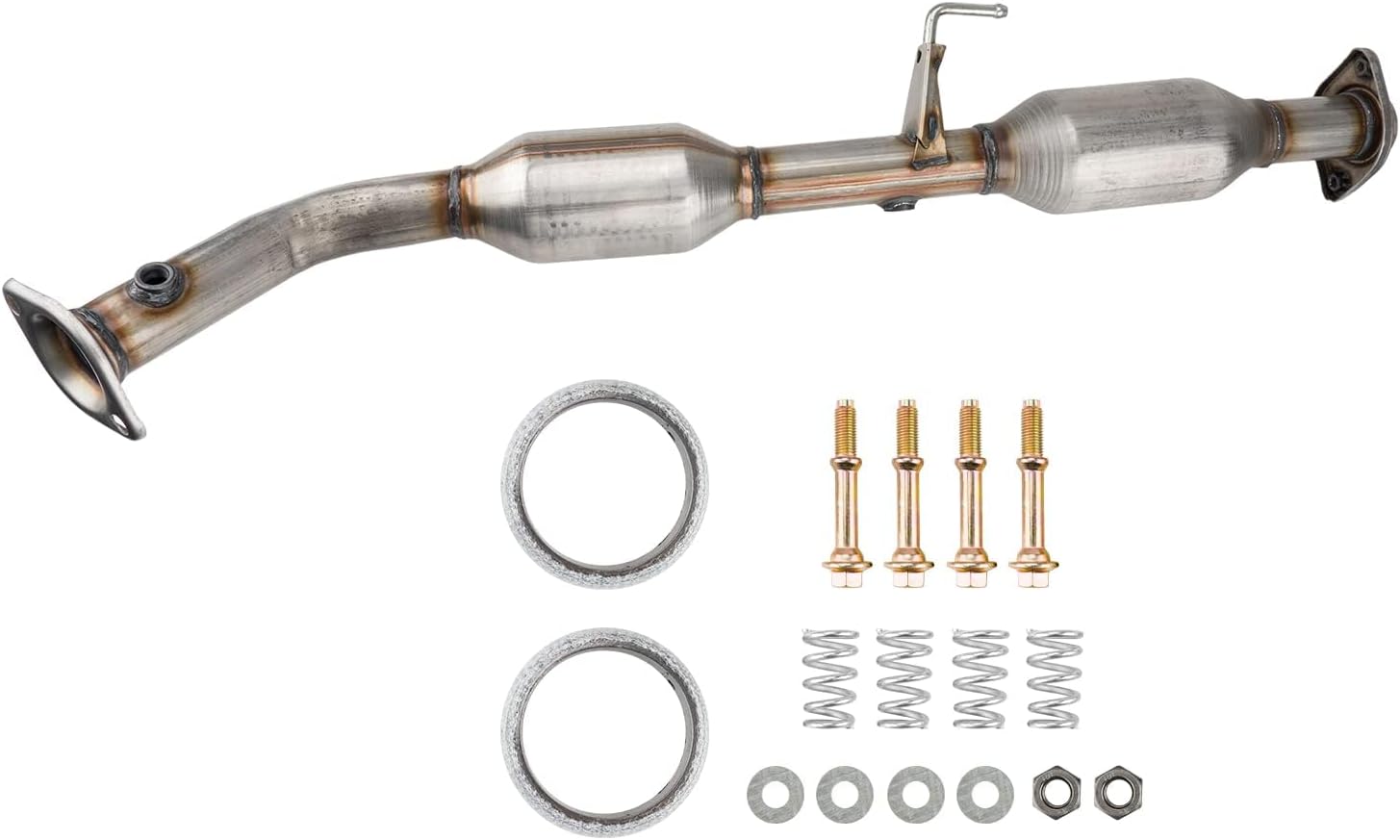
| Position | Rear |
|---|---|
| Material | Stainless steel |
| Compatible engines | Tacoma 2.7L |
| Standards | EPA, OBD3 |
This ZonCar catalytic converter is a direct replacement-style rear catalyst for Toyota Tacoma 2.7L models that aims to restore emissions control and exhaust quieting after an aging or failed factory unit. It uses a stainless steel shell and a double-layer ceramic substrate coated with catalyst material to promote efficient conversion of harmful gases while resisting corrosion. Typical use is as a factory-replacement part during exhaust repairs where the original converter is damaged or clogged; installation will require standard exhaust mounting and likely professional fitment if welding or flange mating is needed. The construction promises improved heat resistance and a longevity advantage over cheaper thin-shell units, and the stated compliance with general EPA and OBD3 procedures means it is intended for road-legal use in most states. Limitations include nonavailability for sale in high-emission states and the usual uncertainty around exact catalyst precious metal loading compared with higher-end branded converters, which can affect long-term conversion efficiency and durability.
Best for: Buyers replacing a failed or clogged rear catalytic converter on a Tacoma 2.7L who want a durable, budget-friendly factory-style replacement that restores emissions function without paying dealer prices.
Less Ideal for: Drivers in high-emission states that require CARB-certified parts or buyers who need a premium, high-loading converter for long-term heavy-duty use should look elsewhere.
- Stainless steel construction offers good corrosion and heat resistance
- Double-layer ceramic substrate increases flow area for improved conversion
- Listed compatibility specifically for Toyota Tacoma 2.7L rear position
- Designed to meet EPA and OBD3 production procedures for most states
- Not sold for use in California, Colorado, New York, or Maine due to stricter regulations
- Precious metal loading and long-term conversion performance are not specified
Verdict: A cost-conscious, stainless-steel factory-style rear catalytic converter that restores emissions control for Toyota Tacoma 2.7L owners outside CARB states.
SIZZER Catalytic Converter Replacement for Toyota Tacoma 2.7L (2005–2015)

| Position | Rear |
|---|---|
| EPA Approval | OBD-II Approved |
| Shell Material | Industrial Grade Stainless Steel |
| Substrate Material | Ceramic |
| O2 Sensor Ports | 2 |
This SIZZER catalytic converter is a direct-replacement rear unit designed for Tacoma 2.7L models and intended to restore emissions control and exhaust flow to factory-style performance. It uses a ceramic substrate inside an industrial-grade stainless steel shell, anodized for rust resistance, and includes two O2 sensor ports plus gaskets and hardware for a bolt-down installation. The unit is EPA OBD-II approved and supplied with a five-year or 50,000-mile warranty, so it fits into emissions-regulated repairs and routine replacement jobs. In practice the converter installs without cutting or modification on the stated model years and delivers higher conversion efficiency and claimed high flow compared with stock. Some buyers report good fit and quiet operation while a few have noted weld or craftsmanship issues, so careful inspection at installation is advised. This is a solid pick for someone who needs a compliant, ready-to-install replacement and values long-term corrosion resistance, though finish and weld consistency can vary between units.
Best for: Buyers who prioritize a dependable, emissions-compliant replacement that installs without modification and who want corrosion-resistant materials and a warranty-backed unit for routine repair or maintenance.
Less Ideal for: Customers seeking a performance-oriented or state-restricted converter for California, New York, Colorado, or Maine should look at alternatives specifically certified for those states or designed for higher-flow performance builds.
- Direct bolt-on design for stated Tacoma 2.7L fitment simplifies installation
- Industrial-grade stainless steel shell with anodized treatment resists corrosion
- Includes two O2 sensor ports plus gaskets and hardware for a complete replacement
- EPA OBD-II approval and a 5-year/50,000-mile warranty provide regulatory compliance and coverage
- Some customer reports of inconsistent weld quality and occasional cracks require inspection after installation
Verdict: A ready-to-install, EPA-approved stainless steel catalytic converter that restores emissions compliance and durability for Tacoma 2.7L owners who want a reliable factory-style replacement.
SPEEDFusion Catalytic Converter for Toyota Tacoma 2005–2015 2.7L

| Vehicle fitment | Toyota Tacoma 2005-2015 2.7L |
|---|---|
| Material | 409L stainless steel |
| Substrate | 400-hole ceramic with Pt/Rh/Pd coating |
| EPA compliance | Meets federal emission standards |
This SPEEDFusion catalytic converter is designed as a direct-fit replacement for Toyota Tacoma 2.7L (2005–2015) applications and aims to restore emissions control and engine performance. Constructed with 409L stainless steel and a 400-hole ceramic substrate plated with platinum, rhodium and palladium, it is intended to improve catalytic conversion efficiency and keep the check engine light related to catalyst codes from appearing. The unit is EPA compliant for federal standards but not CARB approved, so it is only suitable where federal-compliant parts are allowed. Installation is straightforward for a professional shop because it matches OEM mounting points, though some heat shield or minor alignment adjustments may be required on a small number of vehicles. Buyers should appreciate the advertised 5-year structural warranty and the emphasis on durability, but there are mixed user reports on longevity so professional installation and inspection are recommended to help avoid early failures.
Best for: Buyers who prioritize a factory-style, EPA-compliant replacement that restores emissions function and reduces catalyst-related fault codes, and who prefer to have the part professionally installed and verified.
Less Ideal for: Drivers who need a CARB-compliant converter for use in states with stricter regulations or those wanting a lifetime-proven OEM brand part without any mixed longevity reports.
- Direct-fit design for Toyota Tacoma 2.7L 2005–2015 simplifies installation at a shop
- 409L stainless steel shell resists corrosion in typical underbody conditions
- OEM-style 400-hole ceramic substrate with precious metal coating for effective catalytic conversion
- EPA certified for vehicles meeting federal emission standards
- Not CARB compliant so illegal to sell or install in certain states
- Some user reports of premature failure in a minority of units
Verdict: A cost-effective, factory-style EPA-compliant direct-fit replacement for Tacoma 2.7L owners who want to restore emissions performance without modifying the exhaust.
PREMIER MILES Catalytic Converter for Toyota Tacoma 2.7L (2005–2015) — EPA Compliant

| Vehicle compatibility | Toyota Tacoma 2005-2015 2.7L |
|---|---|
| Substrate | 400-cell ceramic |
| Emissions compliance | EPA compliant |
| Manufacturer part number | PM-TYTC-05-16-2.7L |
This PREMIER MILES catalytic converter is a purpose-built replacement for the Toyota Tacoma 2.7L (2005–2015) intended to correct emissions failures and restore exhaust flow. It uses a 400-cell ceramic substrate and precious-metal catalyst to reduce backpressure and meet EPA long-term test requirements, so it is suitable for vehicles outside CARB-regulated areas. Typical use is bolt-in replacement during repairs for a failed converter or after a P0420 code; some buyers reported the oxygen sensor location differs but worked without triggering lights. Notable features include factory-style flow design, EPA compliance, and a multi-year warranty covering structure and short-term emissions performance. Practical benefits are improved catalytic efficiency, potential fuel-economy and drivability improvements compared with a clogged unit, and a warranty for peace of mind. Limitations to consider: it is not CARB compliant and some installations may need minor fitment adjustments or different heat-shield bolts, so budget for a short shop visit if exact bolt placement or shield hardware differs from your original part.
Best for: Buyers who want a reliable, factory-style replacement to resolve emissions faults and restore normal exhaust flow while prioritizing compliance with federal EPA standards.
Less Ideal for: Drivers in California or other areas that require CARB-compliant parts and anyone seeking a universal or multi-vehicle converter option.
- Designed specifically for Toyota Tacoma 2.7L (2005–2015) with a 400-cell ceramic substrate to optimize exhaust flow
- EPA-compliant and passed the 25,000-mile long-term road test for emissions performance
- Includes precious metal catalysts intended to extend durability and reduce emissions
- Backed by a 5-year structural warranty and a separate emissions performance warranty
- Not CARB compliant so it cannot be used in California or other CARB jurisdictions
- Some units may require minor fitment adjustments or different heat-shield bolts during installation
Verdict: A purpose-built, EPA-compliant replacement for Tacoma 2.7L owners who want a factory-style catalytic converter to fix emissions issues and restore exhaust performance.
Choosing the Right Toyota Tacoma 2.7L Catalytic Converter: Key Factors to Consider
Fitment And Flange Compatibility
Correct fitment is the single most important factor for the Tacoma 2.7L because the factory exhaust routing and flange positions are specific to that engine and chassis. A converter that matches the factory flange pattern and sensor ports reduces the need for cutting or welding and helps maintain proper exhaust backpressure.
Mismatched fitment can create leaks, trigger diagnostic trouble codes, or require additional fabrication that raises labor time and cost. When evaluating parts, check for explicit fitment to the Toyota Tacoma 2.7L, and confirm the number and location of oxygen sensor bung fittings. This ensures the converter integrates with the vehicle's emissions control sensors and preserves drivability.
Substrate Type And Cell Density
The internal catalyst substrate—typically ceramic or metallic—and its cell density determine how effectively the converter reduces harmful gases. For the Tacoma 2.7L, a substrate with appropriate cell density balances emissions conversion with resistance to clogging under typical driving conditions.
Higher cell densities offer more surface area for catalytic reactions but can increase the risk of restriction if soot or oil contamination is present. Conversely, metallic substrates warm up faster and can tolerate thermal shock better, which helps with cold-start emissions. Consider the tradeoffs between conversion efficiency and long-term flow for your driving patterns.
Oxygen Sensor Integration And OBD-II Behavior
The Tacoma 2.7L relies on upstream and downstream oxygen sensors for closed-loop fueling and catalyst efficiency monitoring. A replacement converter should preserve sensor locations and avoid changes that confuse the vehicle's OBD-II system. Proper sensor bungs and correct positioning help prevent check engine light catalytic converter codes and ensure accurate downstream monitoring.
If a converter alters the oxygen sensor geometry, the ECU may detect abnormal readings even if the converter functions normally. Check that the part supports the original sensor configuration to maintain emissions compliance and avoid unnecessary diagnostics.
Durability And Materials
Exhaust components face heat cycles, road debris, and corrosion, so housing materials and construction quality directly affect service life. Stainless steel shells and robust welds resist rust and cracking better than lower-grade metals, which is important for long-term reliability on a Tacoma used in varied climates.
Thermal insulation, mounting bracket strength, and reinforcement around flanges also contribute to durability. For the 2.7L Tacoma, prioritize converters built to withstand repeated heating and cooling without warping or developing leaks that would undermine emissions performance.
Emissions Performance And Certification
Depending on local regulations, you may need a converter that meets specific emissions standards. Emissions performance is a key consideration for the Tacoma 2.7L because it affects legal compliance and the ability to pass inspection testing. Look for documented reduction rates for hydrocarbons, carbon monoxide, and NOx when available.
Where certification is required, choose converters that explicitly state compliance with applicable standards or provide test data. Even when certification is not mandatory, converters with quantifiable emissions performance help ensure the vehicle will behave predictably in emissions testing.
Installation Complexity And Serviceability
Installation can range from straightforward bolt-on swaps to units that require cutting, welding, or hanger modification. For many Tacoma owners, minimizing workshop time and avoiding exhaust fabrication is a priority. Consider whether the converter uses factory-style flanges, pre-drilled sensor bungs, and compatible mounting brackets.
Serviceability also includes how easy it is to access oxygen sensors and whether replacement will disturb nearby exhaust components. A converter that simplifies routine maintenance and sensor replacement reduces total ownership hassle for the Tacoma 2.7L.
Understanding Emissions And Your Tacoma 2.7L
The catalytic converter is central to the Tacoma 2.7L's emissions control strategy. It transforms harmful exhaust gases produced by combustion into less harmful compounds before they exit the tailpipe. For owners, the practical goal is to maintain a converter that consistently reduces pollutants while avoiding drivability or diagnostic issues.
Regularly monitoring emissions-related components, and recognizing early catalytic converter symptoms, helps prevent more costly repairs down the road. Addressing minor exhaust issues quickly can preserve the converter's effectiveness and maintain compliance with inspection standards.
- Catalyst performance affects fuel trim and OBD-II monitor readiness
- Proper sensor placement supports accurate downstream monitoring
- Physical damage or clogging can manifest as power loss or increased backpressure
Common Symptoms Of Catalyst Problems On The 2.7L
Catalytic converter failure signs on the Tacoma 2.7L often appear as a combination of check-engine codes and drivability changes. Reduced power, unusual exhaust smells, or a noticeable decrease in fuel economy can all indicate catalytic distress. In some cases, internal substrate breakdown leads to rattling noises from the converter housing.
A persistent check-engine light that relates to catalytic efficiency or oxygen sensor readings usually warrants inspection of the converter and upstream systems. Addressing ignition or fuel-system issues first can prevent premature converter damage caused by unburned fuel reaching the catalyst.
- Poor throttle response or reduced acceleration
- Strong sulfur or rotten-egg exhaust odor
- Rattling noises from the catalytic housing, especially when cold
Fitment Tips For Replacing The Converter
Before attempting catalytic converter replacement on a Tacoma 2.7L, confirm the exact flange pattern and oxygen sensor locations for your model year and exhaust layout. Some converters are designed as direct-fit replacements while others require minor adjustments or new gaskets. Gathering this information upfront reduces surprises during installation.
When removing the old converter, inspect adjacent exhaust hangers, heat shields, and sensor wiring. Replacing corroded bolts and using anti-seize on sensor threads helps ensure easier future service. If welding is necessary, use experienced technicians to maintain proper alignment and prevent leaks.
- Verify sensor bung count and placement before buying
- Use new gaskets and hardware when reusing factory flanges
- Consider professional installation if extensive cutting or welding is required
Maintenance To Extend Converter Life
Routine maintenance of the engine and exhaust system is the best way to extend converter life on the Tacoma 2.7L. Address misfires, oil consumption, or rich running conditions promptly because these issues can contaminate the catalyst with unburned hydrocarbons or oil deposits, accelerating failure.
Keep the engine properly tuned and follow recommended service intervals for spark plugs, fuel system checks, and oil changes. Inspect the exhaust system periodically for leaks, dents, or detached heat shields that can affect converter temperature and performance.
- Fix ignition and fueling faults quickly to avoid catalyst contamination
- Replace oxygen sensors when they show signs of age to maintain correct fueling
- Inspect underbody components for corrosion or impact damage
Legal And Inspection Considerations
Local emissions laws may require that replacement converters meet certain standards or be CARB-compliant where applicable. For the Tacoma 2.7L, choose parts that align with regional inspection requirements to avoid failing emissions tests. Keep documentation that shows the part is intended for your vehicle configuration.
Avoid modifications that alter emissions control in a way that will fail inspection. If inspection failure occurred due to the converter previously, focus on a unit with verifiable emissions performance and correct sensor integration to help ensure test readiness.
- Confirm local regulatory requirements before purchasing
- Keep records of replacement parts and installation details for inspections
- Ensure the converter supports OBD-II monitoring used during testing
Still looking for the perfect fit?
Select your Toyota Tacoma configuration to see the most relevant Catalytic Converters recommendations
How We Chose the Best Toyota Tacoma 2.7L Catalytic Converter
We prioritized parts that address the specific fitment and emissions needs of the Toyota Tacoma 2.7L. Our selection process focused on measurable, vehicle-relevant criteria: exact fitment to the 2.7L exhaust routing and flange specifications, catalyst substrate type and cell density for emissions reduction, thermal durability and housing construction to resist heat and road stress, and compatibility with onboard diagnostics to limit false check-engine triggers.We also weighed installation factors such as whether the converter integrates with existing oxygen sensor ports and mounting points, and whether it requires major exhaust modification. Longevity considerations included resistance to corrosion and potential for clogging over time. Exclusions: we did not include converters that lacked clear fitment data for the Tacoma 2.7L, parts that require extensive custom fabrication, or units without documented emissions performance claims.Overall, the list reflects converters that balance correct fitment, emissions control, durability, and practical installation for Tacoma 2.7L owners.
Our full evaluation process is outlined in our review methodology.
FAQ
What are the most common catalytic converter symptoms on a Tacoma 2.7L?
Common symptoms include a check engine light related to catalyst efficiency, reduced engine power, unusual exhaust odors, and rattling from the converter housing. These signs often indicate a failing substrate, clogging, or sensor-related issues.
Can I replace the catalytic converter myself on a Tacoma 2.7L?
You can replace it yourself if you have the right tools and experience with exhaust work, but many owners opt for professional installation. Factors such as rusted bolts, welds, or precise flange alignment can make the job more complex.
How does a bad catalytic converter trigger the check engine light?
The vehicle's oxygen sensors and onboard diagnostics monitor catalyst efficiency. If downstream sensor readings indicate the converter is not reducing emissions effectively, the ECU will set a diagnostic trouble code and illuminate the check engine light.
Will repairing other engine issues fix catalytic converter failure signs?
Sometimes. Fixing misfires, oil leaks, or fueling problems can prevent further catalyst damage and may resolve early symptoms. However, once the substrate is physically damaged or heavily clogged, replacement is usually necessary.
How can I confirm the replacement part fits my Tacoma 2.7L?
Confirm fitment by checking the part's stated compatibility with Toyota Tacoma 2.7L, verifying flange pattern, oxygen sensor bung locations, and mounting bracket positions. Comparing measurements against the vehicle's existing converter helps avoid fitment surprises.
Are there signs that mean the catalytic converter is clogged rather than broken?
Clogging often presents as increased backpressure, reduced power under load, and elevated exhaust temperatures. A rattling sound is more indicative of physical substrate breakage. Diagnostic pressure tests and inspection can distinguish the causes.
Final Verdict
For the Toyota Tacoma 2.7L, prioritize converters that match factory fitment and preserve oxygen sensor locations to avoid diagnostic complications. Balance substrate characteristics and durability so the unit provides reliable emissions control without creating excessive backpressure.Decide based on the install complexity you are willing to accept and the documented emissions performance for your region. Focusing on correct fitment, robust construction, and proper sensor integration will help you choose a converter that restores compliance and minimizes future maintenance headaches.
Explore More:
- Check out all Toyota Tacoma parts & accessories
- Explore Catalytic Converters Maintenance & Repair Guides
- Explore Exhaust & Emissions
- Browse all Auto Parts
