

Note: This article contains affiliate links. If you click on these links and make a purchase, I may earn a small commission at no extra cost to you. This helps support my research and content. Read my full affiliate disclosure here.
If you own a 1995-2004 Toyota Tacoma and are facing emissions failures, drivability issues, or a stubborn check engine light, a correct catalytic converter can fix those problems. Selecting the right replacement matters because fitment, emissions compliance, and internal substrate design all affect how the truck runs and whether it will pass inspection.This guide shortlists seven top options chosen for fit and emissions performance specific to the 1995-2004 Tacoma. We focus on fitment details, emissions effectiveness, and installation considerations so you can decide which converter best matches your needs. Read on to understand the evaluation criteria and the tradeoffs involved before you pick a replacement.
Looking for other parts? See all Toyota Tacoma parts & accessories.
Top Picks at a Glance
| Best Overall The best all-around choice for most situations | Walker Ultra 15826 Direct-Fit Catalytic Converter |  |
| Best Quality Built to a higher standard if you want something more solid | MagnaFlow California-Grade Direct-Fit Catalytic Converter 447219 |  |
| Best Value The sweet spot between price and what you get | SCITOO Rear Catalytic Converter for Toyota Tacoma 3.4L (2000–2004) |  |
| Best Budget The cheapest option that still gets the job done reliably | LELEHOKA Catalytic Converter Compatible with 2000–2004 Toyota Tundra/Tacoma 3.4L V6 (Front, Inner) |  |
| Highest Rated A top-rated pick with lots of positive feedback | PREMIER MILES Catalytic Converter for Toyota Tacoma 2000–2004 2.7L (Front & Rear) |  |
| Most Popular A crowd favorite that many people choose with confidence | PHILTOP Rear High-Flow Stainless Steel Catalytic Converter for Toyota Tacoma 3.4L (2000–2004) |  |
| Best Seller A high-volume bestseller chosen again and again | A-Premium Front and Rear 2-PC Catalytic Converter Kit for Toyota Tacoma 3.4L (2000-2004) |  |
Walker Ultra 15826 Direct-Fit Catalytic Converter

| Compatible Vehicle Type | Car |
|---|---|
| OEM Equivalent Part Number | 15826 |
| Automotive Fit Type | Vehicle Specific Fit |
| Material Type | Metal |
| Manufacturer Warranty Description | 25K Miles |
The Walker Ultra 15826 is a vehicle-specific direct-fit catalytic converter designed to replace a worn or failed unit without fabrication. It installs using OE-style hangers, flanges and brackets and includes aluminized heat shields when originally equipped to protect the undercarriage. The converter is described as stainless-steel construction with a high-technology washcoat and optimized precious metal load to meet emissions reduction requirements for the intended pre-OBDII or OBDII applications. In practice this means it clears emission-related codes like P0420 for many users and restores quieter exhaust operation compared with a rusted original. Installation may require separate gaskets and common hardware and heavily rusted bolts on older Tacomas can demand cutting or penetrating oil. Some buyers report occasional quality control issues, so expect to inspect the unit before installation and keep sensors and flanges handy if they need replacement.
Best for: Buyers who want a straightforward, factory-style replacement that restores emissions compliance and normal exhaust behavior on period Toyota Tacomas and prefer a bolt-on installable part over custom fabrication.
Less Ideal for: Drivers seeking a performance-oriented or high-flow race converter or those wanting an all-in-one kit with gaskets, sensors and fasteners included should consider alternatives.
- Direct-fit design with OE-style hangers and flanges for bolt-on installation
- Engineered washcoat and precious metal loading to meet emissions reduction targets
- Stainless-steel construction and aluminized heat shields for durability and underbody protection
- Restores quieter exhaust and can clear emission fault codes when fitted correctly
- Gaskets and some hardware are not included so additional parts may be needed
- Older vehicles with rusted bolts may require cutting tools or extra labor for removal
- A minority of buyers reported build-quality inconsistencies on delivery
Verdict: Choose the Walker Ultra 15826 when you need a direct-fit, factory-style replacement that reliably restores emissions compliance and normal exhaust behavior on compatible Tacomas.
MagnaFlow California-Grade Direct-Fit Catalytic Converter 447219

| Type | Direct-Fit CARB Compliant |
|---|---|
| Body Material | Stainless Steel |
| Main Piping Diameter | 2.5" |
| Substrate Material | Ceramic |
This MagnaFlow California-grade catalytic converter is a direct-fit replacement engineered for 2001–2004 Toyota Tacoma trucks and is designed to meet strict CARB emissions requirements. It bolts on without cutting or welding and includes gaskets and hardware to help avoid exhaust leaks, while mandrel-bent tubing and a ceramic substrate maintain flow and emissions control. Stainless steel construction and a clamshell continuous seam weld improve corrosion resistance and thermal stability compared with cheaper stamped units. The part is intended for owners who want a legal, performance-minded replacement that keeps the check engine light off and preserves drivability. Installation is straightforward for someone with basic automotive skills, though tight spaces or rusted bolts may still require professional help. This is a vehicle-specific, emissions-legal solution rather than a high-flow race part, so buyers seeking maximum horsepower gains should consider a high-flow or test-piped option instead.
Best for: Truck owners focused on retaining emissions compliance and reliable everyday performance for a 2001–2004 Tacoma who want a factory-quality, bolt-on replacement that minimizes check engine light issues.
Less Ideal for: Drivers building a race or high-horsepower Tacoma who prioritize maximum exhaust flow over emissions legality should look at high-flow or test-pipe alternatives.
- CARB-compliant for legal use in California and CARB states for the listed Tacoma models
- Direct-fit design with included gaskets and hardware simplifies installation
- Stainless steel clamshell construction resists corrosion and improves longevity
- Mandrel-bent tubing reduces flow restrictions compared with crushed or folded piping
- Not designed as a high-flow performance cat for maximum horsepower gains
Verdict: Choose this MagnaFlow if you want a legal, durable, direct-fit replacement that preserves drivability and keeps the check engine light off on a 2001–2004 Toyota Tacoma.
SCITOO Rear Catalytic Converter for Toyota Tacoma 3.4L (2000–2004)

| Position | Rear |
|---|---|
| Vehicle Fitment | 2000–2004 Toyota Tacoma 3.4L V6 |
| Material | Stainless Steel |
| Inlet/Outlet Type | 2 Bolt Welded Flange |
| Hardware Included | Bolts & Seal |
This SCITOO rear catalytic converter is a direct-fit replacement designed for Toyota Tacoma 2000–2004 with the 3.4L V6 engine. It installs in the rear position using 2-bolt welded flanges and includes bolts and a seal, which simplifies installation for a DIYer or independent shop. Constructed from stainless steel and marketed as EPA compliant for federal specs, it aims to restore emissions control and exhaust routing without major modification. Practical benefits include the factory-style flange connections and inclusion of hardware so you do not need to source extra parts. Some buyers report needing small fitment adjustments or additional piping for certain muffler setups, so expect minor trimming or an elbow if your exhaust has been modified. The part is not approved for sale in some restricted states, so check local compliance. With a modest weight and machined exterior, this converter is a straightforward option to replace a failed rear unit and get a Tacoma back on the road with emissions control restored.
Best for: Buyers who want a practical, installed-replacement catalytic converter to restore emissions control on a 2000–2004 Tacoma 3.4L with minimal parts sourcing and reasonable DIY installation effort.
Less Ideal for: If you need a catalytic converter certified for California or other restricted-state emissions programs, or if you have a heavily modified exhaust that requires custom routing, this unit is not the best choice.
- Direct-fit design for 2000–2004 Tacoma 3.4L V6 rear position
- Includes bolts and seal for simpler installation
- Stainless steel construction for corrosion resistance
- EPA compliant for federal specification vehicles
- Not legal for sale in some restricted states
- May require minor piping adjustments if the vehicle has a non-factory muffler or previous modifications
Verdict: A straightforward, stainless-steel direct-fit rear converter that gets a 2000–2004 Tacoma 3.4L back to factory-style emissions control with minimal extra parts.
LELEHOKA Catalytic Converter Compatible with 2000–2004 Toyota Tundra/Tacoma 3.4L V6 (Front, Inner)

| Vehicle fitment | Toyota Tundra/Tacoma 2000–2004 3.4L V6 |
|---|---|
| Position | Front inner |
| Manufacturer part numbers | 52297, 55330, 17403-07021, 17410-07040 |
| EPA status | Meets EPA criteria (not for CA/CO/ME/NY) |
This LELEHOKA catalytic converter is a direct-fit replacement for the front inner unit on 2000–2004 Toyota Tundra and Tacoma 3.4L V6 models. It installs in place of the factory unit and is designed to restore emission control and exhaust flow after the original has failed. Notable features include EPA certification for use outside restricted states, a high-flow internal design intended to improve exhaust scavenging, and factory-style mounting points to simplify installation for a bolt-in replacement. In practice it serves as an affordable repair part to get a vehicle back to emissions compliance and usable drivability without extensive modification. Limitations are the state restrictions: it is not legal for registration in California, Colorado, Maine, or New York, and the listing warns those markets are excluded. The unit appears to be a budget-oriented aftermarket option that balances cost with basic compliance and fitment, but buyers seeking state-legal parts in restricted states or higher-end longevity guarantees should look at other certified alternatives.
Best for: Buyers looking for an affordable, bolt-in replacement to restore emissions function and usable performance on a 2000–2004 Toyota 3.4L V6 who prioritize cost and correct fitment over state-restricted legality.
Less Ideal for: Drivers who must register their vehicle in states with strict emissions requirements or those who want manufacturer-backed, long-term certified replacements should consider other options.
- Direct-fit design for 2000–2004 Toyota Tundra and Tacoma 3.4L V6 simplifies installation
- EPA-compliant for use in most states outside restricted jurisdictions
- High-flow internal design can help restore engine breathing and drivability
- Replaces specific reference numbers for straightforward part matching
- Not legal for registration in California, Colorado, Maine, or New York
- Limited public data on long-term durability and manufacturer's support details
Verdict: A budget-friendly, direct-fit front catalytic converter to quickly restore emissions function and drivability on 2000–2004 Toyota 3.4L V6 trucks outside restricted states.
PREMIER MILES Catalytic Converter for Toyota Tacoma 2000–2004 2.7L (Front & Rear)
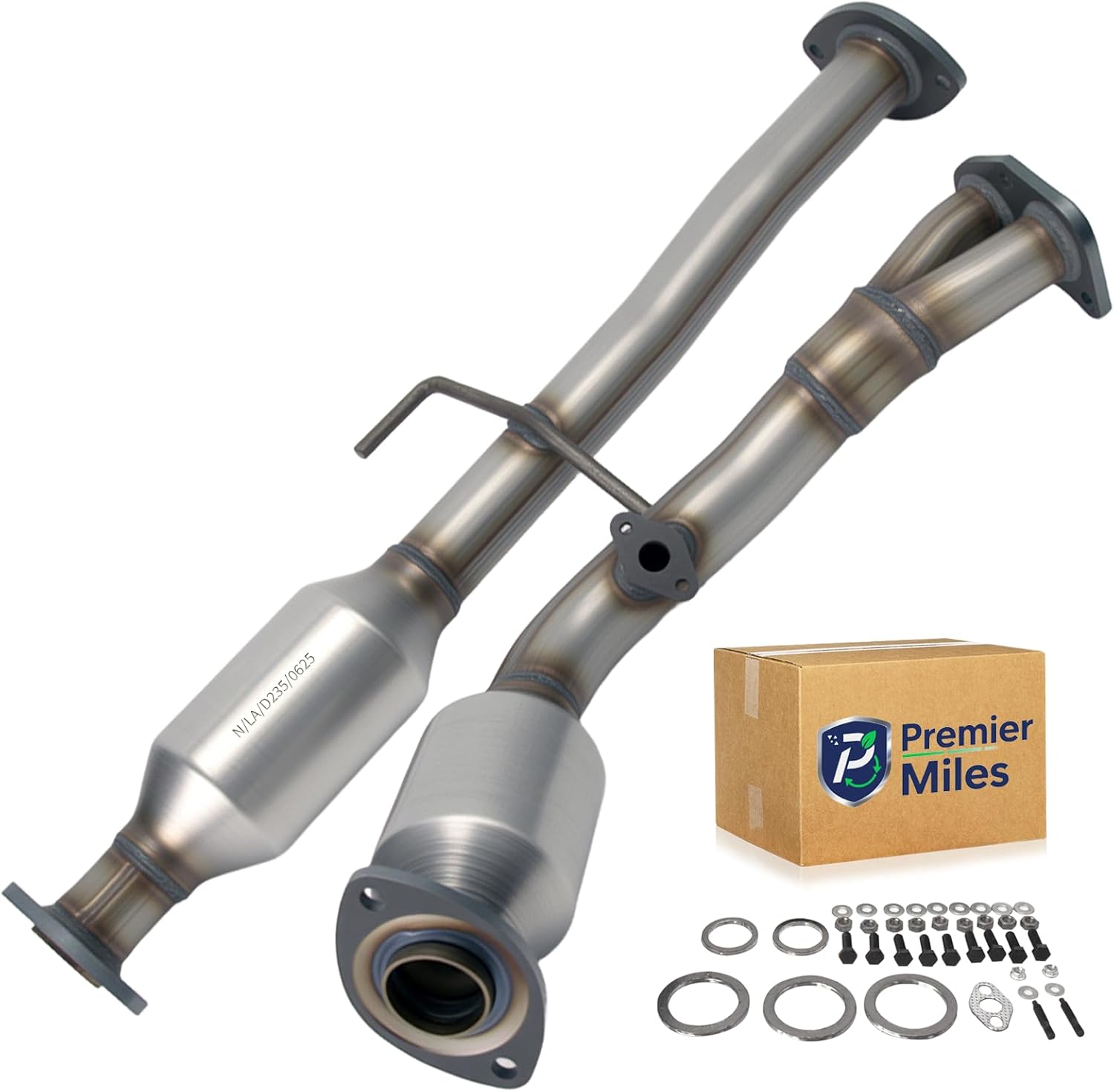
| Vehicle fitment | Toyota Tacoma 2000–2004 2.7L L4 |
|---|---|
| Substrate | 400-cell ceramic |
| Emissions | EPA-compliant (not CARB) |
| Warranty | 5-year structural; 2.5-year/25,000-mile emissions performance |
| Manufacturer | PREMIER MILES |
This PREMIER MILES catalytic converter is a replacement unit made specifically for Toyota Tacoma 2000–2004 with the 2.7L L4 engine and is sold as front and rear options. It uses a 400-cell ceramic substrate and factory-grade catalyst materials to help restore exhaust flow and reduce backpressure compared with a clogged or failing converter. Typical use is as a bolt-in emissions repair to clear P0420-type codes and pass an emissions test; several buyers report straightforward installation and no check-engine lights after fitment. Notable features include EPA long-term testing and claimed precision welding for durability. Practical benefits include improved engine efficiency versus a degraded converter and coverage by a structural and emissions performance warranty. Limitations to consider are that this is not CARB-compliant so it cannot be used where California emissions rules apply, and some users have reported mismatched heat shield bolt locations or minor fitment variations that may require new bolts or professional adjustment to align flanges.
Best for: Buyers prioritizing a reliable, emissions-compliant repair for a 2000–2004 Tacoma with the 2.7L engine who want a purpose-built replacement to clear emissions faults and restore drivability.
Less Ideal for: Do not choose this if you need a CARB-compliant converter or if you prefer an exact OEM heat-shield and bolt kit without any possibility of minor fitment adjustment.
- Specific fitment for Toyota Tacoma 2000–2004 2.7L so it targets the known vehicle application
- EPA-compliant with reported long-term testing to meet emissions requirements
- OEM-grade 400-cell ceramic substrate designed to balance flow and catalytic efficiency
- Claims of precision welding and factory-grade substrates for improved durability
- Includes structural and emissions performance warranty for added peace of mind
- Not CARB-compliant so not legal for use in California or CARB-controlled areas
- Some units may require different bolts or minor modifications to heat shields or flange alignment
Verdict: A purpose-built, EPA-tested replacement that reliably restores emissions function and drivability for 2000–2004 Tacoma 2.7L owners seeking a durable, warranty-backed converter.
PHILTOP Rear High-Flow Stainless Steel Catalytic Converter for Toyota Tacoma 3.4L (2000–2004)

| Vehicle fitment | Toyota Tacoma 3.4L 2000-2004 |
|---|---|
| Position | Rear |
| Construction | Stainless steel body with aluminized pipes |
| Compliance | EPA compliant (not for CA, NY, ME, CO where restricted) |
This PHILTOP rear catalytic converter is a direct-replacement unit built to fit the Toyota Tacoma 3.4L from 2000 to 2004. It installs flange-to-flange with included gaskets and basic hardware and aims to restore catalytic function while improving flow compared with a clogged or damaged original. The stainless steel construction and high-temperature ceramic carrier are intended to resist corrosion and increase catalyst surface area for better conversion and slightly improved fuel efficiency. Real-world users report it fits well and can be installed in a few hours with common tools, though some buyers replaced the supplied clamps or welded the flange when local exhaust components were heavily corroded. It is EPA-compliant for most states but not legal for vehicles required to meet California emissions standards. Expect practical benefits like quieter operation if your old converter rattles and improved drivability when the original unit was degraded; however check heat shields, hanger hardware, and any state-specific emissions rules before purchasing.
Best for: Buyers who want a direct-fit, EPA-compliant rear converter that restores emissions function and improves exhaust flow while relying on other owners' fitment feedback to confirm compatibility and installation expectations.
Less Ideal for: Drivers in states that require California emissions compliance or those who need a converter that preserves every factory heat shield and hanger without modification.
- Direct-fit flange-to-flange design for bolt-on installation
- High-flow ceramic substrate reduces backpressure and can improve drivability
- Stainless steel/aluminized construction offers corrosion resistance compared with mild steel
- Includes OE-style gaskets and basic mounting hardware for a mostly complete replacement
- Included clamps and bolts have mixed quality and may need replacement or welding in heavily rusted systems
- Not compliant with California and certain state emissions regulations
Verdict: A practical, direct-fit rear converter for 2000–2004 Tacoma owners who want a reliable EPA-compliant replacement that improves flow and restores emissions control while following other buyers' fitment experience.
A-Premium Front and Rear 2-PC Catalytic Converter Kit for Toyota Tacoma 3.4L (2000-2004)

| Fitment | Toyota Tacoma 2000-2004 V6 3.4L |
|---|---|
| EPA compliant | Yes (federal emissions; restricted in certain states) |
| Position | Front and Rear |
| Inlet type | Welded flange (front 3-bolt, rear 2-bolt) |
| Manufacturer part number | APCCT424 |
This A-Premium kit replaces both the front and rear catalytic converters on 2000-2004 Toyota Tacoma V6 3.4L trucks and is sold as a direct-fit, EPA-compliant federal-emissions solution. It arrives with welded flanges, mounting hardware, and provisions for upstream and downstream oxygen sensors so a mechanic can install it using standard exhaust gaskets and hardware. In practice buyers report generally good fit and restored exhaust flow that clears check-engine codes, though some installers needed to adapt gasket sizes or modify an O2 sensor bracket hole to achieve a perfect seal. Build quality is steel construction and the kit includes clamps and bolts, but quality-control issues have been reported sporadically so inspect parts before installation. The product carries a one-year unlimited-mileage guarantee, making it a reasonable replacement when a factory-style converter is required and state emissions rules allow aftermarket EPA units.
Best for: A Tacoma owner who wants a factory-style, EPA-compliant replacement to restore emissions function and clear diagnostic codes while prioritizing a relatively straightforward direct-fit repair.
Less Ideal for: Drivers in states with stricter aftermarket emissions rules or anyone unwilling to do minor on-vehicle adjustments or source extra gaskets and fittings should consider alternatives.
- Direct-fit design for Toyota Tacoma 2000–2004 3.4L V6 intended to restore factory exhaust routing
- EPA-compliant for federal emissions applications where allowed
- Includes welded flanges, mounting hardware, and provisions for upstream and downstream O2 sensors
- Steel construction aimed at durability and restored exhaust flow
- Some buyers needed to source different or additional gaskets because supplied gaskets do not always match factory sizes
- Occasional fitment and quality-control inconsistencies reported that can require minor modification or extra shop time
Verdict: Buy this kit if you need a factory-style, EPA-compliant front and rear catalytic converter replacement specifically for a 2000–2004 Tacoma 3.4L to restore emissions function and clear engine codes.
Choosing the Right 1995-2004 Toyota Tacoma Catalytic Converter: Key Factors to Consider
Fitment and Flange Match
Correct physical fit is the first priority for a 1995-2004 Toyota Tacoma catalytic converter. The converter must match the vehicle's exhaust routing, pipe diameter, and flange pattern so installation is straightforward and exhaust leaks are avoided. Mismatched flanges or incorrect pipe lengths can require custom piping, which increases labor and complicates future service.
When evaluating fitment, check whether the unit is a direct bolt-on replacement or requires an adapter. Also verify the converter's orientation and hanger points relative to the Tacoma's underbody; small differences in shell shape can cause rubbing or premature stress on the exhaust system. Good fitment reduces the chance of exhaust leaks that could trigger a check engine light or negatively affect emissions testing results.
Emissions Certification and Substrate Efficiency
Emissions performance depends primarily on the converter's internal substrate and any certifications it carries. A higher cell density substrate and an appropriate washcoat formulation improve conversion of hydrocarbons, carbon monoxide, and nitrogen oxides. For owners who must pass state inspection, prioritize units that document emissions effectiveness or list compliance with relevant standards.
Even on trucks used off-road, substrates that maintain conversion efficiency over time reduce the likelihood of recurring failure signs. Consider whether the converter is intended for pollution-controlled vehicles or labeled for general use, and verify that the substrate type aligns with your emissions requirements.
Backpressure and Engine Compatibility
Catalytic converters introduce backpressure into the exhaust system, and excessive backpressure can reduce power and fuel economy on a Tacoma. Look for units designed to balance conversion efficiency with acceptable flow characteristics for the 1995-2004 Tacoma's engine options. Manufacturer specifications about pressure drop or flow rating can be helpful.
Pay attention to substrate cell density and core volume. Larger core volume and lower cell density generally reduce backpressure but may modestly affect conversion rates. For daily-driven Tacomas, a converter that maintains good flow while meeting emissions targets is usually the best compromise between performance and compliance.
Durability and Construction Quality
A rugged construction matters for pickup truck use because road vibration, temperature cycling, and occasional off-road exposure put stress on the converter shell and internal mounting. Look for sturdy shell materials, quality welds, and secure substrate mounting to minimize the risk of rattling, cracking, or substrate detachment over time. Heat shields and corrosion-resistant coatings extend service life in wet or salty environments.
Durability affects long-term cost of ownership. A well-built converter will resist premature failure signs such as internal collapse or flange warping, which can otherwise lead to repeat repairs and diagnostic headaches.
Installation Complexity and Serviceability
Installation practicality influences total repair time and cost. Direct bolt-on converters that use original flange patterns and hanger points reduce labor. Some replacements may require cutting, welding, or use of adapters; know this in advance so you can plan tools or shop time. Units that allow reuse of existing gaskets and hardware simplify the job.
Also consider future serviceability. Converters that are easy to access and remove reduce labor for downstream work such as oxygen sensor replacement. If you plan to do the installation yourself, check for clear fitment instructions and whether any special hardware is required.
Warranty and Support
A warranty provides protection against manufacturing defects and premature failure. For catalytic converters, check the length of coverage and what it includes, such as replacement or repair for substrate failure. Warranty terms that require installation by a certified shop or limit coverage based on mileage are important to note.
Support resources like clear fitment guides, installation instructions, and responsive customer service can make a difference if you encounter fitment questions or need to process a warranty claim. Prioritize options with transparent warranty policies that align with how you use the Tacoma.
Why Catalytic Converter Choice Matters for Your Tacoma
The catalytic converter plays a direct role in how the Tacoma behaves under load, how it responds to throttle changes, and whether it meets emissions tests. On 1995-2004 models the exhaust configuration and oxygen sensor placement mean the converter's design can influence how the engine control module interprets exhaust data.
Selecting a converter that matches the truck's physical and emissions requirements helps avoid recurring diagnostic codes and prevents drivability degradation. Thoughtful choice also reduces the chance of warranty or inspection issues down the road.
- Converter design affects backpressure and engine performance
- Proper placement and sensor compatibility reduce false fault codes
- Durable construction prevents premature failures on rough roads
Common Symptoms of a Failing Converter on 1995-2004 Tacomas
Symptoms that often point to catalytic converter problems include reduced power, lower fuel economy, and an illuminated check engine light with related exhaust codes. You may notice abnormal exhaust odors, a sulfur or rotten-egg smell, or audible rattling under the truck if the internal substrate is breaking up.
Some failure signs overlap with other issues like sensor faults or exhaust leaks, so combine symptom observation with diagnostic trouble codes and a visual inspection to isolate the converter as the source.
- Loss of power or sluggish acceleration
- Check engine light with emissions-related codes
- Unusual exhaust smell or increased exhaust noise
- Visible rust-through or physical damage on the shell
Checkpoint: Diagnosing Before You Replace
Before installing a replacement, verify that the converter is the root cause. Use onboard diagnostics to check for specific emissions trouble codes and compare upstream and downstream oxygen sensor readings if available. A backpressure test or a visual inspection for external damage can confirm internal collapse or blockage.
Ruling out exhaust leaks, faulty sensors, and engine misfires first prevents unnecessary replacement and ensures the new converter will operate correctly once installed.
- Scan for codes and compare O2 sensor behavior
- Perform a visual inspection for damage or rust
- Check for other engine issues that can poison a converter
Installation Options and What to Expect
Installation varies from direct bolt-on swaps to setups that require cutting and welding. For many 1995-2004 Tacomas, direct-fit converters that match flange patterns and hanger points offer the simplest installation. If your replacement requires an adapter, plan for extra labor and materials.
If you plan to install the converter yourself, ensure you have the correct gaskets, hardware, and tools to access the unit. Take care with oxygen sensor threads and wiring; damaged sensors can cause immediate warnings after replacement.
- Direct-fit units minimize labor and preserve original exhaust geometry
- Adapters or universal units typically need welding and increased labor
- Protect oxygen sensors during removal and reinstallation
Meeting Emissions Testing Requirements
Different jurisdictions have varying requirements for emissions equipment. For the 1995-2004 Tacoma, choose a converter that documents compliance with local inspection standards or lists emissions effectiveness where applicable. Replacement converters intended for pollution-controlled vehicles are the safest option when you need to pass annual inspections.
Keep records of part numbers and any certification statements for the vehicle inspection process. Proper documentation can simplify test day and reduce the chance of a failed inspection due to unclear equipment status.
- Select converters with emissions documentation when inspections apply
- Retain part and certification information for test stations
- Confirm that the unit supports existing oxygen sensor locations
Maintenance Tips to Extend Converter Life
Preventing premature converter failure involves addressing upstream issues. Regular engine tune-ups, timely replacement of failing oxygen sensors, and fixing oil or coolant leaks that can contaminate the substrate will help maintain conversion efficiency. Avoid prolonged idling with a rich-running condition that can overheat and damage the substrate.
Inspect the converter and exhaust system periodically for corrosion and secure hangers. Promptly address any exhaust leaks that can alter sensor readings and damage the catalyst over time.
- Keep ignition and fuel systems properly tuned
- Replace failing oxygen sensors promptly
- Inspect for corrosion and secure hangers during routine maintenance
Still looking for the perfect fit?
Select your Toyota Tacoma configuration to see the most relevant Catalytic Converters recommendations
How We Chose the Best 1995-2004 Toyota Tacoma Catalytic Converter
We selected the seven catalytic converters on this list by applying vehicle-specific fitment and emissions-focused filters to ensure each option is appropriate for the 1995-2004 Toyota Tacoma. Primary evaluation criteria included physical fit and flange/pipe compatibility with the Tacoma exhaust layout, catalyst substrate type and cell density as they relate to conversion efficiency, and emissions certifications or test data relevant to inspection needs. Durability factors such as substrate mounting method, shell construction, and weld quality were also considered because they affect long-term reliability on a pickup that may see varied driving conditions. Heat management and backpressure characteristics were evaluated to balance emissions control with engine performance and fuel economy. Finally, installation practicality was assessed, including whether the unit supports bolt-on replacement or requires additional piping or adapters.We excluded any units that lacked clear fitment data for the 1995-2004 Tacoma or that listed universal compatibility without specific flange details. Options that are intended only for off-road use or that carry no emissions information were not considered for this roundup. The result is a focused selection that prioritizes correct fit, emissions performance, and durability for Tacoma owners.
Our full evaluation process is outlined in our review methodology.
FAQ
How can I tell if my Tacoma's catalytic converter is failing?
Common indicators include reduced engine power, decreased fuel economy, an illuminated check engine light with emissions-related codes, and unusual exhaust smells. A rattling noise under the truck can also indicate internal substrate damage. Confirm with diagnostics and a visual inspection before replacing the unit.
Will a new catalytic converter clear a check engine light immediately?
Sometimes the check engine light clears after replacement, but the vehicle's computer may require several drive cycles to reset emissions readiness monitors. If the underlying cause was starvation or sensor failure, repair those issues first to prevent recurring warnings.
Is a direct-fit converter necessary for the 1995-2004 Tacoma?
Direct-fit units that match the Tacoma's flanges and hangers simplify installation and reduce the chance of leaks. While universal units can be adapted to fit, they typically require cutting and welding and may increase labor time and complexity.
Can a bad oxygen sensor mimic catalytic converter failure?
Yes. Faulty upstream or downstream oxygen sensors can produce emissions-related codes and poor engine performance that look like converter issues. Diagnosing sensor behavior with live data helps differentiate sensor problems from actual catalyst failure.
What should I do if the converter shows external rust or damage?
Surface rust is common on older trucks, but deep corrosion, holes, or warped flanges indicate the unit should be replaced. A visual inspection combined with leak detection can confirm whether the damage affects emissions or creates safety concerns.
Are there installation precautions I should follow?
Use the correct gaskets and torque for flange hardware, protect oxygen sensor wiring during removal, and ensure hangers and heat shields are reinstalled properly. If welding is required, check that the converter's internal components are not damaged during the process.
Final Verdict
Prioritize fitment and emissions performance when choosing a catalytic converter for a 1995-2004 Toyota Tacoma. Balancing physical compatibility, substrate efficiency, and acceptable backpressure will help you maintain drivability and meet inspection requirements. Consider installation complexity and durability tradeoffs so you pick the option that aligns with how you use the truck.Focus on converters that document fit for the Tacoma and provide clear emissions information. That approach reduces the risk of repeated failures and gives you confidence the replacement will solve the problem rather than mask a deeper issue.
Explore More:
- Check out all Toyota Tacoma parts & accessories
- Explore Catalytic Converters Maintenance & Repair Guides
- Explore Exhaust & Emissions
- Browse all Auto Parts
