

Note: This article contains affiliate links. If you click on these links and make a purchase, I may earn a small commission at no extra cost to you. This helps support my research and content. Read my full affiliate disclosure here.
When your Ford F-150 EcoBoost shows emissions issues or a persistent check engine light, selecting the right catalytic converter matters for drivability and legal compliance. A properly matched converter reduces harmful exhaust emissions, stabilizes oxygen sensor readings, and avoids recurring trouble codes. For EcoBoost engines the correct fitment and substrate type also affect backpressure and turbocharger response.This guide summarizes the top shortlisted catalytic converters for the Ford F-150 EcoBoost and explains the evaluation criteria used. Read on to compare fitment approaches, emissions effectiveness, and installation considerations before you pick the best replacement for your truck.
Looking for other parts? See all Ford F-150 parts & accessories.
Top Picks at a Glance
| Best Overall The best all-around choice for most situations | ZHRUIHAN 2‑PC Catalytic Converter Kit for Ford F-150 3.5L EcoBoost (2015–2020) |  |
| Best Quality Built to a higher standard if you want something more solid | MAC Catalytic Converter Y-Pipe Kit for 2011–2014 F-150 EcoBoost 3.5L |  |
| Best Budget The cheapest option that still gets the job done reliably | PHILTOP High-Flow Catalytic Converter for Ford F-150 2015-2020 3.5L | 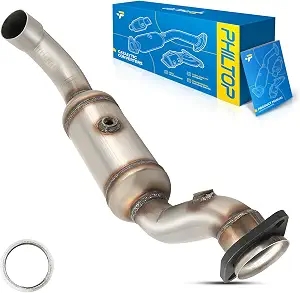 |
| Highest Rated A top-rated pick with lots of positive feedback | MagnaFlow 21-475 Direct-Fit Catalytic Converter (Passenger Side) for 2015-2020 Ford F-150 3.5L |  |
| Most Popular A crowd favorite that many people choose with confidence | pulcherflow Direct-Fit Catalytic Converter for 2011–2014 Ford F150 3.5L V6 |  |
| Best Seller A high-volume bestseller chosen again and again | RZOCARULE Universal Catalytic Converter 2.5-inch Inlet/Outlet with O2 Port and Heat Shield |  |
ZHRUIHAN 2‑PC Catalytic Converter Kit for Ford F-150 3.5L EcoBoost (2015–2020)

| Compatible engines | 3.5L V6 Turbocharged (EcoBoost) |
|---|---|
| Fitment years | 2015-2020 |
| Exterior | Stainless Steel |
| Reference OE numbers | 52605 645146 645168 645169 |
This ZHRUIHAN two-piece catalytic converter kit is built as a direct replacement for the 3.5L turbocharged F-150 EcoBoost from 2015 through 2020 and is intended to restore emissions control and exhaust flow. The housings use thickened stainless steel and automated welds for durability at high temperatures while a ceramic carrier doped with platinum, rhodium, and palladium handles pollutant conversion. Typical use is a factory replacement when a failed converter throws codes or fails inspection; the kit ships with installation hardware and an O2 sensor tool according to reviews. In practice it can return a vehicle to compliant emissions output and should reduce exhaust odors and visible smoke. Reported benefits include solid fitment for many buyers and complete hardware included. Several customers did report fitment and sealing problems on some trucks and a few experienced persistent check engine codes after installation, so expect possible extra labor for alignment or manifold stud work. The product is not sold for use in California, Colorado, Maine, or New York.
Best for: Buyers who want a balanced factory-style replacement to restore emissions function on a 2015–2020 3.5L EcoBoost F-150 and are comfortable arranging modest installation adjustments if needed.
Less Ideal for: If you need a drop-in, guaranteed bolt‑on converter with zero modification or live in states with stricter local rules where this unit is restricted, look for a different certified option or dealer-sourced unit.
- Designed specifically for 3.5L turbocharged F-150 models from 2015–2020
- Constructed from thickened stainless steel with automated welds for high‑temperature durability
- Ceramic carrier with Pt, Rh, Pd catalysts for effective pollutant conversion
- Includes installation hardware and an O2 sensor tool according to customer reports
- Some buyers reported fitment and sealing issues that required extra labor or modification
- A portion of users experienced persistent check engine codes after installation
Verdict: A practical, factory-style replacement for 2015–2020 3.5L EcoBoost F-150s that restores emissions function while offering durable stainless construction, though some installations may need extra alignment work.
MAC Catalytic Converter Y-Pipe Kit for 2011–2014 F-150 EcoBoost 3.5L

| Vehicle fit | 2011–2014 Ford F-150 EcoBoost 3.5L |
|---|---|
| Part number | 150425 |
| Configuration | Y-pipe, ships in two parts |
| O2 ports | Includes two O2 ports per section |
This MAC Y-pipe catalytic converter kit replaces the factory unit on 2011–2014 F-150 EcoBoost 3.5L engines with a bolt-on direct-fit design that ships in two pieces for easier handling. It provides the same basic flow path and O2 port locations as the factory assembly, so it integrates with stock sensors and exhaust connections using two-bolt flanges and slip-fit connectors. For performance-minded buyers the kit offers a straightforward restoration of exhaust function after a failed converter and keeps sensor placement unchanged for factory tuning. The two-piece shipping format and included connectors make installation and alignment simpler for a professional or experienced DIY installer, but this is a replacement converter not a high-flow performance race unit. MAC notes these are intended as long-life emissions devices and warns that upstream engine issues should be resolved before installation. Expect factory-style emissions compliance and fitment rather than measurable power gains over a stock or high-flow aftermarket converter.
Best for: Buyers who need a reliable, bolt-on replacement that restores factory emissions function and fit on a 2011–2014 F-150 EcoBoost 3.5L and prioritize correct sensor placement and straightforward installation.
Less Ideal for: Drivers seeking a high-flow performance converter for increased horsepower or aggressive tuning should consider purpose-built performance units instead.
- Direct-fit design with factory-style O2 port locations for plug-and-play sensor integration
- Ships in two pieces with slip-fit connectors and two-bolt flanges to simplify installation and alignment
- Manufactured to meet fit, form, and function standards from ISO certified facilities
- Includes both left and right sections to replace the complete Y-pipe assembly
- Designed as a factory-style replacement so it does not offer high-flow performance gains
- Requires diagnosis and repair of any engine issues that caused the original converter failure before installation
Verdict: Choose this MAC Y-pipe kit when you want a direct-fit, factory-style catalytic converter replacement for a 2011–2014 F-150 EcoBoost 3.5L that simplifies installation and preserves sensor locations.
PHILTOP High-Flow Catalytic Converter for Ford F-150 2015-2020 3.5L
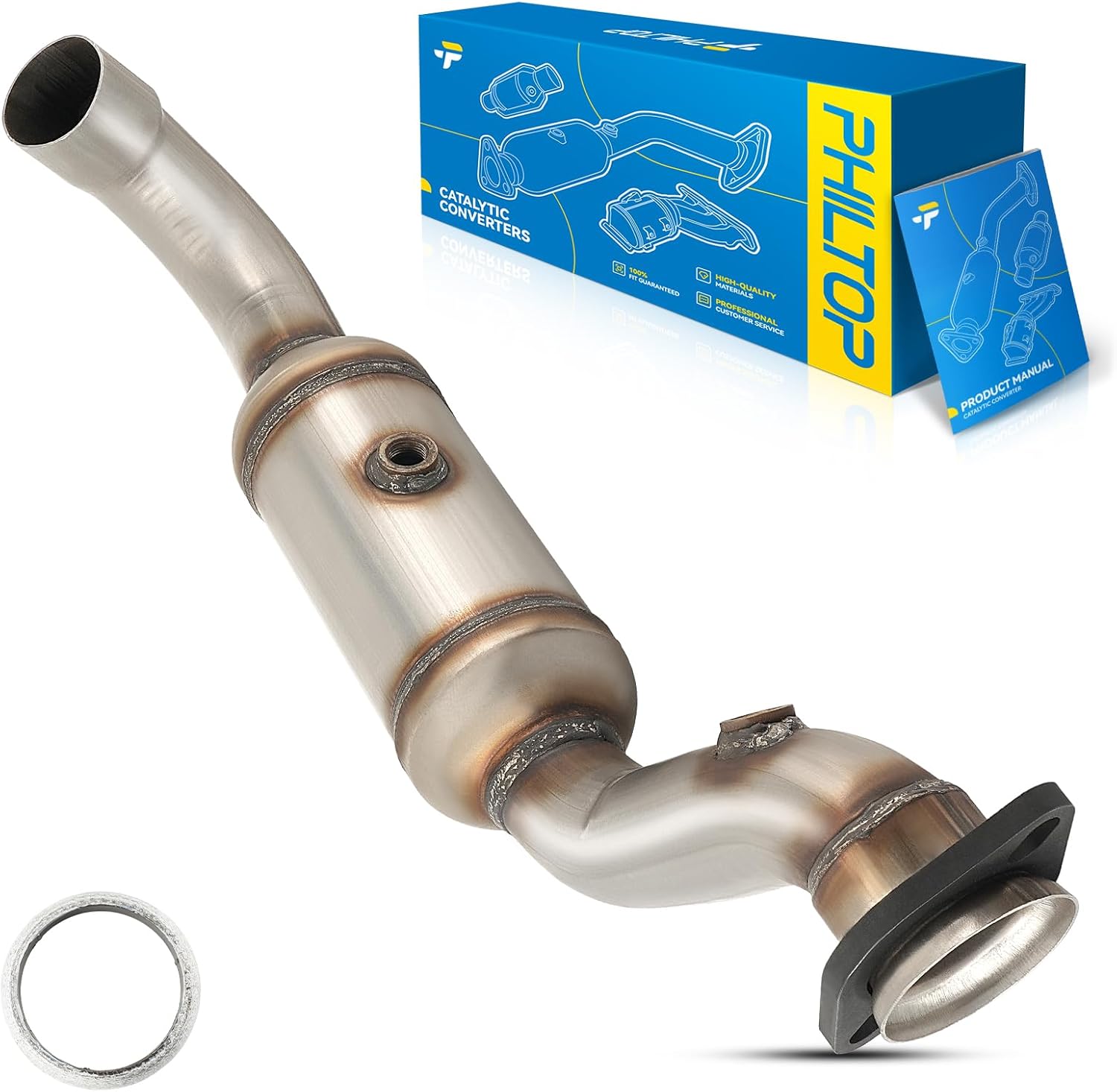
| Fitment | Ford F-150 2015-2020 3.5L |
|---|---|
| Position | Left |
| Material | Stainless steel |
| EPA status | EPA-compliant (not for sale in CA, CO, NY, ME in some cases) |
This PHILTOP catalytic converter is a direct-replacement style unit aimed at restoring emissions control and drivability on 2015–2020 F-150 3.5L EcoBoost trucks. It uses a stainless steel shell and a high-flow ceramic honeycomb substrate to reduce backpressure, which can help the engine breathe better and maintain power while also addressing check-engine lights tied to a failed converter. The kit includes OE-style gaskets and hardware for a straightforward bolt-in installation without cutting or welding, so a moderately skilled DIYer or a local shop can complete the swap in a few hours. Practical benefits include corrosion-resistant construction and EPA-compliant certification for federal emissions regions. Reported issues in some listings include fitment variance at flanges and mixed long-term corrosion performance in salty climates, so verify vehicle fitment carefully and inspect flange dimensions before installation. For buyers prioritizing a lower-cost replacement that restores function and flow, this unit provides a serviceable option, but those needing guaranteed factory-level fit and long-term durability in harsh environments may prefer higher-end alternatives.
Best for: Buyers seeking a lower-cost, functional replacement to clear emissions faults and restore performance on a 2015–2020 F-150 3.5L who prioritize getting a working catalytic converter quickly and affordably.
Less Ideal for: Owners who need guaranteed factory-exact fit or maximum long-term corrosion resistance for vehicles exposed to heavy salt or who require California-compliant parts.
- High-flow ceramic substrate reduces backpressure to help maintain engine power
- Stainless steel construction resists heat and offers improved corrosion resistance versus mild steel
- Includes OE-style gaskets and hardware for bolt-on installation without cutting or welding
- EPA-compliant for federal emissions regions
- Some buyers report flange fitment differences that can require fabrication or welding
- Mixed long-term corrosion reports in areas with heavy road salt
Verdict: A cost-conscious, bolt-on high-flow replacement that restores emissions function and engine breathing for 2015–2020 F-150 3.5L trucks without the premium price.
MagnaFlow 21-475 Direct-Fit Catalytic Converter (Passenger Side) for 2015-2020 Ford F-150 3.5L

| Material | Stainless Steel |
|---|---|
| Part Number | 21-475 |
| Fitment | 2015-2020 Ford F-150 V6 3.5L, Passenger Side |
| Compliance | EPA Compliant (not for use in some states) |
This MagnaFlow 21-475 is a factory-style direct-fit catalytic converter made for the passenger side of 2015–2020 Ford F-150 3.5L trucks. It is built from stainless steel tubing with mandrel bends and OE-sized hangers so installation follows stock exhaust geometry and typically bolts in without major modification. The unit is EPA compliant for sale outside certain states and is intended to restore emissions performance, clear emissions-related fault codes, and help vehicles pass state inspections. Notable features include corrosion-resistant construction, barbed stainless hangers to reduce vibration, and mandrel bent internals to preserve exhaust flow and fuel economy. Because it is a direct replacement rather than a performance part, expect factory-like fit and sound rather than increased power. Buyers should also verify state-specific legality since it is not approved for some states. For someone prioritizing long-term, dependable emissions repair that replicates factory fitment, this converter is a practical, durable option.
Best for: Drivers who want a dependable, factory-quality emissions repair for a 2015–2020 F-150 3.5L and prioritize long-term durability and restored emissions function over performance gains.
Less Ideal for: Buyers seeking increased horsepower, aftermarket performance tuning, or a converter legal in all states should consider performance or state-specific alternatives.
- Direct-fit design aligns with factory exhaust geometry for straightforward installation
- Stainless steel construction and mandrel bends improve corrosion resistance and preserve exhaust flow
- EPA compliant for federal use to restore emissions function and help pass inspections
- OE-sized corrosion-resistant hangers reduce noise and vibration for a factory-like mount
- Not approved for use in certain states which limits legality for some buyers
- Designed as a factory-style replacement and does not increase engine performance
Verdict: Choose this converter when you need a durable, factory-style replacement that reliably restores emissions performance on a 2015–2020 F-150 3.5L.
pulcherflow Direct-Fit Catalytic Converter for 2011–2014 Ford F150 3.5L V6

| Vehicle fitment | 2011–2014 Ford F150 3.5L V6 |
|---|---|
| Position | Left, Right |
| Manufacturer | PULCHERFLOW |
| EPA compliance | 46-state legal (not for CA/NY/ME) |
This pulcherflow catalytic converter is a direct-fit replacement for 2011–2014 Ford F150 3.5L V6 trucks intended to restore emissions control without major modification. It uses an enlarged honeycomb substrate and increased precious metal loading to improve purification over a failed unit and is housed in a heavy-gauge stainless steel shell with mandrel bends for durability. Installation is typical for a direct-fit exhaust part and can be bolted or welded in using the supplied hardware and gaskets, though some buyers upgraded the included clamps. In practice it reduces tailpipe emissions, can clear emissions-related faults when matched to the proper federal model, and is a cost-effective alternative to dealer units. Limitations seen in user reports include occasional fitment mismatches and persistent check-engine lights when upstream sensors or exhaust geometry differ; it is not legal for sale or use in California, New York, or Maine emissions models. For buyers prioritizing a factory-style replacement that balances cost and emissions performance, this unit is a practical option but expect to verify fit and sensor clearance before final installation.
Best for: Buyers who want an affordable, factory-style emissions replacement that restores catalytic function and prioritizes documented user success over brand-name dealer parts.
Less Ideal for: Drivers in states with stricter emissions laws or anyone who needs a guaranteed plug-and-play, OEM-identical unit without verifying sensor locations and fitment.
- Direct-fit design matches factory mounting points for straightforward installation
- Enlarged ceramic substrate and higher precious metal loading for improved catalytic efficiency
- Stainless steel shell with mandrel bends resists corrosion and high temperatures
- EPA compliant for federal emissions models
- Not legal for sale or use in California, New York, or Maine emissions models
- Some buyers reported fitment issues or oxygen sensor clearance problems on certain vehicles
- Included exhaust clamps and hardware may be lower quality and require replacement
Verdict: A budget-friendly, direct-fit catalytic converter that restores emissions control for 2011–2014 F150 3.5L V6 trucks while offering good real-world durability when fitment is confirmed.
RZOCARULE Universal Catalytic Converter 2.5-inch Inlet/Outlet with O2 Port and Heat Shield

| Inlet/Outlet Diameter | 2.5 inches |
|---|---|
| Material | Stainless steel |
| Internal Core | Ceramic honeycomb |
| O2 Sensor Port | Yes |
| Manufacturer | RZOCARULE |
This universal 2.5-inch catalytic converter replaces a damaged front section on vehicles that use a 2.5-inch exhaust pipe by providing a stainless steel housing, internal ceramic honeycomb catalyst, an O2 sensor port, and a welded heat shield. It is typically used as a direct-replacement or interim repair where a vehicle requires a front catalytic element to restore emissions control and reduce exhaust noise. The stainless housing helps resist corrosion and heat while the ceramic honeycomb increases catalyst surface area for better conversion of harmful gases. The included O2 bung lets you retain the factory sensor location, and the 2.5-inch sizing supports higher flow compared with smaller stock units. Limitations are that this is a universal fit item so precise fitment can require trimming, adapters, or custom welding and it is not sold for states with stricter emissions rules, so it may not meet California-style certification or inspection requirements in those regions. Buyers should check pipe OD carefully before ordering and plan for professional installation if an exact fit is needed.
Best for: A risk-averse buyer seeking a durable, high-flow replacement for a front catalytic section on a Ford F-150 EcoBoost who prioritizes corrosion resistance and retaining the factory O2 sensor location.
Less Ideal for: Drivers in states with California-style emissions rules or anyone needing a guaranteed vehicle-specific, emissions-certified direct-fit replacement without modification.
- Stainless steel shell resists rust and handles high exhaust temperatures.
- Internal ceramic honeycomb maximizes catalyst surface area for effective emissions conversion.
- Built-in O2 sensor port preserves factory sensor placement for engine management.
- 2.5-inch inlet/outlet supports higher flow and can reduce exhaust drone versus smaller cats.
- Universal design may require cutting, adapters, or welding for a proper fit.
- Not certified for sale in states with the strictest emissions standards, limiting legal use there.
Verdict: A solid, corrosion-resistant 2.5-inch universal converter that preserves the O2 sensor location and offers high flow for Ford F-150 EcoBoost front-end replacement when vehicle-specific certification is not required.
Choosing the Right Ford F-150 EcoBoost Catalytic Converter: Key Factors to Consider
Precise Fitment and Exhaust Configuration
Correct fitment is essential for the Ford F-150 EcoBoost because exhaust routing and sensor placement vary across model years and trims. A converter that matches flange type, inlet and outlet diameters, and overall length reduces installation time and eliminates the need for pipe cutting or fabrication. Mismatched fitment can cause exhaust leaks, incorrect oxygen sensor readings, and recurring warning lights.
Fitment also affects mounting points and heat shielding alignment. Choosing a unit that aligns with the truck's factory hangers preserves vibration isolation and helps avoid stress on adjacent exhaust components. For owners who want a direct-replacement experience, confirm the converter supports the EcoBoost-specific sensor bungs and port spacing.
Emissions Effectiveness and Substrate Type
The internal substrate and washcoat largely determine how well a catalytic converter reduces NOx, CO, and hydrocarbons. Converters with a high-quality ceramic or metallic substrate and an appropriate washcoat deliver more consistent emissions control across operating temperatures. For EcoBoost engines that run turbocharged and may operate at higher exhaust temperatures, substrate thermal resilience matters to prevent cracking or degradation.
Cell density and precious metal loading influence conversion efficiency and longevity. Higher cell densities can provide better conversion but may increase backpressure. Owners should weigh the need for emissions performance against potential impacts on exhaust flow and turbo response.
Backpressure and Engine Performance
Any replacement converter changes the exhaust flow characteristics for the EcoBoost powertrain. Excessive backpressure can reduce turbocharger efficiency, lower throttle response, and alter fuel trims. Conversely, overly free-flowing units risk insufficient aftertreatment dwell time and poorer conversion efficiency at low temperatures.
Balance is important: choose a converter engineered to restore emissions control without introducing restrictive backpressure that harms turbo behavior. Consider whether the unit is a direct-replacement design tuned to the factory flow profile or a modified-flow piece that requires additional tuning.
Durability and Corrosion Resistance
Durability affects long-term ownership costs and reliability. Components exposed to road salt, moisture, and high-temperature cycling need robust shells, quality welds, and corrosion-resistant coatings. A thicker stainless steel shell and plated flanges resist rust and maintain sealing surfaces over time.
Internal durability is also critical. Substrate retention systems and robust end caps reduce the risk of rattling or substrate breakage. For trucks used in harsher environments or for towing, prioritize converters with proven resistance to thermal shock and mechanical fatigue.
Sensor Compatibility and Emissions Monitoring
The EcoBoost configuration typically relies on multiple oxygen sensors to monitor catalytic performance. A replacement converter must provide the correct sensor bung locations and thread types so the onboard diagnostics function properly. Proper sensor placement ensures accurate upstream and downstream readings used by the vehicle to adjust fuel trims and detect converter efficiency.
If sensor bungs are missing or located improperly, the check engine light and diagnostic trouble codes can return even if the converter material itself is functional. Confirm the converter accommodates the same sensor arrangement as the truck to preserve OBD-II emissions monitoring.
Installation Complexity and Hardware Needs
Installation varies from bolt-on flange replacements to units requiring welding or custom clamps. Bolt-on designs reduce labor time and the risk of leaks when matched correctly, while welded or universal pieces may require fabrication skills and additional materials. Consider whether gaskets, new bolts, or anti-seize are necessary and whether the vehicle needs to be lifted or the exhaust partially removed for access.
Warranty coverage can be affected by installation method. Professional installation versus DIY should be considered based on tools, experience, and the complexity of the EcoBoost exhaust routing. Choose a converter whose installation approach matches your mechanical comfort level and available tools.
Common Catalytic Converter Symptoms on EcoBoost Trucks
Several recurring symptoms can indicate converter issues on Ford F-150 EcoBoost engines. Reduced engine power, stalling at low rpm, or sluggish turbo response often stem from excessive backpressure caused by a clogged substrate. Owners may also notice decreased fuel economy as the engine compensates for altered exhaust flow.
A persistent check engine light is another frequent signal. Diagnostic trouble codes related to catalytic efficiency or oxygen sensor variance usually point to aftertreatment problems. Unusual exhaust odors, such as a strong sulfur or rotten-egg smell, and rattling noises from the converter area during acceleration should also prompt inspection.
- Loss of power or reduced acceleration
- Check engine light with catalyst efficiency codes
- Rattling noises from underneath the truck
- Strong sulfur-like exhaust odor
- Lowered fuel economy
How Converter Choice Affects Turbocharger Behavior
Turbocharged EcoBoost engines are sensitive to exhaust backpressure and flow dynamics. The converter sits between the turbocharger and tailpipe and influences exhaust scavenging and turbine speed. A unit that is too restrictive can delay spool-up, reduce boost efficiency, and increase intake charge temperatures.
Conversely, a converter designed to maintain necessary backpressure for effective emissions conversion will preserve expected turbo performance. When evaluating options, look for documentation on flow characteristics or designs labeled as direct-replacement for EcoBoost applications to minimize impacts on turbo behavior.
- Restriction can delay turbo spool and reduce boost
- Properly matched converters preserve fuel trim and throttle response
- Thermal management affects turbine inlet temperatures
Installation Tips for Ford F-150 EcoBoost Owners
Prepare the truck by raising it safely and supporting it with jack stands or a lift. Inspect the surrounding exhaust components and heat shields for corrosion or damage before removing the old unit. Soak fasteners with penetrating lubricant when present to ease removal.
Measure inlet and outlet diameters and flange spacing to ensure the replacement lines up. If welding is required, ensure clean mating surfaces and use proper filler materials rated for exhaust temperatures. After installation, verify there are no exhaust leaks and clear any stored diagnostic codes to confirm the converter and sensors communicate correctly.
- Support the truck safely before starting work
- Soak rusty bolts with penetrating oil ahead of removal
- Verify sensor bung locations and thread types
- Check for leaks and clear diagnostic trouble codes after install
Regulatory and Emissions Considerations
Catalytic converters play a direct role in meeting emissions standards and state inspections. Ensure the replacement meets applicable emissions regulations for your region and aligns with the vehicle's original emissions certification. Using a converter that does not meet local requirements can lead to failed inspections and fines.
Keep records of the converter's specifications and any installation paperwork. These documents help demonstrate compliance during inspections and can be useful if later diagnosing emissions-related codes.
- Confirm replacement meets local emissions rules
- Retain installation and specification documentation
- Check that sensor placement supports OBD-II monitoring
Maintenance Practices to Extend Converter Life
Routine engine maintenance helps protect the catalytic converter. Addressing oil or coolant leaks promptly prevents contamination that can foul the substrate. Regular spark plug and ignition system maintenance reduces unburned fuel entering the exhaust, which can overheat and damage the converter.
Avoid extended idling and repeated short trips that prevent the converter from reaching optimal operating temperature. If the truck is used for heavy towing or in high-load scenarios, inspect the exhaust system more frequently for signs of thermal stress or mounting wear.
- Fix oil and coolant leaks quickly to avoid substrate contamination
- Keep ignition and fuel systems properly tuned
- Inspect the exhaust after heavy towing or frequent high-load use
Still looking for the perfect fit?
Select your Ford F-150 configuration to see the most relevant Catalytic Converters recommendations
How We Chose the Best Ford F-150 EcoBoost Catalytic Converter
We evaluated candidates using criteria that matter specifically to Ford F-150 EcoBoost owners. Fitment accuracy was a primary filter, including flange type, pipe diameter, and configuration compatibility with EcoBoost exhaust routing. Emissions performance was assessed next, focusing on substrate composition, cell density, and claim support for reducing NOx, CO, and HC to return the vehicle toward compliance.Durability and materials were measured by expected corrosion resistance, shell thickness, and weld quality because EcoBoost trucks often see varied duty cycles and weather. Backpressure impact and thermal characteristics were considered to avoid negative effects on turbocharger performance and oxygen sensor feedback. Installation practicality was included, looking at whether the unit supports bolt-on replacement or requires welding, and whether gaskets or hardware are needed.We excluded products without clear fitment data for the Ford F-150 EcoBoost configuration or units that lacked documented emission reduction or substrate specifications. Also excluded were universal-fit converters that require significant modification. The final shortlist balances correct fit, documented emissions effectiveness, long-term durability, and straightforward installation.
Our full evaluation process is outlined in our review methodology.
FAQ
What common codes indicate a failing catalytic converter on an EcoBoost F-150?
Codes related to catalyst efficiency or downstream oxygen sensor readings are common indicators. Typical signs include reduced conversion efficiency codes and oxygen sensor voltage discrepancies that suggest the converter is not reducing emissions as expected.
Can a clogged catalytic converter cause low turbo boost?
Yes. A clogged substrate raises backpressure and can reduce exhaust flow through the turbocharger, leading to delayed spool and reduced boost. That often shows up as sluggish acceleration and lower-than-expected turbo response.
Is it necessary to replace oxygen sensors when installing a new converter?
Not always, but it is often recommended to inspect sensor condition. Worn or contaminated sensors can produce incorrect readings even with a new converter. If sensors show wear, poor response, or inconsistent voltages, replacing them during the converter service can prevent repeat codes.
How do I know if the converter fitment is correct for my EcoBoost configuration?
Compare inlet and outlet diameters, flange type, overall length, and sensor bung spacing to the original unit. Product documentation that lists Ford F-150 EcoBoost compatibility and includes dimensional drawings is the most reliable way to confirm fitment.
Will a replacement catalytic converter affect my truck's fuel economy?
It can. A failing converter that restricts exhaust flow often reduces fuel economy because the engine compensates for altered backpressure and exhaust scavenging. A properly fitted replacement that restores normal flow should return fuel economy toward original levels.
Are there special considerations for towing with a new catalytic converter installed?
Yes. Towing increases exhaust temperatures and loads, which stresses the converter. Choose a unit with robust thermal resilience and secure mounting. Inspect the exhaust system more frequently after towing to catch heat-related damage or loosened hangers early.
Final Verdict
For the Ford F-150 EcoBoost, prioritize a catalytic converter that matches the truck's exhaust geometry and sensor placements while delivering documented emissions reduction and durable construction. Balance emissions effectiveness with acceptable backpressure to preserve turbocharger performance and fuel economy.Focus on fitment accuracy, substrate quality, and installation approach when deciding. That tradeoff-focused approach will help you choose a converter that restores emissions compliance and maintains the driving characteristics you expect from your EcoBoost truck.
Explore More:
- Check out all Ford F-150 parts & accessories
- Explore Catalytic Converters Maintenance & Repair Guides
- Explore Exhaust & Emissions
- Browse all Auto Parts
