

Note: This article contains affiliate links. If you click on these links and make a purchase, I may earn a small commission at no extra cost to you. This helps support my research and content. Read my full affiliate disclosure here.
If you drive a 2004-2008 Ford F-150, choosing the right catalytic converter matters for emissions compliance, engine management, and long-term durability. These model years correspond to the 10th-gen F-150 chassis, so fitment, mounting flange type, and oxygen sensor placement are consistent across many factory configurations.This guide shortlist covers seven top-rated catalytic converters selected for direct fitment, emissions performance, and reliability. We evaluate each option against practical criteria owners care about, including fitment accuracy, internal substrate quality, and compatibility with the truck's oxygen sensors and exhaust layout. Read on for the factors that should drive your choice and practical installation and maintenance considerations before you buy.
Looking for other parts? See all Ford F-150 parts & accessories.
Top Picks at a Glance


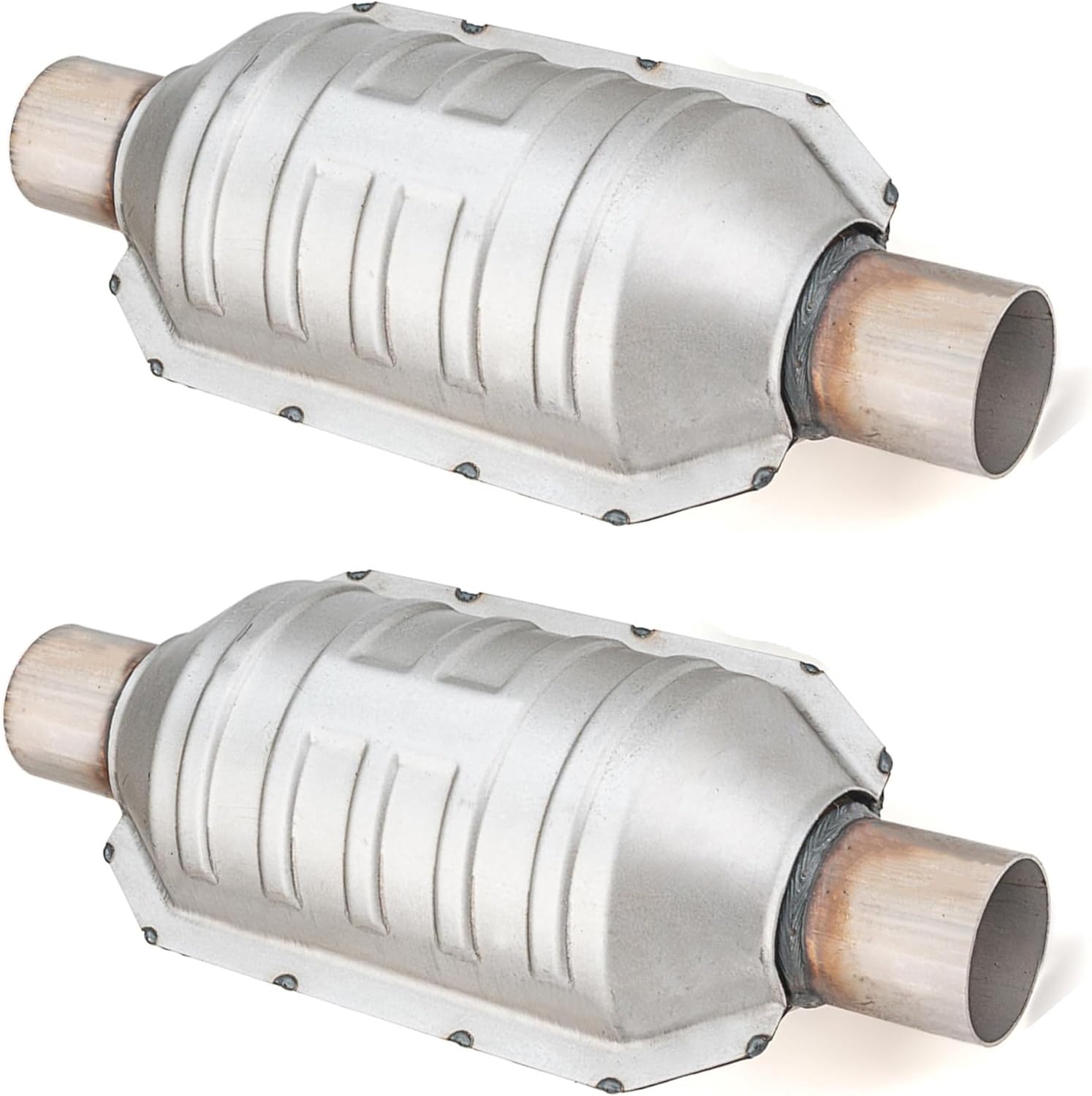
PTPDRH Catalytic Converter Kit for 2004-2008 Ford F-150 RWD 4.6L (EPA Compliant, 2-piece)

| Vehicle compatibility | 2004-2008 Ford F-150 RWD 4.6L |
|---|---|
| Certification | EPA certified (not for CA, WA, VT, OR) |
| Material | Stainless Steel |
| Pieces | 2-piece kit |
This PTPDRH catalytic converter kit is a direct-fit replacement engineered for the 2004–2008 F-150 with the 4.6L RWD layout. It installs as a drop-in unit without programming and uses a three-way catalytic process to reduce hydrocarbons, CO, and NOx. Construction uses stainless steel and ceramic catalyst media to resist thermal stress and deliver service life similar to many aftermarket replacements. Buyers will appreciate that it is EPA certified for federal emissions compliance, and most installers report straightforward bolt-up fitment and that it does not trigger a check engine light when matched correctly. The kit ships with new fasteners and brackets but some users have found the supplied bolts and mounting hardware less robust, so having replacement flange bolts or reusing factory fasteners can be prudent. It is not approved for sale in several states with stricter rules, so verify local regulations before installing. Overall this is a practical, value-focused option for someone seeking a factory-style replacement rather than an upgraded performance unit.
Best for: Drivers who want a straightforward, factory-style replacement that restores emissions control without extra tuning and value practicality over performance upgrades.
Less Ideal for: Do not choose this if you need a high-performance or race-oriented catalytic solution or if your vehicle is registered in a state that requires stricter emissions approvals.
- EPA certified for federal emissions compliance
- Designed as 100% direct fit for 2004–2008 F-150 4.6L RWD for simple drop-in installation
- Stainless steel construction and ceramic catalyst for thermal resistance
- Comes with replacement bolts and brackets for a mostly complete install
- Supplied fasteners and some brackets reported as weak or prone to stripping
- Not approved for sale in California, Washington, Vermont, or Oregon
Verdict: A value-focused, EPA-certified direct-fit replacement that restores emissions compliance and offers easy installation for 2004–2008 F-150 4.6L RWD owners.
MagnaFlow 49694 Direct-Fit OEM-Grade Catalytic Converter (Left)

| Position | Left |
|---|---|
| Body Material | Stainless Steel |
| Type | Direct-Fit |
| Substrate Material | Ceramic |
| Series | OEM Grade |
This MagnaFlow 49694 is a direct-fit catalytic converter built to OEM-grade tolerances for the left-side exhaust of covered F-150s. It uses a spun stainless-steel body, mandrel-bent tubing, and a ceramic substrate to provide corrosion resistance and predictable emission control while aiming to keep the check engine light off. Installation is intended to be bolt-on with factory-style O2 sensor locations, so a DIYer with basic tools can replace the factory unit without cutting or welding in many cases. The converter is Federal/EPA compliant and formulated to match factory performance and emissions for vehicles not registered in certain states. Some owners report near-perfect fit and straightforward installation, while others encountered minor alignment or sealing issues with headers or specific model years, so careful fit verification is advised before installation. Note the listing includes an important legal disclaimer that the part is not for use or sale in California, Colorado, or New York.
Best for: Buyers who want a factory-style replacement that preserves emission compliance and prefers a direct-fit part they can install with basic tools and minimal modification.
Less Ideal for: Those seeking California-compliant parts or owners who need a guaranteed perfect fit with aftermarket headers or heavily modified exhaust layouts should look elsewhere.
- Direct-fit design with factory-style O2 sensor locations reduces installation complexity
- Stainless-steel spun body and mandrel-bent tubing for improved corrosion resistance and flow
- Built to OEM-grade standards and Federal/EPA compliant for covered vehicles
- Ceramic substrate for reliable catalytic activity and emissions control
- Not legal for sale or use in California, Colorado, or New York
Verdict: Choose this MagnaFlow converter if you want a factory-quality, direct-fit left-side replacement that maintains Federal emissions compliance for the 2004–2008 F-150.
PHILTOP Catalytic Converter Kit for Ford F-150 2004–2008 4.6L (Left & Right, EPA Compliant)

| Brand | PHILTOP |
|---|---|
| Fitment | Ford F-150 2004-2008 4.6L |
| Position | Left, Right |
| EPA status | EPA compliant |
This PHILTOP catalytic converter kit is built as a direct replacement for the left and right converters on 2004–2008 Ford F-150 4.6L trucks and ships with OE-style gaskets and hardware for a straightforward installation. It uses a high-flow ceramic substrate intended to reduce backpressure, which can slightly improve breathing, fuel economy, and reduce rattling noise from a damaged original unit. The stainless/aluminized construction aims to resist corrosion and the kit offers the option to clamp or weld the supplied pieces together depending on installer preference. Practical benefits include matching factory mounting points and the ability to perform the swap in a few hours without modification. Notable limitations are that EPA-compliant status restricts use in certain states and a minority of buyers report issues with fitment clocking or seam leaks, so careful pre-install inspection and professional installation or welding are recommended if you want a durable joint. This is a cost-conscious replacement that balances flow performance and OEM-style fitment for routine service needs.
Best for: Buyers looking to replace failing converters on a 2004–2008 F-150 4.6L with a budget-conscious, direct-fit aftermarket option that restores emissions function and reduces exhaust noise.
Less Ideal for: Drivers in states that require CARB-certified converters or those who need a factory-identical sensor and flow match should seek a certified or OEM replacement instead.
- Direct-fit design with OE-style gaskets and mounting hardware for straightforward installation
- High-flow ceramic substrate to reduce backpressure and help restore engine breathing
- Stainless/aluminized construction that resists rust and aims for longer service life
- Includes parts for both left and right positions so both converters can be replaced together
- EPA-compliant model cannot be used in some states with stricter emissions rules
- Some buyers reported fitment clocking issues or seam leaks requiring welding or return
Verdict: A practical, cost-conscious direct-replacement catalytic converter kit for 2004–2008 F-150 4.6L owners who want restored emissions performance and improved exhaust flow without extensive modification.
KAX Replacement Catalytic Converter for 2004-2008 Ford F-150 4.6L RWD (Left, EPA Compliant)

| Position | Left |
|---|---|
| Compatible engine | 4.6L RWD |
| Manufacturer | KAX |
| EPA status | Federal EPA compliant (not CARB) |
This KAX catalytic converter is a direct-fit replacement for the left-side converter on 2004–2008 Ford F-150 4.6L RWD trucks. It uses a stainless steel aluminized body and a double-layer ceramic substrate aimed at increasing flow and reducing backpressure, which can help restore power and improve fuel efficiency compared with a clogged or damaged original unit. The unit ships with OE-style gaskets and hardware so a competent DIYer or independent shop can typically install it in 3 to 4 hours without modifying the exhaust. It is EPA compliant for federal emissions but not legal in states with California-style rules. Buyers should inspect the part before installation because a few users reported internal weld residue or misaligned holes that required tweaks during fitment. For a budget-focused replacement that clears P0420 codes and restores drivability, this converter delivers solid value, though it may not match factory longevity or exact fit of an OEM part.
Best for: Buyers looking for an affordable, do-it-yourself replacement that restores emissions function and drivability on a 2004–2008 F-150 4.6L RWD without paying OEM prices.
Less Ideal for: Those who need a California-compliant converter or want a factory-identical long‑life unit and prefer a dealer or OEM replacement.
- Direct-fit design with OE-style gaskets and hardware for straightforward installation
- Stainless steel aluminized body resists corrosion compared with plain steel
- Double-layer ceramic carrier designed for higher flow to reduce backpressure
- EPA-compliant for federal emissions, suitable outside states with stricter rules
- Not legal for use in states that require California emissions compliance
- Some customers reported interior metal shavings or imperfect welds that need inspection before install
Verdict: A cost-conscious direct-fit replacement that gets a 2004–2008 F-150 4.6L RWD back to working emissions and performance without the OEM price.
Walker Ultra Direct-Fit Catalytic Converter 53569 (3" Inlet, 2.5" Outlet)

| Brand | Walker |
|---|---|
| Model | 53569 |
| Compatibility note | Fits select 2004–2008 Ford F-150 and related models |
| EPA status | EPA compliant for OBDII (1996 and newer) |
The Walker Ultra 53569 is a direct-fit catalytic converter built to replace a failed factory unit on compatible Ford F-150 and related models. It installs using OE-style hangers, flanges and heat shields so most mechanics can bolt it in without cutting or welding; many buyers report straightforward fitment with only a clamp or minor alignment needed. The internal washcoat and precious metal loading are engineered to reduce emissions to EPA-compliant levels for OBDII systems while restoring drivability and clearing fault codes when the original converter is failing. Construction uses thick flanges and brackets for durability and includes aluminized heat protection where originally equipped. Limitations to expect are occasional small fitment tweaks like tapping an out-of-round flange or replacing a rusty clamp, and this is an emissions replacement rather than a performance upgrade. For reliability-focused owners it provides a factory-style solution that prioritizes durability and regulatory compliance over performance gains.
Best for: A buyer who needs a reliable, factory-style replacement to restore emissions control and everyday drivability on a 2004–2008 Ford F-150 and prefers a part that installs with standard tools.
Less Ideal for: Not intended for users seeking increased horsepower, custom exhaust fabrication, or a high-flow performance converter for racing or off-road tuning.
- Direct-fit design with factory-style hangers and flanges for bolt-in installation
- EPA-compliant catalytic substrate and washcoat suitable for OBDII vehicles
- Thick flanges, hangers and brackets improve durability compared with generic universal pipes
- Includes aluminized heat shields where originally equipped to protect undercarriage heat-sensitive areas
- May require minor alignment or light hammering if flange arrives slightly out of round
Verdict: Choose the Walker Ultra 53569 when you want a factory-style, EPA-compliant catalytic converter that restores emissions control and dependable day-to-day operation on compatible Ford F-150s.
PHILTOP Catalytic Converter for 2004–2006 F150 5.4L 4WD and 2006–2008 Mark LT 5.4L 4WD

| Compatible engines | 5.4L 4WD |
|---|---|
| Fitment years | 2004–2006 F-150, 2006–2008 Mark LT |
| Position | Left, Right |
| Emissions compliance | EPA federal (not CARB) |
This PHILTOP catalytic converter is a bolt-on replacement intended to restore emissions performance and pass federal smog checks on compatible 5.4L 4WD F-150 and Mark LT trucks. It uses a high-flow ceramic honeycomb substrate to lower backpressure and is housed in a stainless steel shell with welded connections for durability. The unit ships with OE-style gaskets and hardware so most installations can be completed in a few hours without modification. In practice the high-flow design can help engine breathing and may slightly improve throttle response compared with a severely clogged unit. Reports from buyers show it fits well and can pass inspections, but there are isolated fitment and weld clocking issues that can cause leaks or require welding rather than clamp-only assembly. It is EPA-approved for federal emissions states but not legal in California, New York, Colorado, or Maine where stricter state rules apply. Expect a lower-cost aftermarket option that can save money over dealer replacement while watching for occasional quality variance between units.
Best for: Buyers who prioritize proven customer feedback and want a direct-fit, budget-friendly replacement to restore emissions and pass federal inspections while avoiding dealer costs.
Less Ideal for: Those who must meet California-style state emissions or who need guaranteed perfect factory-fit precision without any potential post-install adjustments should look elsewhere.
- Direct-fit flange-to-flange design with included gaskets and hardware for bolt-on installation
- High-flow ceramic substrate aimed at reducing backpressure and improving catalytic efficiency
- Stainless steel outer shell and welded connections for increased durability
- EPA federal emissions compliant for use outside states with stricter regulations
- Comes with full accessories so no extra parts required for typical replacement
- Not legal for use in California, New York, Colorado, or Maine due to state emissions rules
- Some buyers reported inconsistent weld clocking and occasional seam leaks indicating quality variability
Verdict: A cost-effective, direct-fit EPA-approved replacement for 5.4L 4WD F-150s that restores emissions function and comes with the hardware needed for a straightforward install.
Dylannet 2.5" Weld-On Universal Catalytic Converter with O2 Port and Heat Shield (2.5" Inlet/Outlet)
| Inlet/Outlet | 2.5" / 2.5" |
|---|---|
| Total length | 13" |
| Material | Stainless steel |
| O2 port | Included |
This Dylannet 2.5" weld-on catalytic converter is a universal replacement designed to be cut in and welded into an existing exhaust system; it features a 2.5" inlet and outlet, a welded O2 sensor port, and an insulation heat shield. For a 2004-2008 Ford F-150 this unit can serve as a rear or mid-pipe replacement where a 2.5" connection is used, and installers report it is straightforward to fit with mild pipe preparation or a slight pipe expansion. The stainless steel construction and coated catalytic substrate aim to reduce emissions by converting toxic gases, and the O2 port keeps the vehicle's sensor functionality intact. Practical benefits include a simple direct-fit welding installation and a durable machined exterior suited to underbody exposure. Limitations are its universal nature: flow characteristics and sensor calibration may not match the factory primary converter, so it is better suited as a secondary or downstream replacement rather than a direct swap for primary emissions hardware on emission-tested vehicles in restricted states.
Best for: F-150 owners seeking an affordable, durable replacement for a damaged mid- or rear-pipe catalytic converter who prioritize a straightforward weld-in repair and keeping the O2 sensor functional.
Less Ideal for: Do not choose this if you need a direct factory-equivalent primary converter for emissions inspections or live in a state with stricter sale and installation rules.
- Weld-on 2.5" inlet and outlet fits common mid- and rear-pipe sections with straightforward welding
- Built-in O2 sensor port preserves vehicle sensor placement and avoids custom drilling
- Stainless steel construction and machined exterior resist underbody corrosion
- Includes heat shield/insulation board to protect surrounding underbody components
- Universal design may not restore factory emissions performance or prevent check-engine lights if replacing a primary converter
- Not legal for sale in states with stricter emissions rules as noted by the manufacturer
Verdict: A practical, weld-on 2.5" replacement for damaged mid- or rear-pipe catalytic converters on 2004–2008 F-150s when you need a durable, sensor-compatible fix quickly.
Choosing the Right 2004-2008 Ford F-150 Catalytic Converter: Key Factors to Consider
Fitment and Mounting Type
Correct fitment is the single most important factor for the 2004-2008 F-150. The 10th-gen chassis uses specific pipe diameters, flange types, and hanger locations that affect whether a converter installs without cutting or major modification.
A direct-fit unit that matches the stock welds and oxygen sensor ports saves time and reduces the chance of exhaust leaks. If a universal unit is used, expect additional pipe work, clamps, or new hangers. Confirm flange bolt spacing, inlet and outlet diameter, and whether the unit is meant for the left or right side of the exhaust system when applicable.
Oxygen Sensor Provision and Compatibility
Oxygen sensors control engine fueling and emissions monitoring, so the converter must have the correct sensor bungs in the right locations. The 2004-2008 F-150 often has pre- and post-converter sensors; incorrect placement or wrong thread sizes can trigger a check engine light or cause drivability issues.
Ensure the converter provides the proper number of bungs, uses compatible thread pitch, and positions the sensors at the correct distance from the substrate to obtain accurate readings. Some replacement units include welded-in bungs; others leave ports blank for later tapping.
Substrate Material and Cell Density
The internal substrate is what chemically converts harmful gases. Substrates are typically ceramic or metallic and vary in cell density. Higher cell density can mean more surface area for catalytic coatings, improving conversion efficiency, but it may also increase backpressure.
For truck owners, balance is key: a substrate that provides effective conversion without excessive restriction protects engine performance while meeting exhaust emissions requirements. Look for clear manufacturer specs on substrate type and cell count to assess expected performance and longevity.
Emissions Certification and Legal Compliance
Emissions requirements differ by state and application. For restoration of emissions compliance on a 2004-2008 F-150, confirm whether the converter is certified for on-road use in your jurisdiction. Some units are designed for off-road or racing use only and are not legal for street-driven vehicles.
Choosing a unit with the proper certification avoids registration issues and reduces the risk of failing an emissions inspection. Certification status also often correlates with higher-quality catalytic coatings and manufacturing controls.
Construction Quality and Corrosion Resistance
A durable shell, quality welds, and corrosion-resistant materials matter for a pickup that may see heavy use, exposure to road salt, and off-road conditions. Stainless steel shells and robust end caps prolong service life and reduce the chance of leaks or flange failure.
Examine whether the unit has reinforced weld seams, heat-treated surfaces where applicable, and protective finishes that slow rust. A converter that resists physical damage and corrosion reduces long-term ownership cost and downtime.
Backpressure and Engine Performance Impact
Catalytic converters add restriction to exhaust flow. Excessive backpressure can reduce power, lower fuel economy, and stress engine components. The ideal converter for the 2004-2008 F-150 balances emissions conversion with minimal flow restriction.
Consider factory-equivalent designs or converters with engineered flow paths that minimize pressure drop while preserving catalytic efficiency. If you use heavier-duty towing or performance modifications, check whether the unit's flow characteristics are compatible with those operating conditions.
Common Catalytic Converter Symptoms on a 2004-2008 F-150
Recognizing failure signs early helps prevent engine damage and emissions violations. Common symptoms include persistent check engine lights related to oxygen sensor or catalytic efficiency codes, noticeable drop in power during acceleration, and abnormal exhaust odors such as a rotten-egg smell from unconverted sulfur compounds.
- Check Engine Light catalytic converter codes often appear as P0420 or similar efficiency codes.
- Loss of throttle response or reduced acceleration can indicate internal substrate clogging.
- Rattling noises under the truck when cold or during acceleration may signal a broken internal substrate.
How Exhaust Emissions Are Affected
A properly functioning catalytic converter reduces hydrocarbons, carbon monoxide, and nitrogen oxides produced by the engine. On the 2004-2008 F-150, a degraded converter can increase tailpipe emissions and cause failed inspections in areas with emissions testing. Replacing a failing unit restores conversion capability and helps the vehicle meet regulatory limits.
- Poor conversion efficiency can trigger oxygen sensor feedback and adaptive fueling issues.
- Excessive emissions may correlate with fuel trim adjustments and rough idle.
Installation Considerations for the 10th-Gen F-150
Installation can range from a simple bolt-in job to a more involved replacement requiring cutting and welding, depending on whether the unit is direct-fit or universal. Prepare for the job by confirming oxygen sensor locations, gathering the correct gaskets or flange hardware, and planning for safe lifting and exhaust support during removal and installation.
If you plan to reuse factory oxygen sensors, check their condition before reinstalling. Reusing weak sensors can result in ongoing codes after converter replacement.
- Have replacement gaskets, flange bolts, and anti-seize for sensor threads on hand.
- Consider penetrating oil and heat to break loose rusted flange bolts; be ready for potential welding if flange studs shear.
Maintaining a New Converter and Extending Service Life
Avoiding contamination and excessive thermal cycling extends converter life. Prevent unburned fuel from entering the exhaust by addressing misfires, worn ignition components, or rich-running conditions. Keep the exhaust system free from excessive soot or oil contamination by maintaining the engine and turbo systems if fitted.
Periodic visual inspection for corrosion, dents, or loose hangers helps catch issues before they worsen. Secure hangers and check for leaks at joints to prevent hot spots that accelerate failure.
- Address engine tuning or ignition problems promptly to avoid catalytic damage.
- Inspect hangers and shields for corrosion during routine service to prevent physical damage.
When to Repair Versus Replace
Minor external damage such as surface rust or a leaking flange can sometimes be repaired by replacing gaskets, welding small holes, or installing new mounting hardware. However, internal substrate damage, significant rattling, or persistent emissions codes usually warrant a full replacement because repairs do not restore conversion effectiveness.
If the converter is mechanically intact but misaligned, corrective welding or new hangers may save the unit. For converters with collapsed or contaminated substrate material, replacement is the only reliable cure.
- Use diagnostic trouble codes and a backpressure test to determine if the unit is internally clogged.
- Repairs are sensible for flange leaks and small shell damage; not for internal failure.
Still looking for the perfect fit?
Select your Ford F-150 configuration to see the most relevant Catalytic Converters recommendations
How We Chose the Best 2004-2008 Ford F-150 Catalytic Converter
We focused on attributes that matter specifically for 2004-2008 Ford F-150 owners. Primary filters included correct flange and hanger geometry to match the 10th-generation F-150 exhaust routing, oxygen sensor port location and thread compatibility, and EPA or CARB applicability where relevant to the vehicle's intended use. We prioritized converters with documented substrate materials and cell density information because those details influence emissions conversion efficiency and longevity.Other evaluation criteria were construction quality of the shell and welds, presence of high-temperature gaskets or integrated flanges to simplify installation, and resistance to common failure modes like internal substrate collapse or rust-through. Fitment accuracy and clear vehicle-application listings were required for inclusion; items that lacked firm compatibility data, had ambiguous sensor provisions, or showed a history of premature failure were excluded. Finally, we considered serviceability and whether the unit supports the stock O2 sensor layout without requiring additional modifications.
Our full evaluation process is outlined in our review methodology.
FAQ
How do I know if the catalytic converter is causing my check engine light?
A check engine light tied to catalytic efficiency usually appears as a specific emission-related code. Diagnostics with a code reader and live oxygen sensor data help confirm if the converter is underperforming versus upstream sensor or fuel delivery issues.
Can I install a universal converter on my 2004-2008 F-150?
You can, but universal units often require additional cutting, clamping, or welding and may lack correct sensor bungs. For the 10th-gen F-150, direct-fit units reduce labor and lower the risk of leaks or incorrect sensor placement.
Will a new catalytic converter affect engine performance?
A properly selected converter should restore normal performance by clearing any backpressure caused by a failing unit. Excessive restriction from an undersized flow design can reduce power, so choose a unit with flow characteristics suitable for your truck's typical use.
How long do catalytic converters usually last on these F-150s?
Service life varies widely based on driving conditions, maintenance, and exposure to contaminants. Many last a decade or more under normal conditions, but repeated engine misfires, oil consumption, or physical damage can shorten that lifespan.
What should I do before replacing the converter to avoid premature failure?
Address any engine misfires, fuel trim anomalies, or oil leaks first because those issues can quickly damage a new converter. Also inspect oxygen sensors and exhaust hangers so the installation begins from a known-good baseline.
Final Verdict
For a 2004-2008 Ford F-150, prioritize a converter that matches the vehicle's mounting and sensor layout, offers a robust internal substrate, and meets emissions certification where required. Balance conversion efficiency with acceptable exhaust flow to avoid performance loss, and favor units with durable construction to withstand truck use and corrosion exposure.Ultimately, choose based on fitment accuracy and the converter's ability to restore proper oxygen sensor readings and emissions control. Address underlying engine issues before installation to protect the new unit and ensure a lasting repair.
Explore More:
- Check out all Ford F-150 parts & accessories
- Explore Catalytic Converters Maintenance & Repair Guides
- Explore Exhaust & Emissions
- Browse all Auto Parts
