

Note: This article contains affiliate links. If you click on these links and make a purchase, I may earn a small commission at no extra cost to you. This helps support my research and content. Read my full affiliate disclosure here.
Keeping the emissions system working properly matters for the Ford F-150 4.2L because a failing catalytic converter affects performance, fuel economy, and legal compliance. Replacing a damaged or clogged converter can stop frequent check-engine lights, reduce exhaust odor, and restore proper exhaust flow so the truck runs smoothly on daily drives or work duties.This guide covers the top shortlisted catalytic converters suitable for the F-150 4.2L, explains why each option made our list, and walks through the practical factors you should weigh for replacement. We evaluate fitment reliability and emissions performance to help you pick the right unit for your needs and installation plans.
Looking for other parts? See all Ford F-150 parts & accessories.
Top Picks at a Glance
| Best Overall The best all-around choice for most situations | Garage-Pro Left Direct-Fit Catalytic Converter for Ford F-150 4.2L |  |
| Best Quality Built to a higher standard if you want something more solid | AISIN Aftermarket Right-Side Catalytic Converter for Ford F-150 4.2L |  |
| Best Value The sweet spot between price and what you get | SCITOO 645256 Left Catalytic Converter for Ford F-150 4.2L (Left, painted) |  |
| Best Budget The cheapest option that still gets the job done reliably | Weonefit Catalytic Converter Set for Ford F-150 4.2L RWD (2001–2003) |  |
| Highest Rated A top-rated pick with lots of positive feedback | A-Premium Left Catalytic Converter Kit for Ford F-150 4.2L (2005–2008), EPA Compliant |  |
| Most Popular A crowd favorite that many people choose with confidence | ACZCR Catalytic Converter for Ford F-150 4.2L (2001–2003) |  |
Garage-Pro Left Direct-Fit Catalytic Converter for Ford F-150 4.2L

| Fitment | 2001-2003 F-150, 2004 F-150 Heritage 4.2L RWD |
|---|---|
| Material Type | Steel |
| Part Interchange Info | 30485 |
| Warranty | 1-year unlimited-mileage warranty |
This Garage-Pro left direct-fit catalytic converter is designed to replace the factory unit on 2001–2003 Ford F-150 and 2004 F-150 Heritage 4.2L rear-wheel-drive trucks. It installs as an undercar replacement and aims to restore emissions control and exhaust flow to factory-style operation. The unit is made from steel and lists multiple interchangeable part numbers, making it a straightforward option for routine catalyst replacement after failure or damage. Buyers will appreciate the direct-fit claim that reduces modification during installation, though one user reported needing a reducing coupler at the tail section, so minor adaptation may be required on some exhaust setups. Garage-Pro backs the part with a one-year unlimited-mileage warranty and positions this as an affordable alternative to dealer-sourced components. Expect solid basic performance for emissions compliance and everyday driving, but not the higher durability or precious-metal loading of premium aftermarket or OEM converters, so longevity may be more limited under heavy use.
Best for: Buyers looking for an affordable, straightforward replacement to restore emissions function and drivability on a 4.2L F-150 without seeking high-end performance or extended longevity.
Less Ideal for: If you want the longest-lasting converter, higher precious-metal content for stricter emissions longevity, or track and heavy-duty use, consider premium or upgraded options instead.
- Direct-fit design for specified Ford F-150 4.2L years simplifies installation
- Made from steel for basic durability in normal driving conditions
- Covers common interchange part numbers for easier fitment selection
- Includes a one-year unlimited-mileage warranty for peace of mind
- Construction and materials are basic compared with premium catalytic converters which may affect long-term durability
Verdict: A budget-friendly direct-fit replacement that gets your 4.2L F-150 back to compliant operation with minimal fuss.
AISIN Aftermarket Right-Side Catalytic Converter for Ford F-150 4.2L

| Compatibility | Ford F-150 1997-2003, F-150 Heritage 2004 – V6 4.2L |
|---|---|
| Side | Right Side |
| Drive type | Rear Wheel Drive only |
| EPA compliance | OBDII vehicles (1996+) |
| Manufacturer part number | CCTFD-00508 |
This Aisin catalytic converter replaces the right-side unit on 4.2L V6 Ford F-150 trucks from 1997 through 2004 (heritage) with rear wheel drive. It is designed as an EPA-compliant, direct-fit aftermarket part that installs where the factory converter sits and connects to the existing exhaust system. Built to factory-quality tolerances, the unit aims to restore emissions control and clear check-engine codes linked to a failed catalyst. Typical use is a one-for-one replacement during exhaust repairs or emissions troubleshooting. Notable features include vehicle-specific fitment, RWD-only designation, and EPA compliance for OBDII vehicles. Practical benefits are simplified installation with a part made to match factory geometry and the reassurance of a reputable supplier focused on durability. Important limitations are that it is not legal for sale or use in certain states with stricter emissions rules and it will not fit 4WD trucks, so verify drive configuration and local regulations before purchasing.
Best for: Buyers who prioritize restoring emissions compliance and reliable, factory-style performance in a rear-wheel-drive 4.2L F-150 and want a straightforward direct-fit replacement.
Less Ideal for: Owners of four-wheel-drive F-150s or anyone in states with stricter emissions laws should seek a different converter that matches their drive configuration and local regulations.
- Factory-quality right-side direct-fit for the Ford F-150 4.2L V6 RWD simplifies replacement.
- EPA compliant for OBDII vehicles, helping restore emissions control and clear related fault codes.
- Manufactured by an established supplier with emphasis on durability and factory-style construction.
- Not legal for sale or use in California, Colorado, New York, or Maine due to local emissions rules.
Verdict: If you need a durable, factory-style right-side replacement to restore emissions performance on a RWD 4.2L F-150, this Aisin converter is a reliable choice.
SCITOO 645256 Left Catalytic Converter for Ford F-150 4.2L (Left, painted)

| Vehicle fitment | Ford F-150 4.2L 1997-2004 (left) |
|---|---|
| EPA compliant | Yes |
| Material | Stainless Steel |
| Inlet types | 2-bolt loose flange w/ spherical flare and 3-bolt welded flange |
| Outlet diameter | 2.50" OD pipe |
This SCITOO left catalytic converter is a direct-replacement style unit intended for Ford F-150 4.2L trucks (1997–2004, left side). It uses stainless steel construction, comes EPA compliant, and includes flange types and outlet hardware so it can be bolted into the exhaust system without buying extra parts. Typical uses are restoring emissions function after a failed cat or replacing a damaged unit during exhaust work; the supplied clamps and bolts simplify installation for a mechanic or experienced DIYer. The listing notes two inlet flange styles and a 2.5-inch outlet pipe so installers should check flange and pipe compatibility before starting work; some jobs may require minor cutting, resizing or bushing to achieve a perfect fit. SCITOO provides part number cross-reference and customer support which can help with fitment questions, but there is no explicit vehicle warranty listed and buyers should confirm state emission restrictions since the part is restricted in certain states. For trucks needing a ready-to-install left converter that matches the factory placement and emissions spec, this is a practical replacement option.
Best for: Buyers who prioritize a practical, ready-to-install replacement to restore emissions performance on a 4.2L F-150 and want included hardware to minimize shop time or extra parts purchases.
Less Ideal for: People who need a certified replacement for states with strict local emissions rules not supported by this listing or those who prefer a branded OEM factory part and warranty.
- Made from stainless steel for corrosion resistance and durability
- EPA compliant design suitable for federal-emission trucks
- Includes outlet hardware, clamps, and bolts to simplify installation
- Supplies multiple inlet flange styles to match factory connections
- May require minor cutting, resizing, or bushing for a perfect fit on some installations
Verdict: A practical, EPA-compliant left-side replacement catalytic converter that includes hardware and multiple flange options to get a 4.2L F-150 back on the road quickly.
Weonefit Catalytic Converter Set for Ford F-150 4.2L RWD (2001–2003)
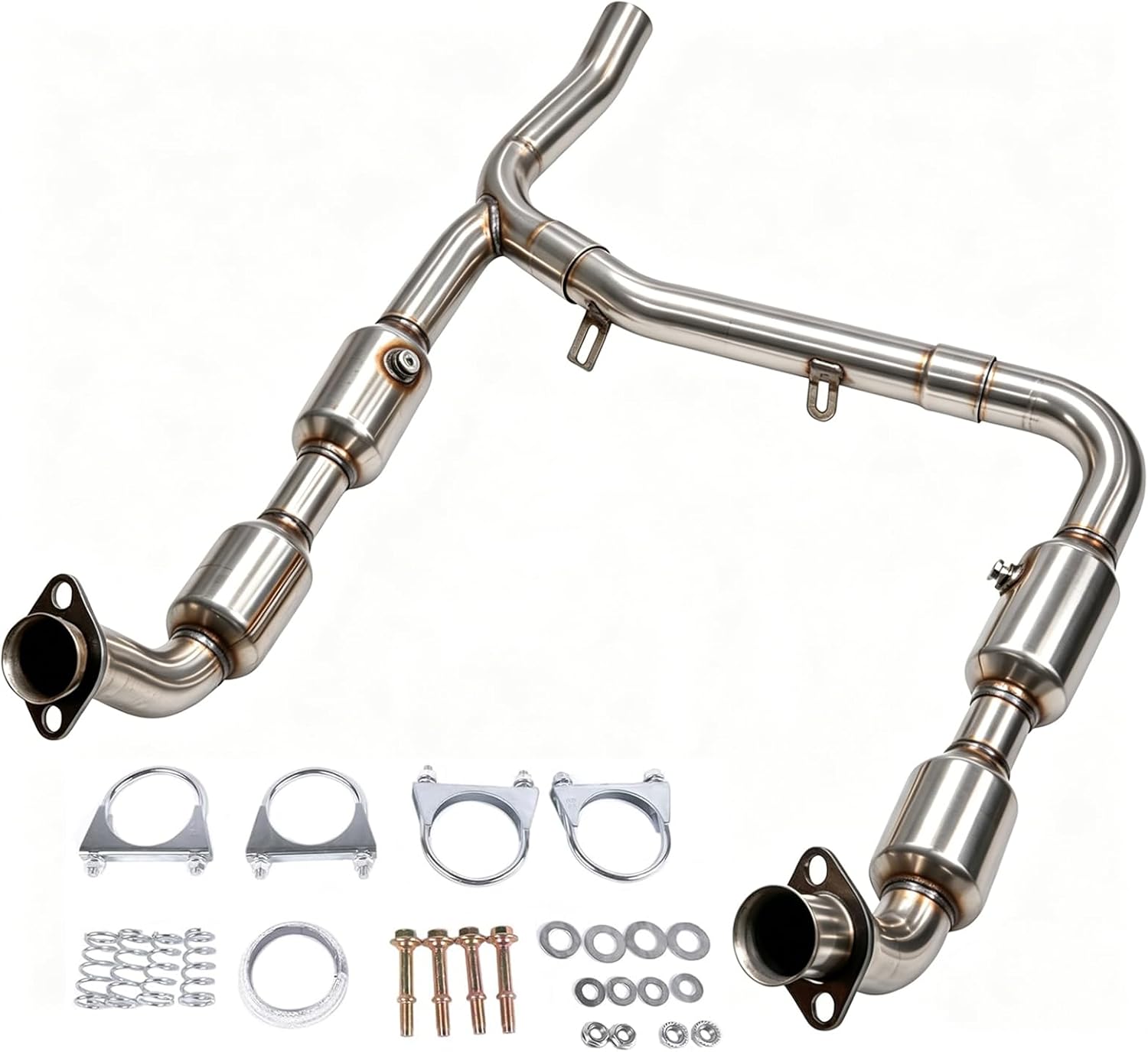
| Fitment | 2001–2003 Ford F-150 4.2L RWD |
|---|---|
| Included | Left and right catalytic converters with installation hardware |
| Manufacturer | Weonefit |
| Exterior | Polished |
This Weonefit catalytic converter set provides a pair of direct-fit replacements for the left and right positions on 2001–2003 Ford F-150 4.2L rear-wheel-drive trucks. It is supplied with installation hardware and meant to bolt into the existing exhaust layout without major fabrication when fitment is correct. The converters are described as constructed to meet original specifications with high heat resistance and emissions control, so they serve as a practical repair option after a failed unit or when a vehicle triggers emission-related codes. Several reviewers report the parts can need minor modification or alignment shimming during installation, so plan for some adjustments and possible heat shield or sensor location work. These units cannot be shipped to states with stricter emissions rules and are intended for non-California-type markets. For drivers repairing an older F-150 on a tight budget, this set can restore catalytic function and avoid more expensive dealer replacements, but expect to check sensor fitment and exhaust flange alignment during installation.
Best for: Buyers seeking a lower-cost replacement to restore emissions equipment on a 2001–2003 Ford F-150 4.2L RWD who prioritize affordability over a guaranteed perfect fit out of the box.
Less Ideal for: Drivers subject to California or other state emissions rules or shoppers who need a guaranteed bolt-in, no-adjustment OEM replacement should consider factory-source parts instead.
- Sold as a left and right matched set so both sides are replaced at once
- Includes installation hardware for a more complete repair package
- Built to meet factory-style specifications with claimed high heat resistance and emissions control
- Direct-fit design intended for bolt-in installation on specified F-150 4.2L RWD models
- May require minor modification, alignment shims, or drilling for some sensor or heat shield locations
- Not available for sale to states with stricter emissions regulations
Verdict: A budget-friendly matched pair that restores catalytic function on the 2001–2003 F-150 4.2L RWD for owners willing to make minor installation adjustments.
A-Premium Left Catalytic Converter Kit for Ford F-150 4.2L (2005–2008), EPA Compliant

| Vehicle fitment | Ford F-150 2005-2008 V6 4.2L |
|---|---|
| Position | Left |
| Material | Stainless Steel |
| Inlet type | 2 Bolt Loose Flange with Spherical Flare |
| Outlet | 2.50" OD Pipe |
This A-Premium catalytic converter is a direct-fit replacement for the left side of 2005–2008 Ford F-150 4.2L trucks, built from stainless steel with a 2-bolt loose flange inlet and a 2.50-inch outlet pipe. It is intended for straightforward factory-style replacement and arrives with the necessary mounting hardware and gasket kit to minimize shop time. The converter is EPA compliant for federal emissions and carries a one-year unlimited-mileage guarantee, which suits owners who prioritize reliability and proper emissions performance. In practice this unit should bolt in without major modification on correctly specified trucks and restore catalytic function after failure or damage. Limitations include restricted sale or installation rules for some states with stricter regulations, so confirm local compliance before buying. The stainless construction should resist corrosion better than cheaper assemblies, but long-term durability depends on driving conditions and proper upstream engine operation to avoid premature failure.
Best for: Buyers looking for a straightforward, factory-style replacement that restores emissions control and minimizes installation hassle, with an emphasis on reliable, corrosion-resistant construction.
Less Ideal for: If you need a converter certified for California or other restricted-state programs, or are looking for a custom high-flow performance piece, this federal-compliant direct-fit unit is not the right choice.
- Direct-fit design specific to Ford F-150 4.2L (2005–2008) for easier installation
- Stainless steel construction for improved corrosion resistance
- Includes mounting hardware and gasket kit to reduce additional parts hunting
- EPA-compliant for federal emissions and comes with a one-year unlimited-mileage guarantee
- Not eligible for sale or installation in certain states with stricter aftermarket converter rules
Verdict: A dependable, factory-style left-side replacement for the F-150 4.2L that restores emissions compliance and simplifies installation.
ACZCR Catalytic Converter for Ford F-150 4.2L (2001–2003)

| Fitment | 2001–2003 Ford F-150 4.2L V6 4WD |
|---|---|
| EPA Compliant | Yes |
| Inlet Type | 2 Bolt Loose Flange w/ Flare |
| Outlet Diameter | 2.50" OD Pipe |
| Material | Stainless Steel |
This ACZCR catalytic converter is a direct-fit replacement intended for 2001–2003 Ford F-150 trucks with the 4.2L V6 and 4WD. It installs in place of the factory unit using the supplied 2-bolt loose flange inlet and a 2.50" outlet pipe, so professional or experienced DIY installers can bolt it up without major modifications. Made from stainless steel and labelled EPA compliant, the unit aims to restore emissions control and exhaust flow to factory-style performance on federal-emission vehicles. Buyers report straightforward fitment and solid early performance, and the polished exterior resists corrosion. Limitations: it is not CARB compliant so it cannot be used in certain states, and a few customers noted occasional fitment mismatch that required minor adjustment. Given catalytic converters interact with sensors and vehicle calibration, have a mechanic confirm fit and O2 sensor placement before installation to avoid check-engine codes.
Best for: Buyers who prioritize a tested replacement with documented user experiences and want a straightforward swap to restore emissions performance on a 2001–2003 F-150 4.2L without major fabrication.
Less Ideal for: Drivers in states requiring CARB-certified parts or anyone unwilling to have a shop verify fitment and sensor alignment before installation.
- Direct-fit design matching factory mounting style for simpler installation
- Stainless steel construction for corrosion resistance
- EPA compliant for federal emissions jurisdictions
- Polished exterior that improves durability and appearance
- Not CARB compliant so cannot be used in California, New York, Colorado, or Maine
Verdict: A practical, direct-fit stainless catalytic converter for restoring emissions control on 2001–2003 F-150 4.2L trucks when CARB certification is not required.
Choosing the Right Ford F-150 4.2L Catalytic Converter: Key Factors to Consider
Fitment and Flange Compatibility
Correct fitment is the top priority for the Ford F-150 4.2L because the converter must align with factory flanges, hangers, and oxygen sensor ports. A unit that matches the original mounting points reduces the need for modifications and prevents exhaust leaks that can trigger check-engine warnings.
Measure flange bolt pattern and pipe diameter and verify oxygen sensor bung placement relative to the factory location. Poor alignment can increase installation time and add labor costs. When fit is verified, the chance of exhaust leaks, rattles, or accelerated gasket wear decreases, which matters for both emissions testing and long-term reliability.
Emissions Performance and Legal Compliance
The primary function of a catalytic converter is to reduce harmful exhaust emissions. For the F-150 4.2L, choose a unit whose substrate and washcoat are rated to meet or exceed applicable emissions standards for your region.
Look for evidence of effective reduction of hydrocarbons, carbon monoxide, and NOx under typical driving loads. Inadequate performance can lead to failed emissions inspections and recurring check-engine light codes tied to oxygen sensor readings or catalyst efficiency monitors.
Substrate Type and Cell Density
Substrate construction affects both conversion efficiency and flow. Ceramic substrates are common and offer good conversion when correctly coated, while metallic substrates handle thermal shock better. Cell density, expressed in cells per square inch, influences backpressure and conversion surface area.
Higher cell densities can improve conversion but may raise backpressure, which can affect throttle response and fuel trim on a 4.2L engine. Selecting the right balance ensures emissions reduction without degrading drivability.
Durability and Corrosion Resistance
The F-150 often encounters road salt, moisture, and heavy loads, so converter housing and weld quality are important. Stainless steel shells and quality welds resist corrosion and extend service life compared with lower-grade materials.
Consider protective finishes and the likelihood of physical damage from road debris. A more durable unit reduces the chance of cracks or leaks developing, which in turn prevents emission and performance issues that are costly to repair.
Impact on Engine Performance and Backpressure
A replacement catalytic converter must balance emission control with exhaust flow. Excessive backpressure from a dense or partially clogged substrate can cause reduced power, poor acceleration, and higher fuel consumption on the 4.2L engine.
Evaluate expected backpressure characteristics and whether the converter is rated for light-duty driving or heavier towing and hauling. Choosing a unit with appropriate flow characteristics maintains engine responsiveness while still meeting emissions goals.
Installation and Oxygen Sensor Compatibility
Installation factors include whether the converter comes with preinstalled oxygen sensor bungs or requires sensor relocation. The position of upstream and downstream sensors is critical for the F-150 4.2L's engine management system to correctly monitor catalyst efficiency.
Consider whether the unit will need new gaskets, hardware, or minor exhaust work. Easier installation reduces labor time and the risk of errors that can cause leaks or sensor misreads. Verify whether welding or bolt-on hardware is required to maintain a secure seal.
Common Catalytic Converter Symptoms on the F-150 4.2L
Recognizing early signs of a failing catalytic converter helps you address issues before they affect emissions testing or engine performance. Several symptoms are commonly reported on the F-150 4.2L when the catalyst is deteriorating.
Typical indicators include a persistent check-engine light with codes related to catalyst efficiency, a noticeable drop in power or acceleration, and an unusual rotten-egg or sulfur smell from the exhaust. Excessive exhaust heat under the vehicle and a rattling noise from loose substrate pieces are also warning signs that the converter needs inspection.
Addressing these symptoms promptly can prevent secondary damage such as oxygen sensor contamination or exhaust leaks that further complicate diagnostics and repairs.
- Check-engine light with OBD-II codes for catalyst efficiency or oxygen sensors
- Decreased acceleration or sluggish throttle response
- Sulfur or rotten-egg odor from exhaust
- Rattling sounds from the converter when the engine is cold or under load
- Visible overheating or discoloration of the exhaust near the converter
How Replacement Affects Emissions and Inspections
A properly fitted catalytic converter restores the vehicle's ability to convert harmful gases into less harmful ones, which is essential for passing emissions inspections. For the F-150 4.2L, ensuring correct sensor placement and tight seals prevents false readings that can cause inspection failures.
If your region requires tailpipe testing or on-board diagnostics monitors catalyst efficiency, a compliant unit will help maintain the required thresholds. After installation it is often necessary to clear stored codes and complete a short drive cycle so the engine control system can confirm the converter's performance.
- Verify oxygen sensor bung locations match the factory layout
- Clear codes and complete a drive cycle before inspection
- Check for exhaust leaks that can skew test results
Installation Tips for the F-150 4.2L
Plan the installation to reduce downtime and avoid surprises. Inspect flange faces, bolts, and hangers before removing the old converter, and replace any corroded hardware. If welding is required, ensure shop welds are full penetration and use appropriate exhaust-grade filler material.
When reusing oxygen sensors, inspect their threads and wiring. If the replacement converter requires relocating a sensor, confirm the new bung location maintains the same distance from the engine as the original. Use proper torque on flange bolts and check for leaks after the first few heat cycles.
- Support the exhaust during removal to avoid stress on hangers
- Replace gaskets and bolts with exhaust-grade hardware
- Use anti-seize on sensor threads where applicable
Maintaining Your New Converter to Maximize Service Life
Routine engine maintenance helps protect the catalytic converter. Address issues like misfires, rich fuel trim, or oil consumption promptly because unburned fuel and oil can contaminate the catalyst and shorten its life. Keeping ignition and fuel systems in good condition reduces the risk of premature failure.
Avoid using cleaners or additives that are not specified for use with catalytic converters. Inspect the converter area periodically for physical damage and clean any heavy road grime that could trap moisture and speed corrosion.
- Fix ignition and fuel system faults quickly to prevent contamination
- Inspect for physical damage after off-road use or impacts
- Avoid aftermarket additives that claim to clean or restore converters
Oxygen Sensor Role and Diagnostic Basics
Oxygen sensors monitor exhaust oxygen levels and help the engine control module adjust fuel trim. Downstream sensors also track catalyst efficiency. On the F-150 4.2L, incorrect sensor readings can mimic converter failure, so proper diagnosis is critical.
When diagnosing, check sensor voltages and response times, and compare upstream and downstream patterns. Sometimes replacing a degraded sensor will clear efficiency-related codes without replacing the converter, but if the downstream sensor shows no fluctuation over time, it often indicates a compromised catalyst.
- Test upstream and downstream sensor signals before condemning the converter
- Look for slow sensor response or constant downstream readings
- Confirm repairs by clearing codes and performing a drive cycle
Still looking for the perfect fit?
Select your Ford F-150 configuration to see the most relevant Catalytic Converters recommendations
How We Chose the Best Ford F-150 4.2L Catalytic Converter
We focused on criteria that matter for catalytic converters used on the Ford F-150 4.2L. Primary evaluation points included fitment accuracy, emissions effectiveness, catalyst substrate quality, and thermal durability under typical truck loads. We prioritized converters with documented compatibility for the 4.2L exhaust routing and flange dimensions to minimize installation issues.Additional filters covered backpressure characteristics and substrate cell density because these affect engine breathing and check-engine triggers. We also examined material construction, including stainless steel housings and welding quality, to assess long-term corrosion resistance for a vehicle often exposed to road salt and heavy use. Installation considerations were weighed, including whether the unit fits existing hangers and requires minimal modification.We excluded units that lacked clear fitment data for the 4.2L configuration or that showed common reports of premature substrate failure. Units intended for off-road or non-emissions applications were not considered. The resulting list reflects options that balance emissions compliance, mechanical compatibility, and durability for typical F-150 4.2L owners.
Our full evaluation process is outlined in our review methodology.
FAQ
What OBD-II codes commonly indicate catalytic converter problems on the F-150 4.2L?
Codes related to catalyst efficiency and oxygen sensor performance often show up. You may see codes indicating the downstream oxygen sensor is too similar to the upstream sensor or efficiency below threshold. These codes suggest the ECU detects reduced conversion but require sensor tests to confirm.
Can a bad oxygen sensor cause symptoms that look like a failing catalytic converter?
Yes. A failing upstream or downstream oxygen sensor can cause poor fuel trims and trigger efficiency codes. Diagnosing sensor voltages and response times is an important step before replacing the converter because a sensor replacement can sometimes resolve the issue.
How long does a replacement catalytic converter usually last on an F-150 4.2L?
Lifespan depends on driving conditions and maintenance. With normal driving and good engine health, a quality converter can last many years, while exposure to road salt, repeated engine misfires, or oil contamination will shorten service life. Regular maintenance extends longevity.
Will replacing the catalytic converter fix a persistent check-engine light right away?
Not always. After replacement you should clear codes and complete the required drive cycle so the engine control system can re-evaluate catalyst performance. If codes persist, further diagnosis of sensors, exhaust leaks, or engine running issues may be needed.
Do I need new gaskets and hardware when installing a replacement converter?
It is recommended. Exhaust gaskets and bolts are often corroded or deformed and can cause leaks if reused. Using new exhaust-grade gaskets and appropriate hardware helps ensure a secure seal and reduces the chance of rework.
Can a clogged converter cause overheating under the vehicle?
Yes. Severe clogging can trap exhaust gases and cause excessive heat to build in and around the converter. That heat can discolor nearby components and may be noticeable as higher underbody temperatures after heavy driving or towing.
Final Verdict
When replacing a catalytic converter on the Ford F-150 4.2L, prioritize accurate fitment, emissions effectiveness, and durability. Balance substrate characteristics to preserve exhaust flow while ensuring adequate conversion of pollutants. Address underlying engine issues such as misfires or rich running before installing a new unit to avoid premature contamination.Focus on long-term reliability and correct oxygen sensor placement to minimize diagnostic headaches and inspection failures. With the right priorities, you can restore emissions compliance and maintain reliable performance over many miles.
Explore More:
- Check out all Ford F-150 parts & accessories
- Explore Catalytic Converters Maintenance & Repair Guides
- Explore Exhaust & Emissions
- Browse all Auto Parts
