

Note: This article contains affiliate links. If you click on these links and make a purchase, I may earn a small commission at no extra cost to you. This helps support my research and content. Read my full affiliate disclosure here.
If you drive a Honda Pilot, the cabin air filter plays a big role in the comfort and health of everyone inside. A clogged or inefficient filter can reduce airflow, increase allergens, and let unpleasant odors circulate. This guide highlights the top shortlisted cabin air filters chosen for fitment to the Pilot and practical performance attributes.We evaluated options based on filtration efficiency and installation ease, along with durability and media type. The picks below represent the top choices for different priorities; use the evaluation notes to find the right balance for your needs.
Looking for other parts? See all Honda Pilot parts & accessories.
Top Picks at a Glance
| Best Overall The best all-around choice for most situations | FRAM Fresh Breeze Cabin Air Filter with Arm & Hammer Baking Soda, CF10134 |  |
| Best Quality Built to a higher standard if you want something more solid | ITESIER Engine and Cabin Air Filter Kit for Honda Pilot/MDX (3.5L) |  |
| Best Value The sweet spot between price and what you get | EPAuto CP813 Cabin Air Filter with Activated Carbon (fits Honda Pilot) |  |
| Best Budget The cheapest option that still gets the job done reliably | PurolatorTECH TC35519 Cabin Air Filter |  |
| Highest Rated A top-rated pick with lots of positive feedback | Puroma Cabin Air Filter with Activated Carbon (Replacement for CP134) — 2 Pack |  |
| Most Popular A crowd favorite that many people choose with confidence | ECOGARD XC35519 Cabin Air Filter |  |
| Best Seller A high-volume bestseller chosen again and again | BOSCH HEPA Cabin Air Filter (Model 6029C) |  |
FRAM Fresh Breeze Cabin Air Filter with Arm & Hammer Baking Soda, CF10134

| Vehicle fitment | Honda Pilot and select Honda/Acura models |
|---|---|
| Filter efficiency claim | Up to 98% of dust and pollen |
| Installation location | Behind glove box |
| Part number | CF10134 |
This FRAM Fresh Breeze cabin air filter is designed as a factory-style replacement for compatible Honda models and installs behind the glove box in about 15 minutes. It uses an activated carbon layer plus Arm & Hammer baking soda embedded in the media to capture common contaminants and help neutralize odors that enter through the HVAC system. In day-to-day use it filters dust, pollen, and other particulates and can noticeably reduce stale or musty smells compared with a standard paper filter. The package lists multiple Honda fitments including the Pilot and cross-references popular aftermarket part numbers for easy verification. Expect straightforward, tool-light installation and improved cabin air freshness, but remember the odor control relies on the carbon/baking soda layer which will saturate over time and requires regular replacement to stay effective. This is a practical, balanced choice for routine maintenance on Honda Pilot models that need both filtration and mild odor control.
Best for: Balanced, practical owners who want a straightforward cabin filter replacement that improves air quality and reduces common odors without fuss.
Less Ideal for: Drivers who need HEPA-level filtration for serious allergy or medical concerns should consider purpose-built high-efficiency filters instead.
- Factory-replacement fitment for Honda Pilot and many Honda/Acura models for straightforward installation
- Activated carbon plus baking soda layer helps reduce odors as well as trap particulates
- Filters up to 98% of dust, pollen and other common contaminants
- Quick install behind the glove box typically takes about 15 minutes
- Odor-absorbing carbon/baking soda layer will lose effectiveness and needs regular replacement
- Not a medical-grade allergen filter for users with severe respiratory sensitivities
Verdict: A convenient factory-style cabin filter for Honda Pilot owners that balances solid particle filtration with mild odor control via carbon and baking soda.
ITESIER Engine and Cabin Air Filter Kit for Honda Pilot/MDX (3.5L)

| Compatible models | Pilot 3.5L (2023-2025), MDX 3.5L (2022-2025) |
|---|---|
| Manufacturer part numbers | 17220-61A-A00; 80292-TF0-G01 |
| Brand | ITESIER |
| Special feature | Easy to Install |
This ITESIER kit bundles a replacement engine air filter and a cabin filter formulated with activated charcoal to suppress odors and trap fine particles. It is intended for direct fit replacement on 3.5L Honda Pilot and MDX models and is used during routine maintenance to restore airflow and cabin air quality. The cabin element’s coconut-shell activated carbon layer helps adsorb smells while the engine filter media aims to protect the intake from dust and debris, preserving performance and fuel economy when changed at recommended intervals. Installation is straightforward and typically completed in minutes with basic tools, which makes it convenient for DIY maintenance. The kit’s packaging and included parts match factory replacement numbers, simplifying identification. Limitations are that this is a model-specific kit so fitment must be confirmed before purchase, and it does not include additional performance upgrades such as high-flow or washable elements for enthusiasts seeking track-level airflow gains.
Best for: Performance-oriented owners who prioritize restoring factory-level airflow and clean cabin air on their Honda Pilot through timely, hands-on maintenance.
Less Ideal for: Drivers looking for washable or high-flow performance filters or those who need parts for engines other than the 3.5L Pilot/MDX should look elsewhere.
- Includes both engine and cabin filters for a single maintenance stop
- Cabin filter has activated charcoal to reduce odors
- Direct-fit design matches factory replacement part numbers for easy installation
- Simple installation suitable for DIY service, saving shop time
- Fitment limited to 3.5L Pilot/MDX model years listed so not universal
- Not a performance high-flow or reusable filter option
Verdict: A convenient, factory-style engine and activated-charcoal cabin filter kit for 3.5L Honda Pilot owners who want quick DIY maintenance to restore filtration and reduce cabin odors.
EPAuto CP813 Cabin Air Filter with Activated Carbon (fits Honda Pilot)

| Compatible vehicles | Honda Pilot (manufacturer-listed years) |
|---|---|
| Location | Behind glove box |
| Replacement for | Honda/Acura part numbers 80290-S0X-A01, 80290-S0X-A02 |
| Recommended replacement | Every 12 months or 12,000 miles |
This EPAuto CP813 cabin air filter is a direct replacement designed to fit Honda Pilot model years the manufacturer lists. It installs behind the glove box and uses pleated media with an activated carbon layer to trap dust, pollen and reduce cabin odors. Typical use is a yearly or 12,000-mile replacement to keep HVAC airflow clean and reduce particulates entering the cabin. In practice the filter fits snugly in the Pilot's housing and reviewers report straightforward installation with no modification required. The activated carbon helps with smells and city smog, while the pleats provide surface area for particle capture without overly restricting airflow. Limitations are minimal for this class of product: it is a single cabin filter without special high-efficiency ratings, so drivers seeking medical-grade filtration or long service intervals will need an upgraded option. Packaging on some units arrives creased and that can slightly dent pleats, though customers say performance is generally unaffected.
Best for: Practical owners who want a cost-effective, factory-quality replacement that restores cabin air freshness and HVAC performance without paying for premium specialty filters.
Less Ideal for: Drivers needing medical-grade filtration, extended service intervals, or those who require certified HEPA-level particle removal should consider higher-end alternatives.
- Designed to fit Honda Pilot cabin filter housing for listed years, offering reliable fitment.
- Activated carbon layer reduces odors and helps block vehicle fumes and smog.
- Pleated media provides reasonable particle capture while maintaining airflow.
- Easy installation behind the glove box with no special tools for most owners.
- Not specified as a high-efficiency or HEPA-level filter, so it may not remove the smallest allergens or ultrafine particles.
- Some packages arrive with dented pleats from shipping which can reduce filter surface uniformity.
Verdict: A practical, budget-friendly cabin filter for the Honda Pilot that restores airflow and reduces odors without the cost of premium filtration.
PurolatorTECH TC35519 Cabin Air Filter
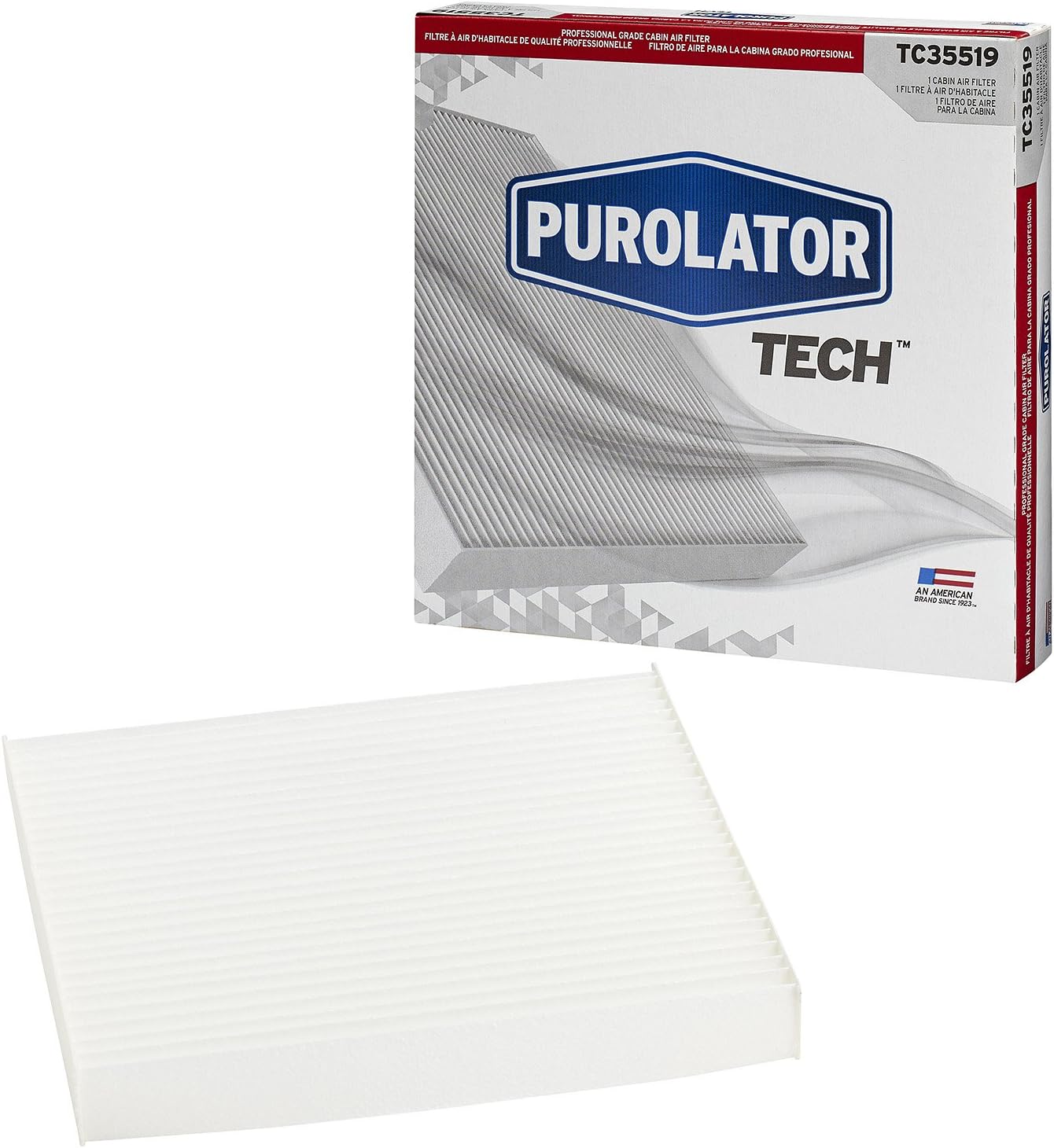
| Material | Polyester Or Fiberglass |
|---|---|
| Part Number | TC35519 |
| Service Life | Up to 12,000 miles or 12 months |
The PurolatorTECH TC35519 is a budget-friendly replacement cabin air filter that removes pollen, dust, and other airborne contaminants while helping the HVAC system maintain airflow and defrost performance. It installs like a standard factory replacement and is commonly used during routine cabin filter service intervals. The filter media is electrostatically charged, which increases particle capture without adding significant airflow restriction, and Purolator offers both particulate and carbon configurations in the same product family. Practical benefits include improved cabin air quality and a clearer heating and cooling system when the old filter has become clogged. Some units arrive without sealed individual wrappers and a few users report slightly different pleat counts or fit tightness, so careful installation and inspection before final assembly is a good idea. For a budget choice that matches factory fit and basic filtration needs on Honda Pilots, this filter delivers expected performance without premium features.
Best for: Practical, budget-conscious Honda Pilot owners who prioritize lowering maintenance costs while keeping cabin air quality acceptable between service intervals.
Less Ideal for: Drivers who need advanced odor control or high-efficiency filtration for allergy or pollution-heavy environments should consider a carbon or HEPA-grade aftermarket alternative.
- Factory-quality fit, form and function designed to replace the original cabin filter
- Electrostatically charged media captures pollen, dust and other particulates
- Rated to protect against airborne pollutants for up to 12,000 miles or 12 months
- Affordable option that restores HVAC airflow and defroster performance
- Some units arrive without sealed individual packaging and have reported debris inside the box
- Occasional fit or pleat alignment issues requiring slight adjustment during installation
Verdict: A cost-effective, factory-replacement cabin filter that restores basic HVAC performance and particle filtration for Honda Pilot owners on a budget.
Puroma Cabin Air Filter with Activated Carbon (Replacement for CP134) — 2 Pack

| Brand | Puroma |
|---|---|
| Item model number | CP134 |
| Manufacturer Part Number | HCF134N |
| Compatible vehicles | Honda and Acura models listed (CP134 fitment) |
The Puroma CP134 cabin air filter is a straightforward replacement designed to restore fresh, clean airflow to the cabin by combining pleated particulate media with an activated carbon layer to reduce odors. It installs in the factory filter location and is intended for routine HVAC maintenance; most owners report an easy, tool-free swap that takes only minutes. The activated carbon helps cut road and musty smells while the denser pleats trap dust, pollen, and other common contaminants, which can improve HVAC efficiency and passenger comfort. Packaging and frame rigidity look like a solid factory-quality fit and the filter includes an airflow arrow to simplify correct orientation. Limitations are typical of aftermarket filters: it does not claim higher-efficiency ratings like HEPA and replacement intervals still depend on local air quality and driving conditions, so heavily polluted environments may need more frequent changes. For reliability-focused Honda Pilot maintenance this provides a cost-effective, practical way to keep cabin air and HVAC performance consistent between service visits.
Best for: A reliability-focused buyer who prioritizes maintaining consistent HVAC performance and cabin air quality on a Honda Pilot and prefers a practical, low-fuss replacement they can install themselves.
Less Ideal for: Drivers seeking medically certified or hospital-grade filtration or those who need a documented high-MERV or HEPA-level filter should consider purpose-built high-efficiency alternatives.
- Activated carbon layer reduces odors in the cabin
- Pleated, non-woven media captures dust and common particulates
- Rigid frame and accurate fit for straightforward, fast installation
- Does not specify high-efficiency particulate ratings beyond general filtration
- Replacement interval still depends on conditions and may be more frequent in polluted areas
Verdict: A cost-effective, easy-to-install replacement that refreshes cabin air and maintains HVAC performance for Honda Pilot owners focused on dependable, practical maintenance.
ECOGARD XC35519 Cabin Air Filter

| Manufacturer Part Number | XC35519 |
|---|---|
| OEM Part Number | 80292-SDA-A01 |
| Compatible Models (example) | Honda Pilot 2009-2021 |
| Item Weight | 4.8 ounces |
The ECOGARD XC35519 is a direct-fit replacement cabin air filter for Honda vehicles that removes dust, pollen, and other particulates from incoming cabin air. It installs in the glove-box access filter housing and is intended for routine maintenance intervals—manufacturers typically recommend replacement every 12 months or 12,000 miles. In use the filter refreshes cabin air and helps reduce allergens and road dust entering the ventilation system. Notable features include a form factor compatible with a wide range of Honda model years and a build that users report fits snugly when aligned correctly. Practical benefits are simple DIY installation, improved air quality without added complexity, and broad availability for common Honda models including the Pilot. Limitations are that this version does not advertise activated carbon or odor-absorbing media, so it will not significantly reduce persistent smells, and a few users noted occasional fitment trimming or unclear airflow arrows on older vehicle housings. For convenience-focused buyers who want a quick, maintenance-friendly cabin filter for their Honda Pilot, it performs reliably.
Best for: Convenience-driven buyers who prioritize easy, fast routine maintenance and want a reliable, DIY-friendly cabin air filter for their Honda Pilot to keep the cabin air fresher with minimal hassle.
Less Ideal for: Drivers specifically seeking odor removal or heavy pollutant filtration should consider filters with activated carbon or higher-efficiency media instead.
- Direct-fit replacement for many Honda cabin filter housings, simplifying DIY swaps.
- Effectively captures dust, pollen, and common airborne particles to improve cabin air quality.
- Easy, quick installation through glove-box access for owners who prefer simple maintenance.
- Does not include activated carbon or explicit odor-absorbing media, so it will not neutralize persistent smells.
- A small number of users reported minor fitment adjustments or unclear installation arrows on the filter.
Verdict: A practical, easy-to-install replacement cabin filter that improves cabin air quality for Honda Pilots but does not provide activated carbon odor control.
BOSCH HEPA Cabin Air Filter (Model 6029C)

| Brand | Bosch |
|---|---|
| Model | 6029C |
| Filtration efficiency | 99.97% at 0.3 microns |
| Fitment notes | Compatible with select Honda and Acura models (verify Pilot fitment) |
This Bosch HEPA cabin air filter replaces the factory cabin filter to reduce pollen, dust, exhaust odors, and fine particulates in the passenger compartment. Installation is straightforward and typically accessed behind the glove box on Honda vehicles, so most owners can swap it in during routine maintenance. The filter uses a melt-blown electrostatic layer plus an added static cotton layer and reinforced ribs to hold shape and maintain airflow while providing HEPA-level filtration claimed at 99.97% efficiency at 0.3 microns. In practice that means noticeably fresher air and reduced allergens for occupants, especially in high-pollen or urban driving. Because the media is denser than basic paper filters some drivers report a small reduction in peak fan output, so you may need a slightly higher blower setting on hot days. The pack is a direct-fit replacement that matches factory mounting points but does not include odor-neutralizing chemicals, so it focuses on particle capture rather than active scent removal.
Best for: Risk-averse mainstream buyers who prioritize proven, factory-quality filtration and want a straightforward, maintenance-friendly upgrade to improve cabin air for everyday driving.
Less Ideal for: Drivers who need active odor elimination or who require maximum unaltered blower output for weak HVAC systems should consider alternatives with charcoal media or lower-resistance designs.
- HEPA-grade media rated to capture 99.97% of 0.3 micron particles for strong allergen and particulate reduction
- Multi-layer construction (electrostatic melt-blown plus cotton layer) increases holding capacity and filtration life
- Structural ribs and reinforced design keep filter shape and ensure a consistent fit and airflow path
- Fits as a factory-style replacement for applicable Honda and Acura models, enabling quick DIY installation
- Denser HEPA media can slightly reduce maximum blower airflow compared with thinner charcoal or paper filters
- Does not include an active odor neutralizer for eliminating strong smells
Verdict: Choose this Bosch HEPA cabin filter when you want a factory-style, high-efficiency particle filter for cleaner in-cabin air, but expect a small impact on peak fan airflow.
Choosing the Right Honda Pilot Cabin Air Filter: Key Factors to Consider
Filtration Efficiency
Filtration efficiency determines how well a cabin air filter removes particles such as pollen, dust, and fine soot. Higher-efficiency media can capture smaller particles and reduce allergy triggers, which is important for occupants with sensitivities.
However, very dense media can increase airflow restriction. You should balance particle capture with the HVAC system's need for adequate airflow. Look for filters that specify particle size capture or MERV ratings when available to compare performance.
Fitment and Size Accuracy
Correct fitment is essential for effective filtration. A filter that is slightly too small or poorly shaped can allow unfiltered air to bypass the media, negating its purpose. Accurate dimensions ensure the filter seats properly in the Honda Pilot's housing and seals against leaks.
Verify the filter size and orientation before purchase. Filters that clearly document which model years and cabin air filter location they fit reduce the risk of purchasing the wrong item and simplify replacement.
Media Type and Construction
Cabin air filters use different media such as pleated paper, electrostatically charged fibers, or multi-layer composites. Each construction influences particle capture, moisture resistance, and longevity. Multi-layer or electrostatic media often capture finer particles without excessive thickness.
Also consider frame durability and edge sealing. A sturdy frame helps the filter keep its shape during installation and service, while good seals prevent air bypass around the media.
Impact on Airflow and HVAC Performance
A filter that restricts airflow too much can reduce ventilation, lower defogging effectiveness, and add strain to the blower motor. Filters with balanced resistance maintain cabin comfort and preserve HVAC efficiency.
When selecting a filter, consider how the media density affects pressure drop. For drivers who frequently use the fan at higher speeds or live in colder climates where defogging is important, moderate airflow resistance is a priority.
Contaminant Specifics and Odor Control
Some filters target specific contaminants such as soot, pollen, or odors using activated carbon layers or specialized coatings. If you commonly encounter exhaust fumes, smoke, or strong odors, a filter with an odor control layer can improve in-cabin comfort.
Keep in mind that odor-control layers may add thickness or slightly higher airflow resistance. Decide whether particulate removal or odor adsorption is the primary need for your typical driving conditions.
Service Interval and Maintenance
Knowing how often to replace the cabin air filter affects both cost and in-cabin air quality. Service intervals depend on driving environment, usage, and the filter's capacity to hold debris. Filters designed for longer life may use denser media or multi-layer designs.
Consider how easy it is to access the cabin air filter location and perform a replace cabin air filter task. Easier access encourages timely maintenance and helps sustain filtration performance over time.
Quick Overview for Honda Pilot Cabin Air Filter
The cabin air filter on a Honda Pilot keeps the interior air cleaner by capturing dust, pollen, and debris before air circulates through the HVAC system. For owners focused on in-cabin comfort and HVAC performance, understanding what the cabin filter does and where it sits is the first step toward sensible upkeep.
This overview uses the primary keyword naturally to help you find the right information for a Honda Pilot cabin air filter and to set expectations about maintenance, signs of failure, and what you can handle yourself.
- Function: traps airborne particles entering the cabin
- Location: behind the glove box or under the dash depending on model year
- Common replacements: disposable pleated filters and activated carbon options
Recognizing Cabin Air Filter Symptoms and when to Act
Rather than relying solely on a calendar, respond to visible symptoms that suggest the filter is clogged or failing. Typical cabin air filter symptoms include reduced airflow from vents, unpleasant odors when the fan runs, increased dust on interior surfaces, and more frequent HVAC fan cycling. If you notice these signs, inspect the filter as a next step.
Pay special attention during allergy season or after heavy dust exposure. A clogged filter can make the HVAC system work harder and reduce comfort, so diagnosing symptoms early helps prevent larger issues.
- Diminished vent airflow or weaker heating and cooling
- Musty or stale air when the system runs
- More dust buildup on the dashboard and interior trims
- Sneezing or increased allergy symptoms that improve after filter change
How to Change the Cabin Air Filter on a Honda Pilot — Step by Step
Many Honda Pilot owners can replace their own cabin filter with basic tools and a few minutes of patience. This section gives a clear, vehicle-specific walkthrough so you can perform a cabin air filter replacement safely and correctly.
Before starting, verify the cabin air filter location in your Pilot model year. For most model years the filter is accessed behind the glove box area. If you are unsure, consult the vehicle owner manual for the exact cabin air filter location.
- Park on level ground, set the parking brake, and turn off the ignition.
- Open the glove box and remove any contents. Find and unhook the glove box stops or dampener arm to lower the glove box fully and expose the filter housing.
- Locate the rectangular filter housing cover, press the clips or tabs to open it, and slide the old filter straight out. Note the airflow direction arrow printed on the filter frame.
- Compare the old filter orientation to the new one, then insert the replacement so the arrow points in the same direction.
- Snap the housing cover back into place, raise and reattach the glove box, and test the HVAC system for normal airflow and noise.
Tools, Parts Checklist, and Fit Notes
Gathering the right tools and the correct filter before you begin keeps the job quick and frustration free. Most replacements require minimal tools, but verifying vehicle-specific fitment and size avoids returns and repeated work.
When ordering or buying a filter, check the cabin air filter size specified for the Honda Pilot to ensure proper fitment. An incorrect size or an improperly seated filter can allow unfiltered air to bypass the media.
- Tools: small screwdriver or trim tool for glove box stops if needed
- Parts: one replacement cabin filter matched to the Pilot year and configuration
- Optional: gloves and a soft brush or vacuum to clean the housing and debris before installing the new filter
OEM Cabin Filter Vs Aftermarket Options
Deciding between an OEM cabin filter vs aftermarket choices comes down to priorities such as original equipment fit, additional filtration features, and budget. OEM parts are designed to match factory specifications exactly while aftermarket offers a range of media types and added features like activated carbon or allergen-targeted layers.
Look for clear labeling of media type and any additional claims. If you need enhanced odor control or pollen capture, choose a product that specifically mentions those features rather than assuming all filters perform the same.
- OEM: consistent fit and factory-specified performance
- Aftermarket: wider selection of media, performance options, and sometimes higher filtration in a given price range
- When comparing, verify the filter matches the Pilot's recommended dimensions and airflow orientation
Maintenance Tips, Seasonal Considerations, and Disposal
Simple maintenance habits extend the life of your cabin filter and help the HVAC system run efficiently. Inspect the filter after heavy dust events such as construction driving or extended dry weather. During high pollen seasons consider a filter with pollen-focused media to reduce allergy triggers inside the cabin.
When replacing the old filter, dispose of it responsibly. Many filters are disposable and should be placed in regular waste unless a local recycling program accepts automotive filter materials. Keep a record of the date and the condition of the removed filter to track how quickly it accumulates debris.
- Check the filter visually rather than relying strictly on miles or months
- Consider upgraded media in urban or high-smog areas for improved in-cabin comfort
- Keep a spare filter on hand to reduce downtime when you need a quick replacement
- Note average cabin air filter price ranges before purchase so you can choose a filter that meets your needs and budget
How We Chose the Best Honda Pilot Cabin Air Filter
We focused on filters designed to fit the Honda Pilot and prioritized attributes that matter in everyday driving. Key evaluation criteria included particle filtration efficiency, measured by the filter media and ability to capture dust, pollen, and soot; fitment accuracy, including how well the filter seats in the vehicle's housing and how consistently it matches OEM dimensions; ease of installation, assessed by access to the filter housing and how straightforward replacement typically is; durability and expected service interval, based on media density and construction; and airflow impact, noting resistance to ensure cabin ventilation and HVAC performance remain adequate.We excluded generic, non-compatible filters and any items without clear fitment information for the Honda Pilot. We also set aside filters lacking basic performance specifications or those with inconsistent construction quality. The resulting selection emphasizes filters that balance effective particle capture with reliable fit and straightforward replacement.
Our full evaluation process is outlined in our review methodology.
FAQ
How often should I replace the Honda Pilot cabin air filter?
Replacement frequency often depends on driving conditions and local air quality. A common guideline is to inspect the filter every 12,000 to 15,000 miles or at least once a year, and replace sooner if you notice reduced airflow or visible dirt. Heavier pollution or dusty roads typically require more frequent replacement.
What are common cabin air filter symptoms that indicate a problem?
Typical signs include reduced airflow from vents, persistent musty or stale odors, increased dust on interior surfaces, and more frequent allergy symptoms while driving. You may also notice slower defogging performance. These symptoms often suggest the filter is clogged or degraded.
Can I use an aftermarket cabin pollen filter instead of the OEM filter?
Aftermarket filters can match or exceed OEM performance, but quality varies. Choose a reputable filter that lists Honda Pilot fitment and provides clear specifications for filtration and dimensions. Balance media performance with fitment accuracy to avoid air bypass and ensure consistent HVAC operation.
Is it difficult to change the cabin air filter on a Honda Pilot?
Many cabin air filter replacements are straightforward and require only basic tools and minimal disassembly of the glove box or a small access panel. Difficulty depends on the model year and access point, but most homeowners with basic mechanical ability can replace the filter in 15 to 30 minutes.
Does cabin air filter size matter if the filter looks close to fitting?
Yes, size matters. Even small gaps can allow unfiltered air to enter the cabin. Always confirm that the filter matches the specified dimensions for your vehicle and that it seats evenly in the housing. Proper size and orientation are critical for effective filtration.
Will a higher-efficiency filter affect my HVAC system?
Higher-efficiency filters can increase airflow resistance depending on media density. In most cases the difference is minor, but if a filter is overly dense it may slightly reduce airflow and affect blower performance over time. Choose a filter that balances filtration with acceptable airflow for regular use.
Final Verdict
When choosing a cabin air filter for a Honda Pilot, prioritize accurate fitment, adequate particle capture, and reasonable airflow resistance. Decide whether odor control or longer service life is more important for your driving conditions, and pick a media type that matches those needs.Regular inspection and timely replacement are the most effective ways to maintain ventilation performance and in-cabin air quality. Use the factors above to weigh tradeoffs and select a filter that aligns with your priorities and local driving environment.
Explore More:
- Check out all Honda Pilot parts & accessories
- Explore Cabin Air Filters Maintenance & Repair Guides
- Explore HVAC
- Browse all Auto Parts
