

Note: This article contains affiliate links. If you click on these links and make a purchase, I may earn a small commission at no extra cost to you. This helps support my research and content. Read my full affiliate disclosure here.
When your Honda Pilot's air conditioning underperforms, a failing condenser is a common cause that affects cabin comfort and system longevity. Choosing the right Honda Pilot AC condenser ensures proper fit, efficient heat transfer, and compatibility with existing hoses and mounting points.This guide highlights the top shortlisted condensers for the Honda Pilot and explains the key evaluation criteria you should weigh, including fitment, durability, and sealing integrity. Read on to see the best options we considered and what to check before installation.
Looking for other parts? See all Honda Pilot parts & accessories.
Top Picks at a Glance
| Best Overall The best all-around choice for most situations | TRQ A/C Condenser and Receiver Drier Assembly (ACA84561) |  |
| Best quality Built to a higher standard if you want something more solid | Besuto AC Condenser for Honda Pilot 2009–2012 3.5 V6 |  |
| Best Value The sweet spot between price and what you get | Kool Vue A/C Condenser for Honda Pilot 2009–2015 (3.5L) |  |
| Best budget The cheapest option that still gets the job done reliably | AUTOSAVER88 A/C Condenser for Honda Pilot (3.5L V6) |  |
| Highest Rated A top-rated pick with lots of positive feedback | Garage-Pro A/C Condenser for Honda Pilot 2009–2015 3.5L | |
| Best Seller A high-volume bestseller chosen again and again | Spectra Premium A/C Condenser 7-4277 |  |
1. TRQ A/C Condenser and Receiver Drier Assembly (ACA84561)
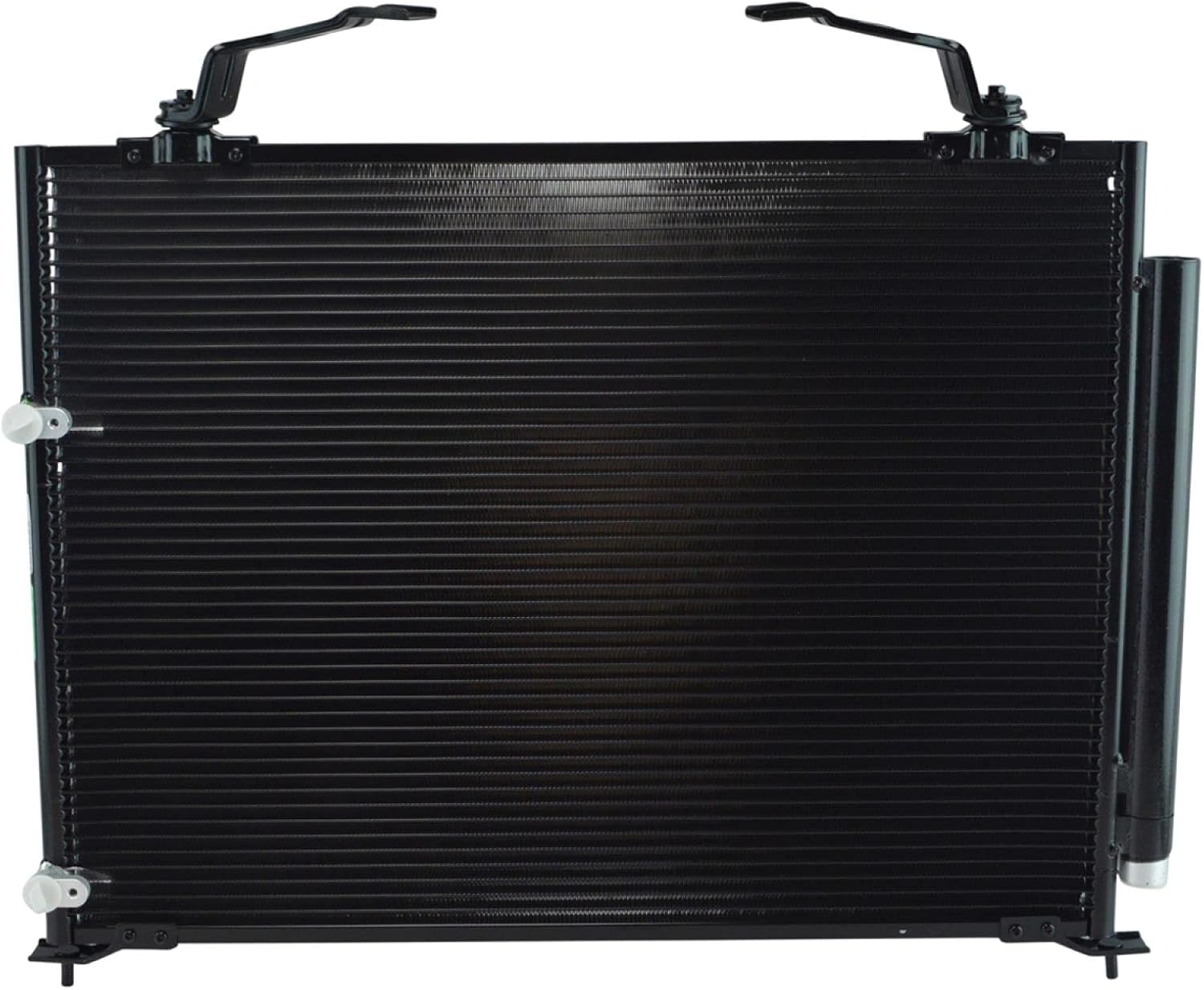
| Model | TRQ ACA84561 A/C Condenser and Receiver Drier Assembly |
|---|---|
| Core Material | Aluminum |
| Mounting Hardware Included | Yes |
| Fitment | Direct Fit Replacement |
This TRQ condenser arrives as a pre-assembled condenser and receiver drier intended as a direct replacement for affected Honda Pilot and Acura MDX models. It is typically used when the original condenser fails, leaks, or for A/C system overhauls; installers will bolt it into the vehicle, connect the lines, evacuate and recharge the refrigerant, and test system pressure. Notable features include an aluminum core, included mounting hardware, and a factory-style receiver drier integrated into the assembly to simplify installation and reduce leak points. In practice that means faster swaps and fewer separate parts to manage during a repair. Many buyers report solid fit and cold performance when installed correctly, though accurate fitment checks against your existing condenser are still important since orientation of fittings can vary between model years. This part leans toward DIY-friendly and shop use where a ready-to-install assembly saves time, but proper refrigerant handling and system evacuation are required during installation.
Best for: Balanced buyers who want a ready-to-install, factory-style replacement that saves install time and minimizes parts sourcing while restoring dependable A/C performance on the specified Honda Pilot models.
Less Ideal for: People looking for a universal or multi-vehicle condenser solution or those who prefer to reuse separate receiver drier components; also not for anyone who cannot or will not handle professional refrigerant service.
- Direct-fit pre-assembled condenser with receiver drier reduces installation steps.
- Aluminum core offers good thermal conductivity for effective cooling.
- Mounting hardware included so you can replace the unit without sourcing extra brackets.
- Designed to match factory-style connections to simplify line hookups.
- Fitment can vary by model year so verification against the existing condenser is necessary.
- Requires professional refrigerant evacuation and recharge to install correctly.
Verdict: A complete, direct-fit condenser plus receiver drier that makes replacing a failed A/C core on compatible Honda Pilot models faster and more straightforward.
2. Besuto AC Condenser for Honda Pilot 2009–2012 3.5 V6

| Brand | Besuto |
|---|---|
| Manufacturer | Besuto |
| Manufacturer Part Number | BES3771 |
This Besuto condenser replaces the factory unit on Honda Pilot 2009–2012 3.5 V6 models and is built to restore or improve air conditioning cooling by efficiently dissipating heat. It is typically used as a direct replacement during AC system repairs or when the original condenser is leaking or corroded. The unit is manufactured from aluminum, treated with a corrosion-resistant coating, and tested for pressure and heat resistance to help prevent refrigerant leaks and premature failure. For a performance-oriented owner, the condenser’s leak-proof seals and factory-quality fit aim to simplify installation and get the system back to optimal cooling quickly. Expect straightforward installation when existing mounting points and hose connections are standard; however the product does not include installation hardware or refrigerant service, so professional recharge and leak testing are still required. This condenser is a solid choice when you want a durable, replacement component that focuses on reliable cooling rather than aftermarket performance enhancements.
Best for: Performance-oriented buyers who prioritize restoring reliable, factory-level AC cooling on a Honda Pilot 2009–2012 3.5 V6 and value durability and tested components.
Less Ideal for: Customers seeking a high-performance or modified AC setup or those who prefer a condenser kit that includes hoses, fittings, and installation hardware should look elsewhere.
- Aluminum construction with corrosion-resistant coating improves longevity in moist or road-salt conditions
- Designed to match factory fit for Honda Pilot 2009–2012 3.5 V6 to simplify installation
- Factory-quality seals and pressure-tested design reduce the chance of refrigerant leaks
- Engineered for efficient heat dissipation to restore AC cooling performance
- No installation hardware or refrigerant recharge included, so additional service is required
- Not marketed as a performance-upgrade condenser beyond restoring factory cooling capacity
Verdict: A durable, factory-fit replacement condenser for Honda Pilot 2009–2012 3.5 V6 focused on reliable cooling and corrosion resistance.
3. Kool Vue A/C Condenser for Honda Pilot 2009–2015 (3.5L)
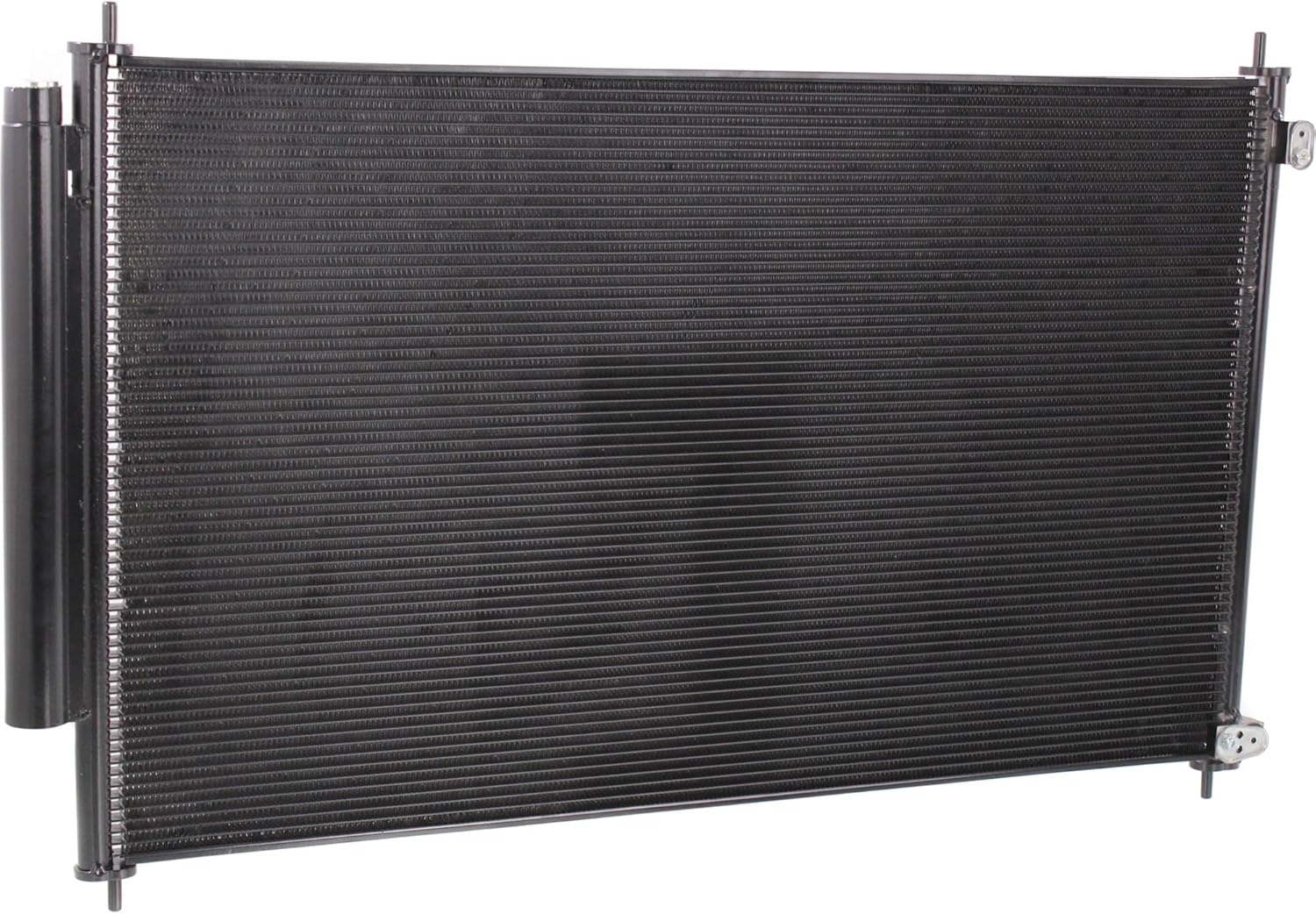
| Compatible vehicles | 2009–2015 Honda Pilot 3.5L |
|---|---|
| Core material | Aluminum |
| Manufacturer part number | KVAC3771 |
| OEM part number | 80110SZAA01 |
This Kool Vue A/C condenser is a direct-fit replacement intended for 2009–2015 Honda Pilot 3.5L applications. It replaces the vehicle's failed condenser to restore AC system cooling; typical use is a one-for-one swap during AC system repair or compressor replacement. The unit uses an aluminum core and is described as 100% fit and leak tested, which makes installation straightforward for a professional or experienced DIYer following standard AC service procedures. Practical benefits include a factory-style fitment that reduces modification time and a corrosion-resistant aluminum core for durable heat exchange. The condenser comes painted and includes manufacturer part references that match Honda interchange numbers, simplifying sourcing and verification. Limitations are that it is an aftermarket part so minor differences in mounting tabs or finish could require slight adjustment, and the listing only mentions a one-year limited warranty which may be shorter than some premium replacements. Buyers should plan for professional refrigerant evacuation and recharge when replacing this condenser.
Best for: Practical optimizers looking to restore AC performance without overspending, who prioritize a reliable, direct-fit replacement that minimizes shop time and parts hunting.
Less Ideal for: Buyers seeking extended factory-backed warranty coverage or cosmetically exact, brand-new factory parts should consider dealer-sourced replacements instead.
- Direct-fit design made for 2009–2015 Honda Pilot 3.5L to simplify installation
- Aluminum core built for efficient heat transfer and corrosion resistance
- Parts and interchange numbers provided for easy verification and matching
- Factory-style painted finish that integrates with engine bay appearance
- Warranty coverage is limited to one year
- Aftermarket components can have small fitment or finish variances compared with factory parts
Verdict: A cost-conscious, direct-fit aluminum condenser that restores AC cooling on 2009–2015 Honda Pilot 3.5L models with minimal fuss but carries only a one-year limited warranty.
4. AUTOSAVER88 A/C Condenser for Honda Pilot (3.5L V6)

| Core Size | 29.69" x 17.94" |
|---|---|
| OEM Part Numbers | 80100TZ5A01, 80100TZ5A02, 80100TG7A01 |
| Compatibility | Honda Pilot 2014–2022 3.5L V6 |
| Leak Test Pressure | 2.94 MPa (30 kgf/cm) for 1 minute |
This AUTOSAVER88 condenser is a budget-focused direct replacement for Honda Pilot 3.5L V6 models and is intended to bring the vehicle's air conditioning back to factory-quality cooling without a high price tag. It installs like a factory replacement and is built with brazed aluminum tubes and high-density multi-louvered fins to increase heat dissipation, which helps the cabin cool faster on hot days. The unit is packaged with corner foam to reduce shipping damage and the product is pressure-tested for leaks. In use it behaves like a standard condenser: connect the factory refrigerant lines, secure the mounting points, evacuate and recharge the system, then verify cooling performance. Limitations to expect at this price are occasional cosmetic handling marks out of the box and the absence of small consumables in the package that some installers expect, such as extra seals, so you should have replacement o-rings and fittings on hand during installation.
Best for: Budget-conscious Honda Pilot owners who want a cost-effective, direct-fit replacement to restore A/C cooling without paying for OE pricing or premium aftermarket options.
Less Ideal for: Owners seeking a premium performance condenser or a plug-and-play kit that includes all replacement seals and hardware should consider higher-end or fully furnished options.
- Direct-fit design for Honda Pilot 3.5L V6 model years listed, simplifying installation
- Brazed aluminum tubes and high-density multi-louvered fins increase cooling efficiency
- Passed air-tight leak test under high pressure, indicating good initial sealing
- Includes protective foam packaging to reduce transport damage
- May arrive with cosmetic bends or marks from shipping that can complicate installation
- Package does not include spare seals or small fittings that some installers expect
Verdict: A practical, wallet-friendly condenser that restores A/C performance on the Honda Pilot 3.5L V6 but bring your own seals and expect possible minor cosmetic shipping damage.
5. Garage-Pro A/C Condenser for Honda Pilot 2009–2015 3.5L
| Fitment | Honda Pilot 2009-2015 3.5L |
|---|---|
| Core | Aluminum core |
| Manufacturer Part Number | JCWKVAC3771GP |
| OEM Part Number | 80110SZAA01 |
This Garage-Pro condenser is a direct-fit replacement for the 2009–2015 Honda Pilot 3.5L, intended to restore proper air conditioning performance after a failed or leaking condenser. It installs in the stock location and pairs with existing A/C components like the compressor and clutch, making it suitable for do-it-yourself replacement or professional installation. The aluminum core construction helps with heat transfer and corrosion resistance compared with older copper designs. Notable practical benefits include matching manufacturer part numbers for fitment and a stated one-year warranty when purchased through the listed distributor. Buyers should be aware this is a single condenser unit without additional seals, O-rings, or refrigerant service; professional evacuation, recharge, and leak testing are still required. Fitment is limited to the specified Pilot engine and trims, so confirm vehicle compatibility before ordering.
Best for: Reliability-focused buyers who prioritize a factory-quality replacement to restore original A/C performance on a Honda Pilot and want a straightforward part that matches OEM fitment.
Less Ideal for: If you need a complete A/C repair kit with seals, dryer, or a long-term extended warranty, consider bundled kits or parts with broader coverage instead.
- Direct-fit replacement matched to Honda Pilot 2009–2015 3.5L applications for straightforward installation
- Aluminum core design for effective heat transfer and improved corrosion resistance
- Listed manufacturer and OEM part numbers facilitate correct part selection and compatibility
- Compatible with standard A/C system components allowing reuse of compressor and clutch when they are serviceable
- Does not include installation consumables or refrigerant so professional A/C service is required
- One-year warranty is limited and may require purchase through a specific distributor for coverage
Verdict: A direct-fit, aluminum-core condenser aimed at reliability-focused Honda Pilot owners who want a factory-quality replacement to restore A/C performance.
6. Spectra Premium A/C Condenser 7-4277

| Brand | Spectra Premium |
|---|---|
| Model | 7-4277 |
| Manufacturer Part Number | 7-4277 |
| OEM Part Number | 80100TZ5A02 |
This Spectra Premium condenser is a direct replacement intended to restore factory air conditioning performance on the Honda Pilot V6 3.5L. It installs in place of the original condenser and uses high-density fins and heavy-gauge mounting brackets to improve heat exchange and reduce vibration during use. The unit is nitrogen leak-tested at the factory to help ensure it arrives damage-free and ready for installation. In practice it suits routine condenser repairs where you want a like-for-like replacement rather than an upgrade: it should cool efficiently when paired with a properly charged system and functioning compressor. Limitations include the need to confirm exact model-year fitment before buying and that installation may still require professional evacuation and recharge of the A/C system. This part focuses on matching factory fit and cooling capacity rather than offering aftermarket performance gains.
Best for: Risk-averse mainstream buyers who prioritize restoring factory air conditioning performance with a proven direct-replacement part and minimal surprises during ownership.
Less Ideal for: Buyers seeking performance upgrades, universal fit parts, or DIYers who want to avoid professional A/C service should consider other options.
- Direct replacement designed to match factory fit and function for the Honda Pilot V6 3.5L
- High-density fins for improved heat exchange and cooling efficiency
- Nitrogen leak-tested to reduce the chance of shipping damage and leaks at installation
- Heavy-gauge mounting brackets to minimize movement and vibration after installation
- Requires professional evacuation and refrigerant recharge for proper installation and safety
- Compatibility must be verified for specific Pilot model years before purchase
Verdict: A reliable, factory-style condenser choice for Honda Pilot owners who want a like-for-like replacement to restore original A/C performance.
Choosing the Right Honda Pilot AC Condenser: Key Factors to Consider
Fitment and Mounting Compatibility
Correct fitment is essential because condensers must align with the Honda Pilot's factory mounting points and hose connections. Mismatched mounting tabs or misaligned ports can make installation difficult or lead to stress on hoses and fittings, causing premature leaks.
Look for condensers that list exact vehicle model years and confirm port types and locations. Consider whether the unit includes required brackets or if any factory components must be transferred. Proper fit reduces installation time and the risk of vibration-related failures.
Core Design and Heat-Exchange Efficiency
The condenser core determines how effectively refrigerant heat is transferred to passing air. Higher fin density and optimized tube layouts can improve cooling performance, but they also require adequate airflow from the radiator fan and engine bay openings.
Assess core thickness, fin spacing, and overall surface area relative to the available space in the Honda Pilot. A more efficient core can lower cabin temperatures faster and reduce compressor workload, but it must not overly restrict airflow or interfere with other under-hood components.
Materials and Corrosion Resistance
Condensers are exposed to road debris, moisture, and corrosive elements, so material quality and protective coatings matter. Aluminum cores and tanks are common, but the alloy quality, brazing technique, and presence of anti-corrosion coatings affect longevity.
Choose condensers with proven brazing or welding methods and surface treatments that limit pitting and galvanic corrosion. Improved corrosion resistance reduces the chance of leaks forming over time and extends service intervals.
Seal Quality and Leak Prevention
Seals and service port fittings are frequent failure points. The integrity of O-rings, threaded ports, and brazed joints directly impacts whether the system maintains refrigerant and oil charge.
Inspect whether replacement units include new service port gaskets or recommend O-ring sizes. Units built with robust joints and tight tolerances lower the likelihood of early refrigerant loss and reduce the chance of needing repeat repairs for leak-related failures.
Serviceability and Installation Ease
How easy the condenser is to install affects labor time and the potential for installation errors. Features that improve serviceability include accurate mounting holes, clearly labeled ports, and compatibility with standard hose fittings.
Consider whether the condenser requires special tools or extensive disassembly of neighboring components. Units that simplify hose connection, provide clear service access, and match factory orientation typically reduce installation time and the chance of improper reassembly.
Compatibility With Cooling System Dynamics
The condenser works with fans, the radiator, and the compressor, so its characteristics should suit the Honda Pilot's cooling system dynamics. Core thickness and airflow resistance can change how fans and the compressor interact under load.
Account for how a replacement condenser affects condenser-to-radiator spacing and airflow. A unit that preserves proper air pathways helps maintain consistent refrigerant condensation and overall AC performance during highway and stop-and-go driving.
How We Chose the Best Honda Pilot AC Condenser
We selected candidates that prioritize correct fitment, robust corrosion resistance, and efficient heat-exchange capacity for the Honda Pilot application. Our process emphasized condensers designed to match OEM mounting locations and hose interfaces, reliable brazed or welded joints to limit leaks, and core designs that balance cooling surface area with airflow clearance.Key evaluation criteria included mechanical fit and connector compatibility, core material and corrosion protection, fin density and airflow efficiency, durability of seals and service ports, and ease of installation including service access. We also considered manufacturing quality standards and warranty coverage as indicators of long-term reliability.We excluded units with unclear fitment information, nonstandard mounting configurations, or unverified construction methods. We did not include products lacking documented service port specifications or that require significant modification to install. The resulting shortlist focuses on condensers that reduce installation uncertainty and deliver predictable cooling performance for the Honda Pilot.
Our full evaluation process is outlined in our review methodology.
FAQ
What are common signs that a Honda Pilot AC condenser is failing?
Common signs include reduced cooling output, warm air from the vents, and visible oil or refrigerant residue on or near the condenser. You may also notice the AC clutch cycling more frequently or decreased system pressure readings during diagnosis. These symptoms often indicate restricted flow, leaking seals, or degraded core efficiency.
Can I replace the condenser myself on a Honda Pilot?
Many experienced DIYers can replace a condenser if they have the correct tools and follow proper procedures for recovering refrigerant and evacuating the system. The task typically involves removing front-end components, swapping the condenser, and then performing a vacuum and recharge. Because refrigerant handling requires certification in some areas, consider professional service if you are not equipped or certified.
How do I detect a condenser leak in my vehicle?
Leak detection methods often include visual inspection for oily residue, using UV dye and a black light, or employing electronic leak detectors that sense refrigerant. Pressure testing with dry nitrogen can also reveal leaks at joints. Using multiple methods helps confirm the source before replacing components.
Does a thicker condenser core always mean better cooling?
Not always. A thicker or denser core can offer more surface area for heat transfer, but only if the vehicle provides sufficient airflow to pass through the fins. If airflow is restricted, thicker cores can increase system pressure and reduce overall efficiency. Balance core design with available airflow and mounting constraints.
Should I replace O-rings and seals when installing a new condenser?
Yes. Replacing O-rings and seals during installation is a recommended practice because old seals may be deformed or hardened and can lead to leaks. Using correct-sized O-rings and proper refrigerant oil on seals helps ensure a reliable seal and long-term system integrity.
How long should a condenser last in normal driving conditions?
Condensers often last many years under normal conditions, but lifespan depends on exposure to road salt, debris impacts, and maintenance. With good corrosion protection and no physical damage, a condenser can remain serviceable for a decade or more. Regular inspections help identify issues before they cause system failure.
Conclusion
Prioritize fitment accuracy, seal integrity, and core efficiency when choosing a Honda Pilot AC condenser. Those factors most directly affect installation success, leak resistance, and how effectively the system restores cabin cooling.Weigh tradeoffs between a high-efficiency core and the available airflow, and make sure seals and service ports match the vehicle's specifications. Replacing related seals and verifying proper installation procedures will reduce the chance of repeat work and keep the AC system performing reliably.
Explore More:
- Check out all Honda Pilot parts & accessories
- Explore AC Condensers Maintenance & Repair Guides
- Explore HVAC
- Browse all Auto Parts
