

Note: This article contains affiliate links. If you click on these links and make a purchase, I may earn a small commission at no extra cost to you. This helps support my research and content. Read my full affiliate disclosure here.
When your Honda Pilot blower motor falters, cabin comfort and visibility can suffer. You want a unit that restores steady airflow, minimizes noise, and works with the vehicle electrical system without fuss. This guide highlights seven shortlisted blower motors chosen for proven fitment, dependable airflow, and manageable installation for typical DIYers and technicians.We evaluated candidates for airflow capacity, electrical compatibility, noise levels, and ease of replacement to help you narrow choices quickly. Read on to see the top picks and the key factors that should influence your decision.
Looking for other parts? See all Honda Pilot parts & accessories.
Top Picks at a Glance
| Best Reviewed A top-rated pick with lots of positive feedback | AEagle HVAC Blower Motor with Fan Cage, Direct Replacement |  |
| Most Popular A crowd favorite that many people choose with confidence | MAYASAF Blower Motor Assembly — Direct Fit Replacement |  |
| Best Quality Built to a higher standard if you want something more solid | LCWRGS Front HVAC Blower Motor Assembly with Fan (Model 700203) |  |
| Best Budget The cheapest option that still gets the job done reliably | OCPTY Front HVAC Heater Blower Motor with Fan Cage |  |
| Most Sold A high-volume bestseller chosen again and again | ECCPP HVAC Heater Blower Motor 700203 |  |
| Best Value for Money The sweet spot between price and what you get | A-NAFTULY AC Heater Blower Motor with Fan (Model 700203) |  |
| Best Overall The best all-around choice for most situations | Marsflex Front Blower Motor (Model APAC04004-MM) |  |
1. AEagle HVAC Blower Motor with Fan Cage, Direct Replacement

| Manufacturer | AEagle |
|---|---|
| Manufacturer Part Number | AEBM0049-BM1 |
| Compatible Model Mentioned | Honda Pilot (2009-2015) listed among compatible vehicles |
This AEagle blower motor is a direct replacement designed to restore proper cabin airflow and quiet HVAC performance. It comes with the fan cage preinstalled so installation is typically plug-and-play, requiring only basic removal of the glove box and a few fasteners on compatible vehicles. The motor is engineered to meet winding and RPM specifications and is intended to deliver consistent airflow across speeds with low noise. For a reliability-focused buyer, the practical benefits are straightforward: quick swap-in fitment, strong and steady airflow, and reduced likelihood of the intermittent noise and weak output associated with failing units. The unit is backed by reported long-term use in similar Hondas and installs without modifications in confirmed-fit vehicles. Limitations are that it is an aftermarket replacement rather than a factory part and replacing the blower motor relay or resistor at the same time is recommended to avoid unrelated failures; buyers should confirm exact year and trim compatibility before ordering.
Best for: Reliability-focused owners who prioritize restoring dependable, quiet HVAC performance with a straightforward replacement that minimizes downtime and installation fuss.
Less Ideal for: Buyers seeking an exact factory-sourced part or those who prefer a bundled solution that includes related electrical components should look elsewhere.
- Preinstalled fan cage speeds installation and avoids transferring parts from the old unit
- Designed to meet motor winding and RPM specifications for consistent airflow
- Plug-and-play electrical connection on compatible vehicles for straightforward replacement
- Reported quiet operation and solid build quality in long-term user reports
- Aftermarket unit rather than factory-original, so fitment must be verified for specific year/trim
- Does not include related items like relay or resistor which may also need replacement
Verdict A practical, reliability-focused replacement blower motor that simplifies installation with a preinstalled fan cage and returns consistent, quiet airflow when verified for your Pilot.
2. MAYASAF Blower Motor Assembly — Direct Fit Replacement

| Brand | MAYASAF |
|---|---|
| Manufacturer Part Number | MSFBMT8004 |
| Compatible Years | Fitment listed for 2007-2017 Ford Edge and various Honda models (see fitment) |
This MAYASAF blower motor assembly replaces a failed HVAC blower to move heated or cooled air through the ventilation system. It is sold as a direct-fit replacement for compatible model years and installs in place of the original motor to restore fan speeds and airflow. Users report an easy installation with matching wiring and mounting points, and many owners find it delivers strong airflow comparable to factory units while costing substantially less. The product is built to be durable for everyday use and will typically be installed by DIYers or technicians during routine HVAC repairs. Some buyers have noted variability between units, with a minority reporting higher noise or reduced top speed compared with factory-quality motors, so fit and performance can depend on the specific vehicle variant. In short, it is a budget-friendly way to get your climate system working again quickly, but you should verify exact fitment for your vehicle before installing.
Best for: Convenience-driven buyers who want a quick, lower-cost repair that restores HVAC function with minimal fuss and can install the part themselves or have a technician swap it in.
Less Ideal for: Those who prioritize an exact factory-level match for noise and maximum airflow or who prefer OEM parts from the dealer should consider factory replacements instead.
- Direct-fit replacement that matches common mounting points and wiring for compatible vehicles
- Restores HVAC airflow and fan speed control to return heating and cooling function
- Good value compared with factory replacement parts
- Many users report quiet operation and strong airflow after installation
- Some units reported louder operation or limited top-speed compared with factory-quality motors
- Fitment can vary by vehicle variant so verifying compatibility is necessary
Verdict A budget-friendly, direct-fit blower motor that restores HVAC operation quickly for drivers seeking a convenient repair, but verify fit and expect some variability in noise and top-speed performance.
3. LCWRGS Front HVAC Blower Motor Assembly with Fan (Model 700203)

| Manufacturer | LCWRGS |
|---|---|
| Model | 700203 Blower Motor |
| Manufacturer Part Number | 156343 |
| Compatible Years | 2009-2015 Honda Pilot |
This LCWRGS blower motor is a direct-fit replacement designed to restore airflow and eliminate noisy or weak fan operation on compatible Honda models. It ships as a complete blower assembly with the fan cage installed, so installation is typically a straightforward swap into the HVAC housing. The motor is described as built to meet or exceed factory-quality specifications with a balanced wheel and a silicon steel rotor plate to reduce friction and vibration, which translates to quieter running and longer service life compared with worn originals. In real-world use it delivers noticeably stronger airflow at high fan speeds and many buyers report a near-factory fit and easy installation. Limitations: the listing covers many vehicle applications but for this article focus is the Honda Pilot fitment range, so confirm the model year match before buying; also this is an aftermarket unit so long-term durability will vary with driving conditions and installation care. Expect improved airflow and reduced noise versus a failing factory blower, with typical DIY installation time under an hour if you are comfortable removing the glovebox or lower dash panels.
Best for: Performance-oriented buyers who want to restore or improve HVAC airflow and reduce fan noise on a Honda Pilot and prefer a direct replacement that aims for factory-level performance.
Less Ideal for: Buyers seeking factory-sourced OEM parts for guaranteed original-spec longevity or those unwilling to verify exact year/trim fitment should consider dealer parts or alternative sources.
- Complete assembly with fan cage for one-step replacement
- Designed to match factory-quality performance with balanced wheel for reduced vibration
- Reports of quiet operation and strong airflow at high speeds
- Fits specified Honda Pilot model years for direct-fit installation
- Aftermarket part so long-term durability can vary compared with factory-sourced parts
- Compatibility must be verified against the specific year and trim before purchase
Verdict A performance-oriented aftermarket blower assembly that restores airflow and reduces noise on compatible Honda Pilots, but confirm year fitment and accept aftermarket durability variability.
4. OCPTY Front HVAC Heater Blower Motor with Fan Cage

| Manufacturer | OCPTY |
|---|---|
| Compatible Models | 2001-2006 Acura MDX; 1998-2002 Honda Accord; 1999-2004 Honda Odyssey; 2003-2008 Honda Pilot |
| Manufacturer Part Number | 058381-5209-1129228231 |
| OEM Part Numbers | 79310S84A01, 15-80955, 615-58456, 79310S3VA01 |
This OCPTY front blower motor is a replacement assembly that includes the motor and pre-balanced fan wheel to make swapping a failed unit straightforward. It is intended to restore cabin airflow and eliminate noises from a worn blower on compatible Honda Pilot and related models; installation generally requires glovebox removal or access behind the dash and is the same process as replacing a factory blower. The listing emphasizes pre-testing for noise, vibration, start-up current and speed, and customers report tight fit and quiet operation after installation. Its main practical benefit is cost savings versus dealership parts while still supplying a complete motor plus fan so you avoid transferring the old wheel. Limitations are fitment sensitivity — you must verify vehicle year and part number before ordering — and some buyers reported fitment issues on non-listed vehicles, so confirm application for your specific Pilot model year.
Best for: Budget-conscious owners seeking an affordable, ready-to-install replacement blower to restore HVAC airflow and quiet operation on an older Honda Pilot.
Less Ideal for: Buyers who prefer dealer-sourced factory parts, extended warranties, or who are unwilling to confirm exact fitment before purchase should consider other options.
- Complete motor and fan cage included for faster installation
- Fan wheel is pre-balanced to reduce vibration and noise
- Seller reports inspection and testing for noise, speed and start-up performance
- Several buyers report direct fit and quieter operation compared with worn originals
- Requires careful fitment check by year and part number because not all vehicles share the same mounting pattern
- May need glovebox removal and tools to access hard-to-reach screws during installation
Verdict A cost-effective, complete blower motor and fan assembly that restores HVAC function for compatible Honda Pilot models if you confirm fitment beforehand.
5. ECCPP HVAC Heater Blower Motor 700203
| Voltage | 12 Volts |
|---|---|
| Manufacturer | ECCPP |
| Item model number | 058386-5211-1502201 |
| OEM Part Number | 615-00129 15-80644, 25770668, 5191345AA, 68048903AA, 700203 |
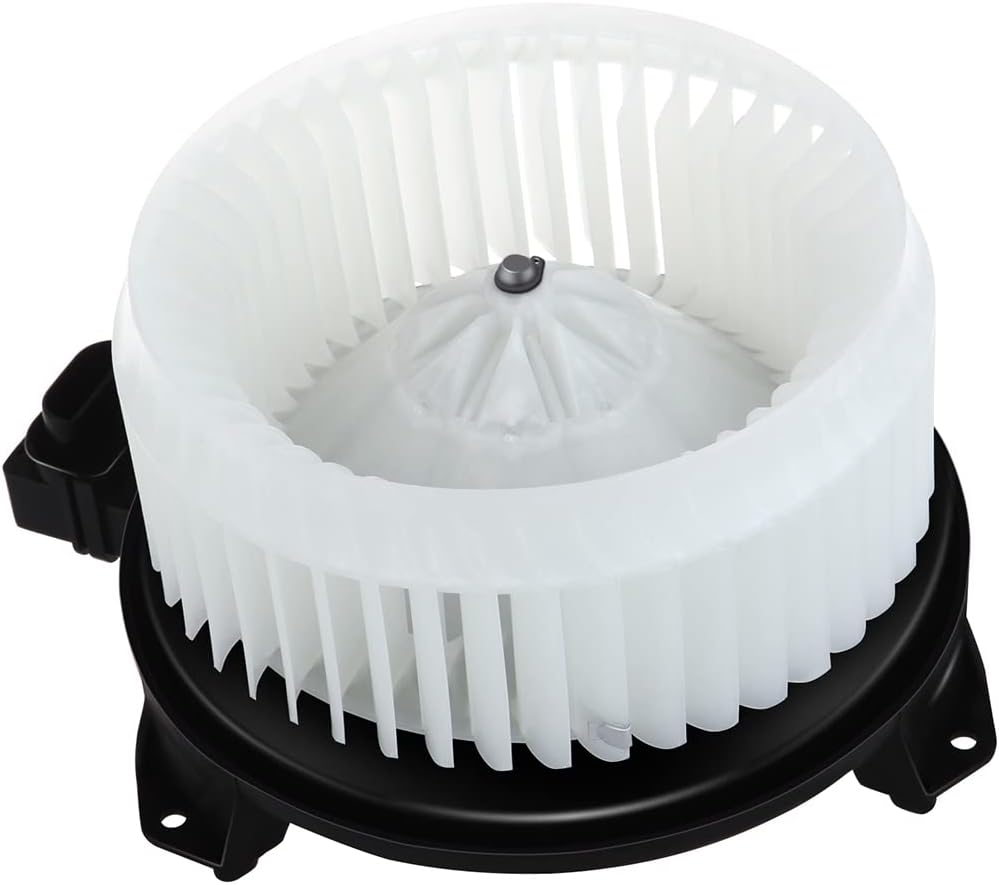
This ECCPP blower motor is a replacement HVAC unit intended to restore cabin airflow and eliminate noisy or failing factory blower motors. It installs in the blower housing and connects to the factory harness, so a typical DIY swap involves removing a few screws under the glovebox and plugging the motor into the existing electrical connector. Notable features called out by the manufacturer and users include a balanced rotor and copper enameled wire for consistent electrical performance, and a fan wheel that clears the housing for a factory-style fit. In practice it brings back stronger, steadier airflow and runs quietly compared with worn originals. Buyers should expect solid short-term value and an easy install, though long-term durability reports are mixed—some users experienced intermittent failures after weeks while others report years of trouble-free service. For a risk-averse buyer this unit is a reasonable budget-friendly option if you prefer a straightforward factory-replacement swap and are prepared to monitor initial performance after installation.
Best for: A cautious, risk-averse buyer who wants a low-cost, factory-style replacement to get a Honda Pilot HVAC blower working again without dealership service.
Less Ideal for: If you prioritize maximum long-term reliability and extended warranty coverage, consider higher-end or OEM-branded replacement motors instead.
- Designed for direct fit with factory mounting and electrical connector for easier installation
- Balanced rotor and construction aimed at steady electrical performance and reduced vibration
- Reportedly stronger airflow and lower noise compared with many worn original motors
- Some customers report premature intermittent failures on a minority of units
- No explicit long-term durability warranty information provided in the listing
Verdict A budget-friendly, direct-fit replacement that restores airflow and quiet operation in the Honda Pilot but has mixed reports on long-term durability.
6. A-NAFTULY AC Heater Blower Motor with Fan (Model 700203)

| Brand | A-NAFTULY |
|---|---|
| Model | ac blower motor |
| Manufacturer Part Number | AN70059 |
| Item model number | 700203, 15-80644, 25770668, 79310STKA41 |
This A-NAFTULY blower motor is an aftermarket replacement designed to restore cabin airflow and quiet noisy operation on affected vehicles. It installs as a direct replacement blower assembly and includes the fan cage, aiming for the same mounting points and electrical connection as the factory unit. In typical use it runs the HVAC fan speeds to move heated or cooled air through the dash vents; buyers report straightforward under-dash access and 20–30 minute DIY installs on similar vehicles when following online guides. Notable features called out by the manufacturer and customers include an upgraded impeller design for stronger airflow, an OE-like fitment, and a quiet running motor. Practical benefits are improved vent output and elimination of whining or rattling from a failing motor at a lower cost than dealer replacement. Limitations are typical of economy aftermarket parts: long-term durability is not proven beyond user reports and fitment requires verifying the exact factory part number for your Honda Pilot year and trim before purchase.
Best for: Practical optimizers who want a cost-effective DIY fix to restore HVAC performance on a Honda Pilot and prefer saving on repair costs rather than paying for dealer service.
Less Ideal for: Buyers who prioritize long-term proven longevity or factory-sourced parts and those who prefer professional shop installation and diagnostics should consider factory-quality replacements or dealer service.
- Direct replacement design intended to match factory mounting and electrical connections
- Improved impeller/fan cage design that users say increases airflow
- Runs quietly compared with failing original motors, reducing cabin noise
- Affordable aftermarket price compared with dealer replacement
- Includes fan cage and is packaged for DIY installation
- Long-term longevity is based on limited user reports rather than extended testing
- May require verification of part numbers to confirm exact fit for specific Honda Pilot model years
Verdict A budget-friendly, DIY-friendly blower motor that restores airflow and quiets a failing unit on a Honda Pilot, but buyers should confirm part-number fitment and accept limited long-term proof.
7. Marsflex Front Blower Motor (Model APAC04004-MM)

| Model Name | APAC04004-MM |
|---|---|
| Speed | 3050 RPM |
| Voltage | 12 Volts |
| Horsepower | 282 Watts |
| Wattage | 282 watts |
The Marsflex Front Blower Motor is a direct-replacement HVAC fan assembly intended to restore cabin airflow on Honda Pilot models covered by the fitment. It installs in the blower housing under the glovebox and connects to the factory wiring harness for a plug-and-play replacement. Key specs include a 12-volt design and a 3050 RPM nominal speed that translates to normal blower performance across fan-speed settings and consistent warm or cool air delivery. Buyers report it fits without modification and is relatively quiet compared with failed originals, though a few users note a slight whistle at the highest speed on some installations. The unit is lightweight and advertised as meeting the same specifications as the factory part, so it suits routine replacements after motor failure, excessive noise, or lost blower function. Keep in mind this is a vehicle-specific replacement, so confirm exact Pilot year and part cross-reference before ordering and expect basic hand tools and modest under-dash access for installation.
Best for: Balanced all-round buyers who want a reliable, straightforward replacement that restores HVAC function without upgrades or extra tuning.
Less Ideal for: Drivers seeking performance upgrades, noise-optimized aftermarket fans, or universal fit parts for multiple vehicle makes should look elsewhere.
- Designed for direct fit and plug-and-play connection with factory wiring on compatible Honda models
- Provides consistent airflow across fan speeds for heating and cooling restoration
- Reportedly quiet operation compared with many failed original motors
- Uses standard 12V electrical input and a common RPM range for reliable HVAC performance
- Some users report a faint whistle or howling sound at full speed on certain installations
- Not a universal blower; must confirm exact Honda Pilot year and part number before purchase
Verdict A practical, vehicle-specific replacement that restores HVAC airflow for Honda Pilot owners who want a reliable, no-frills swap.
Choosing the Right Honda Pilot Blower Motor: Key Factors to Consider
Airflow Capacity
Airflow capacity determines how effectively the blower moves air through the vents, which directly affects heating, cooling, and defogging performance. You should consider both peak and low-speed output since slow speeds often handle cabin circulation while higher speeds are needed for rapid defogging.
A motor with insufficient airflow can leave vents weak even if it runs quietly. Look for specifications or testing notes that indicate cubic feet per minute or qualitative performance across the fan range. Matching expected cabin airflow for the Honda Pilot ensures adequate climate control response in diverse conditions.
Electrical Compatibility
Electrical compatibility covers connector type, voltage draw, and compatibility with existing control modules or blower resistors. Choosing a motor that fits the factory plug and draws expected current reduces the chance of needing wiring changes or discovering control failures after installation.
Also consider whether the motor works with the vehicle's speed control system. Some motors have different internal designs that can affect how the blower resistor or control module regulates speeds. Ensuring a match minimizes troubleshooting and preserves original HVAC functionality.
Noise and Vibration
Noise and vibration are major comfort factors, especially on long drives. A quieter motor improves perceived build quality and reduces cabin fatigue. Evaluate reported noise at low, medium, and high settings because some motors hum quietly at low speed yet become noticeably louder at higher RPMs.
Vibration can indicate imbalance or poor mounting design and may transmit through ducts into the cabin. Look for motors with balanced fans, robust bearings, and secure mounting points to keep noise and vibration to a minimum.
Durability and Construction
Durability influences how long the replacement will reliably operate, especially in climates with heavy HVAC use. Consider materials such as bearing type, rotor quality, and housing robustness. Sealed bearings and heat-resistant windings typically last longer under repeated thermal cycles.
A well-constructed motor also resists dust and humidity intrusion, which matter for a component exposed to cabin air and filter bypass. Longevity reduces the likelihood of repeat repairs and protects other HVAC components from stress caused by a failing blower.
Ease of Installation
Installation ease affects whether you can perform the replacement yourself or need professional help. Factors include access to the blower housing, whether any dash panels must be removed, and how the motor mounts and connects. Motors that reuse factory fasteners and connectors streamline the task.
Also consider whether basic hand tools suffice and if instructions or online guides are readily available. A design that minimizes disassembly time lowers labor costs and reduces the chance of installation-related issues.
Control and Speed Range
Control and available speed steps impact how well you can fine-tune ventilation. Some motors respond smoothly across a broad range of speeds while others feel stepped or uneven. Consider how the motor interacts with the cabin blower control and resistor network.
Good speed modulation aids comfort and prevents abrupt airflow changes. Ensuring the replacement preserves the original speed characteristics keeps the HVAC system intuitive to operate and effective across weather conditions.
FAQ
What are common symptoms of a failing blower motor in a Honda Pilot?
Common symptoms include weak or no airflow from the vents, unusual noise such as whines or rattles, and intermittent operation across speed settings. You might also notice that the blower works on some speeds but not others, which often points to electrical issues or partial motor failure. Observing these signs early helps you diagnose whether the motor, resistor, or wiring needs attention.
How do I know if the problem is the blower motor or the resistor?
If the blower works at high speed but not at lower speeds, the resistor or speed control circuit is often the cause. If the blower does not run at any speed or makes grinding noises, the motor itself is more likely faulty. Testing with a multimeter and checking for power at the motor connector can help distinguish between resistor, motor, and wiring faults.
Can I replace the blower motor myself, and how difficult is the job?
Many owners can replace the blower motor with basic hand tools if they are comfortable removing a few interior panels and accessing the blower housing. Difficulty varies by model year and the blower's location, but common tasks include disconnecting electrical connectors and removing mounting screws. If you are unsure, consult a repair manual or seek professional help to avoid damaging interior trim or electrical components.
Will a new blower motor reduce cabin noise?
A properly matched and balanced replacement motor often reduces noise compared with a worn unit. Noise reduction depends on motor construction, bearing condition, and fan balance. While a new motor can be noticeably quieter, persistent rattles or airflow whines might originate from ducts or mounting hardware rather than the motor itself.
Are there any installation precautions I should follow?
Always disconnect the vehicle battery before working on HVAC electrical components to avoid shorts. Take care to note connector orientations and retain any factory fasteners for secure reinstallation. Inspect the blower housing and resistor area for debris before installing the new motor to prevent premature wear or noise.
How long do replacement blower motors typically last?
Lifespan varies with usage patterns and operating conditions but replacement blower motors often last several years under normal use. Factors such as heavy HVAC use, exposure to dust, and operating at high speeds frequently can shorten service life. Regular cabin air filter maintenance and keeping the blower area clean can help extend motor longevity.
How We Chose the Best Honda Pilot Blower Motor
We focused on components designed specifically for the Honda Pilot and evaluated each option across four to six concrete dimensions that matter to owners. Primary criteria included airflow performance under load, electrical and plug compatibility with factory connectors, and noise characteristics at common speed settings. We also considered durability factors such as motor construction and expected operating life, and installation ease including access to mounting points and whether common hand tools suffice.Units that required extensive wiring modification, custom fitment, or nonstandard control adaptors were excluded. We did not include universal or generic blower motors without clear fitment documentation for the Honda Pilot. Our shortlist prioritizes parts that balance reliable airflow, quiet operation, and straightforward replacement for both DIY repairs and professional installation.
Our full evaluation process is outlined in our review methodology.
Conclusion
When selecting a Honda Pilot blower motor, prioritize units that balance strong airflow with electrical compatibility and quiet operation. Consider how installation complexity and motor construction affect both immediate fitment and long-term durability.Tradeoffs are inevitable: a very quiet motor may have different speed feel, and a high-output motor may demand more current. Focus on matching the motor to your priorities for airflow, noise, and ease of replacement to get the most reliable outcome for your Pilot.
Explore More:
- Check out all Honda Pilot parts & accessories
- Explore Blower Motors Maintenance & Repair Guides
- Explore HVAC
- Browse all Auto Parts
