

Note: This article contains affiliate links. If you click on these links and make a purchase, I may earn a small commission at no extra cost to you. This helps support my research and content. Read my full affiliate disclosure here.
If you drive a Honda Civic Si, the cabin air filter plays an outsized role in cabin comfort and HVAC performance. A clogged or low-quality filter can reduce airflow, strain the blower motor, and let pollen, dust, and odors circulate through the vents. Choosing the right Civic Si cabin air filter helps keep the interior air cleaner and maintains consistent heating and cooling performance.This guide covers seven shortlisted cabin air filters that suit the Honda Civic Si, explains the criteria used to evaluate them, and walks through what matters when replacing the filter. Read on to understand the filtration, fitment, and durability considerations that matter for your Civic Si and how to approach installation and maintenance.
Looking for other parts? See all Honda Civic parts & accessories.
Top Picks at a Glance
| Best Overall The best all-around choice for most situations | ECOGARD XC36080 Cabin Air Filter |  |
| Best Quality Built to a higher standard if you want something more solid | K&N Lifetime Washable Cabin Air Filter VF2033 |  |
| Best Value The sweet spot between price and what you get | ZEZUT Cabin Air Filter CF11182 with Activated Carbon |  |
| Best Budget The cheapest option that still gets the job done reliably | Carory Cabin Air Filter with Activated Carbon, CF182 |  |
| Highest Rated A top-rated pick with lots of positive feedback | SPEARHEAD Breathe Easy Activated Carbon Cabin Air Filter (BE-182) |  |
| Most Popular A crowd favorite that many people choose with confidence | EPAuto CP182 Cabin Air Filter (Fits select Honda/Acura models) |  |
| Best Seller A high-volume bestseller chosen again and again | Puroma 2-Pack Cabin Air Filter with Activated Charcoal (Replacement for CP182) |  |
1. ECOGARD XC36080 Cabin Air Filter

| Part Number | XC36080 |
|---|---|
| Material | Paper |
| Included Components | One Cabin Air Filter |
| Fits Models | Select Honda and Acura models (see manufacturer fitment) |
The ECOGARD XC36080 is a straightforward replacement cabin air filter that improves in-car air quality by trapping dust, pollen, pet dander, and similar contaminants before they enter the cabin. It is used exactly like other panel-style cabin filters: remove the old element from the HVAC intake, seat the new filter with the airflow arrow oriented correctly, and close the cover — most installs take only a few minutes. The filter media is paper-based and the manufacturer claims high filtering efficiency and reduced odors; customers commonly report a good fit in Honda Civic and CR-V models and noticeably fresher air after changing. Practical benefits include protecting the HVAC blower from premature wear and maintaining smooth airflow. The main limitations are that the material is a basic paper media rather than a multi-layer or activated-carbon design, so it may not remove odors or the finest fumes as well as premium filters, and a tight fit in some housings can require a little extra force during installation.
Best for: Buyers seeking a reliable, affordable cabin filter that restores fresh airflow and protects the HVAC system with minimal fuss and DIY-friendly installation.
Less Ideal for: People who prioritize odor removal or advanced pollutant capture should consider filters with activated carbon or multi-layer media instead.
- Designed to fit Honda cabin housings for listed model years so replacement is usually simple
- Captures common airborne contaminants such as dust, pollen, and pet dander
- Helps preserve HVAC blower and maintain steady airflow
- Paper media provides dependable filtration at a budget-friendly cost
- Uses basic paper media rather than activated carbon or multi-layer odor-absorbing layers
Verdict: A cost-effective, easy-to-install replacement filter that restores cabin air quality and protects the HVAC system for Honda Civic and similar models.
2. K&N Lifetime Washable Cabin Air Filter VF2033

| Manufacturer | K&N Engineering |
|---|---|
| Part Number | VF2033 |
| Material | Polyurethane |
| Warranty Description | 10 Years – 100,000 Miles |
The K&N Lifetime Washable Cabin Air Filter replaces disposable cabin filters with a multi-layer, washable element that is pretreated to help control odors and maintain airflow. Installation is simple and usually drops into the factory air box in a few minutes. In daily use the filter tends to preserve or slightly improve HVAC airflow compared with paper filters, which helps heating and cooling feel more responsive and can reduce strain on the blower. The washable polyurethane media cleans easily with low-pressure water and periodic rinses restore performance instead of throwing the filter away. Practical benefits include long-term cost savings and less landfill waste while retaining cabin protection from dust and common pollutants. Important limitations are the higher upfront cost versus disposable filters and the need for occasional cleaning to maintain peak performance; a handful of users reported minor fitment tweaks on some vehicles. For a performance-minded Civic Si driver who wants maintained airflow and a durable, reusable part, this is a solid upgrade.
Best for: Drivers focused on maintaining strong HVAC airflow and reducing recurring maintenance costs who are willing to clean the filter periodically to keep performance optimal.
Less Ideal for: Buyers who prefer a low-cost, maintenance-free replacement they can swap out and forget should stick with disposable filters.
- Washable, reusable design intended to last the life of the vehicle
- Pre-treated media helps reduce musty odors
- Can improve or preserve HVAC airflow for better heating and cooling response
- Easy to install with a drop-in fit for compatible vehicles
- Higher initial purchase cost than disposable cabin filters
- Requires periodic cleaning to maintain filtration and airflow
Verdict: Choose this washable K&N cabin filter if you want to preserve or improve airflow and avoid repeated filter purchases for your Civic Si.
3. ZEZUT Cabin Air Filter CF11182 with Activated Carbon

| Compatible Devices | Honda CR-V, Civic, Accord, Odyssey, HR-V, Clarity, CR-Z, Fit, Insight, Acura MDX, RDX, TLX, Integra |
|---|---|
| Material Type | Honeycomb Structure, Activated Carbon Beads |
| Air Filter Construction | Pleated |
| Product Grade | new |
This ZEZUT cabin air filter is a factory-replacement style pleated filter infused with activated carbon beads to capture fine particles and neutralize odors inside the cabin. It is typically used as a direct-fit replacement during routine HVAC maintenance and the pleated, high-density nonwoven media plus honeycomb-structured carbon offer stronger filtration than basic paper elements. Practical benefits include HEPA-standard particle capture for improved air quality and a sturdy frame that resists deformation during installation. The filter ships in thick cardboard packaging and is sized for a quick swap that most owners can complete in about 10 minutes. Limitations to consider are that fitment is specific to certain Honda and Acura model years listed by the maker, so confirm compatibility before buying, and while activated carbon helps with many odors it will not permanently remove heavy or ongoing sources of contamination. For owners prioritizing cleaner cabin air and reduced smells without changing ventilation performance, this is a solid budget-minded option.
Best for: Drivers who want a no-fuss, higher-filtration cabin filter to noticeably cut dust and common smells without upgrading HVAC components and who value a reliable, easy installation.
Less Ideal for: People seeking a universal filter for multiple vehicle makes or those needing specialized filtration for chemical or industrial contaminants should look for different products.
- Activated carbon beads help reduce cigarette, pet, and other common cabin odors
- Pleated high-density nonwoven media offers strong particle capture meeting HEPA-standard claims
- Sturdy plastic frame and thick cardboard packaging reduce risk of damage during shipping
- Easy, direct-fit installation designed for a quick swap during routine maintenance
- Compatibility limited to specific Honda and Acura model years so must verify fit before purchase
- Activated carbon reduces odors but will not eliminate continuous or very strong sources
Verdict: A practical, direct-fit cabin filter that improves particle filtration and reduces common odors for Honda Civic Si owners who want better in-cabin air with minimal fuss.
4. Carory Cabin Air Filter with Activated Carbon, CF182

| Compatible models | Honda and Acura models listed in product details |
|---|---|
| Reference numbers | Multiple OEM reference and cross-reference numbers provided |
| Part number | CF182 |
This Carory cabin air filter is a direct replacement-style filter that uses activated carbon to reduce odors and capture dust and pollen inside the vehicle cabin. It is installed behind the glovebox and is intended for routine maintenance to restore air flow and cabin comfort. The filter lists compatibility with many Honda and Acura model years and reference part numbers, which simplifies cross-referencing for fitment. Activated carbon helps with smoke and odor control in addition to basic particulate filtration, so drivers who commute in traffic or park near sources of smells will notice fresher air. The design appears to match factory replacement dimensions and should be swapped every 12,000 to 20,000 miles depending on driving conditions. Keep in mind this is a single aftermarket filter without any installation hardware or special tools, and the filtration performance depends on proper fit and periodic replacement rather than advanced multi-stage systems.
Best for: Drivers looking for an inexpensive, no-frills replacement cabin filter that improves cabin air odor and basic dust filtration and who prioritize low cost and easy maintenance.
Less Ideal for: People seeking HEPA-level filtration or specialized allergen control should consider higher-grade filters with explicit high-efficiency particulate ratings.
- Activated carbon layer helps reduce odors and light fumes in the cabin
- Broad list of Honda and Acura reference numbers simplifies fitment checks
- Matches factory replacement form factor for straightforward glovebox installation
- Affordable single-unit option suitable for regular maintenance intervals
- Performance limited to standard particulate and odor reduction rather than high-efficiency multi-stage filtration
Verdict: A budget-friendly activated carbon cabin filter that restores basic particulate and odor control for routine Honda cabin maintenance.
5. SPEARHEAD Breathe Easy Activated Carbon Cabin Air Filter (BE-182)

| Material Type | Electrostatic Filter Media |
|---|---|
| Air Filter Construction | Pleated |
| Unit Count | 1.0 Count |
| Product Grade | High |
The SPEARHEAD Breathe Easy BE-182 is a replacement cabin air filter that combines thick electrostatic pleated media with real coconut shell activated carbon to capture dust, pollen, exhaust fumes, and odors before they enter the cabin. It is typically used as a periodic maintenance item behind the glovebox and is sized to fit many Honda applications listed for the part. Notable features include denser, industrial-strength electrostatic media for finer particle capture and an infused activated carbon layer for gas and odor adsorption. The manufacturer rates the filter for up to 15,000 miles of service, which is about 25 percent longer than a standard 12,000-mile interval, reducing replacement frequency for drivers focused on low-maintenance reliability. Installation is a simple DIY task with the included instructions. The thicker media improves filtration but can slightly restrict airflow compared with minimal media filters, so drivers who prioritize maximum HVAC flow may notice a small difference in fan effort at high blower settings.
Best for: Drivers who prioritize reliable, longer-lasting cabin air filtration and want a low-maintenance replacement that reduces odors and particle exposure on regular commutes.
Less Ideal for: People who need maximum HVAC airflow or who swap filters very frequently for performance reasons should look at more open, high-flow options instead.
- Activated carbon layer adsorbs odors and fumes as well as particulates
- Thick electrostatic pleated media captures finer particles than standard filters
- Rated up to 15,000 miles for longer replacement intervals
- Easy DIY installation with included instructions
- Denser media can modestly reduce airflow compared with lighter filters
Verdict: A durable, longer-life activated carbon cabin filter that reduces odors and particle exposure for drivers who want dependable, low-maintenance in-cabin air quality.
6. EPAuto CP182 Cabin Air Filter (Fits select Honda/Acura models)
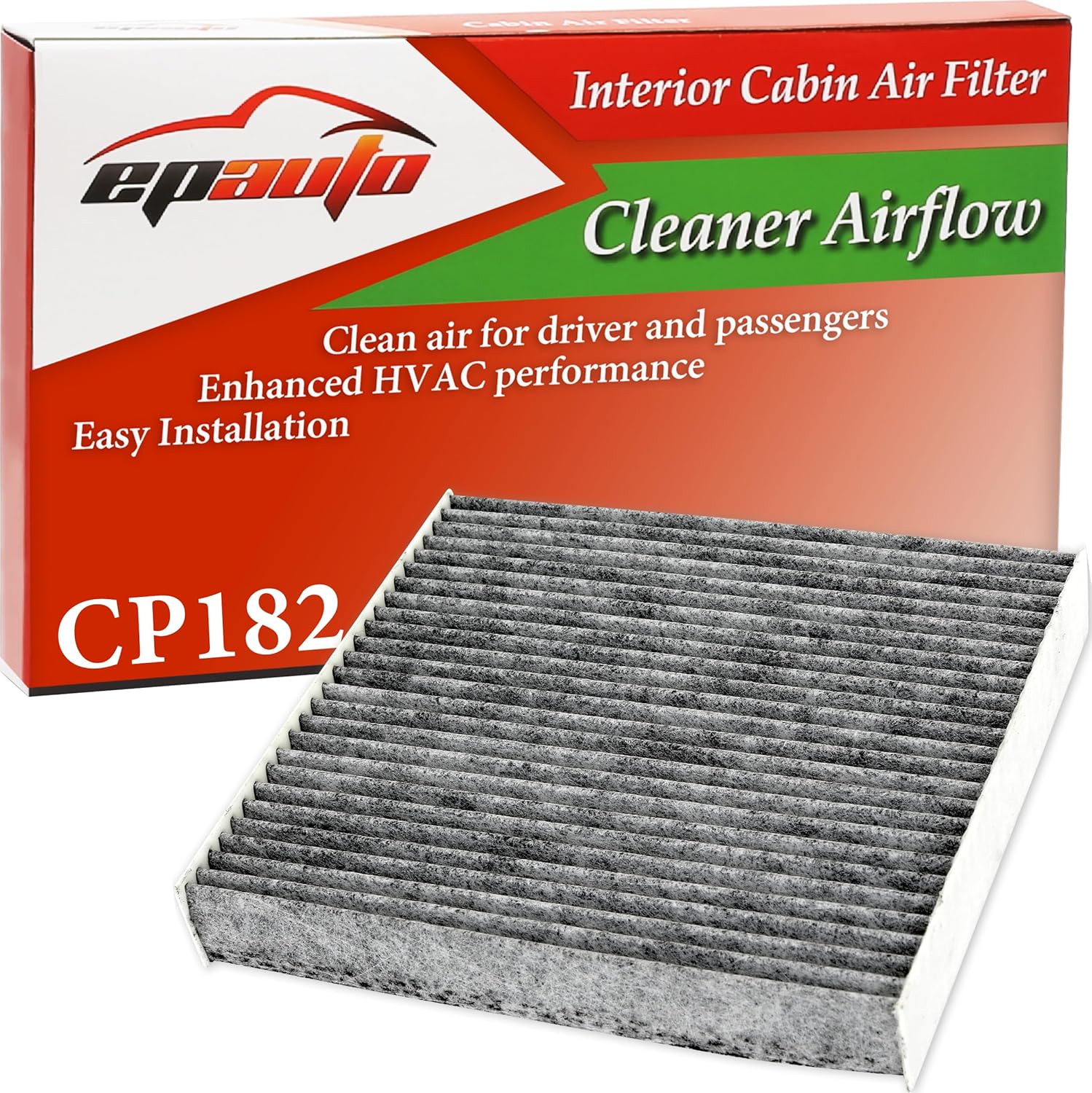
| Compatible models | Select Honda and Acura models (see listing) 2009-2025 range noted |
|---|---|
| Replacement for | FRAM CF11182 / Honda part 80292-TBA-A11 |
| Recommended replacement interval | Every 12 months or 12,000 miles |
The EPAuto CP182 is a straightforward cabin air filter designed to replace the factory unit in compatible Honda and Acura vehicles. Installation is simple: drop the glove box, remove the access cover and slide the old filter out, so most owners can change it themselves in a few minutes. The filter uses activated carbon to help reduce odors and common airborne irritants, which can noticeably improve cabin air and HVAC performance between changes. Its fit is generally good for the listed models and many buyers report OEM-like fit and durability at a lower cost than dealer parts. A few users noted trim or a tight fit on some late-model vehicles, so allow a little patience when seating it. Replace annually or around 12,000 miles for consistent airflow and odor control. If you want a no-frills, budget-friendly replacement that improves in-cabin air and is DIY-friendly, this unit delivers.
Best for: Buyers who prioritize proven user feedback and want an inexpensive, easy-to-install filter that restores cabin air quality without paying dealer prices.
Less Ideal for: If you require an exact factory match or have a vehicle not listed in the compatibility chart, choose a manufacturer-specified OEM replacement instead.
- Activated carbon layer reduces odors and common irritants
- Easy, glove-box-access installation suitable for DIY replacement
- Compatible with many recent Honda and Acura models listed by the manufacturer
- Affordable alternative to dealer cabin filters with many positive user reports
- Some buyers reported a slightly tight fit or needing minor trimming on certain model years
Verdict: A budget-friendly, carbon-filter replacement that improves cabin air and is backed by many positive user experiences, making it a reliable DIY option for Civic owners focused on proven performance.
7. Puroma 2-Pack Cabin Air Filter with Activated Charcoal (Replacement for CP182)

| Item model number | 80291-T5R-A01 |
|---|---|
| Manufacturer Part Number | HCF182 |
| Compatible vehicles | Honda and Acura models listed for CP182 fitment |
| Pack quantity | 2 filters |
This Puroma two-pack cabin air filter replaces the factory cabin filter in compatible Honda and Acura models and adds an activated charcoal layer to help reduce odors. It installs in the factory housing in minutes using the airflow arrow as a guide and is intended for routine maintenance to keep HVAC airflow clear and cabin air fresher. The filter uses a close-meshed non-woven layer to trap dust and particulates while the activated carbon helps capture smells from smoke and food. Buyers report a precise fit and straightforward install across Civic, CR-V, Odyssey and other listed models. The practical benefit is lower-cost, twice-per-purchase replacement compared with dealer parts and simple DIY serviceability. Limits to expect are a midrange build where pleat density is not premium-grade and filtration performance is adequate for everyday use but not targeted at severe allergy or clean-room level filtration. Follow the recommended replacement interval for best results, especially in polluted or dusty driving conditions.
Best for: Buyers who prioritize an affordable, reliable factory-fit replacement that is easy to install and reduces common cabin odors without needing premium medical-grade filtration.
Less Ideal for: Drivers who need the highest possible particulate or allergen filtration from specialty brands or those who prefer thicker, premium pleat construction for long service intervals.
- Activated charcoal layer helps reduce cabin odors
- Designed to match OEM fit and drop into factory housing for easy DIY install
- Sold as a two-pack for convenient routine replacement and value
- Close-meshed non-woven layer captures dust and particulates to protect HVAC flow
- Pleat density and build feel are midrange compared with premium aftermarket or high-efficiency filters
Verdict: A practical, wallet-friendly two-pack that delivers factory-fit replacement and odor control for routine cabin air maintenance on compatible Honda Civic Si models.
Choosing the Right Honda Civic Si Cabin Air Filter: Key Factors to Consider
Filtration Efficiency And Media Type
The primary job of a cabin air filter is to trap airborne particles that enter the HVAC system. Filters with multi-layer media capture a broader range of particle sizes including pollen, road dust, and fine particulate matter.
Activated carbon or odor-adsorbing layers are valuable if you frequently drive in areas with exhaust, food odors, or smoke because they reduce volatile organic compounds and nuisance smells. For Civic Si owners with allergies, prioritize higher MERV-equivalent performance or multi-layer electrostatically charged media to improve pollen and allergen capture without excessive airflow restriction.
Fitment And Seal Integrity
A filter that fits precisely in the Civic Si housing prevents unfiltered air from bypassing the media. Correct shape, edge sealing, and gasket condition matter because even a high-efficiency filter will underperform if air slips around it.
Look for filters labeled for the Civic Si or that list exact part numbers or dimensions matching the factory element. Durable frame materials resist collapse or warping during installation, ensuring the seal stays intact over the service interval.
Airflow Resistance And HVAC Impact
All filters create some resistance to airflow. Excessive pressure drop can reduce cabin airflow, make the HVAC system work harder, and potentially decrease defogging and heating efficiency in cold weather.
Choose filters that balance particulate capture with low resistance. Manufacturers sometimes publish pressure-drop data; when that is unavailable, look for claims about maintaining factory airflow or test-based performance metrics. For the Civic Si, preserving blower efficiency helps maintain consistent vent output under all fan speeds.
Durability And Moisture Resistance
Filters sit in a location exposed to temperature swings and occasionally moisture from wet shoes, wind-driven rain, or high humidity. Media and frame materials should resist sagging, deterioration, and mold growth over the recommended service life.
Longer-lasting media reduces replacement frequency but must still maintain filtration performance as it loads with debris. Civic Si owners who drive in coastal or humid climates should favor moisture-resistant constructions to avoid media breakdown between service intervals.
Installation Ease And Serviceability
Many Civic Si owners change the cabin air filter themselves. Filters designed for straightforward removal and replacement, with clear orientation markings and durable frames, make the job faster and reduce the chance of incorrect installation.
Consider whether the filter includes installation instructions or whether the vendor provides diagrams for the Civic Si. A filter that snaps into place without trimming lowers the risk of gaps or misalignment that can compromise performance.
Value And Replacement Interval
Value is not only about initial cost but also how long the filter maintains useful filtration. A lower-cost filter that needs changing twice as often can cost more in time and waste long term.
Evaluate the recommended service interval, expected performance retention as the filter loads, and the overall balance between upfront cost and longevity. For Civic Si owners who keep their cars for many years, choosing a filter with reliable long-term performance can reduce maintenance hassle and maintain cabin comfort.
When To Replace Your Civic Si Cabin Air Filter
Replacement intervals depend on driving conditions, climate, and how often you use the HVAC system. Typical guidance suggests inspecting the filter at regular service intervals and replacing it yearly or every 12,000 to 15,000 miles under normal conditions, but heavy urban traffic, dusty roads, or frequent pollen seasons warrant earlier replacement.
If you notice reduced airflow, persistent odors, or visible dirt and debris on the element, those are practical signs it is time to replace the filter. Regular visual checks make it easy to adapt the interval to your driving environment instead of relying solely on a calendar schedule.
- Inspect the filter when performing routine cabin or HVAC maintenance.
- Replace immediately if the media is visibly clogged, torn, or waterlogged.
- Shorten intervals during pollen season or after long trips on dirt roads.
Common Cabin Air Filter Symptoms And Troubleshooting
Recognizing early symptoms helps determine whether the issue is the filter or another HVAC component. Typical filter-related complaints include decreased blower output, musty or exhaust-like odors from the vents, and faster dust buildup on interior surfaces.
If you experience these symptoms, remove the filter and inspect it for debris, discoloration, and airflow restriction. If the filter appears sound but symptoms persist, check for clogged intake screens and ensure the cabin intake door and ducting are clear of leaves and debris.
- Reduced airflow at all fan speeds may indicate a clogged filter.
- Musty or mildew smells can signal a damp, contaminated filter or moisture trapped in the HVAC housing.
- A sudden change in air quality after a heavy pollen event usually means the filter reached capacity.
How To Change The Cabin Air Filter In A Civic Si
Replacing the filter is generally a straightforward maintenance task for Civic Si owners. The cabin filter housing is accessible from the glovebox area or under the cowl depending on the model year, and it is designed for simple element swaps without specialized tools.
Before starting, verify the correct filter orientation and have a clean shop rag to catch loose debris. Work carefully to avoid dislodging accumulated leaves or dirt into the HVAC intake. Reinstall the housing cover securely to preserve the seal and prevent unfiltered air from entering the system.
- Park on level ground and set the parking brake before opening the glovebox or cowl.
- Note the airflow directional arrow on the filter and install it in the same orientation.
- Dispose of the old filter responsibly and wipe out loose debris from the housing before inserting the new element.
Filter Sizes And Fitment Notes For The Civic Si
While many filters are direct-fit drop-in replacements, confirming the correct size and frame profile ensures proper seating. The Civic Si uses a specific element size and pleat depth to match the intake housing and provide the intended surface area for filtration.
When shopping, compare dimensions and pleat count rather than relying on generic descriptions. Filters that list the Civic Si explicitly and provide dimensional data reduce the chance of ordering the wrong element for your vehicle.
- Confirm length, width, and thickness match the Civic Si housing specs.
- Check pleat depth and frame stiffness to ensure the element will not compress under installation.
- Avoid universal trim-to-fit options unless you are prepared to verify fit and seal after installation.
Activated Carbon And Odor Control Considerations
If you regularly encounter city exhaust, gasoline odors, or cigarette smoke, an activated carbon layer can measurably reduce these nuisance smells. Carbon media adsorbs volatile molecules before they enter the cabin and can improve perceived air quality during commutes.
Understand that carbon layers add some cost and may slightly increase airflow resistance. Decide whether odor control is worth the tradeoff for your typical driving conditions. For drivers without significant odor exposure, high-efficiency particle filtration alone may be sufficient.
- Carbon filters help with odors but can marginally increase pressure drop.
- Consider carbon if you often drive in traffic or park near busy streets.
- Carbon layers do not replace the need for proper filter replacement intervals.
Still looking for the perfect fit?
Select your Honda Civic configuration to see the most relevant Cabin Air Filters recommendations
How We Chose the Best Honda Civic Si Cabin Air Filter
Our selection prioritized fitment accuracy and filtration performance specific to the Honda Civic Si. We focused on filters sized and profiled to match the Civic Si cabin housing and seal correctly to prevent bypass. Filtration media was assessed for particle capture efficiency across fine dust and pollen, plus whether activated carbon layers were present to reduce common cabin odors.Durability and service life were weighted by recommended replacement intervals and resistance to moisture and debris loading. We also considered factors that affect HVAC function such as airflow restriction and pressure drop to avoid excessive blower strain. Ease of installation and availability of clear fitment guidance were included to help owners who replace the filter themselves.Items were excluded if they lacked clear fitment specifications for the Civic Si, did not disclose filtration media details, or were intended for universal trimming rather than direct-fit housings. The final list reflects products that balance filtration, airflow, longevity, and precise compatibility with the Civic Si cabin filter compartment.
Our full evaluation process is outlined in our review methodology.
FAQ
How often should I replace the cabin air filter in my Civic Si?
It depends on driving conditions, but a common guideline is every 12,000 to 15,000 miles or annually under normal use. Inspect the element more frequently if you drive in dusty areas or during heavy pollen season and replace it sooner if it appears dirty or clogged.
Can a dirty cabin air filter cause poor heating or cooling performance?
Yes. A clogged filter restricts airflow, which can reduce vent output, slow defogging, and make the HVAC system work harder. Replacing the filter often restores normal airflow if the filter was the source of the restriction.
Will an activated carbon filter eliminate all odors in the cabin?
Activated carbon layers reduce many common odors by adsorbing volatile compounds, but they will not eliminate all smells, especially strong or persistent sources. Carbon helps with nuisance odors but is not a substitute for addressing the original odor source.
Is it hard to change the Civic Si cabin air filter myself?
Most Civic Si cabin air filter replacements are straightforward and require only basic hand tools or none at all. The housing is designed for serviceability, but following orientation markings and avoiding debris falling into the intake will make the job easier.
How can I tell if the filter is the cause of a musty smell?
Remove and inspect the filter for dampness, discoloration, or trapped organic debris. A wet, discolored filter is a likely culprit. If the filter looks clean, check for moisture in the HVAC housing and drain channels that could harbor mold or mildew.
Do higher-efficiency filters reduce airflow significantly?
Higher-efficiency media can increase pressure drop, but many direct-fit filters are engineered to balance particle capture with acceptable airflow. Look for filters that publish airflow or pressure-drop data or state that they maintain factory airflow to minimize HVAC impact.
Final Verdict
Prioritize proper fitment, balanced filtration, and reasonable airflow when selecting a cabin air filter for your Honda Civic Si. Filters that seal correctly and use multi-layer media give the best mix of pollen and dust capture without placing undue strain on the blower.Decide whether odor control or extended service life matters more for your driving conditions, and inspect the element regularly to adapt the replacement interval. With attention to those tradeoffs, you can choose a filter that keeps the Civic Si cabin comfortable and the HVAC system working efficiently.
Explore More:
- Check out all Honda Civic parts & accessories
- Explore Cabin Air Filters Maintenance & Repair Guides
- Explore HVAC
- Browse all Auto Parts
