

Note: This article contains affiliate links. If you click on these links and make a purchase, I may earn a small commission at no extra cost to you. This helps support my research and content. Read my full affiliate disclosure here.
If you own a 2001-2005 Honda Civic, keeping the cabin air filter in good condition makes a noticeable difference in cabin comfort and HVAC performance. The 2001-2005 (ES, EM, and EP) chassis can accumulate pollen, road dust, and odors over time, and a clogged filter reduces airflow and strains the blower. This guide compares seven shortlisted cabin air filters chosen for their filtration efficiency, fitment accuracy, and durability specifically for Civic owners from these model years.Below you will find practical notes on what matters when choosing a replacement, expected symptoms of a failing filter, and straightforward guidance on installation and care before the product list.
Looking for other parts? See all Honda Civic parts & accessories.
Top Picks at a Glance
| Best Overall The best all-around choice for most situations | Spearhead Breathe Easy Activated Carbon Cabin Air Filter (BE-135) |  |
| Best Quality Built to a higher standard if you want something more solid | Bosch HEPA Cabin Air Filter 6003C |  |
| Best Value The sweet spot between price and what you get | Forccord HEPA Cabin Air Filter 2-Pack (fits Honda Civic 2001–2005) |  |
| Best Budget The cheapest option that still gets the job done reliably | BDFHYK CF10135 Cabin Air Filter with Activated Carbon, 2-Pack |  |
| Highest Rated A top-rated pick with lots of positive feedback | EPAuto CP135 Cabin Air Filter with Activated Carbon |  |
| Most Popular A crowd favorite that many people choose with confidence | Carory Cabin Air Filter with Activated Carbon for Honda Civic (2001-2005) |  |
| Best Seller A high-volume bestseller chosen again and again | A-Premium 2‑Pack Cabin Air Filter with Activated Carbon (CF10135) | 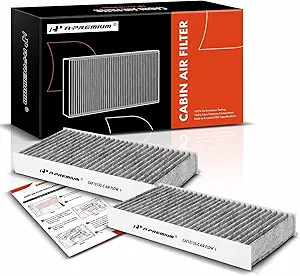 |
1. Spearhead Breathe Easy Activated Carbon Cabin Air Filter (BE-135)

| Compatible Vehicles | 2001–2005 Civic (fit listed) |
|---|---|
| Filter Type | Activated Carbon |
| Material Type | Polyester or Polyester Blend |
| Unit Count | 1 Count |
This Spearhead Breathe Easy activated carbon cabin filter replaces the factory cabin filter on 2001–2005 Honda Civic models to reduce dust, pollen, fumes and odors in the passenger compartment. It uses thick electrostatic pleated media combined with real coconut shell activated carbon to capture fine particles and adsorb unpleasant smells from exhaust and traffic. The manufacturer rates it for up to 15,000 miles between changes, roughly 25% longer than a standard 12,000-mile filter, so it is a low-maintenance option for routine servicing. Installation is a simple DIY swap behind the glove box and the package includes an install guide. Because the media is denser, airflow impact is minimal for normal commuting but drivers who demand maximum HVAC flow may notice a small difference. Overall it is a practical, longer-lasting factory-style replacement that prioritizes cabin air quality and odor control for daily driving use.
Best for: Buyers who want a balance of filtration efficiency, odor control, and longer service intervals for everyday driving in a 2001–2005 Civic without frequent filter changes.
Less Ideal for: Not the best choice for drivers prioritizing maximum HVAC airflow for high-performance climate control or for those seeking the absolute cheapest short-term replacement.
- Activated carbon layer with coconut shell charcoal for odor and fume adsorption
- Thicker electrostatic pleated media captures fine particles like pollen and road dust
- Rated for up to 15,000 miles, offering longer service intervals than standard filters
- Includes installation guide for an easy DIY glove-box replacement
- Denser media may slightly reduce HVAC airflow compared with the lightest performance filters
Verdict: Choose this filter if you want stronger particle capture and active odor control with longer intervals between changes for your 2001–2005 Civic.
2. Bosch HEPA Cabin Air Filter 6003C

| MERV Rating | 17 |
|---|---|
| Compatible Devices | Air Conditioner |
| Product Grade | new |
| Material Type | multi-layer |
| Unit Count | 1.0 Count |
The Bosch 6003C HEPA cabin air filter is built to remove very fine particles from the ventilation system, delivering cleaner, less dusty air inside the vehicle. It is typically used as a direct replacement cabin filter for compatible 2001–2005 Honda Civics and similar models and installs into the factory filter tray. Bosch combines a melt-blown electrostatic layer and a dense HEPA media with an added static cotton layer to increase particle capture and capacity while structural ribs help the filter hold its shape during airflow. The filter meets HEPA-level efficiency claims and is likely to noticeably reduce pollen, dust, and other small particulates compared with standard paper filters. Fitment reports are mixed so you may need to flex the pleats slightly during installation in some trays. There is no added odor neutralizer, so the product focuses on filtration rather than masking smells. For drivers who prioritize cleaner cabin air and respiratory protection, this filter delivers high-efficiency filtration in a familiar factory-replacement form factor.
Best for: Buyers focused on maximizing in-cabin air cleanliness for daily driving and allergy relief in compatible early-2000s Honda Civics who prioritize filtration performance over scent-masking features.
Less Ideal for: Drivers who need a universal or exact-fit aftermarket part for newer model years or who prefer filters with built-in odor neutralizers.
- HEPA-level filtration rated to capture 99.97% of 0.3 micron particles
- Multi-layer media with electrostatic and cotton layers increases particle hold capacity
- Structural ribs improve rigidity and maintain airflow characteristics
- Designed as a factory-style replacement for direct installation in compatible vehicles
- Some users report a tight fit or need to flex the filter to fit certain filter trays
Verdict: Choose this Bosch HEPA cabin filter when top-tier particle filtration for a 2001–2005 Civic is your primary priority.
3. Forccord HEPA Cabin Air Filter 2-Pack (fits Honda Civic 2001–2005)

| Compatible Vehicles | Automobile Cabin (Civic 2001–2005 fitment listed) |
|---|---|
| Filter Mounting Type | Clip In |
| Material Type | Blue Silk Filter Cloth, Melt Blown Cloth |
| Unit Count | 2 |
These Forccord HEPA cabin air filters are a direct replacement-style option for 2001–2005 Honda Civic applications and arrive as a two-pack. Each filter uses a multilayer construction—blue silk filter cloth plus melt-blown layers and activated carbon—to trap dust, pollen, and some odors before they reach the HVAC system. They clip into the factory filter slot and are meant to match common OEM fit and mounting type for easy do-it-yourself swaps. The listing claims a longer service life than basic replacements, and buyers report straightforward installation when following the provided video guidance. Performance will be strongest at removing larger particulates and reducing cabin smells; however activated carbon does not remove all fumes or gases. If you value keeping the blower and vents cleaner and want a budget-friendly, higher-filtration replacement for routine maintenance, these filters offer measurable air quality improvement, but they are not a substitute for specialized gas-phase filtration or medical-grade respirators in extreme environments.
Best for: Buyers who prioritize regular maintenance and better cabin air quality on a practical budget and want an easy DIY replacement that fits the 2001–2005 Civic without modification.
Less Ideal for: Drivers needing specialized chemical or industrial fume protection or medically prescribed filtration should consider higher-grade or dedicated solutions instead.
- Multilayer HEPA-style media combined with activated carbon for improved dust, pollen, and odor capture
- Sold as a two-pack so you can replace filters on a schedule or keep a spare
- Clip-in mounting designed to match factory-style installation for DIY replacement
- Activated carbon reduces common odors but will not remove all vehicle gases or strong chemical fumes
Verdict: A cost-effective two-pack replacement that upgrades cabin filtration for 2001–2005 Civics, ideal for practical owners who do regular maintenance.
4. BDFHYK CF10135 Cabin Air Filter with Activated Carbon, 2-Pack

| Replaces Part | CAF7758, 4817, 24817, 94817, 89031233, XC15439, CF110, PCF5439, CF10135 |
|---|---|
| Compatibility | Selected Honda and Acura models (early 2000s) listed in description |
| Pack Quantity | 2 PCS |
| Item model number | BD-05-0112-VC |
| Manufacturer | BDFHYK |
This BDFHYK cabin air filter is a straightforward replacement option for older Honda and Acura models; the listing targets Civic and related applications from the 2001–2005 era and ships as two filters with an activated carbon layer. It is used the same way any cabin filter is—removed from the glovebox or filter housing and replaced annually or sooner in dirty conditions. The close-meshed non-woven media and carbon layer help trap dust, pollen, and some odors, which can reduce dust on vents and improve AC/heater airflow. Customer feedback generally reports good fit and easy installation, though a few buyers noted fitment issues on certain model years so double-check part numbers before ordering. Practical benefits are cleaner cabin air and preserved HVAC efficiency at a low cost; the main limitations are occasional dimensional variation versus factory filters and a basic construction that is not a high-efficiency HEPA-grade element.
Best for: Shoppers prioritizing a low-cost replacement that improves in-cabin air and HVAC performance on older Honda Civics and similar models, without needing premium HEPA-level filtration.
Less Ideal for: Drivers who need guaranteed exact OEM dimensions for late-model revisions or who require hospital-grade particle removal should consider higher-spec or factory-brand filters instead.
- Activated carbon layer helps reduce odors in addition to trapping dust and pollen
- Sold as a two-pack so you get a spare for the next service interval
- Affordable option that targets common Honda/Acura part numbers for early 2000s models
- Simple drop-in replacement for most compatible housings with no tools beyond basic glovebox access
- Some buyers reported minor fitment or length differences compared with factory filters
- Not a high-efficiency medical/HEPA filter for ultra-fine particle filtration
Verdict: A budget-friendly two-pack activated-carbon cabin filter that cleans cabin air and restores HVAC flow for early-2000s Honda Civics when exact factory fitment is confirmed.
5. EPAuto CP135 Cabin Air Filter with Activated Carbon

| Compatible models | Honda Civic (2001-2005), CR-V (2002-2006), Element (2003-2011), Acura RSX (2002-2006), EL (1997-2005) |
|---|---|
| Activated carbon | Yes |
| Replacement for | Honda genuine part 80292-S5A-003 / 80292-S5D-A01 / 80292-SCV-A01 |
| Recommended interval | 12 months or 12,000 miles |
The EPAuto CP135 is a direct-fit replacement cabin air filter that uses activated carbon to reduce odors while trapping dust and pollen behind the glove box. Installation is straightforward for 2001–2005 Honda Civic owners: drop the glove box, remove the cover, slide out the old filter and insert the new one. The pleated media looks well constructed and several users report a noticeably fresher cabin smell after installation. Because it matches common Honda part numbers, it provides factory-style fit without the OEM price. Practical benefits include improved airflow through the HVAC system and odor control from the charcoal layer. Small issues to watch for are occasional missing airflow markings on one of the pair and the need to fully clear debris from the filter housing during replacement. For routine maintenance cycles the filter is an easy, reliable way to maintain interior air quality, though buyers who expect HEPA-level filtration should consider higher-grade specialty filters instead.
Best for: Drivers who prioritize dependable, no-fuss replacements that restore factory airflow and reduce odors in older Honda Civics and similar models.
Less Ideal for: People seeking premium medical-grade filtration or specialized allergen/HEPA performance should look at higher-end cabin filters instead.
- Activated carbon layer helps reduce cabin odors
- Direct-fit for 2001–2005 Honda Civic and other listed models for easy installation
- Pleated media catches dust and pollen while maintaining airflow
- Matches common Honda part numbers for reliable fitment
- One of the two replacement pieces may lack airflow direction markings
- Not marketed as a high-efficiency HEPA filter for microscopic particle removal
Verdict: A reliable, factory-fit cabin filter with activated carbon that restores fresh-smelling air and consistent HVAC airflow on 2001–2005 Honda Civics.
6. Carory Cabin Air Filter with Activated Carbon for Honda Civic (2001-2005)

| Compatible Vehicles | Honda Civic 2001-2005 |
|---|---|
| Material Type | Paper |
| Unit Count | 1 |
| Product Grade | new |
This Carory cabin air filter is a direct-fit replacement for 2001–2005 Honda Civic models and uses activated carbon plus pleated paper media to capture dust, pollen, and many common odors. Installation is straightforward: the filter slides into the housing behind the glovebox and most buyers report it fits without trimming. In use it restores clean airflow from the vents and the charcoal layer can help reduce light odors and VOCs that come through the intake. Construction appears comparable to many aftermarket alternatives with evenly spaced pleats and a standard frame. Because the media is paper-based, expect typical disposable filter life that depends on local air quality and mileage; it will need routine replacement to maintain performance. The product does not claim enhanced filtration efficiencies beyond standard cabin filters, so drivers with severe allergies or heavy pollution exposure may prefer higher-grade options. For routine maintenance on older Civics this offers good fit and odor control at a low cost.
Best for: Buyers who want a low-cost, easy-to-install replacement that restores clean airflow and offers basic odor reduction for everyday driving in an older Civic.
Less Ideal for: Drivers with severe allergies, chronic respiratory concerns, or who require high-efficiency or long-life filtration should consider premium or HEPA-type cabin filters instead.
- Activated carbon layer helps reduce common odors and VOCs entering the cabin
- Direct-fit design for 2001–2005 Honda Civic makes installation quick and easy
- Pleated paper media captures dust, pollen, and typical airborne debris
- Widely reviewed with many users reporting reliable fit and immediate improvement in cabin air
- Paper-based media offers standard filtration only and may not satisfy users needing HEPA-level protection
Verdict: A budget-friendly, direct-fit cabin filter for 2001–2005 Honda Civics that cleans incoming air and helps reduce odors with an activated carbon layer.
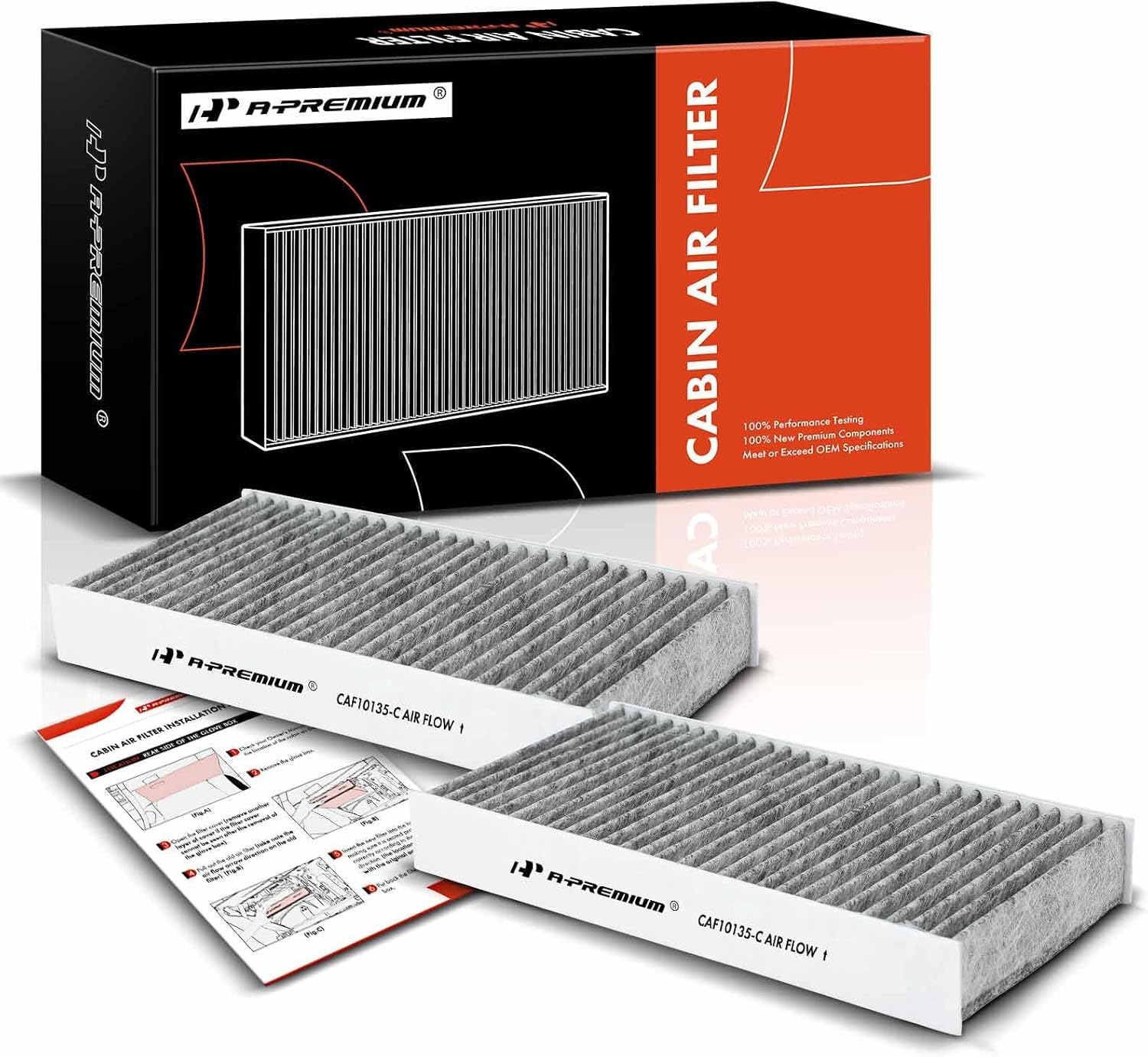
7. A-Premium 2‑Pack Cabin Air Filter with Activated Carbon (CF10135)
| Location | Front |
|---|---|
| With Activated Carbon | Yes |
| Washable | No |
| Reusable | No |
| Package Quantity | 2 |
This two-pack cabin air filter replaces the factory cabin filter in compatible 2001–2005 Honda Civic and several related Honda/Acura models to improve interior air quality. Each filter uses a multi-layer media with an activated carbon layer to absorb dust, pollen, smoke and light odors while blocking larger particulates. Typical use is straightforward: remove the glove box access, slide out the old filter, vacuum the cavity, and install the new filter in the indicated orientation. Practical benefits include noticeably fresher cabin air and removal of musty smells, and the pack of two makes it convenient to keep a spare on hand. Filters are not washable or reusable so plan on replacing them about every 12 months or per driving conditions. Fitment is reported to be snug on some vehicles, so a careful installation and cleaning the filter slot first helps. If you want filtration beyond basic particle and odor control, such as pollen-specific high-MERV filtration or antibacterial treatments, look for higher-performance aftermarket options.
Best for: A practical, cautious buyer who wants a factory-style replacement that improves cabin air and eliminates odors without fuss and prefers an easy DIY swap with predictable results.
Less Ideal for: Drivers seeking medical-grade allergen filtration, antimicrobial treatment, or a reusable filter solution should consider higher-end specialty filters instead.
- Activated carbon layer reduces odors and light fumes
- Multi-layer media captures dust, pollen and smoke particles
- Includes two filters so you have a spare for the next service
- Customers report consistent, factory-like fit in listed Honda/Acura models
- Not washable or reusable so replacements are regular maintenance
Verdict: A simple, reliable two-pack cabin filter with activated carbon that restores fresh, odor-free air in compatible 2001–2005 Honda Civic models.
Choosing the Right 2001-2005 Honda Civic Cabin Air Filter: Key Factors to Consider
Fit and Seal Accuracy
Correct fit and a reliable seal are essential for cabin air filters on the 2001-2005 Civic because gaps let unfiltered air bypass the media. Measure or confirm the nominal filter dimensions and the orientation of the gasket to ensure it seats properly in the Civic's filter tray. A filter that is slightly oversized can wrinkle or deform, while one that is undersized will allow leakage around the edges.
Pay attention to the sealing ridge and whether the filter uses a foam gasket or molded lip. Filters designed specifically for the ES, EM, and EP era Civic typically match the factory tray geometry and reduce the risk of vibration-related gaps that appear over time.
Filtration Efficiency and Media Type
Filtration efficiency determines how well the filter captures pollen, dust, and fine particulates. Look for stated micron ratings or MERV-equivalent levels; higher ratings generally trap smaller particles but can increase airflow resistance. For typical Civic use, a balance is best: capture common allergens and road dust without overly restricting airflow.
Media construction matters too. Multi-layer pleated media increases surface area and dust-holding capacity, while electrostatically charged fibers can improve capture of fine particles. Activated carbon layers add odor and VOC control, which is useful in urban driving conditions where exhaust smells can enter the cabin.
Airflow Resistance and HVAC Performance
Airflow resistance affects blower load, heater and A/C performance, and cabin ventilation. The stock blower in 2001-2005 Civics is sized for OEM filters; replacing that filter with a very dense aftermarket media may reduce airflow and cause weaker A/C output or greater blower noise.
Choose a filter with published pressure-drop data when available, or select media designed for low resistance if you prioritize HVAC performance. For owners who commute daily in hot or cold climates, preserving airflow should be a major consideration to maintain comfort.
Dust Capacity and Lifespan
Dust-holding capacity determines how long a filter can function before it needs replacement. Filters with deeper pleats and larger media surface area tend to last longer between changes. For the 2001-2005 Civic, typical maintenance intervals vary with driving conditions; urban or dusty environments shorten service life.
Choosing a higher-capacity filter reduces the frequency of cabin air filter replacement but may cost more up front. Consider your driving environment and whether you prefer shorter, lower-cost intervals or a longer-lasting option. Inspecting the filter annually helps catch heavy contamination early.
Moisture Resistance and Durability
The cabin filter sits near the HVAC intake where moisture can accumulate from rain or A/C condensation. Media and frame materials that resist moisture and mold growth are preferable to avoid odor and degradation. Filters with water-resistant frames and treated media will hold up better in climates with wet seasons or frequent temperature swings.
Durability also affects handling during installation. A stiff frame and robust gasket make it easier to seat the filter without tearing or bending the media, which preserves sealing performance over time.
Odor Control and Gas-Phase Filtration
If you frequently drive in areas with strong exhaust, industrial odors, or pollen-related smells, consider a filter with activated carbon or other adsorbent layers. These layers reduce hydrocarbons and common odor-causing compounds, improving perceived cabin air quality beyond particulate capture.
Keep in mind that gas-phase filtration does not last indefinitely. Carbon layers can become saturated, so factor in replacement intervals if odor control is a priority for your Civic.
Symptoms of a Clogged Cabin Air Filter
Recognizing when the cabin air filter needs replacement helps prevent HVAC strain and poor cabin air quality. Common signs on 2001-2005 Civics include reduced airflow from vents, musty or stale odors when running the HVAC, and increased dust or pollen accumulation on interior surfaces.
You may also notice louder blower noise or uneven airflow between vents if the filter is heavily loaded. In some cases, windows may fog more quickly because restricted airflow reduces defogging efficiency.
- Diminished airflow and weaker heating or cooling
- Musty or chemical odors inside the cabin
- More dust on dashboard and interior surfaces
- Increased blower noise or uneven vent output
- Faster window fogging in humid conditions
When to Replace the Cabin Pollen Filter
Replacement intervals depend on driving conditions. For a Civic driven mostly in clean suburban areas, plan to replace the cabin pollen filter every 12,000 to 18,000 miles or annually. Urban, dusty, or pollen-heavy environments necessitate more frequent changes—every 6,000 to 12,000 miles may be appropriate.
Also replace the filter if you notice any of the symptoms listed above or after a long period of storage where moisture or rodents may have affected the filter housing. Regular inspection during routine service visits ensures you do not miss a heavily contaminated filter.
- Light use: 12,000–18,000 miles or yearly
- Heavy use/polluted areas: 6,000–12,000 miles
- Inspect at least once per year
How to Change the Cabin Air Filter on a 2001-2005 Civic
Replacing the filter on 2001-2005 (ES, EM, and EP) Civics is a quick maintenance task that most owners can complete with minimal tools. The filter is accessible from the passenger-side footwell behind the glove box in many configurations. Start by removing the glove box stop or lowering the glove box to access the filter housing cover, then unclip the cover and withdraw the old filter.
When installing the new filter, confirm the airflow arrow orientation and seat the gasket fully in the tray. After reinstalling the cover and glove box, run the blower on high to check for unusual noises and to ensure proper airflow. Keep the used filter to compare coloration and contamination at the next service interval.
- Tools: minimal — typically a screwdriver or just hand release
- Orientation: follow airflow arrow printed on filter
- Test: run blower to check airflow and noise after installation
Choosing Between Carbon and Standard Filters
Decide whether you need gas-phase odor control in addition to particulate capture. Standard pleated filters excel at trapping pollen and dust, and they are often the lowest resistance option for reliable HVAC performance. Carbon-enhanced filters add a layer for odor adsorption which is beneficial for urban driving or for drivers especially sensitive to smells.
Keep in mind that carbon layers have finite capacity; if you frequently encounter strong odors, you may need to replace carbon filters more often. For many Civic owners who prioritize airflow and dust control, a high-efficiency pleated filter without carbon is a reasonable compromise.
- Standard pleated: best for airflow and particle capture
- Carbon-enhanced: adds odor and VOC adsorption
- Replace carbon filters more frequently in high-odor environments
Sizing and Confirming Cabin Air Filter Dimensions
Before ordering a replacement, verify the filter size for your 2001-2005 Civic ES, EM, and EP variant. Measure the existing filter or check the vehicle's service manual for the nominal length, width, and thickness. Filters that do not match the required dimensions can compromise sealing and filtration performance.
If the packaging lists multiple vehicle fitments, ensure that the ES, EM, and EP era 2001-2005 Civic is explicitly included. Avoid assuming fitment across different chassis codes unless the seller or manufacturer provides clear dimensional confirmation.
- Measure length, width, and thickness of the existing filter
- Confirm ES, EM, and EP era 2001-2005 Civic is listed among fitments
- Prefer filters that provide exact dimensional specs
Maintaining Cabin Air Quality Beyond the Filter
A new cabin filter is only part of keeping the Civic interior fresh. Regularly vacuuming the cabin, cleaning vents, and addressing potential sources of odors such as damp floor mats or spilled liquids will reduce the load on the filter and extend its useful life. Also check the HVAC drain and cowl area for leaves or debris that can cause moisture buildup.
If you frequently carry allergy-sensitive passengers, consider using the recirculation mode selectively during high-pollen drives and ventilating the cabin when pollutants are low to limit exposure.
- Vacuum carpets and seats regularly
- Clear leaves and debris from cowl and drain outlets
- Use recirculation during peak pollen periods
Still looking for the perfect fit?
Select your Honda Civic configuration to see the most relevant Cabin Air Filters recommendations
How We Chose the Best 2001-2005 Honda Civic Cabin Air Filter
We selected the seven cabin air filters on this list using criteria that reflect real-world needs for 2001-2005 Honda Civic owners. First, fitment and dimensional accuracy were primary filters: we confirmed sizing and sealing details common to the ES, EM, and EP era Civic to avoid gaps that cause bypass and dust infiltration. Second, particulate filtration performance was evaluated using manufacturer-stated MERV-equivalent or micron ratings and media construction to prioritize pollen and dust capture. Third, airflow resistance mattered because overly restrictive filters can reduce heater and A/C output and increase blower noise on older HVAC systems. Fourth, durability and moisture resistance were considered to limit degradation in a damp engine bay environment. Fifth, cabin odor and gas-phase control were reviewed for drivers sensitive to smells; options with activated carbon layers were noted. Finally, ease of installation and access to the filter housing for the 2001-2005 models influenced selection.We excluded items without clear dimensional specs or fitment claims for the 2001-2005 Civic ES, EM, and EP series, and filters that lacked basic particulate performance information. We also did not consider specialty filters intended solely for high-performance race environments or those incompatible with the Civic's stock filter tray.
Our full evaluation process is outlined in our review methodology.
FAQ
How often should I change the cabin air filter on my 2001-2005 Civic?
It depends on driving conditions. In clean environments, replace it every 12,000 to 18,000 miles or yearly. In dusty or high-pollen areas, consider changing it every 6,000 to 12,000 miles and inspect it more frequently.
Where is the cabin air filter located on the 2001-2005 Civic?
On many 2001-2005 Civic variants the filter is behind the glove box in the passenger footwell. You typically lower or detach the glove box to access the filter housing cover and then unclip the cover to remove the old filter.
Can a dirty cabin filter cause bad smells or fogging?
Yes. A clogged or damp filter can produce musty odors and reduce airflow, which makes windows fog more easily because the HVAC system cannot move enough air for effective defogging.
Is a carbon cabin filter worth it for city driving?
Often it is helpful for urban driving because carbon layers adsorb common exhaust odors and VOCs. However, carbon filters can be more restrictive and may need more frequent replacement if exposed to strong odors.
How can I confirm a replacement filter will fit my Civic ES, EM, and EP?
Compare the replacement filter's length, width, and thickness against your vehicle's existing filter or the service manual specs. Also check that the manufacturer explicitly lists the 2001-2005 Civic ES, EM, and EP fitment to avoid surprises.
Will a higher-efficiency filter reduce HVAC performance?
Higher-efficiency media can increase airflow resistance depending on construction. Choose a filter that balances particle capture with low pressure drop to maintain heater and A/C performance on the Civic's stock blower.
Final Verdict
For 2001-2005 Honda Civic owners, prioritize a cabin air filter that fits the ES, EM, and EP era tray precisely and balances particulate capture with low airflow resistance. If allergens or urban odors are your main concern, consider a carbon-enhanced option but be prepared to replace it more often. Regular inspection and timely replacement preserve HVAC performance and cabin comfort.Ultimately, match the filter dimensions, choose a media type suited to your driving environment, and replace the filter at sensible intervals to keep your Civic's interior air clean and the ventilation system working efficiently.
Explore More:
- Check out all Honda Civic parts & accessories
- Explore Cabin Air Filters Maintenance & Repair Guides
- Explore HVAC
- Browse all Auto Parts
