

Note: This article contains affiliate links. If you click on these links and make a purchase, I may earn a small commission at no extra cost to you. This helps support my research and content. Read my full affiliate disclosure here.
If you drive a 2022-present Honda Civic you know cabin air quality matters for comfort and health during daily commutes. Choosing the right cabin air filter affects how well the HVAC system removes pollen, dust, and vehicle odors while maintaining steady airflow and blower performance. This guide looks at the top shortlisted cabin air filters tailored to the Civic 2022-present (FE and FL) chassis, focusing on fit, filtration efficiency, and durability.Below you will find carefully selected options that suit common owner priorities, along with the evaluation criteria used to pick them and practical guidance on replacement and troubleshooting. Read on to identify the right filter for your needs and driving conditions.
Looking for other parts? See all Honda Civic parts & accessories.
Top Picks at a Glance
| Best Overall The best all-around choice for most situations | Carory CF182-2PK Cabin Air Filter with Activated Carbon (2-Pack) |  |
| Best Quality Built to a higher standard if you want something more solid | K&N VF2086 Washable Cabin Air Filter |  |
| Best Value The sweet spot between price and what you get | Puroma HCF182 Cabin Air Filter (replacement for CP182) |  |
| Best Budget The cheapest option that still gets the job done reliably | Carory CF182 Cabin Air Filter with Activated Carbon for Honda and Acura Models |  |
| Highest Rated A top-rated pick with lots of positive feedback | ECOGARD XC36080 Cabin Air Filter |  |
| Most Popular A crowd favorite that many people choose with confidence | EPAuto CP182 Cabin Air Filter (fits select Honda/Acura models) |  |
| Best Seller A high-volume bestseller chosen again and again | Spearhead Breathe Easy Activated Carbon Cabin Air Filter (BE-182) |  |
1. Carory CF182-2PK Cabin Air Filter with Activated Carbon (2-Pack)

| Brand | Carory |
|---|---|
| Material Type | Paper |
| Number of Items | 2 |
| Compatible Devices | Air Conditioner |
The Carory CF182-2PK is a two-pack replacement cabin air filter that installs in the glove-box/filter housing to trap dust, pollen and road debris while the activated carbon layer helps reduce common outside odors. It is intended as a direct-fit aftermarket alternative for a wide range of Honda and Acura vehicles and is used the same way as a factory cabin filter: remove the old filter, slide the Carory unit into the housing and secure the cover. Notable features include even pleating, a charcoal layer for odor adsorption, and packaging that provides two filters so you can replace at typical service intervals without a second purchase. In real use it delivers clean-feeling air and normal A/C airflow with no trimming required for supported cars. Important limitations are that activated carbon reduces some smells but will not completely eliminate strong exhaust or cigarette smoke, and long-term filtering lifespan depends on driving environment so replacement intervals will vary. Fitment depends on selecting the correct reference numbers for your vehicle year and model.
Best for: Buyers who want an affordable, straightforward replacement that restores clean airflow and reduces light odors in daily-driven Hondas and Acuras without the premium cost of dealer parts.
Less Ideal for: Drivers who need heavy-duty odor removal for persistent exhaust or smoke exposure or those who prefer high-efficiency HEPA-grade filtration should consider other options.
- Two filters included so you can change on schedule without buying another pack
- Activated carbon layer helps reduce common outside odors
- Pleated construction traps dust, pollen and small debris effectively
- Direct-fit design for listed Honda and Acura models makes installation quick and tool-free
- Activated carbon offers limited reduction of strong exhaust or tobacco smoke
Verdict: A budget-friendly, direct-fit two-pack cabin filter that restores clean airflow and helps mute light outside odors for recent Honda and Acura models.
2. K&N VF2086 Washable Cabin Air Filter

| Material Type | Non-woven Synthetic |
|---|---|
| Air Filter Construction | Pleated |
| Unit Count | 1 |
The K&N VF2086 is a washable replacement cabin air filter built to be a long-lasting alternative to disposable cabin filters. It fits the factory air box and installs quickly, typically in minutes with no tools, and the pleated non-woven synthetic media is pre-treated to help control odors while maintaining airflow for the HVAC system. Because it is washable and reusable, you clean it with low-pressure water when it becomes dirty instead of buying replacements, which reduces ongoing cost and landfill waste. In practice this means steadier airflow for heating and cooling and fewer musty interior smells over time compared with neglected disposable filters. The main trade-off is the need for periodic maintenance to preserve filtration performance and the initial higher outlay versus a single disposable filter. For a performance-minded Civic driver who values cabin airflow and wants to cut recurring filter purchases, the VF2086 offers a practical, durable option with a lifetime limited warranty.
Best for: Buyers focused on maintaining strong HVAC airflow and reducing recurring maintenance costs who are willing to perform occasional cleaning to keep filter performance high.
Less Ideal for: Drivers who prefer a no-maintenance disposable filter or who do not want to perform any periodic cleaning should consider traditional replaceable filters instead.
- Washable, reusable design that reduces long-term replacement costs and landfill waste
- Pleated non-woven synthetic media that preserves airflow for heating and cooling performance
- Pre-treated to help control odors and reduce musty smells in the cabin
- Simple drop-in installation that fits the factory air box with no tools required
- Requires periodic washing and maintenance to maintain filtration effectiveness
Verdict: A durable, washable cabin filter that boosts airflow and cuts recurring filter purchases for performance-focused Civic owners willing to clean it periodically.
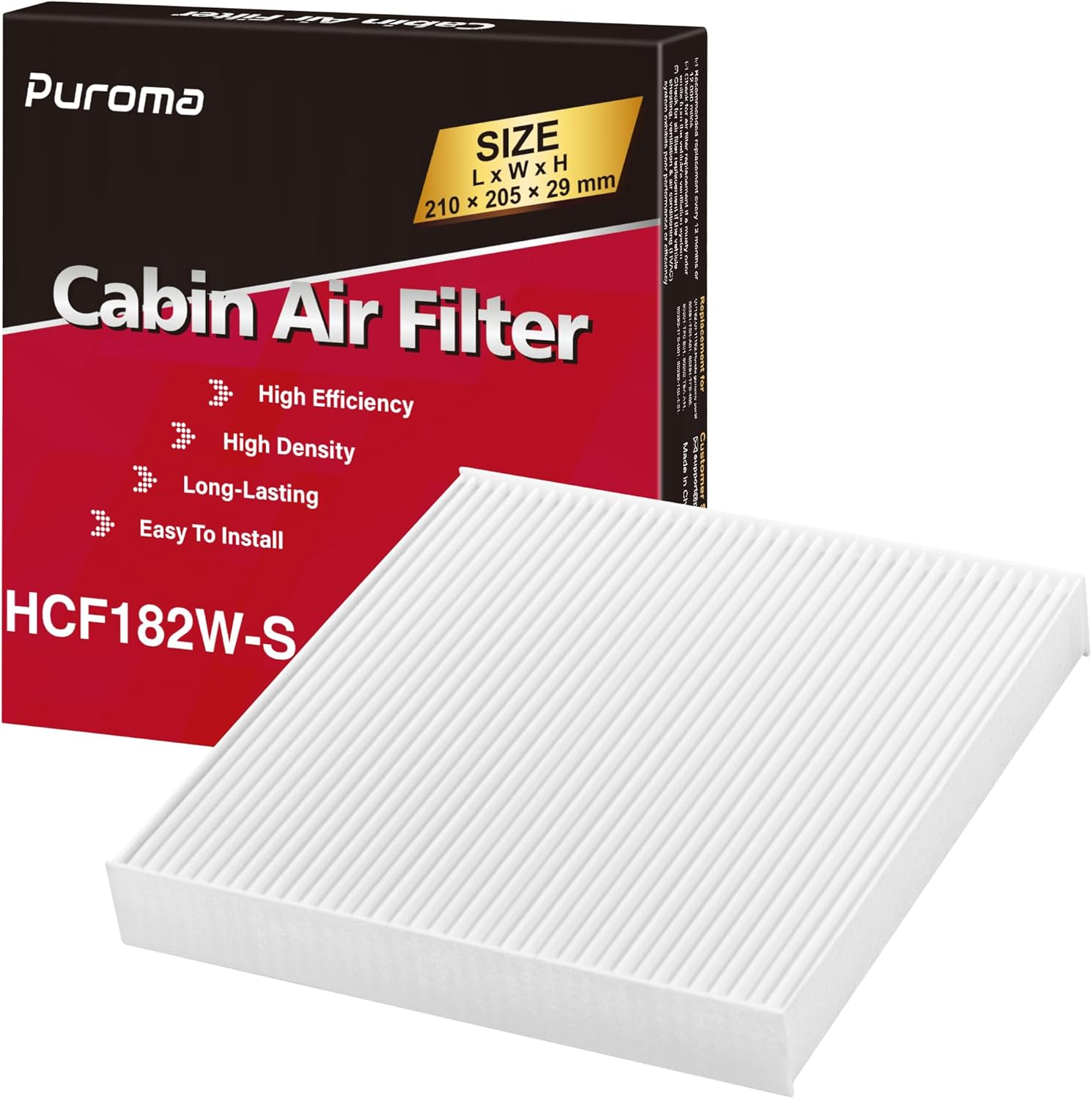
3. Puroma HCF182 Cabin Air Filter (replacement for CP182)
| Compatible Devices | Honda Civic, Clarity, CR-V, CR-Z, Fit, HR-V, Insight, Odyssey, Accord; Acura RDX, TLX, INTEGRA, MDX |
|---|---|
| Material Type | Fiberglass, Paper |
| Air Filter Construction | Pleated |
| Unit Count | 1.0 Count |
This Puroma cabin air filter is a direct replacement designed to fit CP182/CF11182 applications on Honda Civics and related models. It uses multiple fiber layers in a pleated construction to capture dust, pollen, and common particulates while helping reduce stale odors and maintaining HVAC airflow. Installation is straightforward for most Civics—users report a quick 5 to 10 minute swap using the printed airflow arrow. The filter is made from fiberglass and paper and is intended as an annual service item or sooner in dusty or polluted environments. Practical benefits include improved cabin air freshness, less strain on the blower when clogged OEM filters are replaced, and an affordable way to avoid dealership service costs. Limitations are that this is a basic replacement filter without advanced antimicrobial coatings or HEPA-level filtration, so it will not remove ultrafine particles or provide medical-grade purification.
Best for: Buyers who prioritize cost-effective, no-fuss maintenance and want to keep cabin air clean on a routine schedule for a 2022-present Civic without paying for dealer service.
Less Ideal for: People seeking medical-grade filtration, heavy allergy mitigation, or advanced odor removal should consider higher-end or specialized filters.
- Pleated multi-layer construction captures common dust, pollen, and road debris.
- Easy DIY replacement with airflow arrow and typical 5–10 minute install time.
- Affordable alternative to dealership cabin filter replacements.
- Designed to maintain HVAC flow for consistent heating and cooling performance.
- Does not offer HEPA-level filtration or specialized antimicrobial treatment.
- Material is standard fiberglass and paper rather than higher-efficiency media.
Verdict: A low-cost, easy-to-install replacement that restores cabin air freshness and HVAC performance for 2022‑present Honda Civic owners who want practical, routine maintenance.
4. Carory CF182 Cabin Air Filter with Activated Carbon for Honda and Acura Models

| Compatible models | Honda and Acura models listed (see fitment) 2009–2025 |
|---|---|
| Media | Activated carbon plus particulate layer |
| Reference numbers | Multiple OEM and aftermarket reference numbers provided |
This Carory CF182 cabin air filter is a direct replacement-style unit that fits a wide range of recent Honda and Acura cars and SUVs and uses activated carbon media to help trap dust, pollen, and common odors. Installation is the same basic swap as a factory cabin filter and is intended for routine cabin air maintenance: remove the glove box or access panel, swap the old element, and reseal. The activated carbon layer is the standout feature for drivers who want extra odor control beyond a basic particulate filter, and the listing includes many OEM reference numbers so you can confirm fitment. Because it is a generic aftermarket filter, expect performance comparable to other aftermarket options rather than a branded factory part. The filter is best for regular maintenance cycles to keep vents cleaner and reduce interior allergens; buyers should follow vehicle-specific replacement intervals and confirm the reference numbers match their Civic year and trim before purchase.
Best for: Buyers looking for an affordable, straightforward cabin filter replacement that improves odor control and reduces dust and pollen on a routine maintenance budget.
Less Ideal for: Drivers who prioritize factory-branded parts or need vehicle-specific certified filtration performance for severe allergy or contamination conditions should consider other options.
- Activated carbon layer for additional odor reduction compared with plain particulate filters
- Wide compatibility listing with many Honda and Acura reference numbers to simplify fit checks
- Designed as a direct replacement so installation follows the same steps as a factory cabin filter
- Aftermarket unit so filtration efficiency and longevity can vary versus factory-brand filters
Verdict: A budget-friendly cabin filter replacement that adds activated carbon odor control while fitting a broad range of recent Honda and Acura models.
5. ECOGARD XC36080 Cabin Air Filter

| Part Number | XC36080 |
|---|---|
| Material | Paper |
| Included Components | One Cabin Air Filter |
| Item Package Quantity | 1 |
The ECOGARD XC36080 is a straightforward replacement cabin air filter that captures road dust, pollen, pet dander and other contaminants before they enter the passenger compartment. It installs the same way as a factory filter and is commonly swapped during routine maintenance to restore airflow and reduce interior odors. The paper media is rated to filter a high percentage of particulates and EcoGard highlights easy installation with instructions included. Practical benefits include improved HVAC performance and cleaner cabin air for allergy sufferers or drivers in dusty areas. Several user reports note a snug fit in the filter housing and occasional need to orient the airflow marking correctly during installation. This filter is single-layer paper construction so it is not a long-life electrostatic or activated-carbon type, meaning odor and gas adsorption are limited compared with specialty carbon filters. For drivers who prioritize consistent, reliable particle filtration and simple DIY replacement, this model delivers dependable performance at an economical cost.
Best for: Buyers who put a premium on reliable, no-nonsense filtration and want a straightforward, factory-style replacement they can install themselves on a regular maintenance schedule.
Less Ideal for: Drivers who need heavy odor or chemical vapor removal or who prefer long-life or specialty carbon filters for advanced air purification should consider other filter types.
- Designed to remove common airborne particles such as dust, pollen, and pet dander
- Fits OEM-style filter housings for direct replacement on compatible models
- Easy to install with simple orientation markings and included instructions
- Improves HVAC airflow and cabin air quality when replaced regularly
- Paper media does not provide activated carbon odor or gas adsorption
Verdict: A dependable, easy-to-install paper cabin filter that restores clean airflow and reliable particle filtration for compatible Honda Civics.
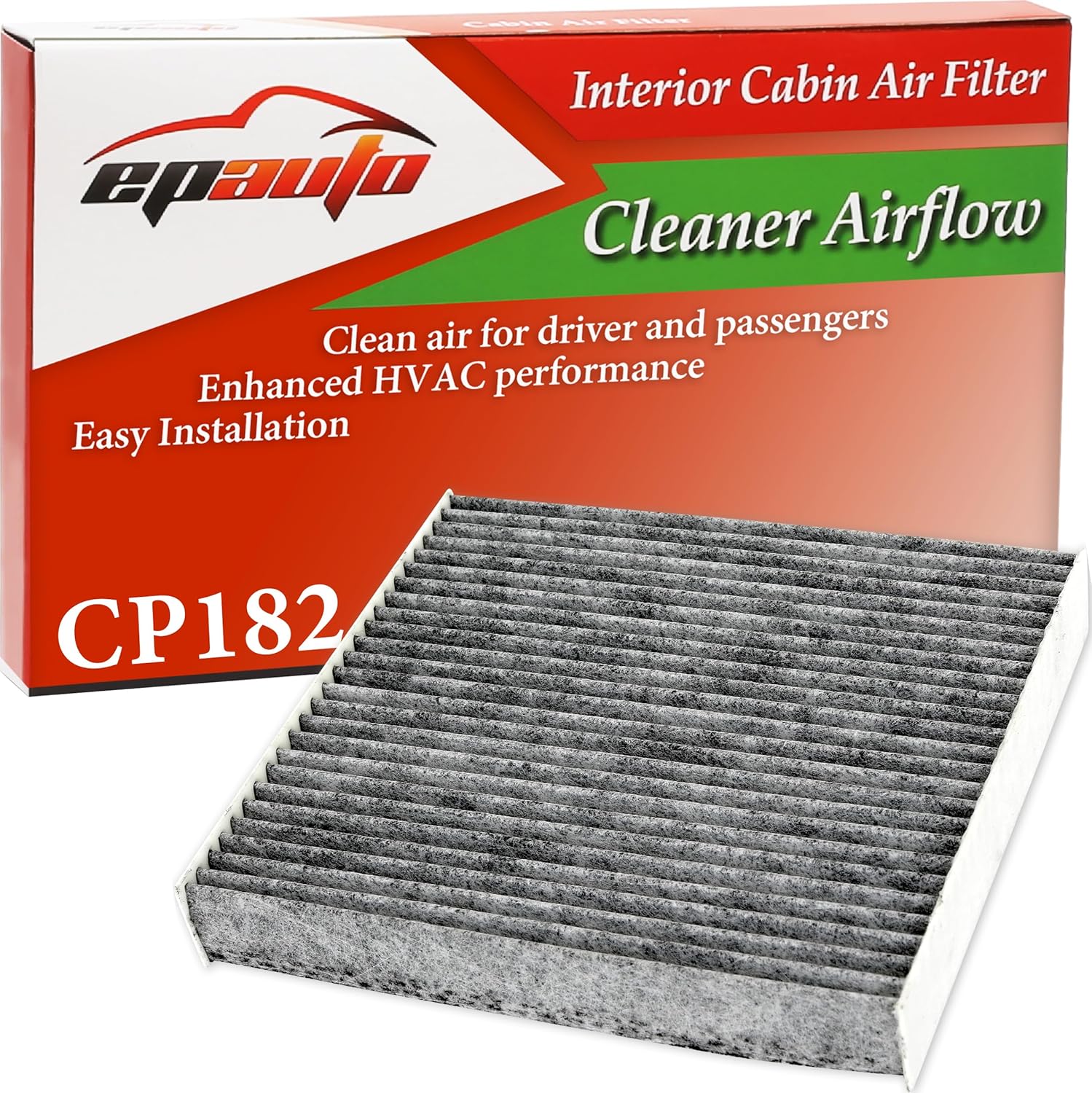
6. EPAuto CP182 Cabin Air Filter (fits select Honda/Acura models)
| Recommended replacement interval | 12 months or 12,000 miles |
|---|---|
| Compatible with | Select Honda and Acura models (see listing) |
| Contains | Activated carbon |
The EPAuto CP182 is a straightforward cabin air filter made as a replacement for specific Honda and Acura vehicles. It installs behind the glove box and is intended to be swapped roughly every 12 months or 12,000 miles to maintain airflow and cabin air quality. The filter uses activated carbon to help capture dust, pollen, smog and light odors, which can noticeably reduce stale or mildew smells inside the car. Buyers report the filter fits easily in most listed models and improves HVAC performance when fresh. The unit is low-cost compared with factory parts and simple to install without tools on most Civics and similar Hondas. A few users noted fit can be tight on certain years and one reported trimming was needed, so check fitment carefully for 2022 and newer Civics before installation. This filter is best if you want an affordable, effective replacement that refreshes cabin air and is changed regularly, but expect occasional fit adjustments on some model years.
Best for: Drivers who prioritize proven, budget-friendly cabin filtration and prefer products with wide customer feedback and straightforward DIY installation.
Less Ideal for: People seeking a perfect factory-size drop-in for every model year without any fitment checks or those wanting HEPA-grade filtration for severe allergy concerns.
- Activated carbon layer helps reduce odors as well as dust and pollen
- Compatible with many Honda and Acura model years listed by the manufacturer
- Easy to install behind the glove box without special tools
- Economical compared with factory replacement filters
- Some buyers report a tight fit on certain years and occasional trimming required
Verdict: A low-cost, carbon-enhanced cabin filter with strong user feedback that refreshes cabin air and is easy to install for routine maintenance.
7. Spearhead Breathe Easy Activated Carbon Cabin Air Filter (BE-182)

| Material Type | Electrostatic Filter Media |
|---|---|
| Air Filter Construction | Pleated |
| Unit Count | 1.0 Count |
| Model Number | BE-182 |
The Spearhead Breathe Easy BE-182 is a replacement cabin air filter built for odor control and longer life in compatible Honda vehicles. It combines dense pleated electrostatic media with a layer of real coconut shell activated carbon to trap dust, pollen and adsorb fumes and smells before they enter the cabin. The design aims for up to 15,000 miles of service life, about 25% longer than a common 12,000-mile baseline, which reduces replacement frequency for drivers who prefer low-maintenance parts. Installation is straightforward and intended as a simple DIY swap behind the glovebox on supported models. The thicker media improves particle capture but may slightly reduce airflow compared with the thinnest economy filters, so drivers who prioritize maximum HVAC flow should check fit and fan performance. Overall it is a practical, factory-replacement-style option for commuters and families who want cleaner-smelling cabin air and fewer filter changes without complicated installation.
Best for: Buyers who want a low-maintenance, easy-to-install cabin filter that reduces odors and extends time between replacements while keeping in-cabin air cleaner.
Less Ideal for: Drivers who need the absolute highest HVAC airflow or who prefer specialized medical-grade HEPA filtration for severe allergies should consider other filter types.
- Activated carbon layer using coconut shell charcoal for odor and fume adsorption.
- Thick pleated electrostatic media for improved particle capture versus standard filters.
- Engineered for longer life up to 15,000 miles to reduce replacement frequency.
- Denser media can modestly restrict airflow compared with very low-resistance economy filters.
Verdict: A longer-lasting activated carbon cabin filter that cuts odors and particle ingress for drivers who want a simple, low-maintenance upgrade.
Choosing the Right 2022-Present Honda Civic Cabin Air Filter: Key Factors to Consider
Filtration Efficiency
Filtration efficiency determines how well the filter captures particles such as pollen, dust, and fine particulate matter. Higher efficiency media trap smaller particles but can also increase resistance to airflow, which affects blower load and cabin circulation.
For the 2022-present Honda Civic, prioritize filters with stated micron ratings or MERV-equivalent performance so you can compare how effectively they remove common allergens. Consider whether you need extra protection against fine particulate pollution in high-traffic areas, since that will justify selecting a higher-efficiency filter despite potential tradeoffs in airflow.
Fit And Seal
A correct fit and reliable seal prevent unfiltered air from bypassing the media and entering the cabin. Even the highest-efficiency filter will fail to protect occupants if gaps exist or the filter is undersized for the Civic's filter housing.
Check that the replacement matches the Civic FE and FL housing dimensions and that it includes a gasket or frame designed to seat securely. Pay attention to orientation arrows and bezel features that ensure the filter sits flush and keeps airflow routed through the media rather than around it.
Media Construction And Layers
Different filters use single-layer spunbond media, multi-layer composite media, or a combination with activated carbon. Multi-layer constructions often combine coarse prefilters with fine inner layers to balance airflow and particle capture.
For Civic owners who face seasonal pollen or occasional odors, a layered media with an activated carbon layer can deliver both particle filtration and vapor adsorption. For drivers prioritizing maximum airflow, a well-designed pleated media with low resistance is preferable.
Activated Carbon And Odor Control
Activated carbon helps adsorb volatile organic compounds, exhaust odors, and some gaseous pollutants. This feature is useful in urban environments or after driving through tunnels or heavy traffic where odors enter the cabin.
Not all carbon treatments are equal; look for filters that describe carbon loading or how the layer is integrated. Keep in mind that carbon adds slight resistance and has a finite adsorption capacity, so it is most beneficial when odor control is a recurring need rather than a rare occurrence.
Service Life And Maintenance Interval
Recommended replacement intervals vary with driving conditions. Frequent urban driving, dusty roads, or heavy pollen seasons shorten filter life. Choosing a filter with a predictable service life helps you plan maintenance and avoid reduced HVAC performance.
For the Civic FE and FL, consider shorter intervals if you park outdoors near trees or drive on unpaved roads. Conversely, drivers in low-dust environments can lengthen intervals within manufacturer recommendations. Also consider whether the filter is easily inspected during routine service to check for clogging.
Installation Ease And Orientation
A filter that is straightforward to install reduces the chance of incorrect placement or damaged media during replacement. Clear orientation markings and a rigid frame help ensure a secure, correct fit in the Civic's housing.
Some filters include a plastic bezel or handles to simplify removal and seating. If you plan to replace the cabin air filter yourself, choose one with instructions or simple alignment cues that make the job quick and error-free.
When To Replace Your Civic's Cabin Air Filter
Replacement intervals depend on your driving environment and symptoms you observe. Typical guidance ranges from annual replacement to every 12,000–15,000 miles, but conditions with heavy pollen, dust, or frequent stops may require earlier changes.
Watch for signs like reduced airflow, persistent odors, or increased dust accumulation on the dash and vents. These indicators often show the filter is clogged and restricting proper ventilation.
- Common symptom: weaker airflow from vents at all fan speeds
- Visible dirt or dark discoloration when inspecting the filter
- Musty or stale odors after running HVAC on recirculation
Identifying Cabin Air Filter Symptoms In The 2022-Present Civic
Owners often report reduced blower performance or new odors when a filter is past its service life. In the Civic FE and FL, these symptoms are typically noticeable during defogging or when switching between fresh-air and recirculation modes.
If pollen allergy symptoms flare only while driving, a clogged cabin pollen filter may be the cause. Addressing the filter promptly restores ventilation effectiveness and reduces in-cabin allergen exposure.
- Allergy flare-ups during driving can point to reduced filtration
- Fogging that takes longer to clear can indicate restricted airflow
DIY Replacement: What You Need To Know
Replacing the Civic's cabin air filter is usually a straightforward task that takes under 30 minutes with basic tools. Confirm the correct orientation before seating the new filter and ensure the housing cover and seals are reinstalled properly to prevent bypass.
Keep a small flashlight or inspection mirror handy to check the seating and condition of the housing. Clean out loose debris from the filter pocket before installing the new media to avoid premature clogging.
- Necessary tools: flat screwdriver or trim tool for cover clips in some trims
- Tip: note the airflow arrow on the old filter to match orientation
- Inspect the housing for leaves or debris and remove before installing the new filter
Carbon Filters Versus Standard Particulate Filters
Carbon-treated cabin filters add odor control by adsorbing exhaust and road-related odors, while standard particulate filters focus on removing dust and pollen. If you frequently encounter odor issues or drive in dense traffic, carbon media can provide noticeable comfort benefits.
However, carbon layers add weight and some airflow resistance. Balance the need for odor control against potential slight reductions in HVAC efficiency and choose based on your most common driving conditions.
- Carbon filters: better at odors and VOC adsorption
- Standard particulate filters: typically lower resistance and good pollen capture
Sizing And Ensuring Correct Fit For FE and FL Chassis
The 2022-present Civic uses specific cabin filter dimensions and a housing design unique to the FE and FL chassis. Confirming the physical size and mounting features is essential to avoid ill-fitting filters that allow unfiltered air to pass.
Look for filters that explicitly list compatibility with the 2022-present Civic or the FE and FL generation codes. A precise fit preserves blower efficiency and prevents rattles or movement of the filter within the housing.
- Verify filter frame dimensions and orientation tabs
- Choose a filter that references 2022-present Civic or FE and FL compatibility
Tools And Parts To Keep On Hand For Future Service
Keeping a spare cabin filter and a basic trim tool in your home garage saves time and helps you address symptoms quickly. Having a replacement on hand is especially helpful before allergy season or extended road trips.
Also keep a small vacuum or a soft brush to clean the filter pocket during changes. Proper pre-installation cleaning can extend the lifespan and effectiveness of the new filter.
- Spare filter matched to Civic 2022-present (FE and FL)
- Trim tool or flat screwdriver, flashlight, soft brush or vacuum
Still looking for the perfect fit?
Select your Honda Civic configuration to see the most relevant Cabin Air Filters recommendations
How We Chose the Best 2022-Present Honda Civic Cabin Air Filter
We prioritized filters that match the 2022-present Honda Civic (FE and FL) fitment and meet realistic owner expectations for filtration and service life. Primary evaluation criteria included measured particulate filtration or stated micron capture, physical fit and seal to prevent bypass, and airflow impact as reported in manufacturer specifications and technical documents. Durability and replace-interval guidance were weighted to reflect typical urban and suburban driving conditions where pollen and fine dust are common.Additional criteria included media construction (multi-layer vs single layer), presence and effectiveness of activated carbon for odor control, and compatibility with standard cabin air filter sizes for the Civic FE and FL. We also considered ease of installation and whether the filter retains orientation markings to aid correct replacement.We excluded filters that lacked clear fitment data for the 2022-present Civic or that required vehicle modifications. Generic filters without stated micron ratings or filters sized incorrectly for the Civic FE and FL were not considered. The result is a focused shortlist emphasizing real-world performance, correct fit, and owner convenience.
Our full evaluation process is outlined in our review methodology.
FAQ
How often should I perform cabin air filter replacement on my 2022-present Civic?
It often depends on driving conditions, but many Civic owners find replacing the filter every 12,000 to 15,000 miles or once a year works well. If you drive in heavy pollen, dusty, or urban environments, inspect and replace it more frequently.
What are the common cabin air filter symptoms to watch for in my Civic?
Common symptoms include reduced airflow at all fan speeds, musty or persistent odors when using HVAC, longer defogging times, or increased dust in the cabin. These symptoms usually indicate a clogged or saturated filter.
Can I change the cabin air filter myself on a 2022-present Civic?
Yes, many owners can replace the filter themselves in under 30 minutes with basic tools. Make sure to follow orientation markings and fully seat the filter to avoid air bypass.
Is a carbon cabin pollen filter worth it for the Civic?
Carbon filters are often worth it for drivers who frequently encounter odors or heavy traffic since they help adsorb smells and some gaseous pollutants. If odor control is not a concern, a high-quality particulate filter may be sufficient.
How do I confirm the correct cabin air filter size for my Civic?
Confirm compatibility by checking the filter's stated vehicle fit list for the 2022-present Honda Civic or FE and FL chassis codes and by comparing frame dimensions. Filters that do not list the Civic FE and FL should be avoided to prevent fitment issues.
Will a higher-efficiency filter reduce my HVAC performance?
Higher-efficiency filters can increase airflow resistance slightly, which may be noticeable in very high-efficiency media. In most cases for the Civic FE and FL the difference is small, but if maximum blower output is critical, choose a filter designed for low resistance.
Final Verdict
When selecting a cabin air filter for a 2022-present Honda Civic, prioritize correct fitment for the FE and FL chassis and filtration efficiency appropriate to your driving environment. Balance the desire for fine-particle capture and odor control against potential impacts on airflow and service life. For most owners, a well-fitting pleated filter with clear installation cues provides the best mix of performance and convenience.Focus on filters that explicitly list compatibility with the 2022-present Civic, follow a sensible replacement interval based on road conditions, and inspect the filter during routine service. That approach yields cleaner in-cabin air and reliable HVAC performance without unnecessary tradeoffs.
Explore More:
- Check out all Honda Civic parts & accessories
- Explore Cabin Air Filters Maintenance & Repair Guides
- Explore HVAC
- Browse all Auto Parts
