

Looking for the perfect fit?
Select your Ford Explorer configuration to see the most relevant Brake Rotors recommendations
Note: This article contains affiliate links. If you click on these links and make a purchase, I may earn a small commission at no extra cost to you. This helps support my research and content. Read my full affiliate disclosure here.
If you drive a Ford Explorer, the condition of your brake rotors directly affects braking performance, pedal feel, and long-term safety. Choosing the right rotors matters for consistent stopping distances, reduced vibration, and predictable fade resistance during heavier use. This guide highlights the top shortlisted options in the category and explains the key evaluation points we used, including fitment accuracy, material and heat handling, and serviceability for maintenance routines. Read on to find rotors that match your Explorer's needs and the scenarios you drive in.
Looking for other parts? See all Ford Explorer parts & accessories.
Top Picks at a Glance
| Best Overall The best all-around choice for most situations | Detroit Axle Front Brake Kit with Drilled & Slotted Rotors and Ceramic Pads |  |
| Best Quality Built to a higher standard if you want something more solid | Detroit Axle Front and Rear Drilled & Slotted Brake Kit with Ceramic Pads |  |
| Best Budget The cheapest option that still gets the job done reliably | Metrix Premium Chassis Parts Rear Vented Brake Rotor and Ceramic Pad Kit (Rear) |  |
| Highest Rated A top-rated pick with lots of positive feedback | Detroit Axle Front Brake Kit — Drilled & Slotted Rotors with Ceramic Pads |  |
| Best Seller A high-volume bestseller chosen again and again | TRQ Front Ceramic Brake Pad and Rotor Kit for Ford Explorer / Explorer Sport Trac (Front) |  |
Detroit Axle Front Brake Kit with Drilled & Slotted Rotors and Ceramic Pads
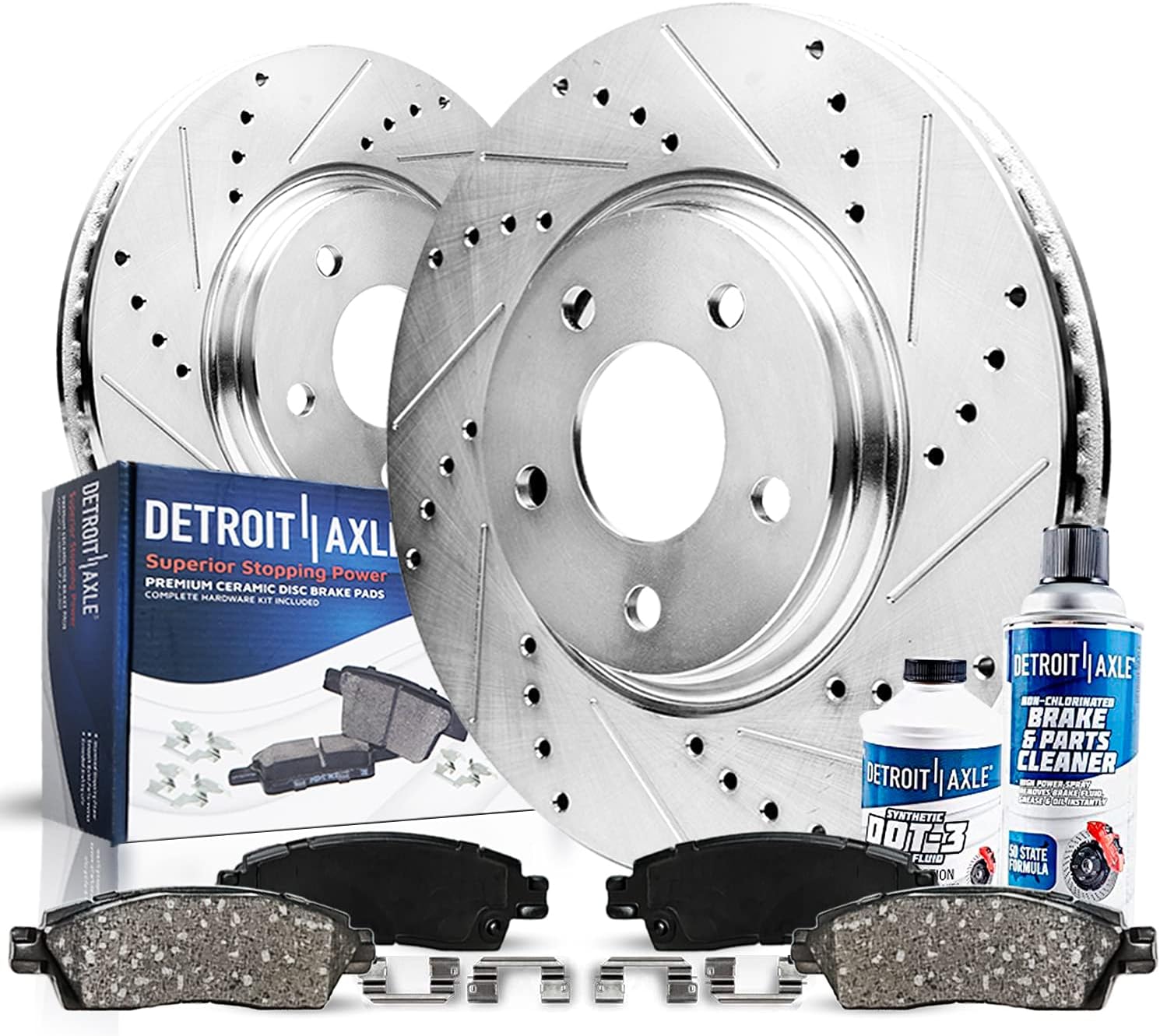
| Front rotor size | 13.86" (352 mm) |
|---|---|
| Pad type | Ceramic |
| Rotor style | Drilled & slotted |
This Detroit Axle front brake kit replaces the factory front rotors and pads on compatible Ford Explorer models with heavy-duty braking packages. It includes two drilled and slotted 13.86" rotors, two ceramic brake pads, brake cleaner, and fluid so you have the core parts needed for a front brake job. The drilled and slotted rotor design helps heat dissipation and reduces pad glazing under repeated heavy stops, while the ceramic pads are tuned for quieter operation and lower dust compared with some semi-metallic options. Buyers report straightforward fitment and complete packaging that includes hardware and anti-seize, which simplifies installation for a DIYer or technician. Limitations to keep in mind are that this kit targets specific Explorer heavy-duty brake configurations only and ceramic pads can feel less aggressive than metallic pads under extreme track-style braking. Also some users have reported isolated squeal events after hard use, so a proper bed-in and inspection after initial miles is advised.
Best for: Balanced buyers who want a complete, ready-to-install front brake replacement that improves heat control and reduces dust without moving to an aggressive track-oriented pad.
Less Ideal for: Drivers seeking maximum track or heavy towing performance who prioritize ultimate initial bite and fade resistance should consider a metallic or performance-specific brake kit instead.
- Complete front kit that includes rotors, ceramic pads, brake cleaner and fluid for one-stop replacement.
- Drilled and slotted rotors improve cooling and help prevent rotor warping under repeated heavy braking.
- Packaging includes installation hardware and anti-seize which aids fitment and reduces prep time for installation.
- Fits only specific Ford Explorer heavy-duty front brake configurations and is not a universal fit.
- Ceramic pads offer quieter operation but may deliver less initial bite than aggressive metallic compounds.
- A small number of users report occasional squeal after hard braking, requiring inspection or re-bed procedure.
Verdict: A well-packed, direct-fit front brake kit for Ford Explorer owners who want improved cooling and quieter, lower-dust stopping without stepping up to a track-focused setup.
Detroit Axle Front and Rear Drilled & Slotted Brake Kit with Ceramic Pads

| Front Rotor Diameter | 13.86 inch (352mm) |
|---|---|
| Rear Rotor Diameter | 13.58 inch (345mm) |
| Front Brake Pads | Ceramic, hardware included |
| Rear Brake Pads | Ceramic, hardware included |
This Detroit Axle brake kit supplies matched front and rear drilled-and-slotted rotors plus ceramic pads and basic installation consumables to restore and improve braking on compatible Ford Explorer models. It is typically used as a direct replacement when your rotors are worn or you want stronger fade resistance and quicker heat dissipation from slotted rotors. Notable inclusions are front and rear drilled/slotted rotors and matching ceramic pads, plus brake cleaner, DOT fluid, and hardware to simplify installation. In practice the kit delivers noticeably firmer bite and smoother stops than worn parts, and the slotted rotors help keep pad surfaces cleaner under repeated heavy braking. Install requires basic mechanical skills and standard tools; the kit does not include printed fitment instructions so a service manual or video is helpful. Buyers should expect slightly more noise and visual wear patterns common to drilled rotors versus plain rotors, and some owners replace calipers or clean seized hubs during installation to ensure the best fit. For a performance-minded upgrade that still matches factory fit, this kit is a practical option for the Explorer.
Best for: Performance-oriented buyers who prioritize stronger, more consistent stopping and better heat management during spirited driving or towing on a Ford Explorer.
Less Ideal for: Drivers who want the absolute quietest, lowest-maintenance replacement or who prefer plain rotors optimized solely for long pad life under mild daily driving.
- Complete front and rear kit includes rotors, ceramic pads, hardware, brake cleaner and DOT fluid for a full replacement
- Drilled and slotted rotors improve heat dissipation and reduce pad glazing during spirited or repeated braking
- Ceramic pads provide quieter, smoother stops and tend to produce less dust than metallic pads
- Designed to meet or exceed factory fit and finish for direct replacement on specified vehicles
- No printed installation instructions included, so DIYers may need external guides or videos
- Drilled and slotted rotors can generate more brake noise and visible wear than plain rotors
Verdict: A full front-and-rear drilled-and-slotted rotor kit with ceramic pads that boosts fade resistance and stopping feel for performance-focused Ford Explorer drivers.
Metrix Premium Chassis Parts Rear Vented Brake Rotor and Ceramic Pad Kit (Rear)

| Position | Rear |
|---|---|
| Rotor diameter | 13.58 inch (345 mm) |
| Includes | 2 rotors + 1 ceramic pad set |
| Certification | ECE R 90 |
This Metrix kit supplies both rear vented rotors and a ceramic pad set intended as a direct replacement for compatible Ford Explorer rear brakes. It is used as a like-for-like service kit when rear rotors and pads need replacing; the rotors are factory mill-balanced and ECE R90 certified to reduce pulsation while the ceramic pads aim to deliver quiet, low-dust braking. In practice the kit simplifies a rear brake job by including rotors, pads, and necessary hardware so you avoid mixing parts from different suppliers. Buyers report smooth, quiet stops and good initial fitment on Explorer models listed for compatibility. Limitations to note are occasional reports of imperfectly bent hardware clips and the pads do not include audible wear indicators, so you should monitor pad thickness manually. The kit is a budget-friendly alternative to dealer parts that leans on European manufacturing and testing certifications rather than an OEM badge.
Best for: Budget-conscious owners prioritizing a cost-effective, factory-fit rear brake replacement for their Ford Explorer who prefer a complete kit to streamline DIY or independent shop installs.
Less Ideal for: Drivers seeking dealer-branded parts or those who want built-in audible pad wear indicators should consider factory-name alternatives or upgraded performance brake components.
- Includes both rear rotors and ceramic pads for a complete rear brake replacement.
- Rotors are vented, mill-balanced, and ECE R90 certified for reduced vibration and thermal stability.
- Ceramic pads are formulated for low dust and quiet operation.
- Comes with installation hardware to simplify a DIY brake job.
- Some buyers reported bent or mismatched metal clips in the hardware kit that may require reuse of original clips or minor adjustment.
- Pads lack audible wear indicators so pad life must be checked visually.
Verdict: A wallet-friendly, complete rear brake kit for compatible Ford Explorer models that delivers quiet, low-dust braking but requires manual pad-wear checks due to no wear indicators.
Detroit Axle Front Brake Kit — Drilled & Slotted Rotors with Ceramic Pads
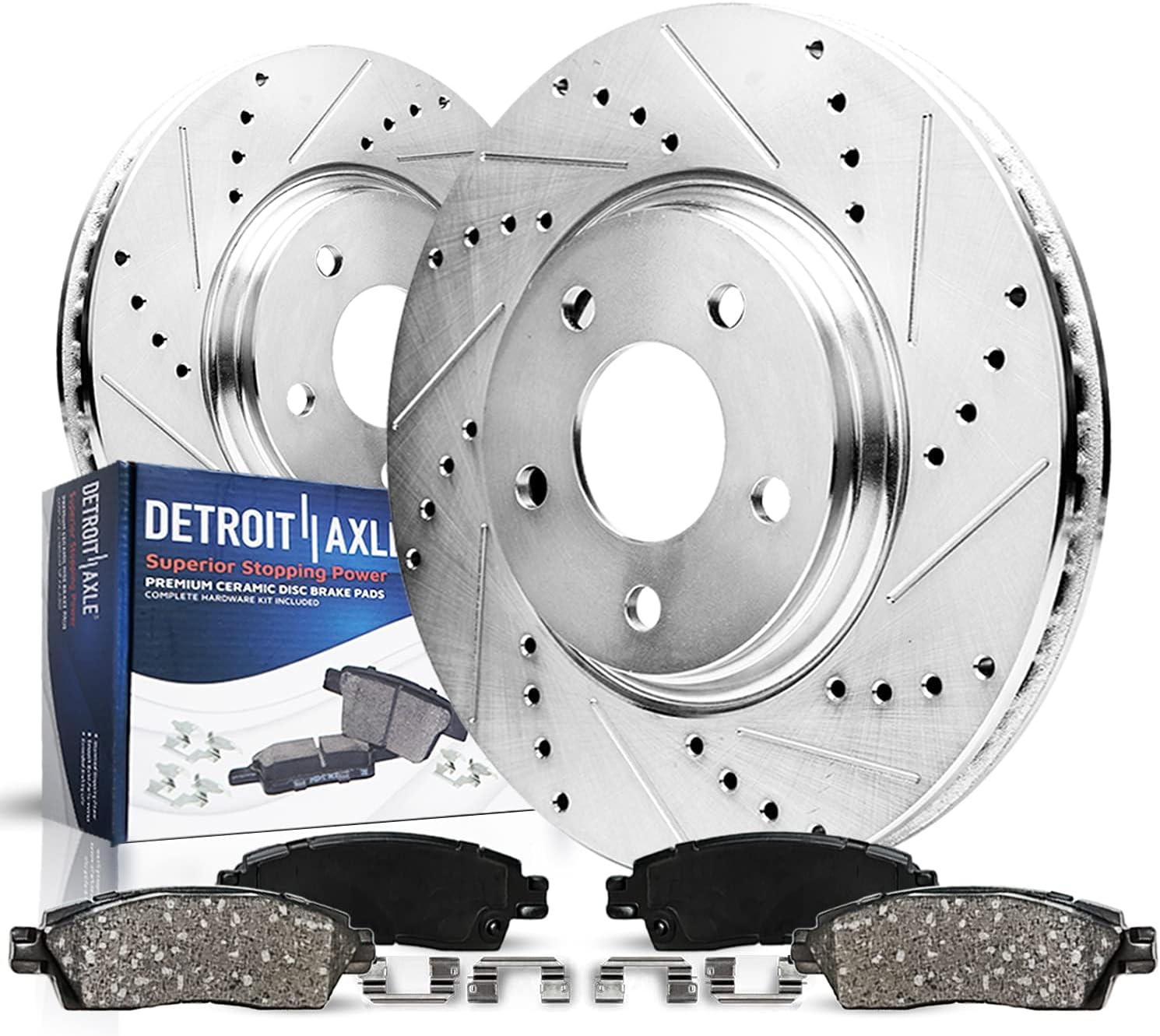
| Fitment | Front brake kit for 4WD Ford Explorer (specified model years) |
|---|---|
| Kit contents | 2 front drilled & slotted rotors and 2 front ceramic brake pads |
| Rotor type | Drilled and slotted |
| Pad material | Ceramic |
This Detroit Axle front brake kit provides a direct replacement braking setup for compatible 4WD Ford Explorer models, combining drilled and slotted rotors with ceramic pads. It is intended for straightforward installation as a paired kit and is typically used when the factory front rotors or pads are worn or to restore braking performance. The drilled and slotted rotor faces help dissipate heat and shed gas and debris during heavy stops, while the ceramic pads aim to deliver consistent bite with reduced dust compared with semi-metallic pads. Buyers report good fitment and simple installation, and the kit includes accessory items like shims and a grease packet to streamline installation. Limitations to consider are that drilled rotors can be noisier during bedding and may be less ideal for extreme towing or heavy-duty repeated high-heat use compared with some solid heavy-duty rotors, and long-term wear characteristics depend on driving style. For reliability-focused buyers looking to restore or maintain safe stopping on a Ford Explorer, this kit offers a practical balance of performance and everyday durability.
Best for: Reliability-focused buyers who prioritize restoring consistent, factory-quality stopping performance on a Ford Explorer and prefer a matched kit that installs cleanly and holds up in daily driving.
Less Ideal for: Drivers who subject their Explorer to heavy towing, frequent track-style braking, or commercial fleet duty should consider heavy-duty or specially rated rotors instead.
- Drilled and slotted rotor design improves heat dissipation and helps reduce surface glazing during repeated stops
- Ceramic brake pads produce less brake dust and provide predictable initial bite
- Sold as a matched front kit so rotor and pad compatibility is ensured for installation
- Includes installation accessories such as shims and grease packet to simplify fitting
- Drilled rotors can be noisier during bedding and may be more prone to cracking under extreme repeated high-heat loads
- Not specified as a heavy-duty or fleet-grade rotor option for severe towing or commercial use
Verdict: A matched front kit that restores reliable, cleaner-stopping performance on compatible Ford Explorer 4WD models while favoring everyday durability over extreme heavy-duty use.
TRQ Front Ceramic Brake Pad and Rotor Kit for Ford Explorer / Explorer Sport Trac (Front)
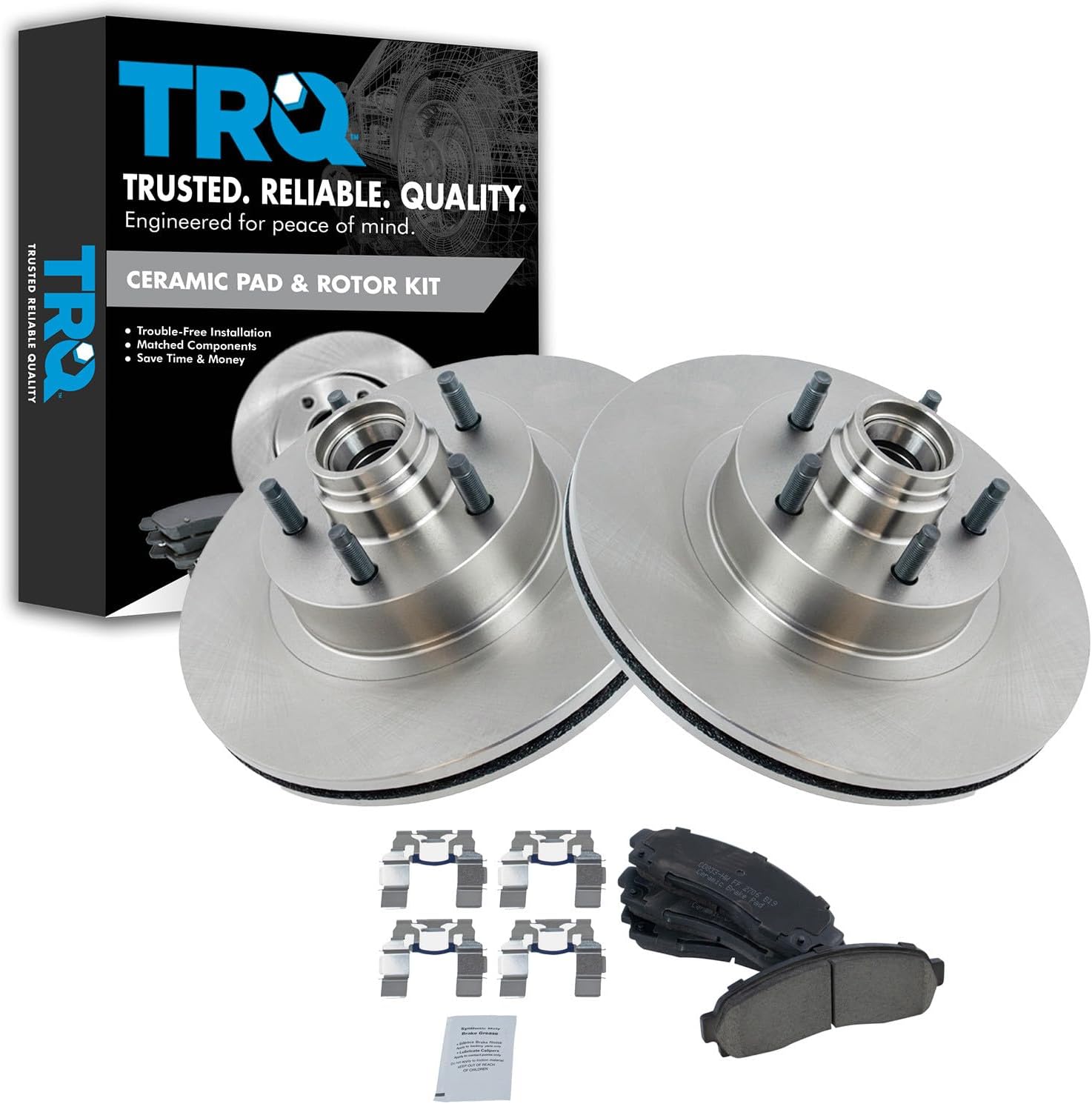
| Fitment | Ford Explorer Sport 2001-2003 RWD Front; Explorer Sport Trac 2001-2005 RWD Front |
|---|---|
| Brake Pad Material | Ceramic |
| Exterior | Machined |
| Position | Front |
This TRQ front brake pad and rotor kit supplies everything needed to refresh the front braking on compatible Ford Explorer models, pairing ceramic pads with machined rotors. It is intended as a direct vehicle-specific replacement for the front of rear-wheel-drive Explorers and Explorer Sport Trac from the early 2000s. The ceramic pads deliver quieter operation and reduced dust compared with semi-metallic compounds, while the rotors arrive machined and ready to install with pressed-in bearing races on some fitments to simplify assembly. TRQ highlights DIY installation resources and pre-assembled components to help mainstream owners complete the job without fabrication. Expect improved stopping feel and cleaner wheels under normal street driving, but know that ceramic pads can show different bite and fade characteristics under heavy towing or track use compared with performance pads. Also confirm exact Explorer year and front axle configuration before ordering because fitment is vehicle-specific and hardware may vary between applications.
Best for: Risk-averse mainstream buyers who prioritize a reliable, quieter replacement that closely mirrors factory fit and makes a do-it-yourself front brake refresh straightforward.
Less Ideal for: Drivers who frequently tow heavy loads, do aggressive driving, or demand track-capable fade resistance should choose a performance-oriented brake pad and rotor solution instead.
- Complete front kit with both rotors and a ceramic pad set for a single purchase and install session
- Machined rotors reduce prep time and may include pressed-in bearing races on compatible fitments
- Ceramic friction offers quieter stopping and lower wheel-dust under normal driving
- Vehicle-specific fit design aims for a plug-and-play replacement without modifications
- Manufacturer provides DIY installation videos and guidance for owner installers
- Ceramic pads are less suited to repeated heavy-load conditions like towing or track driving compared with high-performance or metallic pads
- Included hardware can vary by application and may not always match every vehicle variant
Verdict: A convenient, vehicle-specific front brake kit that improves everyday braking noise and dust for compatible Ford Explorers but is not targeted at heavy towing or track use.
Choosing the Right Ford Explorer Brake Rotors: Key Factors to Consider
Fitment and Mounting Specifications
Correct fitment is essential because rotors must match the Explorer's hub diameter, bolt pattern, thickness, and offset to avoid rubbing, uneven wear, or ABS sensor interference.
Choosing rotors with verified vehicle-specific dimensions reduces installation time and minimizes the need for machining or adapter components. Pay attention to hat height and pilot bore details since inconsistencies can cause runout or require shims. Properly matched rotors help maintain factory braking geometry and preserve wheel alignment and tire wear characteristics.
Material and Heat Management
Rotor material and casting quality determine how well a rotor resists thermal distortion and cracking during repeated stops.
Higher-grade iron formulations and consistent casting reduce the risk of hot spots that lead to warping. Some rotors include directional venting or improved vane designs to promote airflow and dissipate heat faster, which helps prevent fade during towing or spirited driving. Consider how the material choice will perform under your typical driving—daily commuting, highway towing, or stop-and-go city traffic.
Surface Design and Machining Tolerances
The rotor face finish, machining tolerance, and runout specification affect pedal feel, noise, and how well pads bed in.
A smooth, precisely machined surface yields consistent pad contact and reduces vibration and chattering. Patterned faces, such as slots or light machining, can aid pad cleaning and gas evacuation, but the specific design should match your brake pad type to avoid accelerated wear. Tight runout and parallelism specs limit uneven pad loading that causes pulsing or premature pad glazing.
Corrosion Protection and Coatings
Exposure to moisture and road salt accelerates rotor corrosion, which can lead to uneven surfaces and noisy braking if left unchecked.
Coatings or plated hats slow surface rust on non-friction areas and extend usable life between service intervals. For vehicles driven in wet climates or where salt is used on roads, enhanced corrosion protection helps maintain consistent appearance and fit, making future removal and servicing easier. Consider factory-style coatings versus fully coated designs based on clipping compatibility and the potential need to remove coating in the friction surface area during initial bedding.
Serviceability and Replacement Options
How easy rotors are to remove, resurface, or replace affects long-term ownership costs and maintenance scheduling.
Look for rotors that use standard fasteners and have documented service procedures for the Explorer, so routine brake work does not require special tools or adapter parts. Check whether replacement hats or hardware kits are available separately to support partial repairs rather than full rotor swaps. Also consider minimum thickness specs and whether resurfacing is recommended or discouraged for the rotor design when planning future service.
Recognizing Brake Rotor Wear on a Ford Explorer
Knowing when the brake rotors on your Ford Explorer need attention helps you avoid uneven braking and costly damage to calipers and pads. Common signs that rotors are worn or damaged include vibration through the brake pedal or steering wheel under braking, a persistent squeal or grinding noise, visible grooves or scoring on the rotor face, and a pulsating feel when you stop at low speeds.
Some symptoms point to specific problems. Metal-on-metal grinding usually means pads have worn through and the rotor surface is being cut. Vibrations or pulsation often indicate thickness variation or warping. Corrosion and pitting are more common on vehicles that see salt or frequent wet conditions and can reduce effective pad contact.
- Vibration in the brake pedal or steering wheel under braking
- Squealing, scraping, or grinding noises while braking
- Visible scoring, deep grooves, or blue discoloration on the rotor surface
- Longer stopping distances or a spongy brake feel
How to Measure Rotor Thickness and Runout on Your Explorer
Accurate measurement of rotor thickness and lateral runout helps determine whether resurfacing or replacement is necessary. To measure thickness, use a micrometer or a digital caliper capable of measuring to at least 0.01 mm. Measure at multiple points around the rotor edge and face, then compare that reading to Ford's minimum thickness specification for your Explorer year and brake package.
Runout is the lateral wobble of the rotor as it spins and is measured with a dial indicator mounted to a fixed point on the suspension or hub assembly. Spin the rotor slowly and record the maximum deviation. Excessive runout can cause pedal pulsation even if the rotor thickness is within spec. Always note that published minimums and tolerance figures are specific to the Ford Explorer model year and configuration, so check the proper spec before deciding.
- Measure rotor thickness at several points with a micrometer
- Compare readings to the Ford Explorer minimum thickness spec
- Check lateral runout with a dial indicator to identify wobble
- Record and average multiple measurements to confirm results
Rotor Resurfacing Versus Replacement for the Explorer
Deciding between resurfacing and replacement depends on the extent of wear, remaining thickness, and the rotor condition. Resurfacing can correct minor scoring and remove slight thickness variation but removes material and reduces remaining life. If resurfacing would bring the rotor below the factory minimum thickness, replacement is the only safe option.
For the Ford Explorer, lean toward replacement when there are deep grooves, heat cracking, severe blueing from overheating, or corrosion that compromises the rotor face. Also replace rotors if the vehicle has high mileage and the cost difference between resurfacing and new rotors is small relative to the safety and longevity benefits. Resurfacing can be a cost effective short term fix for lightly scored rotors but is not ideal for rotors that have been repeatedly resurfaced.
- Resurface for light scoring and minor thickness variations only
- Replace if resurfacing would reduce thickness below spec
- Replace for heat cracking, heavy corrosion, or deep grooves
- Consider replacement when rotors already had previous machining
Single Versus Two Piece Rotors: Which Makes Sense for an Explorer
Single piece rotors are the traditional design where the friction ring and hub are one casting. They are simple, durable, and generally less expensive. Two piece rotors separate the friction surface from the aluminum hat. That design can reduce unsprung weight, improve heat dissipation management, and allow replacement of only the wear surface in some cases.
On a Ford Explorer used primarily for daily driving and family transport, single piece rotors are often the practical choice because they are robust and serviceable. Two piece designs can benefit Explorers used for towing, heavy loads, or frequent high heat braking because the reduced weight and improved thermal expansion management can reduce warp and help braking consistency. Keep in mind that two piece rotors and the hardware they require may have slightly different mounting and torque procedures, so follow service manual guidance for your Explorer.
- Single piece: durable, cost effective, easy to service
- Two piece: lower unsprung weight, better heat control, potential service advantages for heavy duty use
- Choose based on driving load, towing habits, and budget
Slotted, Drilled, and Plain Rotors: Matching Design to Explorer Driving Needs
The three common surface designs—plain, slotted, and drilled—each have trade offs. Plain rotors offer the quietest operation and longest life for everyday driving. Slotted rotors help clear pad material and gases for more consistent bite under repeated stops. Drilled rotors assist in gas and water evacuation but can be prone to cracking under extreme heat cycles.
For most Ford Explorer owners who do normal commuting, plain or lightly slotted rotors deliver balanced performance with low noise. If you regularly tow or do repeated downhill braking, slotted surfaces can help maintain pad contact and reduce fade. For performance oriented applications or track use, drilled rotors may be considered but understand that they can be more vulnerable to stress cracking when exposed to repeated heavy thermal cycling.
- Plain: best for quiet daily driving and long life
- Slotted: improved pad cleaning and fade resistance for repeated stops
- Drilled: faster gas and water evacuation but higher crack risk under heavy heat
Practical Installation, Maintenance, and Budgeting Advice
When replacing brake rotors on a Ford Explorer, follow a consistent installation routine. Always clean the hub surface before mounting a new rotor to ensure full contact and minimize runout. Torque wheel studs and caliper mounting bolts to Ford specifications using a calibrated torque wrench. Replace brake hardware such as caliper guide pins, clips, and wheel lugs if they show wear or corrosion.
Budgeting for brake service requires realistic expectations. A brake rotors replacement job typically includes rotors, pads, and often some ancillary hardware. Use a brake rotor price guide approach by estimating parts and labor separately and accounting for any machining if resurfacing is considered. Labor time will vary by dealer, independent shop, or DIY approach. For owners who prefer clarity, gather local labor estimates and compare them to parts costs when deciding whether to resurface or replace.
After installation, bed new pads and rotors per the pad manufacturer guidelines to ensure proper transfer film and braking performance. Regular inspections at oil changes or tire rotations will catch early wear. If you are asking, compatible brake rotors for my car are those specified for the Explorer's year, axle, and brake package, so always confirm part fitment using the vehicle identification details before purchase.
- Clean hub faces and torque fasteners to Ford specs
- Replace pads and inspect hardware during rotor service
- Estimate parts and labor separately when budgeting
- Follow pad bedding procedures and recheck torque after initial miles
How We Chose the Best Ford Explorer Brake Rotors
To assemble this list we applied focused, vehicle-specific filters to identify rotors suited to the Ford Explorer. We prioritized exact fitment and OEM-equivalent mounting dimensions to ensure straightforward installation and proper wheel clearance. Thermal performance and material composition were evaluated to gauge resistance to warping and fading under repeated heavy braking. Surface design and machining tolerances were considered for how they influence pedal feedback, noise, and bed-in behavior. We also examined corrosion protection and coating longevity for durability in wet or salted conditions, plus the availability of replacement hardware or hats when relevant. Exclusions included parts without clear vehicle-fit data, items lacking basic material specs, and products intended only for race use rather than road duty. The resulting shortlist reflects a balance of functional durability, serviceability, and documented fitment for the Explorer platform.
Our full evaluation process is outlined in our review methodology.
FAQ
How often should I inspect Ford Explorer brake rotors?
Inspect rotors whenever you replace brake pads and during annual brake checks. Visual checks for scoring, heavy rust, and thickness measurements will indicate whether service or replacement is needed. If you notice vibration, noise, or increased stopping distance, inspect the rotors sooner.
Can rotors be resurfaced instead of replaced?
Resurfacing can be an option when rotors are only lightly scored and above the manufacturer minimum thickness. Many modern rotors are cast with thinner allowances, so resurfacing is less common than before. Always compare the rotor's minimum thickness to measured thickness and follow the service recommendation for your vehicle.
What are common brake rotor wear symptoms?
Typical signs include a pulsing brake pedal during stops, audible squeal or scraping noises, and visible grooves or uneven rust on the surface. Increased stopping distances or vibration under braking also suggest significant wear or warping. Any sudden change in pedal feel warrants prompt inspection.
Should I choose slotted or drilled rotors for a Ford Explorer?
Slotted faces help sweep away pad debris and maintain bite in heavy use, while drilled designs improve gas and water evacuation but may be prone to cracking under extreme thermal stress. For daily driving and light towing, a plain or slotted design often balances longevity and performance. Match the rotor style to your driving demands and the pad material you plan to use.
How do I measure rotor thickness correctly?
Use a micrometer or Vernier caliper to measure rotor thickness at several points around the friction surface, avoiding the outer edge chamfers. Record the smallest reading and compare it to the minimum thickness stamped on the rotor or in service documentation. Measure with the rotor cool and clean for the most accurate reading.
Final Verdict
Prioritize rotors that offer correct fitment, robust thermal performance, and service-friendly features to get consistent stopping power from your Ford Explorer. Balance material and surface design choices against how you drive—daily commuting requires different tradeoffs than heavy towing or spirited use.Plan inspections around pad changes and use thickness and runout measurements to decide between resurfacing and replacement. Focusing on the factors above will help you select rotors that deliver dependable braking and reasonable long-term serviceability.
Explore More:
- Check out all Ford Explorer parts & accessories
- Explore Brake Rotors Maintenance & Repair Guides
- Explore Brake System
- Browse all Auto Parts
