

Note: This article contains affiliate links. If you click on these links and make a purchase, I may earn a small commission at no extra cost to you. This helps support my research and content. Read my full affiliate disclosure here.
If you drive a 2002-2005 Ford Explorer, worn or warped rotors can mean longer stopping distances, pedal vibration, and uneven pad wear. Replacing the rotors with correctly sized, durable units restores braking performance and can extend the life of your pads and calipers. This guide collects seven top-performing brake rotors suited to the Explorer's factory fitment and common driving conditions.We shortlisted options that prioritize correct fit, material quality, and machining tolerances. Below you will find practical notes on compatibility, performance tradeoffs, and the evaluation criteria used to build this list, followed by user-focused guidance to help you pick the best rotor for your driving needs.
Looking for other parts? See all Ford Explorer parts & accessories.
Top Picks at a Glance


1. Detroit Axle Front and Rear Brake Kit with Ceramic Pads for 2002–2005 Ford Explorer / Mercury Mountaineer

| Fitment | 2002–2005 Ford Explorer / Mercury Mountaineer |
|---|---|
| Front rotor diameter | 12.01 inch (305mm) |
| Rear rotor diameter | 11.85 inch (301mm) |
| Pad material | Ceramic |
| Exterior finish | Zinc plated |
This Detroit Axle kit supplies everything needed to refresh the braking system on a 2002–2005 Ford Explorer or Mercury Mountaineer: two front ventilated rotors, two rear rotors, and front and rear ceramic pads with hardware. The rotors are zinc plated to resist corrosion and feature ventilation slots to help dissipate heat for more consistent braking under repeated stops. Ceramic pads deliver quieter operation and produce less dust than many semi-metallic options, making them a practical choice for daily driving. Fitment is machined to match factory locating holes so installation should drop in without modifications for the specified rotor diameters. The kit is aimed at drivers who want a full replacement set rather than piecemeal parts, and it simplifies a multi-component job by including hardware clips. Expect improved pedal feel over worn parts and reduced rotor corrosion compared with bare finishes, but note that ceramic pads prioritize low noise and dust over maximum bite for aggressive driving and that drilled or slotted surfaces can wear faster if used heavily on track. For regular street use this kit balances durability, noise control, and straightforward fitment for the listed Explorer years.
Best for: Drivers who want a balanced, all-in-one replacement that restores braking performance and reduces noise and dust for everyday street use on 2002–2005 Explorer or Mountaineer models.
Less Ideal for: Enthusiasts who regularly do track days or need maximum high-temperature stopping power should choose a performance-oriented pad and rotor combination instead.
- Complete front and rear set includes rotors, ceramic pads, and hardware for a single purchase
- Zinc plating on rotors reduces visible corrosion and wheel dust
- Ventilated/slot rotors improve cooling to help resist fade during repeated stops
- Ceramic pads offer quieter operation and lower brake dust compared with many alternatives
- Ceramic pads trade some initial bite compared with high-performance semi-metallic pads, so not ideal for aggressive driving
- Drilled/vented surfaces can show faster wear under track or heavy-duty use
Verdict: An easy, factory‑fit complete brake kit that restores reliable, quiet daily-driving braking for 2002–2005 Explorer and Mountaineer owners.
2. Betthand Front and Rear Brake Kit with Geomet Coated Rotors and Ceramic Pads for 2002–2005 Ford Explorer

| Fitment | 2002-2005 Ford Explorer / 2002-2005 Mercury Mountaineer |
|---|---|
| Rotor coating | Geomet |
| Front rotor type | Vented slotted drilled |
| Pad material | Ceramic |
This Betthand kit supplies front and rear rotors plus ceramic pads sized for 2002–2005 Ford Explorer and corresponding Mercury Mountaineer models. The rotors are vented, slotted, and drilled and finished with a Geomet corrosion coating to resist rust and extend service life, while the included ceramic pads aim to cut dust and noise compared with metallic options. In use the rotor design helps dissipate heat more quickly during heavy loads or towing, which reduces fade and maintains more consistent stopping power on long descents. The factory-style caliper compatibility and the included installation and break-in guidance make this a straightforward replacement for owners who want a performance-leaning upgrade without changing braking hardware. Expect quieter stops and cleaner wheels versus basic parts, though drilled and slotted rotors can produce slightly more brake dust and may wear differently than plain rotors under some driving styles. Professional installation is recommended to ensure correct bedding and to avoid vibration issues.
Best for: Drivers who want a performance-focused, long-lasting replacement set for daily driving and occasional towing on a 2002–2005 Explorer or Mountaineer and who prioritize reduced noise and corrosion resistance.
Less Ideal for: Buyers looking for a pure race-only rotor or those who prefer undrilled solid rotors for the lowest possible wear in aggressive stop-and-go track use.
- Geomet coating provides strong corrosion resistance for longer rust-free life
- Vented, slotted, and drilled rotors improve heat dissipation and reduce brake fade under heavy use
- Ceramic pads produce quieter, smoother stops with reduced brake dust
- Kit includes both front and rear rotors and pads for a complete vehicle-specific replacement
- Drilled and slotted surfaces can accelerate pad and rotor wear in some driving conditions
Verdict: A ready-to-install, vehicle-specific upgrade that improves heat management, reduces noise and corrosion, and gives Explorer owners a durable performance-leaning brake replacement.
3. Detroit Axle Front Brake Rotors (12.01") for 2002-2005 Ford Explorer / 2002-2005 Mercury Mountaineer

| Fitment | 2002-2005 Ford Explorer (12.01" front rotors); 2002-2005 Mercury Mountaineer |
|---|---|
| Finish | Zinc plated |
| Ventilation | Vented |
| Material Type | Ceramic |
These Detroit Axle front brake rotors replace the 12.01-inch front discs on 2002–2005 Ford Explorer and 2002–2005 Mercury Mountaineer models and are sold as a two-rotor kit. They are vented to help dissipate heat quickly and zinc plated to resist corrosion and reduce visible wheel dust. Machined locating holes match factory placement for straightforward installation without modifications, and the manufacturer notes they are tested for impact, wear, and fatigue. In day-to-day use they provide a direct factory-style replacement for worn or warped rotors and pair well with ceramic pads for lower dust and quieter operation. The practical benefits are durability from the plating and improved cooling from the vents, but buyers should expect standard replacement rotors rather than performance upgrades like drilled and slotted designs for track use. Overall the rotors are a sensible, no-nonsense option when you need a reliable front rotor set that fits cleanly and restores factory braking feel.
Best for: Buyers who want a reliable, factory-style front rotor replacement that restores braking performance with minimal fuss and straightforward installation.
Less Ideal for: Drivers seeking upgraded performance rotors for track use or aggressive driving should look for drilled, slotted, or high-performance-specific options instead.
- Vented design improves heat dissipation for more consistent braking under load
- Zinc plating reduces corrosion and helps keep visible wheel dust to a minimum
- Machined locating holes match factory placement for easy, bolt-on installation
- Sold as a two-rotor kit so both front rotors are replaced at once
- Not a high-performance drilled or slotted rotor for aggressive or track driving
Verdict: A practical, corrosion-resistant vented rotor kit that restores factory braking on 2002–2005 Explorer and Mountaineer models with easy bolt-on fitment.
4. Dynamic Friction Company Front Brake Rotor (2002–2005 Explorer/Mountaineer)
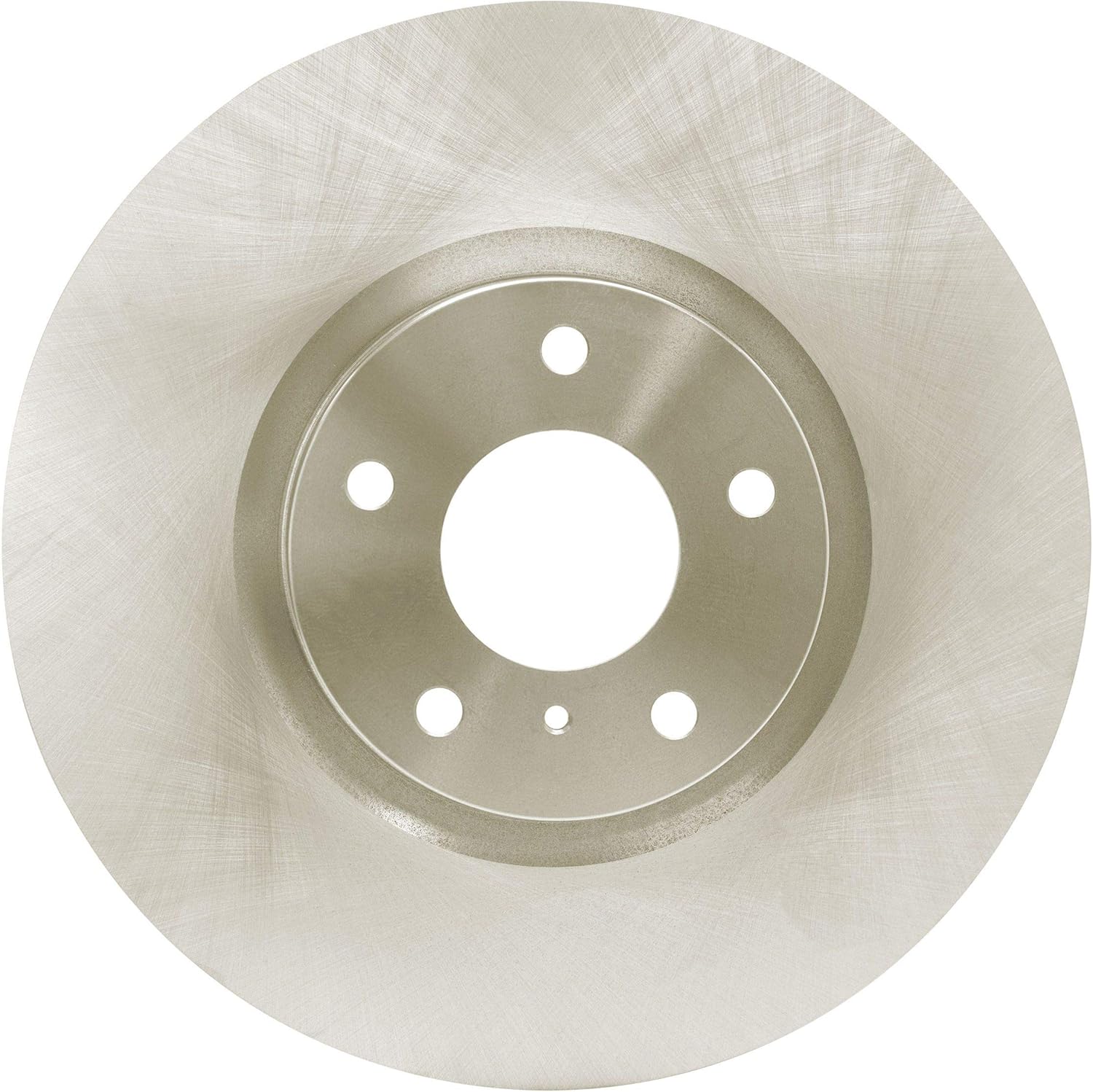
| Included Components | 1 Dynamic Friction Company Disc Brake Rotor |
|---|---|
| Material Type | Iron |
| Automotive Fit Type | Vehicle Specific Fit |
| Compatible with Vehicle Type | Cars, Sport-Utility-Vehicles, Trucks |
This Dynamic Friction Company brake rotor is a direct-fit front replacement for 2002–2005 Ford Explorer and Mercury Mountaineer models. It is a blank, mill-balanced rotor cast from G3000/G11H18 iron intended to deliver smooth, vibration-free stopping and long service life. Typical use is as a one-for-one replacement when resurfacing is not an option or when upgrading from badly worn rotors; installation requires no modification and follows factory-spec mounting. The rotor’s unfinished surface and solid construction focus on dependable braking rather than styling or noise-control features like slotted or drilled faces. The practical benefits are straightforward: factory-quality fit, predictable braking feel, and a durable iron casting that resists warping under normal driving. Limitations are that it is a plain blank rotor so it does not offer extra cooling or corrosion protection, and buyers wanting premium noise reduction or performance venting will need a different design.
Best for: Buyers replacing worn or damaged front rotors on a 2002–2005 Explorer or Mountaineer who prioritize a straightforward, factory-quality replacement that installs easily and lasts under normal driving.
Less Ideal for: Drivers seeking high-performance rotors with extra cooling, noise-reducing coatings, or aesthetic finishes should consider performance or coated options instead.
- Vehicle-specific direct fitment for 2002–2005 Explorer and Mountaineer for simple installation
- Mill-balanced blank design reduces vibration and promotes smooth braking
- Cast from high-strength G3000/G11H18 iron for durability and resistance to warping
- Sold as a single rotor so you can replace only the damaged side
- Unfinished blank rotor without drilled or slotted features limits heat dissipation and styling options
Verdict: A no-nonsense, factory-quality front rotor replacement for 2002–2005 Explorer and Mountaineer owners who want a durable, easy-to-install rotor on a budget.
5. Raybestos R-Line Front Disc Brake Rotor (680014R)

| Compatible vehicles | 2002-2005 Ford Explorer, 2002-2005 Mercury Mountaineer |
|---|---|
| Material Type | Cast Iron |
| Exterior Finish | Machined |
| Automotive Fit Type | Vehicle Specific Fit |
This Raybestos R-Line front rotor is a direct-fit replacement designed for everyday driving on select 2002–2005 Ford Explorer and Mercury Mountaineer models. Made from cast iron with a machined finish, the rotor is mill balanced and engineered to meet SAE tensile strength standards for structural integrity. In practice that means reduced vibration and a smoother pedal feel thanks to limited lateral runout and controlled thickness variation, which also helps extend pad life and reduce brake noise. Installation is straightforward since it is built to factory fit, form, and function from OE samples, so it swaps into the hub without modification on compatible vehicles. The part is focused on reliable, long-term service rather than performance braking, so drivers seeking heavy-duty or track use should look elsewhere. For routine street driving this rotor offers predictable stopping, quieter operation, and durability that matches typical replacement expectations.
Best for: Buyers who prioritize dependable, factory-style braking replacements for daily-driven Explorers and want a rotor that installs easily and delivers consistent stopping performance.
Less Ideal for: Drivers who regularly tow heavy loads, frequently carry high payloads, or want upgraded performance rotors for spirited driving or track use should consider heavy-duty or performance options instead.
- Vehicle-specific fit for 2002–2005 Ford Explorer and 2002–2005 Mercury Mountaineer for easy installation
- Cast iron construction with machined finish for durability and consistent contact with pads
- Mill balanced design and low lateral runout to reduce vibration and pedal pulsation
- Manufactured to SAE strength standards for dependable structural integrity
- Designed for everyday street driving rather than high-performance or heavy towing use
Verdict: Pick this rotor if you want a reliable, factory-quality direct replacement that restores smooth, quiet, everyday braking on 2002–2005 Explorer front axles.
6. Detroit Axle Front and Rear Drilled & Slotted Brake Kit with Ceramic Pads for 2002–2005 Ford Explorer

| Fitment years | 2002-2005 |
|---|---|
| Front rotor size | 12.01 inch (305mm) |
| Rear rotor size | 11.85 inch (301mm) |
| Pad material | Ceramic |
| Warranty | 10 Year Warranty |
This Detroit Axle kit bundles everything needed to replace both front and rear braking surfaces on 2002–2005 Ford Explorer and Mercury Mountaineer models that use the listed rotor sizes. The kit includes drilled and slotted rotors front and rear, ceramic brake pads with hardware, a can of brake cleaner and a bottle of brake fluid so you can finish a full brake job without sourcing extra parts. The drilled and slotted rotors help heat dissipation and moisture removal for more consistent braking under load, while zinc plating reduces surface corrosion during storage and initial service life. Ceramic pads are quieter and produce less dust than semi-metallic compounds, which is useful for daily-driven SUVs. Installation is straightforward if you have basic tools and mechanical experience, though professional installation is advisable if you are not comfortable with brake work. The kit is vehicle-specific by rotor diameter so confirm your Explorer/Mountaineer uses the 12.01 inch front and 11.85 inch rear rotors before buying.
Best for: Buyers who prioritize a single verified kit that replaces all four rotors and pads and want components that reduce dust and noise while restoring braking performance; ideal for do-it-yourselfers comfortable with a full brake job or those seeking a straightforward shop install.
Less Ideal for: Drivers whose vehicle uses different rotor diameters or who prefer heavy-duty or track-oriented pad compounds should consider other rotor/pad combinations.
- Complete kit includes front and rear drilled and slotted rotors, ceramic pads, hardware, brake cleaner and brake fluid.
- Drilled and slotted rotors improve cooling and help expel gases and moisture under heavy braking.
- Zinc plating reduces surface corrosion and visible wheel dust during initial service life.
- Ceramic pads offer low noise and reduced brake dust compared with many semi-metallic pads.
- Fitment requires the specific rotor diameters listed so it will not fit Explorers with different rotor sizes.
Verdict: A complete, vehicle-specific front-and-rear drilled-and-slotted rotor kit with ceramic pads that makes a full brake refresh for 2002–2005 Explorers simple and low-dust.
7. Detroit Axle Front Brake Kit with 12.01" Rotors and Ceramic Pads

| Fitment | 2002-2005 Ford Explorer / Mercury Mountaineer (front) |
|---|---|
| Rotor diameter | 12.01 inch (305 mm) |
| Pad material | Ceramic |
| Orientation | Front |
This Detroit Axle front brake kit replaces the front rotors and pads on 2002–2005 Ford Explorer and Mercury Mountaineer models using 12.01-inch rotors. The kit bundles two vented, zinc-plated rotors, two ceramic brake pads with installation hardware, a brake cleaner spray and a bottle of brake fluid so you have most items needed for a single-axle service. Vented rotors and zinc plating improve cooling and corrosion resistance, while the fully ceramic pads reduce brake dust and aim for quieter operation. Fitment notes say the locating holes and machining match factory-style parts to allow bolt-on installation without modifications. For a risk-averse buyer this kit is convenient because it groups matched components and basic consumables, cutting the need to source separate parts. Limitations: the kit is for front brakes only and does not include calipers or hoses, and professional installation or proper bedding of pads is recommended to achieve expected braking performance and longevity.
Best for: Buyers who prioritize a conservative, low-risk replacement that bundles matched front rotors and pads with basic consumables for a straightforward repair on a 2002–2005 Explorer or Mountaineer.
Less Ideal for: Shoppers who need a full brake overhaul including calipers, or those seeking performance-oriented rotors and pads for aggressive driving or towing.
- Complete front-axle kit that includes rotors, ceramic pads, hardware, cleaner and brake fluid for a single service.
- Vented rotors with zinc plating for improved heat dissipation and corrosion resistance.
- 100% ceramic pads reduce brake dust and are engineered for quieter operation.
- Machined locating holes and factory-style fitment designed to install without modifications.
- Covers front axle only and does not include calipers or other brake system components.
- No detailed performance data provided such as measured stopping distances or rotor thickness specifications.
Verdict: A convenient, factory-style front brake replacement kit that bundles machined rotors and ceramic pads for a low-risk, like-for-like repair on 2002–2005 Ford Explorer front brakes.
Choosing the Right 2002-2005 Ford Explorer Brake Rotors: Key Factors to Consider
Fitment and Dimensions
Correct fitment is the single most important factor for the 2002-2005 Ford Explorer because rotors must match the vehicle's hub diameter, bolt pattern, and overall thickness to install without modification. Mismatched dimensions can cause improper rotor seating, uneven pad contact, axle bearing preload changes, and abnormal vibration.
Verify hub-centric vs lug-centric fit information where available, and ensure the rotor's center bore aligns with the Explorer hub. Pay attention to any notes about required hardware or hub machining; for this vehicle range, avoid rotors that demand extra modification. Also confirm whether the rotor is a front or rear unit and matches the Explorer's specified venting and overall diameter.
Material and Heat Management
Rotor material and internal venting govern heat capacity and how quickly the rotor sheds heat during repeated braking events. For a mid-size SUV like the Explorer, which may see towing or heavy loads, rotors with robust cast iron grades and effective vent channels reduce the risk of heat-induced warping and fade.
Look for rotors with consistent vent designs and adequate mass to absorb heat without becoming brittle. Some aftermarket options alter vane count or thickness for better cooling; these choices affect weight and thermal behavior, so prioritize designs that maintain structural integrity under repeated thermal cycles.
Surface Finish and Machining Tolerances
The rotor's friction surface finish, lateral runout, and thickness variation have a direct effect on pedal feel and noise. Poorly machined surfaces increase the chance of pulsation, squeal, or accelerated pad wear on the Explorer.
Choose rotors with minimal thickness variation and low runout specifications where possible. Fully machined or precision-balanced rotors are preferable for owners who experience vibration. Surface treatments like chamfering and light cross-hatching can improve bedding-in behavior and reduce early noise.
Coating and Corrosion Resistance
Corrosion can accelerate uneven wear and complicate installation as the rotor's bell area or mounting face rusts. For Explorers driven in wet or winter climates, rotors with protective coatings on the hat and edges help extend service life and maintain clean contact surfaces.
Coatings vary from light zinc to thicker protective finishes; consider how often the vehicle is exposed to salt or brine. Coated faces that avoid the braking surface still protect the rotor body without compromising pad bedding. Regular inspection and cleaning during service also help mitigate corrosion-related problems.
Design Features: Slotted, Drilled, and Venting
Design features like slots, holes, or enhanced venting change how the rotor handles gas, dust, and heat. Slotted patterns help clear pad material and maintain a fresh friction surface, which can improve bite and reduce glazing on the Explorer. Drilled holes assist water evacuation but may reduce strength under heavy, repeated heat cycles.
For everyday driving and occasional towing, well-vented plain or slotted rotors often balance longevity and performance. High-stress use cases that produce extreme temperatures require designs that trade some durability for improved cooling. Understand the tradeoffs: increased gas and dust clearing vs potential for cracks around holes or reduced thermal mass.
Serviceability and Resurfacing Considerations
Deciding whether to resurface or replace rotors depends on minimum thickness specifications and visible wear. For Explorers, check the rotor's stamped minimum thickness and the service limit. Resurfacing removes material and may shorten rotor life if the rotor is near its minimum specification.
If the rotor has deep scoring, heavy rust pitting, or has been machined repeatedly in the past, replacement is usually the safer long-term choice. Also consider the cost and availability of replacement rotors for the Explorer when planning maintenance, and whether new hardware or replacement screws are needed for proper installation.
Understanding Fitment for 2002-2005 Explorer
Fitment specifics for the 2002-2005 Ford Explorer include rotor diameter, thickness, bolt pattern, and hub bore. Before selecting a rotor, confirm whether you need a front or rear unit and check the Explorer's specified rotor dimensions from your service manual or parts data.
Some rotors are listed as hub-centric which centers the rotor on the hub for reduced runout, while others rely on the wheel studs for centering. Choosing a rotor that matches the Explorer's original centering method minimizes installation issues and vibration risk.
- Confirm front versus rear application
- Verify center bore and bolt pattern match
- Check stamped minimum thickness before resurfacing
When to Resurface a Rotor Vs Replace It
Resurfacing restores a smooth surface when the rotor has light scoring or glazing and remains above the minimum thickness. For the Explorer, light machining can be a cost-effective short-term fix if the rotor retains adequate thickness and shows no structural defects.
Replace rotors if they are below the minimum thickness, have deep grooves, or show heat cracks. Replacing rather than resurfacing preserves braking performance longer and avoids repeated machining that shortens rotor life.
- Measure rotor thickness with calipers or micrometer
- Compare to the stamped minimum thickness or service spec
- Inspect for heat cracks and deep pitting before deciding
Maintenance Tips to Extend Rotor Life
Routine inspection and periodic cleaning help prevent premature rotor deterioration on the Explorer. Remove surface rust from the hat and hub mating face during service to ensure proper seating and reduce the risk of runout. Keep calipers and hardware clean and lubricated where specified.
Replace brake pads before they reach metal-to-metal contact to avoid scoring the rotor. When installing new pads, perform a proper bedding-in procedure to ensure consistent contact and avoid glazing that can accelerate uneven wear.
- Inspect rotors during every pad change
- Keep mounting surfaces free of rust and debris
- Follow a controlled bedding-in process after replacement
Tradeoffs Between Slotted and Drilled Options
Slotted rotors help clear pad material and maintain a clean friction surface, which often improves initial bite and reduces glazing tendencies. For the Explorer used in mixed driving conditions, slots can deliver consistent braking under variable conditions without significantly compromising strength.
Drilled rotors improve wet-weather performance by allowing water to escape, but drilled holes create stress concentrations that can increase the risk of cracking under repeated heavy braking. For most Explorer owners, slotted or plain vented rotors are a balanced choice unless specific cooling needs demand drilled designs.
- Slots improve pad cleaning and bite
- Drilled holes aid water dispersion but may reduce durability
- Consider driving style and load when choosing design
How to Measure Rotor Thickness and Check Wear
To measure rotor thickness, use a micrometer or calipers at multiple points around the friction surface and compare the readings to the rotor's minimum thickness specification. Measure both faces and average readings for an accurate assessment.
Also check for lateral runout by rotating the rotor against a dial indicator. If runout exceeds service limits, it can cause pedal pulsation and uneven pad wear, indicating the rotor should be resurfaced or replaced depending on remaining thickness.
- Use a micrometer for thickness at several locations
- Check stamped minimum thickness before machining
- Measure lateral runout with a dial indicator
Still looking for the perfect fit?
Select your Ford Explorer configuration to see the most relevant Brake Rotors recommendations
How We Chose the Best 2002-2005 Ford Explorer Brake Rotors
We selected the seven rotors using evaluation filters that reflect real-world needs for the 2002-2005 Ford Explorer. Primary criteria included exact fitment to the Explorer's specified hub diameter, bolt pattern, and offset so each rotor mounts without modification. Material and metallurgy were a major factor, focusing on cast iron grades and thermal characteristics that affect heat dissipation and resistance to cracking.We also considered surface finish and machining tolerances, such as lateral runout and thickness variation, because these directly influence pedal feel and vibration. Corrosion protection and coating choices were reviewed to judge longevity in typical road environments. Finally, we examined rotor venting and friction surface options for their effect on fade resistance during towing or repeated stops.Excluded items included any rotors requiring hub machining, adapters, or nonstandard hardware, as well as those lacking clear fitment data for the Explorer years specified. The final list balances dependable factory-fit replacements with options aimed at drivers who need better thermal performance or reduced noise.
Our full evaluation process is outlined in our review methodology.
FAQ
How often should I inspect brake rotors on a 2002-2005 Ford Explorer?
Inspect rotors whenever you change brake pads or if you notice vibration, noise, or reduced pedal feel. For typical driving, a visual check every 12,000 to 15,000 miles is reasonable.
What symptoms indicate my Explorer's rotors need replacing?
Common symptoms include pedal pulsation under braking, visible grooves or heavy scoring, excessive rust pitting, or if measurements show the rotor is below minimum thickness. Persistent brake noise and reduced stopping performance can also signal replacement is needed.
Can rotors be resurfaced on the Explorer, and when is that appropriate?
Resurfacing is appropriate if the rotor has minor scoring, remains above the stamped minimum thickness, and shows no cracks. If the rotor is near the minimum thickness or has structural damage, replacement is the safer option.
Are slotted or drilled rotors better for my Explorer?
Slotted rotors are generally better for clearing pad deposits and maintaining consistent bite without significantly reducing strength. Drilled rotors help in wet conditions but may be less durable under repeated heavy braking. Choose based on driving style and load.
How do I confirm a rotor is compatible with my Explorer?
Verify compatibility by matching rotor diameter, hub bore, bolt pattern, and thickness to the Explorer's specifications. Look for explicit fitment data that lists the 2002-2005 Ford Explorer or confirm dimensions against the vehicle service manual.
Will rotor replacement affect my brake pedal feel?
Yes. New rotors with correct machining and minimal runout typically restore firm, consistent pedal feel. Poorly machined or mismatched rotors can introduce vibration and reduce pedal responsiveness.
Final Verdict
When choosing brake rotors for the 2002-2005 Ford Explorer, prioritize correct fitment, adequate thickness, and a rotor design that suits your typical driving and load demands. Material quality and venting determine how well a rotor handles heat, while surface finish and tolerances affect pedal feel and noise.For everyday driving, factory-fit replacements or vented slotted rotors usually offer the best balance of longevity and consistent performance. If you tow frequently or subject the vehicle to heavy braking, select rotors with stronger venting and appropriate metallurgy. Use the decision factors above to weigh tradeoffs and choose the option that best matches your driving priorities.
Explore More:
- Check out all Ford Explorer parts & accessories
- Explore Brake Rotors Maintenance & Repair Guides
- Explore Brake System
- Browse all Auto Parts
