

Note: This article contains affiliate links. If you click on these links and make a purchase, I may earn a small commission at no extra cost to you. This helps support my research and content. Read my full affiliate disclosure here.
If you drive a 2006-2010 Ford Explorer, worn or warped rotors will directly affect braking performance, pedal feel, and safety. Choosing the right brake rotors matters because the wrong rotor type or poor material can shorten pad life, introduce vibration, and reduce fade resistance under heavy use.This guide covers the top shortlisted brake rotors for the 2006-2010 Ford Explorer and explains why each rotor type made the list. We evaluated build quality, heat management, and fitment reliability to help you pick rotors that match how you drive. Read on for the selection and the decision criteria that matter most for this vehicle.
Looking for other parts? See all Ford Explorer parts & accessories.
Top Picks at a Glance


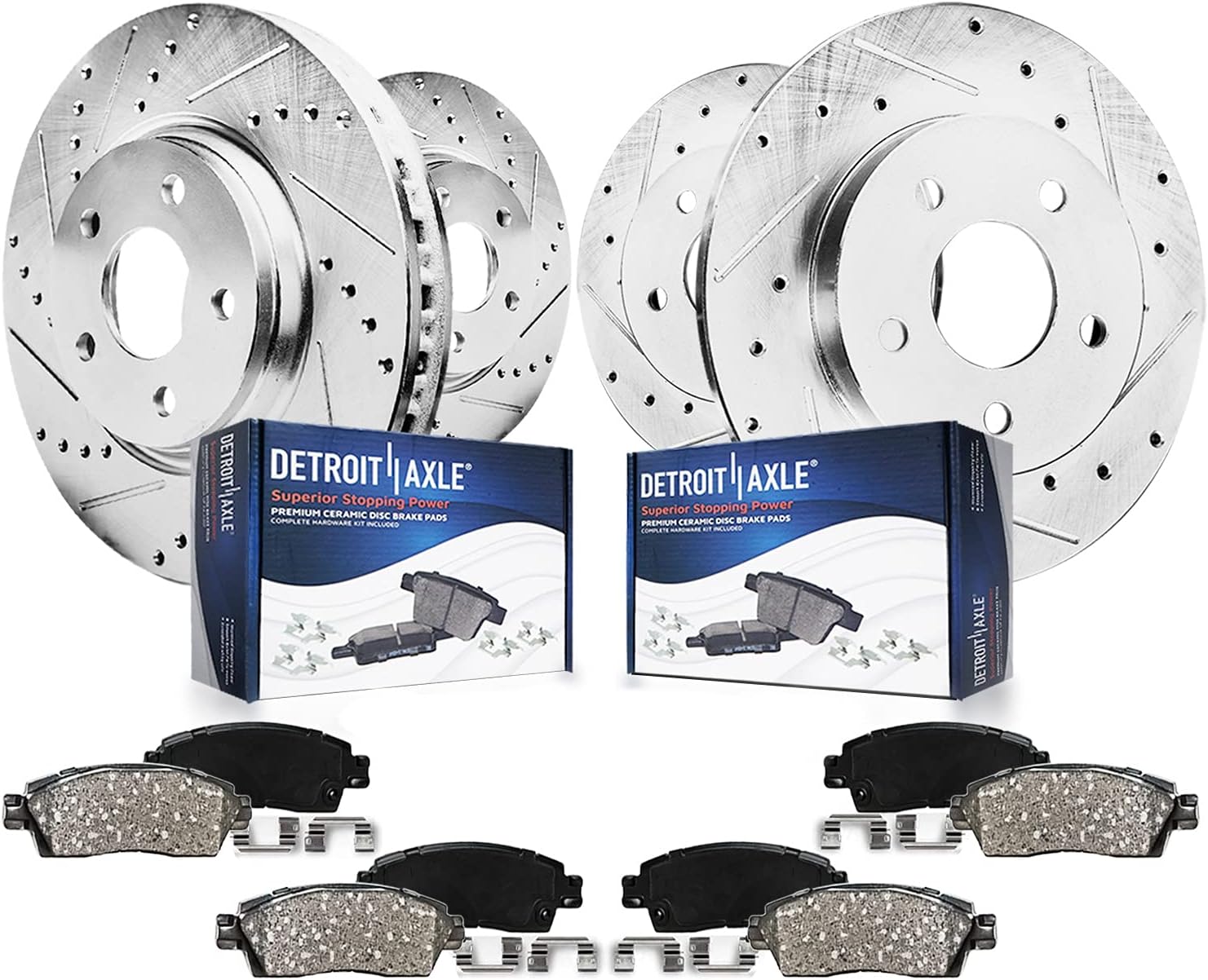
1. Detroit Axle 8‑Piece Drilled & Slotted Brake Kit with Ceramic Pads for 2006–2010 Ford Explorer/Mountaineer
| Fitment | 2006–2010 Ford Explorer, 2007–2010 Explorer Sport Trac, 2006–2010 Mercury Mountaineer |
|---|---|
| Rotors | Drilled & slotted, vented |
| Brake pads | Ceramic with hardware |
| Finish | Zinc plated |
| Warranty | 10 Year |
This Detroit Axle kit supplies a full front-and-rear rotor and pad replacement tailored for 2006–2010 Ford Explorer, Explorer Sport Trac, and Mercury Mountaineer models. It includes drilled and slotted rotors for improved cooling and gas evacuation, plus ceramic pads with hardware for quieter stops and reduced dust. Zinc plating on the rotors helps limit surface corrosion and keeps wheels cleaner over time. Installation is meant to be direct-fit with machined locating holes so the parts mount without modification. In real-world driving you can expect crisper initial bite under repeated stopping thanks to the vented, drilled design and the ceramic compound resists heat fade better than plain organic pads. The kit is a practical choice for balanced buyers who want a dependable, lower-noise upgrade without moving to heavy-duty performance parts. Keep in mind drilled rotors can be less ideal for extreme track use and some drivers preferring maximum longevity may choose plain vented rotors instead.
Best for: Drivers looking for a balanced, factory-style brake replacement that improves cooling and reduces dust while keeping noise low and installation straightforward.
Less Ideal for: Drivers who plan heavy track use or need maximum rotor longevity under extreme repeated overheating should consider a heavy-duty or plain vented rotor option instead.
- Full front-and-rear kit includes rotors, ceramic pads, and hardware for a complete replacement
- Drilled and slotted rotor design improves cooling and helps remove brake gases and moisture
- Ceramic pads run quieter and produce less brake dust than many semi-metallic pads
- Zinc plating reduces surface corrosion and helps maintain appearance over time
- Drilled rotors can be more prone to cracking under extreme high-heat track conditions compared with plain vented rotors
Verdict: A complete, direct-fit upgrade that balances improved cooling, lower dust, and quieter stops for 2006–2010 Ford Explorer and Mountaineer owners.
2. PowerStop Z36 Truck & Tow Front and Rear Brake Kit (drilled & slotted rotors)

| Fitment | 2006-2010 Ford Explorer / 2007-2010 Explorer Sport Trac / 2007-2010 Mercury Mountaineer |
|---|---|
| Pad Type | Z36 Carbon-Fiber Ceramic |
| Rotor Style | Drilled & Slotted |
| Hardware | Stainless-steel installation hardware |
| Rotor Plating | Silver Zinc Dichromate |
This PowerStop Z36 Truck & Tow kit replaces both front and rear rotors and pads with a bolt-on upgrade tailored for 2006–2010 Ford Explorer, Explorer Sport Trac, and Mercury Mountaineer. The Z36 carbon-fiber ceramic pads are formulated for heavier loads and towing, offering stronger stopping power than many factory pads while keeping dust and noise low thanks to stainless-steel shims and chamfered edges. The drilled and slotted G3000 rotors help dissipate heat and clear gases or debris during demanding use, which reduces fade on long descents or when towing. Zinc plating on the rotors improves corrosion resistance for a cleaner look behind wheels. The kit includes stainless installation hardware for a straightforward DIY swap using factory mounting points. Limitations: this is a vehicle-specific kit so it only fits the listed models and years, and drivers looking for maximum track performance or aggressive pad bite may prefer competition-grade compounds instead of a low-dust ceramic formula.
Best for: Buyers who want a reliable, bolt-on braking upgrade for heavier-duty driving—towing, hauling, or hilly routes—without sacrificing everyday drivability or wheel cleanliness.
Less Ideal for: Drivers seeking maximum track or motorsport braking performance should look for competition-oriented pad and rotor combinations designed for extreme temperatures.
- Complete front and rear kit includes pads, four drilled and slotted rotors, and stainless-steel hardware for a single upgrade.
- Carbon-fiber reinforced ceramic pads deliver stronger stopping power with reduced dust and quiet operation.
- Drilled and slotted rotors improve heat dissipation and help maintain consistent braking under towing or heavy-load conditions.
- Zinc plating on rotors resists corrosion and keeps wheels looking cleaner over time.
- Designed specifically for the listed Ford Explorer/Mountaineer/Sport Trac years so it is not a universal fit.
- Ceramic pad compound favors low dust and quiet operation over the absolute highest friction levels for track use.
Verdict: If you want a bolt-on front and rear upgrade that improves braking for towing and hilly driving while keeping dust and noise low, this kit is a practical top choice for 2006–2010 Explorers.
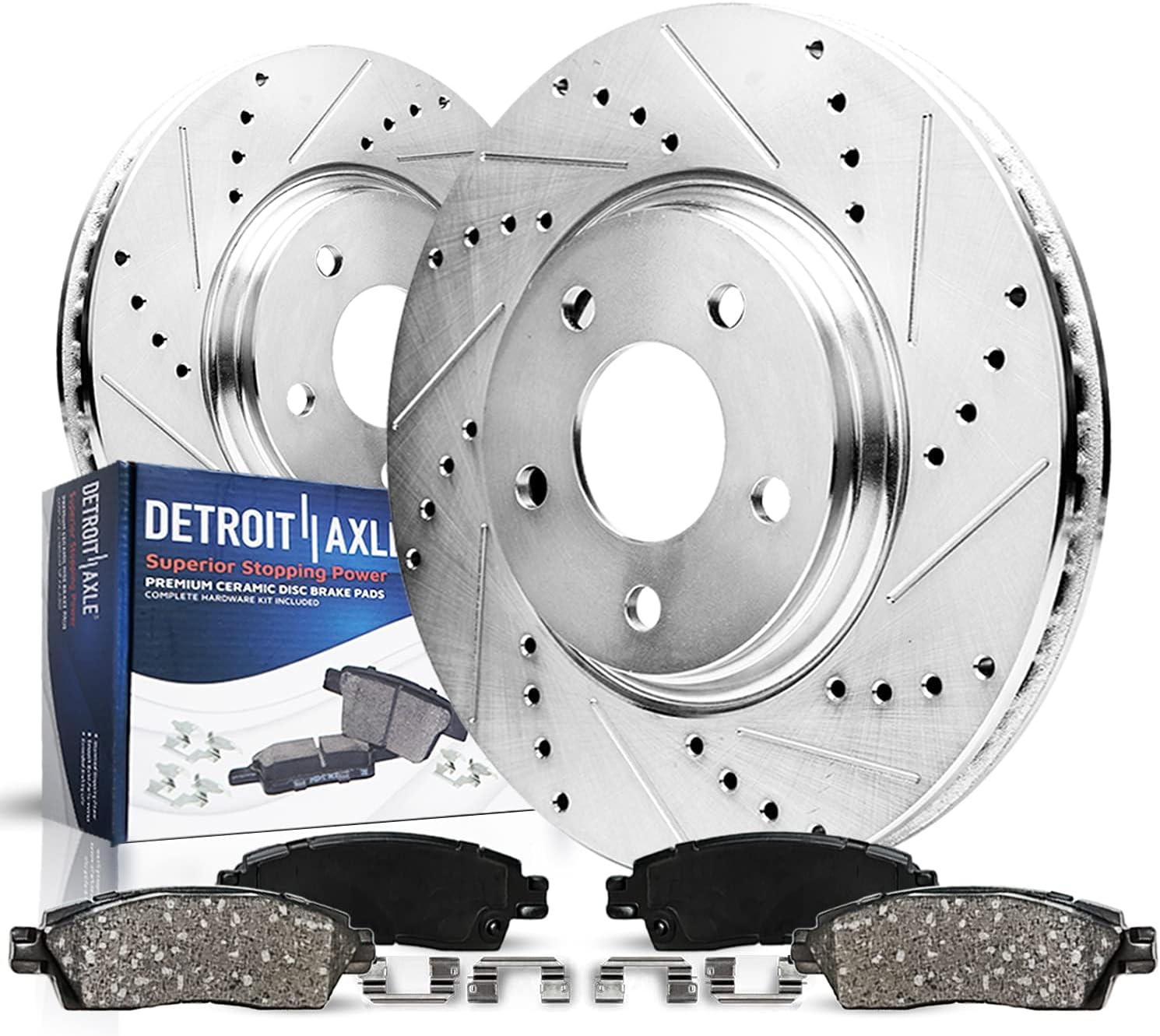
3. Detroit Axle Front Brake Kit with Drilled & Slotted Rotors and Ceramic Pads
| Fitment | 2006–2010 Ford Explorer / 2007–2010 Explorer Sport Trac / 2006–2010 Mercury Mountaineer |
|---|---|
| Includes | 2 front drilled & slotted rotors, 2 front ceramic pads, hardware |
| Orientation | Front |
| Manufacturer Warranty | 10-Year |
This Detroit Axle front brake kit supplies two drilled and slotted rotors plus two ceramic front brake pads and the mounting hardware for a direct-fit replacement on 2006–2010 Ford Explorer, Explorer Sport Trac, and 2006–2010 Mercury Mountaineer. The rotors are vented and zinc plated to help dissipate heat, resist corrosion, and reduce visible wheel dust. Drilled and slotted surfaces speed cooling and help clear moisture and gases under heavy use, while the ceramic pads aim for quieter operation and less dust than semi-metallic compounds. The kit is machined with accurate locating holes for bolt-on installation without modifications, making it suitable for DIY replacement or pro installation. Expect improved brake feel and fade resistance compared with worn factory parts, though drilled rotors can be louder under some conditions and ceramic pads trade a bit of initial bite for low noise and dust. The included hardware streamlines the swap and the manufacturer backs the kit with extended warranty support.
Best for: Buyers who want a practical, value-focused replacement that restores braking performance with easy bolt-on fitment and lower dust and noise than many budget pads.
Less Ideal for: Drivers who routinely track their Explorer hard or need maximum fade resistance and longevity under extreme high‑temperature braking should consider performance-oriented rotors and pad compounds instead.
- Complete front kit includes both drilled and slotted rotors plus ceramic pads and installation hardware
- Zinc plating on rotors improves corrosion resistance and reduces visible wheel dust
- Vented, drilled and slotted rotors promote faster cooling and better moisture/gas evacuation
- Machined locating holes for direct fitment reduce installation adjustments
- Drilled rotors can be noisier and may be more susceptible to crack propagation under extreme track use
Verdict: A convenient, factory-quality front brake replacement kit that restores stopping power and reduces dust and noise for 2006–2010 Ford Explorer owners focused on practical value.
4. Metrix Premium Chassis Parts 12.01" Front Coated Ventilated Disc Brake Rotor

| Compatible vehicles | 2006–2010 Ford Explorer, 2007–2010 Explorer Sport Trac, 2006–2010 Mercury Mountaineer |
|---|---|
| Rotor diameter | 12.01 inch (305 mm) |
| Material Type | Cast Iron |
| Exterior Finish | Machined |
| Certification | ECE R 90, ISO 9001/14001/45001/50001 |
This Metrix front disc rotor is a direct-fit replacement for 2006–2010 Ford Explorer, Explorer Sport Trac, and 2006–2010 Mercury Mountaineer applications. It is a 12.01-inch ventilated rotor machined from cast iron and coated to resist corrosion. The rotor is factory mill-balanced to reduce vibration and deliver smoother, pulsation-free stops, while the vane/pillar ventilation helps dissipate heat under repeated braking. That makes it suitable for everyday driving and towing situations typical for these SUVs. Installation follows standard rotor replacement steps and the unit is intended to be installed in pairs for balanced braking. The product carries industry certifications and a 3-year/36,000-mile limited warranty, which adds reassurance for budget-focused buyers. Limitations are typical of cast-iron rotors: they will slowly corrode over time even with a coating, and they do not offer the noise or weight advantages of higher-end performance or drilled/slotted designs.
Best for: Buyers replacing worn or damaged front rotors on 2006–2010 Explorer-family vehicles who want a reliable, factory-quality replacement that balances cost and durability.
Less Ideal for: Drivers seeking high-performance rotors for track use or those who prioritize lighter weight or aggressive drilled/slotted designs should consider performance-oriented alternatives.
- Direct-fit for 2006–2010 Ford Explorer and compatible models for straightforward replacement
- Factory mill-balanced to reduce vibration and deliver smooth stopping
- Ventilated design improves heat dissipation to reduce brake fade during heavy use
- Coated finish helps resist surface corrosion compared with uncoated rotors
- Backed by a 3-year/36,000-mile limited warranty for added confidence
- Cast iron construction is heavier and will eventually surface-rust despite the coating
Verdict: A cost-conscious, factory-quality direct-fit rotor that restores smooth, reliable braking on 2006–2010 Explorer-family vehicles.
5. Auto Shack Front & Rear Brake Rotors with Ceramic Pads for Ford Explorer (2006–2010)

| Compatible vehicles | Ford Explorer 2006-2010, Explorer Sport Trac 2007-2010, Mountaineer 2006-2010 |
|---|---|
| Included components | 4 brake rotors and ceramic brake pad sets |
| Front rotor construction | Vented |
| Rear rotor construction | Solid |
| Automotive fit type | Vehicle Specific Fit |
This Auto Shack kit supplies all four rotors plus ceramic front and rear pads as a direct-fit replacement for 2006–2010 Ford Explorer and related models. Installation replaces worn rotors and pads at once, restoring stopping performance with vented front rotors to aid heat dissipation and solid rear rotors where appropriate. The ceramic pads are designed to run quietly and produce less brake dust than semi-metallic options, which keeps wheels cleaner between services. Included components arrive ready to install with vehicle-specific fitment so the kit is convenient for a do-it-yourself brake job or a quick shop install. Important limitations are the six-month part warranty and the need to verify exact rotor size, stud count, and brake setup before purchase since fitment is vehicle specific; rust protection and long-term fade resistance will depend on driving conditions and maintenance. For drivers who prioritize dependable everyday braking and quieter operation, this kit covers the common maintenance items in one package.
Best for: Buyers who want a single kit to restore reliable, quiet everyday braking on a 2006–2010 Explorer and prefer straightforward, vehicle-specific replacements over performance-oriented parts.
Less Ideal for: Drivers seeking race or heavy-towing performance upgrades or extended warranty coverage should consider performance-grade or commercial brake options instead.
- Complete front-and-rear kit includes four rotors and two sets of ceramic pads for one-stop replacement.
- Vented front rotors improve heat dissipation for better resistance to brake fade under normal driving.
- Ceramic pads are formulated for quieter braking and produce lower brake dust compared with many semi-metallic pads.
- Vehicle-specific fitment reduces the need for additional modifications and simplifies installation.
- Warranty coverage is limited to six months and does not cover labor or installation costs.
Verdict: A convenient, vehicle-specific front-and-rear brake kit that restores dependable, quieter everyday braking for 2006–2010 Explorers.
6. Detroit Axle 8‑Piece Brake Kit for 2006–2010 Ford Explorer / Sport Trac / Mercury Mountaineer (Drilled & Slotted Rotors, Ceramic Pads)

| Fitment | 2006–2010 Ford Explorer, 2007–2010 Explorer Sport Trac, 2006–2010 Mercury Mountaineer |
|---|---|
| Kit contents | 4 rotors, 4 pairs ceramic pads, hardware, brake cleaner, brake fluid |
| Rotor type | Drilled & slotted, vented, zinc plated |
| Pad material | Ceramic |
| Part numbers | Front S-54143, Rear S-54098; Pads P-1158, P-1109 |
This Detroit Axle brake kit bundles all four drilled-and-slotted rotors with matching ceramic pads plus brake cleaner and fluid for a full front-and-rear replacement on 2006–2010 Ford Explorer and compatible Sport Trac and Mountaineer models. The rotors are vented, zinc plated, and machined with locating holes to match factory fitment, which helps reduce corrosion and should drop straight onto the hub without modification. Drilled-and-slotted faces aid heat dissipation and help clear moisture and debris under heavier use, while the ceramic pads are quieter and produce less dust than semi-metallic options. The kit includes hardware for pad installation so you get a near-complete install package. Limitations to note are that ceramic pads can feel slightly less aggressive under hard repeated stops compared with heavy-duty metallic pads, and drilled rotors can be more prone to cracking under extreme track or towing use. For everyday drivers who want a vehicle-specific, ready-to-install brake refresh, this kit delivers convenience and solid corrosion resistance with factory-style fitment.
Best for: Buyers who value a vehicle-specific, all-in-one replacement with demonstrated customer approval and want a low-hassle refresh that closely matches factory fit and finish.
Less Ideal for: Drivers who routinely tow heavily, use their Explorer for track days, or need maximum fade-resistant, heavy-duty braking should consider heavy metallic pads or specialty rotors instead.
- Complete front-and-rear kit includes 4 rotors, 4 pairs of ceramic pads, installation hardware, brake cleaner and fluid
- Drilled and slotted, vented rotors improve heat dissipation and help clear moisture for more consistent braking
- Zinc plating reduces surface corrosion and visible wheel dust compared with bare rotors
- Machined locating holes and factory-style fitment reduce the need for hub modifications
- Ceramic pads provide quieter operation but can deliver less initial bite than heavy-duty metallic pads under repeated hard stops
Verdict: An easy, vehicle-specific full rotor-and-pad replacement that delivers factory-style fit, improved cooling, and low dust for everyday Ford Explorer and Mountaineer drivers seeking a proven kit.
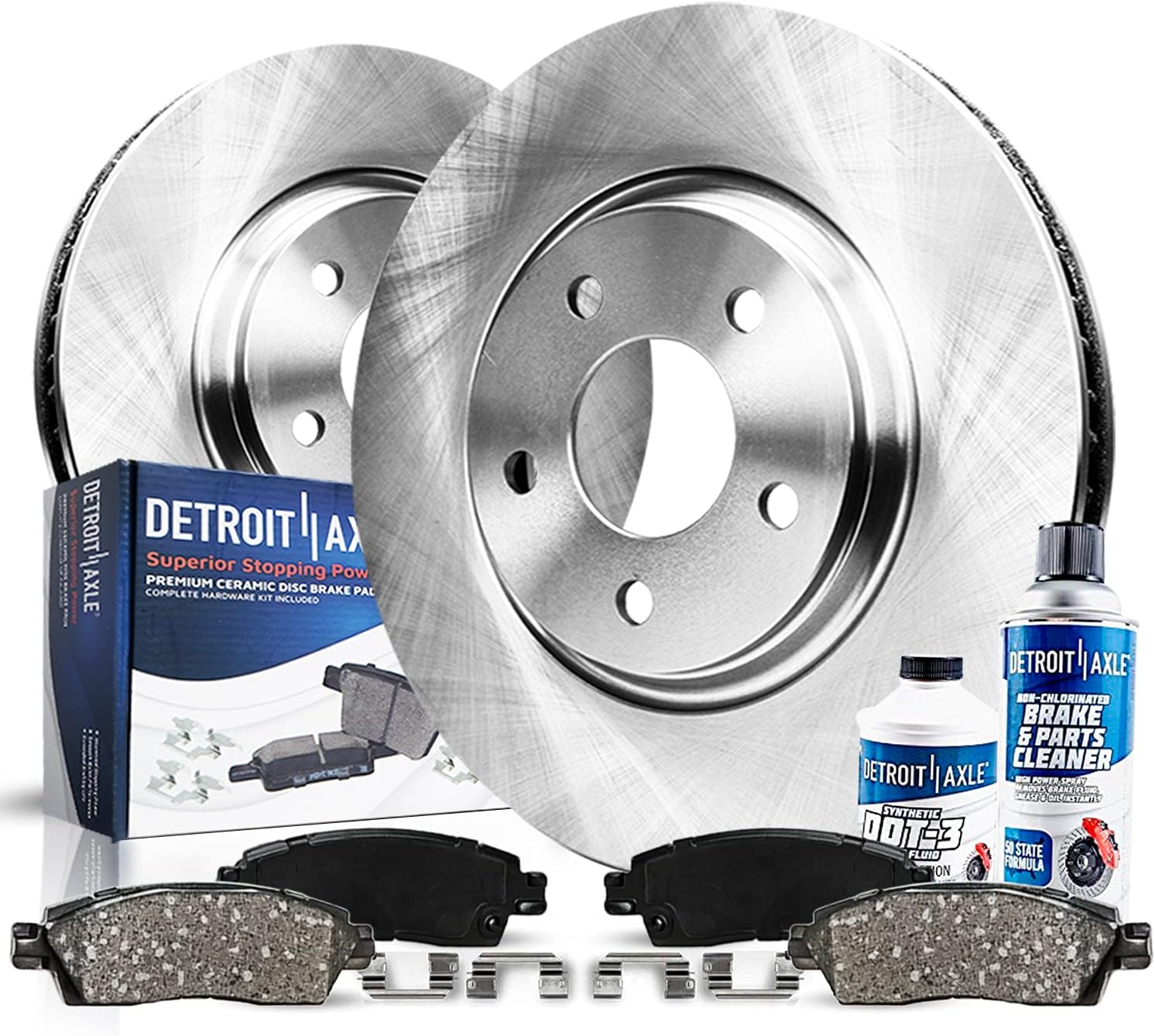
7. Detroit Axle Front Brake Kit with Ceramic Pads and Rotors
| Fitment | 2006-2010 Ford Explorer / 2006-2010 Mercury Mountaineer / 2007-2010 Explorer Sport Trac (305 mm front rotors) |
|---|---|
| Orientation | Front |
| Pad type | Ceramic |
| Includes | 2x rotors, 2x front pads w/hardware, brake cleaner, brake fluid |
This Detroit Axle front brake kit replaces both front rotors and pads and includes hardware plus a can of brake cleaner and a bottle of brake fluid so you can complete the job in one trip. The kit uses vented, zinc-plated rotors designed to shed heat and resist corrosion, and ceramic pads intended to reduce noise and dust. Installation is straightforward because the rotors are machined with locating holes that match factory fitment, so no modification is required on supported Explorer/Mountaineer/Sport Trac models with 305 mm front rotors. For everyday drivers the bundled cleaner and fluid are convenient and make a brake service faster. Expect solid stopping performance for street use and quieter operation versus many semi-metallic pads, though high-performance or heavy-towing drivers may prefer a more aggressive pad compound. The kit is a practical, all-in-one replacement that balances fit, corrosion resistance, and low noise for owners who want a reliable factory-style repair.
Best for: Buyers who want a straightforward, factory-style front brake service kit that restores braking performance with minimal fuss and focuses on quiet, low-dust operation.
Less Ideal for: Drivers who frequently tow heavy loads, carry maximum payloads, or demand track-capable braking should consider performance-oriented rotors and pads instead.
- Complete kit includes rotors, ceramic pads, hardware, brake cleaner, and brake fluid for a single-service replacement
- Vented rotors with zinc plating improve cooling and resist corrosion
- Machined locating holes for direct fitment to factory mounting points
- Ceramic pads offer lower noise and reduced brake dust compared with many semi-metallic pads
- Ceramic pads are less suited for heavy towing or aggressive driving compared with high-friction compounds
Verdict: If you want a risk-averse, all-in-one front brake replacement that fits factory mounting points and prioritizes quiet, low-dust daily driving performance, this Detroit Axle kit is a practical choice.
Choosing the Right 2006-2010 Ford Explorer Brake Rotors: Key Factors to Consider
Material and Casting Quality
Rotor material and how it is cast affect strength, heat capacity, and wear resistance. Higher-grade cast iron with consistent grain structure resists cracking and warping better than lower-quality castings. Look for rotors with tight manufacturing tolerances and minimal porosity, since inconsistencies can lead to uneven wear and vibration.
Surface treatments and coatings also matter for corrosion resistance, especially in climates where road salt is used. A durable coating can extend service life and preserve the rotor surface for proper pad contact. For the 2006-2010 Ford Explorer, prioritize rotors that specify material grade and provide machining tolerances to ensure reliable, repeatable performance.
Ventilation and Heat Management
How a rotor handles heat determines its resistance to brake fade and warping. Vented rotors with well-designed internal vanes move air through the rotor mass to cool braking surfaces, which is important for heavier SUVs like the Explorer that can experience higher loads and repeated stopping.
If you frequently tow or drive in hilly terrain, choose rotors with proven venting geometry and high thermal capacity. Poorly vented rotors retain heat, which accelerates pad glazing and can cause uneven wear. Consider whether slotted or drilled patterns are appropriate for your driving style; those features can help vent gases and debris but also change stress distribution on the rotor.
Surface Style: Plain, Slotted, or Drilled
Surface patterns change how pads bite and how debris, gas, and water are managed at the contact interface. Plain rotors provide a broad, quiet contact area and are often the most durable for everyday street use. Slotted rotors channel gas and dust away from the pad face and help maintain consistent bite during repeated stops.
Drilled rotors aid initial cooling and water evacuation but can concentrate stress around holes, potentially reducing rotor life under heavy use. For Explorer owners, match the surface style to driving demands: plain for low-noise, long-life service; slotted for consistent bite under load; drilled when quick water dispersion is a priority, understanding tradeoffs in longevity.
Compatibility and Fitment Accuracy
Correct dimensions and hub fit are critical to avoid runout, vibration, and installation issues. Even rotors marketed for the 2006-2010 Ford Explorer can vary in hub bore finish, mounting surface flatness, and hat thickness. Confirm rotor diameter, thickness, hat height, and mounting bolt pattern before purchase.
Poor fitment can lead to uneven brake pad contact and premature wear. If machining or minor surfacing is required, factor in the cost and effort. Choose rotors with documented OE-equivalent dimensions to reduce the risk of installation challenges and to maintain proper wheel clearance and caliper alignment.
Rotor Thickness and Minimum Spec
Initial thickness and the factory minimum thickness determine service life and how many times a rotor can be resurfaced. Thicker rotors typically offer longer life and better heat absorption, but must match the caliper and parking brake clearance for the Explorer.
Knowing how to measure rotor thickness helps you evaluate whether resurfacing is viable. Rotors below the minimum specification should be replaced. For routine maintenance, choose rotors with ample starting thickness so they remain serviceable through multiple pad changes when appropriate.
Corrosion Resistance and Coatings
Exposure to moisture and road salt accelerates corrosion, which can affect both appearance and braking performance. Protective coatings on the hat and non-contact surfaces reduce surface rust and make installation and removal easier by preventing seized components.
Some coatings provide limited protection on braking surfaces as well, but be sure any surface treatment does not interfere with pad bedding. For Explorers in wet or winter climates, prioritize rotors with durable corrosion-resistant finishes to reduce maintenance and ensure consistent contact between pad and rotor.
When to Resurface Rotors Vs Replace Them
Resurfacing can be a cost-effective option when rotors are within the minimum thickness spec and exhibit only minor surface irregularities. Use a caliper to measure thickness and inspect for deep grooves, cracks, or heat checking. If the rotor can be machined while remaining above the minimum thickness and without warping, resurfacing will restore a true surface for new pads.
Replace rotors when they are below the minimum thickness, have visible cracks, or show excessive heat damage. For the 2006-2010 Ford Explorer, the decision should balance remaining thickness, cost of machining, and the rotor's role in towing or heavy use. When in doubt, replacement ensures predictable performance and eliminates the risk of repeated machining shortening rotor life.
- Measure thickness at multiple points to detect taper or uneven wear
- Avoid resurfacing if rotors exhibit stress cracks or severe heat spots
- Replace rather than resurface for high-mileage, heavily loaded vehicles
Single-Piece Vs Two-Piece Rotor Designs
Single-piece rotors are the common OEM-style unitary cast design. They offer simplicity, lower weight, and predictable braking feel for daily driving. Two-piece rotors separate the friction ring from the hat, often allowing for lighter hats and replaceable rings, which can reduce unsprung weight and simplify future maintenance.
Two-piece designs can improve heat management when engineered correctly, but they add complexity and potential failure points at the interface. For Explorer owners who prioritize durability and low-maintenance service, single-piece rotors are usually the practical choice unless a specific two-piece design addresses a particular performance need.
- Single-piece: simple, durable, often quieter in everyday use
- Two-piece: potential weight savings and serviceability, more complex
- Consider driving style and load when choosing between designs
How to Measure Rotor Thickness and Check Runout
Measuring rotor thickness requires a micrometer or vernier caliper. Take measurements at several points around the rotor surface and compare them to the vehicle's service manual minimum thickness. Also measure the hat thickness and overall diameter to confirm fitment. Document any tapering or uneven wear.
Runout is checked with a dial indicator mounted to the hub or a fixed point while the rotor is rotated. Excessive lateral runout can cause pedal pulsation. If runout is beyond spec, cleaning the mounting surface or replacing a warped rotor is necessary to restore smooth braking feel.
- Use a micrometer for accurate thickness measurements
- Measure at multiple radial points to detect taper
- Check lateral runout with a dial indicator to diagnose vibration
Signs of Rotor Wear and When to Act
Common symptoms of worn rotors include vibration or pulsation during braking, a scored or grooved surface, increased stopping distance, and unusual noise. Light surface rust is normal after sitting but heavy pitting or deep grooves indicate the rotor is compromised. Monitor pedal feel and braking consistency for changes.
Address rotor issues promptly to prevent accelerated pad wear and compromised safety. If you notice pulsation or a soft pedal, inspect rotor thickness and surface condition. Small issues may be resolved with resurfacing when within spec; severe wear or structural damage requires replacement.
- Pulsation under braking often points to uneven rotors
- Deep grooves or cracking require replacement
- Regular inspections at pad changes help catch problems early
Matching Rotors to Brake Pad Compound
Rotor surface characteristics interact with pad compounds to determine initial bite, stopping distance, and wear rates. Aggressive pad compounds increase heat and wear on rotors, while touring-style pads are gentler and extend rotor life. For the Explorer, choose rotors whose surface finish and thermal capacity match the pad type you plan to use.
If you switch to a high-friction pad for towing or performance, select rotors with better heat dissipation and thicker starting thickness. Conversely, when using OEM-style pads for everyday driving, standard plain rotors with durable coatings are typically ideal.
- High-friction pads benefit from rotors with greater thermal mass
- Gentler pad compounds pair well with plain, smooth rotors
- Ensure bedding procedures match the pad and rotor combination
Maintenance Tips to Extend Rotor Life
Keep mounting surfaces clean and torque wheel fasteners to the specified sequence and values to reduce runout caused by uneven clamping. Inspect and service calipers, sliders, and hardware during pad changes to prevent uneven pad contact that accelerates rotor wear.
Avoid aggressive grinding or repeated resurfacing that reduces thickness below safe limits. If you live in a corrosive environment, consider rotors with protective finishes and routinely clean brake components to limit rust buildup that can trap moisture and accelerate degradation.
- Clean hub and rotor mating surfaces before installation
- Torque lug nuts to spec in a star pattern
- Service caliper hardware during pad replacement
Still looking for the perfect fit?
Select your Ford Explorer configuration to see the most relevant Brake Rotors recommendations
How We Chose the Best 2006-2010 Ford Explorer Brake Rotors
We started by focusing on rotor options that directly match the 2006-2010 Ford Explorer fitment and typical use cases for these SUVs, from daily commuting to occasional towing or highway driving. Our editorial filters prioritized material and manufacturing consistency, because rotor metallurgy and machining determine heat dissipation, resistance to warping, and long-term wear.Key evaluation criteria included cast quality and grade, balance and runout tolerances, surface finish and coating to resist corrosion, and heat-management features such as venting, slotting, or drilling patterns. We also considered dimensional accuracy for hub fit and the availability of OE-spec replacement dimensions to minimize the need for additional machining. Performance under load, compatibility with common pad compounds used on Explorers of this era, and long-term durability were emphasized.We excluded options that required nonstandard adapters or extensive hub modification, as well as rotors with unclear manufacturing traceability. We also removed designs primarily intended for racing that compromise everyday noise and wear characteristics. The final list reflects parts that meet practical, on-vehicle needs for the Explorer while balancing longevity, braking consistency, and heat control.
Our full evaluation process is outlined in our review methodology.
FAQ
How often should I check rotor thickness on a 2006-2010 Explorer?
Check rotor thickness at every pad change or roughly every 30,000 miles, depending on driving. If you tow or perform frequent heavy braking, inspect more often because those conditions accelerate wear.
Can I resurface Explorer rotors instead of replacing them?
You can resurface rotors if they remain above the vehicle's minimum thickness and show only minor surface irregularities. Deep grooves, cracks, or heat checking mean replacement is the safer option.
Are slotted or drilled rotors better for highway towing with the Explorer?
Slotted rotors generally offer more consistent pad bite under repeated stops and reduce glazing, which is useful for towing. Drilled rotors help with water dispersion but can be prone to stress concentration under heavy, repeated loads.
What causes brake pulsation after installing new pads on my Explorer?
Pulsation is often caused by rotor lateral runout or uneven surface thickness. It can also result from improper bedding or from installing pads on rotors with residual warpage. Measuring runout and ensuring flat mating surfaces helps prevent this.
Do coated rotors affect bedding-in new brake pads?
Coatings on the hat and non-contact areas do not affect bedding, but any coating on the braking surface must be removed per the manufacturer's bedding instructions. Proper bedding ensures consistent pad transfer and optimal braking performance.
Will upgrading to two-piece rotors improve Explorer braking for daily driving?
Two-piece rotors can reduce unsprung weight and offer replaceable components, but for typical daily driving they rarely provide measurable benefits over well-made single-piece rotors and add complexity.
Final Verdict
When replacing rotors on a 2006-2010 Ford Explorer, prioritize correct fitment, material quality, and heat-management features that suit how you use the vehicle. Balance thicker starting dimensions and good venting for towing or heavy loads against the quieter, longer-life benefits of plain rotors for everyday driving.Focus on rotors that match your brake pad choice and maintain proper hub fit and runout to avoid vibration issues. By prioritizing these criteria, you can choose rotors that restore reliable stopping performance and deliver predictable wear characteristics for the Explorer.
Explore More:
- Check out all Ford Explorer parts & accessories
- Explore Brake Rotors Maintenance & Repair Guides
- Explore Brake System
- Browse all Auto Parts
