

Note: This article contains affiliate links. If you click on these links and make a purchase, I may earn a small commission at no extra cost to you. This helps support my research and content. Read my full affiliate disclosure here.
If you own a 1995-2001 Ford Explorer, worn or warped rotors can mean longer stopping distances, pedal pulsation, and noisy braking. Choosing the right brake rotors for this generation of Explorer matters because the vehicle's weight and typical driving conditions influence how quickly rotors wear and how they affect overall brake performance.This guide shortlists the top seven options for replacement rotors that are appropriate for the Explorer model years listed. We focus on fitment, material and machining quality, heat management, and longevity so you can pick rotors that match your driving style and maintenance plans. Read on for the evaluation criteria and practical advice to make a confident selection.
Looking for other parts? See all Ford Explorer parts & accessories.
Top Picks at a Glance
| Best Overall The best all-around choice for most situations | Detroit Axle 4WD Brake Kit with Ceramic Pads and Front/Rear Rotors |  |
| Best Quality Built to a higher standard if you want something more solid | TRQ Front Semi-Metallic Brake Pad and Rotor Kit |  |
| Best Value The sweet spot between price and what you get | PowerStop Z17 Semi-Coated Front and Rear Brake Kit (SC1855) |  |
| Best Budget The cheapest option that still gets the job done reliably | Bosch QuietCast Premium Front Disc Brake Rotor |  |
| Highest Rated A top-rated pick with lots of positive feedback | Detroit Axle Rear Drilled & Slotted Brake Kit with Ceramic Pads |  |
| Most Popular A crowd favorite that many people choose with confidence | Detroit Axle 4WD Brake Kit with Drilled & Slotted Rotors and Ceramic Pads |  |
| Best Seller A high-volume bestseller chosen again and again | Detroit Axle Rear Brake Kit with Drilled & Slotted Rotors and Ceramic Pads |  |
1. Detroit Axle 4WD Brake Kit with Ceramic Pads and Front/Rear Rotors
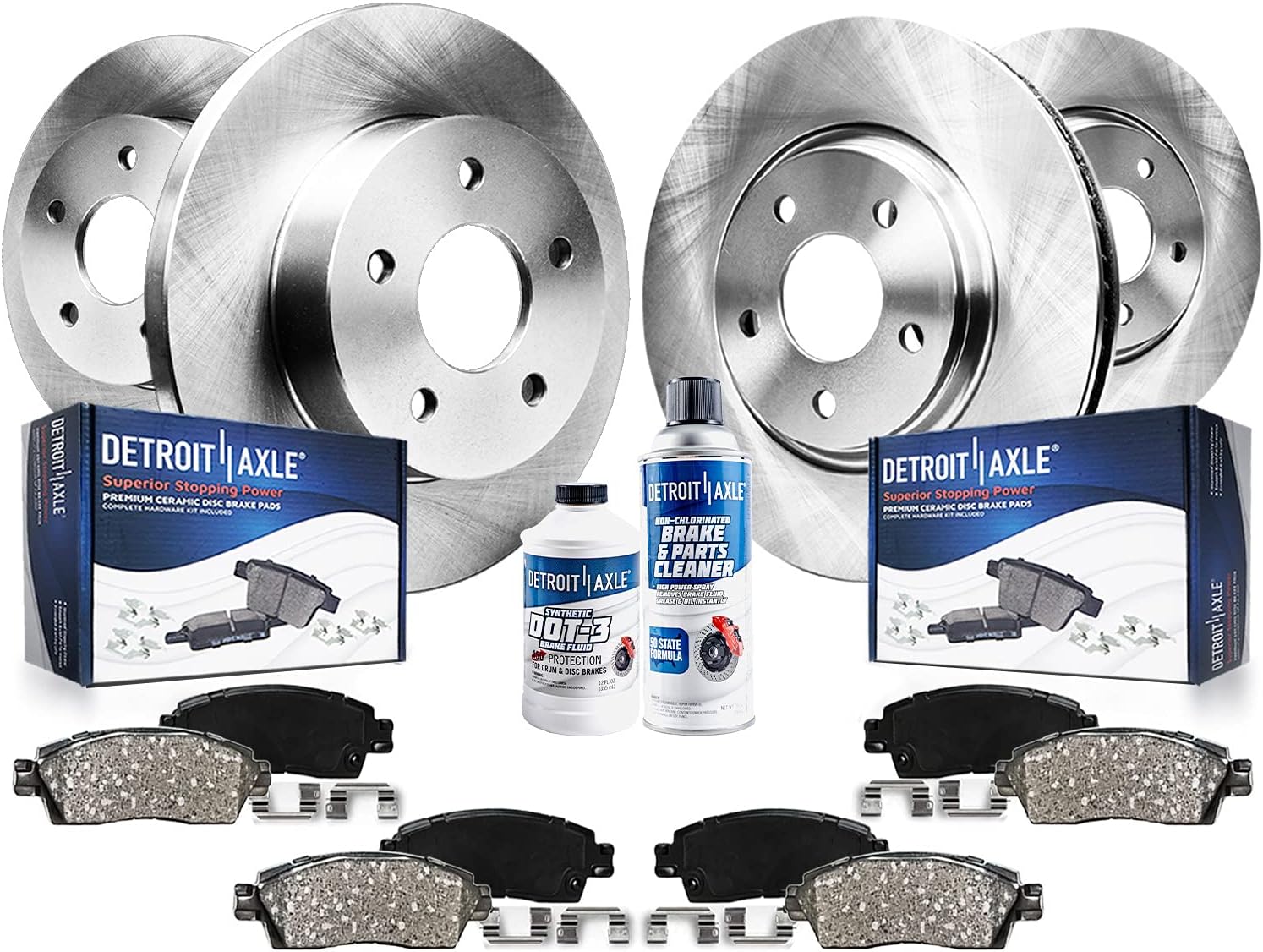
| Fitment | 1995-2000 Ford Explorer (4WD/AWD); 2001 Ford Explorer (4WD/AWD, not Postal); 1997-2001 Mercury Mountaineer (4WD/AWD) |
|---|---|
| Kit contents | 2 front rotors, 2 rear rotors, front & rear ceramic pads, hardware, 10oz brake cleaner, 12oz brake fluid |
| Rotor feature | Vented and slotted |
| Pad material | 100% ceramic |
This Detroit Axle brake kit supplies everything needed to refresh the braking system on 4WD/AWD Ford Explorer and Mercury Mountaineer models from the mid 1990s to 2001. The kit includes front and rear ventilated rotors with slots, matched ceramic brake pads with hardware, a brake cleaner spray and a bottle of brake fluid. In use the slotted, vented rotors help dissipate heat and shed moisture during repeated stops while the zinc plating reduces visible corrosion on the rotor hat. The ceramic pads are quiet and produce less dust than semi-metallic alternatives, making them a good fit for daily driving and light towing. Installation is straightforward because the rotors are machined to locating hole specifications for a direct fit on the specified 4WD/AWD vehicles. Keep in mind this kit is limited to the rotor size and 4WD/AWD configurations listed and uses ceramic pads that prioritize low noise and low dust over ultimate high-temperature fade resistance for heavy performance use.
Best for: Buyers who want an all-in-one, factory-fit replacement to restore everyday braking performance on 4WD/AWD Explorers and Mountaineers without hunting parts from multiple sources.
Less Ideal for: Drivers who frequently do heavy towing, competitive driving, or sustained downhill braking should choose a high-temp performance rotor and metallic pad combination instead.
- Complete kit includes front and rear rotors, front and rear ceramic pads, hardware, brake cleaner, and brake fluid
- Vented, slotted rotors improve cooling and help remove moisture for consistent stopping
- Zinc-plated rotor surfaces resist visible corrosion and wheel-dust buildup
- Ceramic pads produce low noise and reduced brake dust compared with semi-metallic pads
- Ceramic pads are less suited to repeated high-heat performance braking than metallic options
Verdict: If you want a straightforward, full replacement kit that restores quiet, low-dust, factory-style braking on 4WD/AWD Explorers and Mountaineers, this Detroit Axle set is a convenient choice.
2. TRQ Front Semi-Metallic Brake Pad and Rotor Kit

| Included components | 1 front semi-metallic pad set, 2 front rotors |
|---|---|
| Brake pad friction material | Semi-Metallic |
| Brake pad bonding type | Premium Posi |
| Automotive fit type | Vehicle Specific Fit |
| Orientation | Front |
This TRQ front brake pad and rotor kit combines semi-metallic pads with two replacement rotors to restore braking performance on compatible 1995–2001 Ford Explorer front applications. It is intended for DIY or professional installation as a direct-fit replacement, delivering the expected stopping power of semi-metallic friction material which performs well under higher loads and spirited driving. Notable features include premium Posi pad bonding, vehicle-specific fitment, and pre-assembled components meant to simplify installation; TRQ also provides step-by-step videos to help during replacement. In real-world use the kit should reduce brake fade compared with older, worn pads and rotors and produce predictable pedal feel for everyday and performance-minded drivers. The semi-metallic compound can generate more brake dust and slightly more noise than ceramic alternatives, and buyers should confirm exact fitment for 4WD or AWD front configurations listed. This kit is best when you want improved, durable stopping power without modifying the brake system.
Best for: Drivers who prioritize stronger, durable braking performance for spirited or heavier-duty street use and want a direct-fit replacement kit they can install themselves or with a single shop visit.
Less Ideal for: Buyers seeking the quietest, lowest-dust option or those who prioritize maximum NVH reduction should consider ceramic-style pads or different rotor constructions.
- Vehicle-specific fit for targeted 1995–2001 front applications reduces installation hassle
- Semi-metallic pads offer strong stopping power and resistance to fade under heavier use
- Includes both pads and two rotors for a complete front-axle refresh
- Manufacturer provides installation videos to aid DIY replacement
- Semi-metallic compound can produce more brake dust and slightly higher noise than ceramic options
Verdict: Choose this kit if you want a direct-fit front brake package that boosts stopping power and resists fade for 1995–2001 Explorer front applications.
3. PowerStop Z17 Semi-Coated Front and Rear Brake Kit (SC1855)

| Manufacturer Warranty Description | 24 Month / 24,000 Mile Warranty |
|---|---|
| Included Components | Brake Rotors, Brake Pads, Pad Hardware |
| Item Type Name | Disc Brake Kit |
| Orientation | Dual |
| Compatible with Vehicle Type | Car, Truck, Van |
This PowerStop Z17 kit bundles front and rear ceramic pads, four semi-coated rotors, rubberized shims, and stainless-steel hardware to provide a one-stop refresh of a vehicle’s braking system. It is intended for daily-driven use and is marketed as a direct bolt-on replacement that keeps wheels cleaner thanks to a low-dust ceramic pad compound and reduces noise with dual-layer rubberized shims. The semi-coated rotors are mill balanced and G3000 cast for improved resistance to cracking and corrosion on the hat, edges, and vanes. Installation is straightforward because the kit includes hardware and lubrication, so a DIYer or a shop can complete the swap without modifications. Expect quieter, cleaner braking and OEM-like performance for commuting and routine driving. The kit is focused on street use rather than aggressive or track driving, and while it improves corrosion resistance it is not a performance-sport rotor or pad set intended for heavy towing or sustained high-heat conditions.
Best for: Drivers who want a practical, full brake refresh that restores factory-style stopping, reduces dust, and installs without modification using the included hardware.
Less Ideal for: Enthusiasts seeking track-capable or heavy towing brake components should look at performance-specific rotors and pad compounds instead.
- Complete kit includes front and rear pads, four rotors, shims, and stainless-steel installation hardware
- Low-dust ceramic Z17 pads help keep wheels cleaner during normal driving
- Semi-coated rotors have targeted corrosion protection and are mill balanced for smoother operation
- Dual-layer rubberized shims and chamfered/slotted pads reduce brake noise and improve break-in
- Not designed for heavy-duty, track, or high-heat braking scenarios
Verdict: A practical, all-in-one replacement kit that restores quiet, low-dust, factory-style braking for daily-driven Ford Explorer models from the covered years.
4. Bosch QuietCast Premium Front Disc Brake Rotor

| Included Components | Brake Rotor + Instructions |
|---|---|
| Material Type | Cast Iron |
| Exterior Finish | Zinc |
| Automotive Fit Type | Vehicle Specific Fit |
The Bosch QuietCast Premium front rotor is a direct-fit replacement rotor intended for front-wheel braking systems on the specified Ford Explorer model years and similar vehicles. It installs like a factory-style rotor and is typically used when resurfacing is not possible or when refreshing the braking system. Notable features include an aluminum-zinc protective coating to resist corrosion, factory-engraved discard thickness for easy service decisions, and OEM-style vane design to help move heat away from the hub. In practice the part is precision balanced to reduce pedal pulsation and is made from cast iron for predictable wear and braking feel. The rotor includes ABS tone rings where required so wheel sensors remain functional. Expect solid, quiet operation and longer surface life compared with uncoated rotors, but remember this is a factory-fit replacement rather than a performance rotor for heavy towing or racing use.
Best for: Buyers replacing front rotors on the covered 1995–2001 Explorer who want a reliable, factory-quality replacement that resists corrosion and restores smooth braking on a budget.
Less Ideal for: Drivers seeking upgraded performance rotors for heavy towing, track use, or aggressive driving should consider performance-oriented rotor designs instead.
- Vehicle-specific fit for the listed front applications ensures proper fit and ABS tone ring compatibility where required
- Aluminum-zinc coating resists rust and keeps exposed surfaces cleaner for longer
- Precision balanced and low run-out manufacturing reduces pedal pulsation and vibration
- Factory-engraved discard thickness simplifies future service decisions
- Designed as a direct replacement cast-iron rotor so it is not optimized for heavy-duty towing or motorsport use
Verdict: A dependable, corrosion-resistant factory-style front rotor that restores smooth braking on the Explorer while keeping costs reasonable.
5. Detroit Axle Rear Drilled & Slotted Brake Kit with Ceramic Pads

| Fitment | 1995-2001 Ford Explorer, 2001-2002 Explorer Sport, 1998-2002 Ranger, 1997-2001 Mercury Mountaineer |
|---|---|
| Kit contents | 2 rear drilled & slotted rotors, 2 rear ceramic pads, hardware, brake cleaner, brake fluid |
| Rotor feature | Drilled and slotted with zinc dichromate plating |
| Pad type | 100% ceramic |
| Orientation | Rear |
This Detroit Axle rear brake kit replaces the rear rotors and pads on compatible 1995–2001 Ford Explorer and related models that use 11.22 inch rear rotors. The kit pairs drilled and slotted rotors with ceramic rear pads and ships with installation hardware plus a small bottle of brake fluid and cleaner for a single service. The drilled and slotted rotor design helps shed heat and moisture during repeated stops, and zinc dichromate plating reduces visible corrosion over time. Ceramic pads provide quieter operation and low dust compared with semi-metallic options, which is useful for daily-driven Explorers. Installation is straightforward because the rotors are machine-located to match factory mounting. Limitations are that this is a rear-only kit sized to a specific rotor diameter and ceramic pads trade some ultimate high-temperature fade resistance versus aggressive metallic compounds for heavy towing or track use.
Best for: Buyers who prioritize dependable, low-noise replacement parts for regular street use and want a ready-to-install rear brake service kit that closely matches factory fitment.
Less Ideal for: Drivers who frequently tow heavy loads, drive aggressively, or use the vehicle on track days should choose heavy-duty metallic pads and full-performance rotors instead.
- Includes both rotors and ceramic pads plus hardware and small bottles of brake cleaner and fluid for a complete rear service.
- Drilled and slotted rotors improve cooling and help clear gasses and moisture under repeated braking.
- Zinc plating on the rotors helps reduce surface rust and visible wheel discoloration.
- Ceramic pads run quietly and produce less brake dust than many metallic pads.
- Kit covers only the rear brake assembly and only fits the specified 11.22 inch rotor application.
Verdict: A complete, factory-fit rear brake service kit designed for reliable, low-noise everyday braking on 1995–2001 Ford Explorer family vehicles.
6. Detroit Axle 4WD Brake Kit with Drilled & Slotted Rotors and Ceramic Pads

| Fitment | 1995-2000 Ford Explorer (4WD/AWD); 2001 Ford Explorer (4WD/AWD; Not Postal); 1997-2001 Mercury Mountaineer (4WD/AWD) |
|---|---|
| Kit contents | Front and rear drilled & slotted rotors, front and rear ceramic pads, hardware, 10oz brake cleaner, 12oz brake fluid |
| Rotor feature | Vented, drilled & slotted with machined locating holes |
| Plating | Silver zinc plated |
| Warranty | 10 Year |
This Detroit Axle brake kit supplies both front and rear drilled-and-slotted rotors plus matching ceramic pads and basic consumables so you can refresh the whole braking system on 4WD Explorers and Mountaineers in one install. The kit includes vented, zinc-plated rotors machined with locating holes for direct fitment, hardware, brake cleaner, and brake fluid which makes it convenient for a DIY replacement or a small-shop job. Drilled and slotted rotors help dissipate heat and shed debris, and the ceramic pads are aimed at quieter, low-dust operation compared with semi-metallic compounds. Zinc plating reduces visible corrosion on the hat area, and the vendor notes testing and a 10-year warranty for peace of mind. Limitations worth noting are that the kit is specific to 4WD/AWD Explorers and Mountaineers with the listed rotor sizes and will not fit other rotor variants, and drilled rotors can be more prone to cracking under extreme, repeated track use compared with plain rotors. For routine street and towing use this kit offers a balanced, ready-to-install replacement that simplifies a full-axle brake refresh.
Best for: Buyers who want a single, factory-quality replacement package to refresh front and rear brakes on a 4WD Explorer or Mountaineer and who value straightforward fitment and low-noise, low-dust pads.
Less Ideal for: Drivers planning frequent high-heat track sessions or those who need a brake setup tuned for competitive motorsport should choose purpose-built performance rotors and pads instead.
- Complete kit covers front and rear rotors, pads, hardware, brake cleaner, and fluid for a full system refresh
- Drilled and slotted, vented rotors improve heat dissipation and help remove moisture and debris
- Zinc plating on rotors reduces visible corrosion on the hat and improves long-term appearance
- Ceramic brake pads are designed for quieter operation and lower dust compared with many semi-metallic pads
- Fitment limited to 4WD/AWD Explorers and Mountaineers with the specified rotor diameters
- Drilled rotors are less suited to heavy track use where plain or specially treated rotors resist cracking better
Verdict: A convenient, full-axle replacement kit that delivers direct-fit drilled-and-slotted rotors with quiet ceramic pads for 4WD Explorers and Mountaineers seeking reliable street braking and low dust maintenance.
7. Detroit Axle Rear Brake Kit with Drilled & Slotted Rotors and Ceramic Pads

| Fitment | 1995-2001 Ford Explorer; 2001-2002 Explorer Sport (steel piston rear calipers); 1998-2002 Ford Ranger; 1997-2001 Mercury Mountaineer |
|---|---|
| Kit contents | 2 rear drilled & slotted rotors, 2 ceramic rear pads, hardware, 12oz brake fluid, 10oz brake cleaner |
| Pad material | 100% ceramic |
| Rotor finish | Zinc plated |
| Orientation | Rear |
This Detroit Axle rear brake kit bundles everything needed to refresh the back brakes on compatible Explorers and similar vehicles. The kit supplies two drilled and slotted rear rotors, a set of ceramic rear pads with hardware, a bottle of brake fluid and brake cleaner so you can finish the job without buying extras. The rotors are zinc plated for corrosion resistance and feature vents and slots to help dissipate heat and reduce fade during heavier use. Ceramic pads are quiet and produce less dust than semi-metallic types, which helps keep wheels cleaner. Fitment is machined to align with factory locating holes so installation should be straightforward for a competent DIYer or tech. Buyers should note this is an aftermarket replacement product and braking feel can differ slightly from factory parts depending on bedding and installation, and ceramic pads may provide less initial bite than metallic compounds in some driving conditions.
Best for: Buyers who want a ready-to-install rear brake refresh for a 1995–2001 Ford Explorer that minimizes extra purchases and emphasizes low noise and corrosion resistance.
Less Ideal for: Drivers seeking maximum track-level stopping performance or aggressive initial bite should consider high-friction metallic pads or performance rotors instead.
- Complete kit includes rotors, ceramic pads, installation hardware, brake fluid and cleaner for a one-stop replacement
- Drilled and slotted, vented rotors improve heat dissipation and help resist brake fade under load
- Zinc plating on rotors offers corrosion resistance and reduces visible wheel dust
- Ceramic pads run quietly and produce less brake dust than metallic pads
- Ceramic pads may have slightly reduced initial bite compared with some metallic compounds under aggressive driving
Verdict: A convenient, corrosion-resistant rear brake kit that supplies rotors, ceramic pads and fluids for a straightforward factory-aligned replacement on compatible Explorers.
Choosing the Right 1995-2001 Ford Explorer Brake Rotors: Key Factors to Consider
Fitment and Dimensional Accuracy
Correct fit is the baseline for any rotor replacement on the 1995-2001 Ford Explorer. A rotor that does not match the hub bore, bolt pattern, center-to-center thickness, and overall diameter can cause caliper misalignment, wheel contacting, or uneven pad wear.
Precision machining and published specifications are important because they determine whether the rotor will seat properly on the hub and run concentric to the wheel. For this Explorer, verify the rotor's hub bore, outside diameter, center height, and bolt hole pattern against the vehicle specifications. Poor fitment often leads to vibration, noise, and accelerated wear of pads and calipers.
Material and Heat Dissipation
Rotor material affects thermal capacity, resistance to cracking, and long-term durability. Cast iron is common for its predictable friction properties and heat absorption, but alloy formulations and improved casting methods can offer better resistance to thermal warping.
For the Explorer, consider rotors that manage heat well if you tow, carry heavy loads, or do repeated stop-and-go driving. Rotors with directional venting or optimized vane designs help move heat away from the friction surface and reduce the risk of glazing and warping under stress.
Surface Design and Bedding Behavior
The rotor surface finish influences how quickly new pads mate to the rotor and how stable pedal feel becomes after installation. Smooth, precision-machined faces tend to bed evenly, while certain surface treatments or light cross-drilling or slotting can help remove gases and debris during bedding.
For everyday driving with the Explorer, a consistent, uniform surface minimizes noise and promotes even pad transfer. If you choose slotted or drilled styles, be aware that those designs change bedding dynamics and may increase pad wear; they are best selected for specific performance needs rather than as a default choice.
Corrosion Resistance and Protective Coatings
Exposure to road salt, moisture, and seasonal fluctuations can accelerate surface rust on rotors. Excessive corrosion on the hat or friction face can cause uneven wear and noisy braking on the 1995-2001 Explorer.
Look for rotors with protective coatings on non-friction areas or treated surfaces that resist rust without impacting braking performance. Coatings that protect the hat and outer edges prolong service life and reduce the need for frequent replacement in corrosive environments.
Serviceability and Resurfacing Limits
Rotors have a minimum thickness specification. For the Explorer, choosing rotors that are serviceable or clearly labeled with machining allowances gives you the option to resurface instead of replace during some maintenance cycles.
Consider whether aftermarket rotors can be safely machined without dropping below minimum thickness, and how visible wear indicators or vent clogging might affect long-term usability. In many cases, opting for rotors with adequate thickness and quality vents extends safe service intervals.
Noise, Vibration, and Harshness (NVH) Characteristics
NVH performance is crucial for everyday comfort in the Explorer. Rotor stiffness, surface flatness, and heat-related deformation all influence pedal pulsation and vibration transmitted through the steering wheel.
Select rotors with tight runout tolerances and balanced vent designs to minimize NVH. Consider professional installation practices like proper hub cleaning, using the correct torque sequence, and verifying lateral runout to achieve the intended quiet operation after replacement.
Understanding Rotor Types and When They Matter
Rotors come in plain, slotted, and drilled configurations, plus more complex two-piece constructions. For the 1995-2001 Ford Explorer, plain vented rotors cover most daily-driving needs, offering reliable heat capacity and long life. Slotted or drilled faces can help clear gases and water in specific scenarios, but they also change pad wear rates and can reduce usable rotor life under heavy loads.
Two-piece rotors separate the friction ring from the hat to reduce heat transfer into the hub and allow lighter overall weight. These designs can help performance and thermal control, but they add complexity and cost and are rarely necessary for typical Explorer use unless you have specialized towing or heavy-duty requirements.
- Plain vented rotors: Best for standard driving and longevity.
- Slotted rotors: Improve bite and debris removal, may increase pad wear.
- Drilled rotors: Aid water evacuation, higher risk of crack initiation under heavy stress.
- Two-piece rotors: Better thermal isolation but more costly and complex.
Measuring Rotor Condition and When to Replace
Inspect rotors regularly for thickness, runout, scoring, and heat spots. Use a micrometer to measure rotor thickness at multiple points; compare readings to the manufacturer minimums for the 1995-2001 Explorer to determine serviceability. If thickness is close to the minimum, plan replacement rather than resurfacing.
Look for common wear symptoms like pedal pulsation, pulling during braking, or visible grooves. Light surface rust can be cleaned, but deep scoring or rust pitting that penetrates the friction surface indicates replacement. Also monitor lateral runout with a dial indicator; excessive runout often causes vibration and should be corrected.
- Measure thickness at several points to account for taper.
- Check lateral runout to detect waviness or hub-mounting issues.
- Replace when thickness is below the specified minimum or when severe heat damage is evident.
Installation Tips for Reliable Braking on the Explorer
Proper installation is as important as choosing the right rotor. Clean the mating surface on the hub to ensure the rotor seats flush and use the correct torque sequence and torque values for the lug nuts. Uneven or excessively tight lug torque can induce rotor warp and lead to pedal pulsation.
Always replace or inspect associated hardware like caliper slides, mounting bolts, and lug studs. Use proper bedding-in procedures after installation to encourage uniform pad transfer and stable brake feel. If you resurface rotors, make sure they remain within thickness specifications and are machined evenly.
- Clean hub mating surface before fitting new rotor.
- Torque lug nuts in the correct star pattern to spec.
- Follow pad-to-rotor bedding procedures recommended for your pad type.
Effects of Driving and Load on Rotor Life
Driving habits and loads significantly influence how quickly rotors wear on the 1995-2001 Explorer. Frequent hard stops, towing, or carrying heavy payloads increases heat cycles and accelerates wear. Conversely, mostly highway driving with gentle braking tends to produce longer rotor life.
If you use the Explorer for towing or regular heavy loads, prioritize rotors with higher heat capacity and robust venting. For predominantly light commuting, standard vented rotors with good corrosion protection provide the best balance of cost and longevity.
- Towing and heavy loads: prioritize heat management.
- City driving with frequent stops: expect faster wear.
- Highway cruising: generally less aggressive on rotors.
When to Resurface Vs Replace Rotors
Resurfacing can restore a rotor that has minor scoring or slight warp, provided the final thickness after machining remains above the manufacturer minimum for the Explorer. Resurfacing is a cost-effective option when dimples, light grooves, or minor out-of-flat conditions are present.
Replace rotors when they are below the minimum thickness, when cracks or heavy heat damage are visible, or when venting is clogged or collapsed. Replacing instead of resurfacing is often the safer long-term choice if the rotor has seen many heat cycles or shows significant structural damage.
- Resurface if final thickness stays within safe limits and runout can be corrected.
- Replace if cracks, severe scoring, or damaged vents are present.
- Document post-machining thickness before reinstallation.
Still looking for the perfect fit?
Select your Ford Explorer configuration to see the most relevant Brake Rotors recommendations
How We Chose the Best 1995-2001 Ford Explorer Brake Rotors
We selected candidates using criteria that matter specifically for the 1995-2001 Ford Explorer and its common usage patterns. Primary factors included dimensional accuracy and fitment to ensure proper clearance with the Explorer's calipers and wheel hub, and adherence to factory bolt pattern and centering dimensions. Material composition and heat-dissipation properties were reviewed to judge how well rotors handle repeated stops and towing or loaded driving.We evaluated rotor surface finish and machining tolerances because these affect initial bedding, pedal feel, and the risk of vibration. Corrosion resistance and protective coatings were considered due to regional exposure to road salt and moisture. We also weighed serviceability factors such as whether rotors are suitable for resurfacing and how easy they are to install with common hand tools.Excluded from the shortlist were rotors marketed primarily for racing or extreme track use that sacrifice drivability and longevity for peak lap times, and units lacking clear dimensional spec sheets or documented fitment for the 1995-2001 Explorer. The final list favors balanced performance, long-term durability, and straightforward compatibility.
Our full evaluation process is outlined in our review methodology.
FAQ
How can I tell if my Explorer's rotors need replacing?
Common signs include pedal pulsation, unusual vibration during braking, visible grooves or heat discoloration, and a steady loss of braking performance. Measuring rotor thickness and runout helps confirm whether replacement is necessary.
Is it okay to resurface rotors on a 1995-2001 Ford Explorer?
Resurfacing is acceptable if the rotor remains above the minimum thickness after machining and there are no cracks or severe structural issues. If thickness falls below specification or vents are damaged, replacement is the safer option.
Do slotted or drilled rotors offer real benefits for daily driving?
Slotted or drilled rotors can help clear gases and water, offering slightly improved initial bite in some conditions. For routine daily driving in the Explorer, the added pad wear and potential durability tradeoffs mean plain vented rotors are usually preferable.
How often should I inspect the brake rotors on my Explorer?
Inspect rotors whenever you change brake pads or at least once a year for typical driving. More frequent checks are wise if you tow, carry heavy loads, or drive in corrosive conditions.
What causes rotor warp or pedal pulsation on the Explorer?
Warp and pulsation commonly stem from excessive heat cycles, uneven mounting, or improper lug nut torque. Corroded hub mating surfaces and excessive lateral runout also contribute to pedal pulsation.
Can I upgrade to two-piece rotors on my Explorer?
Two-piece rotors can offer improved thermal isolation and reduced unsprung weight, which helps under heavy-duty use. For most Explorer owners, the complexity and cost outweigh benefits unless you have specific towing or performance needs.
Final Verdict
Prioritize rotors that match the Ford Explorer's original fitment and that offer adequate thickness and heat management for your driving habits. For everyday commuting, plain vented rotors with strong corrosion protection and tight machining tolerances deliver the best balance of quiet operation and longevity. If you tow or frequently carry heavy loads, focus on rotors with enhanced venting and material properties that resist thermal warping.Weigh the tradeoffs between resurfacing and replacement based on measured thickness and visible damage. With correct fitment, careful installation, and routine inspection, you can restore confident braking performance on a 1995-2001 Ford Explorer.
Explore More:
- Check out all Ford Explorer parts & accessories
- Explore Brake Rotors Maintenance & Repair Guides
- Explore Brake System
- Browse all Auto Parts
