

Note: This article contains affiliate links. If you click on these links and make a purchase, I may earn a small commission at no extra cost to you. This helps support my research and content. Read my full affiliate disclosure here.
If you own a 2018-present Jeep Wrangler, choosing the right ball joint affects steering precision, suspension safety, and off-road confidence. Worn ball joints can let the wheel move unpredictably, cause vibration, or accelerate tire wear, so picking a replacement that matches the Wrangler's suspension geometry and expected use is important. This guide covers the top six ball joint options for 2018-present Jeep Wrangler owners, shortlisting items that fit JL and JLU era chassis and similar factory configurations. We evaluated candidates for fitment, load capacity, sealing, and durability to reflect real-world driving and light off-road use. Read on for the factors that matter and practical advice on installation and maintenance before the product list below.
Looking for other parts? See all Jeep Wrangler parts & accessories.
Top Picks at a Glance
| Best Overall The best all-around choice for most situations | American Iron Offroad AI-1101 Ball Joint Delete System for Jeep JL/JT (2018–2024) |  |
| Best Quality Built to a higher standard if you want something more solid | Synergy Non-Knurled Heavy Duty Ball Joint Kit for Wrangler JL/JLU and Gladiator JT |  |
| Best Budget The cheapest option that still gets the job done reliably | Detroit Axle 4-Piece Front Ball Joint Set (2 Upper, 2 Lower) |  |
| Highest Rated A top-rated pick with lots of positive feedback | TeraFlex JL/JT Dana 30/44 HD Ball Joint Kit (without Knurl) |  |
| Most Popular A crowd favorite that many people choose with confidence | TRQ Front Upper and Lower Ball Joint 4-Piece Set for 2018–23 Jeep Wrangler and 2020–23 Gladiator |  |
| Best Seller A high-volume bestseller chosen again and again | Spicer 706944X Suspension Ball Joint Kit (upper and lower, one side) |  |
1. American Iron Offroad AI-1101 Ball Joint Delete System for Jeep JL/JT (2018–2024)
| Brand | American Iron Offroad |
|---|---|
| Model | AI-1101 |
| Position | Front |
| Exterior | Zinc-Coated |
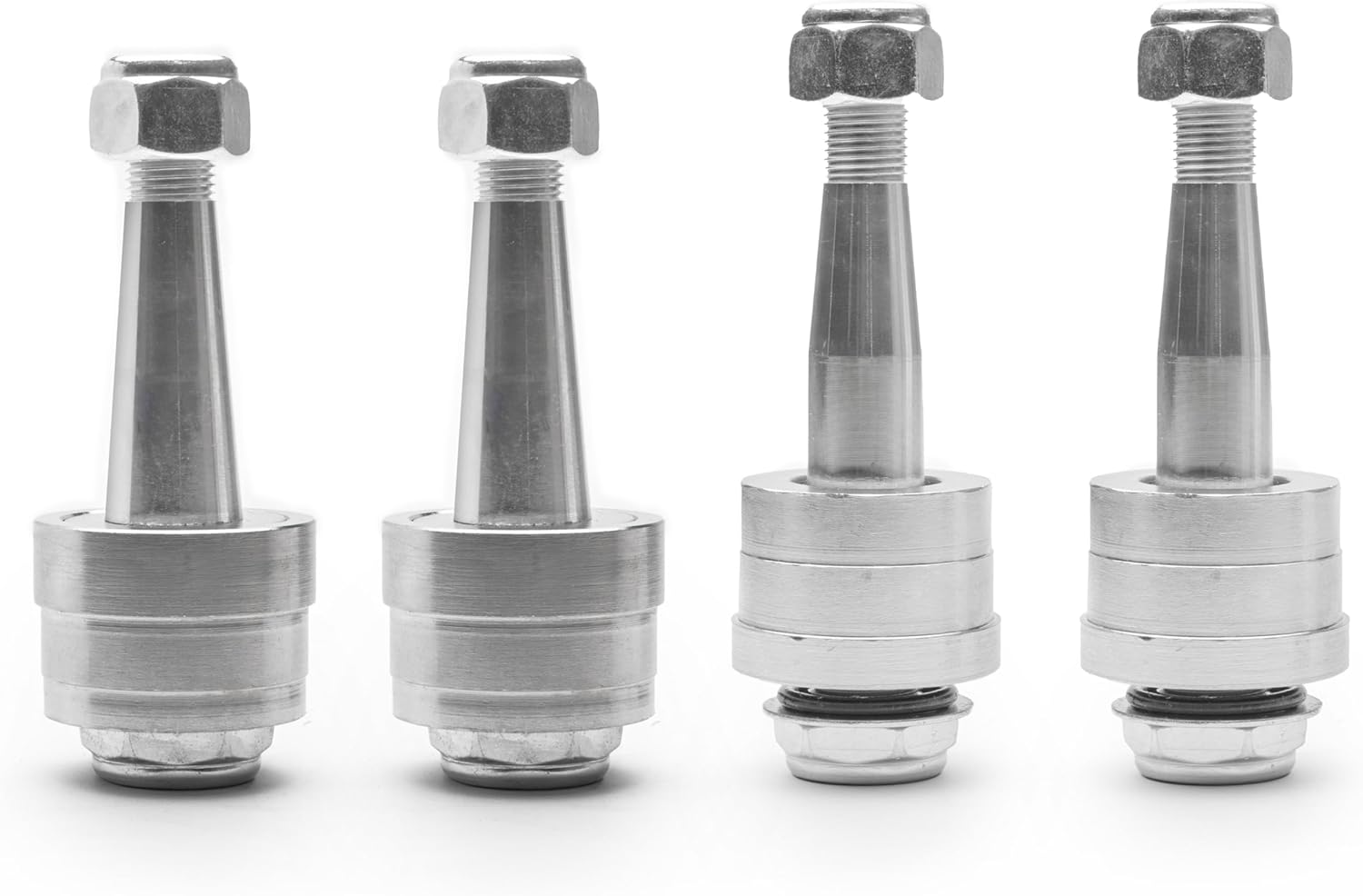
The AI-1101 Ball Joint Delete System swaps fragile factory ball joints for a heavy duty, rebuildable assembly designed specifically for 2018–2024 Jeep Wrangler JL and Gladiator JT. It uses 3/4" PTFE-lined spherical bearings and 4140 chromoly hardware to give a smoother steering feel and much higher durability under off-road loads. The design presses the upper joint from the top and the lower from the bottom so the knuckle stays retained even if a shaft fails, and the lower cup clears RCV axles for compatibility with common aftermarket drivetrains. Assemblies come pre-greased and serviceable so bearings can be replaced without special tools, and double-ended studs let you fine-tune steering firmness. Installation is intended for driveway use with basic hand tools. Expect a firmer steering feel compared with stock and a more permanent solution to ball joint failures, but this is a substantial modification that changes steering components and is aimed at serious off-road builds rather than a simple like-for-like replacement.
Best for: Buyers who want a durable, long-term solution to recurring ball joint failures and who prioritize off-road robustness and tunable steering over retaining a factory steering feel.
Less Ideal for: Drivers seeking a direct, factory-like replacement or minimal-modification repair; those who prioritize supple highway steering and an unmodified daily driver setup should consider alternatives.
- Replaces weak factory ball joints with durable 3/4" PTFE-lined spherical bearings for longer life
- 4140 heat-treated chromoly hardware and zinc coating for high strength and corrosion resistance
- Pre-lubricated, rebuildable assemblies allow bearing replacement without presses
- High-clearance lower cup accommodates RCV axles and bigger tire/axle setups
- Adjustable double-ended studs let you tune steering firmness to preference
- Converts stock steering geometry to a delete system which produces a noticeably firmer steering feel than factory
Verdict: Choose the AI-1101 if you want a tough, rebuildable ball joint delete that eliminates recurring failures and lets you dial steering feel for serious off-road use.
2. Synergy Non-Knurled Heavy Duty Ball Joint Kit for Wrangler JL/JLU and Gladiator JT
| Compatible vehicles | Wrangler JL/JLU and Gladiator JT |
|---|---|
| Includes | 2 upper and 2 lower ball joints |
| Bearing material | Sintered graphite and oil‑impregnated bronze |
| Stud material | Induction heat treated 4140 Chromoly steel |
| Housing material | 1045 high carbon alloy steel |
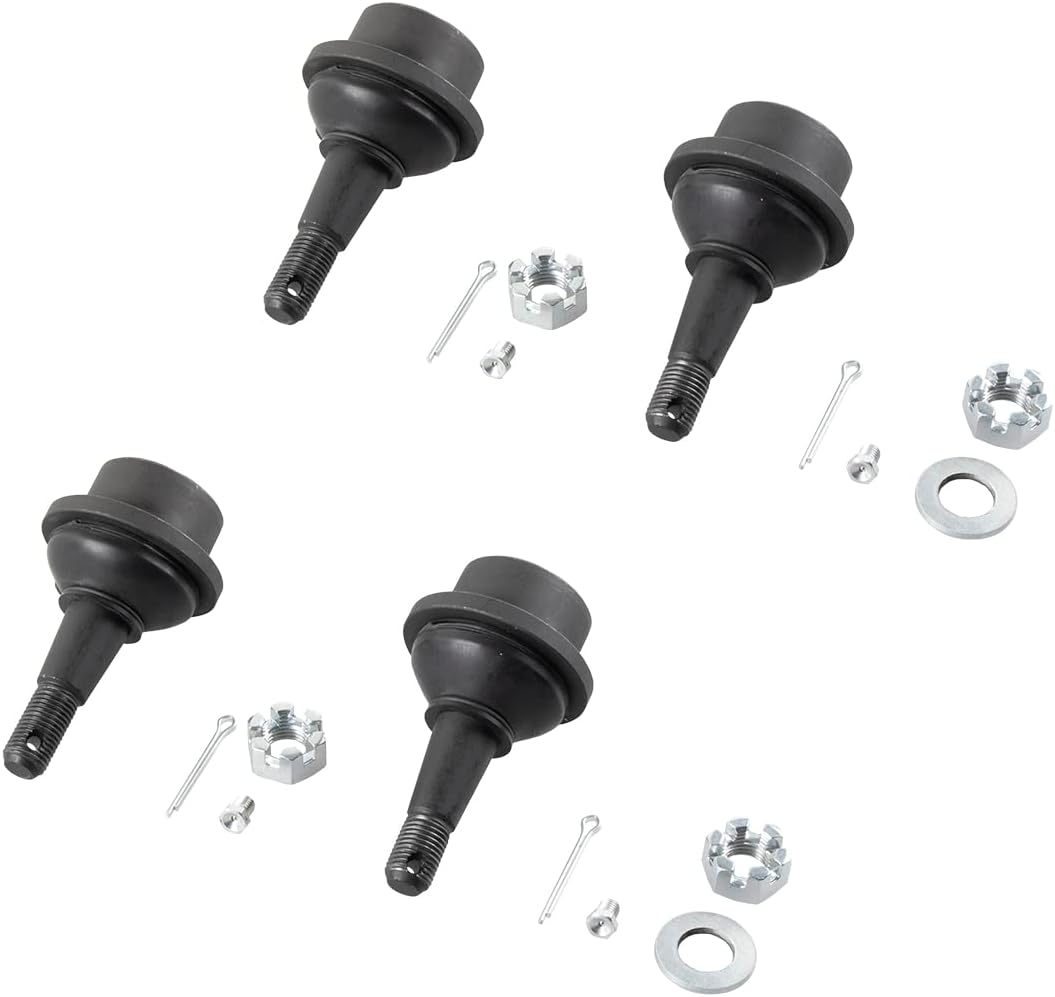
This Synergy kit replaces the upper and lower ball joints on Wrangler JL/JLU and Gladiator JT front suspensions with a fully greaseable, non-knurled metal-on-metal design. It includes two uppers and two lowers made with a sintered graphite and oil-impregnated bronze bearing race, 1045 high carbon alloy housings, and 4140 chromoly studs for improved strength over stock. The larger bearing surface and elimination of the inner nylon liner aim to extend service life when used on lifted vehicles or those with larger tires. Expect a short break-in of roughly 100 to 500 miles during which steering may feel slightly sticky before the bearing surfaces seat. Dust boots use wear-resistant nitro-butyl rubber and the joints accept side-mounted grease fittings, which is useful with aftermarket axles like RCVs. Installation is typical for ball joint swaps but plan on proper alignment afterward. These are built more for durability and heavy off-road use than for a plush highway ride.
Best for: Buyers focused on long-term durability and off-road performance who run lifted Jeeps or oversized tires and prioritize stronger, rebuildable steering components.
Less Ideal for: Drivers seeking the cushiest steering feel or those who prefer low-maintenance polymer-lined joints for strictly street-driven, low-mileage vehicles.
- Designed for Jeep Wrangler JL/JLU and Gladiator JT fitment with direct replacement packaging of two upper and two lower joints
- Metal-on-metal bearing with larger bearing surface for increased durability under heavy loads
- High-strength materials: 4140 chromoly studs and 1045 high carbon alloy housings improve fatigue resistance
- Fully greaseable design with side grease fittings for easier maintenance and compatibility with aftermarket axles
- Durable NBR dust boots resist wear in off-road conditions
- Metal-on-metal design requires a 100–500 mile break-in period during which steering can feel sticky
Verdict: Choose this kit if you need heavy-duty, greaseable ball joints built for lifted Wranglers and Gladiators that prioritize strength and serviceability.
3. Detroit Axle 4-Piece Front Ball Joint Set (2 Upper, 2 Lower)

| Manufacturer | Detroit Axle |
|---|---|
| Model | Ball Joints |
| Item model number | 4S2100092 |
| Exterior | Polished |
This Detroit Axle kit supplies two upper and two lower front ball joints designed to replace worn units on compatible Jeep Wranglers and Grand Cherokees. Installation is typical for suspension work: press the old joints out, install these snug fits, and have an alignment performed afterward. The joints arrive polished and appear heavy duty, and many owners report improved steering feel and restored ride quality once fitted. A practical detail is that the parts come with minimal pre-applied grease, so plan to add grease during installation. Quality appears consistent overall but there are a handful of reports of premature failure, so a careful inspection and correct press-in technique matter. For budget-focused repairs this set delivers OEM-style fit and strong value, but for high-mileage or heavy off-road use some users prefer stepping up to premium branded replacements.
Best for: Buyers repairing a 2018-or-newer Jeep Wrangler who want an affordable, factory-fit replacement set to restore steering and ride without paying dealer prices.
Less Ideal for: Drivers who regularly do heavy off-road use or want the longest-lasting, top-tier suspension parts should consider premium or specialist ball joints instead.
- Includes a full front set with two upper and two lower ball joints for a complete front-end refresh
- Factory-style fit that aligns holes accurately and restores steering geometry when installed correctly
- Sturdy, polished construction that many buyers describe as heavy duty
- Good value for budget repairs compared with dealer-priced replacements
- Comes with little factory grease requiring aftermarket greasing at installation
- A small number of customers report early failures, so longevity can vary
Verdict: A cost-conscious, full front replacement set that restores steering and ride with factory-style fit for 2018‑present Jeep Wrangler owners.
4. TeraFlex JL/JT Dana 30/44 HD Ball Joint Kit (without Knurl)

| Fits | JL Wrangler and JT Gladiator with Dana 30 or Dana 44 front axles |
|---|---|
| Adjustable ball stud | 30 mm (1.18") |
| Grease fittings | Dual zerks, accessible with axle installed |
| Manufacturer | TeraFlex |
This TeraFlex ball joint kit replaces the factory front joints on JL/JT Jeeps with Dana 30 or Dana 44 axles and is built for heavier loads from oversized tires and off-road use. Installation is typical for press-in ball joints and reviewers report the kit comes with clear instructions, torque specs, and serviceable grease fittings that are accessible with the axle installed. Notable features include a 30mm adjustable ball stud for on-vehicle preload tuning, dual grease zerks, and a heavy-duty snap ring to reduce the chance of separation during extreme use. In practice the adjustable preload and accessible grease fittings make maintenance straightforward and help preserve steering feel as components wear. Several users credited these joints with eliminating steering vibration and improving steering precision. Limitations are primarily install-related: some installs require a press and care with directional parts, and a few buyers reported isolated quality control damage on arrival. Expect to need a wheel alignment after installation.
Best for: Buyers who prioritize long-term steering stability and drivetrain durability on JL/JT Jeeps, especially those running larger tires or who do regular off-road driving and want serviceable, adjustable components.
Less Ideal for: Drivers looking for a simple bolt-on, do-it-with-basic-tools replacement or those who will not perform periodic greasing and adjustments should consider simpler, maintenance-free alternatives.
- Designed for JL and JT Dana 30/44 front axles to handle oversized tires and offset wheels
- Adjustable 30mm ball stud allows on-vehicle preload tuning for longer service life
- Dual grease zerks accessible with axle shafts installed for easy routine maintenance
- Heavy-duty snap ring improves retention during extreme off-road articulation
- Installation can require a press and careful handling since joints are directional and vary in length
- Occasional quality control issues reported with shipping damage to individual joints
Verdict: If you need a durable, serviceable upgrade to tighten steering and withstand oversized tires on 2018-present JL/JT Jeeps, this TeraFlex kit is a reliable choice.
5. TRQ Front Upper and Lower Ball Joint 4-Piece Set for 2018–23 Jeep Wrangler and 2020–23 Gladiator

| Position | Front |
|---|---|
| Quantity | 4 Piece |
| Manufacturer Part Number | PSA37969 |
| OEM Part Number | 68388819AA, 68531030AB |
This TRQ kit includes two upper and two lower front ball joints made for 2018–23 Jeep Wrangler and 2020–23 Gladiator front suspension. It is intended as a direct-fit replacement to restore steering precision and front-end stability after worn joints cause play or noise. The parts are machined and ship with upper boots attached while lower boots may need to be installed during fitting. TRQ emphasizes fitment guidance and provides installation videos to help DIY mechanics complete the job with common tools. Buyers report generally good fit and improved ride feel, though some installers note minimal grease at delivery and the absence of grease fittings on certain units, which means maintenance is limited to replacement rather than regreasing. For owners prioritizing a reliable, factory-style replacement that is straightforward to install, this kit meets that need; buyers wanting serviceable joints or factory-style greaseability should verify the specific part variation before purchasing.
Best for: Jeep owners who want a dependable, direct-fit front suspension replacement and prefer parts backed by many reviews and installation guidance to reduce installation risk.
Less Ideal for: Drivers who need serviceable ball joints with grease fittings or who want professional shop–level rebuildability should consider alternatives made for field regreasing.
- Complete four-piece kit covers both upper and lower front positions for one axle
- Machined finish and direct-fit design simplify installation and alignment
- Supported by TRQ installation videos and documented fitment for the listed years
- Some units arrive without grease fittings and limited grease in upper joints requiring re-lubrication or replacement over time
- Lower boots may need manual installation and can be tight to fit in some cases
Verdict: A straightforward, well-documented direct-fit front ball joint kit for Wrangler and Gladiator owners seeking a reliable factory-style replacement.
6. Spicer 706944X Suspension Ball Joint Kit (upper and lower, one side)
| Brand | Spicer |
|---|---|
| Model | 706944X |
| Fit type | Vehicle Specific |
| Includes | Upper and lower (one side) |
| Exterior | Machined |
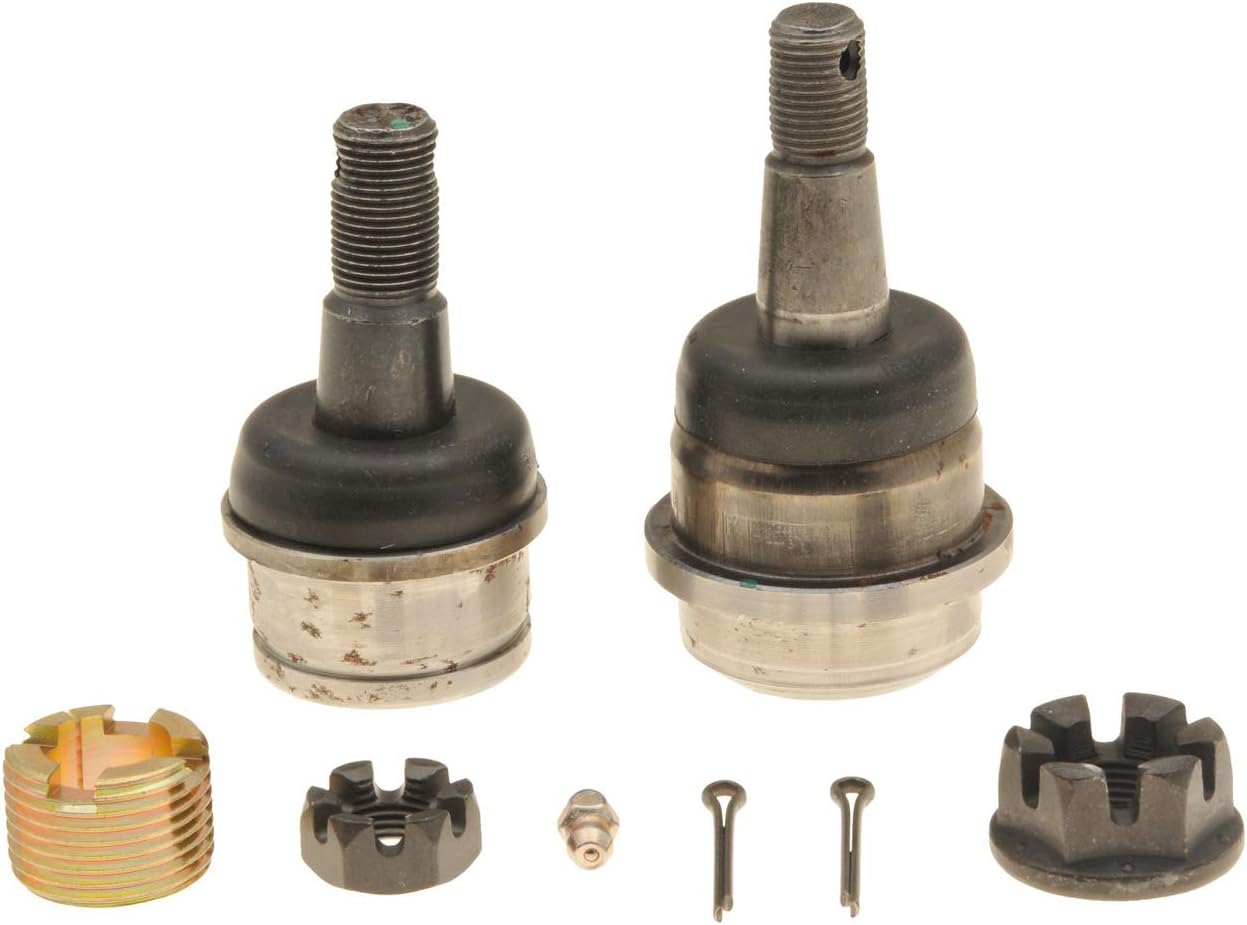
The Spicer 706944X kit supplies both the upper and lower ball joints for one side, intended as a direct factory-quality replacement for Dana 30/44 front suspensions. It is used by pressing the joints into the steering knuckle and control arm with a ball-joint press and then greasing to seat and protect the joint. Notable features include machined exterior surfaces and manufacturer-listed fitment for Dana axle applications, which translate to tight, vehicle-specific fit and predictable steering feel when installed correctly. Reviewers report the parts restore steering tightness and ride quality and that the kit includes the hardware shown. Important limitations are the need for proper tools and experience for press-fit installation and the possibility of slight variation in fit on heavily worn knuckles; some users recommend cleaning or sizing the knuckle bore before installing. For buyers who want a dependable, factory-style replacement for front-end rebuilds, this kit delivers reliable fit and durability, but plan on a press or shop labor during installation.
Best for: Buyers who want a reliable, factory-style front suspension repair that restores steering feel and longevity and who prioritize exact fitment and proven aftermarket parts over DIY shortcuts.
Less Ideal for: If you lack access to a ball-joint press or want a plug-and-play press-in solution without shop labor, consider options designed for easier installation or have a shop handle the job.
- Factory-quality replacement fit for Dana 30/44 front suspension applications
- Includes both upper and lower ball joints for one side so a single-part purchase covers a full-side service
- Machined exterior for consistent seating and long-term durability
- Widely used and well-reviewed by owners restoring steering tightness
- Press-fit installation requires a ball-joint press and moderate mechanical skill or shop service
Verdict: Choose the Spicer 706944X kit when you need a factory-quality upper and lower ball joint replacement that reliably restores front-end tightness for Dana 30/44 Jeep suspensions.
Choosing the Right 2018-Present Jeep Wrangler Ball Joint: Key Factors to Consider
Fitment and Chassis Compatibility
Correct fitment to the 2018-present Jeep Wrangler chassis is the first priority. The JL and JLU-generation steering knuckles, control arms, and mounting points have specific ball joint stud sizes and mounting patterns. Choosing a ball joint built to match those dimensions minimizes installation hassle and prevents improper seating that can lead to premature failure. Chassis compatibility also affects alignment settings. A part that sits even slightly off can change camber or caster characteristics and cause uneven tire wear or pull. Verify whether the replacement is intended for the front lower ball joint or upper ball joint position, since geometry and load differ between those locations.
Load Capacity and Construction
Ball joints take steering and suspension loads constantly, so construction quality matters. Look for heavy-duty metal housings, hardened bearing surfaces, and precision-machined studs to resist deformation under load. Strong construction reduces the chance of accelerated wear when you carry cargo or tackle rough terrain. Consider whether the design uses a pressed-in bearing or a serviceable insert. Both approaches can be durable when well made, but materials and machining tolerances determine how long the joint maintains tightness and alignment under repeated stress.
Seal Design and Contamination Resistance
Wranglers often see water, mud, and road salt, so a robust dust boot and seal are critical to keep grit out of the bearing surfaces. A compromised seal allows abrasive particles and moisture to enter and causes rapid wear and corrosion. Boots made from durable elastomers with secure retaining rings or integrated lips hold up better to flex and temperature swings. Some designs include grease fittings that permit periodic lubrication. If your chosen ball joint supports greasing, it can extend service life by flushing contaminants and replenishing lubricant, provided you maintain it on schedule.
Serviceability and Maintenance
Decide whether you prefer a sealed-for-life unit or a greasable ball joint. Sealed units are low maintenance but might require earlier replacement if a seal fails. Greasable units allow periodic lubrication and can often be refreshed to restore smooth operation, which can be beneficial for Wranglers used off-road or in corrosive environments. Also consider the availability of replacement boots or rebuildable inserts. If you plan to keep the vehicle long term, access to service parts can reduce lifetime ownership costs and downtime.
Installation Requirements and Tools
Replacing a ball joint on a 2018-present Jeep Wrangler may require a press tool or ball joint removal tools, especially for pressed-in styles. Understand whether the joint is a bolt-in design or requires pressing. Bolt-in units often simplify do-it-yourself installs, while pressed joints typically need a ball joint press tool and possibly control-arm disassembly. Factor in installation torque specifications and whether the hardware is included. Using correct tools and following torque specs prevents damage to mounting points and ensures the joint seats correctly, preserving alignment and safety.
Warranty and Long-Term Reliability
Warranty terms give insight into expected durability and manufacturer confidence. A longer warranty can offer peace of mind, but pay attention to what the warranty covers, such as finish corrosion or mechanical failure under load. For Wrangler owners who drive off-road, look for warranties that account for higher duty cycles. Also assess reputation for longevity under real-world conditions. Components exposed to frequent flexing and contaminants reveal design weaknesses sooner, so materials, seal design, and finish treatments all contribute to how long a joint remains serviceable.
Understanding Ball Joint Positions on the Wrangler JL and JLU
On the 2018-present Jeep Wrangler JL and JLU, ball joints appear in specific front suspension locations: the upper and lower ball joints connect the control arms to the steering knuckle. Each position handles different forces and requires compatible geometry for proper steering and suspension behavior. Lower joints typically bear higher vertical loads while upper joints control steering articulation and alignment.
Knowing which position you need helps narrow choices. Front lower ball joint replacements must handle the weight and impact loads at the wheel, while upper ball joints require tight tolerances to avoid steering play.
- Lower ball joints manage vertical loads and wheel support.
- Upper ball joints maintain steering precision and alignment.
- Position-specific design affects mounting method and tools required for service.
Signs You Need a Ball Joint Replacement
Common symptoms on a Wrangler include uneven tire wear, clunking or knocking when going over bumps, visible play at the wheel when shaken by hand, and steering that feels loose or wanders. Wheel vibration that changes with cornering or when hitting bumps can indicate a failing joint.
Inspect boots for cracks or leakage and check for excessive vertical movement by lifting the wheel and measuring play. If you detect the described symptoms, address the issue promptly to avoid further suspension or tire damage.
- Clunking noise over bumps or during steering input.
- Vibration in the steering wheel that worsens with speed or turning.
- Visible torn boots or grease leakage at the joint.
Installation Considerations and DIY Tips
Decide whether the replacement is bolt-in or pressed-in before purchasing. Bolt-in ball joints simplify home installation and often require basic hand tools and torque wrenches. Pressed-in joints typically need a ball joint press tool and a safe workspace to disassemble the control arm and knuckle without damaging adjacent components.
When working on a 2018-present Wrangler, follow service manual torque specs and use new mounting hardware where required. If a press is needed, take care to support suspension components and protect threads and bearing surfaces. After installation, perform a wheel alignment to ensure proper tire wear and steering geometry.
- Keep torque specs handy and use a calibrated torque wrench.
- Inspect control-arm bushings and related hardware while components are apart.
- Plan for a post-replacement alignment.
When to Choose Greasable Vs Sealed Ball Joints
Greasable joints allow routine maintenance and can be advantageous if you drive off-road or in corrosive environments where contaminants penetrate seals. Regular lubrication can push out dirt and replenish the bearing surface lubricant, extending service life when performed correctly.
Sealed-for-life joints lower maintenance time and reduce the chance of over-greasing, but a failed seal typically means replacing the entire unit. For owners who prefer minimal upkeep and mostly on-road use, sealed units can be convenient; for heavier-duty use, a greasable design may be preferable.
- Greasable: longer service life with regular maintenance.
- Sealed: minimal maintenance and simpler installation.
Tools and Workshop Prep for Wrangler Ball Joint Work
Prepare a safe workspace and appropriate tools before starting. Essential items include jack stands rated for the vehicle, a torque wrench, ball joint press tool (for pressed joints), and a set of pullers or separators. Penetrating lubricant, new cotter pins, and appropriate replacement fasteners are useful to have on hand.
If you lack a press tool, many shops or community garages offer tool rental or service options. Taking the time to pre-order hardware and inspect the workspace reduces installation time and avoids mid-job surprises.
- Ball joint press tool for pressed-in units.
- Torque wrench and impact or breaker bar for stubborn fasteners.
- Shop manual or service data for torque specs and disassembly sequence.
Maintaining Ball Joints for Long Life
Regular inspection of boots and checking for play keeps small issues from becoming major repairs. Clean around the joint to remove grit and inspect the rubber boot at service intervals. If the joint is greasable, follow a lubrication schedule based on use, such as after heavy off-road trips or annually for mixed use.
Address rust or corrosion on mounting surfaces promptly, and replace torn boots early if possible. Maintaining surrounding suspension components like control-arm bushings and tie rod ends reduces extra stress on ball joints and extends their service life.
- Inspect boots visually at each oil change or seasonal check.
- Grease greasable joints after heavy off-road use.
- Replace torn boots promptly to protect bearings.
Still looking for the perfect fit?
Select your Jeep Wrangler configuration to see the most relevant Ball Joints recommendations
How We Chose the Best 2018-Present Jeep Wrangler Ball Joint
We focused on criteria that matter specifically for 2018-present Jeep Wrangler owners and excluded items that do not match factory suspension geometry or lack clear fitment notes. Our evaluation emphasized mechanical fit and long-term reliability. Key considerations included material and construction quality, such as forged steel housings and hardened bearings, because these affect load capacity and resistance to play under steering forces. Sealing and contamination resistance were weighed heavily since Wranglers see wet, muddy, and dusty conditions that accelerate wear. Fitment accuracy to the JL and JLU era suspension mounting points and correct stud or bolt patterns was required for inclusion. We also prioritized ball joints with clear serviceability features, such as greaseable fittings when applicable, and kits that include necessary hardware for secure installation. Durability indicators included corrosion-resistant finishes and robust dust boots. We excluded components that lacked definitive vehicle fitment data, used plastic load-bearing elements, or had poor user-reported durability in similar applications. The final list balances longevity, correct fit for 2018-present Wrangler suspensions, and the practical needs of owners who may drive on-road and off-road.
Our full evaluation process is outlined in our review methodology.
FAQ
How long do ball joints typically last on a 2018-present Jeep Wrangler?
Life span varies with driving conditions. Under normal on-road use, they often last many tens of thousands of miles, while heavy off-road or salted-road use can shorten life. Regular inspection helps catch wear before failure.
Can I replace a ball joint myself or should I go to a shop?
DIY replacement is possible if you have the right tools and experience, especially with bolt-in designs. Pressed-in joints usually require a ball joint press tool and knowledge of suspension disassembly. If you are unsure, a professional ensures correct installation and alignment.
What are the safest signs that a ball joint is failing?
Look for clunking noises over bumps, noticeable steering looseness, uneven tire wear, and visible play when rocking the wheel. Torn boots or grease leakage are also early warning signs.
Do greasable ball joints need more frequent replacement?
Not necessarily. Greasable joints can last longer if maintained properly because lubrication flushes contaminants and replenishes bearing grease. However, neglected greasable joints can fail just as quickly as sealed units with damaged boots.
Will replacing ball joints fix wheel vibration issues?
If the vibration is caused by worn ball joints producing play in the steering knuckle, replacement can resolve it. Wheel vibration has multiple causes, so confirm the ball joints are the source before replacing them.
Should I do an alignment after replacing ball joints?
Yes. Any work that affects suspension geometry should be followed by a wheel alignment to ensure correct camber, caster, and toe settings and to prevent uneven tire wear.
Final Verdict
For 2018-present Jeep Wrangler owners, prioritize correct fitment to the JL and JLU era suspension, robust construction, and strong seal design when selecting ball joints. Decide between sealed and greasable options based on maintenance preferences and the vehicle's typical duty cycle. Plan for proper tools and a post-installation alignment to preserve steering feel and tire life. Balancing durability, serviceability, and correct fit will help you choose a ball joint that keeps your Wrangler steering tight and its suspension safe under the driving conditions you face.
Explore More:
- Check out all Jeep Wrangler parts & accessories
- Explore Ball Joints Maintenance & Repair Guides
- Explore Suspension & Steering
- Browse all Auto Parts
