

Note: This article contains affiliate links. If you click on these links and make a purchase, I may earn a small commission at no extra cost to you. This helps support my research and content. Read my full affiliate disclosure here.
If you own a Ford Explorer Sport, the right air filter keeps the engine breathing freely and helps preserve performance, fuel efficiency, and long-term reliability. Engine air restrictions, dirt ingestion, and poor fitment can all reduce throttle response and increase wear, so picking the proper filter for this specific configuration matters.This guide shortlists the seven top air filters suited for the Explorer Sport, focusing on real-world fitment, filtration efficiency, and durability. We evaluate options by airflow, particle capture, build quality, and ease of replacement to help you choose the best upgrade or direct-replacement filter. Read on for the criteria we used and the factors to weigh before you install a new filter.
Looking for other parts? See all Ford Explorer parts & accessories.
Top Picks at a Glance
| Best Overall The best all-around choice for most situations | RVgolf Engine and Cabin Air Filter Kit for 2020–2026 Ford Explorer / Police Interceptor Utility / Lincoln Aviator |  |
| Best Quality Built to a higher standard if you want something more solid | K&N High-Flow Lifetime Engine Air Filter (33-2395) |  |
| Best Value The sweet spot between price and what you get | KAX Engine and Cabin Air Filter Kit (CA10242 + CF11176) |  |
| Best Budget The cheapest option that still gets the job done reliably | PHILTOP Engine Air Filter EAF064 (replacement for select Ford Explorer, Ranger, Mercury Mountaineer, Mazda models) |  |
| Highest Rated A top-rated pick with lots of positive feedback | FRAM Extra Guard CA10242 Engine Air Filter |  |
| Most Popular A crowd favorite that many people choose with confidence | KAX Premium Engine Air Filter GAF031 (CA10242) |  |
| Best Seller A high-volume bestseller chosen again and again | EPAuto GP242 Engine Air Filter (FP-015-1) |  |
1. RVgolf Engine and Cabin Air Filter Kit for 2020–2026 Ford Explorer / Police Interceptor Utility / Lincoln Aviator

| Compatible models | Ford Explorer 2020–2026, Police Interceptor Utility 2020–2026, Lincoln Aviator 2020–2026 |
|---|---|
| Engine fitment | 2.3L and 3.0L options as listed |
| Reference numbers | Engine CA10242, CY01-13-Z40A; Cabin CF12772, CP772 |
| Unit count | 2.0 Count |
This RVgolf kit bundles an engine air filter and a cabin air filter sized to fit 2020–2026 Ford Explorer (2.3L/3.0L), Police Interceptor Utility (3.0L), and Lincoln Aviator (3.0L). The engine filter uses a high-fiber construction that the manufacturer says captures up to 99% of airborne impurities while keeping intake resistance low to help maintain airflow and reduce engine noise. The cabin filter employs multi-layer media to trap dust, pollen, and some harmful gases and is installed behind the glove box with simple stepwise instructions. For routine maintenance this kit is practical: it replaces factory items with parts aimed at similar performance and is quick for DIY swapping during scheduled service. Limitations include relying on the buyer to confirm exact part cross-reference numbers and the typical aftermarket variability in long-term durability compared with factory-brand filters. Still, for a balanced owner who wants effective filtration and easy self-installation, this kit covers both engine and cabin needs in one purchase.
Best for: Buyers who want a practical, do-it-yourself maintenance solution that refreshes both engine intake and cabin air in one kit while keeping filtration and airflow balanced.
Less Ideal for: Drivers seeking factory-brand original parts or those who prefer filters with documented long-term lab testing should consider manufacturer-branded replacements instead.
- Includes both engine and cabin filters for a single maintenance stop
- High-fiber engine filter advertised to capture up to 99% of airborne impurities
- Low-resistance design intended to preserve intake airflow and reduce noise
- Multi-layer cabin filter media to reduce dust, pollen, and odors
- Vehicle-specific fit for the listed 2020–2026 models for straightforward replacement
- Manufacturer fitment requires buyer confirmation against referenced part numbers before purchase
- Long-term durability and lifespan claims are typical for aftermarket parts and may vary in real-world use
Verdict: A convenient two-filter kit that balances strong filtration and easy DIY installation for 2020–2026 Explorer-family vehicles.
2. K&N High-Flow Lifetime Engine Air Filter (33-2395)

| Model | High-Flow Engine Air Filter |
|---|---|
| Shape | Panel |
| Manufacturer | K&N Engineering |
| Automotive Fit Type | Vehicle Specific Fit |
This K&N High-Flow engine air filter is a washable, reusable panel filter engineered to boost intake airflow and sustain engine protection over long service intervals. It installs into the factory air box and is pre-oiled and ready to use, so swap-in takes only minutes. The multilayer cotton gauze media and tacking agent are designed to trap contaminants while allowing higher flow, which can translate to improved throttle response and modest horsepower gains in everyday and performance driving. Because it is reusable and cleaned roughly every 75,000 miles under normal highway use, it removes the recurring cost and waste of disposable filters. The construction is durable and intended for long life, backed by K&N's long-term warranty. Be aware this is a vehicle-specific fit so you must confirm compatibility with your Explorer Sport application before buying, and gains will vary by engine and supporting mods rather than match advertised maximums for every vehicle.
Best for: Buyers seeking a low-maintenance performance upgrade for daily-driven performance or enthusiast use who prioritize improved airflow and reduced operating cost over time.
Less Ideal for: Drivers who prefer completely maintenance-free, disposable filters or those unwilling to verify exact fitment for their specific Explorer Sport model should consider alternatives.
- Washable and reusable design reduces ongoing replacement costs and waste.
- Higher-flow multilayer cotton gauze media can improve throttle response and minor horsepower gains.
- Pre-oiled and vehicle-specific shape allows quick drop-in installation into the factory air box.
- Long service interval between cleanings under typical highway driving conditions.
- Performance gains depend on the vehicle and other intake/exhaust modifications and are not guaranteed.
- Requires periodic cleaning and re-oiling to maintain filtration and flow characteristics.
Verdict: Choose this K&N filter if you want a durable, washable intake upgrade that boosts airflow and reduces long-term filter costs for a performance-oriented Explorer Sport.
3. KAX Engine and Cabin Air Filter Kit (CA10242 + CF11176)

| Included Components | Engine air filter and cabin air filter |
|---|---|
| Manufacturer | KAX |
| Model Number | CA10242+CF11176 |
| Product Grade | Replacement Part |
| Fit Type | Vehicle Specific Fit |
This KAX kit bundles an engine air filter and a cabin air filter made for compatible Ford vehicles, letting you replace both at once. The engine filter uses multi-layer filtration to protect intake components and help maintain engine efficiency, while the cabin filter uses coconut shell activated charcoal to reduce odors and improve in‑car air quality. Installation is straightforward and intended to be a quick user swap, making it useful for routine maintenance during a single service interval. The combined packaging and vehicle-specific fit reduce the chance of ordering the wrong parts and save time compared with buying filters separately. Limitations include the lack of detailed filtration ratings such as MERV or micron capture, and this aftermarket kit may vary slightly from factory parts in construction and longevity. For routine preventative maintenance on a Sport or everyday Explorer, the kit is a convenient economy option; drivers seeking high-performance or heavy-duty filtration may want a premium branded alternative with verified lab specs.
Best for: Buyers who prioritize practical, time-saving maintenance and want a single, vehicle-specific kit to replace both engine and cabin filters together.
Less Ideal for: Drivers who need certified high-efficiency filtration or who prefer dealer-branded parts for long-term durability should consider other options.
- Includes both engine and cabin filters in one purchase for simultaneous replacement
- Vehicle-specific fit reduces fitment errors and simplifies ordering
- Cabin filter uses activated charcoal to neutralize odors
- Quick and easy DIY installation for routine maintenance
- No published filtration efficiency ratings or particulate capture specifications
- Aftermarket construction may differ from factory-quality parts and affect longevity
Verdict: A convenient, vehicle-specific two-filter kit that makes replacing both the engine and cabin filters at once fast and practical for routine Explorer maintenance.
4. PHILTOP Engine Air Filter EAF064 (replacement for select Ford Explorer, Ranger, Mercury Mountaineer, Mazda models)

| Manufacturer | PHILTOP |
|---|---|
| Model | PHILTOP Air Filter EAF064 |
| Automotive Fit Type | Vehicle Specific Fit |
| OEM Part Number | CA8243,46253,CA9563,A35192,F77Z9601AA,FA1658,2L2Z9601AC,AF1658,FA1744 |
This PHILTOP EAF064 engine air filter is a direct-fit replacement intended for 1997–2001 Ford Explorer and compatible Ranger and Mountaineer years, plus several Mazda trucks. It installs in minutes with no special tools thanks to a factory-style shape and fit. The filter advertises very high filtration efficiency, which helps keep intake air clean, reduce engine wear, and can modestly improve fuel economy when compared with a clogged or low-quality filter. Typical use is routine maintenance during service intervals every 10,000–12,000 miles or more often in dusty conditions. The practical benefits are straightforward: easy self-installation, broad vehicle-specific coverage for older Ford models, and strong particle capture. Limitations are that it is marketed as a basic replacement filter rather than a performance upgrade, and buyers should confirm exact year and model fit before ordering because fitment is vehicle-specific.
Best for: Drivers looking for an affordable, factory-style replacement to restore clean intake air on older Ford Explorer and similar models who prioritize straightforward maintenance and value.
Less Ideal for: Owners seeking high-flow performance filters for boosted or tuned engines or those who want long-life washable filters should look at specialty performance options instead.
- Vehicle-specific design for direct, tool-free installation
- High reported filtration efficiency to protect the engine from particles
- Simple replacement that can help maintain or improve fuel economy
- Covers multiple older Ford Explorer and Ranger model years plus compatible Mercury and Mazda trucks
- Not marketed as a performance or high-flow upgrade for tuned engines
Verdict: A budget-friendly, factory-fit replacement that restores clean intake air and is ideal for routine maintenance on older Ford Explorer and related models.
5. FRAM Extra Guard CA10242 Engine Air Filter

| Brand | Fram |
|---|---|
| Model | FRAM CA10242 |
| Position | Front, Rear |
| Automotive Fit Type | Vehicle Specific Fit |
The FRAM Extra Guard CA10242 is a vehicle-specific replacement engine air filter designed to capture dirt and debris before they reach the intake system. It uses FRAM's tested filter media to provide increased protection over standard retail filters and is intended to be changed at roughly 12,000-mile intervals. Installation is simple and quick for a DIYer — remove the old element, seat the new filter in the airbox so the perimeter seal is snug, and resecure the cover. In real-world use the filter balances airflow and particle capture to help preserve acceleration and engine responsiveness between service intervals. It supports a wide list of compatible Ford Explorer and similar V6/L4 applications, so fitment for the specified models is straightforward. The main limitation is that it is a conventional paper-type replacement filter rather than a long-life or performance upgrade, so drivers seeking higher flow or reusable filters should consider performance or washable options instead.
Best for: Drivers prioritizing dependable, factory-style filtration and straightforward maintenance for their Explorer or similar Ford/Lincoln models who want consistent particle protection between service intervals.
Less Ideal for: Owners looking for a washable reusable element or a high-flow performance upgrade for modified engines should choose a different filter type.
- Vehicle-specific fitment for many Ford and Lincoln applications simplifies replacement
- Engineered filter media tested to provide increased particle protection over standard retail filters
- Designed for easy DIY installation with a perimeter seal for quick seating
- Recommended 12,000-mile change interval reduces frequency of maintenance
- Not a high-flow or reusable performance filter, so it does not increase peak airflow for modified engines
Verdict: Choose this FRAM Extra Guard if you want a dependable, easy-to-install replacement filter that protects the engine over typical 12,000-mile service intervals.
6. KAX Premium Engine Air Filter GAF031 (CA10242)
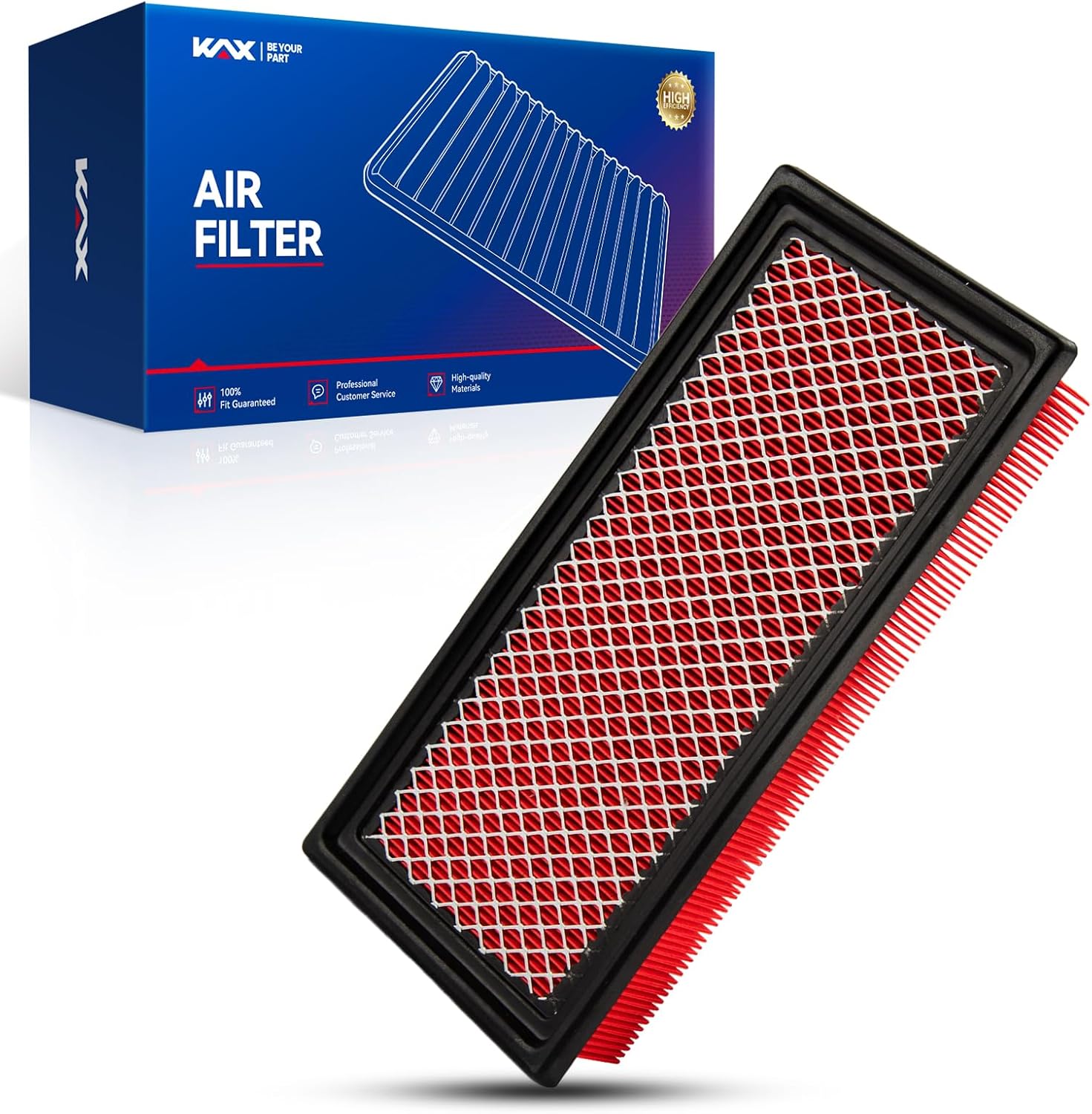
| Compatible part number | CA10242 / GAF031 |
|---|---|
| Fit type | Vehicle Specific Fit |
| Filter shape | Rectangular |
| Reusable | No |
This KAX Premium Engine Air Filter is a direct-fit replacement designed for Ford Explorer and several related Ford models. It installs into the factory air box with no modifications and is intended for routine maintenance to keep intake air clean. The filter uses embossed paper media with a high dust-holding capacity and claims near-total filtration of fine particles, which helps protect the engine and maintain peak performance between services. KAX advertises an extended service interval compared with basic filters, which reduces how often you need to swap it out. Practical benefits include straightforward installation, broad compatibility across model years listed, and a design that mirrors factory fit and orientation. Limitations are that this is a disposable paper filter rather than a washable or reusable element, so long-term cost depends on replacement frequency, and exact filtration performance beyond the manufacturer claims is not independently provided here.
Best for: Buyers who prioritize proven fitment and wide social proof and want a straightforward, reliable replacement filter that mirrors factory installation and reduces installation risk.
Less Ideal for: Drivers who prefer reusable or high-performance washable filters or who want independently verified lab filtration data should consider other options.
- Vehicle-specific fit for listed Ford Explorer and related models for hassle-free installation
- Embossed paper media with high dust-holding capacity to reduce clogging between services
- Manufacturer states high filtration efficiency to protect engine components
- Direct replacement that installs into factory air box without tools or modification
- Disposable single-use design rather than a washable or reusable element
Verdict: A reliable, factory-fit disposable air filter that offers high claimed filtration and easy direct replacement for Ford Explorer owners seeking low-risk maintenance.
7. EPAuto GP242 Engine Air Filter (FP-015-1)

| Model Number | FP-015-1 |
|---|---|
| OEM Equivalent Part Number | 7T4Z-9601-A, CA10242, CY01-13-Z40A |
| Product Grade | Replacement Part |
| Fit Type | Vehicle Specific Fit |
The EPAuto GP242 is a direct-fit replacement engine air filter intended to protect the intake on compatible Ford and Mazda vehicles. It installs in the factory airbox under the hood and follows the same simple 4-step replacement routine used on most cars: open the housing, remove the old filter, clean the cover, and drop in the new unit. The filter lists OEM equivalent numbers and is made as a vehicle-specific fit, so it should seat cleanly and maintain the factory airflow path. Practical benefits include reliable particle filtration to help preserve engine components and potentially maintain fuel economy between services, and the product is offered as a single-count part that matches common factory part numbers. Limitations to expect are that it is a plain replacement filter with no performance claims beyond OEM-equivalent filtration and it must be replaced at recommended intervals rather than cleaned and reused.
Best for: Buyers who prioritize low risk and a no-surprise replacement that matches factory fit and fitment lists, seeking a straightforward swap to keep engine intake protection current.
Less Ideal for: Drivers looking for performance upgrades, washable filters, or aftermarket high-flow solutions should consider other filter types.
- Vehicle-specific fit that matches factory part numbers for straightforward installation
- Covers a wide span of Ford Explorer and related models through recent years
- Helps protect engine internals from dirt and debris to preserve performance
- Simple drop-in replacement that follows standard filter-change steps
- No washable or reusable feature since it is a disposable replacement filter
- No performance or high-flow claims beyond factory-equivalent filtration
Verdict: Choose this EPAuto GP242 when you want a dependable, vehicle-specific replacement that matches factory fitment for hassle-free engine protection.
Choosing the Right Ford Explorer Sport Air Filter: Key Factors to Consider
Filtration Efficiency
Filtration efficiency describes how well the media captures dust, pollen, and abrasive particles that cause engine wear. Higher-efficiency media reduce the number of fine particles reaching the intake, which protects the combustion chamber, valves, and sensors. For the Explorer Sport, particulate control is important because the engine can be sensitive to contaminants that affect combustion stability and emissions components.
However, extremely dense media can restrict airflow if not engineered properly. Look for filters that provide a balance between particle capture and low restriction, and check for published efficiency ratings or lab test data when available. Proper sealing around the filter perimeter also matters; even a high-efficiency element will fail to protect the engine if unfiltered air bypasses the media.
Airflow and Performance Impact
Airflow affects throttle response, turbo lag if equipped, and fuel economy. A filter that allows good volumetric flow while still removing contaminants helps the engine run more efficiently and responsively. For the Explorer Sport, which is tuned for a more dynamic feel than base models, preserving intake flow is often a higher priority.
Consider measured pressure drop or manufacturer airflow claims when choosing a filter. Filters designed with low-resistance pleated media or engineered synthetic fibers can maintain high filtration without choking the intake. Avoid options that sacrifice flow for marginal gains in filtration unless you operate in extremely dusty conditions.
Fitment and Seal Quality
Correct fitment to the vehicle's airbox is critical to prevent bypass and ensure consistent performance. The Sport configuration may include intake components or housings that differ from other trims, so verify compatibility explicitly. A filter that does not seat properly can allow unfiltered air to enter and quickly negate any benefits from high-quality media.
Seal materials and the design of the filter flange or gasket determine how well the element mates with the airbox. Look for robust rubber or foam sealing surfaces and a precise outer frame. Stiffness of the frame is also important to maintain shape under installation pressure or temperature cycles.
Durability and Maintenance
Durability covers both the media longevity and the physical robustness of the filter structure. Disposable paper elements are simple to replace, while reusable or oiled cotton-style filters can be cleaned and re-oiled, offering a longer service life when maintained properly. For Explorer Sport drivers who want low-maintenance reliability, a high-quality disposable element may be preferable.
Consider service interval recommendations and how easy the filter is to access in the Sport airbox. Filters exposed to frequent off-road or dusty driving will require more frequent changes or cleanings. Also consider how resistant the media and sealing materials are to heat, oil contamination, and repeated handling during service.
Compatibility With Sensors and Intake Accessories
Certain filter media or oiling methods can interfere with mass air flow sensors or intake air temperature sensors. Oiled reusable filters, if over-saturated, may leave residue that affects sensor readings or engine management. For the Explorer Sport, preserving accurate sensor operation is important for consistent performance and emissions control.
Verify that a chosen filter is compatible with the vehicle's sensor setup and any aftermarket intake mods that the owner may have installed. If you use a reusable filter, follow the manufacturer cleaning and oiling instructions to avoid introducing contaminants to sensitive sensors.
Environmental and Driving Conditions
Where and how you drive the Explorer Sport should influence filter choice. Frequent highway driving exposes the filter to fewer large particulates, so longer-life media that favor airflow might be ideal. Conversely, dusty roads or off-road use require more aggressive particle capture and possibly shorter service intervals.
Seasonal considerations also matter. In very wet climates, choose a filter with media and seals that resist moisture ingress. Some media types retain water differently and may change flow characteristics when wet. Match service expectations to the local environment and your typical driving patterns.
Engine Vs Cabin Filter Roles
The engine air filter and the cabin filter serve different functions. The engine filter protects internal engine components and ensures proper combustion by supplying clean intake air. The cabin filter improves passenger air quality by trapping pollen, dust, and particulates that would enter the HVAC system.
For the Ford Explorer Sport, focus on selecting an engine air filter optimized for protection and airflow. Cabin filter replacement is a separate maintenance item and will not affect engine performance, but both should be maintained on a schedule to ensure overall vehicle health and comfort.
- Engine filter affects combustion, emissions, and engine longevity.
- Cabin filter affects HVAC performance and interior air quality.
- Replacing both filters on schedule helps reduce strain on HVAC and engine systems.
When To Replace the Air Filter
Replacement frequency depends on driving conditions. Under normal mixed driving, many filters last the factory-recommended interval, but dusty or off-road conditions will shorten that interval significantly. For the Explorer Sport, inspect the filter visually at regular service intervals and replace it when excessive dirt buildup or visible media damage is present.
A simple visual check can be supplemented by monitoring fuel economy and throttle feel. Noticeable drops in economy or sluggish response can indicate a clogged element. Follow the vehicle maintenance schedule as a baseline and adjust based on real-world inspection.
- Inspect during oil changes or every 12 months if usage is moderate.
- Check more often after dusty trips or heavy towing.
- Replace immediately if the media shows holes, seals are compromised, or heavy soiling is evident.
Installation Tips for the Explorer Sport
Proper installation ensures the filter seals correctly and performs as intended. Park on level ground, cool the engine, and remove the airbox cover carefully to avoid disturbing any connected sensors or hoses. When fitting the new element, confirm the orientation matches the intake flow direction markings if present.
Press evenly around the gasket surface to seat the filter and reassemble the airbox without over-tightening fasteners. After installation, check for any gaps and start the engine to listen for intake air leaks. A quick road test will confirm normal throttle response and that no unusual intake noises are present.
- Confirm filter orientation and flow direction.
- Seat the gasket evenly and re-tighten fasteners to spec.
- Inspect surrounding seals and ducts for wear while the airbox is open.
Reusable Vs Disposable Filters
Reusable filters can reduce waste and may lower maintenance costs over many service cycles, but they require proper cleaning and re-oiling procedures. Over-oiling or incorrect cleaning can contaminate sensors and harm engine performance. Disposable filters are convenient and consistent, making them a solid choice for owners who prefer low-maintenance, predictable service.
For the Explorer Sport, weigh the convenience of disposables against the longer life of reusable media. If you opt for a reusable element, follow manufacturer instructions closely and ensure compatibility with the vehicle's sensor suite.
- Reusable filters require periodic cleaning and controlled re-oiling.
- Disposable filters are simple to replace and less likely to affect sensors.
- Consider service accessibility and personal willingness to perform maintenance when choosing.
Sizing and Fitment Guide
Air filter size matters because the wrong size element will not seal properly. Use manufacturer part numbers or verified fitment guides that list the Ford Explorer Sport specifically to confirm size. Avoid assuming interchangeability with other Explorer trims, as the Sport configuration can use different airbox shapes or dimensions.
If a filter listing does not explicitly include the Sport configuration, seek clarification before purchase. Proper fitment ensures the filter functions as intended without introducing intake leaks or installation frustration.
- Confirm size with a fitment list that includes Explorer Sport.
- Measure the old filter if uncertain and compare dimensions.
- Check for any additional intake ducts or snorkels unique to the Sport model.
Still looking for the perfect fit?
Select your Ford Explorer configuration to see the most relevant Air Filters recommendations
How We Chose the Best Ford Explorer Sport Air Filter
We applied a vehicle-specific evaluation framework to identify air filters that perform well on the Ford Explorer Sport. First, we prioritized fitment accuracy and compatibility with the Sport configuration to avoid installation issues and intake leaks. Next, we evaluated filtration efficiency and particle-size capture ratings because these directly affect engine wear and turbocharger or MAF sensor longevity where applicable. Airflow performance was assessed to balance protection with throttle responsiveness and fuel economy impact. Durability and construction quality were considered, including media type, sealing surfaces, and frame stiffness to resist collapse or deformation under under-hood heat and vacuum.We also considered maintenance factors such as replaceability, service life, and whether the filter is disposable or cleanable. Exclusions included filters without clear compatibility information for the Sport configuration, products with unknown media specifications, and items that lack adequate sealing design. The final list reflects filters that meet the core technical criteria most important to Explorer Sport owners: correct fitment, proven filtration, reliable airflow, and robust construction.
Our full evaluation process is outlined in our review methodology.
FAQ
How often should I change the air filter on a Ford Explorer Sport?
It depends on driving conditions but generally inspect the filter at every oil change and replace it every 12,000 to 24,000 miles under normal driving. Increase inspection frequency and replace sooner if you drive in dusty or off-road conditions.
Can I use a reusable oiled filter in the Explorer Sport?
Yes, you can use a reusable oiled filter if it is compatible with the Sport airbox and you follow the cleaning and oiling instructions carefully. Be cautious not to over-oil the element because excess oil can contaminate airflow sensors.
Will a high-flow air filter improve fuel economy in the Explorer Sport?
A high-flow filter may slightly influence throttle response and efficiency if it reduces intake restriction, but gains are typically modest. Priority should be balanced filtration and correct fitment rather than expecting major fuel economy improvements.
How do I know if an air filter is the right size for my Sport model?
Verify fitment listings that explicitly include Ford Explorer Sport or compare the filter dimensions to the existing element. Confirm the filter seals properly in the airbox and does not require modification to fit.
Does the air filter affect turbo or engine sensor life?
Yes. Poor filtration can allow particles to reach the turbocharger and sensors, accelerating wear and fouling. Using an appropriate filter with reliable sealing helps protect those components and maintain sensor accuracy.
Should I change the engine air filter when installing other intake parts?
It is a good opportunity to replace the air filter when modifying intake components. Ensuring a clean, properly sealing filter helps verify the rest of the intake system is functioning and prevents introducing contaminants during work.
Final Verdict
Prioritize fitment, filtration efficiency, and airflow when selecting an air filter for your Ford Explorer Sport. Correct sealing and media performance are the most important tradeoffs: choose a filter that captures fine particles without excessively restricting intake flow. Consider your driving conditions and maintenance preferences when deciding between reusable and disposable elements.By focusing on those core criteria and inspecting the filter regularly, you can protect the engine, maintain consistent performance, and avoid avoidable service issues. Replace or service the filter based on observed contamination and driving environment rather than an arbitrary timer to keep the Explorer Sport running well.
Explore More:
- Check out all Ford Explorer parts & accessories
- Explore Air Filters Maintenance & Repair Guides
- Explore Engine
- Browse all Auto Parts
