

Note: This article contains affiliate links. If you click on these links and make a purchase, I may earn a small commission at no extra cost to you. This helps support my research and content. Read my full affiliate disclosure here.
If you drive a 1995-2001 Ford Explorer, choosing the right air filter affects everyday performance, engine longevity, and fuel efficiency. A clean, properly fitting air filter keeps contaminants out of the intake, helps the engine breathe under load, and can reduce throttle hesitation or rough idling common in older vehicles. This guide spotlights seven shortlisted air filters selected for this Explorer generation and explains the practical differences that matter for owners.Below you will find the evaluation criteria used to narrow the field, plus guidance on installation, maintenance intervals, and sizing considerations so you can pick the right replacement for your driving habits and local conditions.
Looking for other parts? See all Ford Explorer parts & accessories.
Top Picks at a Glance
| Best Overall The best all-around choice for most situations | K&N Reusable Engine Air Filter E-0995 |  |
| Best Quality Built to a higher standard if you want something more solid | K&N High-Flow Lifetime Engine Air Filter (33-2106-1) |  |
| Best Value The sweet spot between price and what you get | ECOGARD XA4879 Premium Engine Air Filter |  |
| Best Budget The cheapest option that still gets the job done reliably | Bosch Workshop Engine Air Filter 5284WS |  |
| Highest Rated A top-rated pick with lots of positive feedback | KAX CA8243 Premium Engine Air Filter |  |
| Most Popular A crowd favorite that many people choose with confidence | PHILTOP Engine Air Filter EAF064 (Replacement for Ford Explorer 1997-2001) |  |
| Best Seller A high-volume bestseller chosen again and again | Bosch Workshop Engine Air Filter 5293WS |  |
1. K&N Reusable Engine Air Filter E-0995

| Model Number | E-0995 |
|---|---|
| Included Components | Air Filter |
| Fit Type | Vehicle Specific Fit |
| Product Grade | Replacement Part |
This K&N reusable engine air filter replaces the factory element and is intended for direct drop-in use in compatible 1995–2001 Ford Explorer applications. It uses multiple layers of cotton gauze media treated with a tackifier, which K&N says improves airflow to support modest gains in horsepower and throttle response while still trapping contaminants. The filter ships pre-oiled and is washable, so instead of periodic disposable replacements you clean and re-oil the element roughly every 75,000 miles under normal highway driving. Practical benefits include long service intervals, durable construction, and reduced landfill waste. Installation is straightforward since it fits the factory air box. Important limitations are that performance gains are modest for everyday driving and the unit requires periodic cleaning and proper re-oiling to maintain filtration effectiveness; improper servicing can reduce protection. Buyers should also confirm exact fitment for their Explorer year and engine before swapping the part.
Best for: Buyers who want a low-maintenance, long-life replacement that improves airflow slightly while cutting ongoing filter costs and waste for routine daily driving.
Less Ideal for: Drivers who prefer fully maintenance-free disposable filters or those wanting large performance upgrades from intake modifications should consider other options.
- Reusable washable design reduces recurring filter purchases and landfill waste
- Pre-oiled and vehicle-specific fit makes installation quick and simple
- Multi-layer cotton gauze media balances increased airflow with particle filtration
- Long recommended service interval of about 75,000 miles under normal highway driving
- Requires correct cleaning and re-oiling procedure to retain filtration performance
Verdict: Choose this K&N unit if you want a durable, washable replacement that slightly boosts airflow and minimizes recurring filter purchases for a 1995–2001 Ford Explorer.
2. K&N High-Flow Lifetime Engine Air Filter (33-2106-1)
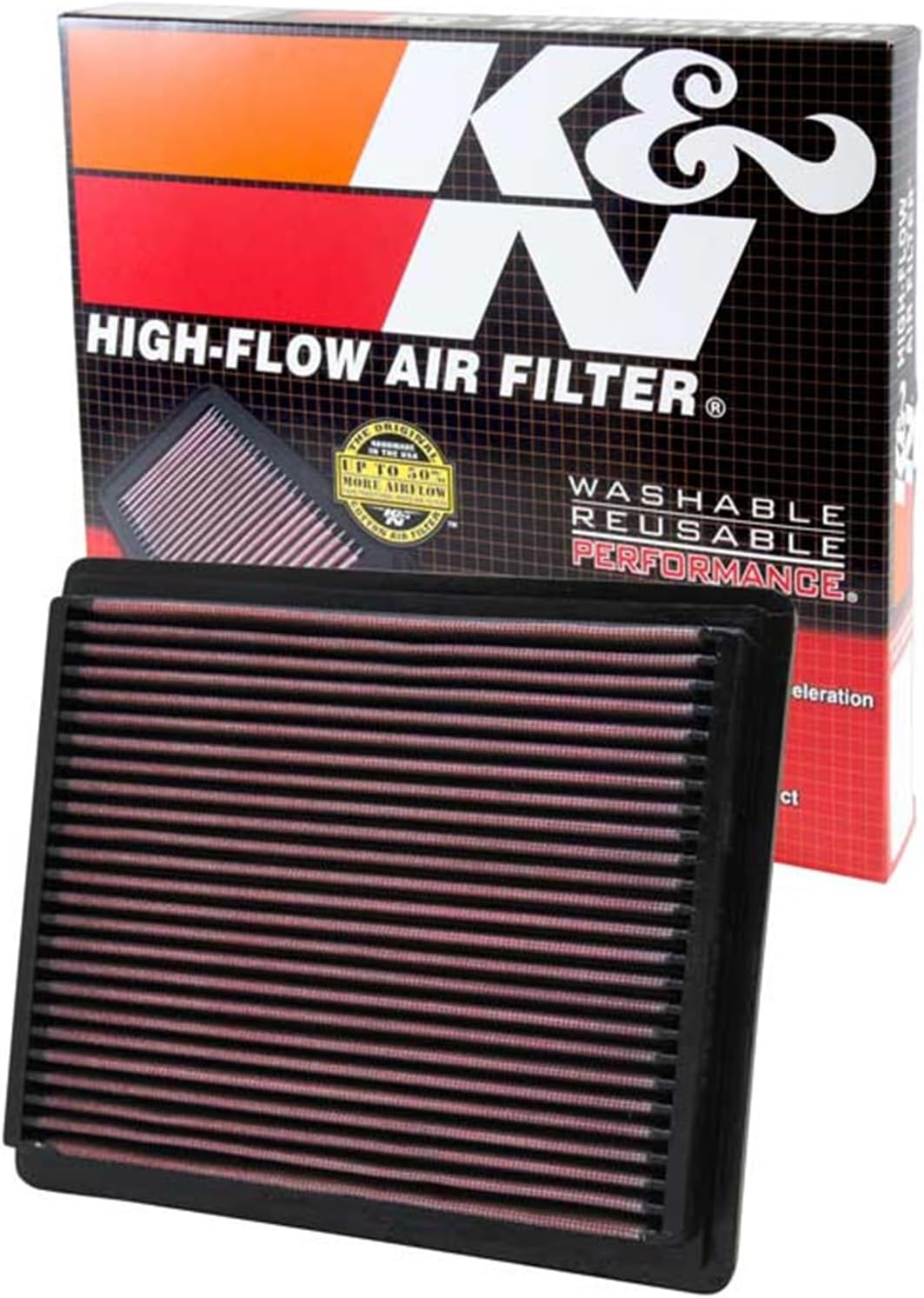
| Model Number | 33-2106-1 |
|---|---|
| Included Components | High Performance Replacement Air Filter |
| Product Grade | Replacement Part |
| Fit Type | Vehicle Specific Fit |
This K&N High-Flow engine air filter replaces the factory panel filter with a layered cotton-gauze element that is pre-oiled and ready to install in the stock air box. It is typically used as a direct replacement to boost airflow and responsiveness without modifying the intake system. Notable features include multilayer filter media that K&N says can increase airflow up to 50%, washable reusable construction for long service life, and a vehicle-specific fit that installs in minutes. In real-world driving you can expect slightly sharper throttle response and potentially small gains in acceleration under load, while the washable element reduces recurring filter purchases and landfill waste. Important limitations are that measurable horsepower gains are modest on a stock Explorer and the filter requires occasional cleaning and re-oiling on a long interval rather than being truly maintenance-free. Fitment and performance depend on correct installation and periodic service to maintain filtration efficiency.
Best for: Buyers focused on extracting small, reliable performance and improved throttle responsiveness from a 1995–2001 Explorer while avoiding frequent disposable-filter replacements.
Less Ideal for: Drivers who prefer zero maintenance disposable filters or who expect large horsepower gains without other engine or intake upgrades should look elsewhere.
- Reusable washable design reduces waste and recurring replacement costs
- Multilayer cotton-gauze media aimed at higher airflow and improved throttle response
- Pre-oiled, drop-in fit for the factory air box makes installation quick and simple
- Engineered as a vehicle-specific fit for straightforward swap with the stock filter
- Requires periodic cleaning and re-oiling on a long maintenance interval
- Performance gains are modest on otherwise stock engines and not a substitute for hardware modifications
Verdict: Choose this washable K&N filter if you want a simple, long-lasting drop-in that improves airflow and small performance aspects on a 1995–2001 Explorer.
3. ECOGARD XA4879 Premium Engine Air Filter

| Fit Type | Vehicle Specific Fit |
|---|---|
| Product Grade | Replacement Part |
| Included Components | one air filter |
| Manufacturer Part Number | XA4879 |
The ECOGARD XA4879 is a direct-fit replacement engine air filter intended for mid 1990s Ford and Mazda vehicles, including Explorer 4.0L 1995-1996. It installs in the stock airbox and filters dust, dirt, pollen, and road particles before they reach the intake. The filter uses high-capacity media to preserve airflow and support steady engine response and fuel efficiency between services. It is intended to be changed about every 12,000 miles, a simple maintenance task that can be completed without special tools. Because it is a vehicle-specific fit, you get a straightforward swap-in with no trimming or modification. The main limitations are that this is a conventional disposable paper-style filter rather than a reusable or performance-oriented element, and it only fits the listed older applications, so confirm fitment for your exact year and engine. For routine maintenance on an aging Explorer, it delivers reliable filtration and easy installation at a practical value point.
Best for: Buyers who prioritize straightforward, maintenance-focused replacements to keep an older Explorer running reliably and who value ease of installation and proven filtration over performance upgrades.
Less Ideal for: Drivers looking for reusable, washable filters or aftermarket high-flow performance elements should consider alternative products.
- Vehicle-specific fit for a direct swap into the factory airbox
- High-capacity filter media traps dust, dirt, pollen, and road debris
- Helps maintain engine airflow and consistent performance between services
- Easy to install and replace with minimal tools or time
- Disposable paper media rather than a washable or high-flow performance element
Verdict: A simple, reliable direct-fit replacement that restores factory-quality filtration and airflow for older Ford Explorer engines.
4. Bosch Workshop Engine Air Filter 5284WS

| Model Number | 5284WS |
|---|---|
| Included Components | Workshop Air Filter |
| Product Grade | Replacement Part |
| Fit Type | Vehicle Specific Fit |
The Bosch Workshop Engine Air Filter 5284WS is a direct-fit replacement designed to keep combustion air clean for older Ford Explorer model years and a handful of compatible trucks. It uses a high-pleat cellulose media and a polyurethane foam seal to trap contaminants while keeping intake airflow resistance low, which helps preserve fuel economy and throttle response. Typical use is a routine service replacement at oil-change intervals or whenever the stock filter is visibly dirty; installation is the same as the factory unit so it is straightforward for home mechanics. Bosch highlights a reported 98% filtration efficiency and robust dirt-holding capacity from the pleated media, which translates to longer intervals between changes under normal driving. The foam seal is intended to maintain a good seal against water and heat. This filter is a practical, no-frills option focused on protecting engine components rather than performance gains, and it follows factory fitment so you should verify vehicle/engine trim compatibility before purchase.
Best for: Buyers who want an affordable, factory-style replacement that restores engine protection and maintains fuel efficiency for late-1990s Ford Explorers without chasing performance upgrades.
Less Ideal for: Drivers seeking reusable or high-flow performance filters or those focused on measurable horsepower gains should consider other aftermarket options.
- Vehicle-specific fit for straightforward replacement
- High pleat count for large dirt-holding capacity
- High reported filtration efficiency to protect the engine
- Polyurethane seal designed to reduce bypass and resist heat and moisture
- Cellulose media is not a washable or reusable performance filter
Verdict: A budget-friendly, factory-style replacement that restores engine protection and maintains fuel economy for late-1990s Ford Explorers.
5. KAX CA8243 Premium Engine Air Filter

| Brand | KAX |
|---|---|
| Model Number | CA8243-1 |
| Product Grade | Performance Part |
| Fit Type | Vehicle Specific Fit |
The KAX CA8243 is a direct-fit replacement engine air filter built to the original dimensions for late 1990s and early 2000s Ford Explorers, Rangers and similar trucks. It uses a high-performance media claimed to balance high airflow with fine particle capture, which the listing says can improve throttle response and yield modest horsepower gains. Installation is tool-free and should take only a few minutes in the stock airbox, making it suitable for routine service intervals. The filter is described as a longer-lasting, performance-grade element compared with standard paper filters and advertises high filtration efficiency to reduce engine contamination and protect internal components. Limitations: it is not washable or reusable and will need periodic replacement, and some performance claims such as specific horsepower gains depend on the vehicle and driving conditions rather than being guaranteed. For buyers seeking a reliable, factory-fit replacement with a focus on filtration and slightly improved breathing, this is a practical option.
Best for: Buyers who prioritize durable, reliable filtration and want a drop-in replacement that preserves engine protection and slightly improves breathing without modifying the intake system.
Less Ideal for: Drivers who prefer reusable or washable filters or those seeking maximum track-focused power gains should consider other options.
- Vehicle-specific fit for correct sealing in original airbox
- Performance-grade media balances airflow and filtration
- Tool-free, quick installation for DIY maintenance
- Longer claimed service life compared with standard paper filters
- Not washable or reusable so it requires regular replacement
Verdict: A dependable, factory-fit performance-grade replacement that prioritizes filtration and longevity for late 1990s to early 2000s Ford Explorers and similar trucks.
6. PHILTOP Engine Air Filter EAF064 (Replacement for Ford Explorer 1997-2001)

| Model | PHILTOP Air Filter EAF064 |
|---|---|
| Manufacturer Part Number | 3059EAF064VUS |
| Automotive Fit Type | Vehicle Specific Fit |
| OEM Part Number | CA8243,46253,CA9563,A35192,F77Z9601AA,FA1658,2L2Z9601AC,AF1658,FA1744 |
The PHILTOP EAF064 is a direct-fit engine air filter made to replace the factory unit on 1997–2001 Ford Explorer and similar models. It is used the same way any disposable panel air filter is: remove the air box cover, swap the old element for this one, and close up—installation takes only a few minutes and needs no special tools. The manufacturer claims over 99.5% filtration efficiency, which in practice means it should keep dirt and particulates out of the intake tract and help preserve engine components and performance. That cleaner intake air can also aid fuel combustion and contribute to modest fuel-economy stability compared with a clogged filter. The filter follows a vehicle-specific, factory-style shape so fitment is straightforward. Limits are typical for aftermarket paper-type filters: it is a maintenance item with recommended replacement intervals and will not provide performance gains beyond restoring proper airflow compared with a clean factory filter.
Best for: Buyers seeking a reliable, factory-style replacement for a 1997–2001 Explorer who prioritize proven fit and filtration backed by many positive customer reviews.
Less Ideal for: Drivers looking for washable or high-performance reusable filters or aftermarket parts that boost airflow beyond factory specifications should consider other options.
- Vehicle-specific design for direct, tool-free installation
- Manufacturer-stated filtration efficiency typically over 99.5% to block fine particulates
- Helps maintain engine health and steady fuel combustion compared with a dirty filter
- Compact, boxed shape matches factory air box contours for predictable fit
- Disposable paper-style element requires regular replacement and does not offer reusable longevity
Verdict: A straightforward, high-filtration factory-style replacement for 1997–2001 Ford Explorer owners who want reliable fitment and proven particulate protection.
7. Bosch Workshop Engine Air Filter 5293WS

| Model Number | 5293WS |
|---|---|
| Included Components | Workshop Air Filter |
| Product Grade | Replacement Part |
| Fit Type | Vehicle Specific Fit |
The Bosch Workshop 5293WS is a direct-fit replacement engine air filter built to protect the intake side of compatible Ford Explorers and similar trucks. It is used like any standard engine air filter: remove the old filter from the airbox and install this unit to restore clean incoming air. Bosch emphasizes a high number of pleats in the filter media and a polyurethane foam seal to increase dirt-holding capacity and keep unfiltered air from bypassing the element. The manufacturer rates the media at about 98% efficiency for small particles and the high-velocity cellulose construction aims to minimize airflow restriction for steady engine performance and fuel economy. Practical benefits include strong particle capture, a reliable seal that resists heat and moisture, and straightforward vehicle-specific fitment for the model years listed. Limitations are that fitment is vehicle dependent so you should confirm compatibility for your exact trim and engine, and this is a standard replacement filter rather than a high-performance or reusable element.
Best for: Buyers who prioritize reliable, factory-style replacement parts and want an easy, no-surprises swap to restore engine protection and steady performance in late 1990s to early 2000s Explorers.
Less Ideal for: Drivers seeking washable or performance-oriented reusable filters or those who need a filter for a vehicle not listed in the fitment should look at other options.
- High filtration efficiency for small particles (manufacturer-stated 98% capture rate).
- Dense, many-pleat media for greater dirt-holding capacity and longer service intervals.
- Polyurethane foam seal designed to prevent unfiltered air bypass and resist heat and moisture.
- Vehicle-specific fit reduces installation guesswork for listed Ford Explorer model years.
- Fitment varies by trim and engine so you must verify exact vehicle compatibility before purchase.
Verdict: Choose this Bosch Workshop filter if you want a dependable, factory-style replacement that restores clean airflow and strong particle protection for the listed Explorer model years.
Choosing the Right 1995-2001 Ford Explorer Air Filter: Key Factors to Consider
Filtration Efficiency and Media Type
Filtration efficiency dictates how well the air filter traps particles before they reach the engine. For the 1995-2001 Ford Explorer, look for media rated to capture common road dust, pollen, and soot. Paper media is common and effective for typical driving; pleated synthetic blends can offer better dirt-holding capacity and more consistent airflow as the element loads. Higher-efficiency media reduces abrasive wear on cylinders and sensors, which is especially important in older engines where clearances may be tighter.
Media construction also affects airflow. A denser media can trap smaller particles but may slightly restrict flow; the right balance helps preserve throttle response while protecting internal components. Consider local conditions such as dusty roads or heavy pollen seasons, since severe environments require higher capacity media to avoid frequent replacement.
Fitment and Seal Integrity
Proper fitment ensures the filter seals completely against the Explorer's airbox so all incoming air passes through the media. A poor seal or incorrect height will allow unfiltered air to bypass the element, negating filtration benefits and increasing wear. For the 1995-2001 Ford Explorer, verify dimensions and mounting features match the factory airbox; even small differences in frame thickness or gasket location can cause leaks.
Frame material and gasket design matter for longevity. Rigid frames keep the filter from deforming when installed, while a continuous foam or rubber sealing lip maintains contact under vibration and temperature changes. When replacing the element, inspect the airbox mating surface for warping or debris and clean it to ensure a good seal.
Airflow and Engine Performance
Airflow characteristics affect how the engine breathes, which in turn influences throttle response, idle quality, and sometimes fuel economy. Filters designed for high airflow reduce intake restriction, which can be beneficial if your Explorer is used for towing or frequent highway driving. However, traded-off filtration efficiency can occur when prioritizing maximum flow.
Most owners should seek a filter that balances low restriction with adequate particle capture. Pay attention to how the filter behaves when new versus partially loaded with dust. Filters that maintain reasonable flow as they load tend to offer more consistent performance between service intervals.
Durability and Environmental Resistance
Durability covers how well the filter materials and frame resist heat, moisture, and repeated installation cycles. The engine bay of a 1995-2001 Ford Explorer can experience significant temperature swings and occasional moisture from road spray. Filters with durable frames and treated media resist sagging, tearing, and media degradation that would reduce effectiveness over time.
Check for features like reinforced corners, UV-resistant frames, and media treated to resist moisture. These aspects matter more if you drive in humid climates, through standing water, or on salty winter roads where corrosion and wet loading are concerns.
Service Life and Maintenance Ease
Service life determines how often you will replace the filter and how much maintenance the element requires. Single-use paper filters are low maintenance but need timely replacement. Some reusable or synthetic options can be cleaned and re-oiled, offering longer intervals between purchases but adding a maintenance step. For an older Explorer, consider how comfortable you are with regular filter inspections and any cleaning procedures.
Ease of installation is part of maintenance. A filter that drops in and seals without trimming or force reduces the chance of installation errors. Also consider how easy it is to access the airbox in the Explorer; shorter service cycles favor simpler replacement procedures.
Compatibility With Driving Conditions
Your typical driving conditions should influence the filter choice. Urban stop-and-go driving with lots of exhaust particulates differs from dusty rural roads or frequent towing where higher airflow and dust capacity are priorities. For the 1995-2001 Ford Explorer, owners who tow or drive on unpaved roads should opt for higher dust-holding capacity and robust sealing to prevent premature clogging.
Consider seasonal factors too. Pollen-heavy springs, sandy summers, and salty winter roads each present different contaminant loads. Selecting a filter that addresses your dominant conditions reduces engine wear and keeps performance steady throughout the year.
How to Verify Correct Air Filter Size for Your Explorer
Confirming the correct air filter size prevents fitment issues and ensures a proper seal in the airbox. Start by checking the part number or dimensions stamped on the old element, and measure the length, width, and height of the filter seating area inside the airbox. Take note of the depth and any tapered edges that align with the housing.
If the original filter is missing or unreadable, measure the internal mounting surface of the airbox and compare dimensions to replacement options. Pay attention to frame thickness because an overly thin or thick frame can change how the filter sits and seals under the airbox cover.
- Measure internal airbox seat when the old filter is unavailable
- Note any asymmetrical shapes or tabs that control orientation
- Compare frame thickness and sealing lip location, not just media footprint
Installation Tips for a Clean Seal
Before installing the new element, clean the airbox mating surfaces of dirt, leaves, or gasket residue. A rag and a vacuum remove loose debris that could prevent a tight seal. Inspect the airbox cover clips or screws and replace any damaged fasteners to preserve proper clamp force.
Place the filter squarely into the airbox, aligning any tabs or orientation marks. Press evenly around the gasket to seat the seal and then secure the cover. After installation, start the engine and listen for any unusual intake whistling that can indicate a gap or misalignment.
- Clean the airbox interior before installing the new element
- Align orientation tabs to avoid partial seating
- Check for intake noise after installation to confirm a good seal
Maintenance Intervals and When to Replace
Replacement interval depends on driving conditions. Under normal suburban driving, an inspection every 12,000 to 15,000 miles is reasonable, with replacement as needed. In dusty or off-road conditions inspect more frequently and expect shorter service life. Heavy towing or sustained highway driving with high air intake demands can also accelerate loading.
Look for visual cues such as heavy discoloration, visible media collapse, or pronounced loss of airflow. An increase in fuel consumption, rough idle, or reduced power under load can also signal a clogged filter. Keep a record of inspection dates and mileage to track service life accurately.
- Inspect every 12,000 to 15,000 miles under normal conditions
- Inspect more often in dusty, off-road, or heavy-towing use
- Replace when media shows heavy clogging, damage, or deformation
Engine Air Filter Vs Cabin Filter: What Matters for the Explorer
The engine air filter protects internal engine components from particulates, while the cabin filter cleans air entering the passenger compartment. For the 1995-2001 Ford Explorer, engine filtration influences mechanical longevity and performance; a compromised engine filter can allow abrasive particles to accelerate wear to valves, pistons, and sensors. Cabin filtration affects passenger comfort and allergen exposure but does not protect the engine.
When prioritizing maintenance, address engine air filtration first to prevent mechanical issues. Cabin filters are still important for HVAC performance and interior air quality, so service both elements on a routine schedule, especially if you carry passengers sensitive to pollen or dust.
- Engine filter protects mechanical components and performance
- Cabin filter improves interior air quality and HVAC function
- Service both, but prioritize engine filter for engine longevity
Signs a New Air Filter Improved Performance
After fitting a properly sized, well-sealed replacement, you may notice smoother idle, better throttle response, and steadier acceleration. Improvements are most apparent if the previous filter was heavily clogged. Fuel economy gains are possible but often modest; they are more likely when the original element was severely restricting airflow.
Monitor engine behavior over the first few hundred miles after replacement. If problems persist, recheck fitment and sealing, and inspect the intake path for faults like vacuum leaks or a dirty mass airflow sensor that could mimic filter-related issues.
- Look for smoother idle and improved throttle response
- Expect modest fuel economy changes unless the old filter was very restrictive
- Reinspect fitment if symptoms do not improve after replacement
Still looking for the perfect fit?
Select your Ford Explorer configuration to see the most relevant Air Filters recommendations
How We Chose the Best 1995-2001 Ford Explorer Air Filter
We prioritized candidates that offer reliable filtration, exact fitment for the 1995-2001 Ford Explorer airbox, and construction that holds up to everyday driving and seasonal demands. Our selection criteria emphasized measurable performance attributes rather than branding. Key evaluation criteria included filtration efficiency against common road dust and pollen, airflow characteristics that influence throttle response, and media durability under heat and humidity.We also assessed seal and frame quality to prevent unfiltered air bypass, ease of installation in the Explorer's airbox, and the availability of correct sizes or part numbers that match factory fitment. Service life and maintenance simplicity were considered so owners know how often to replace or inspect the element.Excluded from consideration were filters that required modification to the airbox, nonstandard sizes that do not match factory mounting points, and options with unclear material specifications. The result is a focused list of options that fit the Explorer, offer predictable performance, and address real owner concerns like dust exposure, towing, and seasonal pollen loads.
Our full evaluation process is outlined in our review methodology.
FAQ
How often should I change the air filter in a 1995-2001 Ford Explorer?
Under normal driving inspect the air filter every 12,000 to 15,000 miles and replace as needed. If you drive in dusty or off-road conditions check it more frequently and expect a shorter service life.
Can I use a high-flow aftermarket filter in my Explorer?
You can use high-flow options, but balance airflow gain against filtration efficiency. Some high-flow media may capture fewer fine particles, so consider local dust levels and your tolerance for more frequent service.
Will a new air filter boost fuel economy noticeably?
A new filter can improve fuel economy slightly if the old filter was clogged, but gains are typically modest. Major fuel economy improvements usually come from addressing broader engine or fuel-system issues.
How do I know if the air filter is the cause of rough idle or lack of power?
Inspect the filter visually for heavy dirt, deformities, or media collapse. If symptoms improve after installing a correctly sized, well-sealed replacement, the filter was likely a contributing factor. If problems persist, check for vacuum leaks, ignition issues, or intake sensor faults.
Should I choose reusable or disposable filters for the Explorer?
Disposable paper filters are simple and reliable for most owners. Reusable filters can offer longer life if you are willing to clean and service them properly. Choose based on maintenance willingness and the driving environment.
Does filter frame material make a big difference?
Frame rigidity and gasket quality affect seal integrity and longevity. A robust frame resists deformation and helps maintain a consistent seal in the airbox, which is important for preventing bypass and ensuring consistent filtration.
Final Verdict
For the 1995-2001 Ford Explorer, prioritize a filter that matches factory dimensions and provides reliable filtration without excessive airflow restriction. Consider your driving environment when choosing media: urban drivers can rely on standard pleated paper elements, while dusty or towing use benefits from higher dust-holding capacity and durable sealing. Balance service interval convenience against filtration performance when deciding between disposable and reusable media.Ultimately, the best choice is the one that fits the Explorer airbox precisely, seals correctly, and aligns with how you drive. Focus on fitment, filtration efficiency, and maintenance needs to keep the engine protected and running smoothly for years to come.
Explore More:
- Check out all Ford Explorer parts & accessories
- Explore Air Filters Maintenance & Repair Guides
- Explore Engine
- Browse all Auto Parts
