

Note: This article contains affiliate links. If you click on these links and make a purchase, I may earn a small commission at no extra cost to you. This helps support my research and content. Read my full affiliate disclosure here.
If you own a 1998-2002 Subaru Forester, choosing the right air filter matters for performance, longevity, and fuel economy. A correct-fit, properly filtering engine air filter keeps contaminants out of the intake, helps maintain throttle response, and can reduce wear on internal components. This guide rounds up the top shortlisted options that fit the 1998-2002 Forester and explains the factors you should weigh before buying.We evaluated candidates for filtration efficiency, airflow impact, and build quality so you can pick a replacement that matches your driving style and maintenance approach. Read on for practical advice on fitment, expected maintenance intervals, and installation considerations before the product list below.
Looking for other parts? See all Subaru Forester parts & accessories.
Top Picks at a Glance
| Best Overall The best all-around choice for most situations | Subaru Element Air Filter 16546AA07A — Genuine Replacement |  |
| Best Quality Built to a higher standard if you want something more solid | ECOGARD XA5353 Engine Air Filter |  |
| Best Value The sweet spot between price and what you get | Premium Guard PA5353 Engine Air Filter |  |
| Best Budget The cheapest option that still gets the job done reliably | FRAM Extra Guard CA9113 Engine Air Filter |  |
| Highest Rated A top-rated pick with lots of positive feedback | K&N 33-2154 Replacement Engine Air Filter for Subaru 1998–2004 |  |
| Most Popular A crowd favorite that many people choose with confidence | PHILTOP Engine Air Filter (CA9113) Compatible with Subaru Forester 2000–2004 |  |
1. Subaru Element Air Filter 16546AA07A — Genuine Replacement

| Brand Name | Subaru |
|---|---|
| Model Number | 16546AA07A |
| Fit Type | Vehicle Specific Fit |
| Product Grade | Replacement Part |
This genuine Subaru element air filter (16546AA07A) replaces the factory air filter in compatible Subaru models and restores factory-quality airflow and filtration. It is used the same way as the original part: remove the airbox cover, swap the old element for this new one, and reseal the housing. As a factory replacement it matches the original fit and shape so installation is straightforward and requires no modification. The filter provides the expected protection for the engine by trapping dust and particulates while maintaining the airflow the engine was designed for. Because it is a vehicle-specific genuine part, you get consistent fitment and predictable service intervals, which simplifies routine maintenance. The main limitation is that this is a direct replacement element only, so it does not offer performance gains over the factory filter and may cost more than generic aftermarket options.
Best for: Owners who want a dependable, factory-quality replacement to maintain original engine protection and fit without guessing fitment or adapting aftermarket parts.
Less Ideal for: Shoppers seeking increased airflow or horsepower gains should consider performance filters instead of a direct factory replacement.
- Genuine Subaru part ensures factory-fit and compatibility with specified models
- Designed to match original airflow and filtration characteristics
- Straightforward drop-in installation with no modifications required
- Helps maintain expected engine protection and consistent service intervals
- Does not improve performance beyond the factory filter
Verdict: Choose this genuine Subaru element filter when you want a direct, factory-quality replacement that restores original fit and protection.
2. ECOGARD XA5353 Engine Air Filter
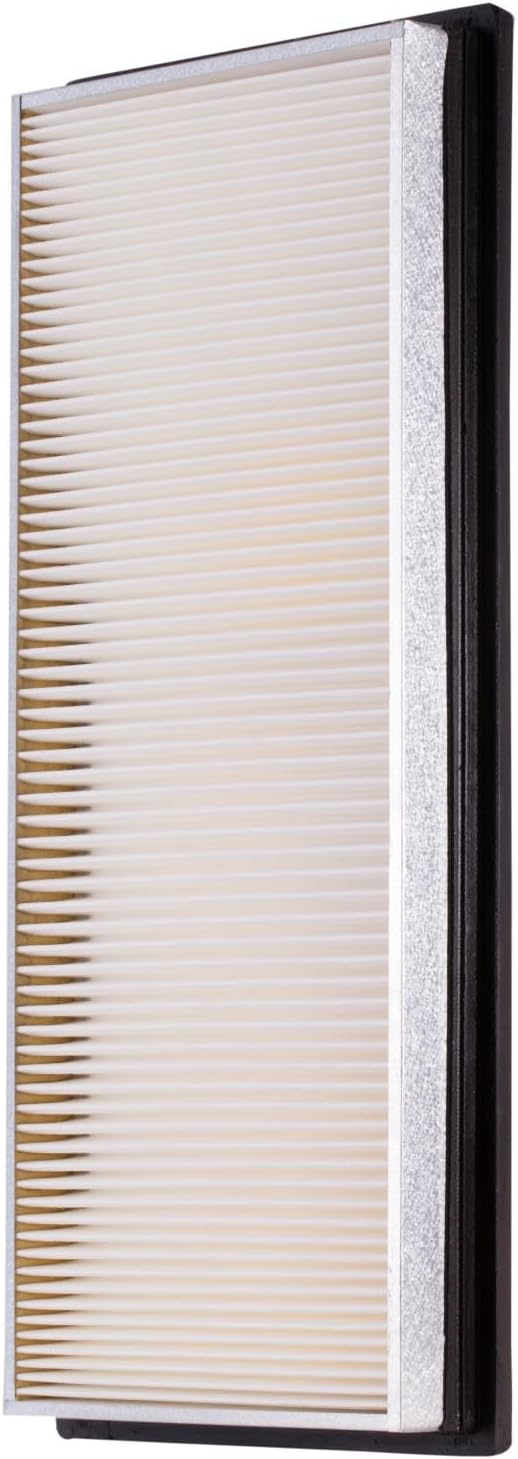
| Model | XA5353 |
|---|---|
| OEM Part Number | 16546-AA07A |
| Automotive Fit Type | Vehicle Specific Fit |
| Shape | Rectangular |
The ECOGARD XA5353 is a direct-fit replacement engine air filter made for older Subaru 2.5L models and similar applications. It installs into the factory airbox and is intended to be changed at regular intervals to maintain engine breathing and protect internal components from dirt. The filter’s rectangular, vehicle-specific design makes it an easy, no-fuss swap that should return lost throttle response and efficiency if the old filter is clogged. Practical benefits include factory-style fitment for quick DIY replacement and compatibility with several common aftermarket part numbers for easy cross-referencing. Because it is a paper-style replacement filter, it balances filtration efficiency with low restriction rather than offering high-flow performance upgrades, so drivers seeking measurable horsepower gains should consider performance air intake kits instead. For routine maintenance or restoring original driving responsiveness on a 1998–2002 Forester, this filter is a convenient, cost-effective choice.
Best for: Drivers who want a reliable, factory-style replacement to restore engine breathing and responsiveness on their older Subaru as part of routine maintenance.
Less Ideal for: Enthusiasts looking for a high-flow performance filter or an intake upgrade that produces measurable power gains.
- Vehicle-specific shape for straightforward, tool-light installation
- Restores clean airflow to help maintain throttle response and fuel efficiency
- Compatible with common replacement part numbers for easy sourcing
- Lightweight and inexpensive to replace at regular service intervals
- Standard paper-style media prioritizes filtration over increased airflow so it will not boost horsepower
Verdict: A straightforward, vehicle-specific replacement that restores factory airflow and protection for routine maintenance on older Subaru 2.5L models.
3. Premium Guard PA5353 Engine Air Filter

| Model Number | PA5353 |
|---|---|
| Included Components | Engine Air Filter |
| Product Grade | Replacement Part |
| Fit Type | Vehicle Specific Fit |
The Premium Guard PA5353 is a direct-fit replacement engine air filter that fits select Subaru 2.2L and 2.5L models and is intended to protect the engine while maintaining proper airflow. It installs like the factory unit and is used as a routine maintenance item during scheduled filter changes to keep intake air cleaner and support fuel economy and throttle response. Notable features include a filter media rated to trap up to 99 percent of particulates and a design that balances high dust-holding capacity with low airflow restriction to preserve engine performance. In practice this means longer service intervals compared with cheaply made aftermarket filters while avoiding the airflow limitations that can sap power. The main limitation is that it is a conventional disposable paper-style replacement, so it must be replaced at service intervals rather than cleaned and reused like washable performance filters. Also fitment is vehicle-specific, so confirm compatibility with your Forester model and engine before purchase.
Best for: Buyers who prioritize reliable, no-fuss maintenance and want a direct-fit replacement that preserves factory airflow and protection for a Subaru used in everyday driving.
Less Ideal for: Enthusiasts who want a washable or high-flow performance filter for modified engines or drivers seeking aftermarket tuning gains should look elsewhere.
- Vehicle-specific fit for easy, factory-style installation
- High filtration efficiency claimed up to 99 percent to protect engine components
- Designed for high dust-holding capacity for longer service life
- Balanced design that limits airflow restriction to preserve engine performance
- Disposable paper media cannot be cleaned and reused
Verdict: Choose the PA5353 when you want a straightforward, factory-style replacement that restores proper airflow and strong particulate protection for your Subaru.
4. FRAM Extra Guard CA9113 Engine Air Filter

| Model Number | CA9113 |
|---|---|
| Included Components | Air Filter |
| Product Grade | Performance Part |
| Fit Type | Vehicle Specific Fit |
The FRAM Extra Guard CA9113 is a replaceable engine air filter made for specific Subaru applications; it traps airborne debris with a fine filter media while aiming to preserve airflow and engine performance. Installation is straightforward for DIYers: remove the old panel filter, seat the CA9113 in the airbox, and resecure the cover in minutes. FRAM claims this Extra Guard media delivers roughly twice the engine protection versus standard retail filters and supports recommended change intervals up to 12,000 miles, which can help keep intake passages cleaner and maintain smoother acceleration. The rectangular, vehicle-specific design means a good fit without trimming, and the filter is light and easy to handle. Limitations are that it is a conventional disposable filter rather than a reusable or high-performance racing element, and claimed protection is based on manufacturer testing rather than independent standards. Buyers should follow their Subaru maintenance schedule rather than exceed interval claims for severe-driving conditions.
Best for: Shoppers looking for an affordable, easy-to-install replacement air filter that maintains everyday drivability and follows standard maintenance intervals.
Less Ideal for: Drivers seeking a reusable performance filter or those who routinely operate in extreme dusty or off-road conditions should consider higher-grade or specialized filters instead.
- Vehicle-specific panel fits Subaru airbox without modification
- Fine filter media captures a wide range of debris while maintaining airflow
- Rated for up to 12,000 miles between changes under normal conditions
- Simple, quick DIY installation requires no special tools
- Disposable design — not washable or reusable
Verdict: A budget-friendly, vehicle-specific replacement that delivers straightforward protection and easy DIY installation for routine Subaru maintenance.
5. K&N 33-2154 Replacement Engine Air Filter for Subaru 1998–2004

| Model Number | 33-2154 |
|---|---|
| OEM Equivalent Part Number | 16546AA070, 16546AA07A |
| Fit Type | Vehicle Specific Fit |
| Product Grade | Replacement Part |
This K&N 33-2154 is a washable, reusable panel air filter made to drop into the factory air box on compatible Subaru models. It uses multi-layer cotton gauze media treated to trap contaminants while allowing higher airflow than many disposable paper filters, so drivers can see small gains in throttle response and engine breathing. The filter is pre-oiled for easy installation and K&N estimates cleaning intervals up to 75,000 miles under normal highway driving, which reduces routine maintenance frequency. Its durable construction and lifetime limited warranty make it a low-hassle option for someone prioritizing long-term reliability. Expect the usual care required with oiled filters: periodic cleaning and re-oiling are necessary to maintain filtration performance, and improper servicing can affect effectiveness. This product is a vehicle-specific replacement, so fitment is straightforward for the listed Subaru models and it replaces the factory filter without modifications.
Best for: Buyers who want a long-lasting, low-maintenance replacement that improves airflow and reduces disposable waste while keeping service intervals infrequent and predictable.
Less Ideal for: Drivers who prefer entirely maintenance-free disposable filters or who are uncomfortable with the cleaning and re-oiling process should consider a standard paper replacement instead.
- Reusable washable media reduces frequency of replacement compared with disposable filters
- Pre-oiled and vehicle-specific fit for straightforward, no-modification installation
- Durable multi-layer cotton gauze construction designed for long service life
- Long recommended service interval (up to 75,000 miles under normal highway driving)
- Requires periodic cleaning and correct re-oiling to maintain filtration and performance
Verdict: Choose this K&N filter if you want a durable, reusable Subaru-specific replacement that boosts airflow and minimizes how often you need to change the filter.
6. PHILTOP Engine Air Filter (CA9113) Compatible with Subaru Forester 2000–2004

| OEM Part Number | CA9113 |
|---|---|
| Model | ENGINE AIR FILTER |
| Automotive Fit Type | Vehicle Specific Fit |
| Manufacturer | PHILTOP |
The PHILTOP CA9113 engine air filter is a direct-fit replacement designed for Subaru Forester and related models from the early 2000s. It uses a three-stage progressive density nanofiber hybrid media that traps large debris, reduces fine dust, and blocks ultra-fine particles to help keep intake air cleaner. Installation is straightforward and intended to match factory fit so most owners can swap it in within five minutes without special tools. Cleaner intake air can support steadier fuel combustion and modest improvements in fuel economy while protecting engine components from abrasive contaminants. The filter is marketed for annual or 12,000-mile replacement intervals, and the manufacturer notes more frequent changes in very dusty or muddy conditions. As a vehicle-specific aftermarket option, it offers a cost-effective way to maintain filtration performance, but buyers should confirm exact model-year fitment lists before ordering to ensure compatibility with their Forester's airbox and snorkel arrangement.
Best for: Buyers who prioritize proven filtration performance and prefer replacement parts with clear fitment and brand information, and who want a straightforward, low-effort maintenance upgrade for an early 2000s Subaru.
Less Ideal for: Shoppers looking for a reusable or performance air intake upgrade should consider washable or high-flow aftermarket systems instead.
- Three-stage progressive density nanofiber media for multi-level particle capture
- Direct-fit, vehicle-specific design for simple installation without modifications
- Targets improved intake cleanliness which can support fuel efficiency and engine longevity
- Fitment limited to the specific CA9113 application so verify vehicle compatibility before purchase
Verdict: If you want a simple, vehicle-matched replacement that restores factory-quality filtration with upgraded multi-stage media, this PHILTOP CA9113 is a practical choice for early-2000s Subaru Forester maintenance.
Choosing the Right 1998-2002 Subaru Forester Air Filter: Key Factors to Consider
Filtration Efficiency Versus Airflow
A filter's ability to trap dust and particulates protects the Forester's engine from abrasive wear and contamination. Higher-efficiency media capture smaller particles, which is important if you drive on dirt roads or in dusty climates.
However, denser media can restrict airflow, which may slightly affect throttle response and fuel consumption on a naturally aspirated Forester. Choosing a filter means balancing how much particulate you want removed against preserving unrestricted airflow. For most owners, a medium-to-high efficiency element that maintains adequate flow is the best compromise, preserving engine life without a noticeable drop in daily drivability.
Fitment And Sealing
Correct dimensions and a reliable sealing surface are essential for the 1998-2002 Forester so all intake air passes through the filter media. A poorly sized filter or a weak seal allows unfiltered air to enter the engine, negating the benefit of a high-quality element.
Inspect how the filter interfaces with the stock airbox flange and the sealing lip design when choosing a replacement. A tapered or uneven edge can lead to gaps over time, especially after repeated service. Prioritize filters designed to match the Forester's airbox profile to minimize installation hassles and sealing risks.
Material Durability And Construction
The media and frame material determine how long the filter will hold up under heat, moisture, and mechanical stress. Paper or synthetic blends are common; some offer reinforced frames to resist collapse during high vacuum conditions or improper installation.
Durable construction reduces the risk of tearing, deformation, or media detachment that can send debris into the intake. Consider how the filter will be handled during routine changes and whether the material tolerates cleaning or repeated service if that is part of your maintenance plan.
Maintenance Interval And Serviceability
Maintenance needs vary by media type and driving environment. Filters in dusty or off-road conditions will clog sooner and need more frequent attention. Understand whether a filter is replace-only or serviceable (cleanable) and how that aligns with your willingness to perform periodic maintenance.
Serviceable filters can offer longer lifecycle value but require correct cleaning and re-oiling procedures when applicable. If you prefer a low-maintenance approach, choose an element with predictable replacement intervals and clear guidance for disposal or swap-over during routine Forester service.
Impact On Fuel Economy And Performance
Airflow characteristics affect how efficiently the engine breathes, which in turn influences fuel economy and throttle response. A filter that significantly restricts airflow can slightly increase fuel consumption and reduce responsiveness, while one that offers freer flow may improve throttle feel but sometimes at the expense of filtration.
For the 1998-2002 Forester, the typical goal is to maintain or modestly improve economy without increasing engine wear. Evaluate manufacturer-stated airflow characteristics alongside real-world feedback about fuel economy to choose an element aligned with your priorities.
Compatibility With Emission And Engine Systems
Some filters change the intake air temperature or filtration characteristics enough to affect sensors or emissions-related behavior. While most direct-fit replacements are benign, changes in airflow dynamics can influence readings from the MAF or other intake sensors, especially on older vehicles like the 1998-2002 Forester.
Choose filters that match the original equipment's mating surfaces and airflow path to minimize the chance of triggering sensor adaptation issues. If you run additional intake modifications, consider how a different filter element will integrate with those components.
Understanding Stock Versus Aftermarket Options
Stock replacement elements typically mirror the original media and fitment, offering predictable performance and straightforward service intervals. They are designed to meet the Forester's factory balance of filtration and airflow, which makes them a safe choice for daily drivers who prioritize longevity and low maintenance.
Aftermarket elements cover a range of designs from high-efficiency paper media to synthetic or cotton gauze that can be cleaned. Some aftermarket options aim to increase airflow for a slightly sharper throttle response, while others focus on extended service life. When considering aftermarket parts, check that the element is engineered for the Forester's airbox dimensions and sealing characteristics to avoid unintended intake leaks.
- Stock-style elements: predictable fit and filtration
- High-efficiency media: better particulate capture, may restrict airflow
- Serviceable media: reusable but require correct cleaning procedures
- Check fitment diagrams and gasket designs for proper sealing
When To Replace Your Forester's Air Filter
Replacement intervals depend on driving conditions. For mostly highway or suburban use, many owners change the engine air filter every 12,000 to 20,000 miles. If you frequently drive on gravel roads or in dusty environments, inspect the filter more often and replace it as needed.
Visual inspection is often the best guide: hold the filter up to a light source. If you cannot see light through most of the media, it is time for service. Also watch for signs of damage or warped frames that can compromise the seal.
- Normal driving: inspect at regular service intervals, replace 12k–20k miles
- Dusty/off-road: inspect every 3k–6k miles
- Visual light test helps determine clogging
- Check the sealing lip and frame for damage during each change
Installation Tips And Common Pitfalls
Installing an air filter on a 1998-2002 Forester is straightforward, but attention to detail ensures a proper seal. Clean the airbox mating surface and remove debris before seating the new element. Confirm the filter orientation and ensure the sealing lip sits flush all the way around.
Avoid overtightening any clamps or placing the filter under tension that could warp the frame. If a serviceable filter requires oil, follow the manufacturer instructions on oil amount and curing time to prevent intake staining or sensor issues. Finally, after installation, give the engine a brief idle and listen for intake whistling that could indicate a gap.
- Clean the airbox before installation
- Verify the filter sits flush and evenly around the sealing surface
- Adhere to oiling and curing instructions for reusable filters
- Listen for intake leaks after installation
Measurements And Sizing For Proper Fit
Exact dimensions matter for proper sealing in the Forester airbox. Confirm the listed dimensions against your old filter or the airbox specifications to ensure compatibility. Some aftermarket listings include multiple sizes; choose the one matching the Forester's specified measurements.
Be aware that slight variations in frame thickness or gasket design can affect fit. If a filter feels loose or overly tight while dry-fitting, double-check orientation and dimensions rather than forcing it into place.
- Compare length, width, and depth with existing element
- Check sealing lip thickness and shape for compatibility
- Avoid filters that require trimming or modification
- Use the vehicle year range when confirming fitment
Effects Of Air Filter Choice On Emissions And Sensors
Direct-fit replacement elements generally preserve emissions characteristics by maintaining similar airflow profiles to the original part. Filters that drastically change intake airflow can alter sensor readings, potentially causing the engine control unit to adapt or throw diagnostic codes on older systems.
Stick with elements that replicate the stock airpath and avoid drastic changes to intake temperature or airflow direction. This reduces the risk of unintended impacts on idle quality, fuel trim, or long-term sensor behavior specific to the 1998-2002 Forester.
- Choose filters with similar airflow geometry to stock
- Avoid radical airflow increases that can change sensor readings
- Monitor engine behavior briefly after replacement
- Consult service documentation if sensors react post-install
Still looking for the perfect fit?
Select your Subaru Forester configuration to see the most relevant Air Filters recommendations
How We Chose the Best 1998-2002 Subaru Forester Air Filter
We focused on attributes that directly affect performance and longevity on a 1998-2002 Subaru Forester. Primary evaluation criteria included filtration efficiency versus airflow tradeoffs, ensuring the filter captures fine particulates while maintaining adequate flow for stock engines. Fitment and dimensional accuracy were required to ensure a proper seal in the Forester airbox and prevent bypass of unfiltered air. Material quality and construction durability were assessed to predict how well the element resists collapse, moisture, and repeated handling during routine service. Ease of installation and common maintenance practices were considered, since most owners perform element changes themselves. Finally, we looked at expected service life and cleaning or replacement intervals to align with typical Forester service schedules.We excluded any options that do not match the exact 1998-2002 Forester fitment or that require significant modification to the intake. Filters that sacrifice necessary filtration for minor airflow gains were deprioritized, as were components with questionable sealing design. The resulting shortlist balances protection, airflow, and durability for daily-driven Foresters and light-performance use.
Our full evaluation process is outlined in our review methodology.
FAQ
How often should I change the engine air filter in a 1998-2002 Forester?
It depends on driving conditions. Under normal driving, inspect and usually replace the filter every 12,000 to 20,000 miles. If you drive on dusty roads frequently, check it every 3,000 to 6,000 miles and replace sooner if heavily soiled.
Can I use a reusable or cleanable air filter in my Forester?
Yes, reusable filters are compatible if they are designed to fit the Forester's airbox. They require proper cleaning and, if applicable, re-oiling following the maker's instructions. Incorrect cleaning or over-oiling can harm sensors or reduce filtration effectiveness.
Will a different air filter size affect performance?
Using the wrong size can cause poor sealing, allow unfiltered air into the engine, or alter airflow paths. Always match the filter dimensions to the Forester's specifications to avoid performance or durability issues.
Does a high-flow air filter improve fuel economy on this Forester?
A high-flow element can slightly change throttle response and may influence fuel economy, but gains are typically modest on stock engines. Any benefit must be weighed against potential reductions in filtration efficiency, especially in dusty conditions.
How can I tell if my air filter is clogged without removing it?
A simple method is the light test: hold the filter up to a bright light. If little or no light passes through most of the media, it is likely clogged. Also monitor reduced engine responsiveness or decreased fuel economy as possible indicators.
Are there compatibility issues between OEM and aftermarket air filters for the Forester?
Compatibility varies by design. Many aftermarket filters match OEM dimensions and performance, but some may differ in sealing lip shape or frame thickness. Verify fitment specifications and confirm the filter is listed for 1998-2002 Forester before purchase.
Final Verdict
For the 1998-2002 Subaru Forester, prioritize a replacement air filter that balances filtration and airflow to protect the engine while maintaining normal drivability. Match dimensions carefully and choose durable construction to avoid sealing issues and premature failure.Weigh maintenance preferences: replace-only elements are low effort, while serviceable filters can offer longer life if you follow proper cleaning procedures. Use the factors discussed here to decide which compromises make sense for your driving conditions and maintenance habits, and you will keep the Forester running reliably.
Explore More:
- Check out all Subaru Forester parts & accessories
- Explore Air Filters Maintenance & Repair Guides
- Explore Engine
- Browse all Auto Parts
