

Note: This article contains affiliate links. If you click on these links and make a purchase, I may earn a small commission at no extra cost to you. This helps support my research and content. Read my full affiliate disclosure here.
If your 2018-2022 Honda Accord is running warm inside the cabin or blowing only slightly cool air, the AC condenser is a likely culprit. A correctly chosen condenser restores cooling performance, prevents refrigerant loss, and reduces the chance of recurring leaks that leave you stranded with no air conditioning.This guide shortlists seven top AC condensers selected for their fitment to the 2018-2022 Accord platform, durability, and ease of installation. We evaluated candidates for correct part fitment, leak resistance, and serviceability so you can decide whether to replace the condenser yourself or have it installed by a technician. Read on for the selection criteria and practical advice for installation and diagnostics.
Looking for other parts? See all Honda Accord parts & accessories.
Top Picks at a Glance
| Best Overall The best all-around choice for most situations | A-Premium A/C Condenser Compatible with Honda Accord 2018–2022 1.5L/2.0L |  |
| Best Quality Built to a higher standard if you want something more solid | HCZLHCZL Aluminum A/C Condenser for Honda Accord (2018–2022) |  |
| Best Value The sweet spot between price and what you get | KAX A/C Condenser with Receiver Drier for 2018-2022 Honda Accord |  |
| Best Budget The cheapest option that still gets the job done reliably | SCITOO Replacement Air Conditioning Condenser for Honda Accord 2018–2022 |  |
| Highest Rated A top-rated pick with lots of positive feedback | SCITOO A/C Condenser for Honda Accord 2018–2019 |  |
| Most Popular A crowd favorite that many people choose with confidence | AUTOSAVER88 A/C Condenser for 2018–2022 Accord 1.5L/2.0L |  |
| Best Seller A high-volume bestseller chosen again and again | TRQ A/C Condenser and Receiver Drier Assembly (ACA80434) |  |
1. A-Premium A/C Condenser Compatible with Honda Accord 2018–2022 1.5L/2.0L

| Vehicle Fitment | Honda Accord 2018-2022 L4 1.5L and 2.0L |
|---|---|
| Built-in Receiver Dryer | Yes |
| Built-in Bracket | Yes |
| Fitting Type | Block Fitting |
This A-Premium condenser is a direct bolt-on replacement built to match factory fit and function for 2018–2022 Honda Accord 1.5L and 2.0L models. It installs in place of the original condenser and restores the vehicle refrigeration loop by providing efficient heat dissipation and a full faceplate with built-in receiver dryer and mounting bracket. Typical use is as a like-for-like repair when the original condenser has failed from corrosion or impact. The built-in receiver dryer helps trap moisture during service and the block fittings match standard lines for straightforward hose connections. Practical benefits include OEM-style fitment that simplifies installation and a design focused on cooling efficiency so the compressor and cabin performance return to normal. Important limitations are that it is a single aftermarket option so you should confirm exact inlet/outlet diameters and fitting orientation against your car before ordering and professional evacuation and recharge of the AC system is still required.
Best for: Buyers seeking a reliable, factory-style replacement condenser to restore proper AC cooling on a 2018–2022 Accord and who value straightforward installation and proven compatibility.
Less Ideal for: Anyone looking for a performance-upgrade condenser or universal-fit options; installers who prefer bundled components like hoses or quick-connect fittings may need additional parts.
- Direct bolt-on design that follows factory fit standards for the specified Accord years
- Built-in receiver dryer and mounting bracket simplify replacement and service
- Engineered for efficient heat dissipation to restore AC cooling performance
- Compatible with both 1.5L turbo and 2.0L naturally aspirated engine variants listed
- Aftermarket part requires verification of inlet/outlet diameters and fitting orientation before purchase
Verdict: A practical, factory-style condenser replacement that restores AC performance on 2018–2022 Honda Accord 1.5L and 2.0L models with minimal fuss.
2. HCZLHCZL Aluminum A/C Condenser for Honda Accord (2018–2022)

| Fitment | Honda Accord 2.0L 2018-2021 & 1.5L 2018-2022 |
|---|---|
| Material | Aluminum |
| Part Number | 30099, WXMVX-251-0416, 80100-TWA-A01 |
| Type | A/C condenser |
This aluminum A/C condenser replaces the factory unit on 2018–2022 Honda Accord 1.5L and 2.0L models and performs the core job of converting hot refrigerant gas into liquid to keep the cabin cool. It is built from corrosion-resistant aluminum with tube-and-fin construction for efficient heat transfer and is intended as a direct-fit replacement using the vehicle's existing mounting points and refrigerant lines. Typical use is straightforward: remove the old condenser, install the replacement, reconnect lines, and evacuate and recharge the system. Practical benefits include improved heat dissipation from the aluminum construction and a compact design that preserves engine-bay clearance. The listing emphasizes easy installation and inspection access, which speeds up shop labor. Limitations to note are the generic manufacturer branding and lack of detailed performance data such as fin density or flow characteristics, so buyers seeking tuned or heavy-duty cooling for high-performance A/C conversions should confirm fitment and cooling capacity with their installer before purchase.
Best for: Drivers who prioritize restoring or maintaining strong factory-style A/C cooling on 2018–2022 Accords and want a durable, aluminum replacement that fits without modification.
Less Ideal for: Owners planning high-load or racing A/C modifications who need verified upgraded cooling capacity or detailed performance specs should consider purpose-built performance condensers instead.
- Aluminum construction improves corrosion resistance and thermal conductivity.
- Designed for direct fit to 2018–2022 Accord 1.5L and 2.0L mounting points for faster installation.
- Tube-and-fin design promotes efficient heat exchange under normal driving conditions.
- No published technical performance metrics like fin density or rated cooling capacity.
Verdict: A solid aluminum direct-fit condenser for 2018–2022 Honda Accord owners who want a durable factory-style replacement to restore reliable cabin cooling.
3. KAX A/C Condenser with Receiver Drier for 2018-2022 Honda Accord

| Fitment Type | Direct Replacement |
|---|---|
| Refrigerant Type | R134A |
| Placement | Front |
| Manufacturer | KAX |
This KAX condenser is a direct-replacement unit built to restore air-conditioning cooling for 2018–2022 Honda Accord models. It installs in front of the radiator and replaces the factory condenser, with a built-in receiver drier so you get a ready-to-fit assembly. Construction uses high-density aluminum with precision welds and a dense fin pattern intended to increase surface area for faster heat exchange, which helps the system bring cabin temperature down more quickly in hot conditions. The modular design and stated fitment make it suitable for DIY mechanics or shops wanting a straightforward swap without fabricating brackets. Limitations to note are the R-134A refrigerant specification and the recommendation to confirm part numbers before ordering, since fitment details vary across engine and trim configurations. The product description mentions a two-year manufacturer warranty but buyers should still check fit carefully and expect standard AC service steps such as evacuation and recharge when installing.
Best for: Buyers who want a cost-effective, ready-to-install condenser that restores strong cooling performance on a 2018–2022 Accord and prefer a practical, straightforward replacement they can fit or have fitted by a shop.
Less Ideal for: Drivers who have had their A/C system converted to a different refrigerant or need a condenser for a vehicle outside the specified 2018–2022 Accord range.
- Direct-replacement design with built-in receiver drier for simpler installation
- High-density aluminum core and dense fins for improved heat dissipation
- Manufactured to fit 2018–2022 Accord models, reducing need for modifications
- Modular construction aimed at faster removal and replacement during maintenance
- Specifically for R-134A systems so not compatible with vehicles converted to other refrigerants
- Fitment requires verifying OEM part number because some trims/years may differ
Verdict: A practical, ready-to-install condenser option for 2018–2022 Honda Accord owners who need reliable cooling restoration without complicated modification.
4. SCITOO Replacement Air Conditioning Condenser for Honda Accord 2018–2022

| Fitment | 2018–2022 Honda Accord 1.5L and 2.0L |
|---|---|
| Material | All aluminum |
| OEM Part Number | 30099 condenser ;CN30099PFC; 80100TVAA01 |
| Manufacturer | SCITOO |
This SCITOO condenser replaces the factory unit on 2018–2022 Honda Accord 1.5L and 2.0L models and is intended as a direct, bolt-in replacement. Made from all-aluminum core and tank, it is designed to restore cooling performance after a failed condenser and installs in place of the OEM part number listed. Typical use is straightforward: remove the old condenser, fit this unit, and then evacuate and recharge the AC system. Notable features include full aluminum construction for corrosion resistance and a painted finish for added durability. Buyers can expect near-factory fit and cooling capacity suitable for everyday driving and hot-climate use. Limitations are that the part must be confirmed for your exact Accord submodel before purchase and AC service tools or a professional are needed to evacuate and recharge the refrigerant; this is not a plug-and-play refrigerant solution. Overall it is a practical, cost-focused alternative to dealer replacements for owners repairing a broken condenser.
Best for: Owners looking for an affordable, factory-style condenser replacement to restore cabin cooling on a 2018–2022 Honda Accord who prioritize cost-effectiveness and straightforward fitment.
Less Ideal for: People who want a do-it-yourself refrigerant service included or those seeking performance-modified condensers with upgraded cooling beyond factory levels.
- Direct-fit replacement specified for 2018–2022 Honda Accord 1.5L and 2.0L applications.
- All-aluminum core and tank for good thermal transfer and resistance to corrosion.
- Painted exterior helps protect the condenser during vehicle use and installation.
- Many buyers report OEM-like fit and reliable operation in real-world installs.
- Requires AC evacuation and recharge by a shop or with proper tools after installation.
Verdict: A budget-friendly, factory-style aluminum condenser that restores OEM cooling performance for 2018–2022 Honda Accord models.
5. SCITOO A/C Condenser for Honda Accord 2018–2019

| Compatible vehicle years | 2018-2019 Accord 1.5L and 2.0L |
|---|---|
| Core material | Aluminum |
| Receiver/drier | Included |
| Manufacturer | SCITOO |
| OEM part numbers | 30099; CN30099PFC; 80100TVAA01 |
This SCITOO condenser replaces the factory unit on 2018–2019 Honda Accord 1.5L and 2.0L models and is intended as a like-for-like repair part. It uses an all-aluminum core and a high-density fin design to improve heat dissipation, and the package includes a receiver/drier so you can reinstall the system without sourcing that separate component. Installation is straightforward because the condenser is built to factory-style shape and mounting points, which helps save time during replacement and reduces the chance of fitment issues. The practical benefit is restoring A/C performance and preventing compressor damage from a failed condenser while avoiding custom modification. Downsides to expect are that this is an aftermarket replacement so long-term durability vs a dealer part can vary, and buyers should confirm the OEM part number before purchase to ensure exact match for their vehicle variant.
Best for: Buyers who prioritize restoring reliable A/C performance quickly and prefer a direct replacement that fits without modification on 2018–2019 Accord 1.5L and 2.0L models.
Less Ideal for: Those seeking an OEM-sourced part with manufacturer warranty support or buyers who need fitment outside the specified 2018–2019 Accord models should consider alternatives.
- Direct-fit design that matches factory mounting points for 2018–2019 Accord 1.5L and 2.0L
- All-aluminum core with high-density fins for improved heat dissipation
- Receiver/drier included so the A/C system can be reassembled without buying an extra component
- Aftermarket part so long-term durability and exactness may vary compared with dealer-sourced replacements
Verdict: A practical, direct-fit replacement condenser that restores factory-style A/C cooling on 2018–2019 Honda Accord 1.5L and 2.0L models with a receiver/drier included.
6. AUTOSAVER88 A/C Condenser for 2018–2022 Accord 1.5L/2.0L
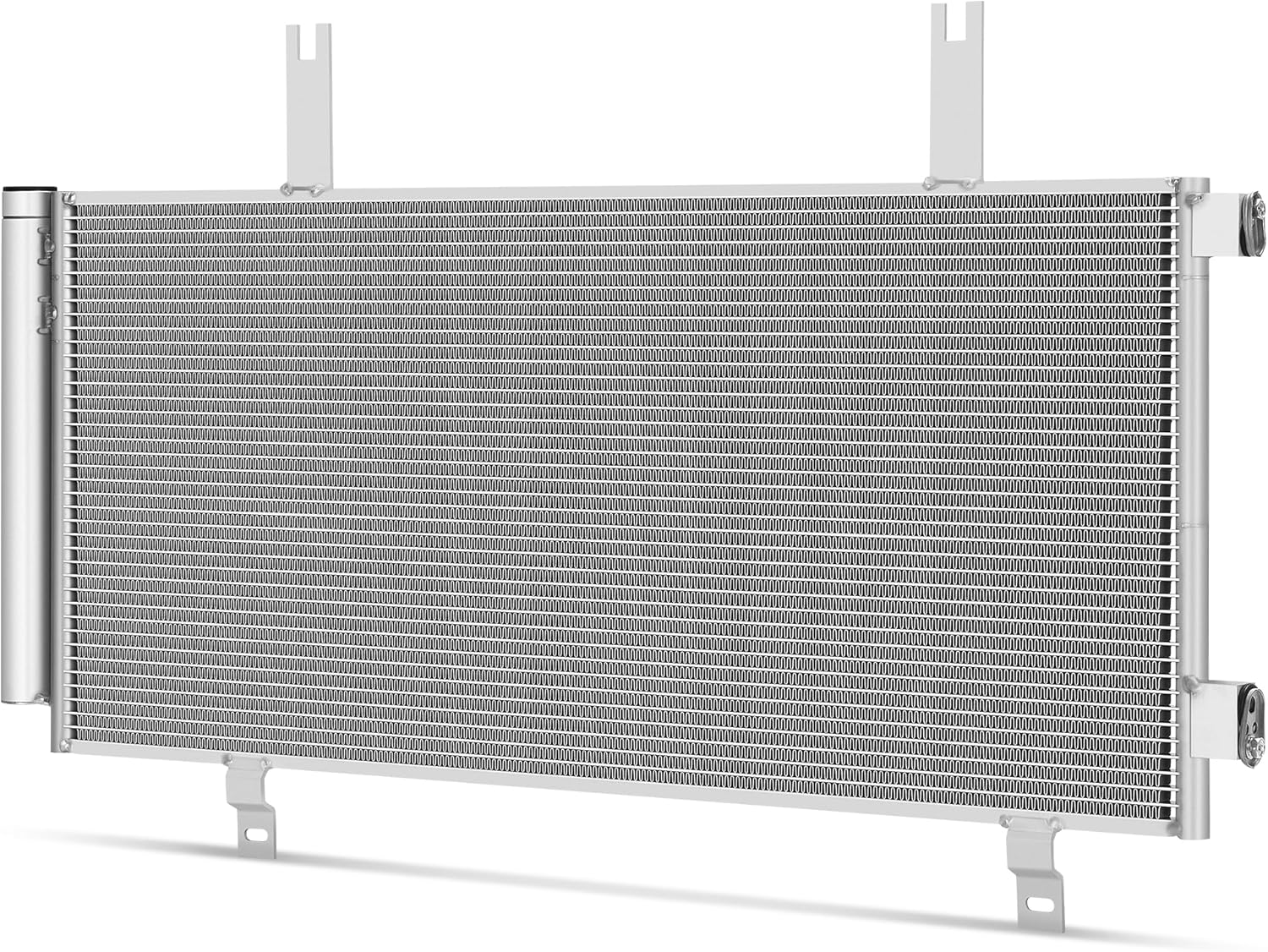
| Compatibility | 2018-2022 Accord L4 1.5L 2.0L |
|---|---|
| OEM Part Number | 80100TVAA01 |
| Core Size | 12.15" x 28.78" |
| Pressure Test | 2.94 MPa for 1 minute |
This AUTOSAVER88 condenser is a direct-fit replacement for 2018–2022 Accord 1.5L and 2.0L models and is intended to restore air conditioning cooling performance. It uses brazed corrugated aluminum tubes and high-density multi-louvered fins to increase heat dissipation, and the unit is pressure-tested for air-tightness to reduce the risk of leaks. The condenser ships with foam corner protection and a user manual; professional installation is recommended since it ties into the vehicle refrigerant circuit. In practice this part will be used to replace a damaged or leaking OEM condenser and should deliver noticeably faster cabin cooling thanks to the denser fin pack. Limitations are that this is an aftermarket single-piece condenser without additional mounting hardware or O-rings listed, so you may need extra seals or a technician to swap fittings and recover/recharge refrigerant. Buyers looking for a plug-and-play factory-quality replacement will appreciate the OE part number match and pressure testing, while those wanting a full bolt-kit included should plan for a small additional purchase.
Best for: Buyers who prioritize a tested, vehicle-specific condenser that restores cooling performance and values social proof of reliability when choosing an aftermarket replacement.
Less Ideal for: If you want a repair kit that includes all fittings, O-rings, and refrigerant service, consider a supplier or kit that bundles those items and professional installation.
- Direct-fit design specified for 2018–2022 Accord 1.5L and 2.0L for straightforward replacement
- Brazed aluminum construction with high-density multi-louvered fins for improved heat dissipation
- Pressure-tested for air-tightness to help minimize refrigerant leaks
- Protective packaging with foam corners to reduce shipping damage
- Does not list included mounting hardware, seals, or fittings so additional parts or shop labor may be needed
Verdict: A vehicle-specific, pressure-tested aftermarket condenser that restores strong A/C cooling for 2018–2022 Accord 1.5L and 2.0L models.
7. TRQ A/C Condenser and Receiver Drier Assembly (ACA80434)

| Fitment | 2018-20 and 2021-22 Honda Accord (EX-L, LX, Sport, Sport SE, Touring) |
|---|---|
| Core Material | Aluminum |
| Core Thickness | 0.47 in |
| Core Dimensions (W×L) | 12.83 in × 28.15 in |
This TRQ condenser ships as a pre-assembled condenser and receiver drier intended as a direct replacement for compatible 2018–2022 Honda Accord models and trims. It replaces the factory condenser core with an aluminum core and includes the receiver drier to simplify installation for a single unit swap. Typical use is as a repair part when the original condenser leaks, is damaged by road debris, or when upgrading a failing A/C cooling component. The machined aluminum core and factory-style connections mean it installs like the factory part and restores cooling performance without major modification. Practical benefits include the integrated drier which saves time compared with buying components separately and TRQ's DIY video resources to guide installation. Limitations are that mounting hardware is not included and buyers should confirm exact line orientation against their car before ordering since fit depends on model year and trim; professional recharge and leak testing are still required after installation.
Best for: Buyers who want a straightforward, factory-style replacement for a failing condenser on 2018–2022 Honda Accord trims and prefer a ready-to-install, documented option that minimizes unknowns during repair.
Less Ideal for: People who expect an all-in-one kit with mounting hardware included or those planning to fit the part to multiple different vehicle models or years beyond the specified Accord range.
- Direct-fit assembly with integrated receiver drier reduces parts and installation steps
- Aluminum core for efficient heat transfer matching factory-style performance
- Pre-assembled unit restores A/C cooling without major modification
- Extensive DIY videos and documentation to assist risk-averse installers
- Mounting hardware is not included so additional fasteners or clips may be required
- Fit depends on exact year and trim orientation so buyers must verify compatibility before purchase
Verdict: Choose this TRQ pre-assembled condenser and receiver drier when you want a direct, factory-style replacement for 2018–2022 Honda Accord trims that simplifies installation and restores A/C performance.
Choosing the Right 2018-2022 Honda Accord AC Condenser: Key Factors to Consider
Correct Part Fitment
Accurate fitment matters because the condenser must align with the Accord's factory mounting points and hose connections. A condenser that differs in core height, inlet or outlet orientation, or bracket location can require additional modifications or create stress on hoses and fittings when installed.
Mismatched fitment can produce vibrations, rubbing against nearby components, or poor sealing at connections, all of which increase the risk of refrigerant leaks. Confirming OEM-style mounting and connection geometry reduces installation time and helps preserve factory system routing and airflow around the condenser.
Leak Resistance and Sealing
A condenser's ability to resist leaks is often the primary reason owners replace it. Look for robust brazed seams, high-quality O-ring sealing at service ports, and reinforced inlet/outlet fittings that resist cracking under vibration. Many failures occur where hoses attach or where the thin aluminum core is joined to cast end tanks, so attention to construction quality at those joints matters.
Pressure-tested condensers with visible quality-control marks or documentation reduce the chance of early failure. Proper sealing also matters because a slow refrigerant leak can be hard to detect and will reduce performance while increasing compressor wear.
Thermal Efficiency and Core Design
The condenser needs to dissipate heat efficiently so the system can condense refrigerant back to liquid at the correct temperature. Core density, fin design, and overall frontal surface area determine how effectively heat transfers to ambient air passing through the radiator bay.
An efficient core reduces compressor workload and helps the cabin cool more quickly, especially in hot climates or heavy traffic where airflow is limited. Consider cores that balance airflow resistance and heat transfer to avoid overloading the vehicle's cooling fans.
Corrosion Resistance and Durability
Condensers live in the front of the car and are exposed to road salt, moisture, and debris. Corrosion can eat through thin aluminum fins or cause seam failures. Look for corrosion-resistant finishes, protective coatings on the core and tanks, and quality alloys that tolerate repeated thermal cycling.
Durability also includes resistance to impact and vibration. Reinforced mounting tabs and thicker end tanks reduce the likelihood of bending or cracking during normal driving and during installation.
Serviceability and Installation Ease
How easy a condenser is to install affects labor time and potential additional costs. Features that improve serviceability include preattached mounting brackets, factory-style service ports, clear alignment features, and a layout that allows the condenser to be removed without disturbing unrelated components.
If you plan to replace the condenser yourself, consider how accessible the fittings are and whether the unit requires specialized adapters. Better serviceability reduces the chance of damaging nearby components during installation and makes routine maintenance, like evacuation and recharge, faster.
Compatibility with System Repairs
When replacing the condenser, you may also be addressing related issues such as receiver-drier replacement, expansion valve integrity, or compressor health. Choose a condenser that integrates cleanly with the Accord's existing lines and service components so you do not create mismatches that could cause future problems.
For example, matching the condenser to the correct service ports and ensuring the internal tube-path layout does not require nonstandard receiver-driers will simplify repairs. Ensuring compatibility reduces the need for additional parts and helps maintain proper refrigerant charge and system pressures.
Common AC Condenser Symptoms to Watch For
Failing condensers show a range of signs before complete failure. Typical symptoms include weak cabin cooling, especially at idle, visible oil residue or wetness on the condenser surface, and fluctuating high-side pressures during a service check. Intermittent cooling that improves at speed but worsens in traffic often points to reduced heat rejection.
Another telltale sign is unusual noises when the compressor cycles or the presence of an unpleasant odor from the vents following a condenser breach. Visual inspection for bent fins, crushed tubes, or punctures can reveal damage from road debris that leads to refrigerant loss.
- Reduced cooling performance at idle or in stop-and-go traffic
- Visible refrigerant oil or wet spots on the condenser
- High-side pressure spikes or inconsistent system pressures
- Hissing or bubbling noises and unpleasant vent odors after a leak
Diagnosing Condenser Leaks on the 2018–2022 Accord
Start with a visual inspection of the condenser and surrounding hoses for oil stains and damaged fins. Use a UV dye or electronic leak detector during a pressurized test to locate slow leaks that are not obvious from a quick visual check. Make sure the system is evacuated and pressure-tested according to service procedures to avoid introducing contaminants.
Check mounting points for deformation that could stress fittings. If a leak is suspected at an inlet or outlet fitting, verify the condition of O-rings and hose clamps. Small punctures from road debris may be repairable in some cases, but larger or corroded breaches typically require condenser replacement.
- Perform a pressure test with nitrogen or an appropriate inert gas before adding dye
- Use UV dye or an electronic detector to pinpoint slow leaks
- Inspect hose connections and O-rings for signs of degradation
- Replace rather than patch when corrosion or large punctures are present
Preparing for Condenser Replacement
Before ordering a condenser, verify the exact year range and any factory body or trim differences that affect mounting. Gather recommended replacement items such as a receiver-drier or accumulator, new O-rings sized for the Accord's fittings, and fresh refrigerant oil compatible with the system. Have proper tools ready, including line disconnect tools if needed and torque tools for mounting fasteners.
Plan the sequence of work to avoid contaminating the system. Isolate the AC system, evacuate refrigerant in compliance with local regulations, and keep the system capped to prevent moisture ingress. After installing the condenser, perform a full vacuum and leak test before charging to ensure system integrity.
- Confirm exact fitment for your 2018–2022 Accord variant
- Replace receiver-drier and O-rings when swapping condensers
- Evacuate and vacuum the system thoroughly before recharge
- Use the correct refrigerant oil type and specified charge volume
DIY Vs Professional Installation Considerations
A competent DIYer can replace the condenser if they have the right tools and familiarity with refrigerant handling protocols. Tasks include removing the front bumper or components for access, disconnecting lines, transferring mounting hardware, and ensuring proper torque on fittings. Proper evacuation and recharge equipment is essential and often the deciding factor for DIY viability.
Professional installation is typically preferred if you lack certified refrigerant handling equipment or if the job requires additional repairs such as refrigerant line replacement or compressor inspection. Professionals can also perform accurate pressure and performance testing under load to confirm the repair.
- DIY suited for experienced home mechanics with proper tools
- Professionals recommended when specialized equipment or diagnostics are needed
- Confirm torque specs and leak-test after installation
Maintaining the Condenser to Extend Service Life
Regular visual checks and cleaning of the condenser fins help maintain airflow and heat rejection. Remove debris, leaves, and buildup gently with compressed air or a soft brush to avoid bending fins. If you drive in coastal or winter conditions, periodic rinsing to remove salt and road grime will slow corrosion.
Address minor fin damage promptly to preserve airflow, and inspect surrounding splash shields and splash guards for damage that might allow debris to strike the condenser. Keeping the cooling fans and shroud in good condition ensures consistent airflow through the condenser in low-speed situations.
- Clean fins with low-pressure air or gentle water spray
- Rinse salt and road grime regularly in corrosive environments
- Check splash guards and fan operation to protect the condenser
Still looking for the perfect fit?
Select your Honda Accord configuration to see the most relevant AC Condensers recommendations
How We Chose the Best 2018-2022 Honda Accord AC Condenser
We focused on criteria that matter specifically when replacing an AC condenser on a 2018-2022 Honda Accord. First, precise part fitment was required: units had to match the Accord's mounting points, hose connections, and condenser core dimensions for the 2018–2022 chassis range. Second, leak resistance and sealing quality were prioritized by checking for robust brazed joints, reinforced inlet/outlet fittings, and evidence of factory pressure testing or equivalent manufacturing controls.Third, thermal performance and core design were considered, because condenser efficiency affects compressor load and cabin cooling. Fourth, corrosion resistance and materials were weighed, with attention to protective coatings and aluminum alloy construction that extend service life in varied climates. Fifth, serviceability and ease of installation were assessed: accessible fittings, preinstalled mounting brackets, and compatibility with standard AC system service ports reduce labor time.We excluded units that required significant modification, nonstandard hose adapters, or lacked clear fitment documentation for the specified years. Units that showed inconsistent manufacturing tolerances or no evidence of leak-testing were also excluded. The final shortlist balances correct fitment, leak prevention, thermal efficiency, corrosion resistance, and installability.
Our full evaluation process is outlined in our review methodology.
FAQ
How long does an AC condenser typically last on a 2018–2022 Accord?
Condenser lifespan depends on exposure to debris and corrosive conditions but often lasts many years. Regular inspections and avoiding repeated impacts help extend life, while corrosion or punctures from road debris can shorten it significantly.
Can I repair a small puncture in the condenser or should I replace it?
Small punctures can sometimes be temporarily repaired, but repairs are often less reliable and may not withstand vibrations and thermal cycling. For larger punctures, corrosion, or seam failures, replacement is the prudent option to avoid recurrent leaks.
Will replacing the condenser fix low cooling performance on my Accord?
Replacing a faulty condenser will restore proper heat rejection if the condenser was the source of poor cooling. However, low performance can also stem from low refrigerant charge, a failing compressor, or clogged expansion components, so a full system diagnosis is advised.
Do I need to replace other AC components when I change the condenser?
It is common practice to replace the receiver-drier or accumulator and O-rings when changing the condenser to protect the system from moisture and contamination. These items are inexpensive relative to the work involved and help ensure a reliable repair.
How can I check if my condenser is leaking without specialized tools?
A basic check is a visual inspection for wet oil residues on the condenser or nearby components and smelling for refrigerant odors. For more reliable detection, professional tools such as an electronic leak detector or UV dye during a pressurized test are recommended.
Final Verdict
When replacing the AC condenser on a 2018–2022 Honda Accord, prioritize correct part fitment, leak resistance, and corrosion protection. Those factors most directly affect the reliability of the repair and the longevity of the air conditioning system. Consider system serviceability and whether related components like the receiver-drier and O-rings should be replaced at the same time.Balance thermal efficiency against durability based on your driving conditions. If you are unsure about diagnostics or do not have certified refrigerant equipment, professional installation ensures the system is properly evacuated, leak-tested, and charged for dependable cooling.
Explore More:
- Check out all Honda Accord parts & accessories
- Explore AC Condensers Maintenance & Repair Guides
- Explore HVAC
- Browse all Auto Parts
