

Note: This article contains affiliate links. If you click on these links and make a purchase, I may earn a small commission at no extra cost to you. This helps support my research and content. Read my full affiliate disclosure here.
If your 1998-2002 Honda Accord is blowing warm air or has visible refrigerant leaks, the AC condenser is a common culprit. Choosing the right 1998-2002 Honda Accord AC condenser matters because the condenser must match the chassis-specific mounting points, tube-and-fin layout, and refrigerant service type to restore factory cooling performance and avoid repeated visits to the shop.This guide shortlists six top condenser options that fit the 1998–2002 Accord platform, focusing on fitment accuracy, leak resistance, and build quality. We evaluate each option for durability, compatibility with original hoses and fittings, and ease of installation, then explain what to check before you buy and how to diagnose common condenser problems.
Looking for other parts? See all Honda Accord parts & accessories.
Top Picks at a Glance
| Best Overall The best all-around choice for most situations | AParts Air Conditioning Condenser for Honda Accord 2.3L (1998–2002) |  |
| Best Quality Built to a higher standard if you want something more solid | AParts A/C Condenser Compatible with 1998–2002 Honda Accord 3.0L |  |
| Best Value The sweet spot between price and what you get | UIU A/C Condenser for Honda Accord 1998–2002 and Acura CL/TL 1999–2003 |  |
| Best Budget The cheapest option that still gets the job done reliably | Kool Vue A/C Condenser Compatible with 1998–2002 Honda Accord and 1999–2003 Acura TL/2001–2003 CL |  |
| Highest Rated A top-rated pick with lots of positive feedback | Readair Air Conditioning Condenser Compatible with Honda Accord 3.0L 1998–2002 |  |
| Most Popular A crowd favorite that many people choose with confidence | A-Premium A/C Condenser for Honda Accord 1998–2002 L4 2.3L |  |
1. AParts Air Conditioning Condenser for Honda Accord 2.3L (1998–2002)

| Vehicle fitment | Honda Accord 2.3L 1998-2002 |
|---|---|
| Material | Aluminum |
| Reference numbers | 80100S84A00, 80110S84A00, 80100S84A10 |
This AParts condenser is a full direct-replacement unit built from aluminum with high-density cooling fins and a leak-resistant construction. It is intended to replace the factory condenser on 1998–2002 Honda Accord 2.3L cars, making it suitable for routine A/C repairs or when the original condenser fails. The precision construction and matching inlet/outlet locations simplify installation and help minimize modification time for DIY mechanics or professional shops. High-density fins improve airflow and heat transfer so the system can cool more effectively after a replacement. Because it is a single-piece condenser, expect straightforward fitment but plan to have the refrigerant evacuated and recharged by a qualified technician. The unit focuses on reliable, long-term operation rather than performance upgrades, so buyers wanting enhanced cooling capacity or modified systems should look elsewhere. Overall it is a practical factory-quality replacement that returns stock cooling performance without added complexity.
Best for: Balanced buyers who want a reliable, OEM-style condenser to restore factory A/C performance on a 1998–2002 Accord 2.3L with minimal fuss and predictable results.
Less Ideal for: Owners looking for upgraded performance condensers, custom cooling solutions, or cross-vehicle compatibility should consider purpose-built aftermarket options instead.
- Direct replacement designed to match factory inlet/outlet locations for 1998–2002 Accord 2.3L
- Aluminum construction with high-density cooling fins for improved heat dissipation
- Leak-resistant, precision construction aimed at long-term durability
- Simplifies installation for technicians and experienced DIYers
- Requires professional refrigerant evacuation and recharge during installation
- Not intended as a performance upgrade beyond factory cooling capacity
Verdict: A straightforward, factory-quality condenser replacement that restores reliable A/C cooling on 1998–2002 Honda Accord 2.3L models.
2. AParts A/C Condenser Compatible with 1998–2002 Honda Accord 3.0L

| Manufacturer | Aparts |
|---|---|
| Condition | New |
| OEM Part Number | 80100S87A00 |
| Built-in Receiver Dryer | No |
This AParts condenser is a direct replacement designed for 1998–2002 Honda Accord 3.0L and the listed Acura 3.2L models. It installs in place of the factory unit and is intended to restore proper refrigerant flow and heat rejection after a failed or leaking condenser. The condenser features an optimized fin layout for improved heat dissipation and is pressure tested for air tightness before shipment. In practice that means it should bring cabin cooling back to expected levels and help avoid high-pressure shutdowns or weak cold air caused by a compromised condenser. It does not include a built-in receiver dryer or oil cooler, so replacing the receiver/dryer and flushing the system are recommended during installation. Fitment is vehicle-specific, so expect a straightforward swap on the listed years with typical shop or DIY time for draining and recharging the A/C. The unit is painted and sold new, and the manufacturer backs it with a stated two-year service warranty against manufacturing defects.
Best for: Buyers who prioritize restoring reliable, factory-quality A/C cooling in a 1998–2002 Accord and want a straightforward direct-replacement part they can install or have fitted by a shop.
Less Ideal for: People looking for upgraded performance condensers with integrated oil cooling or universal units for multiple vehicle platforms should consider other options.
- Direct-fit design for specified 1998–2002 Accord and compatible Acura models reduces modification during installation
- Optimized fin layout to improve heat dissipation and help restore stronger cabin cooling
- Pressure tested for air tightness to reduce the chance of refrigerant leaks on arrival
- Painted finish for corrosion resistance and a factory-replacement appearance
- Does not include a built-in receiver dryer or oil cooler, requiring separate replacement of those components
- Fitment is limited to the listed model years and engine configurations
Verdict: A practical direct-replacement condenser that restores factory-level cooling on the specified 1998–2002 Accord and compatible Acura models.
3. UIU A/C Condenser for Honda Accord 1998–2002 and Acura CL/TL 1999–2003

| Position | Front |
|---|---|
| Compatible vehicles | Honda Accord 1998-2002 V6; Acura CL 2001-2003 V6; TL 1999-2003 V6 |
| Manufacturer Part Number | UCondenser80100S87A00 |
| OEM Part Numbers | 4898, 94733, 80100S87A00, 80100S87A10, 80100S87A21, 80100384A10 |
| Exterior | Polished |
This UIU condenser is a model-specific replacement designed to bolt into 1998–2002 Honda Accord 3.0L and 1999–2003 Acura CL/TL 3.2L applications. It replaces the factory condenser at the front of the vehicle and is intended to restore cooling capacity after a failed or leaking original part. Typical use is a like-for-like service repair where the old condenser is swapped out; the listing emphasizes precision fitment and straightforward installation for a clean replacement. Notable features include OE-style mounting locations and compatibility with the listed reference part numbers, plus a polished finish. Practically, the condenser lets you recover normal A/C operation without modifying refrigerant lines or brackets, and the seller offers technical support and a two-year unlimited-mileage guarantee. Limitations: the unit is specific to the stated model years and engine sizes so fitment must be confirmed before purchase, and buyers should expect to have the system evacuated, recharged, and leak-tested by a professional for reliable results.
Best for: Buyers who need a practical, no-frills repair to restore factory-style A/C cooling on the specified Honda Accord or Acura CL/TL V6 models and prioritize a direct-fit replacement that minimizes installation complexity.
Less Ideal for: People looking for universal condensers, upgraded performance cooling, or compatibility outside the listed model years and engine types should look elsewhere.
- Designed as a direct bolt-on replacement for specified Accord and Acura V6 models
- Matches referenced OEM part numbers for straightforward parts cross-reference
- Polished finish and factory-style mounting for easy installation alignment
- Two-year unlimited-mileage guarantee and seller technical support
- Fitment limited to the listed model years and V6 engine configurations
Verdict: A straightforward, direct-fit condenser that restores factory-style A/C performance on the specified 1998–2002 Accord and 1999–2003 Acura V6 models.
4. Kool Vue A/C Condenser Compatible with 1998–2002 Honda Accord and 1999–2003 Acura TL/2001–2003 CL

| Brand | Kool Vue |
|---|---|
| Model | A/C Condenser |
| Core material | Aluminum |
| Core size | 25.5 x 14.19 x 0.63 in. |
| Replaces OE number | 80100S87A00 |
This Kool Vue condenser is a direct-replacement aluminum unit intended to restore A/C cooling on 1998–2002 Honda Accords and compatible Acura TL/CL models. It installs in place of the factory condenser and is typically used during A/C system repairs or when the original is leaking or damaged. The condenser's aluminum core and claimed factory-style fit make it suitable for straightforward swap-ins when paired with proper O-rings and refrigerant service. Practical benefits include a finished part that matches common mounting points and an appearance consistent with OEM components, which helps installers avoid fabrication or bracket modifications. Limitations are that aftermarket fit and finish can vary from a factory part, so careful test-fitting and inspection for bent fins or connection alignment is wise before full installation. Buyers should also account for professional refrigerant evacuation and recharge unless they have the tools and certification to service the system themselves.
Best for: Buyers looking to fix a failing A/C condenser on an older Accord or Acura who prioritize a low-cost, ready-to-install replacement over an OEM part; ideal for DIY mechanics and independent shops focused on budget repairs.
Less Ideal for: Customers seeking an exact factory-made replacement with guaranteed perfect fitment or those who want a fully precharged plug-and-play assembly including refrigerant and all service components.
- Direct-fit design replacing the factory condenser for the listed Honda and Acura models
- Aluminum core construction common to replacement condensers for corrosion resistance and heat transfer
- Supplied as a full condenser assembly so radiator-area mounting points are included
- Widely available replacement that pairs with standard A/C clutch and compressor kits
- Backed by a limited 1-year coverage when purchased through certain sellers
- Aftermarket fit can differ slightly from factory parts requiring minor alignment checks
- Does not include refrigerant or installation hardware like O-rings and fittings
Verdict: A cost-conscious direct-fit aluminum condenser that restores A/C function on 1998–2002 Accords and matching Acura models without the premium of a factory unit.
5. Readair Air Conditioning Condenser Compatible with Honda Accord 3.0L 1998–2002

| Fitment | Honda Accord 3.0L 1998-2002; Acura TL/CL 3.2L (1999-2003, 2001-2003) |
|---|---|
| Core Height | 24-4/5 inch |
| Core Width | 14-1/5 inch |
| Core Thickness | 3/5 inch |
This Readair condenser replaces the factory unit for 1998–2002 Honda Accord 3.0L cars and related Acura models and is designed for DIY or shop installation. It uses brazed aluminum tubes with high-density multi-louvered fins to improve heat dissipation and restore cooling capacity after a failing or leaking condenser. The listing notes direct-fit mounting, which simplifies swapping the old core without modifying brackets or lines, and the core dimensions are provided so installers can confirm fit. It does not include a built-in receiver dryer or oil cooler, so plan to replace or service the receiver/drier and recharge the system during installation. The condenser comes new and is promoted with a two-year unlimited-mileage guarantee, giving extra assurance for long-term use. Practical limitations are the need for routine AC service steps during installation and ensuring the rest of the system is leak-free to fully regain factory cooling performance.
Best for: Buyers who prioritize a reliable, factory-style replacement to restore air conditioning performance and prefer parts that simplify installation and long-term use.
Less Ideal for: People looking for a fully upgraded performance condenser with integrated components or those who want an all-in-one replacement that includes the receiver dryer.
- Direct-replacement design intended to match factory fit and simplify installation
- High-density multi-louvered fins and brazed construction for improved heat dissipation
- New condition with manufacturer two-year unlimited-mileage guarantee
- Does not include a built-in receiver dryer so additional parts or service are required during replacement
Verdict: Choose this Readair condenser if you want a factory-style, reliable direct replacement to restore cooling on a 1998–2002 Honda Accord 3.0L.
6. A-Premium A/C Condenser for Honda Accord 1998–2002 L4 2.3L
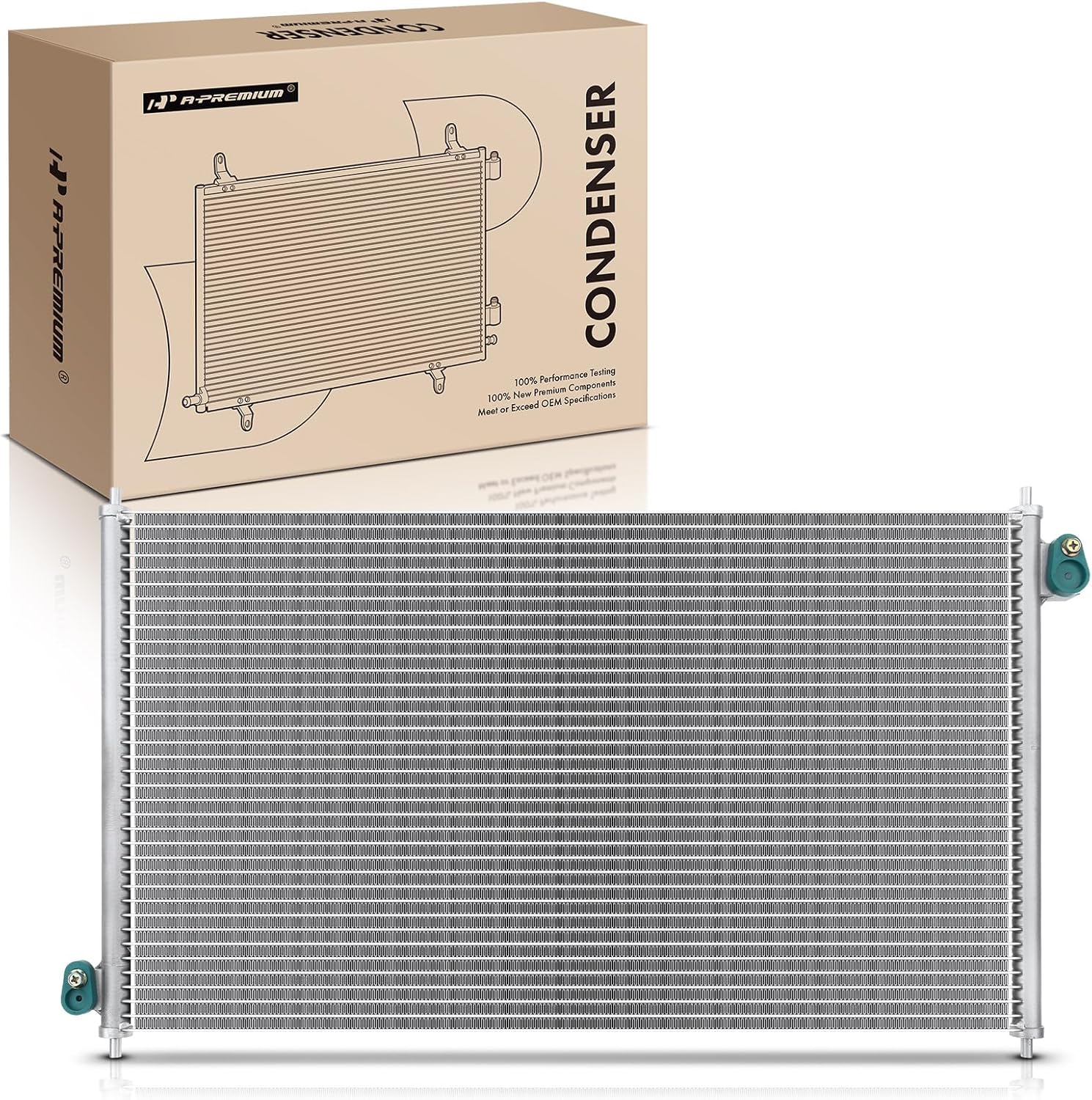
| Vehicle fitment | Honda Accord 1998-2002 L4 2.3L Sedan/Coupe |
|---|---|
| Material | Aluminum condenser core |
| Manufacturer part number | APCON199 |
| Reference numbers | 80100S84A00, 80100S84A10 |
This A-Premium condenser is a straightforward, bolt-on replacement for Accord models with the 2.3L L4 engine from 1998 through 2002. It reproduces the factory mounting points and core layout so installation is familiar to anyone replacing a damaged or leaking condenser. The unit is aluminum and marketed for efficient heat dissipation, which helps restore cooling performance when paired with a properly charged system. Notable details: it does not include a receiver drier or mounting bracket, so those items must be transferred from the original part or purchased separately. The condenser is aimed at routine repairs rather than performance upgrades and comes with a one-year unlimited-mileage guarantee. For buyers who value compatibility and a direct-fit solution, it returns your A/C to factory-style operation, but plan for the small additional expense and effort to source the missing hardware and desiccant components during replacement.
Best for: Buyers seeking a risk-conscious, factory-style replacement to restore A/C cooling on a 1998–2002 Accord 2.3L who prioritize confirmed fitment and peer-reviewed reliability.
Less Ideal for: People looking for upgraded or performance-oriented condensers, or those who want an all-in-one kit with new drier and brackets included.
- Direct bolt-on replacement designed to match factory mounting and fit for 1998–2002 Accord 2.3L models
- Aluminum core built for efficient heat dissipation to restore cooling performance
- Ships as a complete condenser assembly ready to install with common mounting points
- Backed by a one-year unlimited-mileage guarantee from the brand
- Does not include receiver drier or mounting bracket so additional parts or transfer of components is required
Verdict: If you need a direct-fit, factory-quality condenser to restore A/C on a 1998–2002 Accord 2.3L, this A-Premium unit is a reliable, install-ready replacement option.
Choosing the Right 1998-2002 Honda Accord AC Condenser: Key Factors to Consider
Fitment and Mounting Alignment
Exact fitment is essential on a 1998-2002 Honda Accord because small differences in bracket spacing, inlet and outlet orientation, or receiver-drier port location can prevent a straightforward installation. A condenser that matches factory mounting points reduces the need for bracket modifications, minimizes hose stress, and helps ensure correct condenser-to-radiator clearance.
When fitment is correct you avoid accidental kinks in refrigerant lines and preserve proper airflow through the core. For owners, this means a faster install and fewer surprises at reassembly, which is particularly important if you plan to reuse OEM mounting hardware or the original receiver-drier arrangement.
Core Construction and Materials
The condenser core material and construction method influence durability and thermal performance. Aluminum tube-and-fin cores are common for this era and offer a balance of weight and heat transfer, but differences in wall thickness, fin density, and brazing quality affect how well the unit resists road debris and corrosion.
Thicker tubes and robust brazing reduce the chance of impact damage and seam failure. Also consider whether the condenser has protective coatings on exposed surfaces, as these can slow corrosion in coastal or salted-road environments common on older vehicles.
Leak Resistance and Pressure Testing
Leaks are the primary failure mode for condensers on older Accords. Look for condensers that have documented pressure testing or sealed packaging protocols. Features such as reinforced end tanks, quality welds, and factory pressure checks reduce the risk of refrigerant loss after installation.
Avoid units without any pressure-test claims, since a condenser that leaks shortly after replacement creates extra cost and downtime. For the 1998-2002 Accord, where many systems were retrofitted or serviced over the years, ensuring a leak-free condenser is a top priority to maintain cooling performance.
Connection Compatibility and Hose Fit
Connection type and O-ring size must match the Accord's original fittings to prevent leaks. Mismatched flare or threaded connections, or incorrect O-ring materials, can cause immediate seepage or degrade faster under higher pressures.
Ensure the replacement lists the correct inlet and outlet diameters and includes or specifies compatible O-rings. Proper hose fit avoids unnecessary line stress and simplifies evacuation and recharge procedures after installation.
Serviceability and Included Hardware
Some condensers include mounting bolts, O-rings, or brackets, while others are sold as the core only. For a 1998-2002 Accord, having the necessary hardware and clear instructions reduces installation time and the chance of omitted parts that could cause leaks or poor mounting.
Consider whether you will perform a full AC system service at the same time, including receiver-drier replacement and expansion device inspection. A condenser that accommodates standard receiver-drier connections or comes with the required adapters simplifies service and reduces the risk of compatibility errors.
Thermal Performance and Airflow Clearance
The condenser must provide sufficient heat rejection for the car's original AC capacity. Factors such as fin density, overall core area, and correct radiator-to-condenser spacing affect how efficiently the system sheds heat.
If airflow is obstructed by bent fins or if the replacement core reduces free area, cabin cooling will suffer. For a 1998-2002 Accord, maintaining proper clearance ahead of the radiator and keeping fins undamaged during install helps preserve the vehicle's designed cooling performance.
Common AC Condenser Symptoms to Watch For
Recognizing early symptoms can save time and expense. Typical signs that the condenser may be failing include diminished cooling at idle or in traffic, visible oil stains or refrigerant residue near the front of the car, and a noticeable drop in system pressure during a service check.
Intermittent cooling or a compressor that cycles frequently can point to reduced airflow through the condenser or internal restrictions. Physical damage such as bent fins or punctures from road debris will also impair performance and often lead to refrigerant loss.
- Warm or inconsistent cabin air, especially at low speeds
- Visible wet spots or oily residue on the condenser or under the front bumper
- Unusual hissing sounds that indicate active leaks
- Compressor cycling on and off more often than normal
Diagnosing a Condenser Leak on a 1998-2002 Accord
Start with a visual inspection of the condenser and nearby fittings for oil streaks or accumulation. Use a clean rag to wipe suspect areas, then run the system briefly to see if fresh oil appears. For hidden leaks or hairline cracks, ultraviolet dye added during service or an electronic refrigerant leak detector can reveal escaping refrigerant.
Pressure testing is another useful step. A qualified shop can pressurize the system with dry nitrogen to check for pressure loss and localize leaks without introducing refrigerant. When pressure testing, protect plastic components and avoid over-pressurizing, as older lines or brackets on a 1998-2002 Accord can be brittle.
- Wipe and inspect for fresh oil streaks
- Use UV dye or electronic leak detector for small leaks
- Pressure-test with dry nitrogen to localize failures
Preparing Your Accord for Condenser Replacement
Before you remove the old condenser, recover refrigerant using proper equipment and follow environmental regulations. Have replacement O-rings, receiver-drier, and appropriate refrigerant oil on hand. Inspect adjacent components like the radiator and cooling fans so you can address related damage while the front end is accessible.
Label or photograph hose routings and mounting hardware locations to make reassembly straightforward. If you plan a DIY install, ensure you have the correct torque values for mounting bolts and a plan for evacuating and recharging the system after the swap.
- Recover refrigerant and collect required materials beforehand
- Inspect radiator, fans, and hoses for concurrent damage
- Document hose routing and mounting positions for reassembly
Installation Tips to Avoid Common Mistakes
Handle the new condenser by the edges and avoid bending fins. Replace O-rings with the correct size and lubricant, and torque fittings to OEM specs to prevent leaks. If the replacement includes brackets, test-fit the condenser before final tightening to ensure alignment.
After installation, perform a vacuum and leak test before recharging. Run the system to operating temperature and confirm that pressures and temperatures fall within typical ranges for the vehicle. Finally, recheck all visible fittings for signs of oil seepage after a short road test.
- Replace O-rings and lubricate with appropriate refrigerant oil
- Vacuum test the system before recharging
- Recheck fittings after a brief road test
When to Replace Associated Components
Changing the receiver-drier or accumulator at the same time as the condenser is recommended because these components trap moisture and debris. An old receiver-drier can recontaminate a new condenser and shorten its service life. Also inspect expansion devices, hoses, and service ports; degraded hoses or brittle fittings can cause future leaks even after a condenser swap.
If your system has been open to the atmosphere for more than a short period, consider replacing the drier to ensure the system is moisture-free before recharge. This extra step helps preserve compressor life and overall system performance on a 1998-2002 Accord.
- Replace receiver-drier or accumulator when the condenser is changed
- Inspect and replace aged hoses and O-rings as needed
- Ensure the system is moisture-free before recharging
DIY Vs Professional Replacement Considerations
A mechanically skilled owner can replace the condenser, but the job requires refrigerant recovery and proper evacuation and recharge equipment. If you lack access to certified recovery gear or vacuum pumps, plan to have those service steps completed by a professional to avoid releasing refrigerant or leaving moisture in the system.
Factor in time to remove the front bumper and associated trim on the 1998-2002 Accord, as access to the condenser often requires partial disassembly. A professional technician can also pressure-test and verify system pressures under load after recharging, which helps ensure a reliable repair.
- DIY is possible with the right tools and recovery equipment
- Professionals can perform pressure testing and controlled recharge
- Account for bumper and trim removal when planning time
Still looking for the perfect fit?
Select your Honda Accord configuration to see the most relevant AC Condensers recommendations
How We Chose the Best 1998-2002 Honda Accord AC Condenser
We prioritized replacements that align with the 1998-2002 Honda Accord chassis requirements and common owner concerns. Evaluation centered on five concrete criteria: fitment accuracy to factory mounting points and inlet/outlet locations; construction quality including brazed or aluminum tube-and-fin designs that resist corrosion and vibration; leak resistance features such as thicker end tanks, quality brazing, and validated pressure testing; serviceability factors like included mounting hardware, O-rings, and compatibility with standard refrigerant lines; and installation friendliness including straightforward hose routing and clear alignment to stock brackets.We excluded units lacking documented fitment for the 1998-2002 Accord years or those with incomplete connection specifications. We also filtered out condensers without evidence of pressure testing or with reports of premature leaks. Final selections balanced durability and straightforward installability for DIYers and professional installers, while giving weight to products that minimize the chance of refrigerant loss after installation.
Our full evaluation process is outlined in our review methodology.
FAQ
How long does an AC condenser typically last on a 1998-2002 Accord?
Condensers often last many years but lifespan depends on exposure to road debris, corrosion, and prior repairs. Many fail from impact damage or seam leaks rather than gradual wear.
Can I replace just the condenser and keep the old receiver-drier?
It is usually best to replace the receiver-drier or accumulator when changing the condenser because it can hold moisture and debris that will contaminate the new unit. Leaving the old drier risks reduced system life.
What are common signs the condenser is clogged rather than leaking?
A clogged condenser often results in poor cooling at idle and higher system pressures with little visible oil. Reduced airflow due to bent fins or internal blockage can mimic a weak compressor but will usually show elevated discharge temperatures.
Will a small puncture always require condenser replacement?
Small punctures are difficult to repair reliably on older condensers; repair depends on location and access. Many technicians recommend replacement because repairs may not withstand system pressures over time.
Do I need special fittings to connect a replacement condenser on a 1998-2002 Accord?
Replacement condensers should list compatible inlet and outlet sizes and connection types. If the unit specifies correct OEM-type fittings and includes or recommends the correct O-rings, no special fittings should be required.
How can I detect a slow refrigerant leak in the condenser?
Slow leaks often show as gradual cooling decline and small oil stains. Using UV dye or an electronic leak detector during a service check helps find slow leaks, and pressure testing with dry nitrogen can confirm suspected leakage.
Final Verdict
Prioritize a condenser that matches the 1998-2002 Honda Accord's mounting and connection specifics, and focus on leak resistance and core construction to ensure lasting cooling performance. Balance ease of installation and included hardware against documented pressure testing to reduce the chance of repeat service.When deciding, give extra weight to fitment accuracy and leak-tested construction. Replacing the receiver-drier and confirming a proper vacuum before recharge are small steps that significantly reduce future problems and help you return the AC system to reliable operation.
Explore More:
- Check out all Honda Accord parts & accessories
- Explore AC Condensers Maintenance & Repair Guides
- Explore HVAC
- Browse all Auto Parts
