

Note: This article contains affiliate links. If you click on these links and make a purchase, I may earn a small commission at no extra cost to you. This helps support my research and content. Read my full affiliate disclosure here.
If your Ford Ranger is blowing warm air or you notice reduced AC performance, choosing the right condenser matters for restoring reliable cooling. The condenser is a key part of the system that affects cabin comfort, refrigerant containment, and long-term durability. This guide covers the top shortlisted Ford Ranger AC condenser options selected for their build quality, fitment, and expected longevity. Below we explain the evaluation criteria and what to watch for when deciding which condenser fits your needs before the product list.
Looking for other parts? See all Ford Ranger parts & accessories.
Top Picks at a Glance
| Best Overall The best all-around choice for most situations | Sunbelt Radiators A/C Condenser for Ford Ranger, Explorer, Mountaineer, Mazda B4000 (SBC4821) |  |
| Best Quality Built to a higher standard if you want something more solid | Spectra Premium 7-4627 A/C Condenser for Ford Ranger and Similar Models |  |
| Best budget The cheapest option that still gets the job done reliably | APFD Front A/C Condenser for Ford Ranger |  |
| Highest Rated A top-rated pick with lots of positive feedback | TRQ A/C Condenser Compatible with Ford Ranger and Select Ford/Mercury Explorer Models |  |
| Best Seller A high-volume bestseller chosen again and again | Kool Vue A/C Condenser (KVAC4904) for Ford Ranger and Mazda B-Series | 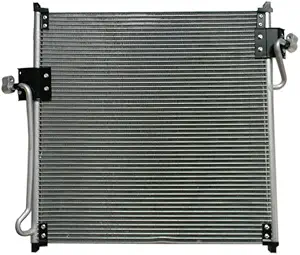 |
1. Sunbelt Radiators A/C Condenser for Ford Ranger, Explorer, Mountaineer, Mazda B4000 (SBC4821)

| Brand | Sunbelt Radiators |
|---|---|
| Manufacturer | Sunbelt Radiators |
| Manufacturer Part Number | SBC4821 |
| OEM Part Number | 1F7061480, 7-4821, CND4821, DPI4821, F77H19712BF, F77HBF, F77Z19712BC, KLI4770, KLI4821 |
This Sunbelt Radiators condenser is a direct-fit replacement intended to restore cooling performance for Ford Ranger and related models. It installs where the factory condenser sits and is used when the original unit is leaking, clogged, or damaged; typical installation requires standard A/C service to evacuate and recharge the refrigerant after fitting. The unit follows an OE-style design for bolt-on fitment and is factory-quality tested, which helps simplify installation and reduce the likelihood of fitment surprises. Buyers get a full condenser assembly rather than patch repairs, and multiple customers report good fit and reliable operation when matched to the correct vehicle application. Expect some variability in inlet/outlet placement on rare units, so verify the connection orientation before installation and plan for professional evacuation and charging if you are not equipped to service refrigerant. The product is backed by a stated lifetime guarantee and arrives boxed for service replacement jobs.
Best for: Balanced owners who want a factory-style replacement condenser to return reliable A/C cooling without chasing the lowest price or highest-end performance.
Less Ideal for: Users looking for a custom or performance condenser or those unwilling to have refrigerant evacuated and refilled should consider other options or professional installation.
- OE-style design for straightforward, bolt-in replacement
- Factory-tested construction intended to match original fit and function
- Covers multiple Ford platform applications including Ranger and Explorer
- Arrives as a complete condenser assembly so you replace the whole component
- May require verification of inlet/outlet positions as some buyers reported fitment mismatch
- Installation requires A/C evacuation and recharge by a qualified shop if you lack equipment
Verdict: A factory-style, full replacement condenser that restores A/C cooling for Ford Ranger and related models with straightforward fitment and factory testing.
2. Spectra Premium 7-4627 A/C Condenser for Ford Ranger and Similar Models

| Mounting Type | Vehicle Mount |
|---|---|
| Item Shape | Rectangular |
| Material Type | Ceramic, Metal, Plastic |
This Spectra Premium 7-4627 condenser replaces the vehicle's factory condenser with a unit engineered to the same construction and materials as the original. It is used when rebuilding or repairing the A/C system and installs in the radiator support area as a direct replacement for the Ranger family and compatible Mazda pickup models. Notable features include high-density cooling fins for efficient heat exchange, heavy-gauge mounting brackets to reduce vibration, and nitrogen leak testing to help ensure the part arrives undamaged. In practice the condenser provides strong cooling performance after an A/C recharge and many buyers report straightforward fit and restored blower output. Some units may need minor adjustment during installation and there are occasional reports of shipping damage or cosmetic finish issues, so inspect the part on arrival. For builders who want a factory-style replacement that prioritizes cooling efficiency and durability, this condenser is a solid choice; installers should still verify fit and handle carefully during installation to avoid damage.
Best for: Performance-oriented owners who prioritize restoring strong cooling and factory-style performance during a full A/C rebuild or condenser replacement.
Less Ideal for: People looking for a cosmetically perfect showpiece or a product guaranteed to arrive flawless without inspection should consider alternatives or professional reman units.
- Direct replacement design intended to match factory fit, form and function
- High-density fins for improved heat exchange and cooling efficiency
- Nitrogen leak-tested to reduce the risk of installation-time failures
- Heavy-gauge mounting brackets to limit movement and vibration in service
- Some customers reported cosmetic finish or shipping damage on arrival
- May require small adjustments at installation to align perfectly with factory mounting
Verdict: A factory-style condenser built for efficient heat exchange and durable mounting that restores A/C performance for Ford Ranger applications.
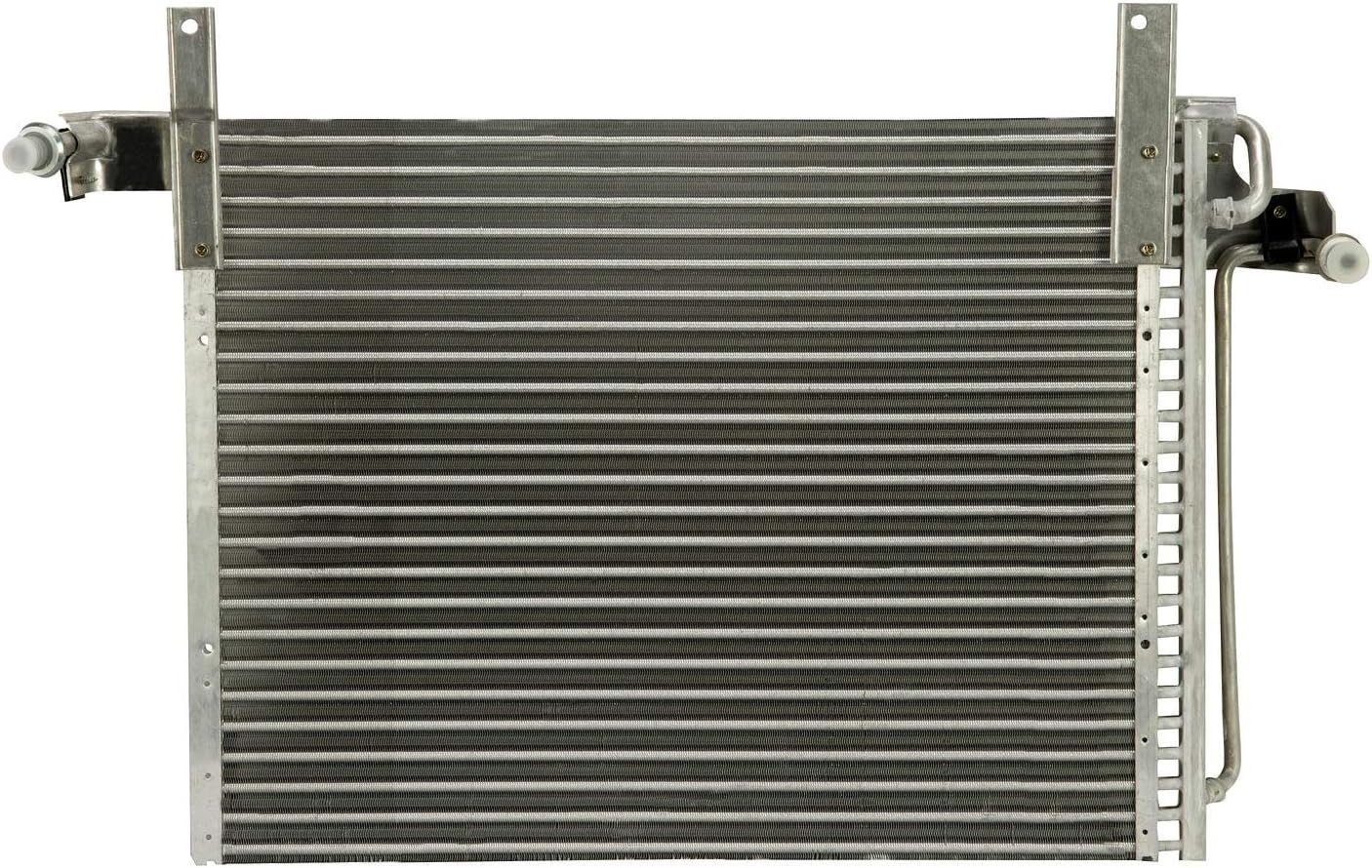
3. APFD Front A/C Condenser for Ford Ranger
| Position | Front |
|---|---|
| Manufacturer | APFD |
| Model | Automotive Condenser |
| Manufacturer Part Number | APC4258 |
This APFD front condenser is a no-frills, budget replacement intended to restore AC cooling on Ford Ranger models. It replaces the factory condenser at the front of the vehicle and functions like the original by reducing refrigerant temperature and enabling efficient cabin cooling. The unit is built to meet factory-style fitment so installation uses existing mounting points and hoses, which simplifies the swap for a DIYer or independent shop. Notable features include corrosion-resistant construction and a design that targets OEM compatibility to minimize trimming or bracket modification. The practical benefits are straightforward: it brings AC performance back without the premium price of OE-brand parts and comes with a lifetime guarantee for peace of mind. Limitations are that this is a basic aftermarket component rather than an upgraded performance condenser, so it does not increase cooling capacity beyond factory levels and may not match the finish or refined tolerances of higher-end replacements. Expect solid value for routine condenser replacement on a Ford Ranger.
Best for: A budget-conscious buyer who needs a reliable, no-frills condenser replacement to restore factory AC performance on a Ford Ranger and prefers a straightforward DIY or shop installation.
Less Ideal for: Not ideal for owners seeking upgraded cooling capacity, performance enhancements, or factory-finish cosmetic detail.
- Designed for direct fit to factory mounting points for straightforward installation on Ford Ranger
- Corrosion-resistant construction to tolerate road exposure
- Lifetime guarantee offers long-term replacement protection
- Basic aftermarket construction without increased cooling capacity or premium fitment tolerances
- Exterior is unpainted which may require surface treatment for corrosion aesthetics
Verdict: A cost-effective, factory-fit replacement condenser that restores Ford Ranger AC performance without premium features.
4. TRQ A/C Condenser Compatible with Ford Ranger and Select Ford/Mercury Explorer Models

| Core Material | Aluminum |
|---|---|
| Core Thickness | 0.79 in |
| Core Width | 21.26 in |
| Core Length | 21.54 in |
| Inlet/Outlet Thread Size | M8 |
This TRQ condenser is a direct-replacement, parallel-flow aluminum unit engineered to restore air conditioning cooling on compatible Ford Ranger and related Ford/Mercury models. It is typically used when the original condenser is leaking, clogged, or damaged after compressor failure or road debris. Notable features include aluminum core construction, block-type M8 inlet and outlet fittings, included mounting hardware, and a core thickness and footprint sized to match factory fit. In practice the condenser installs like a factory part and most buyers report straightforward alignment and leak-free threaded connections when installed properly. The heavier cooling surface and denser tube layout improve heat rejection compared with some budget alternatives, helping the system maintain cold output at idle and in stop-and-go traffic. Limitations to consider are occasional units arriving damaged in transit and a small number of reports of defects that required replacement, so careful inspection before installation is advisable. It does not include a drier or oil cooler so those items may need separate replacement depending on your repair.
Best for: Reliability-focused buyers who prioritize a direct-fit, factory-style replacement to restore consistent A/C cooling and reduce the need for modifications or repeated repairs.
Less Ideal for: Buyers looking for a complete system refresh or those who want combined components like a condenser with integrated drier or oil cooler should consider a more comprehensive kit or professional service.
- Direct-fit design with mounting hardware for straightforward installation in specified models
- Aluminum parallel-flow core for efficient heat rejection and improved cooling surface area
- Factory-style M8 block fittings with female threads for secure connections
- Included mounting hardware reduces the need to source extra parts
- Does not include a drier or oil cooler which may be required after compressor failure
- Some customers report shipping damage or defective units requiring return or replacement
Verdict: A direct-fit aluminum condenser that restores reliable, factory-style A/C cooling for compatible Ford Ranger and related Ford/Mercury models.
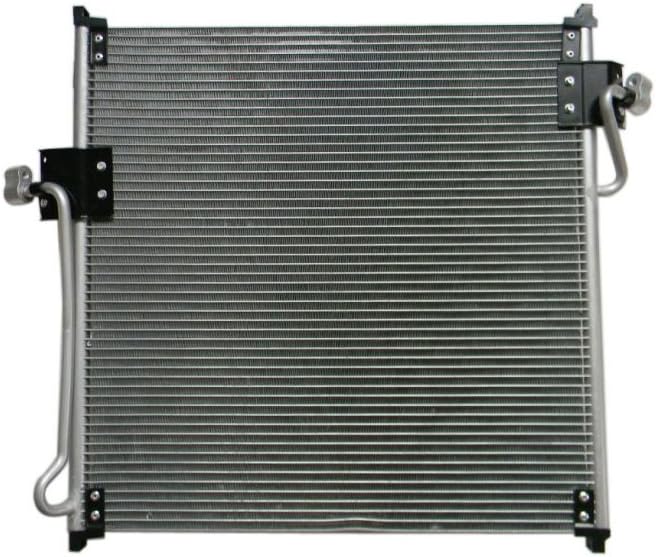
5. Kool Vue A/C Condenser (KVAC4904) for Ford Ranger and Mazda B-Series
| Item model number | KVAC4904 |
|---|---|
| Manufacturer Part Number | KVAC4904 |
| OEM Part Number | 8846048041 |
| Core material | Aluminum |
This Kool Vue condenser is a direct replacement designed to drop into 1998–2011 Ford Ranger and compatible Mazda B-series trucks to restore air conditioning performance. It installs like a factory-style unit and is typically used when the original condenser has failed or leaks; many owners report quick, straightforward installs and effective cooling afterward. The part features an aluminum core and is labeled as a direct-fit with OEM cross-reference numbers, which simplifies swapping the old condenser for this one during a condenser or full A/C system repair. Practical benefits include lower cost compared with dealer parts and apparent reliability when pressure-tested and installed correctly. Limitations to note are occasional fitment differences that may require minor bracket adjustments and the absence of included O-rings or mounting hardware in some purchases, which means you may need to buy seals separately and inspect alignment during installation.
Best for: Risk-averse mainstream buyers who prioritize restoring reliable factory-style A/C performance on a Ford Ranger without paying dealer prices; ideal for owners who prefer proven, commonly sold replacements.
Less Ideal for: People who want a plug-and-play exact OEM replica with all seals and brackets included or who prefer a premium performance condenser with upgraded cooling capacity.
- Direct-fit design with OEM cross-reference numbers for easier replacement
- Aluminum core construction that supports effective heat transfer
- Widely reported easy installation on supported Ranger and Mazda trucks
- Lower cost alternative to dealer/factory parts
- Does not always include O-rings or mounting hardware
- Some units may require minor bracket adjustments for perfect fitment
Verdict: A budget-friendly direct-fit condenser that restores factory-style A/C cooling for Ford Ranger and compatible Mazda B-series trucks.
Looking for the perfect fit?
Select your Ford Ranger configuration to see the most relevant AC Condensers recommendations
Choosing the Right Ford Ranger AC Condenser: Key Factors to Consider
Fitment and Mounting Alignment
Accurate fitment matters because the condenser must align with factory brackets, fan shroud, and refrigerant lines to prevent stress on connections. Misaligned inlet or outlet ports can complicate installation, increase leak risk, or require additional adapters. Choosing a direct-fit condenser reduces installation time and the likelihood of interference with surrounding components. Pay attention to mounting hole spacing, bracket interfaces, and the relative position to the radiator and cooling fan. Proper alignment also ensures adequate airflow through the fins, which affects cooling capacity under load.
Material Quality and Corrosion Resistance
Condenser materials and protective coatings determine long-term durability in road environments. Aluminum cores are common, but the quality of brazing, end tanks, and protective surface treatments affects resistance to salt, debris, and moisture. A well-finished condenser reduces the chance of pinhole leaks and structural failure over time. Look for corrosion-resistant coatings, reinforced tubing junctions, and durable fins that can withstand cleaning without rapid degradation. Higher material quality typically correlates with fewer leaks and longer service life.
Sealing and Leak Prevention
Leaks are a primary failure mode for condensers, so sealing quality is critical. Reliable joints, strong brazing at tube-to-header connections, and well-designed crimped or welded end tanks minimize leak points. The presence of factory-quality O-ring interfaces and compatible port sizes helps ensure a tight refrigerant seal. Consider how easily the unit accepts standard service fittings and whether it includes protective caps during shipping to prevent contamination. Good sealing reduces the need for repeat repairs and refrigerant loss.
Thermal Efficiency and Fin Design
Thermal efficiency determines how effectively the condenser sheds heat from the refrigerant to the passing air. Fin density, fin shape, and tube layout influence heat transfer and airflow resistance. Better designs provide lower operating pressures and improved cooling at idle or in hot conditions. Balance fin density with ease of cleaning because very dense fins can trap debris and become less effective over time. A practical design optimizes heat exchange while remaining serviceable in real-world conditions.
Serviceability and Installation Effort
Ease of installation matters for both DIYers and professionals. Direct-fit units that reuse factory brackets and retain service ports reduce labor time. Clear instructions, labeled ports, and compatibility with standard refrigerant lines simplify installation and minimize the chance of mistakes. Also evaluate whether the condenser design allows routine maintenance, such as flushing or replacing O-rings, without requiring major disassembly. Better serviceability lowers long-term repair costs and downtime.
How We Chose the Best Ford Ranger AC Condenser
We prioritized components that provide correct fitment, robust corrosion resistance, reliable sealing, and straightforward installation for the Ford Ranger platform. Key evaluation criteria included material and finish to resist road corrosion, OEM-equivalent mounting points and inlet/outlet alignment, durability of brazed joints and end tanks, and compatibility with standard refrigerant lines and service ports. We also considered ease of installation, including whether the condenser permits reuse of factory brackets and how accessible mounting points are, plus the presence of protective coatings or improved fin designs to aid heat exchange. Thermal performance and expected lifespan under typical driving and environmental conditions were assessed based on design features rather than lab testing. We excluded units lacking clear fitment data for the Ford Ranger, generic universal condensers that require major modification, and components with insufficient sealing or substandard materials. The result is a curated set of direct-fit options chosen for practical reliability and installation clarity.
Our full evaluation process is outlined in our review methodology.
FAQ
What are common symptoms that indicate a failing condenser on a Ford Ranger?
Common signs include reduced cabin cooling, warm air at idle, visible refrigerant oil or dye near the condenser, and higher system pressures. You might also notice fluttering or unusual airflow near the front of the vehicle. These symptoms often point to leaks, clogged fins, or internal blockages rather than unrelated AC components.
Can I replace the Ford Ranger AC condenser myself?
You can replace a condenser yourself if you have mechanical skills, the right tools, and knowledge of refrigerant handling procedures. The job typically requires recovering refrigerant with proper equipment, disconnecting lines, and ensuring correct sealing during reassembly. If you are unfamiliar with AC service, it is safer to use a qualified technician to avoid refrigerant release or improper installation.
How does condenser fitment affect installation complexity?
Correct fitment simplifies installation because mounting points, inlet/outlet orientation, and bracket compatibility match the vehicle. Poor fitment may require additional adapters, bracket modification, or repositioning, which adds time and can increase leak risk. Choosing a direct-fit condenser minimizes these complications and usually streamlines reassembly.
What maintenance can prevent premature condenser failure?
Regularly inspect the front-end area for debris, clean fins carefully to maintain airflow, and check for signs of corrosion or damage after winter or off-road use. Ensuring proper condenser support and avoiding impact damage helps prevent structural failures. Address minor leaks or bent fins early to avoid larger problems.
How is a condenser leak typically detected?
Leaks are often found by visual inspection for oil residue, using an electronic leak detector around fittings and seams, or applying UV dye during a refrigerant service. Pressure testing the system can also reveal slow leaks. Multiple detection methods are commonly used to confirm the exact leak location.
Conclusion
When choosing a Ford Ranger AC condenser, prioritize units with correct mounting alignment, strong sealing, and corrosion-resistant materials. These factors reduce installation headaches and the likelihood of future refrigerant loss. Balance thermal efficiency with ease of service and look for condensers that allow straightforward reuse of factory brackets and fittings. Focusing on fitment and build quality will help ensure reliable cabin cooling with minimal follow-up repairs.
Explore More:
- Check out all Ford Ranger parts & accessories
- Explore AC Condensers Maintenance & Repair Guides
- Explore HVAC
- Browse all Auto Parts
