

Note: This article contains affiliate links. If you click on these links and make a purchase, I may earn a small commission at no extra cost to you. This helps support my research and content. Read my full affiliate disclosure here.
If your Ford Ranger is delivering weak airflow, loud cabin noise, or inconsistent heating and cooling, swapping the blower motor can restore proper ventilation. Picking the right Ford Ranger blower motor matters because fit, airflow capacity, and durability determine cabin comfort and HVAC reliability over time.This guide highlights the top shortlisted blower motors selected for the Ford Ranger and explains the evaluation criteria, including fitment, airflow performance, and noise. Read on to understand what to look for before you replace your cabin blower motor.
Looking for other parts? See all Ford Ranger parts & accessories.
Top Picks at a Glance
| Best Overall The best all-around choice for most situations | Aeagle HVAC Heater Blower Motor Fan Assembly for Ford Ranger/Explorer/Mountaineer |  |
| Best quality Built to a higher standard if you want something more solid | YHTAUTO Blower Motor Assembly for Ford Ranger & Explorer |  |
| Best Value The sweet spot between price and what you get | Youxmoto 700019 Heater Blower Motor Assembly (replaces 1L5Z18456CA) Fit for Ford Ranger 1998-2011 |  |
| Best budget The cheapest option that still gets the job done reliably | SCITOO Front HVAC Blower Motor with Fan Cage |  |
| Highest Rated A top-rated pick with lots of positive feedback | ECCPP 700019 HVAC Replacement Blower Motor for Ford Ranger/Explorer/Mountaineer |  |
| Most popular A crowd favorite that many people choose with confidence | SCITOO AC Heater Blower Motor for 1995–1997 Ford Ranger |  |
| Best Seller A high-volume bestseller chosen again and again | TRQ HVAC Blower Motor Assembly with Fan Cage for Ford Ranger and Explorer |  |
1. Aeagle HVAC Heater Blower Motor Fan Assembly for Ford Ranger/Explorer/Mountaineer

| Brand Name | Aeagle |
|---|---|
| Part Number | AEBM0061 |
| Material Type | Alloy Steel |
| Compatible Vehicles | 1995-2011 Ford Ranger/Explorer/Sport Trac and 1997-2001 Mercury Mountaineer |
This Aeagle blower motor is a direct-fit replacement for many Ford Ranger, Explorer and Mercury Mountaineer HVAC systems and includes the fan cage for a one-piece swap. It is typically used to restore heater and A/C airflow when the original blower fails or becomes noisy. The motor is built with silicon steel rotor punchings and enameled copper windings to meet expected motor RPM and performance, and customers report straightforward installation and reliable operation across the compatible year ranges. The unit claims stable characteristics, larger air volume and lower noise compared with some aftermarket options, and it ships with the gasket needed for installation. Limitations to keep in mind are that airflow and RPM may differ slightly from a factory unit and fitment should be verified against the vehicle compatibility list before buying. For a balanced buyer wanting a cost-effective, near-factory replacement that installs without modification, this blower motor is a practical choice.
Best for: Practical, balanced buyers who want a reliable, affordable factory-style replacement blower motor for routine HVAC repairs on compatible Ford Ranger, Explorer or Mercury Mountaineer models.
Less Ideal for: Buyers seeking a high-performance or upgraded-blow-rate aftermarket fan for increased cabin airflow or those unwilling to confirm exact fitment before purchase.
- Direct replacement designed for specified Ford Ranger, Explorer and Mercury Mountaineer years for straightforward installation
- Includes fan cage and gasket so fewer extra parts are required during replacement
- Copper enameled windings and silicon steel rotor plate aimed at reliable motor performance
- Multiple user reports of good fit and quiet operation after installation
- Airflow and RPM can differ from some factory units which may be noticeable on highest fan settings
- Compatibility must be double-checked against vehicle application to avoid ordering the wrong fit
Verdict: A practical, direct-fit blower motor replacement that restores HVAC airflow on supported Ford Ranger and Explorer models with minimal fuss.
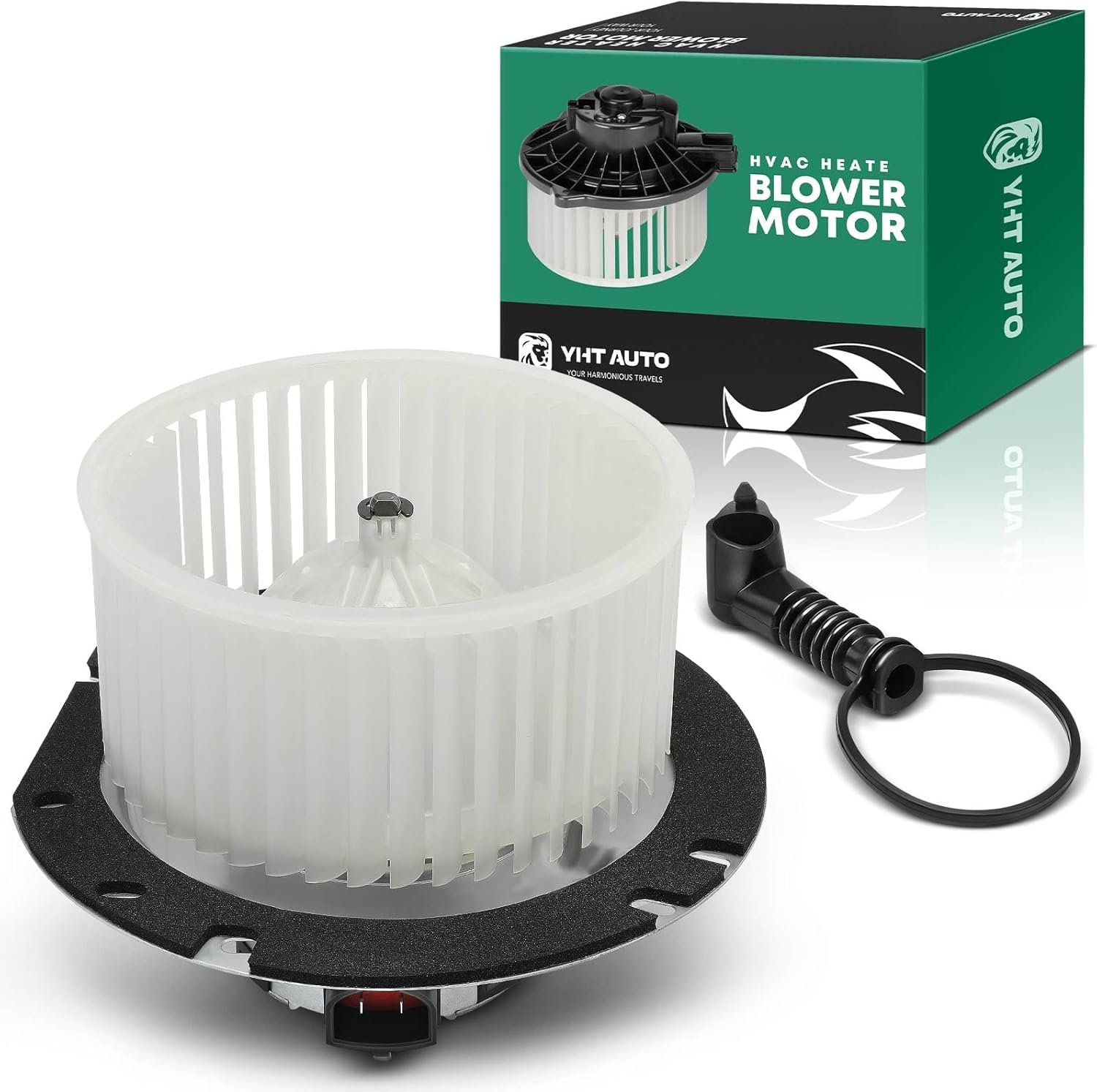
2. YHTAUTO Blower Motor Assembly for Ford Ranger & Explorer
| Fitment | Ford Ranger 1998-2011; Explorer 1995-2001; Mercury Mountaineer 1997-2001 |
|---|---|
| Manufacturer | YTAUTOPARTS |
| Brand | YHTAUTO |
| Manufacturer Part Number | YHTBM0076 |
This YHTAUTO blower motor assembly replaces the vehicle's cabin blower to restore HVAC airflow for heating and air conditioning. It is sold as a direct-fit replacement for Ford Ranger (1998–2011), Explorer (1995–2001) and Mercury Mountaineer (1997–2001) and arrives with the gasket needed for installation. In use it provides the same or better airflow compared with older factory motors, so it quickly returns full fan performance and cooling/heating capacity. Typical installation is straightforward for a DIYer with basic hand tools and about 20–60 minutes of work depending on access. The unit carries multiple OEM reference numbers for fit verification and comes from a brand that lists a one year warranty. Limitations are that this is an aftermarket replacement rather than a factory part and long term longevity can vary by climate and usage; some buyers may prefer a branded OEM motor for extended durability in heavy-duty applications.
Best for: Performance-oriented owners who prioritize restoring full HVAC airflow and fan power quickly and want a direct-fit replacement they can install themselves.
Less Ideal for: Drivers seeking a factory-brand motor with an established long-term track record or those needing parts for vehicles outside the stated fitment years should consider other options.
- Direct-fit replacement for specified Ford Ranger, Explorer and Mercury Mountaineer models
- Includes gasket to simplify installation and improve sealing
- Restores strong HVAC airflow comparable to or better than older factory motors
- Multiple OEM reference numbers for easy compatibility checking
- Aftermarket part so long-term durability may differ from factory-brand motors
- Not intended for models outside the listed fitment range
Verdict: A practical, performance-minded direct-fit blower motor that restores strong cabin airflow at a lower cost than replacing with a factory-brand unit.
3. Youxmoto 700019 Heater Blower Motor Assembly (replaces 1L5Z18456CA) Fit for Ford Ranger 1998-2011

| Brand | Youxmoto |
|---|---|
| Model Name | Heater Blower Motor |
| Part Number | YXBM0061L |
| Fitment Highlights | Ford Ranger 1998-2011; Explorer 1995-2001; Explorer Sport Trac 2001-2005; Mercury Mountaineer 1997-2001 |
The Youxmoto 700019 blower motor is a direct-replacement HVAC motor intended to restore airflow and quiet operation for compatible Ford Ranger and related models. It replaces several factory part numbers and installs in the vehicle's blower housing using the original mounting points and electrical connector. Typical use is as a like-for-like repair when your vehicle has weak or no air from the vents, unusual noise from the blower, or overheating smells. Notable features called out by the manufacturer include heat dissipation design, precision speed control, and a silicon-steel rotor plate to reduce burning and noise. In practice this part delivers strong airflow and many owners report easy installation and a factory-like fit. Limitations include occasional fitment or connector issues on some examples and the product does not include a blower resistor or wiring harness, so replacing the resistor at the same time may be necessary for a complete fix. For a pragmatic buyer this motor offers solid performance at a budget-friendly cost but check connector fit and consider replacing the resistor during installation.
Best for: Practical optimizers seeking the best value repair for a Ford Ranger who prioritize restoring reliable cabin airflow without paying for premium branded parts.
Less Ideal for: Buyers who want a guaranteed plug-and-play kit with new resistor and harness included or who prefer an OEM-branded replacement should consider other options.
- Designed to replace several factory part numbers for direct-fit installation on listed Ford/ Mercury models
- Manufacturer highlights improved heat dissipation and quieter operation compared with worn originals
- Many buyers report straightforward installation and restored strong airflow
- Includes a complete blower motor unit so no separate fan purchase is required
- Does not include blower motor resistor or additional wiring harness components
- Some users report intermittent connector/prong fitment issues that can cause malfunction
Verdict: A budget-friendly, direct-replacement blower motor that reliably restores airflow for Ford Ranger owners looking for practical value.
4. SCITOO Front HVAC Blower Motor with Fan Cage

| Position | Front |
|---|---|
| Connector Gender | Female |
| Number of Terminals | 2 |
| Working Voltage | 12V |
| Cage Wheel | Included |
This SCITOO front HVAC blower motor is a straightforward replacement for failed blower assemblies on compatible Ford Ranger applications. It comes as a motor with the fan cage attached and uses a two-terminal female connector for a direct electrical plug-in, so installation follows the same steps as the factory unit. In use it provides multiple speed control compatibility and a vented, flanged design that helps move cabin air for heat and A/C. Buyers will appreciate the included cage wheel and the part matching to common Ford OEM numbers for fitment. As a budget option the motor offers good airflow and several customers report an easy swap and quiet operation. Limitations are typical of economy replacements: long-term durability may not match higher-end factory-quality parts and finish materials are basic plastic and steel. If you need a low-cost, quick fix to get blower function back in a Ranger, this unit delivers reasonable performance but may be less durable than premium replacements.
Best for: Budget-conscious owners who prioritize restoring HVAC function on a Ford Ranger quickly and affordably rather than sourcing a premium factory-quality replacement.
Less Ideal for: Owners looking for a long-term, high-durability blower or a factory-grade motor for heavy-duty use should consider higher-end or OEM options instead.
- Direct-fit fan cage and two-terminal connector designed to match factory replacement points for Ford Ranger
- Includes cage wheel so you receive a complete blower assembly ready for installation
- Multiple speed setting compatibility lets you use existing HVAC controls without modification
- Budget price that provides a fast, affordable repair for nonworking blower motors
- Construction uses basic plastic and steel which may not last as long as higher-end replacements
- Long-term reliability is less certain compared with factory-quality parts
Verdict: A low-cost, direct-fit blower assembly that gets a Ford Ranger's HVAC blowing again quickly, but with basic materials that may not match factory longevity.
5. ECCPP 700019 HVAC Replacement Blower Motor for Ford Ranger/Explorer/Mountaineer

| Model | ECCPP 700019 HVAC Blower Motor Compatible with Ford Explorer/Explorer Sport Trac/Ranger/Mercury Mountaineer |
|---|---|
| OEM Part Numbers | 615-00515, FO3126107, MM844, XL2Z19805EA, 1L5Z18456CA, 1L2Z19834AA |
| Item Weight | 4.45 pounds |
| Item model number | 058439-5211-1632491 |
This ECCPP blower motor replaces the factory unit to restore air circulation in the cabin when the original fan fails or becomes noisy. It is supplied as a complete motor and fan assembly intended for in-dash HVAC use on specified Ford Ranger, Explorer, Explorer Sport Trac, and Mercury Mountaineer model years. The listing highlights features such as a balanced rotor, copper enameled wire windings, and a design meant to match factory fit and function, which in practice means straightforward swap-in installation for mechanics comfortable with dashboard HVAC work. Buyers report strong airflow and quiet operation after installation, so it works well for routine heating and A/C needs. Limitations include the usual variability of aftermarket parts versus factory parts and the potential need to address the resistor or access screws during installation on some Ford models. Expect a practical, cost-effective repair that returns reliable airflow but plan for some vehicle-specific installation steps.
Best for: Reliability-focused buyers who prioritize restoring dependable cabin airflow with a practical, factory-style replacement rather than sourcing an expensive dealer unit.
Less Ideal for: Drivers seeking an exact factory-branded motor or an OEM-certified part for warranty reasons should consider dealer replacements instead.
- Direct replacement for specified Ford Ranger/Explorer/Explorer Sport Trac and Mercury Mountaineer models
- Balanced rotor and copper enameled windings for consistent electrical performance
- Reported quiet operation with strong airflow restoring HVAC function
- Comes as a complete motor and fan assembly for straightforward replacement
- Installation may require dashboard access and removal of the blower resistor on some Ford models
- Aftermarket part quality can vary compared with factory-made units
Verdict: A practical, cost-effective aftermarket blower motor that reliably restores HVAC airflow for compatible Ford Ranger and related models while requiring standard installation care.
6. SCITOO AC Heater Blower Motor for 1995–1997 Ford Ranger

| Fitment | 1995-1997 Ford Ranger |
|---|---|
| Replaces part numbers | TYC700150, F57Z19805B, F0TZ18504A |
| Bearing type | Permanently lubricated self-aligning |
| Rotor material | Silicon steel sheet |
This SCITOO blower motor is an aftermarket replacement intended to restore cabin airflow on 1995–1997 Ford Ranger trucks. It installs into the vehicle's HVAC housing and connects to the factory plug to drive the blower cage and push air through the vents. The unit advertises strong wind power, low noise operation, and permanently lubricated self-aligning bearings for longer life. In practice buyers report straightforward, quick installs and restored heating and cooling performance comparable to factory replacement parts. Expect a slight delay on startup and occasional light motor whine on higher fan speeds, which several users noted is louder than OEM units. The motor uses copper enameled wire and a silicon steel rotor plate for durability and is offered as a cost-effective alternative to dealer parts. If you need a convenient, ready-to-install fix to get airflow back in an older Ranger, this delivers good value, but those seeking factory-quiet operation and maximum long-term power may prefer a higher-end factory-quality unit.
Best for: Convenience-driven buyers who want a quick, do-it-yourself repair to restore heating and A/C airflow in a 1995–1997 Ford Ranger without visiting a dealer.
Less Ideal for: Drivers who prioritize the quietest possible cabin or exact factory-level airflow performance should consider a higher-end factory-quality replacement instead.
- Direct-fit replacement for 1995–1997 Ford Ranger with OEM-style electrical plug
- Permanently lubricated self-aligning bearings designed for longer service life
- Construction uses copper enameled wire and silicon steel rotor plate for durability
- Easy, quick installation reported by multiple users, restoring cabin airflow
- May produce noticeable whirring or higher-pitched noise at higher fan speeds
- Some users report slightly reduced airflow compared with original factory motor
Verdict: A practical, easy-to-install aftermarket blower motor that gets an older Ford Ranger's HVAC working again at a fraction of dealer cost but with some extra noise and slightly less flow than factory units.
7. TRQ HVAC Blower Motor Assembly with Fan Cage for Ford Ranger and Explorer

| Model | TRQ HMA84802 HVAC Blower Motor Assembly |
|---|---|
| Manufacturer Part Number | HMA84802 |
| Compatible Vehicles | Ford Ranger, Explorer, Sport Trac; Mercury Mountaineer (listed years in product) |
This TRQ blower motor assembly replaces the vehicle's failed HVAC blower to restore cabin airflow for heating and A/C. It ships pre-assembled with the squirrel-cage fan attached so installation is typically a straightforward swap into the factory blower housing for the listed Ford Ranger, Explorer, Sport Trac and Mercury Mountaineer years. Notable features include TRQ's direct-fit design and a machined exterior that helps alignment and fastener fit; the listing also references common OEM reference numbers for cross-checking fitment. In practice the unit provides strong airflow and many buyers report simple bolt-on installation and reliable operation. A few customers noted occasional fit or minor pre-assembly issues requiring a quick adjustment of fan prongs or that the cage is slightly shorter than some originals which can affect peak airflow in rare cases. For a risk-averse buyer this unit offers a pragmatic balance of factory-style fit and accessible DIY installation, but confirm the vehicle compatibility chart before purchasing and inspect connections at first power-up to avoid installation hiccups.
Best for: Practical, risk-averse buyers who want a factory-style replacement that minimizes guesswork and supports a DIY swap to restore HVAC function on covered Ford Ranger and related models.
Less Ideal for: Buyers seeking performance upgrades, higher-flow aftermarket fans, or solutions intended for vehicles outside the specified Ford Ranger/Explorer/Mountaineer fitment should consider other options.
- Direct-fit, pre-assembled blower assembly designed to replace the factory unit for listed Ford and Mercury models
- Includes squirrel-cage fan for immediate installation without sourcing separate parts
- Common OEM reference numbers provided for easy fitment verification
- Many users report straightforward installation and restored strong HVAC airflow
- Some units have arrived with bent fan prongs or minor assembly issues requiring simple adjustment
- A few buyers reported the fan cage is slightly shorter than some original parts which may reduce maximum airflow in specific applications
Verdict: A pragmatic, direct-fit blower motor assembly that restores HVAC airflow with minimal fuss for the specified Ford and Mercury models.
Looking for the perfect fit?
Select your Ford Ranger configuration to see the most relevant Blower Motors recommendations
Choosing the Right Ford Ranger Blower Motor: Key Factors to Consider
Vehicle Fitment and Mounting
Ensuring the blower motor fits your Ford Ranger exactly matters because incorrect fit leads to installation problems and potential air leaks. Check the mounting flange shape, bolt pattern, and connector orientation so the motor seats securely in the HVAC housing.
A proper mechanical fit prevents vibration and rubbing against the ductwork, which can shorten component life. Matching fitment also reduces the chance of needing additional adapters or modifications during installation.
Airflow Capacity and Multi-Speed Performance
Airflow capacity determines how effectively the HVAC system heats or cools the cabin. Look for motors and fan wheels rated for consistent CFM across low, medium, and high speeds to avoid weak output at common fan settings.
Consistent multi-speed performance ensures adequate defogging and passenger comfort in varied conditions. A motor that loses torque at low voltage or low speed will often cause insufficient airflow when you need gentle ventilation.
Noise and Vibration Characteristics
Blower motor noise affects cabin comfort more than many drivers expect. Evaluate motors for balanced fan wheels, quality bearings, and damped housings to minimize whining, rattling, or grinding sounds.
Vibration-resistant design and proper balancing reduce transmitted noise through the HVAC ducts. Lower noise at each speed setting makes the HVAC feel higher quality and reduces driver distraction during long trips.
Durability and Bearing Type
Bearing design and motor internals are central to service life. Motors with sealed ball bearings or high-quality sleeve bearings designed for automotive HVAC cycles tend to last longer under heat and humidity.
Durable motors resist premature failure from dust, moisture, and thermal cycling. Consider corrosion-resistant materials and robust electrical contacts, since HVAC environments can be harsh over time.
Electrical Compatibility and Connector Type
Electrical compatibility is essential to avoid wiring modifications. Confirm the motor uses the same connector type, voltage rating, and pinout as the Ranger's harness so it plugs in directly and communicates with the blower control.
Mismatch in connectors or control signals can cause fan speeds to behave erratically or not work at all. Proper compatibility also simplifies diagnostics if the blower motor symptoms persist after installation.
Ease of Installation and Serviceability
A motor that is straightforward to access and replace reduces labor time and installation errors. Consider the motor's orientation, whether any dash or glovebox removal is required, and whether mounting screws and electrical clips are easy to reach.
Serviceable designs allow easier inspection and future replacements. Clear installation alignment points and reusable fasteners help maintain proper fit and reduce the likelihood of air leaks or noise introduced during reassembly.
How We Chose the Best Ford Ranger Blower Motor
To assemble this list we focused on components that reliably restore HVAC function in Ford Ranger models. We prioritized accurate vehicle fitment and mounting compatibility, genuine or high-quality bearings and motor internals for long service life, and measured airflow performance at multiple speed settings to ensure adequate cabin ventilation. Noise level under load was another key filter, since excessive blower motor noise undermines comfort. We also evaluated electrical compatibility, including connector type and voltage tolerance, and assessed build quality features such as corrosion-resistant housings and balanced fan wheels.We excluded units with unclear fitment claims, motors lacking standard electrical connectors, and parts with reported high failure rates or poor warranty support. The resulting selections emphasize parts that address the typical blower motor symptoms Ranger owners experience while meeting common installation needs.
Our full evaluation process is outlined in our review methodology.
FAQ
What are common symptoms of a failing Ford Ranger blower motor?
Common signs include weak or no airflow from the vents, unusual noises like grinding or squealing, and fan speeds that do not change or only work on one setting. You might also notice intermittent operation or smell of burning if the motor is overheating.
How can I tell if the blower motor resistor is the problem instead of the motor?
If the fan works only at certain speeds, the resistor often causes the issue because it controls lower speed settings. If the fan does not work at any speed or makes mechanical noise, the motor itself is more likely at fault. Diagnosis usually involves checking voltage at the motor and inspecting the resistor for visible damage.
Is blower motor replacement difficult on a Ford Ranger?
Difficulty varies by year and trim, but many Ford Ranger blower motors are accessible behind the glovebox or under the dash. Basic mechanical skills, common hand tools, and following a vehicle-specific procedure are typically sufficient for a DIY replacement. Take care with electrical connectors and mounting alignment.
Will replacing the blower motor fix weak HVAC airflow?
Replacing a worn or failing blower motor often restores proper airflow if the motor was the limiting factor. However, weak airflow can also result from clogged cabin filters, duct obstructions, or HVAC system issues. Inspect filters and ducting as part of troubleshooting.
What causes blower motor noise and how can it be addressed?
Noise can stem from unbalanced fan wheels, worn bearings, debris in the housing, or loose mounting hardware. Address the issue by inspecting and cleaning the housing, tightening mounts, and replacing the motor or fan wheel if bearings or balance are compromised.
Conclusion
Choosing the right Ford Ranger blower motor requires balancing fitment, airflow, and noise performance against durability and ease of installation. Prioritize a motor that matches your Ranger's mounting and electrical connections, delivers steady airflow across speeds, and uses robust bearings to avoid premature failure.Remember that some HVAC issues mimic motor failure, so inspect filters, ducts, and electrical connections alongside motor replacement. Focusing on the factors above will help you restore consistent, quiet cabin ventilation with the least disruption.
Explore More:
- Check out all Ford Ranger parts & accessories
- Explore Blower Motors Maintenance & Repair Guides
- Explore HVAC
- Browse all Auto Parts
