

Note: This article contains affiliate links. If you click on these links and make a purchase, I may earn a small commission at no extra cost to you. This helps support my research and content. Read my full affiliate disclosure here.
If your 1998-2011 Ford Ranger is showing uneven fan speeds, no blower on certain settings, or intermittent HVAC performance, the blower motor resistor is a common cause. Replacing the resistor can restore reliable airflow for heating and air conditioning without replacing the entire blower assembly. This guide shortlists the top options compatible with the 1998-2011 Ranger and explains the main differences that affect durability and installation.Below you will find our top picks for blower motor resistors that fit the Ranger, plus practical guidance on symptoms, testing, installation considerations, and durability factors we used to evaluate each option.
Looking for other parts? See all Ford Ranger parts & accessories.
Top Picks at a Glance
| Best Overall The best all-around choice for most situations | SCITOO Blower Motor Resistor Regulator |  |
| Best Quality Built to a higher standard if you want something more solid | A-Premium Blower Motor Resistor, compatible with select Ford, Mazda and Mercury vehicles |  |
| Best Value The sweet spot between price and what you get | WEDOAUTO HVAC Blower Motor Resistor, 4-Pin |  |
| Best Budget The cheapest option that still gets the job done reliably | MOCA AUTOPARTS Blower Motor Resistor Kit with Wire Harness |  |
| Highest Rated A top-rated pick with lots of positive feedback | Dorman 973-411 HVAC Blower Motor Resistor Kit |  |
| Most Popular A crowd favorite that many people choose with confidence | YHTAUTO Blower Motor Resistor for Ford Ranger and Explorer Series |  |
1. SCITOO Blower Motor Resistor Regulator

| OEM Part Number | 4L5Z 19A706-AA, F5TZ19A706A |
|---|---|
| Item model number | 122556-5206-1405042151 |
| Brand | SCITOO |
| Fitment years | 1995-2011 (listed range across models) |
This SCITOO blower motor resistor is a direct replacement meant to restore proper fan-speed control in vehicles covered by the listed fitment. It installs in place of the factory resistor and is typically used when a cabin fan loses some or all speed settings or when the heating and A/C blow only on high. The unit is described as tested at the factory and uses a design intended to resist thermal fuse failure and overheating, which helps reliability in everyday use. Installation is straightforward for DIYers comfortable with basic dash or glovebox access and connector swaps. Practical benefits include restoring full fan-speed range, compatibility with several Ford Ranger and Explorer model years, and a compact harness-ready design. Limitations are that fitment must be checked carefully against the vehicle year and part numbers and that long-term durability depends on installation environment and original connector condition.
Best for: Buyers who want a practical, no-frills replacement to restore full HVAC fan control in late 1990s to early 2010s Ford Ranger and related trucks and who prioritize a straightforward install and reliable everyday operation.
Less Ideal for: Drivers who need a guaranteed long-term lifetime solution for units exposed to heavy moisture or corrosion without addressing connector or harness condition first should consider a more comprehensive repair.
- Direct replacement for factory blower resistor part numbers listed
- Designed to reduce thermal fuse failure and overheating
- Pretested at the factory to help ensure basic functionality out of the box
- Compact, harness-ready unit simplifies install and connector fitment
- Requires careful fitment check by year and part number before purchase
Verdict: A budget-friendly, direct-fit replacement that restores factory-style blower fan speed control for compatible Ford Rangers and similar trucks.
2. A-Premium Blower Motor Resistor, compatible with select Ford, Mazda and Mercury vehicles

| Manufacturer Part Number | APBMR003PC |
|---|---|
| OEM Part Number | 4L5Z19A706AA, 973-010 |
| Package Contents | 1x Heater Blower Motor Resistor |
| Is Discontinued By Manufacturer | No |
| Brand | A-Premium |
This blower motor resistor replaces a failed or intermittent blower speed control by restoring the stepped resistance network that governs the HVAC fan speeds. It is supplied as a direct-fit replacement made to OEM-style specifications, so installation is straightforward for technicians or competent DIYers using the vehicle-specific connector and mounting points. The unit ships alone in a boxed package and lists common reference numbers to help verify fitment for late 1990s and 2000s Ford Rangers and related models. In use it returns distinct low, medium and high fan settings and removes the flicker or single-speed symptoms caused by a burned resistor. Limitations are typical of resistor-based controls: it replaces only the resistor assembly and will not fix failures caused by a faulty blower motor, switch, or wiring; buyers should confirm year and model compatibility before ordering. A-Premium backs the part with a one-year unlimited-mileage guarantee for added confidence.
Best for: Buyers focused on restoring precise HVAC fan control on a project or daily driver Ranger from the late 1990s to 2010s who want a direct-fit, serviceable replacement without modifying the system.
Less Ideal for: People looking to upgrade fan performance beyond stock behavior or those who need to diagnose suspected blower motor or electrical faults rather than replace the resistor alone.
- Direct-fit replacement built to OEM-style specifications for straightforward installation
- Restores full stepped fan speed control to correct intermittent or single-speed blower issues
- Includes common OEM reference numbers to simplify fitment verification
- One-year unlimited-mileage guarantee provides added assurance
- Only replaces the resistor assembly and will not address failures in the blower motor, switch, or vehicle wiring
Verdict: Choose this direct-fit A-Premium resistor when you need a reliable, factory-style replacement to restore stepped fan speeds on compatible late 1990s–2000s Ford Ranger and similar vehicles.
3. WEDOAUTO HVAC Blower Motor Resistor, 4-Pin

| Power Connector Type | 4-Pin |
|---|---|
| Cooling Method | Air |
| Compatible Devices | Radiator |
| Model | WDE06700031-1 |
| Part Number | WDE06700031-1 |
This WEDOAUTO blower motor resistor replaces factory resistors on compatible Ford Rangers and related Ford/Mercury models to restore the HVAC fan speed range. It installs in the blower housing and uses a 4-pin connector with air cooling to dissipate heat, letting the fan respond correctly to your speed selector. Typical use is a simple swap when you lose certain fan speeds or the blower stops working; access is from the lower passenger dash and installation requires a few screws and basic hand tools. The unit lists many equivalent part numbers, which helps confirm fitment, and the resin-and-metal construction aims to resist thermal fuse failure and overheating. There is no instruction sheet included, so drivers comfortable with basic DIY auto work will appreciate the low-complexity replacement; those who prefer guided steps or professional installation should plan accordingly. Expect straightforward restoration of blower function for the supported vehicle list, though confirm the four-pin connector and part numbers match before buying.
Best for: Buyers who want a practical, no-frills replacement to restore HVAC fan speed on supported Ford Ranger and related vehicles and prefer an affordable DIY fix over dealer service.
Less Ideal for: People who need step-by-step installation guidance, universal fit across many vehicles, or who prefer an exact factory replacement from an OEM dealer.
- Direct-fit replacement for listed Ford and Mercury models with common part numbers for easier match
- 4-pin connector and air-cooled design reduce chance of overheating during normal operation
- Simple installation accessible from lower passenger dash for DIY replacement
- Constructed to resist thermal fuse failure and burnout
- No installation instructions included so some mechanical experience is needed
- Compatibility limited to vehicles and engine variants listed, must verify part numbers before ordering
Verdict: A straightforward 4-pin replacement that reliably restores blower speed control on supported 1995–2011 Ford and Mercury models for drivers seeking a practical DIY repair.
4. MOCA AUTOPARTS Blower Motor Resistor Kit with Wire Harness

| Included Components | 1 Blower Motor Resistor, 1 Wire Harness, 4 Butt Connectors |
|---|---|
| Brand Name | MOCA AUTOPARTS |
| Manufacturer | Maxwin Auto Parts |
| Part Number | NBMR-0012 |
This MOCA AUTOPARTS blower motor resistor kit replaces a failing HVAC resistor to restore fan speed control when the blower either runs only on high or does not work at all. The kit ships with the resistor, a plug-in wire harness and four butt connectors to simplify installation when the factory connector is corroded or damaged. It is intended for mid-late 1990s through early 2010s Ford Ranger and compatible Explorer applications and is typically used as a direct replacement during an interior HVAC repair. The listing notes factory-quality fit and testing, which means it should reproduce original blower speeds and provide a straightforward swap for DIYers or independent shops. Expect basic benefits like restored multi-speed blower operation and a lower-cost alternative to dealer parts. Limitations are typical for aftermarket resistors: fitment must be confirmed for the exact year and engine, and long-term durability may vary compared with higher-end branded parts.
Best for: Buyers looking to fix a nonfunctional or single-speed blower on a budget who are comfortable confirming fitment and performing or supervising a simple in-cabin replacement.
Less Ideal for: Customers seeking a long-term factory-source replacement or a fully guaranteed dealer part should consider higher-end or OEM options instead.
- Includes wire harness and butt connectors for easier installation when the factory connector is damaged
- Covers many Ford Ranger and compatible Explorer year ranges listed for direct replacement
- Marketed and tested to meet or exceed factory-quality standards for blower function
- Durability can vary compared with premium brand OEM replacement resistors
Verdict: A cost-conscious, plug-and-play replacement kit that restores blower speed control on compatible Ford Ranger and Explorer models without the premium cost of dealer parts.
5. Dorman 973-411 HVAC Blower Motor Resistor Kit
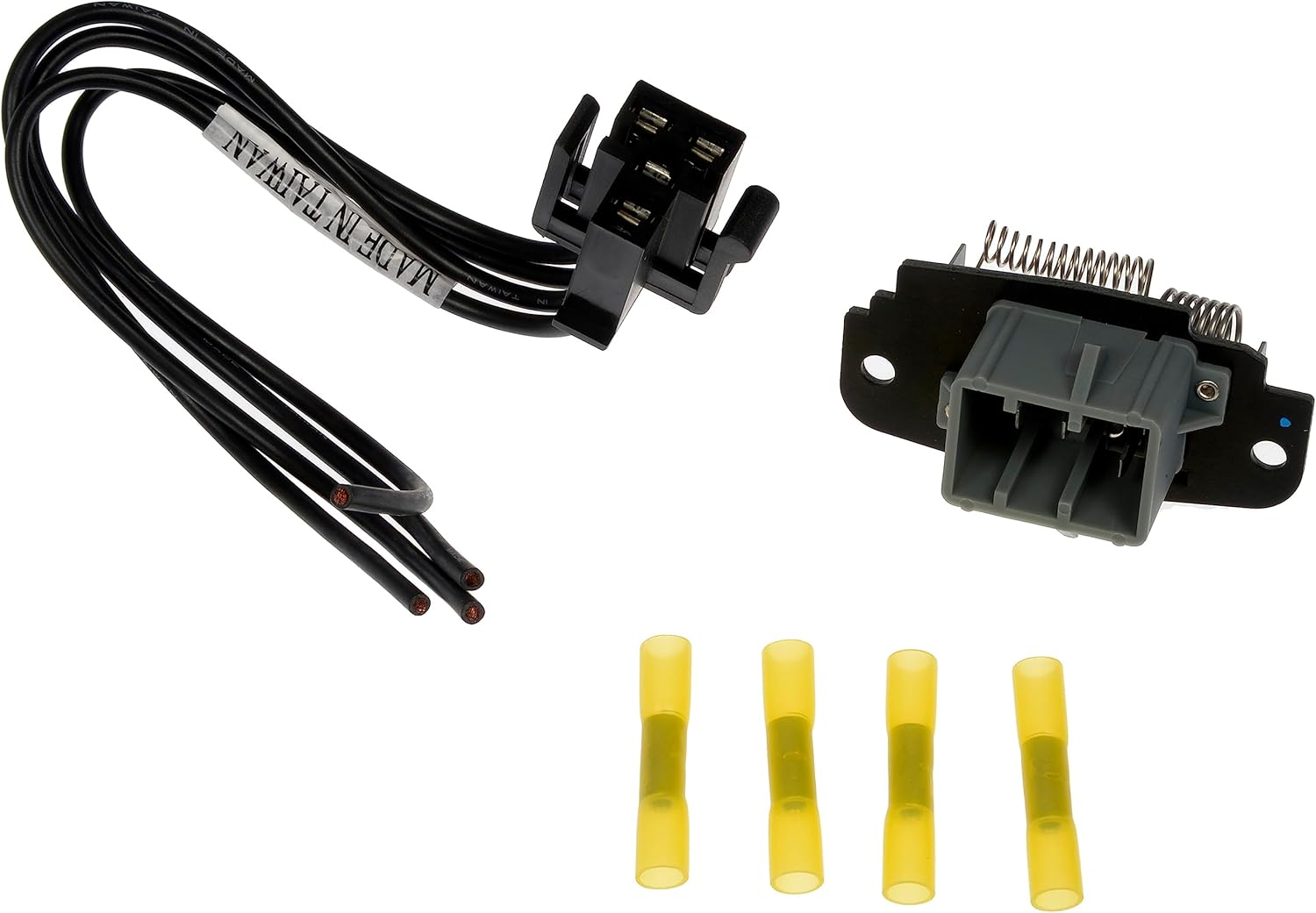
| Model | 973-411 |
|---|---|
| Position | Center |
| Manufacturer Part Number | 973-411 |
| OEM Part Number | 20321; 4P1368; JA1506; RU1098; RU404; 4L5Z 19A706-AA; F5TZ19A706B |
This Dorman kit replaces a failed blower motor resistor and includes the harness pigtail needed for a complete repair. Installed in the HVAC housing, it restores the multiple fan speeds when an original resistor has overheated, corroded, or failed. The kit is built to match factory function so the fan regains full variable control rather than being stuck on high or a single speed. Because it is a simple plug-and-play replacement, most home mechanics can swap it in with basic hand tools in under an hour. The single notable limitation is that fitment is vehicle-specific, so confirming compatibility with your Ranger year and trim is required before buying. Overall it is a practical, reliability-minded repair part that gets climate control working again without replacing the entire blower assembly.
Best for: Buyers who prioritize a durable, no-frills repair to return HVAC fan speed control to factory-like operation on a Ranger and prefer parts that let them fix problems themselves affordably.
Less Ideal for: If you want an upgraded performance part or a universal resistor for multiple vehicle types, this vehicle-specific OEM-style replacement is not the best choice.
- Complete kit includes both resistor and harness pigtail for a full repair
- Designed to restore factory-style multi-speed fan control
- Plug-and-play direct replacement simplifies DIY installation
- Made and tested by an established aftermarket supplier focused on repair solutions
- Compatibility is specific to certain model years and trims so you must verify fitment before purchase
Verdict: A straightforward, factory-style resistor and pigtail kit that reliably restores multi-speed HVAC fan control for affected Rangers.
6. YHTAUTO Blower Motor Resistor for Ford Ranger and Explorer Series

| Brand | YHTAUTO |
|---|---|
| Manufacturer Part Number | YHTBMR0053 |
| OEM Part Number | 4L5Z19A706AA, 973-010, RU-404 |
| Item model number | 2699008833 |
This blower motor resistor replaces the faulty speed-control element in the HVAC blower circuit to restore multiple fan speeds when a vehicle’s fan is stuck on one setting or fails to operate properly. It is typically used as a direct replacement during a dash repair or when replacing the blower motor assembly. The part lists fitment for Ford Ranger (1995–2011), Explorer (1995–2003), Explorer Sport Trac (2001–2005), and Mercury Mountaineer (1997–2001) with manual temperature control, so installation follows the factory replacement procedure and plugs into the existing connector. Notable features include OEM part number cross-references and a compact, vehicle-specific design intended to match factory fitment. The practical benefits are straightforward: you regain full fan speed control without modifying the HVAC system, and the small form factor makes bench testing and replacement simple. Limitations are that it is for manual temperature control models only and buyers should verify the exact OEM part numbers match their vehicle; installation can require partial dash access which may be moderate in difficulty for DIYers.
Best for: Drivers who want a reliable, factory-style replacement to restore proper blower fan speeds and who prefer a proven part backed by many user reviews.
Less Ideal for: People who have automatic climate control systems or those seeking a universal or performance-upgraded resistor; professional installation may be preferable for complex dash layouts.
- Direct-fit design with OEM part number cross-references for straightforward replacement
- Restores factory-style multi-speed fan control on compatible manual HVAC systems
- Compact, plug-and-play form factor simplifies bench testing and installation
- High seller rating and many reviews supporting reliability and consistent fitment
- Compatible only with manual temperature control systems, not automatic climate control
- Installation may require dash access which can be moderately difficult for inexperienced DIYers
Verdict: If you need a straightforward, well-reviewed factory-style replacement to bring back proper fan-speed control on compatible Ford Ranger and Explorer manual HVAC systems, this resistor is a dependable choice.
Choosing the Right 1998-2011 Ford Ranger Blower Motor Resistor: Key Factors to Consider
Fitment and Connector Compatibility
Correct fitment matters because the blower resistor must align with the Ranger's HVAC housing and mate with the factory wiring harness. Even small differences in mounting tab locations or connector pin arrangement can prevent a direct swap and force wiring changes that increase failure risk.
When a resistor uses the factory connector and mounting points, installation is usually straightforward and less likely to loosen over time. Confirming physical dimensions and connector type helps avoid return installs and protects the blower motor from incorrect voltages that can occur with mismatched pinouts.
Thermal Durability and Heat Management
Blower resistors dissipate significant heat, especially at lower fan speeds when more resistance is in use. Materials and construction that conduct heat away from the resistive elements reduce thermal cycling and extend service life.
Look for resistors with ceramic substrates, robust solder joints, and protective covers that resist warping. Designs that minimize hot spots and allow airflow through the resistor housing will typically last longer in the Ranger's confined HVAC cavity.
Electrical Reliability and Contact Quality
Reliable electrical connections prevent intermittent operation and potential arcing. High-quality terminals, corrosion-resistant plating, and solid soldering ensure consistent resistance values across fan positions.
Poor contact can lead to elevated temperatures and premature failure. Inspect how the resistor interfaces with the harness and whether the terminals are protected by seals or housings to keep moisture and dust out.
Mounting Hardware and Vibration Resistance
The Ranger experiences road vibration that can loosen poorly secured components. Secure mounting hardware and reinforced tabs keep the resistor stable inside the HVAC box, reducing stress on solder joints and terminals.
Consider whether the resistor kit includes screws, clips, or reinforced mounting pads. Designs that integrate rubber grommets or vibration-damping features are less likely to fail from mechanical fatigue.
Sealing and Corrosion Protection
The HVAC cavity is exposed to moisture and air-borne contaminants that accelerate corrosion. Protective coatings on terminals, sealed housings, and corrosion-resistant fasteners all help resist degradation.
Resistors with better sealing protect internal traces and contacts from humidity and road salt, which is particularly important for Rangers used in wet or winter climates.
Serviceability and Testability
A resistor that is easy to test and service reduces diagnostic time. Clear pinouts, accessible terminals, and compatibility with common multimeter tests allow you to confirm open circuits or abnormal resistance values quickly.
Parts that can be removed and inspected without disassembling large sections of the dash simplify future maintenance. Availability of replacement connectors or repair parts is also a consideration if you plan to extend the part's life with repairs.
Common Symptoms of a Failing Blower Motor Resistor
Blower resistor symptoms on the 1998-2011 Ranger often start with loss of certain fan speeds while others still work. You might notice the fan operates on high but not on low or medium settings, or it may stop working entirely when the resistor overheats.
Intermittent fan operation, a burning smell from the dash, or visible smoke are signs the resistor is failing. Diagnosing early can prevent further damage to the blower motor and wiring harness.
- Fan works only on highest speed
- No fan operation on select fan positions
- Intermittent blower operation tied to engine heat or after prolonged use
- Burning odor or visible discoloration near the resistor housing
How to Locate and Access the Resistor in Your Ranger
On the 1998-2011 Ford Ranger the blower motor resistor is located in the HVAC housing, typically accessible from under the glove box or behind the lower dash panel. Access often requires removing a small trim panel or the glove box liner to reach the resistor mounting plate.
Before starting, disconnect the vehicle battery and note the connector orientation. Take care when pulling the resistor free because the harness and the blower motor wiring can be tight and the plastic tabs may be brittle on older Rangers.
- Park on level ground and disconnect the battery
- Remove lower dash or glove box liner to expose HVAC housing
- Unplug the resistor harness before removing mounting screws
Simple Tests You Can Do Before Replacing the Resistor
A basic HVAC blower resistor test can confirm whether the resistor or the blower motor itself is at fault. Use a multimeter to check for continuity across the resistor pack and verify expected resistance values across the different pins. Also check for power and ground at the connector with the fan switch in various positions.
Inspect the resistor for visible damage, melted plastic, or corrosion at the terminals. If the resistor shows open circuits or the expected resistance values are not present, replacement is usually warranted.
- Test for power at the blower motor connector with ignition on
- Measure resistance across resistor pins for open circuits
- Swap to known-good fan switch positions to verify control signaling
Installation Tips to Avoid Early Failure
When installing a new resistor, ensure the mating connector is clean and the pins are straight. Replace any brittle plastic clips and use the correct fasteners to maintain a solid mechanical connection. Ensure the resistor sits flush against the HVAC housing for proper heat dissipation.
Avoid over-tightening screws which can deform the housing or mounting tabs. If the replacement part includes a gasket or foam seal, position it correctly to prevent air bypass and moisture ingress.
- Clean and inspect the wiring harness connector before plugging in
- Use thread locker or torque control sparingly to prevent loosening
- Confirm fan operation across all speeds before reassembling trim
Long-Term Maintenance for Ranger HVAC Reliability
Periodically inspect the blower resistor area for debris, moisture, and corrosion. Keeping the HVAC intake and cabin filter clean reduces dust that can accelerate resistor wear. If you frequently operate the blower at low speeds, be aware that the resistor sees heavier electrical load and may need attention sooner.
If you perform repairs, choose parts designed with corrosion-resistant materials and replace worn connectors. Regular checks help catch early signs of overheating or terminal loss before full failure occurs.
- Check terminals for corrosion during routine service intervals
- Keep the cabin air filter replaced to reduce dust load
- Address intermittent fan behavior promptly to avoid blower motor stress
Still looking for the perfect fit?
Select your Ford Ranger configuration to see the most relevant Blower Motor Resistors recommendations
How We Chose the Best 1998-2011 Ford Ranger Blower Motor Resistor
We focused specifically on parts that fit the 1998-2011 Ford Ranger and judged them on attributes that matter for long-term HVAC performance. Our selection criteria emphasized fitment accuracy, thermal durability of the resistive elements, connector and mounting integrity, and the quality of insulation and seals that prevent corrosion and shorting. Electrical reliability was weighed by looking at design features that reduce heat buildup and maintain stable resistance across fan speeds.We also considered ease of installation, including whether the resistor uses the factory connector and standard mounting points to minimize modification. Noise and vibration resistance were noted because loose hardware or poor soldering can cause early failure in this vehicle. Availability of replacement terminals and clear wiring pinouts were included to ensure straightforward installation.Excluded items included universal or generic resistor boards with unclear or nonstandard pinouts and any designs that required significant duct modification. We prioritized parts designed for the Ranger HVAC housing and those that address the common failure modes specific to this generation of Ford Ranger.
Our full evaluation process is outlined in our review methodology.
FAQ
How do I know if the blower resistor or blower motor is bad?
If the fan works on high but not on lower settings the resistor is likely at fault. Use a multimeter to test for continuity across the resistor and verify power at the blower motor. If there is no power to the motor on any setting the problem could be upstream, such as a switch or fuse.
Can I drive my Ranger with a failed blower resistor?
You can drive, but you may lose climate control at certain fan speeds which affects comfort and defogging capability. If you rely on the heater for visibility in cold conditions you should address the issue soon.
Is the resistor hard to replace on a 1998-2011 Ranger?
Replacement is generally straightforward with basic hand tools and access from under the dash or glove box area. Expect to spend a short amount of time locating the resistor, disconnecting the harness, and swapping the unit, provided the mounting tabs and connector are intact.
What tools do I need to test the blower motor resistor?
A digital multimeter to measure continuity and resistance is the primary tool. Basic hand tools like screwdrivers and a socket set are useful for removing trim and the resistor housing. A test light can also help verify power at the connector if you do not have a multimeter.
Will cleaning the connector fix blower resistor symptoms?
Cleaning corroded terminals can restore proper contact and temporarily alleviate symptoms if poor connections caused intermittent operation. However, if the resistor elements themselves are burned or open, cleaning alone will not fix the problem.
How often should I inspect the blower resistor area?
Inspect the resistor and surrounding area during regular HVAC or cabin filter service, roughly once a year. More frequent checks are warranted if you drive in wet or salty conditions where corrosion risk is higher.
Final Verdict
Prioritize fitment accuracy and thermal durability when choosing a blower motor resistor for your 1998-2011 Ford Ranger. Fitment and proper connector mating reduce installation headaches and electrical faults, while robust materials and good heat management lengthen service life. Tradeoffs include ease of installation versus long-term corrosion protection; a part that fits the factory mounting and offers sealed terminals usually reduces future maintenance.Focus first on parts that match the Ranger's harness and mounting, then consider construction quality and sealing. Addressing failing resistor symptoms promptly will restore reliable HVAC performance and help protect the blower motor from added stress.
Explore More:
- Check out all Ford Ranger parts & accessories
- Explore Blower Motor Resistors Maintenance & Repair Guides
- Explore HVAC
- Browse all Auto Parts
