

Note: This article contains affiliate links. If you click on these links and make a purchase, I may earn a small commission at no extra cost to you. This helps support my research and content. Read my full affiliate disclosure here.
If you own a Subaru Forester Wilderness and plan to tow a small trailer or add a cargo carrier, choosing the right trailer hitch is one of the most important upgrades you can make. The wrong hitch can reduce payload capacity, interfere with ground clearance, or complicate installation under the Wilderness-specific bumper and suspension setup. This guide covers the top shortlisted hitches that fit the Forester Wilderness, with attention to towing capacity, receiver size, mounting style, and installation effort.Below you will find concise explanations of how each hitch performs for towing, load carrying, and day-to-day use on rugged trails, plus practical buying criteria to help you select the best option for your needs.
Looking for other parts? See all Subaru Forester parts & accessories.
Top Picks at a Glance
| Best Overall Trailer Hitch The top all-around hitch balancing fitment, strength, and features | CURT Class 3 Trailer Hitch 2-Inch Receiver (fits select Subaru Forester) |  |
| Best Budget Trailer Hitch A reliable low-cost hitch that covers basic towing needs | DBXB-RV Class 3 2" Trailer Hitch Receiver for Subaru Forester (2019–2026) |  |
| Best Premium Trailer Hitch Higher-end construction, finishes, and extra convenience features included | Draw-Tite Class 3 Trailer Hitch 2-Inch Receiver for Subaru Forester and WRX |  |
| Best Compact Trailer Hitch Low-profile or space-saving design that keeps clearance and aesthetics | CURT Class 2 Trailer Hitch with Ball Mount, 1-1/4-In Receiver |  |
| Best Class III Trailer Hitch A common mid-range class with broad towing capacity and versatility | T-TOP WLS Class 3 Trailer Hitch 2" Receiver for 2019–2026 Subaru Forester |  |
1. CURT Class 3 Trailer Hitch 2-Inch Receiver (fits select Subaru Forester)
Best Overall Trailer Hitch

| Receiver size | 2-inch x 2-inch |
|---|---|
| Gross trailer weight | 3,500 lbs |
| Tongue weight | 525 lbs |
| Material | Carbon Steel |
| Finish type | Co-cured liquid A-coat and powder coat |
The CURT Class 3 hitch is a custom-fit receiver designed to add a standard 2" hitch to compatible Subaru Forester models for everyday towing tasks. It installs using vehicle-specific mounting points so it sits tight against the rear frame and provides a 2" x 2" receiver suitable for ball mounts, cargo carriers, and most hitch-mounted accessories. Built from high-strength carbon steel with precise welding, the hitch is finished with a co-cured liquid A-coat and powder coat for strong resistance to rust, chipping and UV. Rated for 3,500 lb gross trailer weight and 525 lb tongue weight, it covers common uses like small boat, utility trailer, and camper towing while meeting SAE J684 testing expectations. Expect a straightforward bolt-on installation on supported Forester years, but confirm exact vehicle compatibility before buying since fitment is limited to specific model years. The hitch is a solid mix of durability, tested towing capacity and a true vehicle-specific fit for owners who want a reliable, long-lasting receiver without major modification to the vehicle.
Best for: Subaru Forester owners who want a factory-style, reliable towing solution that balances durability, tested towing capacity and simple bolt-on installation for everyday hauling needs.
Less Ideal for: Drivers needing towing capacity above 3,500 lb or a multi-vehicle hitch solution should look at higher-class hitches or vehicle-specific options for larger trucks and trailers.
- Vehicle-specific design for a tight, factory-style fit
- 2" receiver compatible with a wide range of common hitch accessories
- 3,500 lb GTW and 525 lb tongue weight rating suitable for most small trailers and campers
- Durable steel construction with co-cured liquid A-coat plus powder coat for corrosion resistance
- Fits only select Subaru Forester years so you must verify application before purchase
Verdict: The best all-around trailer hitch that balances build quality, towing capacity, ease of installation, and useful features for most owners.
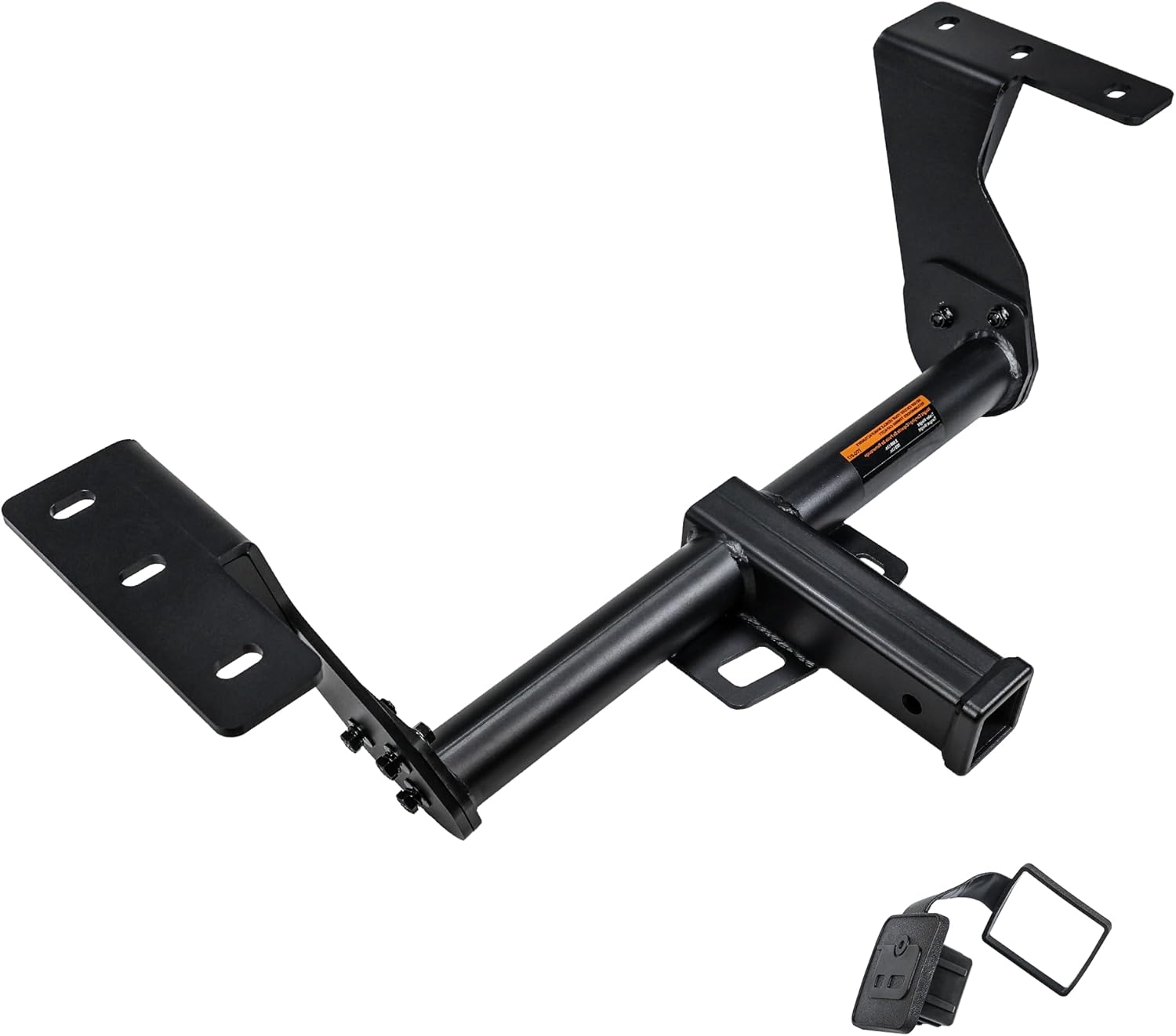
2. DBXB-RV Class 3 2" Trailer Hitch Receiver for Subaru Forester (2019–2026)
Best Budget Trailer Hitch
| Compatible with Vehicle Type | Forester 2019-2026 |
|---|---|
| Maximum Towing Capacity | 3500 pounds |
| Pull Force | 3500 pounds |
| Material Type | Carbon Steel |
| Finish Type | Black Matte Powder Coated |
This DBXB-RV Class 3 trailer hitch is a straightforward, vehicle-specific 2-inch receiver designed to restore towing capability on Subaru Forester models from 2019 through 2026. Engineered from carbon steel with a black matte powder coat, it installs in the factory mounting area and provides a rated 3,500 pound gross trailer weight and 525 pound tongue weight, which covers common small trailers, cargo carriers, and bike racks. The hitch ships with an installation manual and is built as an all-welded assembly for durability; the powder coat helps resist rust in wet conditions. Expect a mostly bolt-on install, though the listing warns some Forester variants may need slight hole enlargement during fitting. This is a no-frills, safety-minded option: it offers tested towing capacity and a factory-style fit without extra features like integrated wiring or detachable components. If you want a low-cost way to add dependable towing capability to a Forester Wilderness, this hitch gives the essentials, but plan for basic tools and minor drilling on a few vehicles during installation.
Best for: Buyers who want an affordable, factory-style tow receiver that provides reliable basic towing capability for everyday uses like small trailers, cargo carriers, and bike racks.
Less Ideal for: Those who need plug-and-play trailer wiring, removable hitch options, or the highest tongue capacities for heavy towing should consider more feature-rich or heavier-duty alternatives.
- Vehicle-specific fit for Subaru Forester 2019–2026 that simplifies installation
- Rated 3,500 lb GTW and 525 lb tongue weight for common towing tasks
- All-welded carbon steel construction with powder coat for durability and rust resistance
- Includes installation manual and is designed to accept standard 2-inch accessories
- Some vehicle variants may require hole enlargement during install
- Does not include integrated wiring or electrical connectors
Verdict: The best budget trailer hitch for buyers who need a dependable, no-frills tow solution that keeps cost down without sacrificing essential safety or fit.
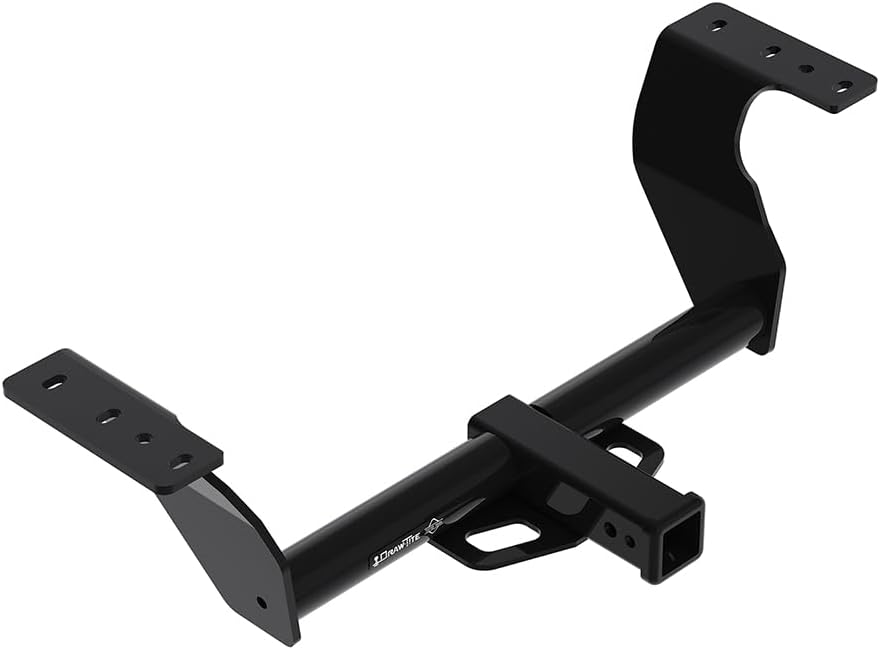
3. Draw-Tite Class 3 Trailer Hitch 2-Inch Receiver for Subaru Forester and WRX
Best Premium Trailer Hitch
| Maximum Towing Capacity | 3500 pounds |
|---|---|
| Pull Force | 3500 pounds |
| Automotive Fit Type | Vehicle Specific Fit |
| Material Type | Alloy Steel |
| Finish Type | Powder Coated |
This Draw-Tite Class 3 trailer hitch is a vehicle-specific receiver engineered to fit 2019–2025 Subaru Forester and 2022–2024 Subaru WRX models. It installs using the included hardware and bolts to factory mounting points for a clean, integrated fit; the 2-inch square receiver accepts common towing accessories such as bike racks and cargo carriers. Built from all-welded alloy steel with a black powder coat, it resists corrosion better than bare metal and is tested to V-5 and SAE J684 standards for strength. The hitch is rated to tow up to 3,500 pounds and handle up to 525 pounds tongue weight, and it supports weight-distribution systems to maintain trailer control on heavier loads. Practical benefits include a strong, stable platform for occasional towing and the ability to add accessories without aftermarket modification. Limitations for buyers seeking a top-tier premium hitch: it does not advertise integrated wiring mounts or reinforced cosmetic trim found on some higher-end models, and the finish and hardware are standard rather than stainless or extra-corrosion protected for extreme coastal use.
Best for: Buyers who want a strong, vehicle-matched hitch that delivers dependable towing capacity and a factory-like fit for their Subaru with minimal fuss during installation.
Less Ideal for: Drivers who need premium corrosion protection, built-in wiring features, or advanced cosmetic finishing for heavy coastal use should consider higher-end alternatives or purpose-built premium hitches.
- Vehicle-specific fit for Subaru Forester (2019–2025) and WRX (2022–2024) for straightforward installation
- All-welded alloy steel construction tested to V-5 and SAE J684 standards for reliable strength
- Powder-coated finish provides basic corrosion resistance for everyday use
- 2-inch receiver accepts widely used towing accessories and supports weight-distribution systems
- No integrated wiring mount or preinstalled wiring harness shown, so electrical hookups require a separate kit or routing
- Finish and hardware are standard powder coat rather than enhanced stainless or sacrificial coatings for extreme corrosion environments
Verdict: The best premium trailer hitch for buyers willing to pay more for superior materials, corrosion resistance, refined fit, and convenience features like integrated wiring mounts or reinforced crossbars.
4. CURT Class 2 Trailer Hitch with Ball Mount, 1-1/4-In Receiver
Best Compact Trailer Hitch

| Pull Force | 3500 pounds |
|---|---|
| Material Type | Carbon Steel |
| Finish Type | Gloss, Powder-Coated |
| Automotive Fit Type | Vehicle Specific Fit |
This CURT Class 2 trailer hitch is a vehicle-specific receiver kit designed to integrate cleanly with select Subaru Forester models. It provides a standard 1-1/4-inch receiver and includes a ball mount, hitch pin, and mounting hardware so you can tow small trailers, carry a bike rack or install a cargo carrier. The hitch is rated for 3,500 pounds gross trailer weight and 350 pounds tongue weight and is tested to SAE J684 safety protocols. Its welded carbon steel construction and dual-coat finish are aimed at resisting rust, chips and UV exposure for long-term durability. Because it is a custom-fit design, installation is straightforward and the hitch sits close to the vehicle for a lower visual profile and better ground clearance than bulkier receivers. The main limitation is the 1-1/4-inch receiver size, which restricts heavier towing accessories and vertical-hang bike racks that need larger receivers, so buyers wanting maximum towing capacity or larger hitch accessories should consider a higher-class option.
Best for: Buyers who want a compact, low-profile hitch for a Subaru Forester that preserves ground clearance and provides a secure connection for light towing, bike racks, or cargo carriers.
Less Ideal for: Drivers who plan to tow heavy campers, large boats, or use accessories that require a 2-inch receiver should choose a higher-class hitch instead.
- Vehicle-specific fit that installs cleanly and maintains a low visual profile
- Rated for 3,500 lb gross trailer weight and 350 lb tongue weight for light towing tasks
- Durable carbon steel construction with a dual-coat finish for strong corrosion resistance
- Includes ball mount, hitch pin, and mounting hardware for a complete installation
- 1-1/4-inch receiver limits use with heavier trailer setups and larger hitch accessories
Verdict: The best compact trailer hitch for buyers prioritizing low visual impact and increased ground clearance while still providing a secure towing connection.
5. T-TOP WLS Class 3 Trailer Hitch 2" Receiver for 2019–2026 Subaru Forester
Best Class III Trailer Hitch

| Compatible vehicle range | 2019–2026 Subaru Forester (all trims) |
|---|---|
| Receiver opening | 2 inches |
| Maximum towing capacity | 3500 pounds |
| Tongue weight | 525 pounds |
| Finish type | Powder Coated (with E-coat) |
This T-TOP WLS Class 3 hitch turns a 2019–2026 Subaru Forester into a capable towing platform without cutting or drilling. It installs using the vehicle's existing frame holes and includes all mounting hardware and instructions for a bolt-on fit across base, Premium, Sport, Limited, Touring, and Wilderness trims. Constructed from high-strength steel with solid welds and a dual-layer corrosion finish (E-coating plus powder coat), it resists rust and road salt for long-term use. The standard 2-inch receiver accepts common accessories like ball mounts, bike racks, cargo carriers, and spare-tire carriers, making it a versatile mid-capacity solution. It carries a 3,500 lb gross trailer weight rating and 525 lb tongue weight, which covers most small campers, utility trailers, and heavy cargo carriers but is not suited for larger towing needs. Installation calls for torquing M12 fasteners to specified values for a rattle-free fit, and some buyers may prefer professional installation if unfamiliar with torque specs. For Forester owners wanting to add frequent weekend-hauling or gear-hauling capability, this hitch offers a strong, factory-style option.
Best for: Buyers who want a durable, factory-style tow solution that expands a Forester's utility for weekend trailers, bike racks, and cargo carriers while keeping installation simple and vehicle-specific fitment.
Less Ideal for: Drivers who need high-capacity towing for large boats, heavy campers, or commercial trailers should choose a higher-capacity hitch or a different tow vehicle.
- Vehicle-specific bolt-on design fits 2019–2026 Forester models with no drilling required
- Class 3, 2-inch receiver offers broad accessory compatibility
- 3,500 lb GTW and 525 lb tongue weight handle most small-to-medium towing tasks
- High-strength steel construction with E-coat plus powder coat for corrosion resistance
- Includes hardware and installation instructions for a complete kit
- Not intended for heavy-duty towing beyond the 3,500 lb rating
Verdict: The best Class III trailer hitch for buyers who want a versatile, mid-capacity receiver that handles most small-to-medium towing tasks with wide accessory compatibility.
Choosing the Right Subaru Forester Wilderness Trailer Hitch: Key Factors to Consider
Towing Capacity and Tongue Weight
Towing capacity defines the maximum gross trailer weight the vehicle and hitch combination can handle. When selecting a hitch, choose one with a towing capacity at or above the weight of the trailer you intend to pull. Always account for cargo, passengers, and aftermarket accessories on the Forester Wilderness when calculating trailer weight.
Tongue weight is equally important because it affects vehicle handling and suspension load. If tongue weight exceeds the rated capacity, the rear of the Forester can sag, reducing ground clearance and altering steering feel on rough trails. Pick a hitch with a tongue weight rating that provides a margin for typical loads and consider weight-distribution solutions if your trailer setup approaches the upper limits.
Receiver Size and Hitch Class
Receiver size determines which ball mounts and accessories will fit. For most Forester Wilderness owners, a 2 inch hitch receiver is the common choice because it supports a broad range of ball mounts, cargo carriers, and bike racks while offering a good compromise between capacity and accessory availability.
Hitch class is tied to structural strength and load ratings. A Class III hitch with a 2 inch receiver typically supports moderate towing tasks suitable for small trailers and utility loads. Confirm the hitch class and matching receiver size to ensure compatibility with the accessories and trailers you plan to use.
Fitment and Ground Clearance
Fitment matters because the Wilderness trim often has a different bumper profile and suspension setup. A hitch designed for the Forester Wilderness will clear the bumper, spare tire area, and any off-road protection while maintaining factory ground clearance where possible.
Poor fitment can result in bumper trimming, rubbing against exhaust components, or reduced departure angle. Consider how the hitch mounts to the vehicle frame and whether its cross tube or receiver tube location changes approach and departure angles important for off-road driving.
Corrosion Resistance and Finish
The Forester Wilderness is often used in wet or salty environments, so corrosion protection is essential for long-term durability. Look for hitches with robust powder-coat finishes, e-coating, or plated hardware to resist rust and flaking.
A durable finish reduces the need for frequent touch-ups and helps maintain structural integrity over time. Also check whether mounting hardware includes washers and lock nuts with corrosion-resistant treatments, since fastener failure is a common long-term issue in harsh climates.
Installation Complexity and Hardware
Installation effort affects cost and convenience. Some hitches bolt up with factory holes and minimal disassembly, while others require partial bumper removal or trimming. A hitch that includes complete hardware and a clear instruction set will simplify both DIY installs and professional fitting.
Consider whether you have the tools and clearance to perform the job yourself. Ease of install also influences installation time at a shop, which can affect the total cost when you factor in labor. If you expect to swap accessories frequently, look for designs that make access to the receiver straightforward.
Accessory Compatibility and Wiring Considerations
Think beyond the hitch itself to the accessories you will use. Hitch-mounted cargo carriers, bike racks, and ball mounts all have physical and weight requirements. Verify that the hitch receiver height and clearances work with the intended accessories and that the pinhole location matches common accessories.
Electrical wiring for trailer lights and brakes is another consideration. While the hitch does not provide wiring, choosing a hitch that leaves adequate access for wiring harness routing saves time. Plan where a wiring connector will mount relative to the hitch and ensure it will not interfere with trailer coupling or cargo carriers.
Understanding Tongue Weight Vs Gross Trailer Weight
Tongue weight is the downward force the trailer tongue applies to the hitch and vehicle, while gross trailer weight is the total weight of the trailer and its load. Both numbers must be within the ratings of the Forester Wilderness, the trailer, and the hitch. Exceeding tongue weight can cause the rear suspension to compress too much, reducing ground clearance and steering stability.
When planning a towing setup, estimate tongue weight as roughly 10 to 15 percent of the trailer's loaded weight for typical utility trailers. Check the vehicle owner's manual and the hitch's rating to confirm limits and establish whether additional equipment such as a weight-distribution system is needed.
- Tongue weight affects handling and suspension load.
- Gross trailer weight determines overall towing suitability.
- Calculate tongue weight before hitch selection and loading.
Common Mounting Styles for Forester Wilderness
Hitches for the Forester Wilderness typically mount to existing frame holes or use supplied brackets that attach to the vehicle's underside. Some designs have a crosstube that sits behind the bumper while others have a more tucked receiver to preserve departure angle. Choose a mounting style that avoids interference with exhaust plumbing and spare tire components.
A flush-mounted or tucked receiver preserves the Wilderness' off-road capability better than a protruding cross-tube. However, more tucked designs can be slightly harder to access for hitching and for installing pins and accessories.
- Frame-mounted hitch with visible cross tube: easier to access, may reduce departure angle.
- Tucked receiver: better clearance, slightly more difficult access for accessories.
Wiring and Brake Controller Options
Trailer lighting and electric brakes require a wiring harness and, for trailers with brakes, a brake controller in the towing vehicle. For the Forester Wilderness, plan routing that keeps connectors clear of the hitch and away from pinch points. Many vehicle-specific harnesses plug into factory taillight circuits and provide a trunk-mounted or bumper-side connector.
If your trailer requires a brake controller, select a unit that mounts within reach of the driver and complements the Forester's cabin layout. Some owners opt for proportional controllers for smoother braking, but the right choice depends on trailer weight and personal preference.
- Confirm connector placement relative to receiver access.
- Consider a brake controller if towing trailers with electric brakes.
- Use sealed connectors and protective routing to avoid water ingress.
Maintaining Ground Clearance and Off-Road Function
The Wilderness trim has a focus on clearance and approach/departure angles. When choosing a hitch, consider how the receiver height and cross-tube placement influence off-road behavior. A poorly placed hitch can lower the rear departure angle or snag obstacles while backing over rough terrain.
Regularly inspect the hitch and mounting points after off-road use to detect bending, loose fasteners, or finish damage. Touch up paint or undercoating where chips appear to prevent corrosion from worsening in exposed environments.
- Check receiver and cross-tube position relative to the bumper and skid plates.
- Inspect mounting bolts after heavy off-road use.
- Reapply corrosion protection where the finish is damaged.
Accessory Clearance and Cargo Configurations
Think about how common accessories will interact with the hitch. A cargo carrier or bike rack may limit rear hatch opening or sit lower than the bumper, affecting approach angles and loading convenience. Measure receiver height and consider how a fully loaded accessory affects ground clearance.
For heavy cargo, confirm the combined weight of accessory and load does not exceed the hitch tongue weight rating or the vehicle's rear axle load limit. In some scenarios, trailer-based cargo may be a better option than hitch-mounted carriers because it keeps weight distribution away from the vehicle.
- Measure receiver height for clearance with cargo carriers.
- Confirm combined accessory and cargo weight is within tongue weight limits.
- Consider tradeoffs between hitch-mounted and trailer-mounted cargo solutions.
Still looking for the perfect fit?
Select your Subaru Forester configuration to see the most relevant Trailer Hitches recommendations
How We Chose the Best Subaru Forester Wilderness Trailer Hitch
We prioritized products and features that matter for owners of the Subaru Forester Wilderness and the way this vehicle is used. Primary evaluation criteria included towing capacity and tongue weight rating because those determine what you can pull and carry safely on mixed road and trail surfaces. We also looked at receiver size and class to match common ball mounts and cargo accessories, with attention to 2 inch hitch receiver compatibility that many SUV owners require. Fitment and bumper clearance were key, focusing on hitches designed to mount cleanly to the Wilderness bumper without trimming or major modification. Corrosion protection and finish were assessed since many Forester owners encounter wet and salty conditions. Ease of install and hardware completeness were evaluated to reflect realistic do-it-yourself or shop installation scenarios. We excluded any hitch options that require permanent vehicle modifications, that do not provide clear vehicle-specific fitment for the Forester Wilderness, or that lack published weight ratings. The final list reflects hitches that balance strength, fit, and serviceability for everyday towing and cargo tasks.
Our full evaluation process is outlined in our review methodology.
FAQ
Can I install a trailer hitch on a Subaru Forester Wilderness myself?
Often you can, if you have basic mechanical skills, hand tools, and a safe way to lift and support the vehicle. Many hitches bolt to existing frame points and include complete hardware and instructions. If the install requires bumper removal or precise torqueing of frame fasteners, professional installation is a reasonable option.
What receiver size should I choose for the Forester Wilderness?
A 2 inch receiver is commonly recommended because it supports a wide range of ball mounts and accessories while offering sufficient capacity for small trailers and cargo carriers. Confirm that the chosen hitch's class and weight ratings meet your towing needs.
How do I know the hitch will not reduce my ground clearance?
Check the hitch design and how the cross tube or receiver sits relative to the bumper and exhaust. Tucked receiver designs preserve ground clearance better, but you should compare receiver height measurements and review installation instructions to ensure the hitch does not alter approach or departure angles significantly.
Do I need a brake controller for towing with the Forester Wilderness?
That depends on the trailer. Trailers with electric brakes usually require a brake controller to operate legally and safely. If your trailer is light and within the vehicle's unbraked towing limits, a controller may not be necessary. Always verify local regulations and trailer specifications.
Will a hitch affect my vehicle's warranty or require modifications?
Most hitches that bolt to factory frame points do not require permanent modifications, but installation practices can vary. Avoid hitches that mandate cutting or welding the bumper structure if you want to preserve original components. If you have warranty concerns, consult the vehicle documentation or a dealer for specifics.
How should I maintain the hitch to prevent rust?
Rinse the hitch after exposure to salt or mud, and inspect the finish periodically for chips. Touch up bare metal with appropriate paint or undercoating and replace corroded hardware as needed. Regular inspections after off-road use help catch issues early.
Final Verdict
Prioritize a hitch that matches the Forester Wilderness' intended use: confirm towing and tongue weight ratings first, then check receiver size and fitment relative to the bumper and ground clearance. Consider corrosion resistance and ease of install to minimize long-term maintenance and downtime. Balance capacity against vehicle handling and departure angles to keep the Wilderness' off-road capability intact. With those tradeoffs in mind, choose the hitch that provides the needed strength and convenient accessory compatibility for your planned towing and cargo tasks.
Explore More:
- Check out all Subaru Forester parts & accessories
- Explore Other Accessories
- Browse all Accessories
