

Note: This article contains affiliate links. If you click on these links and make a purchase, I may earn a small commission at no extra cost to you. This helps support my research and content. Read my full affiliate disclosure here.
If you plan to tow with a 1998-2002 Subaru Forester, the right trailer hitch matters more than you might expect. A properly matched hitch ensures secure towing, preserves vehicle handling, and prevents undue stress on the frame and suspension. This guide covers the top shortlisted trailer hitches that fit the 1998-2002 Forester and explains the criteria we used to evaluate them.You will find hitches that focus on safe towing, ease of installation, and the practical weight capacities owners need. The article also walks through installation considerations and common accessories to help you pick a solution that meets your towing goals.
Looking for other parts? See all Subaru Forester parts & accessories.
Top Picks at a Glance
| Best Overall Trailer Hitch A balanced, well-built hitch that suits most towing needs | CURT Class 2 Trailer Hitch with 1-1/4-Inch Receiver for Subaru Forester |  |
| Best Budget Trailer Hitch A low-cost hitch that covers basic towing without extras | Draw-Tite Class II Insta-Hitch 1-1/4" Receiver (Model 51174) |  |
| Best 1.25" (Class 2) Trailer Hitch Compact 1.25-inch receiver hitches rated for light towing and racks | Gelacie Class 2 1.25" Trailer Hitch Receiver for 1998–2008 Subaru Forester |  |
| Best 2" (Class 3) Trailer Hitch Standard 2-inch receiver hitches rated for heavier towing and accessories | CURT Class 3 Trailer Hitch 2" Receiver for Select Forester |  |
| Best Vehicle-Specific Fit Hitch Hitches engineered to match mounting points for a precise OE-style fit | ALMULOO Trailer Tow Hitch Receiver 1.25-Inch Class 2 for 1998–2008 Subaru Forester |  |
| Best Corrosion-Resistant Hitch Hitches with multi-layer e-coat or dual/coated powder finishes for long life | CURT Class 2 Trailer Hitch with Ball Mount, 1-1/4-In Receiver for Select Subaru Forester |  |
1. CURT Class 2 Trailer Hitch with 1-1/4-Inch Receiver for Subaru Forester
Best Overall Trailer Hitch

| Material Type | Carbon Steel |
|---|---|
| Included Components | Class 2 Hitch |
| Gross Trailer Weight | 3,500 lbs |
| Tongue Weight | 350 lbs |
This CURT Class 2 hitch is a custom-fit receiver made for select Subaru Forester model years and is engineered for everyday towing and accessory use. It provides a 1-1/4-inch receiver tube for standard ball mounts, cargo carriers, and many bike racks, and is rated for 3,500 lb gross trailer weight and 350 lb tongue weight so it can handle small utility trailers, lightweight boat trailers, popup campers, or heavy cargo carriers when you stay within vehicle limits. The hitch is fabricated from high-strength carbon steel, robotically welded, and finished with a dual-coat process that resists rust and chips for long service life. Installation is designed to be straightforward for a vehicle-specific hitch and requires basic hand tools and some mechanical familiarity. Limitations are the smaller receiver size, which excludes larger towing tasks and some vertical-hang bike racks, and the capacity is constrained by the lowest-rated component in your towing setup, so larger trailers will need a heavier hitch and matching hardware.
Best for: Buyers who need a proven, vehicle-specific hitch for routine light towing and for adding cargo or bike carriers to a Subaru Forester with a focus on reliable fit and finish.
Less Ideal for: Drivers planning heavy towing, towing large boats or travel trailers, or those needing a 2-inch receiver and higher weight capacities should consider a heavier-duty hitch solution.
- Custom fit for select Subaru Forester years for a clean, vehicle-matched installation.
- 3,500 lb gross trailer weight and 350 lb tongue weight ratings suitable for common light-duty towing tasks.
- 1-1/4-inch receiver accepts standard ball mounts and many hitch accessories.
- Durable dual-coat finish (liquid A-coat plus powder coat) for strong rust and chip resistance.
- Robotic welding and high-strength steel construction for reliable strength and fit.
- Receiver size and Class 2 rating limit use to light-duty towing and many larger trailers or accessories are incompatible.
Verdict: The top pick for readers who want a proven, all-around trailer hitch offering reliable strength, good finish, and a straightforward install for typical towing tasks.
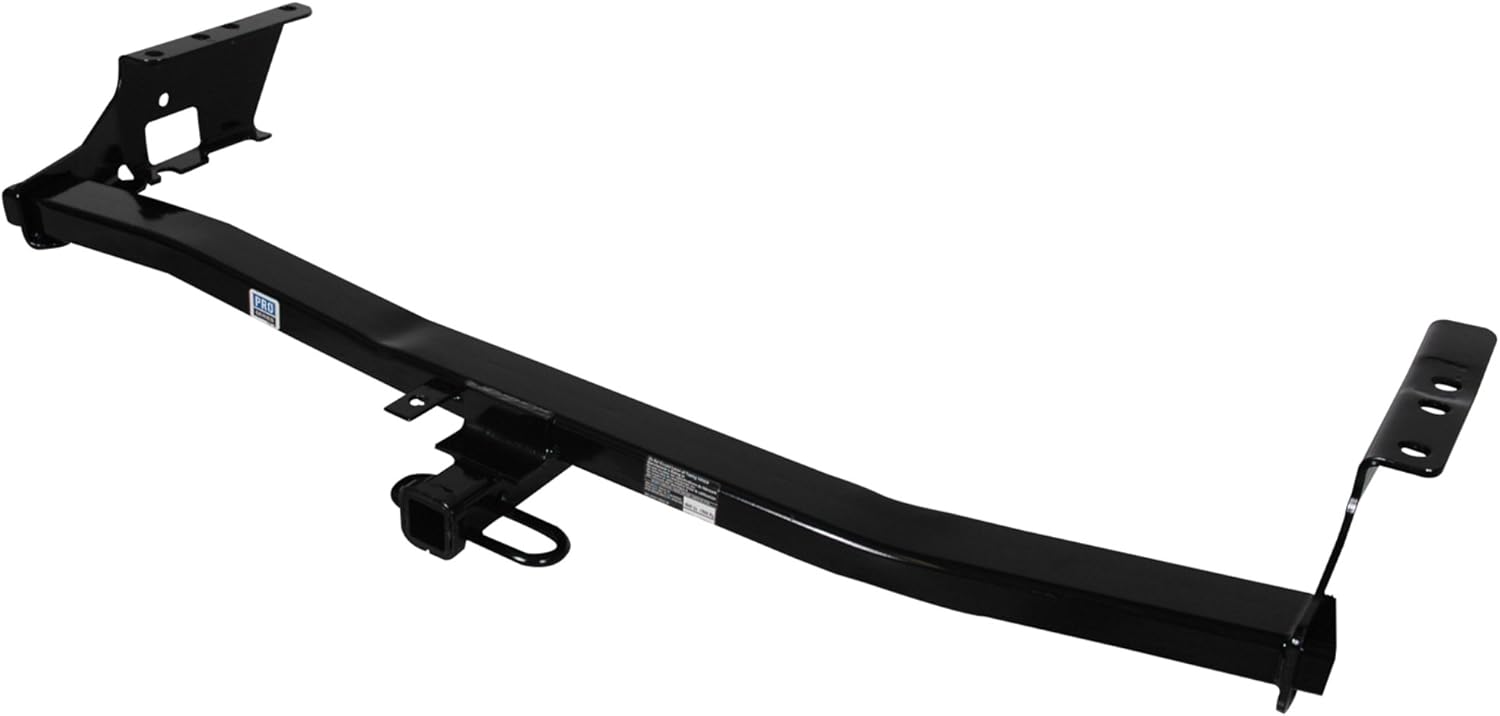
2. Draw-Tite Class II Insta-Hitch 1-1/4" Receiver (Model 51174)
Best Budget Trailer Hitch
| Material Type | Alloy Steel |
|---|---|
| Finish Type | Powder Coated |
| Pull Force | 250 pounds |
This Draw-Tite Class II Insta-Hitch is a straightforward, budget-focused receiver for owners who need light towing or want to mount bike racks and cargo carriers. It attaches to the vehicle using the included hardware and a welded alloy steel construction with a powder coat finish gives solid durability and corrosion resistance for everyday use. The 1-1/4" receiver opening and stated capacities let you tow small trailers and haul rooftop-style accessories without the complexity of weight-distribution systems. Its simplicity is the main appeal: there are no extra features to install or troubleshoot, and the design is compact so it does not overly change vehicle ground clearance. The hitch is limited to Class II capacities and cannot accept weight-distribution setups, so it is not suitable for heavier trailers or extended towing; buyers should match loads to the 3,500 lb gross trailer weight and 300 lb tongue weight guidance. For a cost-conscious Forester owner wanting a dependable, no-frills receiver for light tasks, this hitch covers the basics well.
Best for: A Forester owner on a tight budget who needs a reliable, no-frills receiver for occasional light towing or for mounting bike racks and cargo carriers.
Less Ideal for: Drivers who tow heavy trailers frequently or need to use a weight-distribution system should choose a higher-capacity hitch instead.
- Solid all-welded alloy steel construction for durability
- Powder coat finish resists rust and corrosion
- Includes mounting hardware for straightforward installation
- 1-1/4" receiver fits common light-duty accessories like bike racks and cargo carriers
- Not compatible with weight-distribution systems, limiting heavier towing setups
- Designed for light-duty towing only with a lower tongue weight capacity
Verdict: Choose this economical hitch if you need a functional, no-frills receiver that saves money while providing acceptable towing capacity for light-duty use.
3. Gelacie Class 2 1.25" Trailer Hitch Receiver for 1998–2008 Subaru Forester
Best 1.25" (Class 2) Trailer Hitch

| Compatible Vehicle | 1998-2008 Subaru Forester |
|---|---|
| Receiver Size | 1.25 inches |
| Maximum Towing Capacity | 3500 pounds |
| Material Type | Alloy Steel |
| Finish Type | Powder Coated |
This Gelacie Class 2 hitch is a bolt-on, vehicle-specific 1.25-inch receiver made to add towing and cargo capability to 1998–2008 Subaru Foresters. It installs with supplied hardware and does not require drilling, so it is suitable for a DIY installation with basic tools or for quick professional fitting. Constructed from alloy steel with a powder-coated finish, the receiver resists corrosion and provides a stable mounting point for bike racks, cargo carriers, and small utility trailers. The hitch is rated to 3,500 pounds gross trailer weight and 350 pounds tongue weight, which covers most light towing tasks and accessories while staying within the lower-profile limits of the 1.25-inch shank. Because it is a compact Class 2 unit, the receiver is not intended for heavy trailers or towing near the top of vehicle capacity and riders who need higher tongue loads should choose a larger class hitch instead. The straightforward design and vehicle-specific fit make it a practical choice for Forester owners wanting a tidy, usable hitch for everyday accessory use and light towing.
Best for: Buyers who need a compact, factory-fit hitch for carrying bike racks, cargo carriers, or light trailers on a 1998–2008 Forester and prefer a simple bolt-on installation.
Less Ideal for: Anyone planning to tow heavy trailers, carry very heavy tongue loads, or requiring a larger 2-inch receiver for heavy-duty accessories should look at higher-class hitches.
- Vehicle-specific bolt-on design for 1998–2008 Subaru Forester simplifies installation
- 1.25-inch receiver suited for bike racks, cargo carriers, and small trailers
- Powder-coated alloy steel construction improves corrosion resistance and durability
- 3,500 lb gross trailer weight and 350 lb tongue weight provide reliable support for light towing tasks
- Not suitable for heavy trailers or high tongue-load towing demands
Verdict: This slot is for compact Class 2 hitches with a 1.25-inch receiver when buyers need a smaller shank for bike racks or light trailers and lower tongue loads.
4. CURT Class 3 Trailer Hitch 2" Receiver for Select Forester
Best 2" (Class 3) Trailer Hitch

| Receiver size | 2" |
|---|---|
| Gross trailer weight | 3,500 lb |
| Tongue weight | 525 lb |
| Material | Carbon Steel |
This CURT Class 3 trailer hitch is a vehicle-specific 2-inch receiver built to restore full towing capability to compatible Subaru Forester models. It installs in place of the factory bumper structure to provide a concealed main body and a near-factory appearance while adding a 3,500 lb gross trailer weight capacity and 525 lb tongue weight rating. Typical uses include towing small campers, utility trailers, boat trailers, or attaching hitch-mounted accessories like cargo carriers and bike racks. The hitch is made from high-strength carbon steel with precise welding and a co-cured liquid undercoating plus powder coat for improved rust and chip resistance. Because it is custom-fit, installation is straightforward for a competent DIYer or a shop and yields clean integration with the vehicle. The hitch is limited to the specific Forester application listed, so verify year fitment before buying, and its towing figures mean heavier trailers will require a larger class hitch and appropriate vehicle towing package.
Best for: Buyers who want a factory-looking, 2-inch Class 3 receiver to tow trailers or use hitch-mounted accessories on the specified Forester and who prioritize versatility and a clean integrated appearance.
Less Ideal for: Drivers who need higher towing capacity for heavy trailers or who require a hitch that fits multiple vehicle models should look at higher-class or universal options.
- 2-inch receiver accepts standard ball mounts, cargo carriers, and most hitch-mounted accessories
- Vehicle-specific design provides a concealed, factory-style fit and easier installation
- Rated for 3,500 lb gross trailer weight and 525 lb tongue weight for versatile towing
- Durable carbon steel construction with co-cured undercoat and powder coat for corrosion resistance
- Fits only the specified Subaru Forester application so compatibility must be confirmed
Verdict: Pick this 2-inch Class 3 hitch when you need a more versatile receiver that accepts standard ball mounts, cargo carriers, and higher gross/tongue weight ratings.
5. ALMULOO Trailer Tow Hitch Receiver 1.25-Inch Class 2 for 1998–2008 Subaru Forester
Best Vehicle-Specific Fit Hitch

| Maximum Towing Capacity | 3500 pounds |
|---|---|
| Pull Force | 3500 pounds |
| Maximum Tongue Weight | 350 pounds |
| Material Type | Alloy Steel |
| Finish Type | Powder Coated |
This ALMULOO trailer hitch is a bolt-on, vehicle-specific receiver made to mount to factory attachment points on 1998–2008 Subaru Forester models. Built from alloy steel with a powder-coated finish, it provides a 1.25-inch Class 2 receiver for light towing tasks like bike racks, small utility trailers, and compact campers. The listed 3,500 lb gross trailer weight and 350 lb tongue weight ratings mean it handles common weekend loads without overstressing the vehicle. Because it is designed for Forester fitment, the hitch sits close to the bumper and preserves a factory-like appearance once installed. Installation requires hardware and basic alignment; the package notes an assembly manual and recommends professional installation if you are not comfortable under the car. The hitch is a focused, no-frills solution: it gives reliable towing capacity and corrosion resistance from the powder coat but does not include wiring, mounting bolts, or accessories, so plan to source those separately.
Best for: Buyers who want a near-factory, vehicle-specific hitch for a 1998–2008 Subaru Forester and prioritize a clean fit and competent light-duty towing capability.
Less Ideal for: Drivers who need heavier towing capacity, integrated electrical wiring, or a larger 2-inch receiver should look at higher-class hitches or tow packages.
- Vehicle-specific design that bolts to factory mounting points for a close, integrated fit
- Alloy steel construction with powder-coated finish for corrosion resistance
- Class 2 1.25-inch receiver supports common accessories like bike racks and small trailers
- Rated 3,500 lb gross trailer weight and 350 lb tongue weight for light-duty towing
- Does not include wiring harness, mounting bolts, or hitch accessories
- Installation may require professional tools or shop if you lack mechanical experience
Verdict: This category highlights hitches designed to bolt directly to factory mounting points for a near‑OEM fit and cleaner integration with the bumper and frame.
6. CURT Class 2 Trailer Hitch with Ball Mount, 1-1/4-In Receiver for Select Subaru Forester
Best Corrosion-Resistant Hitch

| Pull Force | 3500 pounds |
|---|---|
| Compatible with Vehicle Type | Sport Utility Vehicle |
| Automotive Fit Type | Vehicle Specific Fit |
| Material Type | Carbon Steel |
| Finish Type | Gloss, Powder-Coated |
This CURT Class 2 trailer hitch is a custom-fit receiver designed for select Subaru Forester model years and ships as a complete kit with a ball mount, hitch pin and mounting hardware. It accepts 1-1/4-inch accessories and is rated for 3,500 pounds gross trailer weight and 350 pounds tongue weight, making it suitable for small boats, utility trailers, hitch cargo carriers and most platform-style bike racks. The standout feature is the dual-coat finish process that includes a liquid A-coat and a durable powder coat to resist rust, chips and UV exposure, which helps the hitch hold up in wet or salty climates. Installation is vehicle-specific and engineered for a snug fit to preserve the car's appearance. Limitations: it is a Class 2 hitch so it is not intended for heavy towing, and it uses the smaller 1-1/4-inch receiver so larger accessories or heavier-duty ball mounts are not compatible.
Best for: Buyers who regularly tow light loads in wet, coastal, or winter-salt conditions and want a vehicle-specific hitch with proven rust-resistant finishing to extend service life.
Less Ideal for: Someone who needs higher towing capacity or plans to use heavy-duty hitch accessories should choose a higher class hitch with a larger receiver.
- Dual-coat finish (liquid A-coat plus powder coat) for strong corrosion and chip resistance
- Vehicle-specific design engineered for a precise fit on select Subaru Forester models
- Comes as a complete kit with ball mount, hitch pin and mounting hardware
- Rated for 3,500 lb gross trailer weight and 350 lb tongue weight for common light towing tasks
- 1-1/4-inch receiver limits use to lighter-duty accessories and smaller ball mounts
- Class 2 capacity is not suited for heavy trailers or larger towing needs
Verdict: Choose a hitch from this slot if you tow in wet or salty conditions and want extra rust protection from e‑coats, dual-coat or heavy powder coatings to extend service life.
Choosing the Right 1998-2002 Subaru Forester Trailer Hitch: Key Factors to Consider
Fitment and Mounting Points
Correct fitment is the first priority for a 1998-2002 Subaru Forester. Hitches designed specifically for these model years align with the factory frame or body mounting points, reducing the need for drilling or welding and preserving structural integrity.
A hitch that does not match the Forester's attachment locations can introduce stress concentrations or require adapters that compromise safety. Verifying the hitch matches the year range ensures bolt holes line up and load paths route through the vehicle's reinforced areas rather than thin sheetmetal.
Weight Rating and Tongue Weight
Weight rating, including gross trailer weight and tongue weight limits, determines what you can safely tow with your Forester. Choose a hitch with published capacities that meet or exceed the loads you plan to pull. Pay attention to tongue weight allowances because excess tongue weight can overload the rear suspension and alter handling.
For small trailers, bikes, or cargo carriers, ensure both the hitch and the Forester's own towing specifications are considered. Matching the hitch rating to the expected load provides a safety margin and helps prevent premature wear to the vehicle's chassis and brakes.
Receiver Size and Class
Receiver size and hitch class affect the range of towing accessories you can use. A 2 inch hitch receiver is common for light- to medium-duty towing and offers compatibility with a wide variety of ball mounts and cargo carriers. Confirm the hitch class supports your intended uses; for example, Class III units typically permit higher towing and tongue weights than Class II.
Selecting the right receiver size up front avoids the need for adapters that can reduce capacity or introduce play in the connection. Also consider the match between receiver pin hole diameter and accessory hardware to ensure secure attachment.
Corrosion Protection and Finish
Long-term corrosion protection matters for vehicles in climates with moisture or road salt exposure. A durable finish such as powder coat or corrosion-resistant plating helps maintain structural integrity and keeps mounting hardware serviceable.
Inspect the design for welded seams and exposed fasteners that may trap water. Hitches with better finishes require less maintenance and are less likely to suffer from rust-related weakening that could compromise towing performance over time.
Installation Complexity
Installation complexity influences whether you can fit the hitch yourself or need professional help. Some hitches for the 1998-2002 Forester install using factory holes and basic hand tools, while others require trimming of bumper elements, drilling, or the removal of heat shields.
Consider the tools you have, the time the job takes, and whether the mounting hardware is included. Hitches that come with clear instructions and vehicle-specific hardware reduce the chance of improper installation that could affect safety or create vibration and noise.
Accessory Compatibility and Clearance
Think about the accessories you plan to use, such as ball mounts, cargo carriers, or hitch-mounted bike racks. The hitch should offer adequate ground clearance and receiver spacing so common accessories do not foul the rear bumper or impede departure angle.
Also check for wiring routing options and whether the hitch design interferes with rear sensors or the spare tire. Ensuring accessory compatibility prevents fitment surprises and helps you choose the right ball size and mounting height for safe towing.
Understanding Towing Limits for the Forester
The 1998-2002 Subaru Forester was built with light towing tasks in mind. Before choosing a trailer hitch, match the hitch's published weight rating to the vehicle's permitted tow capacity. Exceeding the vehicle limits can strain the engine, transmission, brakes, and suspension.
When planning a tow, calculate both the gross trailer weight and the tongue weight. Tongue weight is typically 10 to 15 percent of trailer mass for most loads but check the trailer specifications and distribute cargo to keep the tongue load within safe limits.
- Confirm vehicle owner's manual towing limits before selecting a hitch.
- Consider trailer braking requirements for heavier loads.
- Account for passengers and cargo in the vehicle when calculating gross combined weight.
Receiver Height and Ball Mount Selection
Receiver height affects trailer level and handling. A hitch that positions the receiver too high or too low will require a drop or rise ball mount, which changes tongue weight distribution and stability. Measure the loaded trailer height and compare it to receiver height to minimize extreme drop or rise requirements.
Select a ball mount rated at or above the hitch's capacity and use the correct ball diameter for the trailer coupler. Using an undersized ball or under-rated mount reduces safety margins and can lead to coupling failure.
- Measure trailer coupler height with the trailer level.
- Choose a ball mount with the shortest necessary drop or rise for stability.
- Use a ball and mount combination that meets the hitch and trailer ratings.
Electrical Connections and Brake Control
Towing often requires wiring for tail lights, turn signals, and brake lights. For trailers that exceed a certain weight, a trailer brake controller may be necessary to provide stable stopping performance. Check whether the Forester requires a specific adapter or wiring harness to integrate with existing lighting circuits.
Plan the routing of wiring to avoid hot exhaust components and sharp edges. Clean and secure connectors reduce the chance of intermittent lighting faults while towing and simplify future maintenance.
- Consider a vehicle-specific wiring harness for a cleaner install.
- Test lighting circuits before each trip to ensure visibility and compliance.
- Install a proportional brake controller if towing heavier trailers for smoother braking.
Practical Tips for Self-Installation
Many hitches designed for the 1998-2002 Forester are achievable for a competent DIYer with basic tools and a safe work environment. Use jack stands and wheel chocks rather than relying solely on a hydraulic jack. Lay out included hardware and follow torque specifications to secure fasteners properly.
If the installation calls for drilling, first verify the recommended drill locations and protect wiring and fuel lines. Take photos of the original underbody layout before removing parts to help with reassembly.
- Have a helper to position the hitch during alignment.
- Use thread locker where recommended and torque fasteners to spec.
- Inspect the hitch and hardware after the first few hundred miles of towing.
Maintaining Your Hitch Over Time
Routine inspection extends hitch life and safety. Periodically check mounting bolts for tightness, inspect the finish for rust, and ensure the receiver tube is clear of debris. Address surface rust promptly with appropriate protective coatings to prevent progression.
Before extended storage or the start of a towing season, remove accessories and inspect for wear. Replace worn pins, clips, or broken safety chains to maintain secure connections and reliable performance.
- Lubricate hitch pins and moving parts to prevent seizure.
- Touch up scratches in the finish to limit corrosion.
- Store removable accessories indoors when not in use to prolong service life.
Still looking for the perfect fit?
Select your Subaru Forester configuration to see the most relevant Trailer Hitches recommendations
How We Chose the Best 1998-2002 Subaru Forester Trailer Hitch
We prioritized fitment accuracy, structural strength, and installation practicality when evaluating trailer hitches for the 1998-2002 Subaru Forester. Our selection process emphasized reliable attachment points and bolt patterns that align with the Forester body and frame for those model years. Weight capacity was a key filter; we considered only hitches with published ratings appropriate for light towing tasks commonly performed with this SUV.Corrosion resistance and finish were included as concrete criteria because exposure to road salt and weather affects long-term durability on older vehicles. Ease of installation was assessed by looking at whether the hitch requires drilling, special hardware, or professional alignment. We also evaluated receiver size and class to ensure compatibility with common towing accessories.Excluded from the list were hitches that lacked clear manufacturer specifications, required significant vehicle modification, or had poor corrosion protection. The final picks reflect a balance of secure fit, rated towing capacity, installation clarity, and long-term durability for the 1998-2002 Forester.
Our full evaluation process is outlined in our review methodology.
FAQ
Can I install a trailer hitch on a 1998-2002 Subaru Forester myself?
Often you can install a trailer hitch yourself if the hitch is vehicle-specific and uses existing mounting holes. Expect to need basic hand tools, jack stands, and sometimes assistance lifting the hitch. If the install requires drilling or frame modifications, professional help is recommended.
What receiver size should I choose for my Forester?
A 2 inch receiver is a common choice for the Forester and supports a broad range of ball mounts and accessories. Choose the receiver class based on the load you plan to tow and ensure the mount and ball match the trailer's coupler size.
How do I know the correct tongue weight for my trailer?
Tongue weight is typically 10 to 15 percent of the trailer's total loaded weight but can vary with trailer design. Use a tongue weight gauge or a bathroom scale with a fulcrum method to measure it and adjust cargo distribution to stay within the hitch and vehicle limits.
Will adding a hitch affect my Forester's ground clearance?
Some hitches reduce rear ground clearance slightly depending on their design and mounting location. Choose a hitch with adequate clearance for your typical driving conditions and consider the installed accessory height when evaluating departure angle impacts.
Do I need special wiring to tow with the Forester?
You will need wiring for trailer lights and, for heavier trailers, a brake controller. A vehicle-specific wiring harness can simplify installation and avoid splicing into factory wiring. Ensure routing keeps wires clear of exhaust and moving parts.
How often should I inspect the hitch and hardware?
Inspect the hitch and mounting hardware before long trips and periodically during a towing season. Check fastener torque, look for corrosion or cracks, and ensure pins, clips, and chains are in good condition to maintain safe towing.
Final Verdict
Prioritize a hitch that matches the 1998-2002 Subaru Forester's mounting points and published weight limits. Balance receiver size and class with the loads you expect to tow, and consider corrosion protection and installation complexity when choosing between options.The best choice for your Forester will meet the vehicle's towing needs without excessive modification, provide clear installation instructions, and offer a margin of capacity for safer, more stable towing. Focus on correct fitment, rated capacity, and durable finishes to make a confident selection.
Explore More:
- Check out all Subaru Forester parts & accessories
- Explore Other Accessories
- Browse all Accessories
