

Note: This article contains affiliate links. If you click on these links and make a purchase, I may earn a small commission at no extra cost to you. This helps support my research and content. Read my full affiliate disclosure here.
If you own a 2026 Subaru Outback, choosing the right tires has a big impact on safety, comfort, and fuel economy. Tires influence braking distance, grip in wet or snowy conditions, ride comfort on long trips, and how the vehicle handles during evasive maneuvers. The right tire choice also affects tread life and long-term ownership costs.This guide shortlists seven top tire options that suit the Outback's weight, all-wheel-drive dynamics, and typical driving environments. We evaluated candidates for wet and snow traction, treadwear expectations, ride comfort, and noise. Read on to find the tire characteristics that match your driving priorities and seasonal needs, along with practical fitment and maintenance advice.
Looking for other parts? See all Subaru Outback parts & accessories.
Top Picks at a Glance
| Best Overall The best all-around choice for most situations | Yokohama Geolandar CV G058 All-Season 225/65R17 102H Tire |  |
| Best Quality Built to a higher standard if you want something more solid | Bridgestone WeatherPeak 225/60R17 All-Season Touring Tire (99H, XL) |  |
| Best Value The sweet spot between price and what you get | Firestone All Season 225/65R17 102H Passenger Tire |  |
| Best Budget The cheapest option that still gets the job done reliably | Accelera Omikron H/T 225/65R17 102H Highway All‑Season Tire |  |
| Highest Rated A top-rated pick with lots of positive feedback | Yokohama AVID ASCEND GT Touring Radial Tire — 225/60R18 100H |  |
| Most Popular A crowd favorite that many people choose with confidence | STARFIRE Solarus AS All-Season 225/60R17 99H Tire |  |
| Best Seller A high-volume bestseller chosen again and again | Starfire Solarus AS All-Season 225/65R17 102H Tire | |
1. Yokohama Geolandar CV G058 All-Season 225/65R17 102H Tire

| Size | 225/65R17 102H |
|---|---|
| Load Capacity | 1609 pounds |
| Tread Type | Symmetrical |
| Seasons | Year Round |
| Ply | 6-Ply |
The Yokohama Geolandar CV G058 is an all-season crossover/SUV tire designed to deliver steady performance for everyday driving on a vehicle like the Subaru Outback. Its symmetric tread with a mix of 2D and 3D sipes and micro-silica compound improves grip in wet conditions and helps with light snow, while chamfered ribs and a staggered multi-pitch pattern promote even wear and reduce road noise for a more comfortable cabin. The tire carries a significant limited mileage warranty that reflects its focus on tread life, and the 3PMSF snow rating gives added confidence in winter slush and occasional snow. Expect predictable handling and a quieter highway ride rather than aggressive off-road capability or deep-snow performance. Drivers who prioritize a long-lasting, low-noise all-season tire for daily commuting, family trips, and mixed-weather roads will appreciate this choice, but it is not intended for heavy off-road use or severe winter conditions without dedicated winter tires.
Best for: Drivers who want a quiet, long-lived all-season tire that handles wet roads and occasional light snow reliably on daily drives and longer highway trips.
Less Ideal for: Those who regularly drive heavy off-road trails or face prolonged, deep-snow winters should choose specialized off-road or dedicated winter tires instead.
- Balanced wet and dry traction from micro-silica compound and numerous sipes
- Three Peak Mountain Snowflake certification for credible light-snow performance
- Staggered multi-pitch tread reduces road noise for a quieter ride
- Chamfered ribs and symmetric design promote even wear and longer tread life
- Not aimed at aggressive off-road or deep-snow use where mud-terrain or winter tires are needed
Verdict: A durable, low-noise all-season tire that gives Subaru Outback drivers reliable wet and light-snow performance with long tread life.
2. Bridgestone WeatherPeak 225/60R17 All-Season Touring Tire (99H, XL)

| Rim Size | 17 inches |
|---|---|
| Load Index | 99 |
| Speed Rating | H |
| Load Capacity | 1709 pounds |
| Seasons | Year Round |
The Bridgestone WeatherPeak is an all-season touring tire built to balance confident year-round traction with a comfortable, low-noise ride. It is designed for 17-inch passenger cars and offers a 99 load index with an XL load range, so it supports heavier loads than a standard passenger tire. The WeatherPeak uses a symmetrical tread and a compound tuned for wet grip and winter capability, earning a 55 Peak Mountain Snowflake rating for light snow performance. In everyday use it performs as a quiet cruiser with predictable handling in rain and dry pavement, and it will get you through occasional snowy roads better than non-certified all-seasons. Expect a typical touring-tire lifespan supported by a 70,000-mile limited warranty. Trade-offs are that this is not a dedicated winter tire for sustained deep-snow driving and performance drivers seeking ultra-sharp cornering or summer stickiness may prefer a sport tire instead.
Best for: Drivers who prioritize a quiet, confident all-season tire that can handle occasional snow and support heavier loads while keeping ride comfort and longevity in focus.
Less Ideal for: Drivers who need maximum dry performance and track-capable grip or those who regularly encounter deep snow and rely on a dedicated winter tire.
- Year-round traction with a 55 Peak Mountain Snowflake certification for winter capability
- Quiet, comfortable touring-oriented ride quality
- XL load range and 99 load index for higher load capacity than standard passenger tires
- Symmetrical tread for predictable handling in wet and dry conditions
- Backed by a 70,000-mile limited warranty
- Not optimized for high-performance summer grip or aggressive cornering
- Not a substitute for a dedicated winter tire in heavy snow or prolonged icy conditions
Verdict: Choose the WeatherPeak if you want a quiet, durable all-season touring tire that improves wet and light-snow confidence for a 2026 Subaru Outback without sacrificing ride comfort.
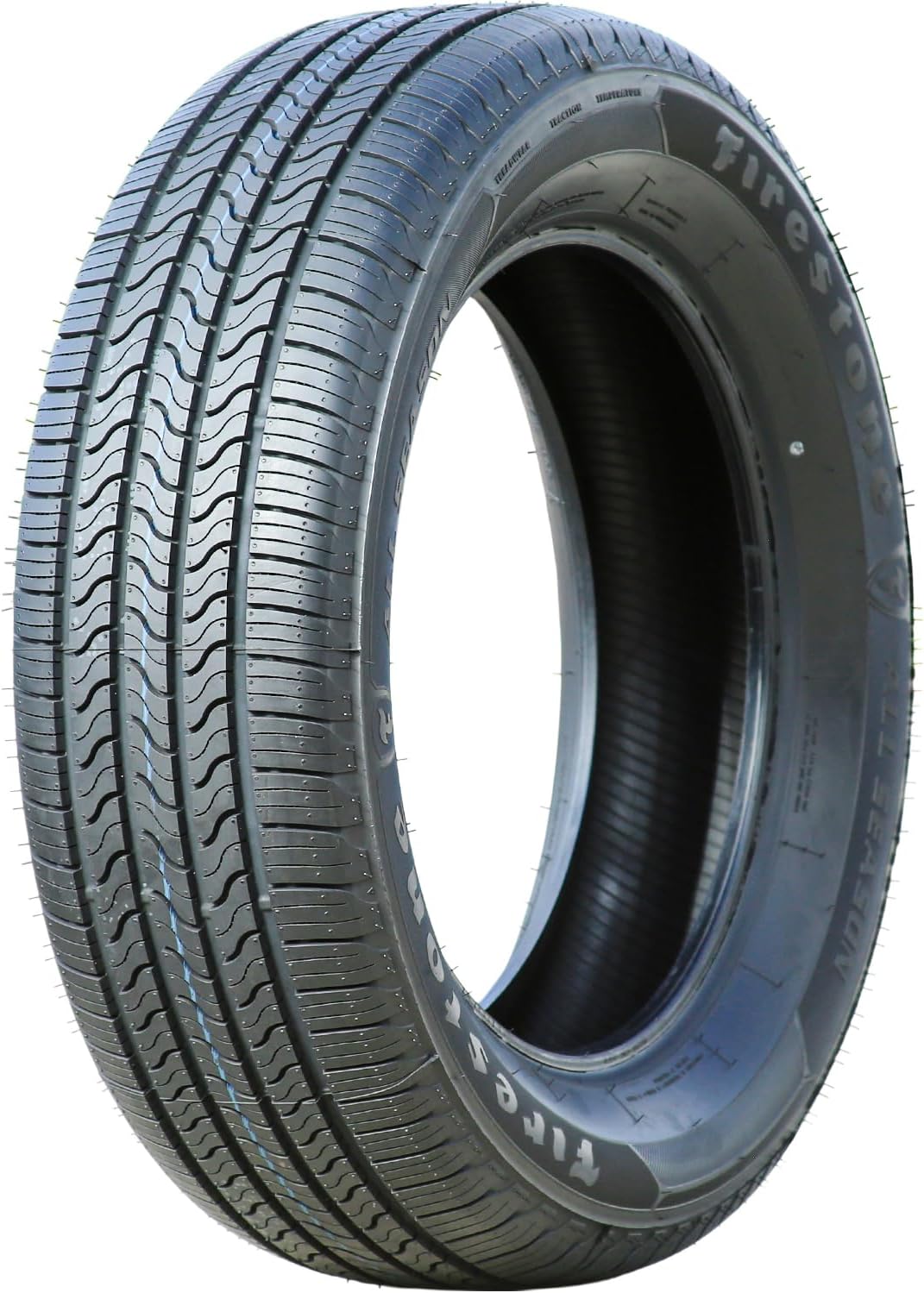
3. Firestone All Season 225/65R17 102H Passenger Tire
| Rim Size | 17 Inches |
|---|---|
| Load Index | 102 |
| Speed Rating | H |
| Tread Type | Symmetrical |
| Seasons | Year Round |
The Firestone All Season in 225/65R17 is a straightforward all-season tire that balances wet-weather grip, comfort, and tread life for everyday driving on a Subaru Outback. Its symmetrical tread with deep sipes and circumferential grooves helps evacuate water and maintain traction in rain and light snow, while the computer-tuned design reduces road noise for a quieter cabin. Expect compliant handling and a supple ride suitable for commuting, family trips, and light touring rather than aggressive driving. The tire carries a manufacturer limited tread life up to 65,000 miles depending on size and speed rating and uses a radial construction with a 4-ply specification for typical durability. Limitations include modest load capacity compared with heavier-duty tires and a speed rating capped at H, so it is not aimed at high-speed performance or heavy towing; heavy off-road use or severe winter conditions will call for specialized tires. Overall it is a practical, comfort-oriented all-season option for daily driving on the Outback.
Best for: Drivers seeking a practical, low-noise all-season tire that prioritizes mileage and everyday comfort for daily commuting and family use on their Subaru Outback.
Less Ideal for: Owners who regularly carry heavy loads, do high-speed driving, tackle deep snow or icy roads, or need off-road-capable tires should consider more specialized options.
- Balanced year-round traction from deep sipes and circumferential grooves for improved wet performance
- Computer-tuned tread reduces road noise for a quieter, more comfortable ride
- Up to 65,000 mile limited manufacturer tread life offers long service for commuting and touring
- Symmetrical tread and radial construction deliver predictable handling and a smooth ride
- Not designed for heavy towing or severe winter driving where specialized tires are preferable
Verdict: A quietly composed, long-lasting all-season tire that delivers dependable year-round performance for practical Outback owners focused on comfort and mileage.
4. Accelera Omikron H/T 225/65R17 102H Highway All‑Season Tire

| Rim Size | 17 inches |
|---|---|
| Load Index | 102 |
| Speed Rating | H |
| Seasons | Year Round |
| Construction Type | Radial |
The Accelera Omikron H/T is a highway all-season tire intended for light trucks and SUVs in a 225/65R17 size. It uses a silica compound and a symmetrical tread with three semi ribs and interlocked blocks to prioritize a quiet, stable ride on paved roads. Four wide circumferential grooves help channel water for improved wet traction while the 102 load index supports typical Outback cargo and passenger loads. This tire is positioned as a value option and includes a 35,000-mile mileage warranty and road hazard protection, which can reduce ownership costs compared with pricier name-brand tires. Expect comfortable highway cruising, reduced road noise, and acceptable wet-weather performance for daily driving. Limitations are its wet grip grade of E and a 4-ply construction, which indicate it is not optimized for spirited handling, heavy towing, or severe winter conditions; buyers seeking top wet braking or deep-snow traction should look to dedicated performance or winter tires instead.
Best for: Drivers prioritizing low cost and comfortable, quiet highway performance for everyday commuting and light cargo needs on a Subaru Outback.
Less Ideal for: Do not choose this tire if you need best-in-class wet braking, aggressive handling, heavy towing capability, or reliable deep-snow traction in winter conditions.
- Value-oriented price with a 35,000-mile mileage warranty and road hazard protection included
- Designed for a quiet, comfortable highway ride thanks to silica compound and symmetrical tread
- Four wide grooves improve water evacuation to reduce hydroplaning risk
- 102 load index supports common passenger and cargo loads for light SUVs
- Wet grip rated E, so braking performance in heavy rain is below premium all-season levels
Verdict: A budget-friendly highway all-season tire that delivers quiet, comfortable mileage for everyday Outback driving while including a 35,000-mile warranty.
5. Yokohama AVID ASCEND GT Touring Radial Tire — 225/60R18 100H

| Rim Size | 18 Inches |
|---|---|
| Load Index | 100.0 |
| Speed Rating | H |
| Tread Type | Asymmetrical |
| Seasons | Year Round |
The Yokohama AVID ASCEND GT in 225/60R18 is a touring all-season radial built for steady, reliable daily driving. Its asymmetrical tread and 12/32nds depth are aimed at balanced wet and dry grip while the construction and 50,000-mile warranty emphasize longevity. You would typically use this tire on a midsize wagon like the Subaru Outback for commuting, family trips, and light highway cruising; the load index and 100H speed rating match common factory requirements for that size. Notable features include a universal fit rim size of 18 inches, 4-ply construction, and a maximum cold inflation pressure listed at 51 PSI, which supports stable load carrying and predictable handling. In practical terms the tire delivers a quiet, comfortable ride and predictable wet-weather performance without aggressive handling characteristics. The main limitation is that it is a touring tire rather than a dedicated winter or off-road tire, so in deep snow or aggressive off-road use you will want a winter-specific or all-terrain option instead.
Best for: Drivers who prioritize dependable, low-noise all-season performance and long tread life for everyday driving on a Subaru Outback.
Less Ideal for: People who need strong winter traction or aggressive off-road capability should choose dedicated winter tires or all-terrain tires instead.
- Designed for long tread life with a 50,000-mile warranty backing expected longevity
- Asymmetrical tread for balanced wet and dry traction
- Quiet, comfort-focused touring ride suitable for daily driving and highway miles
- 18-inch fitment and load index that align with common midsize wagon requirements
- Not intended for severe winter conditions or serious off-road use
Verdict: A dependable, comfort-focused all-season touring tire that fits the Subaru Outback and emphasizes long tread life and quiet highway driving.
6. STARFIRE Solarus AS All-Season 225/60R17 99H Tire

| Rim Size | 17 Inches |
|---|---|
| Load Index | 99.0 |
| Speed Rating | H |
| Tread Type | Symmetrical |
| Seasons | Year Round |
The STARFIRE Solarus AS is a budget-friendly all-season touring tire designed for everyday driving on sedans and crossovers that use 225/60R17 fitment. Its re-engineered tread compound and Shoulder Control Technology with deep slots and biting edges provide confident wet and dry grip, while a solid center rib helps keep steering stable and the ride controlled. Variable pitch tread blocks reduce road noise at highway speeds, making longer trips more comfortable. The tire is M+S rated and carries a 50,000 mile treadwear warranty, so it targets buyers who prioritize mileage and predictable performance over high-performance handling. Construction is radial with a 99 load index and H speed rating, suitable for typical Outback driving loads and speeds. Limitations include its touring focus rather than sport or aggressive winter capability, so drivers in heavy snow or enthusiastic handling situations may prefer a dedicated winter or performance tire. As a factory-replacement style option, it balances quiet cruising, longevity, and everyday traction for routine driving needs.
Best for: Practical Subaru Outback drivers who want a quiet, mileage-focused all-season tire for daily commuting and long highway trips and who value warranty-backed longevity.
Less Ideal for: Drivers who need maximum winter traction in heavy snow or those seeking sporty, high-performance handling should choose a dedicated winter or performance tire instead.
- All-season tread compound tuned for wet and dry traction
- Shoulder Control Technology and solid center rib for stable steering and controlled ride
- Variable pitch tread design that reduces highway road noise
- 50,000 mile treadwear warranty for long service life
- M+S rating for basic mud and snow capability
- Not intended as a dedicated winter or high-performance tire so extreme snow grip and sporty handling are limited
Verdict: A conservative, warranty-backed all-season touring tire that delivers quiet, long-lasting mileage for Subaru Outback drivers seeking reliable everyday performance.
7. Starfire Solarus AS All-Season 225/65R17 102H Tire
| Rim Size | 17 Inches |
|---|---|
| Load Index | 102 |
| Speed Rating | H |
| Seasons | Year Round |
| Tread Depth | 9 32nds |
The Starfire Solarus AS is a budget-friendly all-season touring tire built for everyday driving on sedans, crossovers, and family wagons sized 225/65R17. It uses a re-engineered tread compound and variable pitch pattern to reduce highway noise while Shoulder Control Technology and deep tread slots help maintain grip in wet conditions and light snow. The solid center rib aids straight-line stability and responsive steering feel for highway cruising. With a 50,000-mile treadwear warranty and M+S rating, it is positioned for long mileage and predictable performance rather than extreme winter capability or spirited handling. Expect comfortable, quiet daily driving and reliable wet-weather braking, but do not plan on heavy snow or high-performance cornering. Installation is straightforward since it is a direct replacement size; pairing a full axle set will provide the most consistent ride and wear characteristics.
Best for: Drivers who prioritize a quiet, economical all-season tire with long tread life and predictable everyday performance for commuting and family trips.
Less Ideal for: Drivers who need a dedicated winter tire for heavy snow or those seeking high-performance handling at the limits.
- All-season tread compound for competent wet and dry traction
- Variable pitch tread reduces road noise at highway speeds
- 50,000 mile treadwear warranty for long service life
- Symmetrical tread and solid center rib for stable, predictable handling
- M+S rating only, not intended for severe winter or deep snow conditions
Verdict: Choose the Starfire Solarus AS if you want an affordable, long-lasting all-season touring tire that delivers quiet, dependable everyday performance on your Subaru Outback.
Choosing the Right 2026 Subaru Outback Tires: Key Factors to Consider
Tire Size and Load Rating
Choosing the correct tire size and load rating ensures the tire supports the vehicle weight and preserves handling characteristics. The Outback may use several wheel diameters and aspect ratios across trims, so matching the OEM size or an approved alternate keeps speedometer accuracy and stability.
Load rating matters when you carry cargo or tow lightweight loads. Underrated tires can run hotter and wear faster, and they may affect safety under heavy loads. Check the placard inside the driver door for recommended sizes and load indexes, and confirm any replacement covers the vehicle's maximum gross axle weight. If you change wheel size, verify the new tire's circumference stays close to original to avoid calibration issues.
Seasonal Performance and Traction
Deciding between all-season, summer, and dedicated winter tires depends on where and when you drive. All-season tires provide balanced wet and dry performance for moderate climates and are convenient for year-round use. Dedicated winter tires significantly outperform all-seasons in snow and ice because of specialized rubber compounds and siping.
If you regularly encounter snow or subfreezing temperatures, winter tires improve braking and lateral grip. For predominantly warm-weather driving, a summer or performance all-season compound can offer crisper handling and shorter wet braking distances. Consider how often you drive in extreme conditions before committing to a seasonal set.
Tread Life and Wear Patterns
Treadwear rating and compound formulation affect how long tires last and how they wear across the contact patch. Tires with harder compounds and deeper grooves often last longer but may trade off some grip. Uneven wear can indicate alignment or inflation issues, so look for tires with predictable wear patterns and strong user-reported longevity.
Longer-lasting tires reduce replacement frequency, but initial grip and comfort should not be sacrificed excessively. Factor in typical annual mileage when estimating replacement intervals, and inspect tires regularly for cupping, feathering, or one-sided wear that shortens service life.
Ride Comfort and Road Noise
The Outback is a vehicle often used for long-distance driving and commuting, so a comfortable ride and low road noise matter. Tire construction, sidewall stiffness, and tread block design all influence ride quality. Touring-focused all-season tires tend to prioritize cushioning and quietness, while performance-oriented tires use stiffer sidewalls that can transmit more road feedback and noise.
If you cover long highway miles, prioritize tires designed for comfort and low noise. Keep in mind that comfort-focused tires may have slightly higher rolling resistance, affecting fuel economy marginally compared to sportier options.
Wet Grip and Hydroplaning Resistance
Strong wet performance reduces braking distance in rain and improves directional stability. Look for tires with circumferential grooves, lateral channels, and siping patterns that evacuate water efficiently. Tread compound also affects wet traction, particularly in cooler, wet conditions.
Hydroplaning resistance is influenced by tread pattern and contact patch shape. Tires that channel water well keep more rubber in contact with the road under heavy rain, which is important for an all-wheel-drive vehicle like the Outback to maintain balanced traction across all wheels.
Fitment and Wheel Compatibility
Not all tire sizes are available in every tread type, so verify that the tire you consider is offered in the Outback's wheel diameters and widths. The wheel offset and backspacing on replacement wheels can change scrub radius and steering feel, so stick to sizes within the manufacturer's recommended range.
If you choose a staggered or nonstandard fitment for aesthetic reasons, confirm load index and speed rating meet or exceed OEM specs. Misfit tires can alter ABS and traction control behavior, so ensure compatibility before purchase and installation.
Understanding Tire Options for the Outback
Tires for the Outback are available in all-season, all-terrain, and dedicated winter constructions. For the 2026 model and the 2020–present range, most owners prioritize a balance of wet traction, winter capability, and long tread life. Knowing the tradeoffs between compound types and tread designs helps you pick a tire that matches your driving conditions.
When selecting a specific tread, consider typical road surfaces you encounter. Smooth highways reward touring-focused designs that reduce noise and increase fuel economy. Rougher roads or light off-pavement use benefit from more aggressive tread patterns with reinforced sidewalls.
- All-season: balanced everyday performance and convenience
- Winter: superior grip on snow and ice at low temperatures
- All-terrain: added durability for occasional unpaved routes
Seasonal Strategies: One Set or Two?
Deciding whether to run one set of all-season tires year-round or switch between dedicated summer and winter tires depends on climate and storage practicality. Dedicated winter tires give the biggest safety gain in snowy or icy regions, while quality all-season tires are sufficient for mild winters.
If you choose seasonal swaps, factor in the cost of a second set of wheels, storage space, and installation intervals. Seasonal swapping preserves the life of each set and optimizes performance for extreme temperatures.
- Winter tires increase braking performance on snow and ice
- All-season tires reduce the need for seasonal swaps in mild climates
- Swapping extends overall tread life by distributing wear
Maintenance: Inflation, Rotation, and Alignment
Proper maintenance preserves tire life and ensures consistent handling. Maintain recommended inflation pressure listed on the driver door placard, and check pressures when tires are cold. Underinflation increases wear on the shoulders, while overinflation accelerates center wear and can reduce grip.
Rotate tires every 5,000 to 8,000 miles to even out wear, unless the tire maker specifies a different interval. Regular wheel alignment checks keep steering straight and prevent premature one-sided wear. Balancing and alignment together reduce vibration and prolong lifespan.
- Check tire pressure monthly and before long trips
- Rotate tires at regular service intervals
- Get alignment checks after impacts or if steering pulls
Interpreting Treadwear Ratings and Manufacturer Warranties
Treadwear ratings give a rough comparison across models but are not a guarantee of life. They are useful for estimating relative durability, but real-world mileage depends on driving habits, road surfaces, and maintenance. Look at warranty mileage figures as one data point when evaluating longevity.
Warranties can cover tread life and manufacturing defects but often exclude damage from road hazards. When comparing options, weigh warranty terms alongside independent user reports for a more complete picture.
- Treadwear index shows relative expected life
- Warranties vary in scope and exclusions
- Real-world mileage depends heavily on usage and care
Replacing Tires: Timing and Safety Signs
Knowing when to replace tires is critical for safety. Check tread depth regularly using a tread wear indicator or a depth gauge. Many tires include built-in tread wear indicators that become visible when the tire reaches the legal minimum depth, but replacing tires before reaching that limit improves wet and winter performance.
Other reasons to replace tires include visible damage, frequent flats, sidewall bulges, or vibration that balancing cannot correct. If you notice uneven wear, have alignment and suspension components inspected before fitting new tires to prevent repeat issues.
- Replace tires before tread reaches the legal limit for better wet braking
- Inspect for sidewall damage, bulges, or punctures
- Address suspension or alignment issues to avoid repeated wear
Still looking for the perfect fit?
Select your Subaru Outback configuration to see the most relevant Tires recommendations
How We Chose the Best 2026 Subaru Outback Tires
We focused on attributes that matter most to 2026 Subaru Outback owners and used a consistent editorial framework to narrow the field. Primary evaluation criteria included wet and snow traction, because many Outback drivers encounter mixed weather; treadwear and longevity to estimate replacement intervals; ride comfort and road noise, since the Outback is often used for long drives; load capacity and speed rating compatible with the vehicle's curb weight and cargo capacity; and handling stability to preserve predictable AWD behavior.We also considered rolling resistance for fuel efficiency and compatibility with common Outback wheel sizes and offset ranges for 2020–present models. Test data, manufacturer specifications, and user feedback were reviewed to verify claims related to traction and treadwear. Exclusions applied to tires without clear size coverage for the Outback, products lacking published performance data, and specialty tires intended for vehicles other than passenger crossovers. The result is a focused list that balances real-world performance, durability, and comfort for this vehicle.
Our full evaluation process is outlined in our review methodology.
FAQ
What tire pressure should I run on a 2026 Subaru Outback?
Use the tire pressure specified on the vehicle placard inside the driver door for the original wheel and tire combination. Pressure should be checked when cold and adjusted for load. Slightly increasing pressure for heavy cargo can help, but avoid exceeding the tire's maximum pressure stamped on the sidewall.
How often should I replace the tires on my Outback?
Replacement typically depends on tread depth and condition rather than a fixed time. For many drivers, tires last between 40,000 and 70,000 miles depending on compound and use. Inspect tread depth regularly and replace tires sooner if treadwear, damage, or performance in wet or winter conditions declines.
Are all-season tires adequate for winter driving in snowy regions?
All-season tires may handle light snow, but they are not optimized for prolonged subfreezing temperatures or heavy snowfall. Dedicated winter tires with softer compounds and enhanced siping provide noticeably better braking and lateral grip in cold, snowy conditions.
Will switching tire size affect my Outback's handling or systems?
Changing tire diameter or profile beyond recommended ranges can alter speedometer readings, ABS and traction control behavior, and steering feel. Stick to sizes approved on the vehicle placard or consult a professional to ensure the new size maintains overall circumference and load rating compatibility.
How can I check if my tires are wearing unevenly?
Look for one-sided shoulder wear, feathering, cupping, or faster wear in the center. Regular visual inspections and measuring tread depth at multiple points across the tread reveal irregular patterns. Uneven wear often indicates alignment, inflation, or suspension issues that should be addressed promptly.
Does rotating tires really extend their life?
Yes. Rotating tires at recommended intervals promotes even wear across all four tires, particularly important for AWD vehicles that distribute torque differently front to rear. Regular rotation helps maximize tread life and maintain balanced handling.
Final Verdict
Prioritize tires that match the 2026 Subaru Outback's typical driving conditions. For mixed climates, choose a touring-focused all-season that balances wet grip, tread life, and comfort. If you regularly encounter snow and ice, a dedicated winter set will deliver the clearest safety benefit.Balance tradeoffs between longevity, road noise, and seasonal performance when making your choice. Confirm correct size and load rating, maintain proper inflation and alignment, and replace tires promptly when tread or damage compromises safety. With those priorities in mind you can select tires that keep the Outback dependable and enjoyable to drive.
Explore More:
- Check out all Subaru Outback parts & accessories
- Explore Tires Maintenance & Repair Guides
- Explore Wheels & Tires
- Browse all Auto Parts
