

Note: This article contains affiliate links. If you click on these links and make a purchase, I may earn a small commission at no extra cost to you. This helps support my research and content. Read my full affiliate disclosure here.
Upgrading the front suspension on your Ford Ranger can transform how the truck rides, steers, and carries load. Whether you want a smoother daily commute, better off-road control, or a more capable towing setup, the right front suspension kit makes a measurable difference in comfort and stability. This guide covers the top shortlisted front suspension kits specifically for the Ford Ranger and explains the tradeoffs between ride comfort, durability, and load handling.Below you will find the top picks for front suspension kits for this vehicle, plus practical advice on fitment, installation considerations, and the evaluation criteria used to select these options. Use the brief product summaries and the buying guidance that follows to pick the kit that best fits your driving needs.
Looking for other parts? See all Ford Ranger parts & accessories.
Top Picks at a Glance


1. Detroit Axle 10‑Piece Front End Suspension Kit for Ford Ranger (Torsion Bar)

| Fitment | 2002–2011 Ford Ranger; 2002–2007 Mazda B3000; 2002–2009 Mazda B4000 |
|---|---|
| Kit contents | 2 upper control arms w/ball joints, 2 lower ball joints, 2 inner tie rods, 2 outer tie rods, 2 sway bar links |
| Suspension type | 1‑piece design with torsion bar suspension only |
| Manufacturer | Detroit Axle |
| Manufacturer Part Number | 80467-10A |
This Detroit Axle 10‑piece front end kit supplies the main front suspension and steering wear items for Ford Ranger models with torsion bar suspension. The kit includes two upper control arms with ball joints, two lower ball joints, inner and outer tie rod ends and two sway bar links so you can refresh steering response and front‑end stability in a single job. Components are offered as direct‑fit replacements and are described as made from premium alloy with enhanced structural strength and rust resistance, which helps longevity and repeatable alignment after installation. For a balanced owner who wants a complete front suspension refresh, the kit reduces the hassle of sourcing individual parts and typically speeds up labor since the assemblies come ready to install. Important limitations: it is for 1‑piece design torsion‑bar Ranger/B3000/B4000 applications only, so it will not fit Rangers with different suspension setups, and professional alignment after installation is still required to restore correct handling and tire wear.
Best for: A practical owner who wants a coordinated, single‑purchase solution to restore front steering feel and suspension stability on a torsion‑bar Ford Ranger and prefers ready‑to‑install replacement assemblies.
Less Ideal for: Do not choose this kit if your vehicle has a different front suspension design or if you only need a single replacement part rather than a full-front rebuild.
- Comprehensive kit covers upper control arms, ball joints, tie rods and sway links so multiple worn parts are replaced at once.
- Direct‑fit assemblies simplify installation compared with sourcing separate components.
- Premium alloy construction and reinforced structure aim to resist corrosion and handle repeated impact loads.
- Includes both inner and outer tie rod ends to fully restore steering linkage wear points.
- Only compatible with torsion‑bar 1‑piece upper control arm Ranger/B3000/B4000 setups and not suitable for other suspension types.
Verdict: If you need a one‑stop, direct‑fit front suspension refresh for a torsion‑bar Ford Ranger, this complete Detroit Axle kit gets the job done efficiently.
2. Detroit Axle 14pc Front End Suspension Kit with Control Arms, Tie Rods, Sway Links & Wheel Hubs

| Position | Front |
|---|---|
| Lugs | 5 Bolt |
| ABS Type | Sensor Wire |
| Kit Includes | Control arms, tie rods, sway links, tie rod boots, wheel hub assemblies |
This Detroit Axle 14-piece front end kit supplies the main front suspension and steering components needed to restore handling on older 4WD Ford Rangers and compatible vehicles. It replaces both upper and lower control arms with ball joints, inner and outer tie rod ends, sway bar end links, tie rod boots with clamps, and two complete front wheel hub and bearing assemblies. In practice the kit is used for comprehensive front-end refreshes after wear, crash damage, or if multiple components are failing at once. Notable points are the one-piece right upper control arm fitment, sensor-wire style ABS hub, and preassembled wheel bearings that simplify installation. The maker highlights premium alloy construction and reinforced structure intended to resist corrosion and repeated impact. The practical benefits are full steering geometry restoration, reduced play and vibration from worn hubs, and fewer parts to source separately. Limitations are that the kit is vehicle-specific to certain years and ABS connector types, so fitment must be confirmed, and it does not include suspension bushings, shocks, or alignment service which you will need after installation.
Best for: Buyers rebuilding the entire front steering and suspension on older 4WD Ford Rangers and similar vehicles who prioritize a coordinated, performance-oriented refresh rather than piecemeal repairs.
Less Ideal for: Drivers looking for a basic single-part replacement, a kit for 2WD models, or those who need shock/strut service included should consider other options.
- Complete 14-piece kit replaces upper and lower control arms plus steering and hub components for a coordinated repair
- Includes preassembled front wheel hub and bearing assemblies with ABS sensor wire for direct replacement
- One-piece right upper control arm design simplifies fitment where required
- Manufactured from premium alloy and reinforced structure to resist corrosion and handle repeated impacts
- Fitment limited to specific 4WD/AWD model years and ABS connector types so compatibility checks are required
- Does not include shocks, struts, suspension bushings, or alignment, which are needed for a full front-end service
Verdict: Choose this all-in-one front end kit when you want a coordinated, performance-minded rebuild of the front steering and hubs on a compatible 4WD Ford Ranger or similar vehicle.
3. ADIGARAUTO Front Suspension Kit for Ford Ranger and Mazda B-Series (10-Piece)

| Fit Type | Vehicle Specific Fit |
|---|---|
| Auto Part Position | Front |
| Unit Count | 1 Count |
| Manufacturer Part Number | ACAS80054-10 |
This ADIGARAUTO suspension kit provides a full front-end refresh for compatible Ford Ranger 2WD and several Mazda B-Series trucks with front coil suspension. The set includes two lower ball joints, inner and outer tie rod ends, two sway bar end links, and both upper control arms with preinstalled ball joints, so you can replace most common wear items in one job. Components are offered as vehicle-specific fit replacements and carry a corrosion-resistant finish intended to resist rust in wet or salted conditions. For a DIYer or independent shop this kit simplifies parts sourcing and cuts install time versus buying pieces separately, and preinstalled bushings reduce assembly steps. Limitations: fitment is restricted to the listed model years and front coil suspension variants only, and the kit carries a one-year manufacturer warranty rather than a long-term coverage plan. Expect alignment after installation since steering and suspension geometry is changed when replacing arms and tie rods.
Best for: Buyers who want a practical, all-in-one front suspension refresh for an older Ranger or Mazda B-series and value time saved by installing a matched set rather than sourcing individual parts.
Less Ideal for: Not a good choice for owners who need parts for 4WD or non-coil front suspension variants or who want extended factory-style warranty coverage beyond one year.
- Complete 10-piece kit replaces most front suspension wear items in a single purchase
- Vehicle-specific fit for the listed Ford Ranger and Mazda B-Series applications
- Upper control arms include ball joints to simplify installation
- Corrosion-resistant coating helps prolong service life in harsh weather
- Preinstalled bushings and matched components reduce installation time and fitment issues
- Compatibility limited to specified years and front coil suspension configurations only
Verdict: If you want a straightforward, time-saving front-end overhaul for the specified Ranger or Mazda B-Series coil-suspension models, this complete 10-piece kit delivers the matched parts needed in one purchase.
4. AngyMeck 10-Piece Front Suspension Kit for Ford Ranger and Mazda B-Series (1998–2011)

| Fit Type | Vehicle Specific Fit |
|---|---|
| Auto Part Position | Front |
| Material Type | Alloy Steel |
This AngyMeck front suspension kit bundles the main front steering and suspension wear items you would replace when refreshing a Ranger or compatible Mazda B-Series. It includes upper control arms, lower ball joints, inner and outer tie rods, and sway bar links designed for vehicle-specific fitment. The components are alloy steel with hardened studs, polished ball joints, maintenance-free polymer bearings, and synthetic grease for reduced upkeep and corrosion resistance. For routine repairs or a full front-end refresh on an older truck this kit saves time sourcing parts individually and ensures matched components. It is aimed at budget-conscious owners who need a practical repair solution rather than performance upgrades. Expect basic fit-and-forget durability but not premium materials or refinements found in high-end aftermarket arms. Also confirm exact year and model fitment before buying since the kit is vehicle-specific and intended for the listed Ranger and Mazda year ranges.
Best for: Budget-minded owners who need a straightforward front-end refresh for an older Ford Ranger or compatible Mazda B-Series and want a matched set of replacement steering and suspension parts.
Less Ideal for: Drivers seeking heavy-duty, performance-oriented suspension upgrades or custom tuning should look at specialty performance parts instead.
- Complete 10-piece kit covers upper control arms, lower ball joints, inner and outer tie rods, and sway bar links
- Alloy steel construction with hardened studs and polished ball joints for basic durability
- Maintenance-free polymer bearings and synthetic grease reduce the need for servicing
- Vehicle-specific fitment simplifies installation for the listed Ford Ranger and Mazda B-Series years
- Designed for economy replacement rather than high-performance or heavy-duty use
- Fitment limited to the specified Ranger and Mazda year ranges so not universal
Verdict: A cost-effective matched front suspension kit that lets budget-focused owners replace all common wear items on the front end of a late 1990s–2011 Ford Ranger or compatible Mazda B-Series in one purchase.
5. PetMigo Front Upper Control Arm Kit with Ball Joints for Ford Ranger (RWD) — 10‑Piece

| Fit Type | Vehicle Specific Fit |
|---|---|
| Auto Part Position | Front Upper |
| Material Type | Alloy Steel |
| Unit Count | 10 Count |
This PetMigo 10-piece front suspension kit supplies both front upper control arms with preinstalled ball joints plus tie rod ends, lower ball joints and sway bar links to rebuild the front steering and upper suspension on eligible Ford Ranger RWD models. It is intended as a direct-fit replacement for the 1-piece control arm design used with coil springs, so installation replaces multiple wear items in one job and helps restore steering geometry and reduce vibration and noise. The components are made from alloy steel with protective coatings for corrosion resistance, and the upper arms come assembled with bushings and ball joints to simplify installation. Because the kit covers both sides and related steering links, it is practical for someone doing a complete front-end refresh rather than piecemeal repairs. Limitations: it is vehicle-specific to Ranger (RWD) and listed Mazda pickups with 1-piece coil front suspension, so it will not fit other suspension types, and buyers should verify part numbers before ordering.
Best for: Buyers who prioritize a durable, factory-style front-end rebuild for a Ford Ranger RWD and want a single kit that replaces multiple worn steering and suspension components at once.
Less Ideal for: Someone looking for a universal or multi-suspension kit, or owners of Rangers with torsion-bar or non‑1-piece front suspension should look for a different fitment.
- Complete 10-piece kit replaces upper control arms, ball joints, tie rod ends and sway links in one purchase
- Preinstalled ball joints and bushings on upper arms reduce installation time and alignment prep
- Alloy steel construction with protective coating for improved durability and corrosion resistance
- Designed as vehicle-specific direct-fit replacements to restore steering geometry
- Fits only specific RWD Ford Ranger and listed Mazda models with 1-piece coil front suspension
- Does not include lower control arms or items beyond the listed 10 pieces
Verdict: A convenient, vehicle-specific 10-piece front kit that restores steering and upper suspension reliability for RWD Ford Ranger owners doing a complete front‑end rebuild.
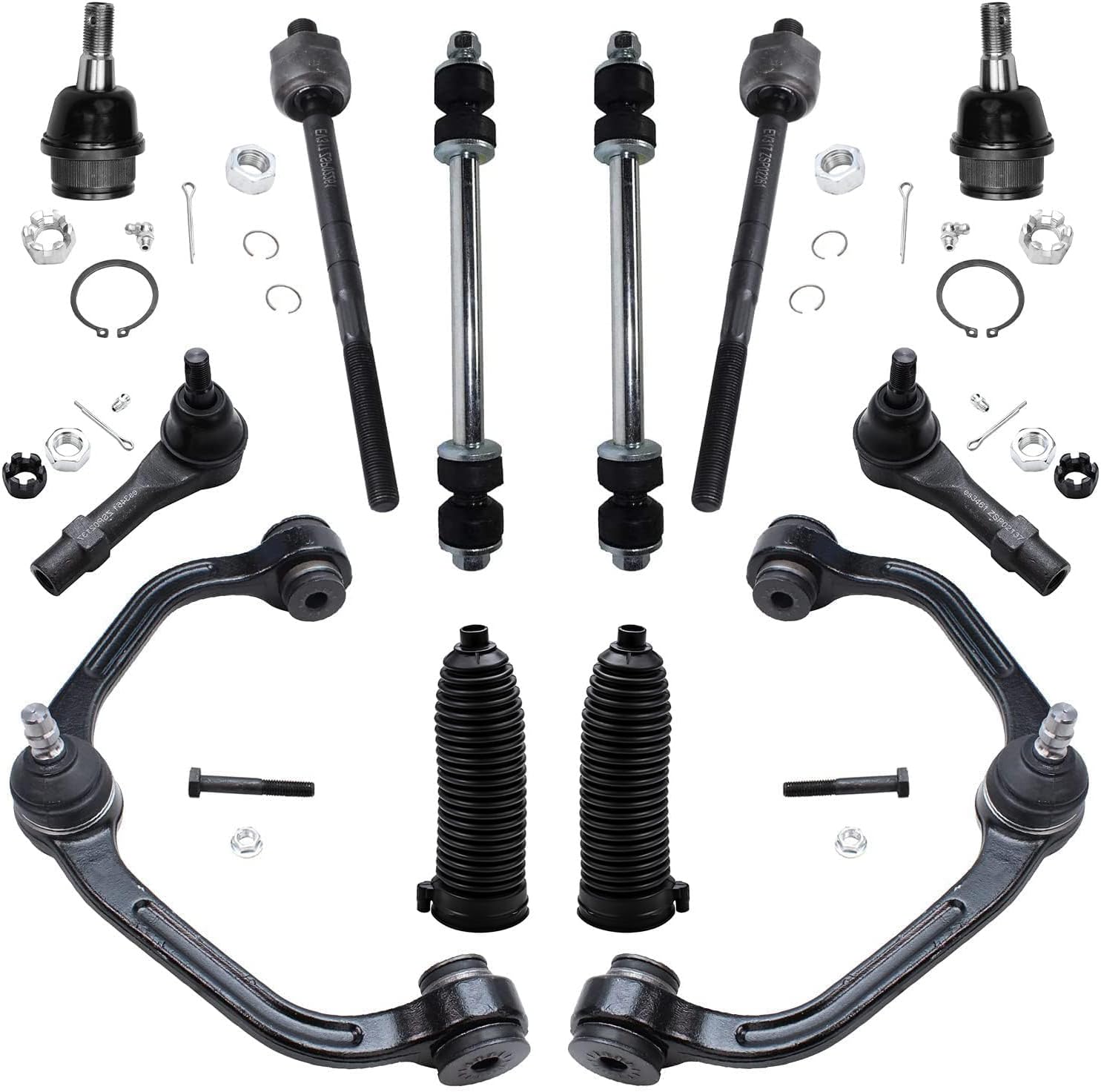
6. Detroit Axle Front End 12‑Piece Suspension Kit for Ford Ranger / Mazda B-Series
| Manufacturer | Detroit Axle |
|---|---|
| Manufacturer Part Number | 80466-12A |
| Position | Front |
| Compatible Vehicles | Ford Ranger 1998-2011 (2WD) and select Mazda B2300/B2500/B3000/B4000 years |
| Kit Contents | 2 upper control arms, 2 lower ball joints, 4 tie rods, 2 sway bar links, 2 boots |
This Detroit Axle 12-piece front suspension kit provides the main wear items needed to refresh the front end on 2WD Ford Ranger and compatible Mazda B-series trucks. It includes two upper control arms, two lower ball joints, four inner/outer tie rods, two sway bar links and two boots, making it suitable for a comprehensive front suspension service without hunting for individual parts. The components are manufactured to aftermarket quality with factory-replacement fitment in mind and the listing notes impact, wear and fatigue testing. For DIYers or independent shops this kit simplifies installation and reduces parts-matching errors. Expect restored steering response and reduced play after installation, though high-mileage vehicles may still require alignment and occasional adjustment of related hardware. The kit does not include springs or struts so it is focused on steering and control arm wear items rather than a full shock/strut overhaul.
Best for: Buyers who want a one‑stop kit to replace worn front control arms and steering components on a 2WD Ford Ranger or compatible Mazda B-series and who prioritize straightforward fitment and proven reviews.
Less Ideal for: Shoppers looking to replace shock absorbers, springs, or perform a full front-strut rebuild should choose a different kit that includes damping components.
- Complete set of front wear items reduces the need to buy multiple parts separately
- Parts grouped for correct fitment to specified Ford Ranger and Mazda B-series years simplifies installation
- Includes both inner and outer tie rods plus boots for a more thorough steering rebuild
- Manufactured and tested to aftermarket standards intended to match factory replacement fit
- Does not include struts, shocks, or coil springs so suspension damping is not addressed
- May require wheel alignment and additional hardware not included after installation
Verdict: A convenient, well-reviewed kit for replacing worn front control arms and steering parts on 2WD Ford Ranger and compatible Mazda B-series trucks, ideal for DIY repairs or shop installs.
7. Detroit Axle Front End 10‑Piece Suspension Kit for Ford Ranger / Mazda B-Series
| Fit Type | Vehicle Specific Fit |
|---|---|
| Auto Part Position | Front |
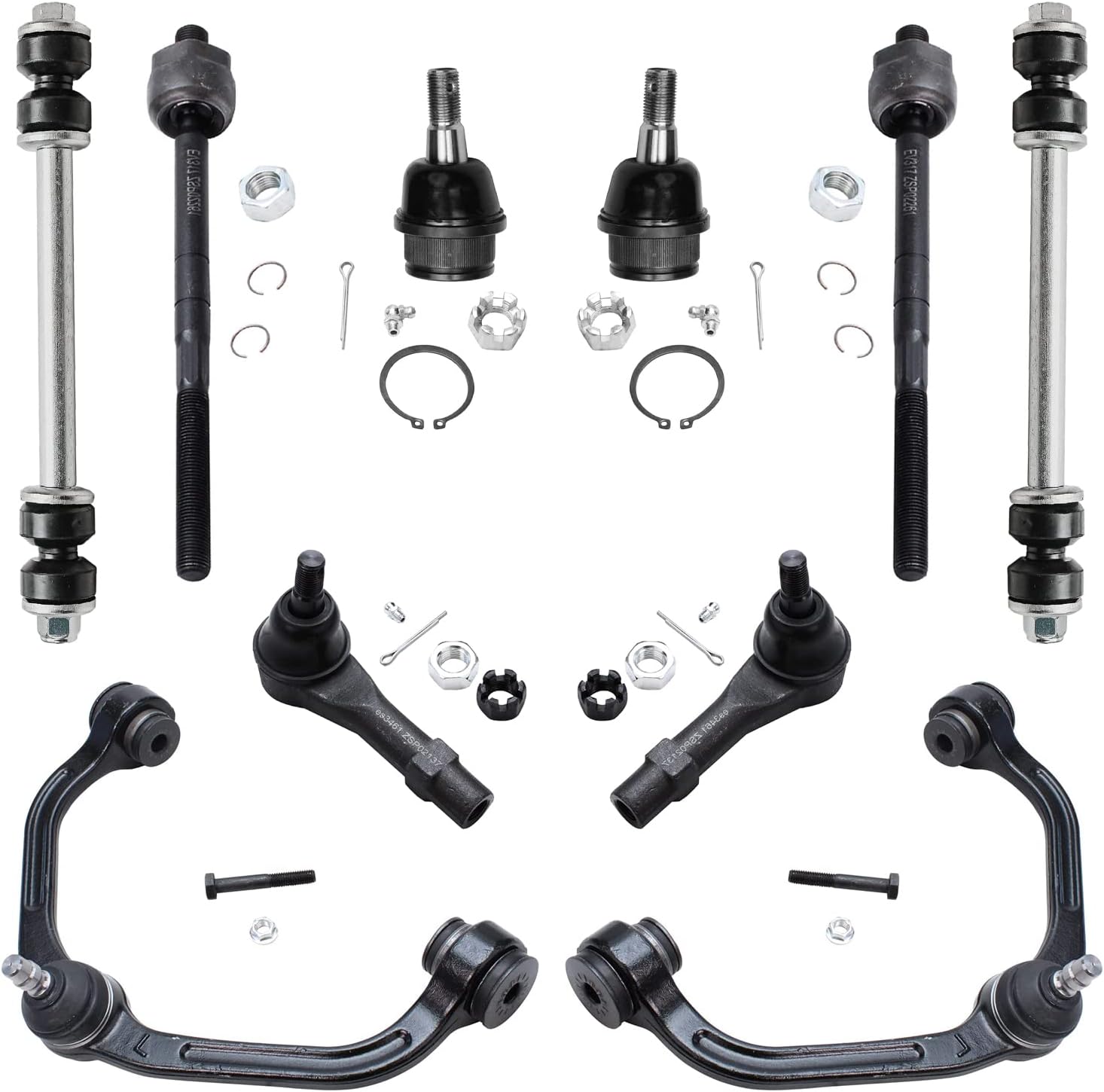
| Kit Includes | 2 upper control arms w/ ball joints, 2 lower ball joints, 2 inner tie rods, 2 outer tie rods, 2 sway bar links |
| Fitment | 1998-2011 Ford Ranger (2WD, 1-piece coil) and compatible Mazda B2300/B2500/B3000/B4000 ranges |
This Detroit Axle 10‑piece front suspension kit replaces the most commonly worn front-end components on 1‑piece coil spring Ford Ranger and compatible Mazda B-series models. The kit bundles two upper control arms with integrated ball joints, two lower ball joints, inner and outer tie rod ends, and sway bar end links so you can refresh steering and suspension wear items in one job. Components are made from premium alloy and are described as direct-fit to simplify installation for a shop or experienced DIYer. In practice the kit restores steering feel, reduces play, and cuts the need to source individual parts while keeping alignment geometry close to factory specs. The all-in-one nature saves time compared with buying pieces separately, but it also means you get a mixed set of components so high-performance or heavy-duty upgrades are not part of this package. Fitment is vehicle-specific and limited to 2WD Ranger/compatible Mazda models with coil front suspension, so verify exact years and configuration before ordering.
Best for: Buyers who want a low-risk, practical fix to restore front-end steering and suspension on compatible Ford Ranger or Mazda B-series trucks without hunting down individual parts.
Less Ideal for: Drivers seeking heavy-duty, lifted suspension components or performance upgrades should look for purpose-built parts instead.
- Complete kit replaces upper control arms, lower ball joints, tie rods, and sway bar links in one purchase
- Direct-fit design intended for straightforward installation and alignment retention
- Components made from premium alloy for corrosion resistance and structural strength
- Not intended as a performance or heavy-duty upgrade; parts are replacement-grade rather than specialty components
Verdict: A convenient, factory-style replacement kit that refreshes all common front-end wear components on 2WD Ford Ranger and compatible Mazda B-series trucks with minimal fuss.
Choosing the Right Ford Ranger Front Suspension Kit: Key Factors to Consider
Fitment and Vehicle Compatibility
Correct fitment is the starting point for any front suspension kit. A kit that is specifically engineered for the Ford Ranger will match mounting points and steering geometry, reducing the need for adapters or fabrication. When components align with the Ranger's front subframe and control arm locations, installation is faster and alignment measurements fall within service limits.
Poorly fitting kits can introduce premature wear on ball joints, tie rods, and bushings because of altered geometry. Confirm that the kit specifies compatibility with your Ranger model year and any factory options that affect suspension, such as factory tow packages or heavy-duty configurations. Consider whether the kit requires additional parts, such as extended brake lines or adjustable track bars, and factor those into the decision.
Ride Quality and Damping
Ride comfort and handling are largely determined by the damper tuning and spring rates in the front suspension kit. Softer damping and progressive springs provide a smoother ride over potholes and broken pavement, while firmer damping improves body control during spirited driving and when carrying heavy loads.
Think about how you use the Ranger day to day. If you frequently haul gear or tow, look for kits with firmer spring rates and adjustable damping to control squat and maintain steering precision. If the truck is primarily a street vehicle, prioritize compliant valving and NVH-reducing features to keep highway miles comfortable.
Load Capacity and Spring Rate
Front spring rate affects how the truck handles payload and towing weight. Kits with heavier spring rates reduce front-end sag when carrying weight and improve ride height under load, which helps maintain headlight aim and steering geometry.
Avoid overspringing for everyday use, as excessively stiff springs transfer more shock to the cabin and can reduce grip on uneven roads. Matching spring rate to typical payload and tongue weight is key. If your Ranger sees variable loads, adjustable or progressive-rate springs give more flexibility between solo driving and heavy hauling.
Durability and Corrosion Resistance
Front suspension components face road salt, mud, and impacts from debris. Materials and protective coatings determine how long those parts maintain structural integrity and appearance. Look for kits that use high-strength steel or billet components where needed, combined with durable finishes like powder coating or zinc plating.
Bushing material and seal quality on struts or dampers also influence service life. Rubber and polyurethane options offer tradeoffs between compliance and longevity; polyurethane often resists deformation better but can transmit more noise. Consider the expected environment and maintenance schedule when weighing durability features.
Serviceability and Adjustability
A front suspension kit that is easy to service and adjust will lower long-term ownership costs. Features like adjustable camber or preload settings, replaceable wear items, and standard fastener sizes make routine maintenance and tuning more straightforward.
Kits that allow damper revalving or spring-rate swaps let owners tune the truck to changing needs. Also check whether the kit requires specialty tools for alignment or disassembly; simpler hardware and clear instructions reduce shop time and expense.
Installation Complexity and Required Modifications
Installation difficulty varies widely between bolt-on kits and those that need trimming, relocation brackets, or extra components. Bolt-on kits minimize labor and risk, while kits that require permanent chassis changes should be avoided unless you plan a professional installation and understand long-term implications.
Factor installation complexity into your decision if you intend to install the kit yourself. Consider the tools, lift access, and alignment services required. Kits that provide detailed instructions and include necessary hardware reduce the chance of errors and add to overall value.
Types of Front Suspension Kits Available
Front suspension kits for the Ranger come in several configurations to suit different goals. Typical options include strut and spring kits that replace the dampers and coil springs, coilover-style kits that integrate spring and damper into one adjustable assembly, and lift or lowering kits that change ride height while often retaining factory shock absorbers.
Each type influences handling and ride differently. Strut and spring kits tend to be simple upgrades that restore or slightly improve ride quality. Coilover kits are favored for precise height and damping adjustment. Lift and lowering kits are chosen when ground clearance or lowered stance is the primary goal.
- Strut and spring kit: restores or refines stock behavior
- Coilover kit: offers height and damping adjustability
- Lift kit: increases ground clearance for off-road use
- Lowering kit: lowers center of gravity for improved on-road handling
How Height Changes Affect Steering and Alignment
Raising or lowering the front end changes suspension geometry and affects toe, camber, and roll center. Even modest height adjustments can alter steering feel and tire wear patterns, so post-install alignment is essential. Some kits include adjustable components to correct for these geometry shifts.
If you choose a lift kit, be aware that higher ride height can increase scrub radius and steering effort. Lowering the front will generally quicken steering response but can reduce suspension travel, increasing the chance of bottoming on larger bumps.
- Always plan for alignment after installation
- Prefer kits with alignment correction features when altering ride height
- Consider steering component reinforcement if making large height changes
Maintenance Tips for Longevity
Maintain suspension performance by inspecting components periodically for wear, leaks, and corrosion. Check fastener torque after the first few hundred miles following installation and during routine service intervals. Replace worn bushings and seals promptly to prevent progressive damage.
Keep moving parts clean and consider protective sprays on exposed metal surfaces in corrosive climates. If the kit includes adjustable elements, mark baseline settings before making changes so you can revert if a new setup proves unsatisfactory.
- Inspect shocks and struts for leaks and mounting wear
- Re-torque control arm and strut fasteners after initial break-in
- Clean and protect exposed hardware in winter climates
Installation Logistics and Alignment Considerations
Plan for installation time, tools, and alignment service when budgeting the project. Some front suspension kits can be installed in a home garage with common tools, while others require press tools, spring compressors, or a lift. If you are not confident with suspension work, professional installation reduces risk.
A proper four-wheel alignment after installation is critical. Inform the alignment technician of any adjustable components or ride-height changes so they can set camber, caster, and toe to appropriate specifications for the modified setup.
- Verify included hardware and any additional parts needed before starting
- Reserve alignment service for immediately after installation
- Document original settings to aid reassembly and tuning
Tuning for Mixed Use: Street and Light Off-Road
If your Ranger sees both street miles and light off-road trails, select a front suspension kit that balances damping and travel. Moderate lift and damper valving that resists bottoming while remaining compliant over washboards provides versatility without making the truck too harsh for daily driving.
Adjustability is valuable for mixed use. Kits that allow mild height adjustments or damping tuning let you prioritize comfort for commuting and firmness for trail days. Consider progressive-rate springs to get softer initial compliance with increasing firmness under heavier compression.
- Choose progressive springs or adjustable dampers for mixed use
- Avoid extreme lift heights that compromise on-road dynamics
- Consider supplemental bump stops or travel limiters for trail use
Still looking for the perfect fit?
Select your Ford Ranger configuration to see the most relevant Suspension Kits recommendations
How We Chose the Best Ford Ranger Front Suspension Kit
We evaluated front suspension kits for the Ford Ranger using criteria that reflect real-world usage and the truck's common needs. Primary evaluation factors included fitment accuracy and ease of installation, ensuring components align with Ranger front-end geometry and do not require extensive modification. Ride quality and damping performance were considered to capture how a kit affects comfort and control across pavement and rough surfaces. Load capacity and spring rates were reviewed to determine whether a kit supports towing, payload, or solo driving without excessive sag.Durability and corrosion resistance were assessed because front suspension parts endure road debris and wet conditions; we prioritized components with protective finishes and robust hardware. Alignment serviceability and parts availability were considered so owners can maintain proper toe and camber settings after installation. We excluded kits that required unsupported chassis alterations or that lacked clear fitment information for the Ranger. Overall, the selections balance real-world utility, installation practicality, and long-term dependability for this vehicle.
Our full evaluation process is outlined in our review methodology.
FAQ
Will a front suspension kit change my ride height significantly?
Yes, depending on the kit type. Lift or lowering kits are designed to change ride height, while many strut-and-spring replacements aim to maintain stock height or make modest adjustments. Check the listed height change before buying and plan for alignment afterward.
How long does installation typically take?
Installation time varies by kit complexity and tools available. Simple strut and spring swaps can take a few hours per side for an experienced mechanic, while coilover or lift kits that require additional brackets or extended lines may require a full day or professional shop time.
Do I need an alignment after installing a front suspension kit?
Always get a four-wheel alignment after installing a front suspension kit. Height changes and new components affect camber and toe values, and proper alignment ensures even tire wear and predictable steering.
Can I install a front suspension kit myself?
Many owners can perform bolt-on installations with the right tools and mechanical experience, but jobs involving spring compression, press-fit components, or significant geometry changes are best handled by professionals to avoid injury and ensure correct setup.
Will a heavier front spring rate make towing easier?
Heavier front springs reduce sag under load and help maintain ride height when towing, but overspringing can harm ride comfort when unloaded. Matching spring rate to your typical towing and payload needs yields the best balance.
How can I protect suspension parts from corrosion?
Regularly clean exposed components, apply corrosion-inhibiting sprays where appropriate, and inspect protective coatings for damage. Promptly address chipped paint or coating failures to prevent rust from developing on load-bearing parts.
Final Verdict
Choosing the right front suspension kit for your Ford Ranger means balancing ride comfort, load capacity, and durability for the way you use the truck. Prioritize correct fitment and plan for alignment after installation. If you frequently haul or tow, favor kits with stiffer spring rates or adjustable damping to control sag and maintain steering precision. For mixed street and light off-road use, seek a kit with moderate travel and tunable damping so you can adapt the truck to different conditions. By focusing on the evaluation criteria outlined here, you can select a front suspension kit that delivers the best tradeoffs for your driving needs.
Explore More:
- Check out all Ford Ranger parts & accessories
- Explore Suspension Kits Maintenance & Repair Guides
- Explore Suspension & Steering
- Browse all Auto Parts
