

Note: This article contains affiliate links. If you click on these links and make a purchase, I may earn a small commission at no extra cost to you. This helps support my research and content. Read my full affiliate disclosure here.
If you drive a 1998-2011 Ford Ranger, the right suspension kit can transform how the truck feels, carries loads, and handles rough roads. Whether you want better ride comfort, improved cornering, or a controlled lift for light off-road use, choosing a kit matched to the Ranger's chassis and typical use matters.This guide shortlists seven top-rated suspension kits selected for the 1998-2011 Ranger and explains the key attributes that affect performance, fitment, and drivability. Read on for an overview of what we evaluated and how each kit type can change handling and ride height.
Looking for other parts? See all Ford Ranger parts & accessories.
Top Picks at a Glance
| Best Overall The best all-around choice for most situations | Detroit Axle Front Suspension 10‑Piece Kit for Ford Ranger and Mazda B‑Series |  |
| Best Quality Built to a higher standard if you want something more solid | Detroit Axle Front End 12‑Piece Suspension Kit (Front Upper/Lower Control Arms, Tie Rods, Sway Bars) |  |
| Best Value The sweet spot between price and what you get | Detroit Axle 12-piece Front Suspension Kit for Ford Ranger / Mazda B-Series |  |
| Best Budget The cheapest option that still gets the job done reliably | Youxmoto Front Upper Control Arm Suspension Kit (4-Piece) |  |
| Highest Rated A top-rated pick with lots of positive feedback | Detroit Axle Complete 4WD Suspension Kit for 1998–2011 Ford Ranger (4 Front & Rear Shocks + Sway Bar Links) |  |
| Most Popular A crowd favorite that many people choose with confidence | Detroit Axle Front End 12‑Piece Suspension Kit (fits 1998–2011 Ford Ranger) |  |
| Best Seller A high-volume bestseller chosen again and again | A-Premium Front and Rear Shock Absorbers Set of 4 (APSA0903) |  |
1. Detroit Axle Front Suspension 10‑Piece Kit for Ford Ranger and Mazda B‑Series
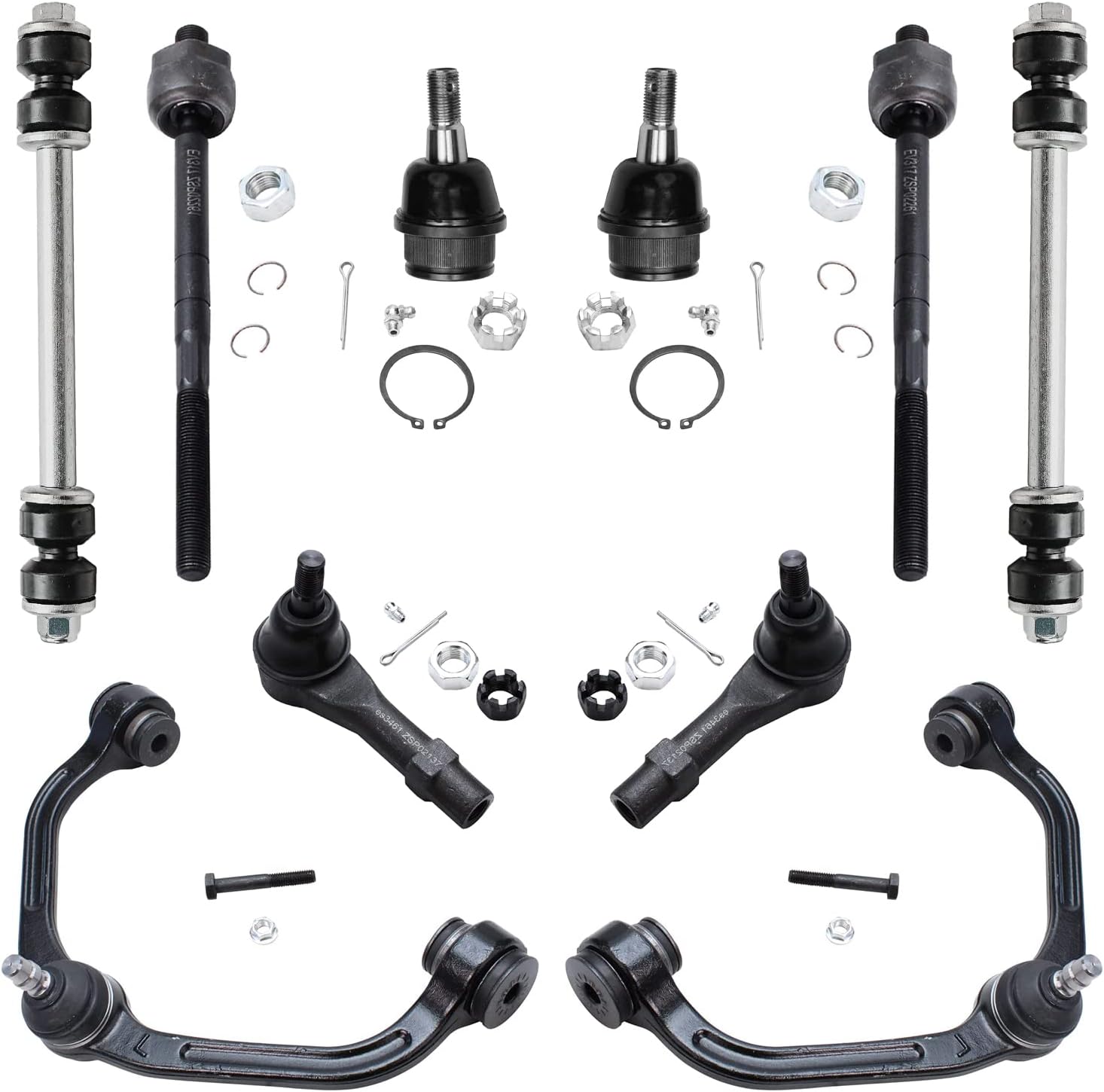
| Fitment | 1998-2011 Ford Ranger (2WD, 1-piece front coil suspension) and listed Mazda B-series models |
|---|---|
| Kit contents | 2 upper control arms w/ ball joints, 2 lower ball joints, 2 inner tie rod ends, 2 outer tie rod ends, 2 sway bar links |
| Position | Front |
| Fit Type | Vehicle Specific Fit |
This Detroit Axle 10-piece front suspension kit is a vehicle-specific replacement set aimed at restoring steering and front-end stability on 1998–2011 Ford Ranger 2WD models and compatible Mazda B‑Series trucks with one-piece coil-spring front suspension. The kit bundles two upper control arms with integrated ball joints, two lower ball joints, inner and outer tie rod ends, and sway bar end links so you can replace the pickup's major front suspension wear items in one job. Components are described as premium alloy with enhanced structural strength and corrosion resistance, and the parts are designed for direct-fit installation to match factory mounting points, which helps simplify installation and alignment. This makes the kit a practical choice if you need to address play in the front end, uneven tire wear, or loose steering feel without sourcing parts separately. Important limitations are that it covers only the listed model years and 2WD coil-spring configurations and does not include control-arm bushings or hardware beyond the listed components, so you may need additional parts or an alignment after installation.
Best for: Buyers needing a straightforward, all-in-one front suspension refresh for a 1998–2011 Ranger or matching Mazda B‑Series with 2WD and coil springs who prioritize replacing multiple worn steering and suspension parts in one service session.
Less Ideal for: Not a good choice for modified, 4WD, or vehicles with different front suspension designs or for those who only need a single replacement part rather than a full kit.
- Complete front-end kit replaces multiple wear items in a single purchase
- Direct-fit design intended to match factory mounting points for easier installation
- Upper control arms include ball joints reducing the number of separate parts to source
- Premium alloy construction and reinforced structure aimed at corrosion resistance and durability
- Covers common steering and suspension failure points to restore handling and reduce tire wear
- Fitment limited to specified years and 2WD coil-spring front suspensions only
- Does not include alignment, supplemental hardware, or bushings beyond the listed components
Verdict: If you want a single purchase to refresh the front steering and suspension on a 1998–2011 Ranger 2WD, this kit gives all the main wear items in a direct-fit package.
2. Detroit Axle Front End 12‑Piece Suspension Kit (Front Upper/Lower Control Arms, Tie Rods, Sway Bars)
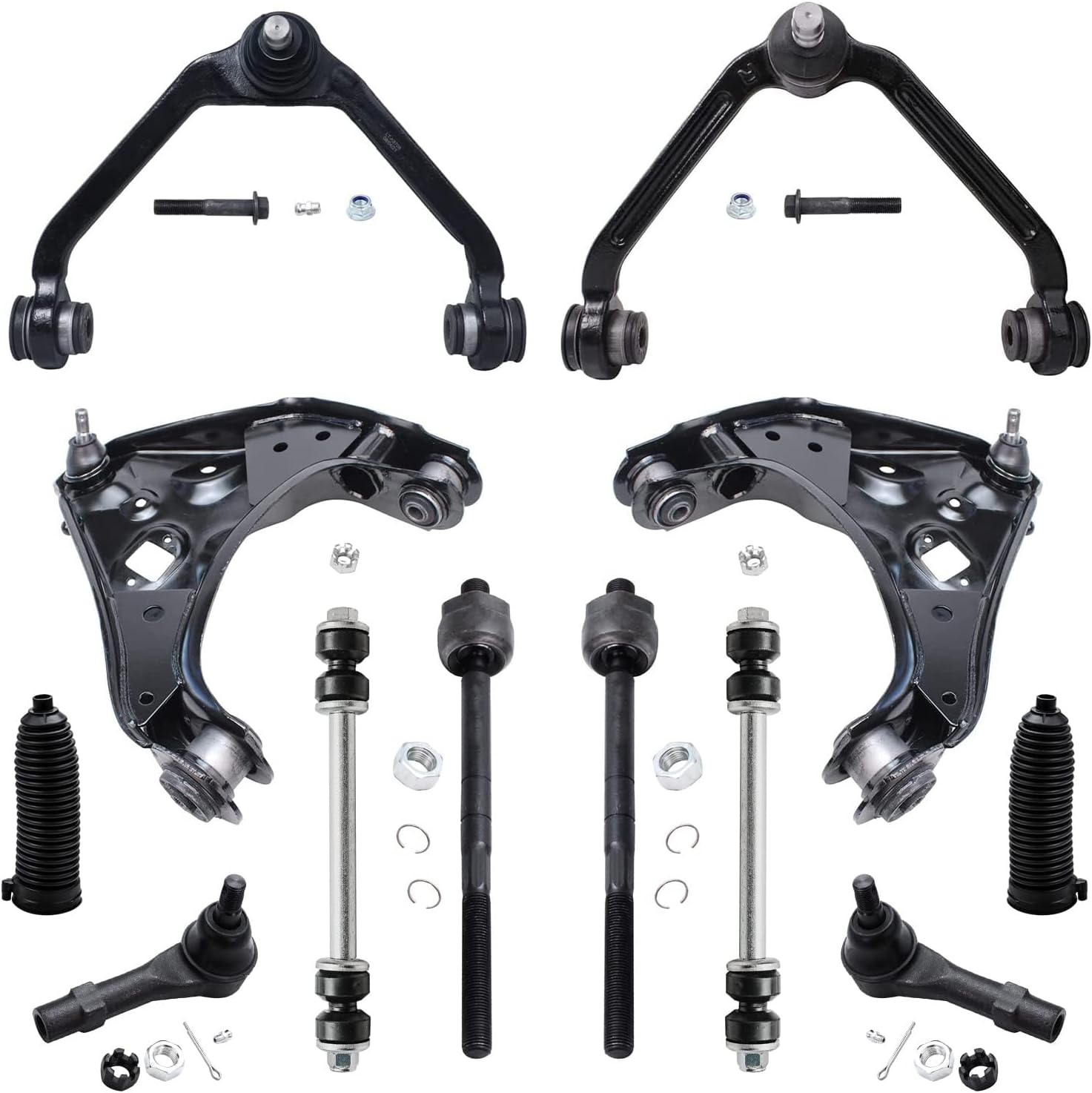
| Position | Front Upper |
|---|---|
| Item model number | 80679-12A |
| Special Features | Replacement for specified 1995–2011 torsion-bar models |
| Warranty | 10-Year Warranty |
This Detroit Axle 12-piece front suspension kit supplies the major front-end wear items you would replace when restoring steering precision and handling on a torsion‑bar Ford Ranger (and the specified compatible vehicles). The kit includes upper and lower control arms with ball joints, inner and outer tie rod ends, sway bars and rack boots so you can renew steering linkage, reduce play, and restore more direct steering feedback. Parts are aftermarket replacements made to factory-style fit and are intended for bolt‑in installation where the original one-piece right upper control arm design applies. For a performance-minded buyer this kit delivers the core mechanical parts that tighten up cornering and reduce wandering on worn chassis. Expect faster steering response and a firmer, more consistent feel, but you will still need proper alignment after installation and a competent installer for best results. The kit targets torsion‑bar front suspensions only and does not include struts or springs, so plan additional purchases if you want a complete ride upgrade.
Best for: Buyers who want to restore or sharpen steering and handling on a torsion‑bar Ford Ranger by replacing worn front control arms and steering linkages with a single coordinated kit.
Less Ideal for: People looking for a complete shock or spring upgrade, or owners of Rangers without torsion‑bar front suspension and different front arm designs.
- Comprehensive set replaces multiple front-end wear items in one purchase, simplifying repairs.
- Includes control arms with ball joints and tie rod ends to restore steering precision and reduce play.
- Aftermarket parts manufactured to factory-style fit for direct bolt-in replacement where applicable.
- Kit components focus on handling and steering, which improves cornering response once installed.
- Backed by a 10-year warranty according to the product description.
- Designed only for torsion-bar front suspensions and specific model years, so it is not universal.
- Does not include struts, shocks, springs, or wheel hubs so additional parts may be required for a full suspension refresh.
Verdict: If your torsion‑bar Ford Ranger has sloppy steering, this all-in-one front control arm and tie‑rod kit is a direct way to restore sharper handling and steering feel.
3. Detroit Axle 12-piece Front Suspension Kit for Ford Ranger / Mazda B-Series
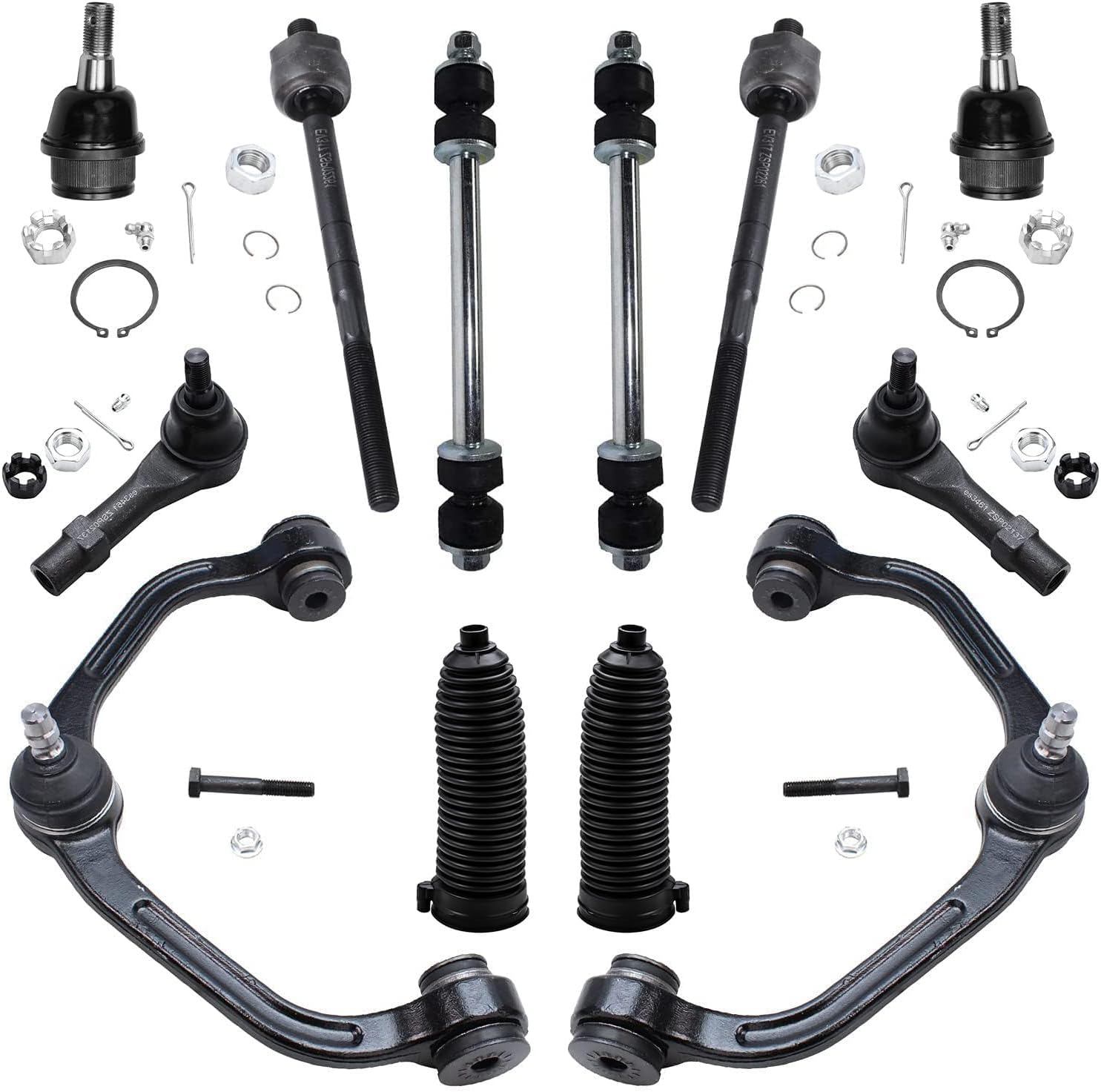
| Fitment | 1998-2011 Ford Ranger (2WD) and compatible Mazda B-series |
|---|---|
| Kit contents | 2 upper control arms, 4 tie rods, 2 sway bar links, 2 boots, 2 lower ball joints |
| Manufacturer | Detroit Axle |
| Manufacturer part number | 80466-12A |
This Detroit Axle 12-piece front suspension kit provides all the main front-end components needed when rebuilding the Ranger's coil-spring front suspension. The kit bundles two upper control arms, four tie rods (inner and outer), two sway bar links, two boots, and two lower ball joints so you can replace worn steering and suspension joints in one installation. Parts are described as manufactured in ISO-certified facilities and undergo impact and fatigue testing, which suggests consistent build quality across the set. For a DIYer or a shop doing a front-end refresh, the kit reduces parts hunting and ensures matched components for alignment and steering feel. Expect standard factory-replacement fit and function rather than performance upgrades. The kit covers 2WD Ranger model years in the article scope and similar Mazda B-series trucks, but it does not include springs, shocks, or alignment hardware, so a post-install alignment is required and additional suspension parts may be needed depending on vehicle condition.
Best for: Buyers who want a practical, time-saving front-end rebuild for a 1998–2011 Ford Ranger 2WD and prefer buying a matched set to simplify repairs and get the truck back on the road quickly.
Less Ideal for: Drivers seeking upgraded handling or heavy-duty components, or owners of 4WD or modified Rangers who need parts specific to those configurations.
- Comprehensive 12-piece kit replaces key front-end components in one purchase
- Includes matched control arms, tie rods, sway bar links and ball joints for coordinated fitment
- Manufactured in ISO-certified facilities and tested for impact and fatigue
- Saves time compared with buying individual parts separately
- Does not include shocks, struts, springs, or alignment hardware
- Intended for coil-spring 2WD front suspensions only, not for 4WD or modified setups
Verdict: Choose this kit if you want a single, factory-replacement style bundle that simplifies replacing all worn front-end steering and suspension joints on a 1998–2011 Ford Ranger 2WD.
4. Youxmoto Front Upper Control Arm Suspension Kit (4-Piece)

| Fit Type | Vehicle Specific Fit |
|---|---|
| Auto Part Position | Front Upper |
| Material Type | Alloy Steel |
| Unit Count | 4 Count |
This Youxmoto suspension kit supplies a pair of front upper control arm assemblies with preinstalled ball joints plus two lower ball joints so you can refresh the front suspension on 2WD Ford Rangers with coil springs. The components are made from alloy steel and are described as one-piece assemblies that aim to simplify installation compared with rebuilding individual parts. In use the premium ball joints and rubber bushings should restore tighter steering feel, reduce road noise and vibration, and return correct wheel tracking after worn parts caused wandering or uneven tire wear. The kit targets routine replacements and restorative repairs rather than performance upgrades. Expect a straightforward swap if your Ranger falls within the listed years but plan to check fitment carefully and have basic suspension tools on hand. The product carries a short 90-day warranty and the vendor positions it as a value-oriented alternative to more expensive factory replacements.
Best for: Buyers replacing worn front upper suspension on a budget who want a complete, ready-to-install kit that restores stock handling and reduces steering play.
Less Ideal for: Shoppers seeking performance-oriented or heavy-duty suspension upgrades for off-road use should look at purpose-built aftermarket arms and components instead.
- Complete kit includes both front upper control arm assemblies and two lower ball joints for a one-stop replacement.
- One-piece alloy steel assemblies with preinstalled ball joints simplify installation compared with piecing together separate components.
- High-density rubber bushings and premium ball joints are intended to reduce vibration and restore steering precision.
- Vehicle-specific fit for Ford Ranger 1998-2011 (2WD) with coil-spring suspension minimizes guesswork on compatibility.
- Limited warranty period of 90 days which is shorter than typical longer-term aftermarket warranties.
- Kit is aimed at restoration not performance improvement, so it does not offer upgraded geometry or heavy-duty components for off-road abuse.
Verdict: A budget-friendly complete front upper control arm kit that restores factory-style steering and ride for 2WD Ford Ranger models with coil springs.
5. Detroit Axle Complete 4WD Suspension Kit for 1998–2011 Ford Ranger (4 Front & Rear Shocks + Sway Bar Links)

| Fitment | 1998-2011 Ford Ranger (4WD; front torsion bar; excludes FX4/Highrider) |
|---|---|
| Kit Contents | 4 complete shock absorbers + 2 front sway bar end links |
| Material Type | Steel or Aluminum |
| Finish | Electrophoretic coating |
This Detroit Axle kit supplies two front and two rear complete shock assemblies plus a pair of front stabilizer/sway bar end links to refresh the suspension on 4WD Ford Ranger trucks with front torsion bar setups. Each shock arrives fully assembled so installation avoids using a coil spring compressor or specialty tools, which speeds up a DIY job or reduces shop time. The parts carry an electrophoretic coating to resist corrosion and are described as manufactured to meet factory-style fit and function, which helps restore ride height and reduce body roll for improved handling and stability. Because it is a vehicle-specific fit, the kit is a straightforward swap for compatible Rangers and related Mazda trucks covered by the listing. Limitations are that the fit excludes FX4 and Highrider variants and the kit does not include other suspension items such as control arms or bump stops, so expect additional repairs if other wear items are present.
Best for: Buyers who prioritize a dependable, factory-style suspension refresh for 4WD Rangers and want a kit that reduces installation time and delivers predictable handling restoration.
Less Ideal for: Anyone needing a full suspension overhaul beyond shock absorbers and sway links or owners of FX4/Highrider Rangers should look at other options.
- Complete kit includes front and rear assembled shock units plus two sway bar end links for a one-stop replacement.
- Fully assembled shocks eliminate the need for a coil spring compressor and simplify installation.
- Electrophoretic coating and mixed steel/aluminum construction improve corrosion resistance and durability.
- Vehicle-specific design restores ride height and reduces body shake for better handling.
- Does not fit FX4 or Highrider variants and only covers torsion bar front suspension configurations.
Verdict: Choose this kit if you want a ready-to-install, vehicle-specific shock and sway link package that restores ride height and handling for 4WD Ford Rangers with torsion bar fronts.
6. Detroit Axle Front End 12‑Piece Suspension Kit (fits 1998–2011 Ford Ranger)

| Fitment | 1998–2011 Ford Ranger RWD w/ front coil springs |
|---|---|
| Kit contents | 2 shocks, 2 upper control arms w/ ball joints, 2 lower ball joints, 4 tie rod ends, 2 sway bar end links |
| Position | Front |
| Manufacturer | Detroit Axle |
This Detroit Axle 12‑piece front end suspension kit supplies the common wear components needed to refresh the front end on 1998–2011 Ford Rangers with front coil springs and rear‑wheel drive. The kit bundles two shock absorbers, two upper control arms with ball joints, two lower ball joints, four inner/outer tie rod ends and two sway bar end links so you can replace multiple failure points in one job instead of buying parts piecemeal. That makes it a practical choice for owners tackling a thorough front suspension rebuild: installation is typical for a DIYer with basic tools or for a local shop, and replacing matched components helps restore steering feel and reduce noise, play, and uneven tire wear. Components are marketed as manufactured in ISO‑certified facilities and the kit carries a 10‑year warranty, which offers extra confidence for buyers who value documented quality. Expect OEM‑style fit and function but note this is a full replacement kit aimed at worn or failed parts rather than performance upgrades, so it will return factory‑level handling rather than dramatically change ride height or sporty behavior.
Best for: Buyers who want a single, vehicle‑specific package to replace worn front suspension components and prefer products with testing and warranty-backed reassurance.
Less Ideal for: If you are seeking performance suspension, adjustable components, or ride height changes, this factory‑style replacement kit is not the right choice.
- Comprehensive kit covers all major front wear items so you can replace multiple parts in one visit to the garage.
- Includes factory‑style shock absorbers and control arms for restored steering and ride quality.
- Manufactured in ISO‑certified facilities and backed by a 10‑year warranty for added buyer reassurance.
- Vehicle‑specific fit for 1998–2011 Ford Ranger RWD with front coil springs reduces fitment guesswork.
- Parts are factory‑replacement quality and not tuned for performance driving or lift/lowering modifications.
- Kit weight and packaging mean handling and installation may require a second person for some components.
Verdict: If you need a risk‑minimizing, warranty‑backed solution to restore front suspension function on a 1998–2011 Ford Ranger, this all‑in‑one kit delivers the essential factory‑style replacement parts.
7. A-Premium Front and Rear Shock Absorbers Set of 4 (APSA0903)

| Compatible models | 1998–2011 Ford Ranger; select Mazda B3000/B4000 with torsion bar front suspension |
|---|---|
| Set count | 4 Count |
| Auto part position | Front, Rear |
| Material type | Metal |
This four-piece shock kit replaces both front and rear units so you can service all four corners in one job. It is vehicle-specific and intended for Ford Ranger (1998–2011) and selected Mazda B3000/B4000 applications that use torsion bar front suspension. The shocks include dust covers and list stroke, extended, and compressed lengths, which helps confirm fit during installation. In use they restore damping for worn original shocks, improving ride control and reducing nose dive and rear bounce on everyday driving and light hauling. The set ships with two front and two rear shocks so matching valving front-to-rear is preserved. Limitations are that these are aftermarket replacements rather than a performance upgrade and the listing excludes some Ranger variants such as FX4 with monotube shocks and High Ryder option, so confirm suitability before ordering. Also the warranty covers the cost of the item only and does not cover installation or related expenses.
Best for: Buyers who want a straightforward, vehicle-matched replacement to restore factory ride and control on a 1998–2011 Ranger without chasing performance parts.
Less Ideal for: Do not choose this if you need heavy-duty, lifted, or performance-tuned shocks or if your Ranger uses the excluded monotube or special-option suspension setups.
- Complete four-shock kit covers both front and rear to ensure matched damping
- Vehicle-specific fit for many 1998–2011 Ranger and compatible Mazda applications
- Includes dust covers to help protect the shaft from road debris
- Replaces multiple OEM reference numbers so it is straightforward to cross-check fitment
- Not a performance or heavy-duty upgrade; built as a factory-style replacement
- Does not fit Ranger variants specified as Exceptions such as FX4 with monotube shocks or High Ryder option
Verdict: A practical, vehicle-specific four-shock kit to reliably restore factory-style ride and control on 1998–2011 Ford Rangers.
Choosing the Right 1998-2011 Ford Ranger Suspension Kit: Key Factors to Consider
Fitment and Model-Year Coverage
Correct fitment matters because the 1998-2011 Ranger has variations across model years and configurations that affect mounting points, spring seats, and control arm geometry. Confirm that a kit lists explicit compatibility for the full 1998-2011 range or the specific year you own.
Misfit components can lead to premature wear, altered alignment, and unsafe handling. A kit engineered for these Ranger years should minimize or eliminate the need for additional brackets and preserve factory mounting locations where possible. Fitment clarity also speeds installation and reduces the chance of returns or modifications.
Ride Quality and Damping Characteristics
Ride quality depends on spring rates and damper tuning. For everyday driving and light work with a Ranger, balanced damping that soaks up bumps without excessive body roll is ideal. Stiffer springs and firmer damping provide better handling but can transmit more road harshness into the cab.
Consider how you use the truck: commuting and light towing benefit from progressive springs and medium damping, while a dedicated off-road or performance setup may call for firmer, more controlled damping. Look for kits that document spring rates or offer adjustable dampers to tune comfort versus control.
Load Capacity and Towing Considerations
Many Ranger owners carry gear or tow small trailers, so the suspension must support additional weight without bottoming out or excessive sag. Kits designed as suspension replacements or upgrades often specify load ratings or recommend different spring options for heavier payloads.
Choosing a kit with the appropriate spring rate or optional helper springs can preserve ride height and handling when loaded. Ignoring load capacity can lead to sagging rear ride height, deteriorated braking performance, and compromised steering geometry.
Height Change and Ground Clearance
Whether the goal is a modest lift for clearance or a lowering for improved handling, the amount of ride height change affects approach angles, driveline geometry, and steering alignment. Lift kits change center of gravity and can increase stress on suspension joints if not properly engineered.
Evaluate the advertised lift or drop range and confirm whether alignment adjustments, extended brake lines, or sway bar links are required. Small height changes are often the safest choice for mixed on-road and light off-road use, while larger lifts need complementary suspension components to maintain safe handling.
Durability and Corrosion Resistance
The Ranger is frequently used in environments that expose suspension components to road salt, mud, and moisture. Materials and finishes affect long-term durability; powder-coated or zinc-plated springs, sealed dampers, and corrosion-resistant hardware extend service life.
Durability also ties to bushing quality and weld integrity. Kits with replaceable wear items and accessible service parts reduce long-term maintenance costs. Consider the intended lifespan relative to your vehicle usage and regional climate.
Installation Complexity and Required Modifications
Installation difficulty ranges from simple bolt-on strut and spring swaps to full multi-link conversions that require cutting, welding, or specialty tools. Many owners prefer kits that preserve factory geometry and use existing mounting points to avoid alignment surprises.
Kits that include clear instructions, necessary hardware, and accessible customer support reduce install time and the likelihood of errors. Factor in the need for alignment service, potential control arm or brake-line extensions, and whether professional installation is recommended based on your mechanical experience.
Types of Suspension Kits and What They Do
Suspension kits for the 1998-2011 Ranger come in several basic forms: complete strut and spring replacements that maintain stock ride height, lift kits that increase ground clearance, lowering kits aimed at improved handling, and coilover-style packages that combine adjustable dampers with threaded spring perches. Each type changes specific ride attributes such as damping, spring rate, and travel.
Choosing between types depends on intended use. Lift kits are common for light off-road use and larger tires but require attention to driveline angles. Lowering kits improve cornering and reduce body roll on pavement. Coilovers provide the most tunability but can demand more setup time during installation.
- Strut and spring kits: straightforward replacements, usually preserve stock geometry.
- Lift kits: increase clearance and tire fitment, may require alignment and link changes.
- Lowering kits: lower center of gravity for improved on-road handling.
- Coilover kits: adjustable height and damping for fine-tuning performance.
How Height Changes Affect Alignment and Steering
Raising or lowering the Ranger alters suspension geometry, which impacts toe, camber, and steering responsiveness. Even modest height changes can shift alignment enough to cause uneven tire wear and unpredictable handling if not corrected.
After any kit installation that changes ride height, a professional alignment is strongly recommended. Some kits include camber or caster correction components to bring geometry back into spec without extensive additional parts.
- Expect toe and camber adjustments after height changes.
- Lifted Rangers may need extended brake lines or sway bar links.
- Correcting alignment improves tire life and handling predictability.
Maintenance and Long-Term Care
Routine inspections keep suspension upgrades functioning safely. Check fasteners, bushings, and shock seals periodically, especially after off-road use or heavy hauling. Addressing small issues early prevents more costly repairs later.
Replace worn rubber bushings with polyurethane or OEM-spec parts depending on your preference for noise and vibration isolation. Keep moving parts clean and lightly lubricated where appropriate to extend component life.
- Inspect shocks for leaks and mounting hardware for tightness.
- Monitor spring condition for sag or cracked coils.
- Schedule periodic alignment checks if you change tire sizes or ride height.
Tire and Wheel Considerations With Suspension Changes
When you alter ride height, tire and wheel choices become more important. Larger tires increase unsprung mass and can change steering effort and braking distances, while wider wheels can change scrub radius and load on bearings.
Confirm clearance at full suspension travel and full steering lock to avoid rubbing. You may need to re-index spacers or choose different wheel offsets to maintain proper clearance without overstressing suspension components.
- Verify tire clearance at full droop and compression.
- Consider wheel offset changes when increasing tire width.
- Balance unsprung mass with damping to retain ride quality.
Legal and Safety Considerations
Local laws sometimes restrict allowable ride heights and required equipment such as extended lighting or bumper heights. Ensure any modifications comply with regional regulations to avoid inspection or registration issues.
Safety is paramount: improper installation or oversized lifts can adversely affect handling and braking. Use components rated for vehicle weight and intended use, and follow manufacturer torque specifications during installation.
- Check local regulations for allowable lift or lowering limits.
- Retain or upgrade safety-critical components like sway bars if needed.
- Have suspension work inspected or installed by qualified technicians when in doubt.
Still looking for the perfect fit?
Select your Ford Ranger configuration to see the most relevant Suspension Kits recommendations
How We Chose the Best 1998-2011 Ford Ranger Suspension Kit
We prioritized kits that deliver reliable fitment for the 1998-2011 Ford Ranger platform and demonstrable improvements in ride control, load handling, or ride height. Primary evaluation criteria included fitment accuracy, component quality and durability, ride quality under common Ranger loads, and the range of height adjustment when applicable. We also assessed ease of installation and the level of additional modification required, since many Ranger owners prefer bolt-on solutions that do not require chassis trimming.Other filters: we excluded kits that are not specifically engineered for the 1998-2011 Ranger or that require extensive fabrication to install. We also set aside systems aimed solely at extreme competition use where on-road civility is sacrificed. Secondary considerations included corrosion resistance of components, availability of replacement parts, and warranty or technical support coverage. The resulting picks balance real-world usability, longevity, and the specific demands of the Ranger's suspension geometry.
Our full evaluation process is outlined in our review methodology.
FAQ
Will a suspension kit for other years fit my 1998-2011 Ford Ranger?
Fitment depends on year-specific mounting points and component geometry. Many kits are listed to cover the 1998-2011 range, but always confirm fitment for your exact year and configuration before purchasing.
Do I need an alignment after installing a new suspension kit?
Yes. Any installation that changes ride height or replaces control arms or struts typically requires a professional alignment to restore proper toe and camber settings.
Can I install a suspension upgrade kit myself?
Some kits with straightforward strut and spring swaps can be installed by experienced DIYers with proper tools. More involved installations, such as coilovers or lift kits that alter geometry, are best left to professionals.
Will a lift kit affect my towing capacity?
A modest lift changes center of gravity and can subtly affect handling when towing. The rated towing capacity of the vehicle does not increase with a lift; choose springs and components that maintain safe load support.
How often should I inspect upgraded suspension components?
Check components after the first few hundred miles, then at regular service intervals or after heavy use. Look for loose hardware, leaking shocks, and bushing deterioration.
Are coilover kits worth it for a Ranger used primarily on pavement?
Coilovers offer fine adjustment but may be overkill for a daily-driven Ranger. If you want precise height and damping control for occasional spirited driving, they can be beneficial; otherwise, a well-tuned strut and spring kit may suffice.
Final Verdict
Prioritize fitment, ride quality, and load capacity when choosing a suspension kit for a 1998-2011 Ford Ranger. Decide whether the primary goal is improved comfort, towing support, or increased ground clearance, and select a kit whose spring rates and damping characteristics match that goal. Remember that height changes will usually require alignment and may prompt additional hardware updates.By balancing durability, installation complexity, and the intended use for your Ranger, you can pick a suspension solution that delivers predictable handling and long-term reliability. Focus on the specific tradeoffs described earlier to choose the most suitable option for your needs.
Explore More:
- Check out all Ford Ranger parts & accessories
- Explore Suspension Kits Maintenance & Repair Guides
- Explore Suspension & Steering
- Browse all Auto Parts
