

Note: This article contains affiliate links. If you click on these links and make a purchase, I may earn a small commission at no extra cost to you. This helps support my research and content. Read my full affiliate disclosure here.
Choosing the right engine oil for a 2019-2023 Ford Ranger matters for reliability, fuel economy, and engine life. The Ranger's turbocharged and naturally aspirated engines have specific viscosity and additive needs that affect cold starts, oil consumption, and long-term wear. Using an oil that matches Ford specifications helps maintain performance and reduces the chance of premature component wear.This guide highlights five top engine oils shortlisted for the 2019-2023 Ranger and explains why each type is a strong fit. We focus on viscosity choices, synthetic versus conventional formulations, and suitability for towing, cold-weather starts, and higher-mileage Rangers. Read on for the evaluation criteria used and the factors to consider before you make a choice.
Looking for other parts? See all Ford Ranger parts & accessories.
Top Picks at a Glance
| Best Overall Engine Oil The all-around top choice balancing protection, specs, and value | Motorcraft 5W-30 Engine Oil 5-Quart Jug |  |
| Best Budget Engine Oil A low-cost oil that meets basic engine protection requirements | Castrol GTX Full Synthetic 5W-30 Motor Oil, 5 Quart Jug |  |
| Best Full-Synthetic Engine Oil A modern synthetic formula for optimal protection and performance | Castrol EDGE 5W-30 Full Synthetic Motor Oil, 5 Quart Jug |  |
| Best High-Mileage Engine Oil Formulated with conditioners for older engines and higher mileages | Castrol EDGE High Mileage 5W-30 Full Synthetic Motor Oil, 5 Quart |  |
| Best 5W-30 Engine Oil A common viscosity choice balancing cold-start flow and hot protection | Factory Racing Parts 5W-30 Full Synthetic Oil Change Kit (7 qt) |  |
1. Motorcraft 5W-30 Engine Oil 5-Quart Jug
Best Overall Engine Oil
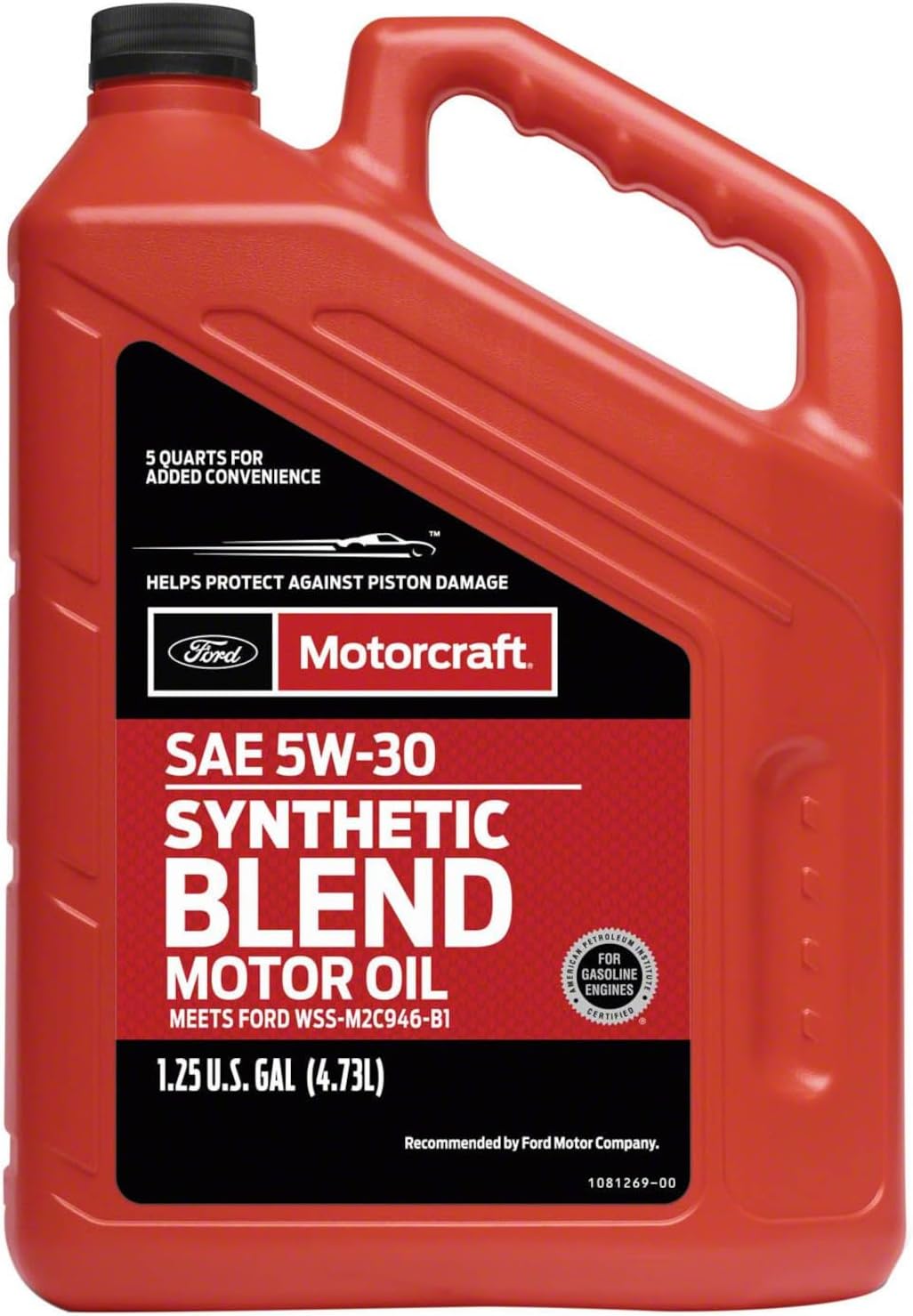
| Viscosity | 5W-30 SAE Grade |
|---|---|
| Size | 5-Quart Jug |
| Vehicle Service Type | Car, SUV, Truck, Van |
| Flash Point | 446 Degrees Fahrenheit |
This Motorcraft 5W-30 jug is a straightforward engine oil choice for routine DIY maintenance on compatible gasoline vehicles. It provides a 5W-30 viscosity that helps with cold starts while maintaining film strength at operating temperature, and the 5‑quart container makes refill and topping off straightforward. As a brand replacement part, it is engineered and tested for performance and long life in Ford and Lincoln applications, and the stated flash point and SAE grade indicate stable thermal properties. Typical uses are scheduled oil changes and topping off between services; the factory-focused formulation aims to protect bearings, pistons, and seals while working with modern sealing materials. Limitations include lack of detailed additive chemistry on the label and no explicit multi-vehicle specification beyond Ford/Lincoln fit, so users who need a particular manufacturer certification or extreme high‑mileage additives should verify compatibility before purchase.
Best for: Someone who wants a factory-focused, easy-to-use 5W-30 oil for routine oil changes on applicable Ford vehicles and values compatibility with manufacturer service expectations.
Less Ideal for: Drivers seeking specialized formulations for very high mileage engines, diesel applications, or those requiring a specific third-party certification should consider alternatives.
- 5W-30 viscosity that balances cold-start flow and high-temperature protection
- Sold in a 5-quart jug suitable for full oil changes without extra packaging
- Formulated and tested as a factory replacement for Ford and Lincoln applications
- High flash point indicating good thermal stability during operation
- Product description does not list detailed additive package or industry certification claims on the label
Verdict: The best overall engine oil that balances protection, compatibility with modern engine seals, fuel efficiency gains, and cost to suit most DIY maintenance needs.
2. Castrol GTX Full Synthetic 5W-30 Motor Oil, 5 Quart Jug
Best Budget Engine Oil

| Viscosity grade | 5W-30 |
|---|---|
| Volume | 5 Quarts |
| Oil type | Full Synthetic |
| Meets specs | API SP, ILSAC GF-7 |
| Manufacturer part number | 15E6DE |
Castrol GTX Full Synthetic 5W-30 is a five-quart jug of full synthetic motor oil formulated to reduce engine wear, control sludge, and resist viscosity breakdown at high temperatures. For routine maintenance on a 2019–2023 Ford Ranger, use it as the replacement oil during standard oil changes to help keep the engine clean and maintain pressure protection under normal driving and towing. The formula claims improved sludge control and stronger resistance to viscosity loss compared with industry baselines, which translates to cleaner internals and more consistent lubrication between service intervals. It meets modern specifications including API SP and ILSAC GF-7 and lists GM and Ford service specifications relevant to many gasoline engines. The practical benefit is a factory-quality, full synthetic option that supports standard oil-change intervals and everyday driving demands. Limitations are that it does not advertise extended high-mileage additives or specialized formulations for extreme-duty commercial use, so owners who push interval lengths or run heavy-duty commercial cycles should consult Ford guidance before extending change intervals.
Best for: Cost-conscious Ranger owners who want a factory-quality full synthetic 5W-30 that meets modern specs and provides solid protection for routine oil changes and everyday driving.
Less Ideal for: Drivers who routinely use extreme towing, commercial duty cycles, or who plan to extend oil-change intervals beyond factory recommendations should consider dedicated heavy‑duty or extended‑performance formulations instead.
- Full synthetic formulation for better high-temperature stability and viscosity control
- Claims improved sludge control and wear protection versus industry standards
- Meets current API SP and ILSAC GF-7 specifications and Ford service requirements
- Available in a convenient five-quart jug suitable for a single oil change
- Not positioned as an extended‑interval or high‑mileage specialty oil
Verdict: The best budget engine oil for cost-conscious buyers who need acceptable wear protection and spec compliance for routine oil changes without extra additives or premium claims.
3. Castrol EDGE 5W-30 Full Synthetic Motor Oil, 5 Quart Jug
Best Full-Synthetic Engine Oil

| SAE Viscosity Grade | 5W-30 |
|---|---|
| Container Type | Jug |
| Liquid Volume | 5 Quarts |
| Compatible with Vehicle Type | Car, Truck |
Castrol EDGE 5W-30 is a full synthetic motor oil designed to protect engine internals under heavy load and high temperature conditions. Typical use is routine oil changes for daily-driven trucks and cars, where it functions to reduce wear, resist sludge formation, and maintain viscosity across a wide temperature range. Notable features include a proprietary additive package targeted at high-temperature stability and claims for extended drain performance compared with some conventional oils. For a DIYer working on a 2019–2023 Ford Ranger, the 5W-30 grade helps with cold starts and keeps oil pressure stable during towing or spirited driving. Practical benefits are improved engine cleanliness and resistance to viscosity breakdown during extended high-load operation. Limitations are that extended drain interval claims depend on driving conditions and manufacturer service interval recommendations, and compatibility should follow Ford oil spec requirements for specific engines and years.
Best for: DIY truck owners who prioritize strong baseline protection, cleaner-running engines, and confident cold starts for routine maintenance on 2019–2023 Ford Ranger models.
Less Ideal for: Those following manufacturer-required non-5W-30 viscosity or specialized fluids for certain Ranger engines, or owners who strictly adhere to extended service intervals specified by their dealer without regard to operating conditions.
- Full synthetic formulation for better high-temperature stability and reduced sludge formation
- 5W-30 viscosity improves cold-start flow and maintains protection across a broad temperature range
- Formulated to provide strong wear protection for engines under load
- Meets multiple industry and manufacturer specifications for modern gasoline engines
- Extended oil change interval claims depend on driving style and should not override Ford service recommendations
Verdict: The best full-synthetic engine oil for DIYers who want the highest baseline protection, better cold starts, and improved thermal stability compared with conventional oils.
4. Castrol EDGE High Mileage 5W-30 Full Synthetic Motor Oil, 5 Quart
Best High-Mileage Engine Oil

| SAE Viscosity Grade | 5W-30 |
|---|---|
| Compatible with Vehicle Type | For vehicles with over 75,000 miles |
| Liquid Volume | 160 Fluid Ounces |
| Specifications | API SP, ILSAC GF-6 |
Castrol EDGE High Mileage 5W-30 is a full synthetic motor oil engineered for high-mileage engines and intended to be used as a direct drain-and-fill replacement. It includes additives designed to reduce sludge, control corrosion, limit oil burnoff, and protect timing components and worn rings. The product highlights a phosphorus replacement technology aimed at reducing harm to the catalytic converter while still providing wear protection. In practice this oil helps keep older engines cleaner and can reduce oil consumption and leaks by using conditioners tailored for seals and gaskets. It meets modern specifications including API SP and ILSAC GF-6, so it fits the factory recommendations for many late-model engines. The main trade-off is choosing a single-viscosity grade; 5W-30 is broadly suitable but buyers should confirm the 2019-2023 Ford Ranger engine spec before use. Packaged in a five-quart bottle, it is convenient for a full service and routine maintenance on high-mileage Rangers.
Best for: Owners of 2019–2023 Ford Rangers with high mileage who prioritize protecting worn seals, reducing oil consumption, and keeping the engine and emission system cleaner without changing service procedures.
Less Ideal for: Drivers with low-mileage Rangers or those whose engine requires a different viscosity grade should choose an oil matched to their factory recommendations instead.
- Formulated specifically for vehicles with over 75,000 miles to address wear and deposits
- Contains additives to reduce oil burnoff and help control sludge buildup
- Phosphorus replacement technology to limit harm to the catalytic converter
- Meets API SP and ILSAC GF-6 specifications for modern engine protection
- Only offered in a 5W-30 viscosity here so may not match every Ranger engine's recommended grade
Verdict: The best high-mileage engine oil for vehicles with significant miles that benefit from seal conditioners, reduced oil consumption, and additive packages targeting worn engines.
5. Factory Racing Parts 5W-30 Full Synthetic Oil Change Kit (7 qt)
Best 5W-30 Engine Oil

| Viscosity | SAE 5W-30 |
|---|---|
| Certifications | API SP, ILSAC GF-6A |
| Liquid Volume | 7 quarts |
| Included Components | Oil, oil filter, drain plug, gloves, funnel, sticker |
This kit supplies everything needed for a Ford Ranger or Bronco 2.3L oil service: seven quarts of SAE 5W-30 full synthetic oil, a WIX-brand oil filter sized to replace the factory unit, a drain plug, gloves, funnel, and an oil change sticker. The oil meets API SP and ILSAC GF-6A specifications, so it is formulated to control low-speed pre-ignition and handle modern start-stop and turbocharged duty. In use the 5W-30 viscosity gives dependable cold-start flow while maintaining film strength at highway and towing temperatures; the listing claims extended protection up to 7,500 miles between changes. The included filter and drain plug simplify a do-it-yourself service and reduce parts hunting. Limitations are that the advertised mileage interval may not match manufacturer recommendations under severe service, and this kit is specific to the listed Ford 2.3L applications so you must verify fitment before buying for other engines.
Best for: Shoppers who want a ready-to-use, vehicle-specific 5W-30 oil change kit for a 2019–2023 Ford Ranger or 2021–2023 Bronco 2.3L and prefer the convenience of a single purchase for a DIY service.
Less Ideal for: Drivers who follow stricter dealer-recommended intervals, who require oils with different viscosities or specifications, or who need a kit for a different engine family should look elsewhere.
- Complete kit includes oil, a premium WIX filter, drain plug, funnel, gloves, and service sticker for one convenient service.
- Full synthetic SAE 5W-30 formulation meeting API SP and ILSAC GF-6A for modern engine protection and LSPI control.
- Vehicle-specific filter and components are matched to the listed Ford 2.3L applications to reduce fitment guesswork.
- Manufacturer-stated extended change interval may exceed Ford’s recommended service schedule under heavy or severe use.
- Fitment is limited to the specified 2.3L Ranger and Bronco applications and is not universal.
Verdict: The best 5W-30 engine oil for shoppers who need a widely recommended viscosity that provides reliable cold-start performance and dependable high-temperature protection for many modern engines.
Choosing the Right 2019-2023 Ford Ranger Engine Oil: Key Factors to Consider
Viscosity and Temperature Range
Viscosity is the single most important trait when choosing oil for a 2019-2023 Ford Ranger because it affects startup protection, fuel economy, and oil pressure. Choose a viscosity grade that matches Ford recommendations for your engine and the climates you drive in. For example, a multigrade like 5W-30 balances cold-start flow with high-temperature film strength, while lower cold-viscosity oils such as 0W-20 improve pumpability in very cold climates.
Incorrect viscosity can increase wear during cold starts or allow excessive oil thinning under load. Consider seasonal differences and whether you tow frequently, as heavy loads raise operating temperatures and may favor a slightly higher hot-viscosity performance. Always check the owner's manual for the exact grade and service specification required for your Ranger model.
Synthetic Vs Conventional Base Stocks
Synthetic motor oils offer better thermal stability, oxidation resistance, and longer service life than conventional oils, which is beneficial for modern Ford Ranger engines, especially when towing or operating in hot conditions. Synthetics maintain viscosity under thermal stress, reduce sludge formation, and typically support extended drain intervals when allowed by the manufacturer.
Conventional oils can be acceptable for lighter use and shorter service intervals, but for owners seeking maximum protection, improved cold-start behavior, and consistent performance across temperature extremes, synthetic formulations are usually the better choice for the 2019-2023 Ranger.
OEM Specifications and Approvals
Matching oils to Ford-approved specifications and API/ILSAC ratings is critical. The Ranger's engine warranties and long-term reliability depend on using oils that meet the engine maker's requirements for additive chemistry and performance. Look for oils that explicitly state compliance with the relevant Ford specification or equivalent API classification.
Using oils that lack the appropriate approvals can risk varnish, deposit formation, and accelerated wear. Verify labels and technical data sheets to ensure the formulation aligns with the Ranger engine's needs before committing to an oil.
Towing and Heavy-Duty Use Considerations
If you regularly tow trailers or haul heavy loads with your Ranger, heat and engine load increase dramatically. Oils that resist thermal breakdown and maintain film strength under high stress help protect bearings, pistons, and turbo components. Choose formulations with robust high-temperature wear protection and shear stability.
Towing also accelerates oil degradation, so owners should consider more frequent oil changes or higher-performance synthetic oils that tolerate extended stress. Pay attention to the oil's high-temperature/high-shear (HTHS) performance numbers when evaluating options for frequent towing.
High-Mileage and Ageing Engines
For Rangers with higher miles, look for oils formulated to manage seal conditioning and reduce oil consumption. High mileage-specific formulations contain additives that help swell and condition seals and reduce leaks, while also addressing deposit control in engines that have seen more wear.
Older engines may benefit from slightly different viscosity choices depending on observed oil consumption and engine clearances. Monitor oil level between changes and choose a high-mileage formulation if you notice leaks, elevated consumption, or reduced compression that could be improved with an oil that helps condition components.
Oil Change Interval and Maintenance Practices
The desired oil change interval influences which oil is appropriate for your Ranger. Some synthetic oils are formulated to support longer drain intervals when used in conjunction with proper maintenance and diagnostic checks, while other oils are best suited to traditional shorter service schedules.
Factor in your driving patterns, the frequency of short trips versus long highway runs, and whether the vehicle is subject to stop-and-go urban driving or heavy towing. Regular oil analysis or periodic inspections can help determine whether you can safely extend intervals or should adhere to conservative change schedules.
Recommended Viscity Choices by Climate and Use
Match oil viscosity to both local climate and your Ranger's typical workloads. For temperate regions and mixed driving, a 5W-30 grade often provides a good balance of cold-start flow and high-temperature protection. In consistently cold climates, a 0W-20 option can improve pumpability and reduce wear during startup.
If you tow frequently or operate in hot environments, favor oils with stronger high-temperature film strength and higher HTHS numbers to maintain protection under sustained load. Always verify the Ranger owner's manual for permitted viscosity ranges before switching grades.
- 0W-20: best for very cold climates and improved fuel economy in light-duty use
- 5W-30: balanced choice for mixed climates and towing readiness
- 10W-30/10W-40: consider only if recommended for a specific high-mileage or high-temperature application
Understanding Oil Ratings and Labels
Oil labels carry API, ILSAC, and often OEM approval codes that indicate the formulation meets certain performance benchmarks. For the 2019-2023 Ranger, check the owner's manual for the required API or Ford specification and ensure the product label matches those requirements.
Technical data sheets provide deeper information about viscosity index, HTHS values, and base-stock type. When in doubt, rely on specification compliance rather than marketing claims to ensure compatibility with the Ranger's engines.
- API rating confirms general service performance for gasoline engines
- Manufacturer or OEM approvals indicate tailored compatibility with engine design and warranty requirements
- HTHS and viscosity index numbers reveal high-temperature and shear performance
Routine Maintenance Tips to Protect Engine Life
Consistent oil changes, using the correct filter and following recommended torque specs for the drain plug, are essential to maintain engine longevity. Fresh oil and a quality filter remove contaminants and prevent sludge buildup that can impair oil passages and valvetrain operation.
Monitor oil level between changes, especially after towing or long-haul trips. Periodic visual checks for leaks or unusual oil consumption can catch issues before they lead to serious engine damage.
- Change oil at recommended intervals or sooner if you perform heavy towing
- Use the correct oil filter, and inspect the drain plug gasket when servicing
- Record oil changes and note consumption trends to inform future viscosity or formulation choices
Oil for Turbocharged Rangers
Many 2019-2023 Ranger engines use turbocharging, which raises thermal and mechanical demands on the oil. Turbochargers spin at high speeds and run hot, making oxidation resistance and deposit control critical properties in the oil you choose.
Select oils with strong antioxidant additives and detergents that help protect turbo bearings and keep compressor and turbine housings free from carbon buildup. Good turbo protection reduces the risk of bearing wear and turbocharger performance loss over time.
- Look for formulations with proven oxidation stability
- Regular oil and filter changes are more important for turbocharged engines
- Check for turbo-specific guidance in service documentation
Environmental and Fuel Economy Considerations
Lower-viscosity oils can improve fuel economy by reducing internal friction, but they must still meet the engine's protection requirements. If maximizing mpg is a priority, choose an oil that balances low-viscosity benefits with adequate wear protection for your Ranger.
Disposal and recycling of used oil is an important environmental responsibility. Follow local regulations for used oil disposal and use certified collection centers to minimize environmental impact.
- 0W-20 and other lower-viscosity oils typically yield marginal fuel economy gains
- Never sacrifice required protection for small efficiency improvements
- Recycle used oil properly to reduce environmental harm
Still looking for the perfect fit?
Select your Ford Ranger configuration to see the most relevant Engine Oils recommendations
How We Chose the Best 2019-2023 Ford Ranger Engine Oil
We evaluated oils based on criteria that matter specifically for the 2019-2023 Ford Ranger platform. First, viscosity and specification compliance: oils had to meet Ford-recommended viscosity grades and API/ILSAC or OEM specifications appropriate for the Ranger's engines. Second, thermal and shear stability: we prioritized oils with proven resistance to thinning under load and elevated temperatures, which is important for towing and highway driving. Third, additive package and wear protection: oils that include robust antiwear and dispersant chemistries reduce deposit formation and protect turbochargers and valve trains. Fourth, cold-start performance: low-temperature fluidity and pumpability were considered for owners in colder climates. Fifth, compatibility with extended drain intervals and oil change practices: we favored oils whose durability aligns with typical Ranger service intervals.We excluded oils that do not meet Ford's published specifications or that are intended only for diesel engines when the Ranger uses gasoline powerplants. We also set aside hybrid or unconventional formulations that lack clear manufacturer backing. The final shortlist reflects balance across viscosity options, synthetic base stocks, and formulations tuned for towing or high-mileage use.
Our full evaluation process is outlined in our review methodology.
FAQ
How often should I change engine oil in a 2019-2023 Ford Ranger?
It depends on driving conditions and the oil used. For normal driving with synthetic oil, many owners follow manufacturer intervals in the owner's manual. For heavy towing or severe service, shorten intervals and inspect oil condition more frequently.
Can I switch from conventional oil to full synthetic in my Ranger?
Yes, switching to full synthetic is generally safe and can improve thermal stability and cold-start protection. Ensure the synthetic meets Ford specifications and monitor for leaks or consumption after the change.
What viscosity should I use if I live in a cold climate?
In cold climates, a lower cold-grade like 0W-20 improves pumpability and reduces startup wear. Confirm the owner's manual permits the lower viscosity for your engine before switching.
Is high mileage oil necessary for an older Ranger?
High mileage formulations can help condition seals and manage oil consumption in aging engines. They are beneficial if you notice leaks or elevated consumption, but they are not mandatory if the engine is performing well with standard oils.
Does towing require a different oil choice?
Frequent towing increases operating temperature and stress, so choose oils with stronger high-temperature wear protection and shear stability. Also consider more frequent oil changes under heavy-duty use.
How do I know if an oil meets Ford specifications?
Check the product label and technical data sheet for explicit mention of compliance with Ford specifications or the relevant API/ILSAC ratings. If the label does not list approvals, consult the manufacturer's technical documentation.
Final Verdict
Prioritize oils that meet Ford-recommended viscosity and specification requirements while matching your typical driving and towing patterns. Synthetic formulations generally offer superior thermal stability and cold-start protection, which benefits most 2019-2023 Ranger owners. For heavy towing or high-mileage trucks, choose oils with robust high-temperature performance or high-mileage additives and plan for more frequent inspections.Balance viscosity, OEM approvals, and maintenance cadence to make a confident selection. Focus on long-term protection and proper service intervals rather than marginal fuel economy gains when trying to extend engine life.
Explore More:
- Check out all Ford Ranger parts & accessories
- Explore Fluids & Chemicals
- Browse all Accessories
