

Note: This article contains affiliate links. If you click on these links and make a purchase, I may earn a small commission at no extra cost to you. This helps support my research and content. Read my full affiliate disclosure here.
Choosing the right engine oil for a Ford Ranger Raptor matters more than many owners realize. The Raptor's performance-oriented engine and occasional heavy towing or off-road use place distinct demands on lubrication, so the oil you choose affects protection, fuel economy, and long-term durability.This guide covers the top shortlisted engine oils suitable for the Ranger Raptor and explains the evaluation criteria used to pick them. You will find clear guidance on viscosity choices, synthetic versus conventional options, and considerations for high-mileage engines to help you make a confident selection.
Looking for other parts? See all Ford Ranger parts & accessories.
Top Picks at a Glance
| Best Overall Engine Oil The best all-around oil balancing protection, performance, and value | Motorcraft 5W-30 Engine Oil, 5-Quart Jug |  |
| Best Budget Engine Oil A low-cost oil that provides reliable basic engine protection | Motorcraft 5W-30 Engine Oil (1 qt) |  |
| Best Full-Synthetic Engine Oil 100% synthetic formulation for maximum protection and performance | Castrol EDGE Extended Performance 5W-30 Full Synthetic Motor Oil, 5 Quart |  |
| Best Synthetic Blend Engine Oil A compromise between full synthetic performance and lower cost | Ford Motorcraft SAE 5W-30 Premium Synthetic Blend Motor Oil, 5 Quart |  |
| Best 5W-30 Engine Oil A commonly specified viscosity for balanced cold-start and operating protection | Castrol EDGE 5W-30 Advanced Full Synthetic Motor Oil, 5 Quart Eco Pack |  |
| Best High-Mileage Engine Oil Formulated to condition seals and reduce oil consumption in older engines | Mobil 1 High Mileage Full Synthetic Motor Oil 5W-30, 5 Quart |  |
1. Motorcraft 5W-30 Engine Oil, 5-Quart Jug
Best Overall Engine Oil
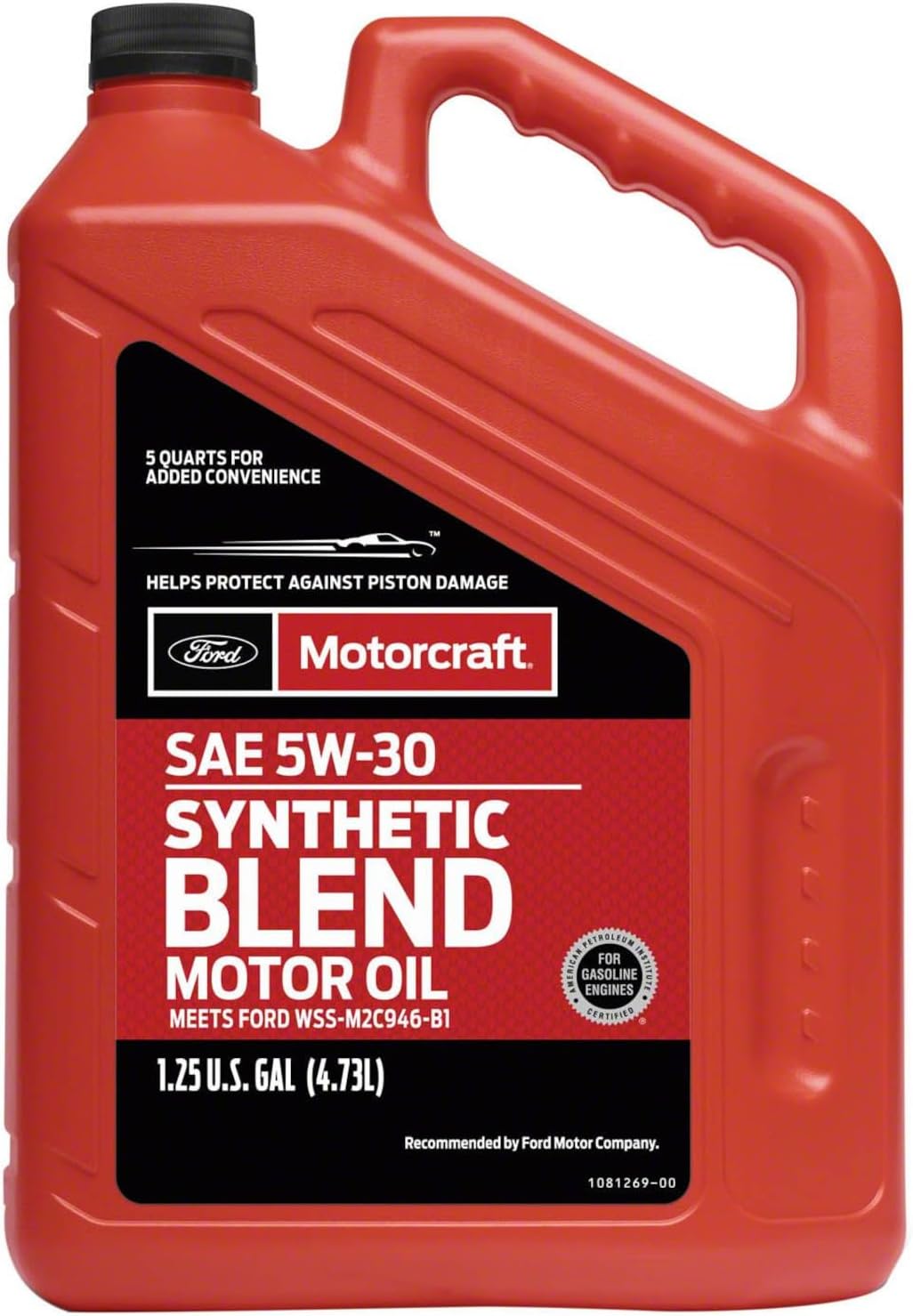
| Viscosity | 5W-30 SAE Grade |
|---|---|
| Size | 5-Quart Jug |
| Vehicle Service Type | Car, SUV, Truck, Van |
| Flash Point | 446 Degrees Fahrenheit |
This Motorcraft 5W-30 jug is a straightforward, factory-quality engine oil designed for routine service and DIY oil changes. It supplies 5W-30 viscosity to protect engine components across typical driving temperatures and is packaged in a 5-quart container convenient for single oil changes. As a Motorcraft-branded fluid, it is formulated to meet common OEM specifications for Ford-family vehicles, which helps ensure compatibility and dependable performance when used as a direct replacement. The practical benefits are easy: predictable cold starts, stable film strength at operating temperature, and a familiar feel when monitoring oil condition between services. Limitations are minimal but worth noting for extreme needs: it is a general-purpose 5W-30 rather than a specialized high-mileage, racing, or diesel formulation, so drivers with heavy towing, extreme high-performance tuning, or diesel engines should choose a product matched to those demands. For routine maintenance and most on-road use it provides a simple, reliable option that aligns with factory expectations.
Best for: Buyers who prioritize a reliable, factory-style replacement oil for routine maintenance and want a no-frills option that balances protection and drivability for everyday on-road use.
Less Ideal for: Drivers who need a specialty formulation for heavy towing, motorsport use, diesel engines, or those seeking additives specifically for very high-mileage engines should look elsewhere.
- Factory-quality formulation tailored for Ford vehicles
- Standard 5W-30 viscosity for good cold-start flow and high-temp protection
- Comes in a 5-quart jug sized for a complete DIY oil change
- Not marketed as a specialized high-mileage, racing, or diesel formula
Verdict: The best all-around engine oil that balances wear protection, fuel efficiency, and versatility for most DIY maintenance and repair jobs.
2. Motorcraft 5W-30 Engine Oil (1 qt)
Best Budget Engine Oil
| Container Type | Bottle |
|---|---|
| Compatible with Vehicle Type | Ford F-150, Transit |
| Liquid Volume | 1 Quarts |
| Brand Name | Motorcraft |
This Motorcraft 5W-30 quart is a factory-branded engine oil intended as a straightforward, budget-friendly lubricant for Ford engines. It is used like any conventional motor oil when topping off or during oil changes between synthetic-focused service intervals. The product carries Motorcraft branding and a part number that aligns it with Ford maintenance practices, which makes it simple to choose when you want a dealer-recommended fluid. In practical terms it provides basic wear protection and viscosity control at typical operating temperatures, and the quart packaging is convenient for one-off top-offs or small-volume servicing. Limitations are that this listing only shows a single quart and it does not advertise advanced additive packages or specific high-mileage formulas, so drivers seeking synthetic-blend or performance-focused oils should look elsewhere. For routine maintenance on a Ford vehicle where factory-branded, no-frills oil is preferred, this is a serviceable option.
Best for: Budget-focused Ford owners who want a factory-branded, no-frills 5W-30 oil for routine topping-off or occasional service and prioritize compatibility with Ford maintenance guidance.
Less Ideal for: Drivers seeking high-performance synthetic oils, specialized high-mileage formulas, or bulk quantities for frequent full oil changes should consider other options.
- Factory-branded product designed to match Ford service expectations
- Single-quart bottle convenient for top-offs or small jobs
- Simple, standard 5W-30 viscosity suitable for typical gasoline engine temperatures
- No explicit claim of synthetic or synthetic-blend formulation in the listing
- Sold as a single quart which may be inefficient for full oil changes
- No detailed additive or performance specifications provided
Verdict: The best low-cost engine oil for budget-conscious buyers who need dependable lubrication and basic wear protection without premium additives.
3. Castrol EDGE Extended Performance 5W-30 Full Synthetic Motor Oil, 5 Quart
Best Full-Synthetic Engine Oil

| Viscosity | 5W-30 |
|---|---|
| Compatible Vehicle Type | Car, Gasoline and Light Duty Diesel, Hybrids, Truck |
| Liquid Volume | 160 Fluid Ounces |
| Fit Type | Universal Fit |
Castrol EDGE Extended Performance 5W-30 is a hyper-premium full synthetic motor oil designed to protect modern engines under extended drain intervals. It is used as a factory-quality replacement oil for routine maintenance and long-interval service, delivering stable 5W-30 viscosity across a wide temperature range to help preserve oil pressure and lubrication during hot operating conditions. The formula emphasizes wear protection, thermal stability, and cleanliness with proprietary additives intended to minimize sludge and deposits while supporting fuel economy. Castrol positions this oil for extended drains up to the stated interval and for engines that demand strong high-temperature performance and resistance to breakdown. Limitations include the need to confirm vehicle manufacturer approvals and interval recommendations for the Ranger Raptor specifically, since extended drain claims may exceed factory service schedules; users should follow Ford guidance for warranty and maintenance requirements.
Best for: Mechanics and tech-minded owners who prioritize maximum engine protection and consistent oil performance across a wide range of temperatures for a high-output truck engine.
Less Ideal for: Owners who strictly follow Ford's published service intervals or who require oils explicitly listed in Ford documentation without cross-checking approvals.
- Full synthetic formulation for consistent viscosity and thermal stability
- Additive package targeted at wear protection and deposit control
- Formulated for extended drain intervals to reduce service frequency
- Extended drain recommendation may conflict with Ford's specified service intervals if not verified
Verdict: The best full-synthetic engine oil for mechanics who want the highest-level engine protection, consistent viscosity, and improved performance in varied temperatures.
4. Ford Motorcraft SAE 5W-30 Premium Synthetic Blend Motor Oil, 5 Quart
Best Synthetic Blend Engine Oil

| SAE J300 Viscosity Grade | 5W-30 |
|---|---|
| Container Type | Bottle |
| Compatible with Vehicle Type | Car |
| Liquid Volume | 5 quarts |
This Motorcraft 5W-30 synthetic blend is formulated to deliver stronger wear protection and better thermal stability than conventional oils while remaining more budget-friendly than full synthetics. It is designed for typical engine protection tasks such as minimizing deposits, reducing high-temperature oxidation, and protecting turbochargers and bearings. The oil’s friction-reducing additives help improve fuel economy compared with heavier 10W-30 grades, and its low-temperature flow characteristics reduce gelling in cold starts. Buyers will appreciate the vehicle-specific fit and the familiar Ford branding that signals compatibility with Ford-recommended service intervals when used as directed. The main limitation is that as a synthetic blend it does not quite match the extended drain intervals and ultra-high-temperature protection of premium full-synthetic formulas, so drivers who demand maximum performance under extreme towing, racing, or extended-interval conditions may prefer a full synthetic alternative.
Best for: Buyers who want a step up from conventional motor oil for everyday driving and light towing while keeping costs lower than full synthetic options.
Less Ideal for: Drivers who routinely push engines hard, run long extended oil-change intervals, or require maximum thermal stability for severe-duty or motorsport use should consider a full synthetic instead.
- Formulated to reduce engine deposits and wear for improved long-term protection
- Friction-reducing additives that can yield better fuel economy versus heavier grades
- Designed to protect against high-temperature oxidation and turbocharger deposits
- Good cold-start performance with low-temperature flow characteristics
- Does not provide the same extended drain intervals or peak high-temperature protection as full synthetic oils
Verdict: The best synthetic blend engine oil for buyers seeking improved protection and stability over conventional oils at a more affordable price than full synthetics.
5. Castrol EDGE 5W-30 Advanced Full Synthetic Motor Oil, 5 Quart Eco Pack
Best 5W-30 Engine Oil

| Liquid Volume | 5 Quarts |
|---|---|
| Compatible with Vehicle Type | Car, Truck |
| Automotive Fit Type | Universal Fit |
| API Specification | API SP/SN PLUS/SN |
| Dexos | GM dexos1 Gen 2 |
Castrol EDGE 5W-30 is a full synthetic engine oil engineered to give DIY mechanics reliable cold-start flow and sustained protection at high operating temperatures. It is used like any standard 5-quart oil change refill and is available in an Eco Pack that reduces plastic waste. The formulation with Fluid TITANIUM technology targets reduced sludge and metal wear, which helps preserve compression and power over time while supporting fuel efficiency by lowering internal friction. Castrol cites strong performance on industry tests for wear and high-temperature stability and lists broad industry specifications including API SP and GM dexos1 Gen 2 so it fits many modern gasoline engines. Practical benefits include easier cold-weather starts, long-term engine cleanliness, and robust protection during heavy use. Limitations are that it is a single-viscosity grade so users should confirm 5W-30 is the correct viscosity for their Ranger Raptor application and that specialized diesel or high-mileage formulations are not part of this product offering.
Best for: DIY mechanics looking for a widely recommended 5W-30 that eases cold starts and provides steady protection during spirited driving or towing while following routine oil-change intervals.
Less Ideal for: Drivers seeking a diesel-specific, high-mileage, or performance-variant oil tailored to unusual engine requirements should consider a specialized formulation instead.
- Full synthetic base with Fluid TITANIUM technology for enhanced wear protection
- 5W-30 viscosity balances cold-start flow and high-temperature stability
- Meets common industry specs including API SP and GM dexos1 Gen 2 for broad modern gasoline engine compatibility
- Eco Pack packaging with reduced plastic and recyclable outer shell
- Not formulated specifically for diesel engines or high-mileage conditioning
Verdict: The best 5W-30 engine oil for DIY mechanics who need a widely recommended viscosity that delivers good cold-start flow and steady high-temperature protection.
6. Mobil 1 High Mileage Full Synthetic Motor Oil 5W-30, 5 Quart
Best High-Mileage Engine Oil

| Viscosity | 5W-30 |
|---|---|
| Size | 5 Quart |
| Model | Extended Performance |
| Manufacturer | Mobil 1 |
Mobil 1 High Mileage 5W-30 is a full-synthetic engine oil designed for cars and light trucks with higher mileage. It is formulated to clean and protect aging engine components, using Mobil 1’s Triple Action Formula to reduce deposits and sludge while helping control oxidation so the oil remains effective for extended drain intervals. The label highlights seal conditioners and additives aimed at minimizing leaks and oil consumption, which can help older engines retain compression and reduce seepage around gaskets. It meets modern SAE and ILSAC viscosity requirements and is suitable for turbocharged and fuel-injected engines found in performance applications. Practical benefits include improved thermal protection, lower engine temperatures versus conventional oils, and compatibility with extended 10,000-mile service intervals where recommended. Limitations are that extended drain intervals depend on driving conditions and manufacturer guidance, and older engines with severe wear may still require mechanical repair rather than oil-only remedies. Follow Ford Ranger Raptor service specs when deciding interval length and viscosity selection.
Best for: Buyers guiding the Ford Ranger Raptor toward longer service intervals who want a synthetic oil that targets high-mileage engine care, seal conditioning, and deposit control to help reduce leaks and consumption.
Less Ideal for: Drivers planning short, severe-service oil changes, those who prefer strictly factory-recommended short intervals, or owners of engines needing mechanical overhaul rather than additive-based fixes.
- Formulated for engines with over 75,000 miles to help reduce deposits and sludge
- Includes additives and seal conditioners that can help minimize leaks and reduce oil consumption
- Full-synthetic base provides strong thermal and low-temperature protection
- Supports extended oil change intervals up to 10,000 miles when used per guidelines
- Extended drain claims depend on driving habits and should follow vehicle manufacturer guidance
- Will not fix major mechanical wear or gasket failure on its own
Verdict: The best high-mileage engine oil for older engines, offering seal conditioners and additives to minimize leaks, reduce consumption, and restore compression.
Choosing the Right Ford Ranger Raptor Engine Oil: Key Factors to Consider
Viscosity Range and Cold-Start Protection
Viscosity determines how quickly oil flows at startup and how it protects moving parts once the engine reaches operating temperature. For the Ranger Raptor you should match the viscosity to your climate and driving style. Lighter grades help with cold-start lubrication in very cold climates, reducing wear during the first seconds of operation.
However, too light a grade can thin excessively under high heat or heavy load, so consider a multi-grade that balances cold-flow with high-temperature film strength. Check the vehicle's recommended viscosity range as a baseline and choose an oil that maintains its protective film under the Raptor's typical use cases, such as highway cruising, towing, and off-road bursts.
Synthetic Versus Conventional Formulation
Synthetic motor oil typically offers better thermal stability, shear resistance, and longer service life than conventional oils. For a performance-oriented pickup like the Ranger Raptor, synthetic formulations usually deliver superior protection during high-load driving and frequent temperature swings.
Conventional oils can be acceptable for low-stress, short-term use, but they may break down sooner under towing or off-road conditions. Prioritize synthetic or synthetic-blend oils when you want consistent viscosity retention, reduced sludge risk, and extended drain intervals compatible with the vehicle's service recommendations.
Additive Chemistry and Wear Protection
The additive package controls how well an oil prevents wear, cleans deposits, and resists oxidation. Anti-wear additives such as zinc dialkyldithiophosphate are important for protecting camshafts, lifters, and bearings, especially under heavy loads. Detergents and dispersants keep combustion byproducts and soot suspended to prevent sludge and varnish buildup.
For the Ranger Raptor, which may see higher cylinder pressures and temperatures during spirited or loaded driving, choose oils with robust anti-wear and detergent chemistry to protect valve train components and maintain cleanliness over time.
OEM Approvals and Specification Compliance
Manufacturer approvals and industry specifications indicate an oil has passed tests relevant to performance and longevity. Oils that meet the recommended specifications for Ford engines signal compatibility with engine materials and performance expectations. Using oils that lack appropriate approvals can risk inadequate protection or warranty concerns.
Confirm that the oil meets or exceeds the specifications your Ranger Raptor's manual lists. This ensures the formulation has been tested for wear, deposit control, shear stability, and other attributes important to the engine.
Oil Drain Interval and Shear Stability
How long an oil maintains its protective properties before needing replacement affects both maintenance schedule and long-term engine health. Oils with strong shear stability resist viscosity breakdown under mechanical stress, which matters if you drive aggressively or tow frequently with the Ranger Raptor.
Evaluate typical drain interval guidance for each oil type and consider whether extended-interval oils are compatible with your driving patterns. Even with extended-life synthetics, following manufacturer-recommended service intervals is important for sustained engine health.
Compatibility With High Mileage Engines
If your Ranger Raptor has significant mileage, oil choice can influence oil consumption, seal condition, and engine noise. High-mileage formulations often include seal conditioners and additives that help reduce leaks and improve compression retention. These characteristics can be valuable for older Raptor engines showing minor wear.
Assess whether a high-mileage formulation is appropriate based on engine condition. In some cases, a standard synthetic with strong anti-wear properties is preferable, while in others, a dedicated high-mileage oil helps manage aging seals and oil consumption.
Choosing the Right Viscosity for Your Climate
Viscosity selection is the single most practical adjustment an owner can make for local conditions. In cooler climates favor oils with lower winter viscosity ratings to improve cold start flow. In hotter regions or if you tow often, pick a grade that maintains a thicker film at operating temperature to prevent metal-to-metal contact under sustained load.
Refer to the Ranger Raptor's recommended viscosity range and then pick a specific grade within that window that aligns with your typical seasonal temperatures and driving. Multi-viscosity oils give the best all-season compromise for many owners.
- Colder climates: choose oils with better cold-flow numbers
- Hotter climates or heavy loads: prioritize high-temperature film strength
- Multi-grade oils balance cold starts and hot protection
When to Consider High-Mileage Engine Oils
High-mileage engine oils are formulated with additives that target seal conditioning and deposit control. If your Ranger Raptor has elevated oil consumption or minor seepage, these oils can reduce leaks and make the engine run quieter.
If the engine runs well and consumption is low, a modern synthetic with robust anti-wear additives may be the better long-term choice. Evaluate the engine condition and choose high-mileage formulations primarily when signs of aging are present.
- Look for seal conditioners if you notice minor leaks
- High-mileage oils can reduce oil consumption in worn engines
- Skip high-mileage formulas if the engine shows no signs of age
Oil Change Practices and Maintenance Tips
Regular oil changes are the most effective way to preserve engine life. Follow the manufacturer's service intervals as a baseline, but adjust more frequently if you operate off-road, tow, or drive in dusty conditions. Fresh oil and a clean filter help maintain cooling and reduce abrasive wear.
Keep records of oil type and intervals so you can detect changes in consumption or performance. If you change to a different viscosity or formulation, monitor for leaks or unusual noises for a few service cycles.
- Replace the oil filter with each oil change
- Inspect for leaks after switching formulations
- Shorten intervals under heavy-duty use
Synthetic Vs Synthetic-Blend: Practical Differences
Full synthetic oils generally provide superior thermal stability, lower volatility, and better resistance to shear compared with blends. They are often recommended for vehicles like the Ranger Raptor that can operate under higher stress. Synthetic-blend oils offer a middle ground: better protection than conventional oils at a lower cost than full synthetics.
Decide based on intended use. For regular spirited driving, towing, or long highway runs, a full synthetic is usually the more protective choice. For primarily local, moderate driving, a synthetic blend can be a reasonable compromise.
- Full synthetics: best for high-stress use and extended intervals
- Blends: cost-effective with improved protection over conventional oils
- Match oil type to how you actually use the truck
Monitoring Oil Health Between Changes
Use simple checks to track oil condition. Periodically inspect the dipstick for level and color. A milky appearance can indicate coolant contamination, while heavy sludge or strong fuel smell points to contamination or combustion issues. Regular visual checks help you catch problems before they cause lasting damage.
If you tow or drive off-road frequently, sample oil more often and consider lab analysis if you detect metal particles or rapid viscosity changes. Early detection of abnormal wear can save major repair costs.
- Check level and color monthly or before long trips
- Use lab analysis for persistent concerns
- Address milky oil or metal particles immediately
Still looking for the perfect fit?
Select your Ford Ranger configuration to see the most relevant Engine Oils recommendations
How We Chose the Best Ford Ranger Raptor Engine Oil
We evaluated candidate oils against criteria that reflect the real-world demands of the Ford Ranger Raptor. Our primary filters included oil specification and OEM approvals, focusing on modern synthetic formulations that meet Ford-recommended standards and viscosities. Viscosity performance across temperature ranges was assessed to ensure cold-start protection and high-temperature film strength during sustained loads.We also considered additive package quality, including detergents, dispersants, and anti-wear chemistry, because these affect deposit control and component longevity under heavy-duty and off-road conditions. Oil change interval performance and shear stability were weighed to identify oils that maintain viscosity under stress. Compatibility with current engine seals and suitability for high-mileage engines were evaluated to reduce leak risk and oil consumption.Exclusions: we excluded outdated formulations, oils lacking relevant OEM approvals, and specialty racing fluids not intended for typical street or light off-road use. The final picks balanced protection, thermal stability, and everyday usability for Ranger Raptor owners.
Our full evaluation process is outlined in our review methodology.
FAQ
What viscosity engine oil should I use in a Ford Ranger Raptor?
The correct viscosity depends on climate and driving load. Follow the vehicle's recommended range in the owner's manual, then pick a multi-grade oil within that range that suits your local temperatures and towing or off-road use.
Is full synthetic oil necessary for the Ranger Raptor?
Full synthetic oil is not strictly required but is often recommended for performance-oriented use because it offers better thermal stability and shear resistance. For light, everyday driving a synthetic blend may be acceptable.
How often should I change engine oil on the Ranger Raptor?
Follow the manufacturer service intervals as a baseline. Shorten intervals if you tow, drive off-road, or operate in extreme temperatures. Regular oil and filter changes are the single best way to protect the engine.
Can I switch between different oil viscosities or brands?
You can switch viscosities within the manufacturer's recommended range. When changing formulations, monitor for leaks or changes in consumption. Using oils with proper specifications and approvals reduces the risk of compatibility issues.
Should I use a high-mileage oil in an older Ranger Raptor?
High-mileage oils can help if the engine shows signs of wear, like increased oil consumption or minor leaks, because they include seal conditioners. If the engine runs clean with low consumption, a standard synthetic with strong anti-wear properties may be preferable.
What signs indicate my oil is no longer protecting the engine?
Look for metal particles in oil, a sudden increase in consumption, milky discoloration, unusual engine noise, or visible sludge. Any of these signs warrant immediate inspection and possibly earlier oil replacement.
Final Verdict
Prioritize oils that match the Ranger Raptor's recommended viscosity and meet relevant OEM specifications. For owners who tow, drive off-road, or regularly operate at higher temperatures, favor synthetic formulations with strong anti-wear additives and shear stability.Balance your choice with maintenance habits: regular oil and filter changes, routine inspections, and choosing a viscosity suited to local climate will protect performance and longevity. Use the tradeoffs between protection and cost to select an oil that fits your driving style and maintenance plan.
Explore More:
- Check out all Ford Ranger parts & accessories
- Explore Fluids & Chemicals
- Browse all Accessories
