

Note: This article contains affiliate links. If you click on these links and make a purchase, I may earn a small commission at no extra cost to you. This helps support my research and content. Read my full affiliate disclosure here.
If you own a Ford Ranger with a manual gearbox, the transmission fluid you choose affects shift feel, gear longevity, and drivetrain noise. Using fluid that matches the factory-recommended viscosity and friction properties helps the gearbox operate smoothly under towing, off-road, and daily-driving conditions. This guide highlights the top manual transmission fluids shortlisted for Ranger owners and explains the practical reasons these options were selected.Below you will find our top picks for manual transmission fluid, plus clear buying factors and maintenance guidance to help you decide which formulation suits your Ranger and driving style.
Looking for other parts? See all Ford Ranger parts & accessories.
Top Picks at a Glance
| Best Overall Transmission Fluid A balanced manual-transmission fluid that fits most DIY needs | TRIAX Synergy Gear MT 75W-90 GL-4 Full Synthetic Manual Transmission Fluid (1 Quart) | 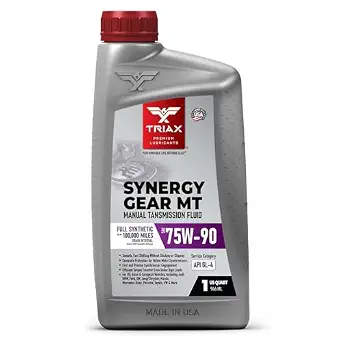 |
| Best Budget Transmission Fluid An affordable quart that delivers solid protection without breaking the bank | ACDelco 75W-85 GL-4 Manual Transmission and Transfer Case Fluid, 1 qt |  |
| Best OEM Ford Manual Fluid Factory-formulated fluid meeting Ford's manual-transmission specifications and approvals | Ford Genuine XT‑M5‑QS Full Synthetic Manual Transmission Fluid, 1 qt |  |
| Best Synchromesh Manual Fluid Formulated specifically to optimize synchronizer performance and smooth shifting | Valvoline Synchromesh Manual Transmission Fluid, 1 Quart |  |
| Best 75W-90 Synthetic Gear Oil Full-synthetic 75W-90 GL‑4 gear oil for higher-temp protection and smooth shifts | TRIAX Synergy Gear MT 75W-90 GL-4 Full Synthetic Manual Transmission Fluid (1 Gallon) |  |
| Best Heavy-Duty SAE 40 Manual Fluid High-viscosity manual-transmission oil for heavy-duty or high-heat use | Mobil Delvac 1 Fully Synthetic Manual Transmission Fluid SAE 40, 1 Gallon |  |
1. TRIAX Synergy Gear MT 75W-90 GL-4 Full Synthetic Manual Transmission Fluid (1 Quart)
Best Overall Transmission Fluid

| Viscosity | 75W-90 |
|---|---|
| SAE J300 Viscosity Grade | 75W-90 |
| Liquid Volume | 1 Quarts |
| Material | Full Synthetic Fluid |
This Triax Synergy Gear MT 75W-90 is a full synthetic GL-4 manual transmission fluid formulated to deliver smooth synchronizer engagement and strong gear protection. It is used as a factory-quality replacement wherever 75W-90 GL-4 or MT-90 fluids are specified, and its frictional tuning is intended to prevent shudder, sticking, or slipping during shifts. The formula is described as yellow-metal safe, so it should be compatible with brass and copper synchronizers common in many manual gearboxes. Practical benefits include improved shift feel under load and resistance to high-temperature wear, making it suitable for routine service and heavier use. The brand also advertises extended drain capability, which can reduce service frequency when following manufacturer guidance. Limitations are that specific vehicle approvals are not listed, so confirm Ford Ranger manual transmission requirements before use, and one-quart bottles mean multiple units may be needed for larger fills.
Best for: Buyers seeking a balanced, factory-replacement style manual fluid that prioritizes smooth shifts and long-term durability for routine service on compatible manual gearboxes.
Less Ideal for: Drivers who require fluids with specific manufacturer approvals or whose Ranger has a rare transmission that mandates a unique spec should consult the handbook or dealer before choosing this product.
- Full synthetic 75W-90 GL-4 formulation for consistent viscosity and heat resistance
- Friction-optimized for smoother synchronizer engagement and reduced shift shudder
- Yellow-metal safe, compatible with brass and copper synchronizers
- Advertised long drain capability that can extend service intervals
- No explicit OEM approvals or a list of Ford transmission part numbers included
- Sold in 1-quart bottles which may require multiple units for complete fills
Verdict: The top pick for readers who want a well-rounded manual transmission fluid combining OEM compatibility, smooth shifts, and proven durability for routine service.
2. ACDelco 75W-85 GL-4 Manual Transmission and Transfer Case Fluid, 1 qt
Best Budget Transmission Fluid

| Brand | ACDelco |
|---|---|
| Liquid Volume | 1 Quarts |
| Recommended Uses For Product | Transmission Fluid |
| Item Form | Oil |
This ACDelco 75W-85 GL-4 manual transmission fluid is a straightforward, budget-focused choice for service on Ford Ranger manual gearboxes and transfer cases that call for a GL-4 specification. It is designed to preserve synchronizers and protect gear surfaces while maintaining consistent viscosity in cold starts, so shifts stay predictable in cooler climates. The one-quart jug and common SAE grade make it simple to top up or refill during routine maintenance. Because it targets basic wear protection rather than high-performance or extreme-pressure formulations, it works well for daily-driven Rangers and older trucks where factory replacement fluid is appropriate. The product is discontinued by the manufacturer but remains useful where GL-4 chemistry and 75W-85 viscosity are specified. Users needing advanced extreme-pressure protection or specialty formulations for heavily modified transmissions should look elsewhere.
Best for: Owners of Ford Ranger trucks seeking an economical, factory-style manual transmission fluid for routine service who prioritize reliable synchronizer protection on a budget.
Less Ideal for: Drivers with heavily modified transmissions, off-road racers, or anyone needing high extreme-pressure additives should choose a specialty or heavy-duty fluid instead.
- GL-4 formulation protects synchronizers and gear surfaces compatible with many manual transmissions
- 75W-85 viscosity helps maintain shift quality in cold weather
- One-quart jug suits routine top-ups and DIY maintenance
- From a recognized factory-replacement brand with clear specification labeling
- Discontinued by the manufacturer, which may limit long-term availability
- Not formulated for extreme-pressure or racing applications
Verdict: Choose this economical manual-trans fluid when you need a reliable, low-cost replacement that preserves synchronizers and basic wear protection on a tight budget.
3. Ford Genuine XT‑M5‑QS Full Synthetic Manual Transmission Fluid, 1 qt
Best OEM Ford Manual Fluid

| Viscosity | SAE 75W-90 |
|---|---|
| Liquid Volume | 32 Fluid Ounces |
| Recommended Uses | 1995-2011 MTX-75 and IB5 transmissions |
| Upper Temperature Rating | 350 Degrees Fahrenheit |
| Model | XT-M5-QS |
This Ford Genuine XT‑M5‑QS is a factory‑formulated full synthetic manual transmission fluid intended for MTX‑75 and IB5 gearboxes and older rear‑drive transmissions that call for GL‑3 or GL‑4 gear oils. It is used as a direct replacement fluid to preserve factory shift feel while improving cold‑shift performance and thermal stability. The formula emphasizes thermal, oxidative, and shear stability so it can meet Ford fill‑for‑life guidance and help reduce operating temperatures. It also includes additives to protect synchronizers, bearings, and other gearset components, which helps extend component life and maintain smooth gear changes. Practical benefits include improved shift feel in cold weather and reduced long‑term wear compared with conventional oils. Limitations are that it is specified to particular Ford transmissions, so it is not a universal manual fluid and buyers should confirm compatibility with their transmission model before use.
Best for: Buyers who prioritize using a factory‑specified fluid to preserve original shift feel and follow manufacturer service guidance for Ford manual transmissions.
Less Ideal for: People seeking a universal or multi‑vehicle manual fluid for mixed makes and models should consider a more broadly specified product instead.
- Factory‑formulated to Ford specifications for correct shift feel and compatibility with recommended gearsets
- Full synthetic base oils for improved cold shift, thermal and oxidative stability
- Additives designed to protect synchronizers and bearings and reduce operating temperatures
- Meets Ford fill‑for‑life guidance which can reduce maintenance frequency
- Intended for specific Ford manual transmissions so it is not a universal manual gearbox oil
Verdict: Pick this OEM-approved fluid if you want a factory-formulated option specified for Ford gearsets and synchronizers to maintain original shift feel and warranty guidance.
4. Valvoline Synchromesh Manual Transmission Fluid, 1 Quart
Best Synchromesh Manual Fluid

| Item Type | Manual Transmission Fluid |
|---|---|
| Material | Synthetic |
| Liquid Volume | 1 Quarts |
| Flash Point | 390 Degrees Celsius |
Valvoline Synchromesh Manual Transmission Fluid is a full synthetic manual trans fluid formulated to protect synchronizers and improve shift quality in manual gearboxes. It is intended for top-up and service use where synchromesh performance is required, offering enhanced load-carrying capacity, extreme pressure resistance, anti-foam behavior, and corrosion protection. In use it delivers smoother, quieter shifts and reliable oil flow across a wide temperature range, which helps preserve synchronizer surfaces and reduces wear under high loads. Practical benefits include targeted protection for synchronizers during repeated shifting and improved cold-start flow that makes shifting easier in low temperatures. Limitations are that it is a synchromesh-grade product intended for gearboxes specifying API GL-4 type fluids or the listed GM/Chrysler part numbers, so installers should confirm Ford Ranger service specs before topping up or changing fluid to ensure compatibility with the factory fill requirements.
Best for: Mechanics and hands-on technicians who prioritize protecting synchronizers and achieving faster, quieter shifts in manual gearboxes during service or top-up operations on a Ford Ranger.
Less Ideal for: Owners who need a fluid that explicitly matches a Ford-specified manual transmission fluid or those seeking a universal multi-vehicle fluid without checking Ford service requirements.
- Full synthetic formulation for thermal stability and consistent viscosity across temperatures
- Synchromesh-specific additives that promote smooth, quiet shifts and protect synchronizer surfaces
- Enhanced load-carrying and extreme pressure resistance to reduce wear under heavy shifting
- Anti-foam and corrosion protection to help maintain fluid performance and gearbox longevity
- Formulation references GM and Chrysler part numbers so users must verify Ford Ranger compatibility before use
Verdict: This synchromesh-grade fluid is for mechanics who want improved synchronizer protection and faster, quieter shifts in manual gearboxes.
5. TRIAX Synergy Gear MT 75W-90 GL-4 Full Synthetic Manual Transmission Fluid (1 Gallon)
Best 75W-90 Synthetic Gear Oil

| Viscosity | 75W-90 |
|---|---|
| SAE J300 Viscosity Grade | 75W-90 |
| Material | Full Synthetic Fluid |
| Liquid Volume | 1 Gallon |
The TRIAX Synergy Gear MT 75W-90 is a full-synthetic manual transmission fluid designed to keep gears and synchronizers working cleanly under load. It is used as a direct-fill gear oil where GL-4 or GL-3 fluids are specified, offering friction management aimed at smooth shifting and reliable synchronizer engagement to reduce sticking, slipping, and shudder. Key features include yellow-metal safe chemistry for brass and copper synchronizers, high thermal stability for demanding driving, and a formulation the brand rates for long drain intervals. For a Ford Ranger manual transmission, this oil supports consistent shift feel and improved protection during towing, spirited driving, or light off-road use where gear stress and heat rise. Limitations include that compatibility must match the Ranger's manual transmission spec and OEM recommendations, and some owners prefer fluids with explicit manufacturer approvals for specific Ranger model years. The product comes in a one-gallon bottle and carries a 75W-90 SAE grade suitable for many manual gear applications.
Best for: Drivers who prioritize long-lasting protection and consistent shift feel in a manual transmission and want a synthetic 75W-90 that is safe for brass synchronizers, especially for towing or mixed on/off-road use.
Less Ideal for: Those who require a fluid with explicit Ford factory approval for a particular Ranger model year or owners who must follow dealer-recommended branded fluids for warranty compliance.
- Full-synthetic formulation for improved thermal stability and wear protection.
- Friction-optimized for smooth synchronizer engagement and reduced shudder.
- Yellow-metal safe chemistry compatible with brass and copper synchronizers.
- Suitable SAE 75W-90 viscosity grade for a wide range of manual transmissions.
- Available in a full one-gallon bottle for easier DIY service.
- No explicit OEM approval list for specific Ford Ranger model years is shown in the product details.
Verdict: Choose a 75W-90 synthetic when you need superior gear protection, stable viscosity under load, and long-lasting performance in manual transmissions and differentials.
6. Mobil Delvac 1 Fully Synthetic Manual Transmission Fluid SAE 40, 1 Gallon
Best Heavy-Duty SAE 40 Manual Fluid

| Viscosity | 40 |
|---|---|
| SAE J300 Viscosity Grade | 40 |
| Upper Temperature Rating | 302 °F |
| Flash Point | 392 °F |
| Liquid Volume | 1 gallons |
Mobil Delvac 1 SAE 40 is a fully synthetic manual transmission fluid designed for heavy loads and severe duty service. It is typically used in manual gearboxes that demand a thicker, high‑temperature stable lubricant to resist wear during towing, heavy hauling, or continuous high‑torque operation. The formula meets API MT‑1 and carries approvals for common heavy‑duty specs such as Allison TES 439, Eaton PS‑386, MACK TO‑A PLUS, Meritor O‑81, and Navistar MPAPS B‑0116 Type 2, which indicates strong protection against gear scuffing and thermal breakdown. Notable practical benefits include a high flash point and upper temperature rating that help preserve lubricant film under sustained heat, plus a 1‑gallon jug for easy service and topping off. Limitations to consider are that SAE 40 is quite viscous compared with lighter grades, so it is best reserved for heavy‑duty or high‑temperature applications and may not be appropriate where the factory calls for a lighter viscosity for cold shifting or specific Ford Ranger manual transmission specs.
Best for: Ford Ranger owners who frequently tow, carry heavy loads, or operate in hot or severe conditions and need a thicker, durable manual transmission lubricant to protect gears under sustained stress.
Less Ideal for: Drivers who primarily use their Ranger in cold climates, light‑duty daily driving, or who must follow a factory‑specified lighter viscosity should choose a fluid that matches the OEM recommendation instead.
- Fully synthetic formulation for stronger thermal and oxidative stability
- Meets API MT‑1 and carries multiple heavy‑duty approvals for wide applicability in demanding gearboxes
- High upper temperature rating and flash point that support sustained high‑heat operation
- Convenient 1‑gallon jug with handle for easier pouring and fleet maintenance
- High SAE 40 viscosity may impair cold‑temperature shiftability in transmissions designed for lighter oils
Verdict: This SAE‑40 heavy‑duty fluid suits owners who run high loads, tow frequently, or need a thicker manual oil for durability in severe conditions.
Choosing the Right Ford Ranger Manual Transmission Fluid Transmission Fluid: Key Factors to Consider
Viscosity Grade And Temperature Range
Viscosity affects how the fluid flows at cold start and how it maintains film strength when hot. For the Ranger, you want a viscosity that ensures easy cold shifting in low temperatures while still providing a robust lubricating film at operating temperature.
A fluid that thins too much when hot can lead to increased wear under load, while one that is too thick when cold can cause stiff, noisy shifts. Look for products that list a clear viscosity grade and data on low-temperature pumping and high-temperature shear stability so you can match fluid behavior to your climate and driving demands.
Friction Characteristics And Synchronizer Compatibility
Manual transmissions rely on synchronizers and friction materials to match gear speeds during shifts. A fluid's friction modifier package influences shift smoothness and the potential for synchro wear or clutch judder. For the Ranger, choosing a fluid with friction characteristics tuned for manual synchronizers helps keep shifts crisp and reduces the chance of partial engagement or crunching when downshifting.
Some formulations are explicitly labeled for synchronizer-friendly performance. If you tow frequently or do aggressive throttle shifts, prefer fluids known for predictable friction behavior to protect synchronizers over time.
Shear Stability And Long-Term Film Protection
Shear stability refers to a fluid's ability to resist mechanical breakdown of its viscosity under repeated gear and bearing loads. A fluid with poor shear stability will thin over time and lose its protective film, increasing metal-to-metal contact and wear. For a vehicle like the Ranger, which may see repeated towing or off-road stress, shear-stable fluids help maintain consistent protection between changes.
Consider products that provide laboratory or manufacturer data on viscosity retention after high-shear testing, as well as formulations designed to preserve additive performance under mechanical stress.
Seal Compatibility And Leak Prevention
Transmission fluid contacts a variety of elastomers and seals. Incompatible chemistries can cause swelling, hardening, or shrinkage of seals that lead to leaks. The Ranger's seal compounds are common to Ford designs, so choosing a manual transmission fluid that specifies non-aggressive seal interactions helps maintain gasket and seal life.
When evaluating fluids, review compatibility statements and technical sheets to ensure the formulation does not include solvents or additives known to degrade seal materials commonly used in Ford manual gearboxes.
Additive Package And Corrosion Protection
Additives provide secondary benefits beyond basic lubrication, including corrosion inhibitors, foam control, and detergency. For manual transmissions subjected to moisture or occasional condensation, corrosion inhibitors protect gear and bearing surfaces. Anti-foam agents help maintain consistent hydraulic behavior where small fluid volumes and tight tolerances exist.
Choose fluids that list corrosion protection performance and controlled additive dosing so you get protection without adverse interactions with synchronizers or seals.
Service Interval And Maintenance Considerations
How often you plan to change the manual transmission fluid affects which product is most practical. Some formulations are designed for extended service intervals and advertise long-life stability, while conventional fluids may require more frequent changes to preserve performance. For Rangers used in heavy-duty tasks like towing or frequent trail use, shorter intervals can be a low-cost way to protect the gearbox.
Factor in your driving conditions and the Ranger's typical duty cycle. If you prefer lower-maintenance options, choose fluids that explicitly provide data on longevity and resistance to oxidation under load.
When To Change Manual Transmission Fluid In A Ford Ranger
Interval recommendations vary with usage. For typical commuting you may follow moderate drain intervals, but if you tow, carry heavy loads, or frequently drive in dusty or off-road conditions, shorten the interval to protect gears and synchronizers.
Signs that a fluid change is due include gritty or noisy gears, inconsistent shift feel, or visible contamination on the drain plug. Regular inspections during service can help you spot early signs of contamination or metal particles.
- Check fluid condition during scheduled maintenance
- Shorten intervals for towing, off-road, or commercial use
- Inspect drain plug for metal filings as an early warning
How Fluid Choice Affects Shift Feel And Noise
The right manual transmission fluid can make shifts feel precise and reduce gear whine. Fluids with appropriate friction modifiers help the synchronizers do their job smoothly, especially during downshifts or rapid gear changes.
Conversely, a mismatched fluid may cause vague or crunchy shifts and increase audible gearbox noise. Matching the fluid's friction behavior to synchronizer materials is central to keeping the transmission quiet and responsive.
- Friction tuning influences clutch engagement speed
- Viscosity influences hydraulic damping inside synchronizers
- Thermal breakdown increases noise and reduces shift quality
Top Maintenance Practices To Extend Gearbox Life
Beyond fluid selection, regular inspection of seals, mounts, and linkage helps spot issues before they cause gear damage. Keep the transmission housing clean to prevent contamination during service.
When changing fluid, use a proper drain and refill method and follow torque specs for pan bolts and drain plugs. Avoid mixing fluids with differing base chemistries unless the technical data explicitly permits blending.
- Use correct fill volumes and observe level procedures
- Replace crushed or aged seals during major service
- Keep a service log to track fluid change intervals
Choosing Between Synthetic And Conventional Manual Fluids
Synthetic fluids generally offer better shear stability, wider temperature operating windows, and improved oxidation resistance. For Rangers driven in extreme climates or used for towing, synthetics can maintain viscosity and additive performance longer than conventional oils.
Conventional fluids can be adequate for light-duty, low-mileage use and may simplify compatibility in older transmissions. Review technical data and match the fluid's strengths to your anticipated duty cycle rather than assuming one type always outperforms the other.
- Synthetics: superior high- and low-temperature performance
- Conventional: acceptable for lighter duty and frequent service
- Check OEM guidance where available for acceptable base stocks
Common Misconceptions About Manual Transmission Fluid
Many owners assume automatic transmission fluids are interchangeable with manual fluids. That is not always true because ATF formulations include friction modifiers and pressure characteristics meant for automatic clutches and torque converters, which can affect synchronizers when used in a manual gearbox.
Another misconception is that thicker fluid always protects better. Excessive thickness can hinder cold shifts and may not be compatible with synchronizer operation. Always match viscosity and friction characteristics rather than choosing based on thickness alone.
- Do not assume ATF equals manual fluid compatibility
- Match fluid properties to gearbox requirements, not marketing
- Check technical specifications for synchronizer compatibility
Still looking for the perfect fit?
Select your Ford Ranger configuration to see the most relevant Transmission Fluids recommendations
How We Chose the Best Ford Ranger Manual Transmission Fluid Transmission Fluid
We prioritized fluids that meet the mechanical and duty demands of the Ford Ranger manual gearboxes. Evaluation criteria included viscosity grade and shear stability to ensure the fluid maintains protective film thickness across temperature ranges and under sustained loads. Friction and shift feel were assessed as an editorial criterion to favor fluids that support crisp, consistent gear engagement without excessive grinding or clutch judder. Thermal stability and oxidation resistance were considered to reduce sludge and varnish formation over extended drain intervals. Compatibility with Ford-specified seals and synchronizer materials was another key filter to avoid leaks and preserve shift quality.We also checked manufacturer technical specifications and formulation types to ensure compatibility with the Ranger's manual transmissions rather than automatic gearboxes. Fluids that were explicitly formulated only for automatic or CVT systems were excluded. The shortlist emphasizes mechanical protection, consistent shifting, and materials compatibility over marketing claims or additive buzzwords.
Our full evaluation process is outlined in our review methodology.
FAQ
Can I use automatic transmission fluid in a Ford Ranger manual gearbox?
Sometimes ATF is used in certain manual gearboxes, but compatibility depends on synchronizer materials and seal compatibility. Check the Ranger's service documentation or technical guidance and prefer fluids specified for manual transmissions to avoid unexpected shift issues.
How can I tell if my manual transmission fluid needs changing?
Look for gritty or noisy gear changes, inconsistent shift feel, or metal particles on the drain plug. Dark, burnt-smelling fluid also indicates oxidation and a need for replacement.
Will switching to a synthetic manual transmission fluid improve shift quality?
Synthetic fluids often provide more consistent viscosity and better shear stability, which can preserve shift feel under heavy use. Improvement depends on the current fluid condition and whether the synthetic matches the gearbox's friction and seal compatibility requirements.
How does towing affect manual transmission fluid life in the Ranger?
Towing increases load and heat in the gearbox, accelerating thermal and mechanical stress on the fluid. As a result, you should shorten service intervals and choose a fluid with strong thermal stability and shear resistance for towing duty.
Is there a universal fill volume for Ford Ranger manual transmissions?
Fill volumes vary by gearbox design and year. There is no single universal quantity, so consult the service manual for the exact fill procedure and volume for your Ranger's transmission to avoid overfilling or underfilling.
Final Verdict
Prioritize fluids that match the Ranger's specified viscosity and synchronize-friendly friction behavior to maintain crisp shifts and long gearbox life. Balance the benefits of synthetic formulations for heat and shear resistance against your service schedule and driving demands.For most Ranger owners, selecting a fluid that explicitly addresses synchronizer compatibility, shear stability, and seal friendliness provides the best long-term protection. Use the buying factors above to weigh tradeoffs and set appropriate maintenance intervals so you can choose confidently.
Explore More:
- Check out all Ford Ranger parts & accessories
- Explore Fluids & Chemicals
- Browse all Accessories
