

Note: This article contains affiliate links. If you click on these links and make a purchase, I may earn a small commission at no extra cost to you. This helps support my research and content. Read my full affiliate disclosure here.
If you drive a Ford Ranger with a manual gearbox, the transmission fluid you choose directly affects shift quality, component wear, and long-term gearbox health. The right fluid helps reduce noise, resist shear under load, and maintain consistent shift feel in a range of temperatures. This guide shortlists six top-rated manual transmission fluids selected for the Ranger Manual and explains why each type of formulation might suit different driving habits.Below we cover practical evaluation criteria like friction characteristics, thermal stability, and compatibility with Ford manual wet-clutch and syncromesh systems to help you pick the best option for daily driving, towing, or heavier-duty use.
Looking for other parts? See all Ford Ranger parts & accessories.
Top Picks at a Glance
| Best Overall Transmission Fluid The best all-around fluid balancing performance, protection, and value | Ford Genuine XT‑M5‑QS Full Synthetic Manual Transmission Fluid, 1 Quart |  |
| Best Budget Transmission Fluid A low-cost fluid that still meets basic protection and spec needs | Valvoline Synchromesh Manual Transmission Fluid, 1 Quart |  |
| Best Premium Transmission Fluid A higher-end formulation with advanced additives and extended protection | Red Line 50204 75W80 GL-4 Manual Transmission Gear Oil — 1 Quart |  |
| Best Synthetic Transmission Fluid A fully synthetic option for improved stability and extended intervals | TRIAX Synergy Gear MT 75W-90 GL-4 Full Synthetic Manual Transmission Fluid (1 Quart) | 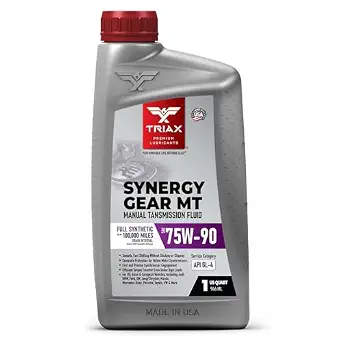 |
| Best High-Mileage Transmission Fluid Formulated for older gearboxes to reduce wear and smooth shifting | TRIAX Synergy Gear MT 75W-80 GL-4 Full Synthetic Manual Transmission Fluid (1 Quart) |  |
| Best Multi-Vehicle Transmission Fluid A versatile fluid compatible with a wide range of manual gearboxes | Valvoline Daily Protection 75W-90 Gear Oil, 1 Quart |  |
1. Ford Genuine XT‑M5‑QS Full Synthetic Manual Transmission Fluid, 1 Quart
Best Overall Transmission Fluid

| Viscosity | SAE 75W-90 |
|---|---|
| Liquid Volume | 32 Fluid Ounces |
| Recommended Uses For Product | 1995-2011 MTX-75 and IB5 transmissions, older GL-3/GL-4 rear wheel drive transmissions |
| Upper Temperature Rating | 350 Degrees Fahrenheit |
This Ford Genuine XT‑M5‑QS is a full synthetic 75W‑90 manual transmission fluid designed for MTX‑75 and IB5 gearboxes and many older rear‑drive manual transmissions that call for GL‑3 or GL‑4 gear oils. In everyday use it provides smoother shifts across a wide range of temperatures thanks to synthetic base oils and performance additives, and it is formulated for high thermal and oxidative stability so it resists breakdown over long service intervals. The formula emphasizes wear protection for synchronizers and bearings, which helps preserve shift quality and extend component life. Practical benefits include lower operating temperatures, consistent viscosity under load, and compatibility with Ford fill‑for‑life recommendations for eligible gearboxes. Limitations are narrow fitment scope: this is intended for specific Ford manual transmissions and similar older designs, so confirm your transmission spec before buying; it is not a universal ATF or multi‑vehicle fluid.
Best for: Buyers looking for a factory‑recommended, long‑lasting manual transmission fluid that prioritizes smooth shifting and component protection in Ford manual gearboxes.
Less Ideal for: Drivers who need an automatic transmission fluid, a universal multi‑vehicle fluid, or have a manual transmission not listed in Ford’s compatibility information should look elsewhere.
- Full synthetic 75W‑90 formulation for stable viscosity and cold‑start shifting
- Formulated specifically for MTX‑75 and IB5 gearboxes and older GL‑3/GL‑4 applications
- Adds wear protection for synchronizers and bearings to preserve shift quality
- High thermal and oxidative stability supports long service intervals
- Intended fitment is limited to certain manual transmissions so it is not a universal transmission fluid
Verdict: The best all-around transmission fluid that balances lubrication performance, gear protection, smooth shifting, and long-term value for most manual-transmission users.
2. Valvoline Synchromesh Manual Transmission Fluid, 1 Quart
Best Budget Transmission Fluid

| Item Type Name | Manual Transmission Fluid |
|---|---|
| Material | Synthetic |
| Liquid Volume | 1 Quarts |
| Specific Uses For Product | Smooth Gear Shifting, Lubrication of Manual Transmission Gearboxes (specific to General Motors and Chrysler vehicles with synchronizers) |
Valvoline Synchromesh Manual Transmission Fluid is a full-synthetic MTF designed to keep manual gearboxes shifting smoothly. It is typically used as a top-up or service fill in manual transmissions with synchronizers, where it helps maintain synchronizer performance, reduce wear under high loads, resist pitting, and control foam. The formula emphasizes thermal stability and cold-flow to preserve lubrication in varied temperatures, so shifts stay consistent during warm-up and under heavy use. Practical benefits include enhanced load carrying capacity and corrosion protection that can extend gearbox life versus conventional fluids. As a value-oriented choice, it focuses on core protection and specification coverage without premium additives targeted at extreme racing or specialty builds. Limitations are that compatibility should be verified against your Ranger’s required specification and part numbers before use, and a single quart bottle means multiple purchases for a full drain and fill on most transmissions.
Best for: Buyers who need an affordable, full-synthetic manual transmission fluid that delivers reliable synchronizer protection and everyday durability for routine service on a Ford Ranger manual gearbox.
Less Ideal for: Owners building high-performance or heavily modified Rangers who need specialty racing or extreme-pressure gear oils should consider purpose-built fluids instead.
- Full-synthetic formula for better thermal stability and cold-flow
- Engineered to protect synchronizers and enable smooth shifting
- Enhanced load carrying and anti-pitting additives for gearbox longevity
- Corrosion and anti-foam properties to maintain fluid performance
- Not marketed specifically for Ford Ranger fitment so confirm required specs and part numbers before use
Verdict: The best budget transmission fluid for buyers who want adequate gear protection and spec compliance at a lower price without unnecessary extras.
3. Red Line 50204 75W80 GL-4 Manual Transmission Gear Oil — 1 Quart
Best Premium Transmission Fluid

| Viscosity | 185 |
|---|---|
| Flash Point | 232 Degrees Celsius |
| Material | Synthetic |
| Liquid Volume | 32 Fluid Ounces |
Red Line 50204 is a full synthetic 75W80 GL-4 gear oil designed to protect manual transmissions and transaxles that require a non-reactive formulation for brass synchronizers. It is typically used during gearbox service or fluid top-ups in vehicles that specify GL-4 or special synchromesh fluids. The formula emphasizes wear protection and thermal stability so it holds viscosity under heat and helps extend synchronizer life while offering smoother, quicker shifts thanks to balanced friction control. Because it avoids the reactive sulfurs found in many GL-5 oils it is safe for brass and bronze synchros common in older and performance-oriented manual boxes. Practical benefits include reduced gear wear during spirited driving or towing and more consistent shift feel in demanding conditions. The product comes in a handy one-quart bottle for shop or DIY use. Limitations are that it is a specialty GL-4 fluid so it must match the Ranger manual transmission specification before use and a single quart may not be enough for a full fluid change on some gearboxes.
Best for: Buyers who prioritize long-term gear protection and stable shift feel in a manual transmission and are willing to pay for a premium synthetic fluid for demanding use in their Ford Ranger.
Less Ideal for: Drivers who need a budget bulk fluid for routine, low-stress driving or those whose Ranger requires a different specification should consider other options.
- Full synthetic formulation for strong thermal stability and consistent viscosity under load
- GL-4 chemistry safe for brass and bronze synchronizers found in many manual transmissions
- Balanced friction control promotes quicker, more positive shifts
- Designed to reduce wear and extend synchronizer life in demanding driving or towing conditions
- Sold in one-quart bottles so multiple units may be required for a full service
Verdict: The best premium transmission fluid for users willing to pay more for superior wear protection, thermal stability, and longer service life under demanding conditions.
4. TRIAX Synergy Gear MT 75W-90 GL-4 Full Synthetic Manual Transmission Fluid (1 Quart)
Best Synthetic Transmission Fluid

| SAE J300 Viscosity Grade | 75W-90 |
|---|---|
| Viscosity | 75W90 / MT 90 |
| Liquid Volume | 1 Quarts |
| Material | Full Synthetic Fluid |
This Triax Synergy Gear MT 75W-90 GL-4 is a full synthetic manual transmission fluid designed to deliver smooth synchronizer engagement and stable friction characteristics under load. It is used like any gear oil when servicing a manual gearbox that specifies SAE 75W-90 GL-4, poured into the transmission fill point to replace factory fluid. Notable features include yellow-metal safe chemistry for synchronizers and brass components, high thermal stability for sustained high-load or towing conditions, and a formulation claimed to allow very long drain intervals. Practical benefits for a Ford Ranger manual include reduced shift snatch or shudder, consistent torque transfer under heavier loads, and improved protection during spirited driving or light off-road use. Limitations: compatibility must be confirmed against the Ranger model year and factory fluid spec because GL-4 is not universal for every manual; a single-quart bottle may be insufficient for a full service on vehicles that require more fluid volume.
Best for: Ford Ranger owners looking to upgrade to a synthetic gear oil for improved shift smoothness, heat management, and longer service intervals while retaining factory-style synchronizer protection.
Less Ideal for: Drivers who must match a transmission spec other than SAE 75W-90 GL-4 or who prefer fluids explicitly specified by Ford for warranty compliance should consider alternatives.
- Full synthetic base offers better thermal stability and oxidation resistance than conventional gear oils.
- Formulated as yellow-metal safe for synchronizers and brass components to preserve shift feel.
- 75W-90 viscosity provides wide temperature performance for varied climates and towing or load conditions.
- Sold in one-quart containers which may require multiple bottles to complete a full transmission service.
Verdict: The best synthetic transmission fluid for owners seeking improved thermal stability, reduced friction, and longer change intervals compared with conventional oils.
5. TRIAX Synergy Gear MT 75W-80 GL-4 Full Synthetic Manual Transmission Fluid (1 Quart)
Best High-Mileage Transmission Fluid

| Viscosity | 75W-80 |
|---|---|
| Container Type | Bottle |
| Material | Synthetic |
The TRIAX Synergy Gear MT 75W-80 is a full synthetic GL-4 manual transmission fluid designed to improve shift quality and protect internal gears and synchronizers. It is used as a replacement fill for manual gearboxes, differentials, and transfer cases that call for 75W-80 GL-4 fluid. The formulation emphasizes shear stability, thermal stability, and low-temperature fluidity so it maintains viscosity across a wide temperature range and supports smoother, faster shifts with reduced notchy or grinding sensations. Additives target yellow metal protection for brass synchros, corrosion inhibition, and enhanced friction control, which helps restore worn shift feel and reduce wear in high-mileage gear sets. Practical benefits include extended drain intervals compared with typical factory fluids and improved seal protection that can help limit minor leaks. Limitations are that compatibility is limited to systems specifying GL-4 chemistry and 75W-80 viscosity, so it is not suitable for gearboxes requiring different grades or GL-5 oils, and users should confirm factory recommendations before switching fluids.
Best for: Owners looking to refresh shift quality and protect an older manual gearbox who prioritize conditioners and anti-wear chemistry to compensate for mileage-related wear.
Less Ideal for: Do not choose this fluid for transmissions that call for GL-5 gear oil or a different viscosity grade, or for drivetrains with special OEM-specified fluids not matching 75W-80 GL-4.
- Full synthetic PAO and ester base provides strong thermal and shear stability for long service life
- Additive package includes friction modifiers and yellow metal protection for smooth, positive shifting
- Corrosion inhibitors and detergency help protect internal components and extend drain intervals
- Maintains low-temperature fluidity for easier cold-weather shifting down to very low temperatures
- Formulated specifically to GL-4 75W-80 spec so it is not appropriate where GL-5 or different viscosities are required
Verdict: The best high-mileage transmission fluid for vehicles with significant miles that need extra conditioners, anti-wear additives, and friction modifiers to restore shift quality and reduce leakage.
6. Valvoline Daily Protection 75W-90 Gear Oil, 1 Quart
Best Multi-Vehicle Transmission Fluid

| Viscosity | 75W-90 |
|---|---|
| Upper Temperature Rating | 190 Degrees Celsius |
| Flash Point | 394 Degrees Celsius |
| Liquid Volume | 0.95 Liters |
| Material | Synthetic |
Valvoline Daily Protection 75W-90 is a synthetic gear oil designed to protect hypoid differentials and non-synchronized manual transmissions under high load and towing conditions. In use it replaces or services rear axles and manual gearboxes that call for a 75W-90 viscosity meeting GL-5 or GL-4 requirements, and includes a limited-slip additive to help clutch-type differentials. The formula claims strong thermal stability, resistance to foaming, and corrosion inhibitors that reduce wear and help prevent rust and pitting during seasonal temperature swings. For a Ford Ranger with a manual transmission or rear differential that specifies 75W-90 GL-5/GL-4 lubricants, this product provides year-round coverage from low-temperature starts to high operating temps and is convenient in a one-quart bottle for DIY maintenance. It is a conventional synthetic blend rather than a specialty OEM fluid, so users should verify manufacturer service specs and any required factory fill additives before switching to ensure compatibility with specific Ranger model years and limited-slip requirements.
Best for: Shoppers who want a single 75W-90 gear oil that can service a Ford Ranger manual transmission or rear differential across multiple model years and driving conditions, prioritizing a multi-vehicle, do-it-yourself maintenance solution.
Less Ideal for: Owners who require a factory-specified proprietary transmission fluid, fluids for synchronized transmissions with different viscosity requirements, or those who prefer dealer-recommended fills tied to warranty programs.
- Meets GL-5 and GL-4 specs suitable for many manual gearboxes and hypoid differentials
- Includes limited-slip additive for clutch-type limited-slip differentials
- Thermally stable formula resistant to foaming and oxidation under high load
- Provides wide temperature coverage for year-round use in varying climates
- Not marketed as a vehicle-specific OEM transmission fluid so confirm Ford service specifications before use
Verdict: The best multi-vehicle transmission fluid for shoppers who want one compatible formulation that meets multiple manufacturer specifications and works across different manual gearboxes.
Choosing the Right Ford Ranger Manual Transmission Fluid: Key Factors to Consider
Fluid Compatibility and Approvals
Compatibility with the Ranger Manual is the first priority because using a fluid without the proper specifications can harm synchronizers, shift feel, or cause premature wear. Check for manufacturer-recommended specs or equivalent modern standards that explicitly list manual transmission use.
Approved or compliant fluids help ensure the additive package and friction modifiers suit the synchronizer materials and clutch design in Ford Ranger manual gearboxes. Mismatched chemistry can cause grabbing, noisy shifts, or reduced clutch life. When servicing, always confirm the fluid meets the required viscosity range and any Ford-specific approvals to avoid warranty or performance issues.
Friction Characteristics and Shift Feel
Friction modifiers and additive balance determine how smoothly gears and synchronizers engage. Fluids formulated for manual gearboxes aim for predictable, consistent friction so shifts feel positive without grinding or slip.
If you tow frequently or drive in stop-and-go traffic, prioritize fluids known for stable friction under varying temperatures. A fluid that provides crisp, consistent shifts reduces driver effort and lowers the risk of synchronizer wear. Conversely, overly slippery formulations can lead to clutch slip or poor engagement, so match the fluid's friction profile to your driving style.
Viscosity and Shear Stability
Viscosity affects film strength between gear teeth, bearings, and synchronizer surfaces. A fluid that thins excessively under shear will lose protective film thickness, which can accelerate wear during heavy loads or towing.
Choose a fluid with proven shear stability so it retains viscosity after hours of operation. This matters for both short, high-load events like hill climbs and sustained highway towing. Stable viscosity also helps maintain consistent shift quality across the service interval, reducing the risk of surprises between changes.
Thermal and Oxidation Resistance
Transmissions generate heat, and the fluid must resist oxidation and breakdown at operating temperatures. When fluid oxidizes, it forms deposits and varnish that can impede synchronizer movement and clog narrow passages.
A fluid with strong thermal stability extends service life and keeps internal surfaces clean. This is especially important if you tow regularly or operate in hot climates where elevated temperatures accelerate chemical breakdown. Improved oxidation resistance reduces the frequency of service required to maintain optimal gearbox performance.
Wear Protection and Corrosion Inhibition
Effective anti-wear additives protect gears, bearings, and synchronizers from metal-to-metal contact under load. Good wear protection reduces the risk of pitting and scoring that lead to noisy operation and shortened gearbox life.
Corrosion inhibitors are also important, particularly if the vehicle experiences high humidity or occasional water exposure. A fluid that prevents rust and neutralizes acids formed during use will help preserve internal components and maintain reliable operation over many miles.
Serviceability and Change Interval
Practical maintenance factors influence ownership cost and convenience. Look at recommended change intervals for each fluid type; some modern formulations offer extended service life while others are intended for more frequent replacement.
Also consider container sizes, ease of filling through the Ranger Manual's fill/inspection port, and whether the fluid requires any special handling. Regular fluid checks and adherence to interval guidelines are often more important than chasing marginal performance gains from exotic fluids.
Understanding Manual Vs Automatic Fluids
Manual transmission fluids differ from automatic transmission fluids in friction chemistry and additive balance. While ATF fluid formulations focus on hydraulic control and certain friction characteristics suited to torque converters, manual gearbox fluids emphasize gear protection, synchronizer compatibility, and stable film under sliding contacts.
Using an ATF in a manual gearbox can work in some cases if the ATF meets the manual transmission specifications required by Ford, but it is not universally appropriate. For the Ranger Manual, choose a fluid that explicitly lists manual transmission compatibility or the appropriate Ford specification to avoid shifting issues.
- Manual-specific fluids prioritize synchronizer-friendly friction modifiers.
- ATF products focus on torque converter behavior and hydraulic functions.
- Check manufacturer specs before substituting fluid types.
How Climate and Driving Style Affect Fluid Choice
Cold starts and hot operating temperatures both impact the performance of transmission fluid. In colder climates, a lower low-temperature viscosity helps preserve shift smoothness on startup. In hotter environments, high thermal stability and resistance to shear are more important to maintain protection and shift feel.
Your driving style also matters. Heavy towing, frequent stop-and-go urban driving, or aggressive shifting all place extra demands on fluid. If you regularly tow or operate with heavy loads, prioritize formulations with stronger wear protection and thermal stability than you might choose for a strictly commuter vehicle.
- Cold-weather performance supports smooth first-gear engagement.
- High-temperature stability reduces oxidation and deposit formation.
- Towing increases demand for shear-stable, high-film-strength fluids.
Service Tips for Changing Ranger Manual Transmission Fluid
Plan the fluid change on level ground and warm the vehicle slightly by driving a short distance to get the fluid to operating temperature. Warm fluid drains more completely, carrying more contaminants out with it. Follow the factory fill and level procedure for the Ranger Manual to avoid under- or overfilling.
Use a clean catch pan and replace any crush washers or seals on the drain and fill plugs as needed. After refilling, verify shift feel and check for leaks. If you notice unusual grinding or binding after a fluid change, re-check compatibility and fluid level before more invasive investigation.
- Warm the gearbox before draining for a more complete fluid change.
- Replace drain/fill seals to prevent future leaks.
- Verify shift feel and fluid level after service.
Common Misconceptions About Transmission Fluid
One common misconception is that thicker oil is always better for protection. Viscosity must match the gearbox design and component clearances; overly thick fluids can hamper shifting and increase drag, while excessively thin fluids may not provide adequate protection under load.
Another mistaken belief is that any ATF will work in a manual gearbox. While some ATFs are formulated to meet manual specifications, not all are suitable. Always prioritize the specification and intended application over marketing claims.
- Match viscosity to manufacturer recommendations, not intuition.
- Do not assume automatic fluid compatibility without verifying specs.
- Regular maintenance beats chasing marginal performance differences.
When to Consider a Specialist Fluid
Specialist or performance-oriented manual transmission fluids can be useful when the Ranger is used for heavy towing, off-road duty, or spirited driving. These formulations often focus on extreme pressure additives, superior shear stability, and enhanced thermal resistance to cope with higher stresses.
However, for typical daily driving, a high-quality mainstream manual transmission fluid that meets the vehicle specifications will usually offer the best balance of cost, protection, and shift quality. Reserve specialist fluids for clear use-case reasons rather than assuming they are universally superior.
- Specialist fluids can help under sustained heavy loads.
- Mainstream fluids are usually adequate for normal driving.
- Evaluate based on operating demands, not marketing.
Still looking for the perfect fit?
Select your Ford Ranger configuration to see the most relevant Transmission Fluids recommendations
How We Chose the Best Ford Ranger Manual Transmission Fluid
We focused on attributes that matter specifically for a Ford Ranger with a manual transmission. Our selection filtered for fluids designed for manual gearboxes and formulations that address the Ranger's typical operating conditions, including towing, frequent shifting in city traffic, and extended highway runs.Evaluation criteria included friction and shift feel, which affects clutch engagement and synchronizer performance; shear stability and viscosity retention under high load to preserve film thickness; thermal stability and oxidation resistance to avoid varnish and deposits; corrosion and wear protection to extend gearbox life; and compatibility with Ford-specified fluid standards or equivalent performance claims. We also considered ease of serviceability and availability of common container sizes suitable for routine maintenance.We excluded automatic-only ATF products that lack explicit manual-transmission approvals, and we avoided specialty fluids intended solely for racing or vintage gearboxes unless they clearly matched Ranger service requirements. The result is a focused set of fluids that balance durability, smooth shifting, and protection for real-world Ford Ranger Manual use.
Our full evaluation process is outlined in our review methodology.
FAQ
How often should I change the manual transmission fluid in a Ford Ranger Manual?
Change intervals vary by use, but many owners change manual transmission fluid every 30,000 to 60,000 miles under normal driving. If you tow frequently or operate in extreme temperatures, shorter intervals are often advisable. Always follow the vehicle service schedule and monitor shift feel for signs of contamination or degradation.
Can I use automatic transmission fluid instead of manual transmission fluid in my Ranger?
Some automatic transmission fluids meet manual transmission specifications, but not all are suitable. Using an ATF only makes sense if it explicitly meets the recommended manual gearbox specification for the Ranger. Verify compatibility before substituting to avoid synchronizer or shift quality problems.
What are signs the transmission fluid needs to be changed?
Common signs include rough or inconsistent shifting, increased gear noise, grinding during shifts, or presence of dark, contaminated fluid when inspected. Loss of shift smoothness or a noticeable change in clutch engagement can also indicate fluid breakdown or contamination.
Does changing to a different manual transmission fluid improve shifting performance?
Changing to a fluid with a more suitable friction profile or better shear stability can improve shift feel and consistency. However, benefits depend on matching the fluid to Ford Ranger Manual specifications and the gearbox condition. If internal wear is present, a fluid change alone may not fully restore original shift quality.
Is there a single best transmission fluid for all Ranger Manual owners?
No single fluid is ideal for every owner. The best choice depends on climate, towing frequency, driving style, and service interval preferences. Prioritize compatibility and protection attributes, then select a formulation that aligns with your specific operating conditions.
Final Verdict
Prioritize fluids that explicitly match the Ford Ranger Manual specifications and offer a balance of consistent friction, shear stability, and thermal resistance. For routine commuting, choose a proven manual-transmission formulation that maintains shift feel and wear protection across temperatures. If you tow frequently or subject the gearbox to heavy loads, favor fluids with stronger anti-wear and oxidation resistance even if that means more frequent checks.Ultimately, regular maintenance and using a compatible fluid are the most effective ways to preserve gearbox performance and longevity. Focus on the decision factors discussed above to select the fluid that best aligns with how you use your Ranger Manual.
Explore More:
- Check out all Ford Ranger parts & accessories
- Explore Fluids & Chemicals
- Browse all Accessories
