

Note: This article contains affiliate links. If you click on these links and make a purchase, I may earn a small commission at no extra cost to you. This helps support my research and content. Read my full affiliate disclosure here.
Your Civic depends on properly functioning rear sway bar links to keep body roll in check and maintain predictable handling during cornering. Worn or noisy links can cause clunks, reduced stability, and uneven tire wear, so swapping to a reliable replacement matters for both safety and ride quality. This guide covers the top shortlisted rear sway bar links selected for Honda Civic owners, with attention to exact-fit options, material choices, and common failure points.Below you will find the recommended parts and what to look for when choosing a rear sway bar link replacement, along with practical guidance on symptoms, installation considerations, and torque expectations.
Looking for other parts? See all Honda Civic parts & accessories.
Top Picks at a Glance
| Best Quality Built to a higher standard if you want something more solid | MOOG K750125 Suspension Stabilizer Bar Link |  |
| Best Value The sweet spot between price and what you get | Torsiva Rear Stabilizer Sway Bar End Link Kit (2-piece) |  |
| Best Budget The cheapest option that still gets the job done reliably | ApplianPar Rear Sway Bar End Links (Driver & Passenger) |  |
| Highest Rated A top-rated pick with lots of positive feedback | ADIGARAUTO Rear Stabilizer Sway Bar Link Pair for 2006–2015 Honda Civic |  |
| Most Popular A crowd favorite that many people choose with confidence | Detroit Axle Rear Stabilizer Sway Bar End Link Kit (2-piece) |  |
| Best Seller A high-volume bestseller chosen again and again | HAWK BROTHER Rear Sway Bar End Link Kit (2 pcs) |  |
1. MOOG K750125 Suspension Stabilizer Bar Link

| Auto Part Position | Right |
|---|---|
| Compatible with Vehicle Type | Car, Truck |
| Automotive Fit Type | Vehicle Specific Fit |
| Material Type | Rubber |
The MOOG K750125 stabilizer bar link replaces a worn rear sway bar link to restore tighter steering and reduce body roll on affected Hondas. It is a vehicle-specific fit designed for the rear right position and commonly used during suspension refreshes or when diagnosing clunks and loose steering. MOOG highlights a greaseable socket and improved internal components that resist rust and wear, which helps extend service life compared with simple stamped links. Installation is typical for a link kit and can be done with basic suspension tools; the painted finish and rubber material help dampen noise and vibration for quieter operation. Because this is a direct replacement, it focuses on durability and restoring factory handling rather than increasing cornering stiffness for track use. If you want a robust, serviceable link that brings back like-new steering and fewer NVH issues, this kit delivers; drivers seeking a pronounced performance upgrade should consider heavier-duty aftermarket sway components instead.
Best for: Enthusiastic drivers who want to restore crisp, predictable rear steering response on their Civic without changing suspension geometry and who prioritize durability and serviceability.
Less Ideal for: Drivers seeking a track-focused upgrade that increases roll resistance and cornering grip should look at heavier-duty performance sway bar links or upgraded sway bars.
- Vehicle-specific fit for a precise rear right replacement
- Greaseable socket allows relubrication to reduce wear and corrosion
- Painted finish and rubber elements help reduce noise and vibration
- Designed to restore factory steering feel and reduce body roll
- Built as a direct replacement so it does not increase sway bar stiffness for performance handling
Verdict: A serviceable, vehicle-specific rear sway bar link that restores factory steering feel and longevity through a greaseable, durable design.
2. Torsiva Rear Stabilizer Sway Bar End Link Kit (2-piece)

| Auto Part Position | Rear |
|---|---|
| Compatible with Vehicle Type | Car |
| Automotive Fit Type | Vehicle Specific Fit |
| Material Type | Iron |
These Torsiva rear sway bar end links replace the worn links that cause clunks, increased body roll, and uneven tire wear. Sold as a left and right matched pair, the iron links use plated finishes and bushings intended to resist corrosion and reduce noise compared with degraded originals. Installation is straightforward for anyone with basic tools since the links mount where the stabilizer bar connects to the suspension; replacing them typically restores tighter turn-in and cuts suspension noise after bumps or lane changes. Reviews indicate good fitment on Civic and Acura ILX/CSX applications and build quality comparable to pricier alternatives, though the plated iron design will be heavier than some aftermarket alloy options and may not match factory appearance exactly. For drivers who want a direct replacement to regain stability and reduce suspension squeaks without upgrading other components, these provide a practical, durable option.
Best for: Buyers who want a reliable, no-frills replacement to stop rear suspension noise and restore cornering stability on older Civic or Acura compact sedans, prioritizing fitment and function over appearance.
Less Ideal for: Drivers seeking a lightweight performance upgrade or a visual match to factory finish should consider higher-end or specialty aftermarket links instead.
- Sold as a matched left and right pair for complete rear replacement
- Plated iron construction with bushings intended to resist corrosion and reduce noise
- Vehicle-specific fitment for direct replacement on listed Civic and Acura models
- Simple bolt-on installation that requires only common hand tools
- Material is iron so heavier than some lightweight aftermarket alternatives
Verdict: A simple, vehicle-specific rear sway bar end link pair that restores stability and reduces suspension noise for practical Civic and Acura owners.
3. ApplianPar Rear Sway Bar End Links (Driver & Passenger)

| Fitment | Honda Civic 2006-2015; Fit 2013-2014; Acura CSX 2006-2011; ILX 2013-2019 |
|---|---|
| Part number | 52321-SNA-A01 |
| Included | Rear driver and passenger sway bar end links |
These ApplianPar rear sway bar end links replace the driver and passenger side links to restore rear anti-roll performance. They are intended as like-for-like replacements for worn or noisy links and are typically used during suspension repairs or when diagnosing clunking from the rear. The kit includes two links finished with ball-joint ends that mount to the stabilizer bar and chassis to reduce body roll and improve handling predictability during cornering. For a budget-focused repair this kit offers a straightforward swap-in fit and should noticeably reduce play and noise compared with badly worn originals. Expect basic hardware and a no-frills finish rather than premium materials or advanced corrosion protection, so long-term durability may lag higher-end aftermarket options. Installation is familiar to anyone who has done simple suspension work but may require basic tools and some rust-penetrant on older cars. Overall it is a practical, cost-effective choice to get rear handling back to normal without spending much.
Best for: Buyers looking to make an affordable, practical repair to rear suspension and stop clunks or excessive body roll without upgrading to premium parts.
Less Ideal for: Drivers seeking long-term, heavy-duty corrosion resistance or performance-tuned suspension components should consider higher-end replacement links.
- Sold as a matched pair for both rear sides so both links get renewed at once
- Simple, direct-replacement design makes installation straightforward
- Lower-cost option suitable for budget repairs and routine maintenance
- Finish and hardware are basic so corrosion resistance may be limited over many years
Verdict: A budget-friendly rear sway bar link kit that restores handling and quiets rear suspension for compatible Honda and Acura models.
4. ADIGARAUTO Rear Stabilizer Sway Bar Link Pair for 2006–2015 Honda Civic

| Compatible vehicles | 2006-2015 Honda Civic; 2013-2014 Honda Fit; 2006-2011 Acura CSX; 2013-2019 Acura ILX |
|---|---|
| Package contents | Rear driver side link K750125 and rear passenger side link K750126 with hardware |
| Manufacturer part number | A2SLK7501256 |
| OEM part numbers | K750125 52321SNAA01, K750126 52320SNAA01 |
This ADIGARAUTO rear sway bar link pair replaces the factory rear link assemblies for 2006–2015 Honda Civic and compatible Honda and Acura models, and is intended to restore proper stabilizer function and reduce body roll. The kit ships as a complete left and right pair with installation hardware so a mechanic or competent DIYer can swap both sides at once. Build notes and listings claim corrosion-resistant finishes and precision fitment to the referenced OEM part numbers, which helps ensure a straightforward bolt-in fit and lowers the chance of premature squeak or looseness. In use the links should tighten up rear handling and reduce sway during cornering compared with worn originals. Expect the usual limitation of aftermarket links: longevity depends on local road salt and driving conditions, and they are a replacement part rather than an upgraded performance unit. For drivers after reliable, factory-style handling restoration, this pair offers a practical, ready-to-install solution.
Best for: Buyers prioritizing dependable, factory-style replacements to restore rear handling and reduce body roll on older Civics who want a ready-to-install pair and minimal fuss.
Less Ideal for: Drivers seeking heavy-duty or performance sway bar links for track use or significantly modified suspensions should consider reinforced or performance-specific alternatives.
- Complete driver and passenger rear link pair with installation hardware included
- Made to match referenced factory part numbers for straightforward fitment
- Corrosion-resistant finish and claimed durability testing to reduce premature failure
- Precision fit reduces installation time and lowers risk of alignment issues
- Not marketed as a heavy-duty or performance upgrade compared with reinforced aftermarket links
Verdict: A practical, factory-fit rear sway bar link pair that restores original rear handling for reliability-minded Civic owners.
5. Detroit Axle Rear Stabilizer Sway Bar End Link Kit (2-piece)
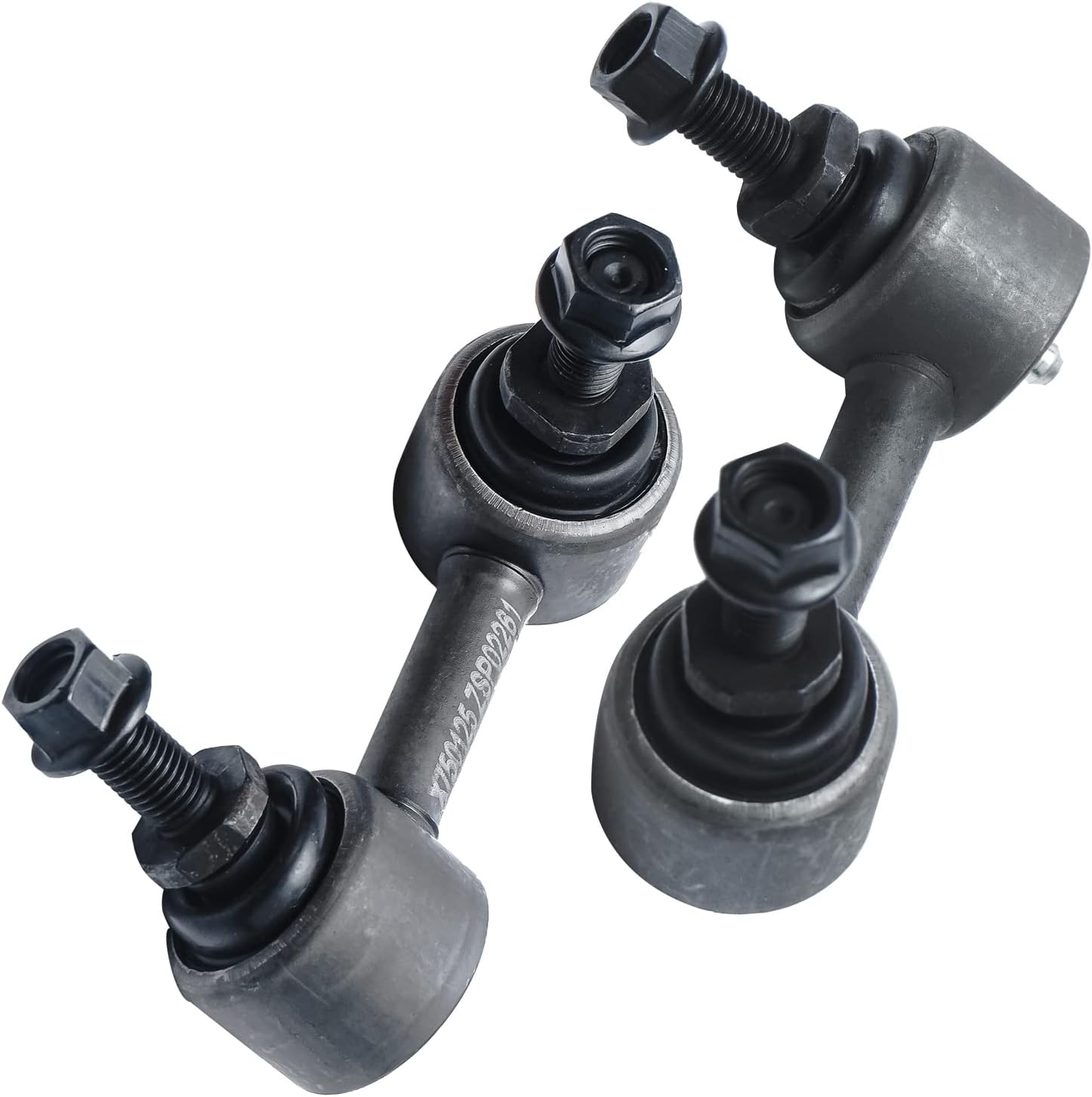
| Position | Rear |
|---|---|
| Fitment | 2006-2015 Honda Civic, 2013-2014 Honda Fit, 2013-2019 Acura ILX, 2006-2011 Acura CSX |
| Includes | 2x Rear Sway Bar End Links |
| Material | Premium alloy |
This Detroit Axle kit replaces both rear stabilizer sway bar end links with direct-fit parts intended for 2006–2015 Honda Civic, 2013–2014 Fit, 2013–2019 Acura ILX, and 2006–2011 Acura CSX. Each link is made from a premium alloy and finished to resist corrosion, and the kit is packaged as two driver and passenger side links for a full rear-side refresh. Typical use is a straightforward swap when worn links cause clunking, looseness, or increased body roll; the manufacturer positions the parts for easy installation with factory-style fit and mounting points. Practical benefits include restored rear stability, quieter suspension operation, and a longer service life compared with rusted or fatigued OEM links. Limitations are that this is a direct replacement for specific model years only and does not upgrade to a performance or adjustable link, so drivers seeking firmer handling or adjustability will need a different product. The kit carries a long warranty backing and overall offers a cost-effective way to restore factory steering feel and reduce sway-related noise.
Best for: Buyers who prioritize proven performance and documented fitment and want a reliable, factory-style replacement to eliminate rear sway noise and restore stock handling.
Less Ideal for: Drivers who want performance-tunable or adjustable sway bar links or who plan to modify suspension geometry should look at aftermarket performance links instead.
- Direct-fit design for straightforward installation on listed Civic, Fit, ILX, and CSX model years
- Premium alloy construction with corrosion-resistant finish for longer service life
- Replaces both left and right rear links in one kit to restore balanced rear suspension
- Manufactured and tested to meet fit, form, and function expectations comparable to factory-style replacements
- Fitment limited to the listed model years and vehicle types so it is not universal
- Not an adjustable or performance-oriented link so it will not change handling characteristics beyond restoring factory behavior
Verdict: A dependable, corrosion-resistant direct-replacement kit that restores rear stability and quiets sway-related suspension noise for the specified Civic, Fit, ILX, and CSX model years.
6. HAWK BROTHER Rear Sway Bar End Link Kit (2 pcs)

| Position | Rear |
|---|---|
| Manufacturer Part Number | SSB13030602-R-HB1 |
| OEM Part Number | 45G20678, 45G20679, GS60829, GS60830, SL59622XL, SL59621XL, IK750125, IK750126 |
| Applicable Models | 2006-2015 Honda Civic; 2013-2014 Honda Fit; 2013-2019 Acura ILX; 2006-2011 Acura CSX |
This HAWK BROTHER kit supplies one driver-side and one passenger-side rear sway bar end link intended to restore rear stabilizer connection on compatible Civic, Fit, ILX, and CSX models. Installers will use it when worn links cause rear clunks, excess body roll, or uneven tire wear; the kit is sized for bolt-in replacement and comes painted with an electrophoretic coating to resist corrosion. In use the links re-establish sway bar control so cornering feels firmer and rear noise or clicking is reduced. Benefits include a high-strength body for stable running and tested fitment that many buyers report matches factory geometry. Limitations are typical of economy aftermarket parts: long-term durability varies across users and a minority of reviews cite premature failure. The kit does not promise upgraded performance over heavier-duty aftermarket options, so drivers seeking sportier handling or extended life under aggressive use should consider reinforced alternatives.
Best for: Buyers who prioritize a straightforward, cost-conscious replacement that restores factory steering feel and reduces rear clunking on daily-driven Civics and similar compact cars.
Less Ideal for: Drivers who want a performance-oriented or heavy-duty upgrade for track use or vehicles regularly carrying heavy loads should choose reinforced or premium sway bar links instead.
- Includes both left and right rear links for a complete rear replacement
- Electrophoretic coating improves corrosion resistance for longer exterior life
- Designed to match factory mounting points for straightforward bolt-in installation
- High-strength body construction intended to restore stable rear sway bar control
- Some users reported early failures so long-term durability can be inconsistent
Verdict: A budget-friendly, bolt-in rear sway bar link kit that restores factory steering feel for risk-averse buyers seeking a simple, direct replacement.
Choosing the Right Honda Civic Rear Sway Bar Link: Key Factors to Consider
Fitment and Mounting Compatibility
Exact fitment is critical for a rear sway bar link on the Honda Civic because incorrect length, thread pitch, or mounting pattern can cause improper suspension geometry and premature component stress. Ensure the replacement matches the Civic's factory mounting points and any model-specific offsets so the sway bar and link maintain correct alignment.
A part that duplicates factory dimensions prevents binding during suspension travel and keeps the sway bar effective at controlling body roll. When fitment is wrong, you may see accelerated wear on adjacent bushings, abnormal tire wear, or difficulty reassembling the original hardware. For owners, verifying the application by year and submodel or choosing vehicle-specific kits avoids those issues.
Joint and Bushing Design
The joint or bushing type determines how the link handles articulation and translates forces between the sway bar and suspension. Ball joints tend to allow freer movement and can reduce binding, but if they use low-quality bearings or lack seals they can wear noisy over time. Rubber or synthetic bushings often isolate noise but may compress and introduce play as they age.
Look for sealed or greasable joints and durable bushing compounds that maintain stiffness without cracking. For the Civic, durable joints preserve predictable steering response and reduce chances of a sway bar link noisy clunk developing under load. The right design balances quiet operation with the ability to handle repeated suspension cycles.
Material Quality and Corrosion Resistance
Sway bar links are exposed to road grime, water, and salt, so materials and surface treatment directly affect lifespan. Hardened steel shafts, zinc or e-coatings, and stainless fasteners resist rust and seizing that can complicate future removal. Low-quality plating may flake, leading to accelerated corrosion of the link body or threaded areas.
For Civic owners in winter or coastal regions, prioritize links with robust finishes and corrosion-resistant hardware. That reduces the risk of seized nuts during maintenance and extends time between replacements, providing better long-term value and reliability.
Strength and Fatigue Resistance
Sway bar links transfer torsional loads from the anti-roll bar into the suspension; repeated stress cycles can cause fatigue failure if the part is underspecified. Manufacturing processes such as cold forging or heat treatment improve strength and fatigue life compared with stamped or thin-walled components.
Choose links designed to withstand the Civic's typical load spectrum, including occasional hard turns and rough road impacts. Higher strength reduces the chance of sudden failure, which could affect handling. Durability matters especially for drivers who encounter rough roads or carry additional loads in the vehicle.
Ease of Installation and Included Hardware
Installation convenience affects total ownership cost and whether you can perform a DIY replacement. Some links come as complete kits with new nuts, bolts, and washers sized to match Civic torque specs, while others assume reuse of factory hardware. Included grease fittings or pre-greased joints simplify maintenance.
Consider whether the link requires special tools like ball joint presses or whether standard sockets and torque wrenches suffice. Replacing sway bar links on many Civic models is achievable with basic tools, but ensuring the part includes necessary mounting hardware reduces the chance of follow-up trips to the store or incomplete repairs.
Noise and NVH Characteristics
A core reason owners replace rear sway bar links is to eliminate noises such as clunks or rattles that appear from worn joints. The construction and tolerances of the link determine how much play exists as the suspension cycles. Tight joints with durable seals and good bushing compounds limit metal-to-metal contact and reduce audible clunks.
Assess reported noise performance and look for designs that isolate vibration. Minimizing NVH contributes to a more comfortable ride and signals that the suspension components are transferring loads predictably, which is important for maintaining safe handling on the Civic.
Common Symptoms of a Worn Rear Sway Bar Link
Worn rear links present a predictable set of symptoms that Civic owners can spot before a full failure. The most common sign is a distinct clunk or metallic knock when driving over bumps or during weight transfer in turns, often described as a sway bar link noisy clunk.
Other indicators include increased body roll, a loose or sloppy feeling through corners, and uneven tire wear if the issue is left unaddressed. You may notice the noise is more pronounced at low speeds or when reversing over rough surfaces.
- Clunking or knocking over bumps
- Excessive body roll in turns
- Loose steering feel during lateral loads
- Noise more evident at low speeds or on rough roads
When to Replace Vs Inspect Further
If you hear consistent clunks or detect play at the sway bar link connection, replacement is usually the correct course because worn joints rarely improve with time. However, a visual inspection can help determine whether a simple bushing replacement or tightening of hardware will resolve the issue.
Inspect mounts for torn bushings, visible rust that compromises threads, and side-to-side play at the joint. If the link shows significant movement or the fasteners are corroded, plan to replace the link rather than attempt repairs that may not restore proper fitment.
- Inspect for torn boots, play, and corrosion
- Tighten hardware to specified torque only as an initial check
- Replace links showing radial play or damaged threads
DIY Replacement Tips for Civic Owners
Many Civic owners can replace rear sway bar links using common hand tools, but following a few best practices reduces risk and saves time. Always lift and support the vehicle securely, work on one side at a time, and compare the new link to the old one before installation to confirm length and orientation.
Apply anti-seize to threads if corrosion resistance is a concern and use a torque wrench to tighten fasteners to the manufacturer's recommended values. If a replacement includes grease fittings, lubricate after installation and recheck torque after a short test drive.
- Support vehicle safely and work on a flat surface
- Compare new and old parts before installation
- Use anti-seize on threads and torque to spec
- Grease fittings if present and recheck after a test drive
Interpreting Sway Bar Link Torque Specs
Proper torque is essential to prevent premature loosening or joint binding. Follow the Civic's specified torque values for sway bar link nuts and related suspension hardware. Under-torquing can allow excessive movement that accelerates wear, while over-torquing may pre-load joints and cause binding or threaded damage.
When installing new links, tighten fasteners to the specified torque in stages and recheck after a brief break-in drive. If the replacement provides its own torque recommendations, use those only if they match or are validated against the Civic's factory specifications.
- Always use a calibrated torque wrench
- Tighten to factory torque in stages
- Recheck torque after a short test drive
Choosing Between Rubber, Poly, and Spherical Designs
Sway bar links use a range of joint and bushing materials that trade off noise isolation, durability, and articulation. Rubber bushings are quiet and forgiving, but they can compress and wear faster, creating play. Polyurethane options resist compression and last longer but can transmit more vibration into the cabin. Spherical or rod-end designs offer maximum articulation and precise handling but demand higher maintenance and can be noisier.
Decide based on your priorities: if you favor comfort and low NVH for daily driving, a rubber or well-isolated design is suitable. If you want crisper handling and are willing to accept some additional noise or maintenance, polyurethane or spherical options may be appropriate.
- Rubber: quiet, forgiving, shorter service life
- Polyurethane: durable, firmer ride, potential for extra vibration
- Spherical: precise, high articulation, higher maintenance
Signs of Stabilizer Link Wear During Routine Maintenance
During oil changes or tire rotations, take a moment to check the rear stabilizer link for play and boot condition. Move the sway bar by hand and feel for looseness at the link connection. Visible tears in boots, grease leakage, or rusted fasteners are red flags that the link is approaching the end of its useful life.
Regular visual checks help you catch problems early and avoid being surprised by sudden noises or degraded handling on daily drives. Early replacement reduces collateral wear on the sway bar and adjacent suspension components.
- Check boots for tears and grease loss
- Feel for axial or radial play at joints
- Inspect fasteners for corrosion
Still looking for the perfect fit?
Select your Honda Civic configuration to see the most relevant Sway Bar Links recommendations
How We Chose the Best Honda Civic Rear Sway Bar Link
We focused on parts and attributes that directly affect handling, longevity, and ease of installation on Honda Civic models. Evaluation emphasized fitment accuracy to factory mounting points, bushing and joint design, corrosion resistance of metal components, and the overall construction quality that governs long-term performance. Durability was judged by materials and protective finishes that resist road salt and moisture, while noise performance considered joint type and whether the part minimizes play that causes clunks.We also assessed installation practicality: availability of replacement hardware or kits, compatibility with common DIY tools, and whether the design requires special presses or ball joint tools. Ride impact and NVH (noise, vibration, harshness) were considered indirectly through the joint/bushing design and reported service life. Exclusions included any parts that require modifications to the vehicle, non-vehicle-specific generic links, or options lacking verifiable fitment for Civic mounting points. The final list favors components that balance correct fitment, quiet operation, and robustness for everyday driving.
Our full evaluation process is outlined in our review methodology.
FAQ
How do I know if my rear sway bar link needs replacing?
Look for clunking noises over bumps, increased body roll during turns, or visible play when you wiggle the link. Torn boots, grease loss, and corroded threads also indicate the link needs replacement.
Can I replace a rear sway bar link myself on a Civic?
Yes, many Civic owners can perform the swap with basic tools if the vehicle is safely supported. Ensure you have the correct torque specs and replacement hardware; use a torque wrench and verify fitment before finishing the job.
Are greasable sway bar links worth it?
Greasable joints allow periodic lubrication that can extend service life, especially in harsh conditions. They are useful if you plan to maintain suspension components; sealed joints require less maintenance but will be replaced when they wear out.
Will a worn rear sway bar link affect tire wear?
Indirectly, yes. Excessive play or failed links can change how forces are transmitted during cornering, which over time may contribute to uneven tire wear if left unaddressed. Replacing worn links helps preserve normal suspension geometry.
What causes a sway bar link to make a popping noise?
Popping or clicking often comes from dry or worn bushings, torn boots, or loose fasteners that allow sudden relative movement. Inspect the joint and hardware and replace components showing play or damage.
Should I replace rear and front links at the same time?
It depends on condition. If only the rear shows wear, replacing just the rear links is acceptable. Match replacement intervals to actual wear patterns rather than changing all links preemptively unless multiple links show similar age and deterioration.
Final Verdict
When selecting rear sway bar links for the Honda Civic, prioritize exact-fit parts with durable joints and corrosion-resistant hardware to preserve handling and avoid noisy failures. Balance the need for quiet, comfortable operation against longevity and maintenance preferences when choosing bushing types.Focus on verified fitment, correct torque during installation, and quality finishes. That approach helps you restore predictable cornering behavior and reduces the chance of repeat replacements, making it easier to choose confidently between options based on how you drive the Civic.
Explore More:
- Check out all Honda Civic parts & accessories
- Explore Sway Bar Links Maintenance & Repair Guides
- Explore Suspension & Steering
- Browse all Auto Parts
