

Note: This article contains affiliate links. If you click on these links and make a purchase, I may earn a small commission at no extra cost to you. This helps support my research and content. Read my full affiliate disclosure here.
If your 2006-2011 Honda Civic feels loose in corners or makes clunking noises over bumps, worn sway bar links are a common cause. Correct sway bar link selection matters because the wrong fit or low-quality components will not restore handling and can introduce noise or premature failure. This guide covers the top seven sway bar links and kits that we shortlisted for the 2006-2011 Civic (FA and FG), focusing on proper fitment, construction, and long-term durability. We evaluated each option for fit, material and bushing design, and corrosion resistance to help you pick a replacement that brings back stable steering and confident cornering. Read on for practical buying factors and owner-focused guidance before you start a DIY replacement or plan a shop visit.
Looking for other parts? See all Honda Civic parts & accessories.
Top Picks at a Glance
| Best Overall The best all-around choice for most situations | MOOG K80769 Stabilizer Bar Link |  |
| Best Quality Built to a higher standard if you want something more solid | Metrix Premium Chassis Parts 4‑Piece Front & Rear Stabilizer Sway Bar Link Kit |  |
| Best Value The sweet spot between price and what you get | ADIGARAUTO Front Sway Bar Link Pair for 2006–2011 Honda Civic / 2006–2011 Acura CSX |  |
| Best Budget The cheapest option that still gets the job done reliably | HAWK BROTHER Front Sway Bar End Link Kit for 2006–2011 Honda Civic / 2006–2011 Acura CSX |  |
| Highest Rated A top-rated pick with lots of positive feedback | Metrix Premium Chassis Parts Front Sway Bar End Link Kit (front left & right) |  |
| Most Popular A crowd favorite that many people choose with confidence | Detroit Axle 4‑Piece Sway Bar End Link Kit for 2006–2011 Honda Civic / Acura CSX | 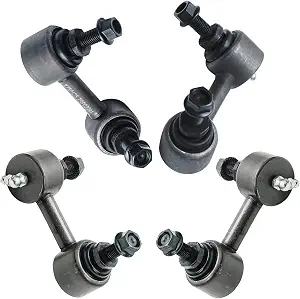 |
| Best Seller A high-volume bestseller chosen again and again | Detroit Axle Rear Sway Bar End Link Kit (pair) |  |
1. MOOG K80769 Stabilizer Bar Link
| Auto Part Position | Right |
|---|---|
| Compatible with Vehicle Type | Car, Truck |
| Automotive Fit Type | Vehicle Specific Fit |
| Material Type | Rubber |
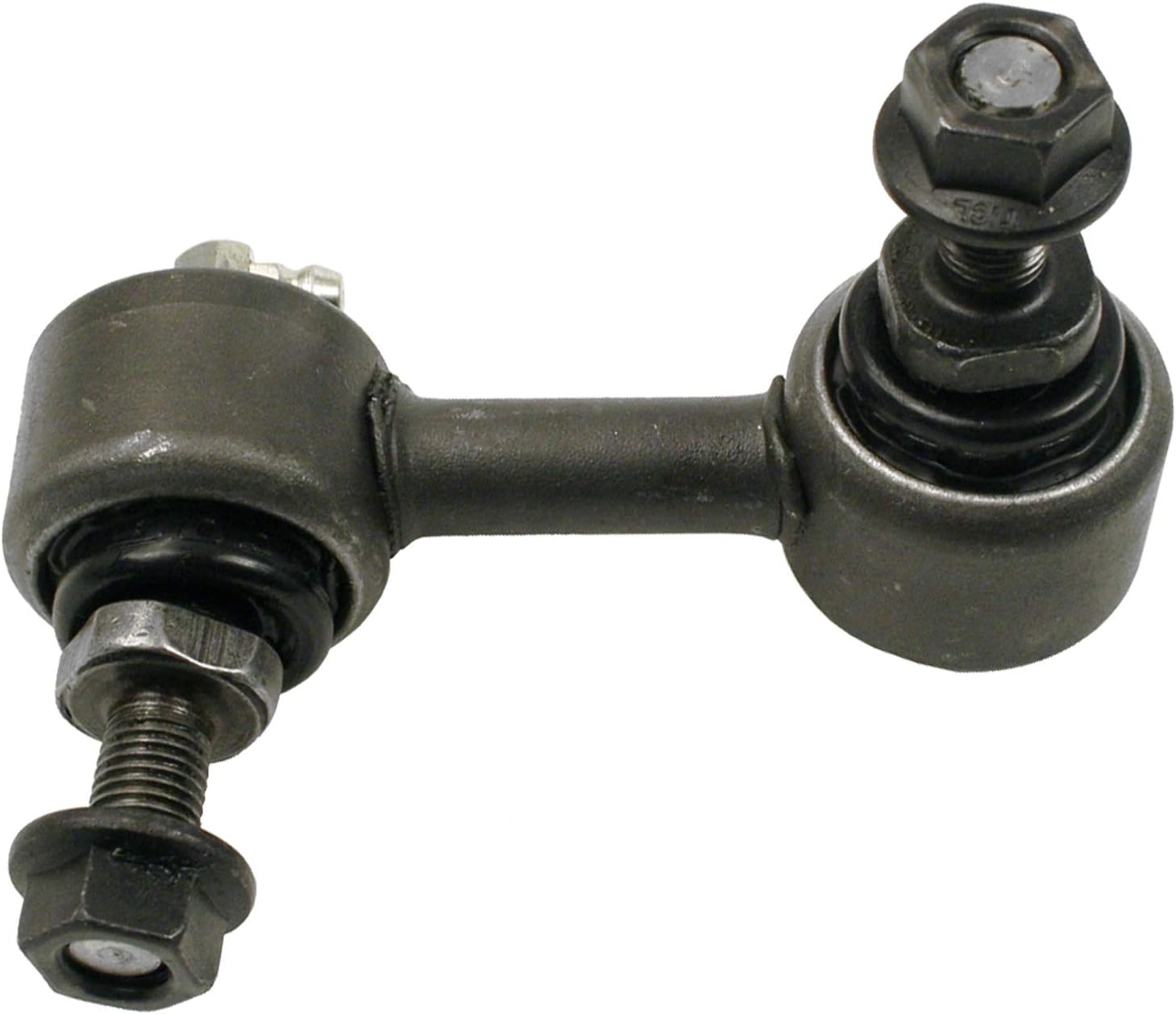
The MOOG K80769 is a replacement stabilizer bar link engineered for 2006–2011 Honda Civic fitment and designed to restore firm sway-bar connection and steering response. It installs like a factory-style link using wrench flats for removal and tightening, and the greasable socket allows periodic lubrication to reduce wear and extend life. A sealed boot helps keep dirt and water out of the joint while a thicker connecting rod and metal bearing components give the link greater strength than typical stock pieces. In practical terms that means reduced clunks over bumps and crisper handling when cornering. The part is vehicle-specific, so installation is straightforward for a DIYer with basic tools, but you should plan to re-grease the socket periodically since it is serviceable rather than permanently sealed. If your Civic has high-mileage suspension, this link is a robust swap that pairs well with refreshed bushings or an upgraded sway bar.
Best for: Buyers who want a durable, serviceable replacement that restores handling and reduces suspension noise on a 2006–2011 Civic while allowing periodic maintenance to extend service life.
Less Ideal for: Drivers who prefer maintenance-free, permanently sealed end links or those seeking a performance-tuned polyurethane or solid-link setup for track use.
- Vehicle-specific fit for 2006–2011 Honda Civic simplifies installation
- Greaseable socket lets you refresh lubrication to inhibit corrosion and wear
- Sealed boot shields internal components from dirt and water
- Thicker connecting rod and metal bearing components offer greater strength than typical stock links
- Requires periodic re-greasing because the joint is serviceable rather than permanently sealed
Verdict: A strong, vehicle-specific replacement link that restores Civic handling and lets you prolong life through periodic greasing.
2. Metrix Premium Chassis Parts 4‑Piece Front & Rear Stabilizer Sway Bar Link Kit

| Compatible vehicles | 2006-2011 Acura CSX, 2006-2011 Honda Civic |
|---|---|
| Kit contents | 4 stabilizer bar links (front and rear) with hardware |
| Construction | High-grade steel |
| Corrosion protection | Cataphoresis plating |
| Warranty | 3-Year / 36,000-Mile |
This Metrix 4-piece sway bar link kit supplies front and rear links to restore tight handling on 2006–2011 Honda Civic and Acura CSX models. Each link is built from high-grade steel with cataphoresis plating to resist corrosion and some links include grease fittings for periodic servicing. The kit is designed to fit like factory parts and is sold with all necessary hardware, so installation is straightforward for a competent DIYer or a shop technician. In use the stiffer, fresh links reduce body roll and eliminate clunking that comes from worn links, helping the car feel more direct through corners. Certification to IATF 16949 and ISO 9001 indicates consistent manufacturing quality, and the included 3-year/36,000-mile warranty gives extra confidence. Expect a noticeable improvement in steering feel and mid-corner stability, but bear in mind this is a direct replacement part rather than a performance-tuned aftermarket link for track use. For drivers chasing ultimate motorsport stiffness, adjustable or competition-specific links would be a better choice.
Best for: Drivers who want to restore sharp, factory-like handling on a 2006–2011 Honda Civic or Acura CSX with a durable, serviceable replacement that reduces body roll and suspension noise.
Less Ideal for: Racers and track-focused owners who need adjustable end links or stiffer, competition-grade components for cornering setup changes.
- Complete kit includes front and rear links plus hardware for a full replacement
- Greaseable design on some links allows periodic maintenance to extend life
- Cataphoresis plating improves corrosion resistance for longevity in wet or salted conditions
- High-grade steel construction and factory-style fitment aimed to match OEM performance
- Not an adjustable or competition-spec link, so it does not offer tunable stiffness for track tuning
Verdict: A durable, factory-fit 4-piece link kit that restores handling and reduces suspension noise on 2006–2011 Honda Civic and Acura CSX with serviceable grease fittings and strong corrosion protection.
3. ADIGARAUTO Front Sway Bar Link Pair for 2006–2011 Honda Civic / 2006–2011 Acura CSX

| Compatible vehicles | 2006-2011 Honda Civic; 2006-2011 Acura CSX |
|---|---|
| Package contents | Front driver side link (K80769) and front passenger side link (K80768) with hardware |
| Manufacturer part number | A2SLK807689 |
| OEM cross-reference | K80768 51320SNAA02, K80769 51321SNAA02 |
This ADIGARAUTO front sway bar link pair replaces the factory links on 2006–2011 Honda Civic and 2006–2011 Acura CSX models to reduce body roll and restore steering stability. The kit includes both left and right links and the installation hardware, so it is used as a straightforward front-end suspension refresh when worn links cause clunks, looseness, or excess lean. The listing notes OEM cross-reference numbers, which indicates the parts are intended to match factory fitment and geometry. Buyers can expect tightened handling and reduced sway during cornering after installation. The components are presented as corrosion-resistant and precision-fit in the brand materials, which helps with durability in mixed weather use. Limitations are typical for aftermarket links: long-term durability depends on installation torque and driving conditions, and these are replacement links rather than performance upgrades for track use. Fitment is limited to the specified Civic and CSX years, so confirm application before ordering.
Best for: Buyers looking to restore factory handling on a 2006–2011 Civic or 2006–2011 CSX with a ready-to-install replacement pair and minimal fuss.
Less Ideal for: Drivers seeking performance-tuned suspension upgrades for track use or those who want heavy-duty aftermarket links for extreme off-road or competition driving.
- Direct-replacement pair that matches factory part numbers for straightforward fitment
- Includes both driver and passenger links plus installation hardware for a complete front-end repair
- Designed to reduce body roll and restore handling consistency
- Seller documentation emphasizes corrosion resistance and precision fit for longer service life
- Aftermarket construction may not match long-term durability of higher-end performance components
Verdict: A practical, complete replacement pair that restores factory handling on 2006–2011 Civic and CSX models with easy fitment and included hardware.
4. HAWK BROTHER Front Sway Bar End Link Kit for 2006–2011 Honda Civic / 2006–2011 Acura CSX

| Manufacturer | HAWK BROTHER |
|---|---|
| Position | Front Left, Front Right |
| Manufacturer Part Number | SSB13030602-F-HB2 |
| OEM Part Number | 51320SNAA02, 51321SNAA02, MS60800, 51320S84A01 |
This HAWK BROTHER front sway bar end link kit replaces the factory front links on 2006–2011 Honda Civic and 2006–2011 Acura CSX models to restore stabilizer function and reduce clunking over bumps. Typical use is direct replacement during routine suspension maintenance or when you notice play, noise, or reduced roll control. The kit is metal-bodied with electrophoretic coating for corrosion resistance and is offered in left and right positions so both sides can be serviced together. Buyers report the parts feel solid and simpler to install than fragile factory plastic-style links, making it a practical DIY swap with basic hand tools. The practical benefits are improved steering stability, reduced noise, and potentially longer shock life when the anti-roll system is functioning properly. On the downside these are aftermarket links so finish and long-term durability may vary compared with higher-end premium brands, and professional alignment is recommended after suspension work for best handling results.
Best for: Buyers looking for an affordable, reliable replacement to stop sway-bar noise and restore front-end stability on 2006–2011 Civic or 2006–2011 CSX models who prefer a straightforward DIY fix.
Less Ideal for: Those who prioritize longest-possible service life under heavy-duty or performance driving should consider higher-end aftermarket or factory-quality alternatives.
- Direct fit for 2006–2011 Honda Civic and 2006–2011 Acura CSX front positions
- Metal construction with electrophoretic coating for improved corrosion resistance
- Sold as a kit covering front left and right so both sides can be replaced together
- Reportedly straightforward to install with basic tools for DIYers
- Aftermarket manufacturing quality may not match premium OEM-level longevity
Verdict: A cost-effective, corrosion-resistant front end-link kit that lets budget-minded Civic and CSX owners replace noisy or worn links and restore steady handling.
5. Metrix Premium Chassis Parts Front Sway Bar End Link Kit (front left & right)

| Compatible models | 2006-2011 Acura CSX, 2006-2011 Honda Civic |
|---|---|
| Quantity | 2 (front left and right links) |
| Pre-greased | Yes |
| Certifications | IATF 16949, ISO 9001 |
This Metrix Premium front sway bar end link kit replaces both left and right links to restore steering stability and reduce body roll and rattles. It is supplied pre-greased with greasable fitting points so the joints can be serviced for longer life. The links are machined and use corrosion-resistant coatings and aluminum steering and suspension components to resist rust and match factory appearance. Buyers report straightforward installation and good fitment on compatible Civics with the kit eliminating common front-end clunks. The design aims to meet industry quality standards and includes locknuts on joints for secure fastening. Expect mostly OEM-like performance and quieter handling after replacement, but some users have noticed the rubber bushings can crack sooner than heavier-duty designs and isolated reports of defective units arriving. For reliability-focused purchases, follow proper installation torque and maintenance of the greasable joints to maximize service life.
Best for: Buyers who prioritize a reliable, factory-quality replacement that restores handling and removes front-end rattles and who plan to maintain the parts with periodic greasing.
Less Ideal for: Drivers seeking a heavy-duty or performance-oriented link for aggressive driving or off-road use should consider reinforced aftermarket options instead.
- Sells as a complete left and right kit so both sides are serviced at once
- Pre-greased with greasable joints for periodic maintenance and extended life
- Corrosion-resistant coatings and machined finish for improved durability and factory-fit appearance
- Designed to meet IATF 16949 and ISO 9001 standards, indicating controlled manufacturing quality
- Some users report premature cracking of the rubber bushings under heavy use
- Occasional reports of defective units arriving that require return or replacement
Verdict: A factory-fit, serviceable front sway bar end link kit that restores stability and quiets clunks for 2006–2011 Civic owners focused on dependable, maintainable replacements.
6. Detroit Axle 4‑Piece Sway Bar End Link Kit for 2006–2011 Honda Civic / Acura CSX
| Fitment | 2006–2011 Honda Civic, 2006–2011 Acura CSX |
|---|---|
| Kit contents | 2 front and 2 rear stabilizer end links |
| Manufacturer | Detroit Axle |
| Item weight | 3.66 pounds |
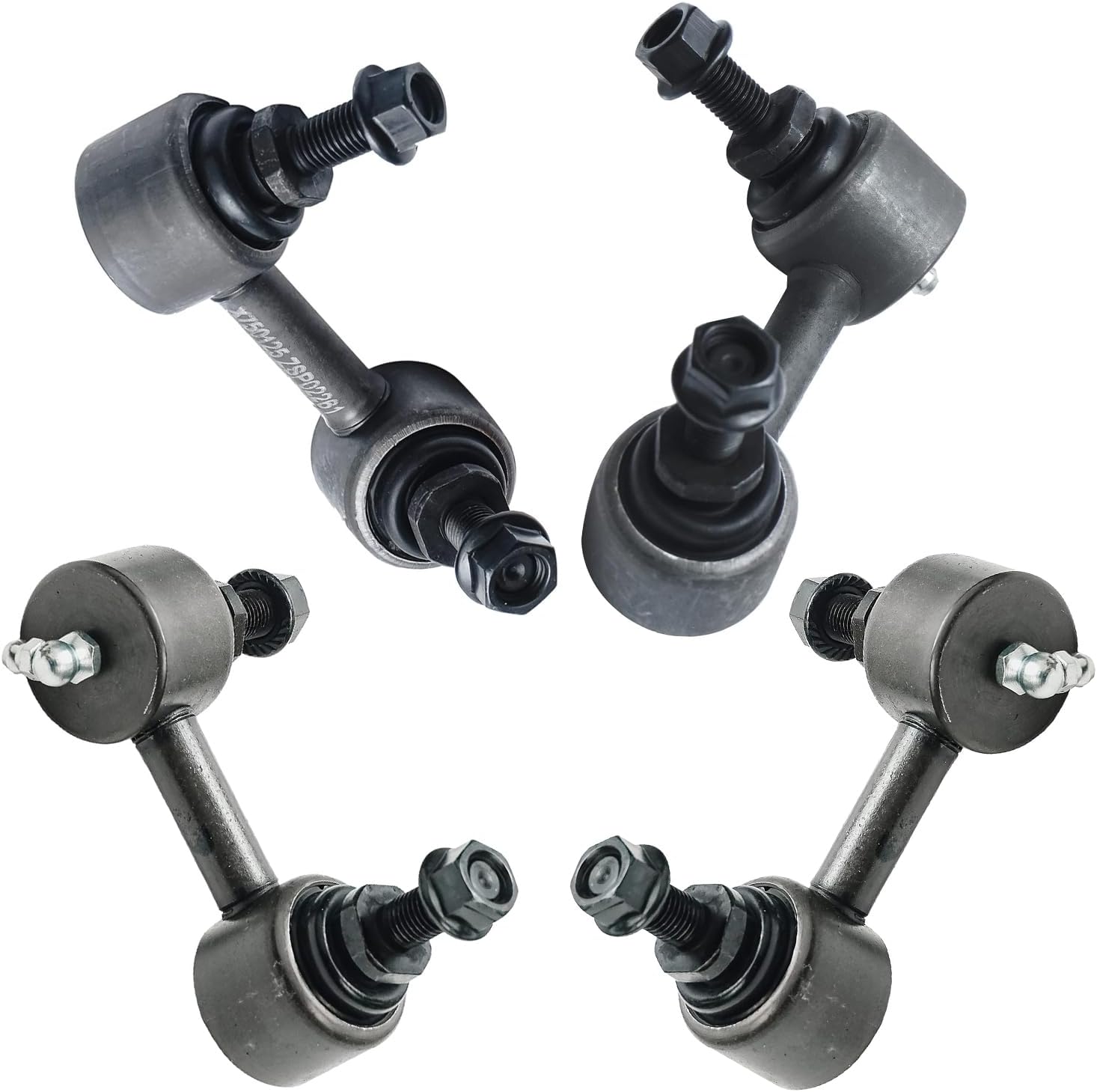
This Detroit Axle kit supplies two front and two rear stabilizer end links that replace worn links on 2006–2011 Honda Civic and Acura CSX models. Each link is offered as a direct-fit replacement intended for quick installation without major modifications, so it is typically used when you hear clunks over bumps, notice increased body roll, or want to restore original steering feel. The listing highlights premium alloy construction and a high-strength structure intended to resist wear and corrosion and handle repeated impacts. In practice that means the links should feel stiffer and quieter than heavily worn OE parts and help the sway bars control body roll during cornering. The kit covers both axles so it is convenient for a full refresh in a single job. Limitations: these are aftermarket replacement links rather than upgraded performance links, so drivers looking for firmer track-focused handling or adjustable geometry should look elsewhere. Also fitment is limited to the stated Civic and CSX years and chassis types. Overall this kit is a practical, value-oriented repair solution for Civic owners who want to fix suspension noise and restore factory handling behavior.
Best for: Buyers who want a reliable, factory-replacement repair to eliminate sway-bar noise and restore original handling on a 2006–2011 Civic or CSX with minimal fuss and visible social proof from user reviews.
Less Ideal for: Drivers seeking adjustable, performance-oriented end links for track tuning or for vehicles outside the listed Civic/CSX years and chassis.
- Direct-fit replacement for 2006–2011 Honda Civic and Acura CSX for straightforward installation
- Includes both front and rear end links so you can replace all worn links in one job
- Premium alloy construction and reinforced structure aimed at corrosion resistance and durability
- Designed to restore factory steering feel and reduce clunking and sway noise
- Not an adjustable or performance-tuned link set for track use
Verdict: A complete, direct-fit four-piece end link kit that restores factory handling and quiets sway-bar noise for 2006–2011 Civic and CSX owners.
7. Detroit Axle Rear Sway Bar End Link Kit (pair)
| Position | Rear |
|---|---|
| Fitment | 2006-2015 Honda Civic; 2013-2014 Honda Fit; 2013-2019 Acura ILX; 2006-2011 Acura CSX |
| Item model number | K750125-K750126 |
| Exterior | Black |
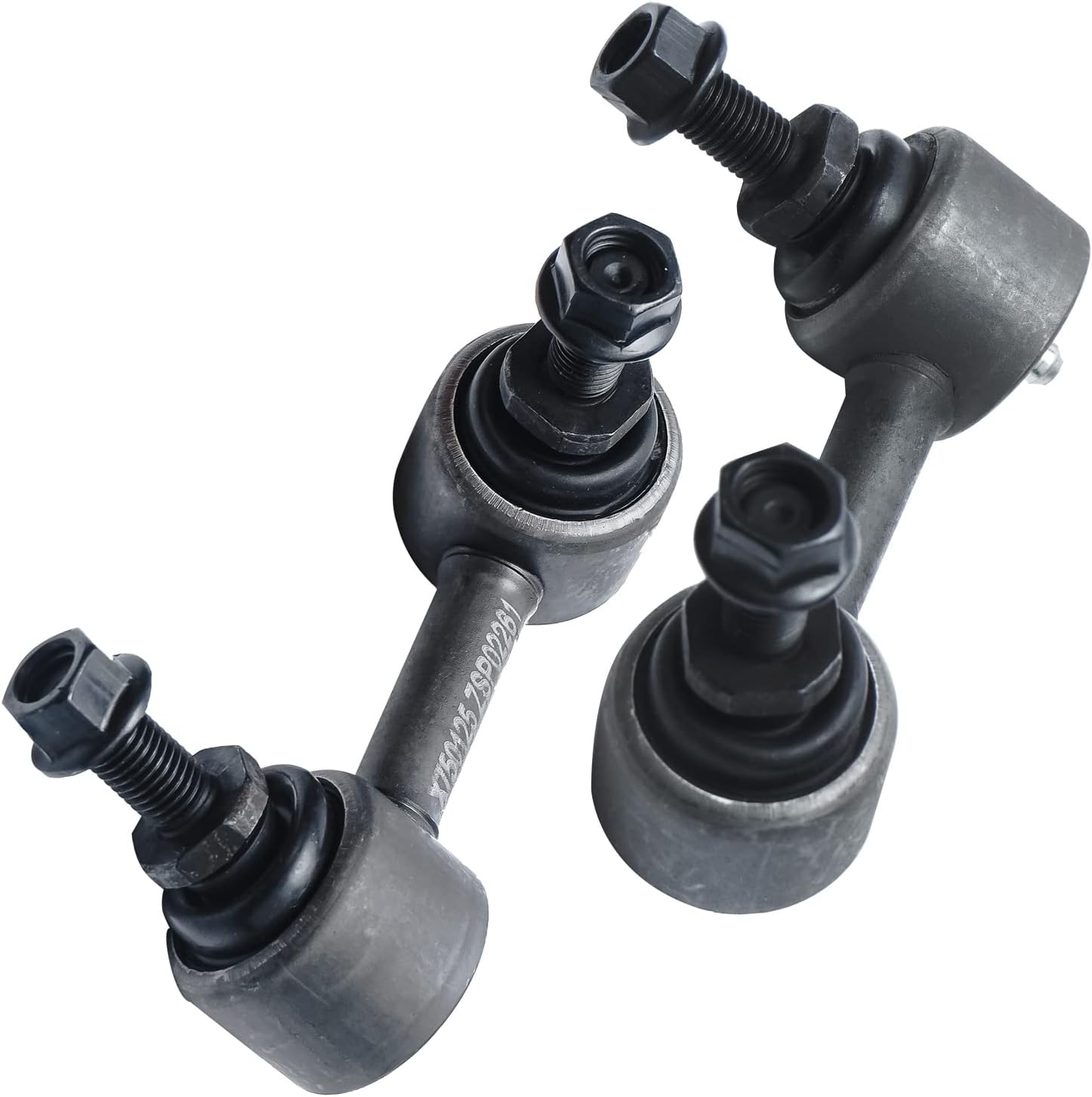
This Detroit Axle kit supplies two rear stabilizer sway bar end links intended as a direct-fit replacement for 2006–2015 Honda Civic and several related compact models. Installation is straightforward for a competent DIYer or a local shop because the parts are contoured to match factory mounting points. The links use a premium alloy and claim enhanced structural strength to resist wear and repeated impacts, which should reduce clunking and restore tighter rear roll control compared with worn originals. Their black finish helps corrosion resistance, and the kit is marketed with factory-quality fit and a long service life. Note that these are aftermarket parts rather than factory-brand components, so minor fitment variation or the need for fresh fasteners is possible; buyers replacing multiple suspension items may prefer to inspect adjacent bushings and hardware while the car is lifted. The kit covers a broad Civic year range, but verify exact model fitment before ordering to ensure compatibility with your specific trim and subframe configuration.
Best for: Buyers who prioritize a reliable, factory-quality replacement to stop rear sway clunks and restore original handling without custom work.
Less Ideal for: Shoppers looking for upgraded performance or stiffer aftermarket sway link geometry should consider dedicated performance parts instead.
- Direct-fit design for quick installation on covered Civic model years
- Premium alloy construction intended for wear and corrosion resistance
- Restores rear roll control and reduces sway-related noise
- Covers multiple related compact models so one kit fits a range of vehicles
- Aftermarket part so small fitment differences or need for new fasteners can occur
Verdict: A dependable, direct-fit rear sway bar end link pair that restores factory-like rear stability for Civic owners seeking low-risk, long-lasting replacement.
Choosing the Right 2006-2011 Honda Civic Sway Bar Link: Key Factors to Consider
Fitment and Length
Correct fitment preserves the sway bar geometry and steering characteristics. Links that are the wrong length or use incorrect stud spacing can preload the stabilizer bar or change roll stiffness, which affects handling and tire wear. When shopping for the 2006-2011 Civic (FA and FG), confirm the link's center-to-center length and mounting stud dimensions match the original equipment.
Also verify whether links are specified for front or rear use. Front sway bar link and rear sway bar link assemblies differ in length and attachment angle on this Civic generation, so buying the correct location-specific unit prevents clearance issues and undue stress on ball joints.
Joint Type and Bushing Material
The joint design determines noise, compliance, and service life. Sealed ball joints reduce maintenance and are usually quieter, while rubber bushings offer a compliant ride but can degrade faster. Polyurethane bushings are more durable and resist deformation, but they may transmit more vibration into the chassis.
For a Civic used for daily driving, rubber or sealed joints balance NVH (noise, vibration, harshness) and longevity. Performance-oriented owners who accept a firmer ride may prefer polyurethane components for reduced deflection and longer service intervals.
Corrosion Resistance and Finish
Sway bar links are exposed to water, road salt, and debris, so protective finishes matter. Zinc plating, powder coat, or stainless components can significantly extend service life by preventing pitting and seizure of threads and joints. Corrosion can lead to noisy clunks and make future removal difficult, so prioritize parts with clear anti-corrosion treatments.
Also look for protective boots or seals on ball joints. A compromised seal allows contaminants in and shortens joint life. For owners in regions with salted roads, upgraded finishes and sealed joints are particularly important.
Hardware and Kit Completeness
Some sway bar link kits include new nuts, washers, and bushings while others sell the link alone. Complete kits reduce guesswork and ensure fastener grades and locking hardware are appropriate for the Civic's suspension. Using incorrect or reused hardware can cause loosening and safety issues.
If you plan a DIY replacement, choose kits that provide all necessary mounting components. For shop installations, confirming included hardware ahead of time avoids delays and unexpected additional parts charges.
Durability Versus Ride Comfort
There is a tradeoff between ultimate durability and ride comfort. Stiffer materials and polyurethane bushings reduce deflection and maintain sway bar effectiveness longer, but they often transmit more road noise and vibration into the cabin. Softer rubber bushings cushion impacts and quiet the suspension but may crack or compress over time, especially under heavy loads.
Consider your driving style and priorities. Daily-driven Civics used for commuting typically benefit from a slightly softer, quieter setup, while vehicles carrying heavier loads or used for spirited driving may justify firmer, longer-lasting components.
Serviceability and Maintenance
Ease of replacement and future maintenance reduces ownership cost. Features like greaseable fittings, replaceable bushings, and standard-threaded studs make repairs simpler. Non-greaseable sealed units are low-maintenance but may require full replacement when worn.
Think about long-term access for removal and replacement. Designs that minimize seized fasteners and provide clear torque recommendations save time and avoid additional labor during future service.
Common Symptoms of Worn Sway Bar Links
Worn sway bar links cause distinct drivability cues on the 2006-2011 Civic. Typical symptoms include a rhythmic clunk or knock over bumps, increased body roll in corners, and a loose or imprecise steering feel. Noise often presents during low-speed maneuvers and may be more noticeable during cold starts when bushings are stiffer.
Pay attention to whether the sound is coming from the front or rear. Front sway bar link symptoms commonly show up as looseness or clunking under steering input, while rear link issues manifest as instability during quick lane changes or a loose rear end feel.
- Noisy clunk over bumps or during steering
- Increased body roll and less precise cornering
- Visible play at the joint or cracked bushings
- Uneven tire wear if geometry is affected
How to Inspect Sway Bar Links on a Civic FA and FG
A basic visual and physical inspection can confirm sway bar link wear. Park on level ground and safely lift the vehicle if needed. Check for torn boots, cracked rubber, rusted studs, or visible play by manually moving the link and feeling for looseness in the ball joint or bushing.
For more thorough diagnosis, support a wheel and use a pry bar to test for play at the attachment points. If you notice movement at the joint or hear clunks while applying load, the link likely needs replacement. Document whether the affected link is front or rear so you order the correct part.
- Look for cracked or missing rubber bushings
- Probe joints for excessive play or looseness
- Inspect for rusted or seized hardware
- Check both left and right sides to compare wear
DIY Replacement Tips for Owners
Replacing sway bar links on a 2006-2011 Civic is a common DIY task if you have basic hand tools and a jack with stands. Use the correct torque specs for the mounting hardware and replace any corroded nuts or washers. When removing old links, apply penetrating lubricant and support the sway bar to avoid sudden shifts in suspension geometry.
If you plan a DIY job, choose a kit that includes new hardware and clear installation instructions. After installation, perform a short test drive to confirm noise is eliminated and handling returns to normal. Recheck torque after a few hundred miles to ensure fasteners remain tight.
- Use penetrating oil on seized fasteners
- Support the sway bar during removal and installation
- Always torque nuts to manufacturer specifications
- Recheck hardware after initial test drive
Front Versus Rear Link Differences
Front and rear sway bar links differ in length, angle, and mounting geometry on the Civic FA and FG, so they are not interchangeable. Front links typically attach to the front lower control arm or strut and the front stabilizer bar, while rear links mate the rear sway bar to the rear suspension linkage. Confirm you are selecting the correct side and position when ordering parts.
The front links often experience higher steering-related loads and may show wear differently than rear links. When replacing one side, inspect the opposite side for similar wear and consider replacing links in pairs to maintain balanced handling.
- Front links: often shorter and handle steering loads
- Rear links: different mounting angles and longer lengths
- Replace in pairs if wear is similar on both sides
When to Upgrade Bushings or Choose a Kit
Decide between single-link replacements and full sway bar link kits based on condition and goals. Kits that include upgraded bushings or greaseable fittings can improve longevity and ease future maintenance. If the sway bar itself and end mounts are in good condition, replacing the links and bushings is often sufficient.
For vehicles exposed to harsh conditions, consider kits with corrosion-resistant finishes and sealed joints. Owners who want reduced deflection for firmer handling can opt for polyurethane bushings, but be prepared for a firmer ride and potential increase in transmitted noise.
- Choose kits with complete hardware for easier installation
- Greaseable fittings aid long-term serviceability
- Upgraded bushings can reduce deflection but may increase NVH
Still looking for the perfect fit?
Select your Honda Civic configuration to see the most relevant Sway Bar Links recommendations
How We Chose the Best 2006-2011 Honda Civic Sway Bar Link
We focused on practical criteria that matter for owners replacing sway bar links on a 2006-2011 Honda Civic (FA and FG). Priority went to direct-fit components and kits that match factory mounting points and lengths so installation does not require modification. We evaluated materials and construction, preferring hardened steel or alloy shafts, robust ball joint housings, and corrosion-resistant finishes expected to tolerate road salt and everyday exposure.Bushing and joint design was another core filter: OEM-style rubber bushings, upgraded polyurethane, and sealed ball joints were weighed for noise control, longevity, and ride compliance. We also considered serviceability features such as replaceable bushings, grease fittings, and included hardware in kits. Fitment clarity and compatibility documentation were required; ambiguous or multi-fit listings without clear Civic FA and FG-specific information were excluded.Other dimensions that influenced selection include stated load ratings, thread and stud sizes consistent with Civic suspension hardware, and overall length tolerance to preserve sway bar geometry. We excluded options that rely on nonstandard mounting methods or lack rust protection. The result reflects choices that balance durability, quiet operation, and straightforward installation for this generation Civic.
Our full evaluation process is outlined in our review methodology.
FAQ
How long do sway bar links typically last on a 2006-2011 Civic?
Lifespan varies by driving conditions and climate. On average, links can last many years under normal driving, but exposure to salted roads or frequent potholes can shorten life. Inspect them periodically and look for cracked bushings or joint play.
Can I replace a single sway bar link or should I do both sides?
You can replace a single worn link, but replacing both sides is recommended if the other side shows similar wear. Replacing in pairs preserves balanced handling and avoids uneven response between left and right.
Will bad sway bar links affect alignment?
Worn links usually do not change static alignment specs but can alter dynamic handling and cause uneven tire wear if the suspension geometry is stressed. Address worn links to restore predictable cornering behavior.
Are polyurethane bushings a good choice for daily-driven Civics?
Polyurethane offers greater durability and reduced deflection, which can sharpen handling. However, it may transmit more road noise and vibration compared with rubber. For daily commuting, many owners prefer the quieter, more compliant rubber bushings.
How can I tell if a sway bar link joint is loose without removing the part?
With the car safely supported, use a pry bar or push on the sway bar and observe for movement at the joint. Excessive play or audible clunks during this test indicate a loose or failing link.
Do sealed ball joints on links need regular greasing?
Sealed ball joints are designed to be maintenance-free and do not require greasing. Greaseable joints can be serviced periodically to extend life, but sealed units will need replacement once the seal fails or wear becomes evident.
Final Verdict
When replacing sway bar links on a 2006-2011 Honda Civic (FA and FG), prioritize correct fitment, corrosion protection, and an appropriate joint or bushing material for your driving style. Confirm front and rear distinctions, choose kits that include necessary hardware if you plan a DIY job, and weigh durability against potential increases in cabin noise. Replacing worn links in a timely way restores handling precision and reduces distracting clunks.Ultimately, pick the option that matches how you use the Civic: softer, sealed bushings for quiet daily driving or firmer, serviceable components for longer life and tighter response. Following the factors above will help you select a reliable replacement and get the Civic back to confident cornering.
Explore More:
- Check out all Honda Civic parts & accessories
- Explore Sway Bar Links Maintenance & Repair Guides
- Explore Suspension & Steering
- Browse all Auto Parts
