

Note: This article contains affiliate links. If you click on these links and make a purchase, I may earn a small commission at no extra cost to you. This helps support my research and content. Read my full affiliate disclosure here.
If your 2012-2015 Honda Civic feels loose in corners or makes clunking noises over bumps, worn sway bar links are a common culprit. Choosing the correct sway bar link matters because fitment, joint type, and material affect steering response, ride comfort, and long-term reliability for the Civic chassis used from 2012 to 2015 (FB and FG). This guide covers a short list of vetted options that fit this Civic generation and explains the practical differences you should weigh.You will find top picks that match factory mounting points and common aftermarket upgrades, plus guidance on symptoms, installation considerations, and torque expectations to help you choose confidently.
Looking for other parts? See all Honda Civic parts & accessories.
Top Picks at a Glance
| Best Overall The best all-around choice for most situations | MOOG K750604 Suspension Stabilizer Bar Link |  |
| Best Quality Built to a higher standard if you want something more solid | MOOG K750605 Suspension Stabilizer Bar Link (Right) |  |
| Best Value The sweet spot between price and what you get | Metrix Premium Chassis Parts Front Sway Bar End Link Kit (front left & right) |  |
| Best Budget The cheapest option that still gets the job done reliably | Torquizo 2PCS Front Sway Bar Links for Honda Civic (2012–2015) |  |
| Highest Rated A top-rated pick with lots of positive feedback | Detroit Axle Front Sway Bar End Links (pair) for 2012–2015 Honda Civic / 2013–2019 Acura ILX |  |
| Most Popular A crowd favorite that many people choose with confidence | Detroit Axle Rear Stabilizer Sway Bar End Links (pair) for 2006–2015 Honda Civic |  |
| Best Seller A high-volume bestseller chosen again and again | HAWK BROTHER Front Sway Bar End Link Kit (2 pcs) for Honda Civic/Acura ILX |  |
1. MOOG K750604 Suspension Stabilizer Bar Link

| Auto Part Position | Upper |
|---|---|
| Compatible with Vehicle Type | Car, Truck |
| Automotive Fit Type | Vehicle Specific Fit |
| Material Type | Metal, Rubber |
The MOOG K750604 sway bar link is a vehicle-specific upper stabilizer link intended as a direct-style replacement for compatible Honda Civic applications. It replaces a worn link to restore steering stability and reduce clunks over bumps. Notable features include a greasable socket for periodic lubrication, sealed dust boot to keep debris out, wrench flats that make removal and installation easier, and a robust connecting rod with metal bearings and rubber preload for durability. In practice this part is used when you hear knocking from the front suspension or notice loose steering feel; it returns crisper handling and quieter operation compared with a failing link. Practical benefits are straightforward: easier installation for DIYers, better resistance to corrosion and contamination, and a design tuned for longer service life. Limitations are minimal but expected: as a vehicle-specific replacement you must confirm fitment for your exact year and trim, and it does not change handling characteristics beyond restoring factory stability.
Best for: Buyers who want a reliable, long-lasting replacement link that restores steering stability with relatively simple DIY installation and minimal fuss.
Less Ideal for: Drivers seeking performance upgrades or altered handling should look at performance-oriented suspension components instead.
- Greasable socket allows fresh lubricant to flush debris and extend joint life
- Sealed boot protects internal components from dirt and water
- Wrench flats simplify installation and removal for DIY servicing
- Robust metal bearings and thick connecting rod improve durability
- Requires confirming vehicle-year and trim compatibility before purchase
Verdict: A durable, vehicle-specific replacement that restores factory steering stability while simplifying installation and service.
2. MOOG K750605 Suspension Stabilizer Bar Link (Right)

| Auto Part Position | Right |
|---|---|
| Compatible with Vehicle Type | Car, Truck |
| Automotive Fit Type | Vehicle Specific Fit |
| Material Type | Metal, Rubber |
The MOOG K750605 is a right-front stabilizer bar link made as a direct, vehicle-specific replacement for 2012–2015 Honda Civic models. It connects the sway bar to the suspension control arm to restore roll control and eliminate clunking from worn links. Installation is aimed at home mechanics and shops alike thanks to wrench flats that let you hold the joint while tightening and a design that avoids fragile allen fittings. The link ships pre-greased and includes a grease fitting so you can service the joint without removing the wheel, while the sealed boot keeps dirt and water away from the bearing surfaces for extended life. MOOG highlights a thicker connecting rod and metal bearings for added durability compared with lighter aftermarket options, but removing rusted factory links can still be the hardest part of the job. This is a practical, performance-minded replacement that tightens handling and removes noise, though it does not change sway bar stiffness so expect improved response rather than increased roll resistance from springs or thicker bars.
Best for: Buyers who want a durable, serviceable replacement that restores sharp handling and eliminates clunks while keeping installation straightforward and serviceability in mind.
Less Ideal for: Drivers seeking a firmer or sport-tuned setup that reduces body roll should instead consider upgrading the sway bar or choosing performance-specific suspension components.
- Vehicle-specific fit for 2012–2015 Honda Civic ensures proper alignment and easy replacement
- Greaseable socket (Zerk fitting) allows periodic lubrication without disassembly
- Sealed boot protects internal components from dirt and moisture
- Wrench flats simplify installation versus allen-headed aftermarket links
- Heavier-duty construction with metal bearings and a thicker rod improves durability
- Only replaces the end link; does not alter sway bar stiffness or handling beyond restoring factory roll control
Verdict: A rugged, greaseable direct-replacement link that restores Civic steering response and longevity without changing sway bar stiffness.
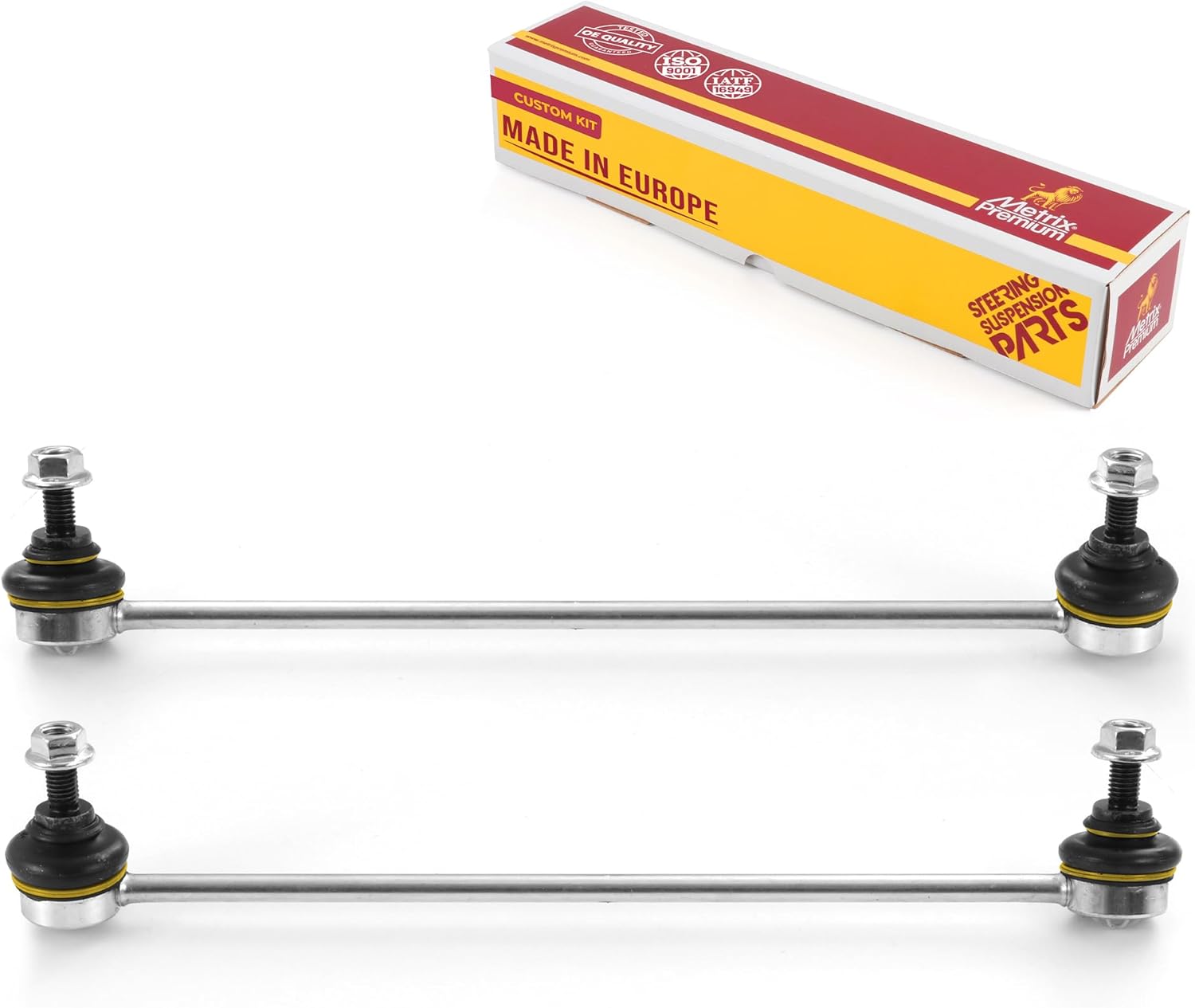
3. Metrix Premium Chassis Parts Front Sway Bar End Link Kit (front left & right)
| Compatible models | 2013-2022 Acura ILX; 2012-2015 Honda Civic |
|---|---|
| Quantity | 2 (front left and right) |
| Pre-greased | Yes |
| Certifications | IATF 16949, ISO 9001 |
This Metrix front sway bar end link kit replaces both left and right links and is aimed at restoring steering stability and stopping suspension clunks. The links come pre-greased and use a greasable design so periodic maintenance is straightforward for DIYers or technicians. The metal components are machined and treated with a corrosion-resistant coating intended to extend service life, and the kit is sold as a matched pair so both sides get identical wear characteristics. In practice the parts install like factory replacements and eliminate rattles and excess body roll when the original links are worn. Some users report firm, factory-like joints while a minority saw early bushing cracking or occasional defective units, so it is wise to inspect seals and bushings on arrival. This kit is certified to quality management standards and includes common OEM cross-reference numbers, making fitment verification easier. It is a practical option for drivers who want a direct replacement that balances durability and ease of installation.
Best for: Buyers who want a practical, like-for-like replacement to stop front suspension noise and restore handling on a daily driven compact car and who prefer parts that are easy to install and service themselves.
Less Ideal for: Drivers seeking a performance-tuned or heavy-duty aftermarket upgrade for aggressive driving or commercial use should consider purpose-built performance links instead.
- Includes both front left and right links so both sides match wear and performance
- Pre-greased, greasable design simplifies maintenance and can extend service life
- Machined metal construction with corrosion-resistant coating for durability
- Designed to match factory fit and use common OEM cross-reference numbers for easier compatibility checks
- Some reviews report premature rubber bushing cracking on long-term use
- Occasional reports of units arriving with damaged or leaking joints that require return
Verdict: A practical, factory-fit front sway bar link pair that restores handling and quiets clunks while being easy to install and maintain.
4. Torquizo 2PCS Front Sway Bar Links for Honda Civic (2012–2015)

| Brand | Torquizo |
|---|---|
| Fitment | Honda Civic 2012-2015, Acura ILX 2013-2021 |
| Quantity | 2 pieces |
| Salt spray resistance | Over 800 hours |
These Torquizo front sway bar links replace the factory links on Honda Civic 2012–2015 models and are sold as a two-piece kit for both sides. They use a hardened ball-joint design intended to improve handling response and reduce body roll compared with worn stock links. Typical installation is direct bolt-on using existing mounting hardware and basic hand tools, so a competent DIYer can swap them in an hour or two per side. Notable features include claimed salt-spray corrosion resistance exceeding 800 hours and a focus on durability. In practical use you can expect crisper cornering and fewer clunks from a failing link, and the kit’s compact design keeps ride quality largely unchanged while restoring proper sway bar function. Limitations are that this is an aftermarket replacement from a value brand rather than a factory-piece equivalent and long-term durability beyond the salt-spray claim depends on driving conditions. The kit comes with a six-month satisfaction commitment but does not list extended warranties or OEM part numbers beyond the manufacturer reference.
Best for: Buyers wanting an affordable, do-it-yourself replacement to restore front anti-roll bar performance on a 2012–2015 Civic and prioritize cost and straightforward fitment.
Less Ideal for: Drivers seeking a factory-brand or heavy-duty racing upgrade should consider OEM or performance-specific links instead.
- Direct-fit design for 2012–2015 Honda Civic front sway bar mounts
- Hardened ball-joint intended to improve handling and reduce play
- High claimed corrosion resistance with over 800 hours salt-spray rating
- Sold as a pair so both sides can be serviced at once
- Aftermarket value-brand part so long-term durability may vary compared with factory replacements
Verdict: A budget-friendly, direct-fit pair that restores front sway bar function and handling on 2012–2015 Honda Civics while offering strong corrosion resistance.
5. Detroit Axle Front Sway Bar End Links (pair) for 2012–2015 Honda Civic / 2013–2019 Acura ILX

| Auto Part Position | Front |
|---|---|
| Material | Metal |
| Automotive Fit Type | Vehicle Specific Fit |
| Manufacturer | Detroit Axle |
These Detroit Axle front sway bar end links are a direct-fit replacement kit that replaces worn or noisy front stabilizer links on 2012–2015 Honda Civic and 2013–2019 Acura ILX. The kit includes two front links and uses metal construction with a black finish; parts are built to meet common aftermarket quality standards and Detroit Axle says they undergo impact and fatigue testing. In practice they restore steering stability and eliminate clunks caused by failed links, and many DIYers report straightforward installation with basic hand tools. Notable features include vehicle-specific fitment and a long warranty from the brand. On the downside some users report early wear of the dust boots and occasional premature failure on high-mileage or harsh-use vehicles, so longevity can vary. Greasing the joints during installation can reduce initial noise and improve durability. For a reliability-focused replacement they hit the sweet spot between affordability and acceptable performance, but buyers wanting the longest service life may prefer a heavier-duty or premium OEM-equivalent option.
Best for: Buyers who prioritize getting a reliable, affordable replacement that restores steering feel and eliminates sway-bar noise with an easy DIY install and straightforward fitment.
Less Ideal for: If you need the longest-lasting, heavy-duty performance for aggressive driving or commercial use, consider higher-end or reinforced aftermarket links instead.
- Vehicle-specific direct-fit design simplifies installation and alignment.
- Metal construction and factory-style design restore steering stability and reduce clunking.
- Backed by manufacturer testing and a long warranty period.
- Widely reported easy DIY installation with common tools.
- Some users report premature wear of dust boots and occasional early joint failure under heavy use.
- May require greasing at install since joints are not always pre-lubricated.
Verdict: A cost-effective, direct-fit replacement that quickly restores steering stability and quiets clunking for 2012–2015 Honda Civic drivers focused on practical reliability.
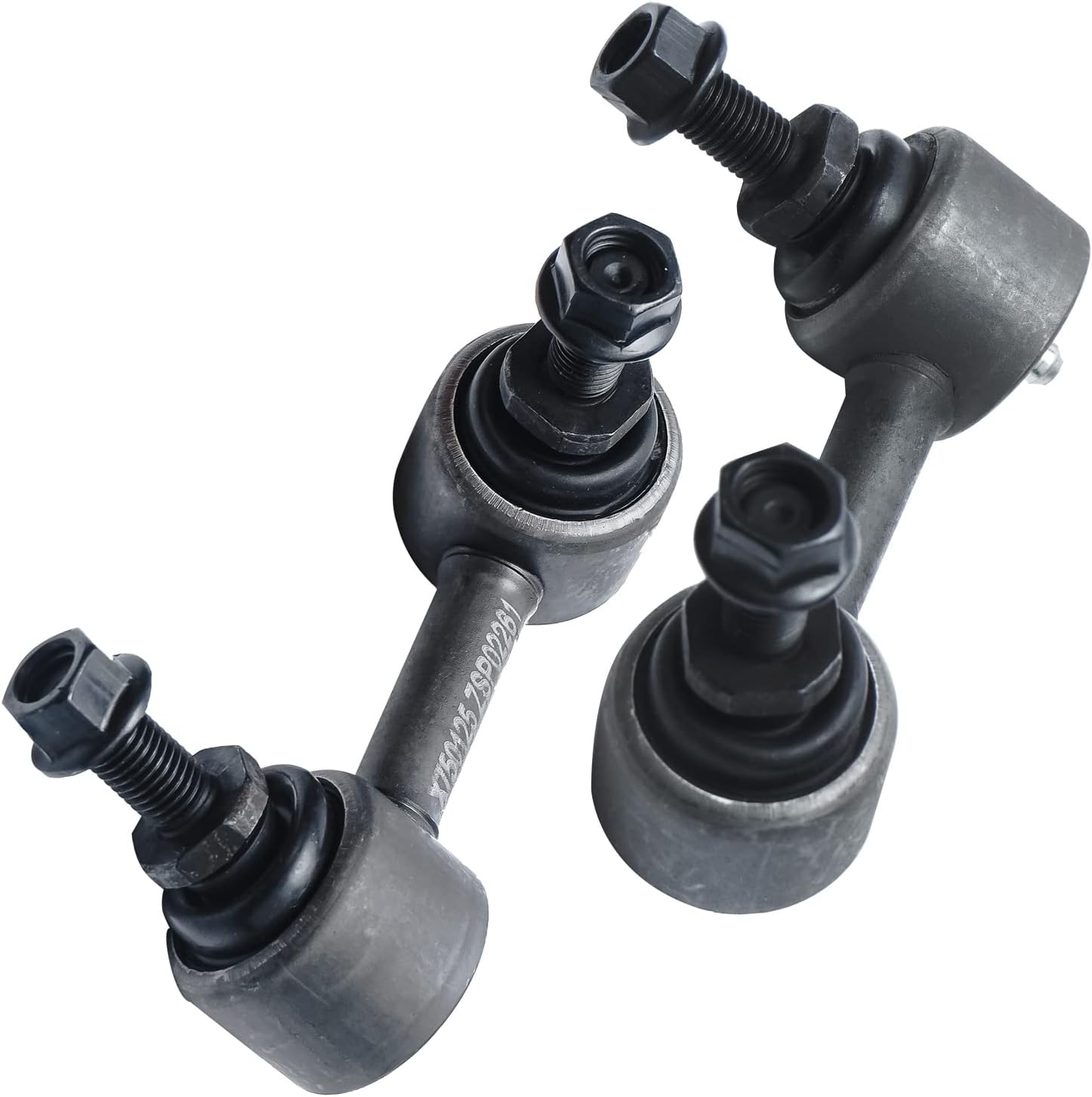
6. Detroit Axle Rear Stabilizer Sway Bar End Links (pair) for 2006–2015 Honda Civic
| Position | Rear |
|---|---|
| Fitment | 2006-2015 Honda Civic; 2013-2014 Fit; 2013-2019 Acura ILX; 2006-2011 Acura CSX |
| Material | Premium alloy |
| Includes | 2x Rear sway bar end links |
These Detroit Axle rear stabilizer end links replace the two rear sway bar link assemblies on compatible Honda Civic models. Sold as a pair, they are direct-fit replacements intended for quick installation without modifications. The parts are made from a premium alloy and feature a reinforced structure that Detroit Axle says resists wear and corrosion while standing up to repeated impact loads. In practical terms that means stronger links for reduced sway-bar noise and more consistent rear roll control after installation. The kit is focused on function rather than extras so you get the two links only, which keeps things simple for a DIY install or a standard shop job. Expect improved steering feel over worn factory links, but note these are replacement links rather than a performance upgrade, so handling gains will be modest and aimed at restoring factory behavior. The brand backing and wide customer adoption offer reassurance if you want a reliable, budget-friendly fix for a Civic from the 2012 to 2015 model years.
Best for: Buyers who want a reliable, factory-quality rear sway bar link replacement to restore steering stability and reduce sway-bar noise on a 2012–2015 Civic and who value proven products with broad customer use.
Less Ideal for: Drivers looking for performance or adjustable sway bar links for track use should consider purpose-built aftermarket performance links instead.
- Direct-fit replacement tailored for 2006–2015 Honda Civic fitment
- Premium alloy construction for corrosion resistance and wear durability
- Reinforced structural design intended to handle repeated impact loads
- Sold as a pair for straightforward rear-end replacement jobs
- Not designed as a performance uprated link so limited handling improvement beyond restoring factory behavior
Verdict: A dependable, direct-fit pair of rear sway bar end links that restore factory steering feel for 2012–2015 Honda Civic owners who want a proven, budget-conscious replacement.
7. HAWK BROTHER Front Sway Bar End Link Kit (2 pcs) for Honda Civic/Acura ILX

| Auto Part Position | Front |
|---|---|
| Compatible with Vehicle Type | Car |
| Automotive Fit Type | Vehicle Specific Fit |
| Material Type | Iron |
These HAWK BROTHER front sway bar end links replace the factory front stabilizer link assemblies on compatible Civics and ILXs. Sold as a driver and passenger pair, the iron links are painted and use an electrophoretic coating intended to resist corrosion. In normal use they restore the connection between the sway bar and control arm to reduce body roll, minimize clunking over bumps, and improve steering feel that can degrade when worn links start to fail. Installation is straightforward for a competent DIYer with basic suspension tools or a shop can install quickly since they are vehicle-specific fit. The package is a budget aftermarket option that emphasizes durable metal construction and factory-style function, but it does not include bushings or advanced hardware upgrades like poly inserts or greasable joints. For buyers who want a like-for-like replacement to return handling and quietness to near-factory levels, these links are a practical, corrosion-resistant choice; drivers seeking performance upgrades or premium articulating joints should consider higher-end alternatives.
Best for: Buyers who want a direct, factory-style replacement to restore steering feel and eliminate suspension noise without paying for performance upgrades.
Less Ideal for: Not the best choice for enthusiasts seeking upgraded sway link articulation or for vehicles that need heavy-duty, high-mileage performance components.
- Vehicle-specific fit for 2012–2015 Honda Civic and 2013–2019 Acura ILX makes installation simpler
- Sturdy iron construction with electrophoretic painted finish improves corrosion resistance
- Sold as a front driver and passenger pair so both sides can be refreshed at once
- Does not include upgraded bushings or greasable joints for extended service life
Verdict: A straightforward, corrosion-resistant front sway bar end link pair to restore factory handling and reduce noise on 2012–2015 Civics.
Choosing the Right 2012-2015 Honda Civic Sway Bar Link: Key Factors to Consider
Fitment And Correct Geometry
Correct fitment is the top priority for a Civic of these years because sway bar links must match the factory mounting points and length to preserve designed roll stiffness. An incorrect length or end style can alter sway bar preload, change handling balance, or introduce binding during suspension travel.
Check thread pitch, stud diameter, and link length against factory specs. When replacing front or rear links, confirm whether the part is designed for the specific end (upper or lower) and for left or right sides when applicable. Proper geometry reduces unwanted steering changes and prevents premature wear of adjacent suspension components.
Joint Type And Durability
Sway bar links use different joint types: ball joints, heim joints, or rubber/polymer bushings. Sealed ball joints and high-quality polymer bushings provide a balance of NVH control and durability for typical Civic use, while heim joints offer adjustability at the cost of increased noise and maintenance.
Durability depends on seal quality and materials. Links with metal-on-metal joints without adequate sealing will wear faster in wet or salted conditions. Consider service intervals and exposure when selecting a joint type to match your driving environment.
Corrosion Resistance And Materials
Road salt, moisture, and debris accelerate corrosion on suspension parts. Links built from corrosion-resistant steel, stainless components, or with durable coatings extend service life on the Civic.
Pay attention to plating quality, zinc coatings, or powder finishes. Threaded components and nuts should also use treated materials or protective sleeves to prevent seizure and easing future removal. Better corrosion resistance reduces the chance of thread damage during replacement.
Noise, Vibration, And Harshness (NVH) Impact
Different link designs affect how much road and suspension noise is transmitted into the cabin. Soft polymer bushings absorb vibration and reduce squeaks, while rigid metal joints can transmit a more direct mechanical feel and may introduce a noisy clunk when worn.
If your priority is a quiet daily driver, choose designs intended to isolate NVH. For drivers seeking sharper handling feedback, slightly stiffer joints may be acceptable but expect more road noise and potential for increased wear if seals are compromised.
Installation And Maintenance
Ease of installation matters because many owners will perform the replacement themselves. Parts that match OEM mounting hardware, come with required nuts or washers, and do not require special tools make DIY replacement more reliable and faster.
Consider whether the link is serviceable or sold as a kit. Serviceable designs allow grease access and periodic maintenance, extending life. Also check whether replacement requires strut removal, significant jacking, or special torque tools and plan accordingly.
Compatibility With Suspension Setup
If the Civic has aftermarket sway bars, lowered springs, or altered suspension travel, choose links that accommodate the changed geometry and travel range. Link length and joint articulation must allow full suspension movement without binding or overstressing joints.
For stock suspension, OEM-equivalent geometry is usually best. For modified setups, look for adjustable links or those explicitly rated to handle the altered motion to avoid introducing handling penalties or early failure.
Common Symptoms Of Worn Sway Bar Links
Worn or failing sway bar links often reveal themselves through specific noises and handling changes. A rhythmic clunk or metallic knock when driving over bumps, especially at low speeds or when the vehicle transitions body roll, is one of the clearest indicators. You may notice looseness in cornering feel or a subtle increase in body lean that was not present before.
Besides audible clues, inspect visually for torn boots, excessive play at the joints, or rusted fasteners. Symptoms can differ between front and rear links: front link wear tends to affect initial turn-in and steering feel, while rear link problems contribute to rear-end instability or wandering during lane changes.
- Rhythmic clunking over bumps
- Increased body roll or looseness in corners
- Visible boot tears, corrosion, or joint play
- Different symptoms may point to front versus rear link wear
Front Versus Rear Link Considerations
Although both front and rear sway bar links serve the same purpose, the loads, geometry, and common failure modes differ on the Civic. Front links are typically subject to more steering-related forces and may show wear sooner in vehicles with heavier urban use. Rear links often see different motion patterns and can be more sensitive to changes from lowered or aftermarket rear sway bars.
When selecting front sway bar link or rear sway bar link replacements, confirm the part is made for the intended position. Differences in length, stud offset, and bushing orientation influence installation and dynamic behavior. For example, an adjustable front link may be useful if the vehicle has been lowered to retain proper anti-roll bar geometry.
- Confirm position-specific design before purchase
- Front links affect steering feel; rear links influence stability
- Adjustable links help on lowered or modified Civics
DIY Replacement: What To Expect
Replace sway bar links with basic mechanical skills and standard tools, but plan for potential seized nuts on older hardware. Typical steps include safely lifting and supporting the vehicle, removing the wheel if needed, unbolting the link at both ends, and installing the new link with correct orientation and torque. Having penetrating lubricant and a breaker bar handy helps deal with corroded fasteners.
A replace sway bar link DIY job usually takes one to two hours for an experienced homeowner per corner. Keep torque specs accessible and use new nuts or serrated washers when provided. Inspect related components like sway bar bushings and control arm mounts while the wheel is off to catch additional wear that could affect performance.
- Basic hand tools, jack stands, and torque wrench required
- Penetrating oil often needed for seized hardware
- Plan one to two hours per corner for typical DIY replacement
When To Choose Adjustable Links
Adjustable sway bar links are valuable if the Civic has lowering springs, coilovers, or aftermarket sway bars that change the suspension kinematics. They allow you to dial in the correct length so the anti-roll bar is neither preloaded nor drooped through suspension travel. Proper adjustment preserves handling balance and prevents binding that accelerates wear.
For stock-height Civics, adjustable links are usually unnecessary and add complexity. If you do choose adjustable units, ensure they have locking mechanisms to resist rotation and are corrosion-resistant to prevent on-car adjustment problems.
- Use adjustable links for lowered or modified suspension
- Ensure locking features to maintain set length
- Not usually needed for unmodified, stock-height Civics
Signs That Point To Other Suspension Issues
Some symptoms blamed on sway bar links can stem from worn bushings, loose control arm bolts, or strut mounts. If clunking persists after link replacement, inspect sway bar bushings, control arm and subframe fasteners, and strut bearings. A thorough visual and physical check helps isolate the root cause rather than swapping parts unnecessarily.
Also note that uneven tire wear, alignment drift, or persistent vibration might indicate problems that are not solved by replacing links alone. Addressing underlying suspension or alignment issues ensures the new links perform as intended and avoids repeat failures.
- Inspect bushings, control arm bolts, and strut mounts if noise continues
- Uneven tire wear or alignment issues can point to other causes
- Systematic troubleshooting reduces unnecessary part swaps
Still looking for the perfect fit?
Select your Honda Civic configuration to see the most relevant Sway Bar Links recommendations
How We Chose the Best 2012-2015 Honda Civic Sway Bar Link
We focused on features that directly affect performance and longevity on the 2012-2015 Honda Civic (FB and FG). Selection criteria emphasized proper fitment to the specified model years and mounting geometry, robust joint designs such as sealed ball joints or polymer bushings, and corrosion-resistant finishes to withstand road exposure. We prioritized parts with clear specification documentation for thread pitch, length, and end styles to reduce fitment variables during installation.Durability factors included materials and seal designs that limit contamination and wear. Ride and noise characteristics were considered by evaluating joint stiffness and vibration isolation properties. Ease of installation was assessed through the clarity of installation guidance, availability of replacement hardware or kit options, and whether common hand tools suffice. Finally, we excluded parts lacking explicit fitment for the 2012-2015 Civic or those with incomplete technical specs, because ambiguity increases the risk of incorrect fitment and installation issues.
Our full evaluation process is outlined in our review methodology.
FAQ
How long do sway bar links typically last on a 2012-2015 Civic?
Lifespan depends on driving conditions and joint type. Under normal driving they often last several years, but exposure to road salt, frequent pothole impacts, or aggressive driving can shorten life. Inspect them during routine service intervals for early signs of wear.
Can I replace a sway bar link without removing the strut?
Often you can replace links without removing the strut by working through the wheel well or dropping the lower control arm slightly, depending on the link design and access. Some installations are easier with the wheel removed and the suspension drooped to relieve tension on the sway bar.
Are there torque specs I should follow when installing links?
Yes. Correct torque on sway bar link mounting nuts secures joints and prevents loosening or premature wear. Follow the vehicle-specific torque specs for the 2012-2015 Civic and use a calibrated torque wrench to achieve accurate values.
What are common signs that distinguish front from rear link failure?
Front link issues typically affect turn-in response and may cause clunks felt through the steering, while rear link failure often shows as rear-end looseness, wandering, or clunks felt more through the chassis. Visual inspection of the failed joint helps confirm the location.
Is it worth choosing adjustable links for a stock Civic?
For an otherwise stock Civic, adjustable links are usually unnecessary and add complexity. They are most beneficial when the suspension has been lowered or when aftermarket anti-roll bars change geometry.
Can worn sway bar links cause alignment problems?
Worn links themselves usually do not directly change alignment angles, but they can contribute to inconsistent handling and uneven tire loading that might accelerate uneven tire wear. Persistent alignment symptoms warrant a full suspension check.
Final Verdict
Prioritize correct fitment and durable joint design when replacing sway bar links on a 2012-2015 Honda Civic. Matching geometry and thread specifications prevents handling degradation and installation headaches, while sealed joints and corrosion-resistant finishes reduce long-term maintenance needs. For daily-driven Civics, OEM-equivalent links with robust seals are generally the best balance between quiet operation and longevity. If the suspension has been modified, consider adjustable options to retain proper anti-roll bar geometry and avoid binding.
Explore More:
- Check out all Honda Civic parts & accessories
- Explore Sway Bar Links Maintenance & Repair Guides
- Explore Suspension & Steering
- Browse all Auto Parts
